Showing posts with label Shell. Show all posts

Saturday, 13 January 2018

A plea for the truth from Kevin Hester

Oil Giants admit to a 5C Temperature Increase being baked in but no one else will!


Kevin Hester


9 January, 2018

Oil giants Shell and BP are planning for global temperatures to rise as much as 5°C by the middle of the century. 

The level is more than double the upper limit committed to by most countries in the world under the Paris Climate Agreement, which both companies publicly support.”

I believe a temperature increase of 5C and more will occur much, much sooner than mid-century. This is clearly an extinction event for most if not all complex life on planet earth.

In my 
May 2015 Oral Submission to the N.Z. Ministry of Environment, I pointed out that both the IEA and Shell Petroleum admit that close to 5C is baked in but none of the large NGO’s nor the global Green Party’s nor their networks are prepared to face the reality of the crisis. I received zero feedback from the Ministry minions but a standing ovation from the concerned members of the public at the hearing process. My oral presentation is embedded in the above hyperlink:

According to the conservative blogger Joe Romm at Think Progress the planet may have warmed 5C in 13 years once before;

I  have written to both David Parker, Environment Minister and James Shaw co-leader of the Green Party of Aotearoa in the new Labour led coalition government in New Zealand challenging them both to face up to the reality of the situation, I have yet to receive any reply. My emails are copied below, feel free to email them yourself( both of their emails are embedded in the two links directly above) and ask why they are holding back;

Kia ora David,

I have had a long email dialogue with James Shaw M.P. over his failure to address the climate crisis in a meaningful way.

Below is my latest email to him about Shell and BP admitting that 5C is baked in by the middle of the century. I’m sure you’re aware that 5C is an extinction event for most if not all complex life on the planet. When we exit stage left we will see 450 nuclear melt downs and over 1200 spent fuel pool fires which will be infinitely worse.

When are we going to start telling the truth about the severity of the climate crisis?

Surely the youth deserve the truth?

Best
Kevin Hester
Rakino Island
Hauraцki Gulf

“Hi James,
Just in case you missed it; “Oil giants Shell and BP are planning for global temperatures to rise as much as 5°C by the middle of the century. The level is more than double the upper limit committed to by most countries in the world under the 
Paris Climate Agreement, which both companies ( and yourself) publicly support. FYI I believe it will happen much sooner.

What will it take for the Greens and the new government to come clean on the crisis?”

Best
Kevin Hester
Rakino Island
Hauraцki Gulf

The planet and all species inhabiting it face an existential crisis and it seems that almost none of us have the courage to face what is now a “Fait Accompli.” What I find even more repulsive is the burden being cast on our youth to fix the un-fixable dilemma we have bequeathed them.

I see young people in my family and circle of friends continuing to have children. I firmly believe many children would be spared the impending horror if their young parents were aware of the armageddon bearing down on them. To quote David Attenborough “
Population matters

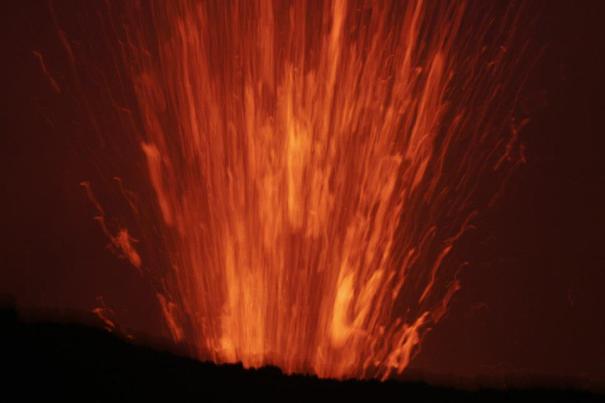
I took this photo whilst standing on the crater edge at Tanna Island in Vanuatu. From this point you can see down into the volcano crater,  a boiling cauldron of molten lava, somewhat like what our entire planet is soon to look like;
21148_10200351251116575_299026901_n
Our youth are lied to from birth. Let’s not be the last generation, at the edge of extinction, lying to the youth.

It is only a matter of time before the living will envy the dead. Let’s start the grieving process while the situation is still relatively stable.


Monday, 1 June 2015

The oil companies KNOW what everyone is denying is the case

In case you missed this important bit of news.

This blows open the fraud behind what those in charge know about climate change and our future

The oil companies KNOW what everyone is denying is the case

Shell Oil Caught Planning for Deadly 4 to 6 Degree Rise in Global Temperature


17 May, 2015

Whoopsies. From The Guardian:

Royal Dutch Shell has been accused of pursuing a strategy that would lead to potentially catastrophic climate change after an internal document acknowledged a global temperature rise of 4C, twice the level considered safe for the planet.

A paper used for guiding future business planning at the Anglo-Dutch multinational assumes that carbon dioxide emissions will fail to limit temperature increases to 2C, the internationally agreed threshold to prevent widespread flooding, famine and desertification.
Instead, the New Lens Scenarios document refers to a forecast by the independent International Energy Agency (IEA) that points to a temperature rise of up to 4C in the short term, rising later to 6C.
...
The Shell document says: “Both our (oceans and mountains) scenarios and the IEA New Policies scenario (and our base case energy demand and outlook) do not limit emissions to be consistent with the back-calculated 450 parts per million (Co2 in the atmosphere) 2 degrees C.”
It adds: “We also do not see governments taking steps now that are consistent with 2 degrees C scenario.”

Surely there's nothing Shell itself could do to try to mitigate global warming. They're just planning realistically for our future!
But seriously, this is disgusting. It shows callous disregard for the planet and all its inhabitants.

Contact Shell and tell them to change their plans:
Mail: P.O. Box 2463, Houston, TX 77252 (Shell Oil Company)
Shell U.S. Switchboard: 713-241-6161 (all Shell U.S. companies)
US Shareholder Services: 888-737-2377
Shell U.S. Media Relations: 713-241-4544
Shell U.S. Trademarks: 888-SHELLTM or 888-743-5586
Shell U.S. Royalties:   281-544-2600
Update 1:
Brilliant comment from RhodeIslandAspie:
RW media may not believe climate change is real.
But sure looks like Shell believes it. Smoking gun
.


Wednesday, 1 April 2015

Obama: Actions speak louder than words

Have some Greenies,like Bill McKibben and his friends from Wall Street been trying to tell you that Barack Obama is serious about climate change?

Actions speak louder than words

Barack Obama gives Shell go-ahead to drill for oil in Alaskan Arctic
Anglo-Dutch oil giant to return to the Chukchi Sea in search for oil despite concerns for the environment

The damaged Royal Shell Dutch drilling barge Kulluk is loaded onto the transport ship XRK in Unalaska, Alaska
Shell's Kulluk drilling rig ran aground in the Arctic Photo: AP

31 March, 2015


Royal Dutch Shell has received the go-ahead from the US government to restart a controversial oil exploration campaign in the Alaskan Arctic despite fears over the risk to the environment.

The Department of the Interior approved the Anglo-Dutch oil major’s request to return to the Chukchi Sea within the Arctic circle. It comes just three years after Shell’s last attempt to find oil in the region floundered when its Kulluk drilling rig ran aground.

"The Arctic is an important component of the Administration's national energy strategy, and we remain committed to taking a thoughtful and balanced approach to oil and gas leasing and exploration offshore Alaska," said Interior Secretary Sally Jewell.

This unique, sensitive and often challenging environment requires effective oversight to ensure all activities are conducted safely and responsibly.”

Interior's Bureau of Ocean Energy Management will now consider Shell's exploration plan and perform an environmental assessment on it, which could take at least 30 days.

Shell said in a statement on Tuesday night: “Today’s Record of Decision reaffirms Lease Sale 193 and clears the way for the Bureau of Ocean and Energy Management to conclude its review and make a decision on our Revised Chukchi Sea Exploration Plan. The execution of that plan remains contingent on achieving the necessary permits, legal certainty and our own determination that we are prepared to explore safely and responsibly.”

The company spent $5bn (£3bn) in its last failed search for oil in Alaska but the company believes that the region’s vast untapped reserves warrant the potential financial and environmental risks of returning.

Despite the slump in oil prices to levels around $50 per barrel, operators are prepared to continuing searching for crude in the Arctic. According to estimates by energy consultants Wood Mackenzie, the region, straddling territory belonging to Russia, the US, Norway, Greenland and Canada, may hold as much as 166bn barrels of oil equivalent.

Shell’s plan for the Chukchi may involve using two rigs to reach production of around 400,000 barrels per day (bpd) of crude, roughly half the UK’s current output of oil from the North Sea. Tapping oil and gas reserves held under the Arctic will be vital to meeting expected global energy demand beyond 2040.

According to the International Energy Agency, total energy demand will increase by 37pc over the next 25 years and without new reserves the world could face a catastrophic shortfall in oil and gas.

However, the decision by President Barack Obama’s administration to sanction Shell’s plans in Alaska has drawn immediate criticism from environmental lobby groups.

It’s an indefensible decision,” said Greenpeace Arctic campaigner Ian Duff. “The Arctic is melting rapidly because of climate change. But instead of seeing it as a warning, Shell sees profit. It wants to drill for more of the stuff that caused the melting in the first place. And all the evidence shows Shell can’t drill safely in the Arctic. The extreme conditions means it’s when, not if, a spill will happen.”

Drilling in the Arctic is complicated by ice, which in some areas can last for around six months. The US Bureau of Ocean Energy Management has said there is a 75pc chance of “one or more large spills” happening.

The decision to permit Shell back into Alaska could also trigger a rush by other nations to tap their Arctic resources.

Canada is watching Shell’s plans closely. Imperial Oil wants to drill on the Canadian side of the Beaufort Sea by the end of the decade. In Russia, state-run Rosneft and Gazprom have a monopoly to explore the country’s vast Arctic continental shelf, but work has been slowed by Western sanctions aimed at forcing the Kremlin to back down over its support of separatists in Ukraine


A Greenpeace activist covers the logo of the Shell oil company to protest against the heading of the an icebreaker for Shell's Arctic oil drilling project in the north of Alaska in 2012.
A Greenpeace activist covers the Shell logo in May 2012. Photograph: Michal Cizek/AFP/Getty 

The Guardian mentioned it the other day but without mentioning Obama’s name. Doesn’t really fit their current narrative.


Liberals like George Monbiot are still delivering exactly the same messsage as they were 20 years ago when I first discovered him.

This is from 3 weeks ago

Tuesday, 9 July 2013

Arctic oil drilling

From Greenpeace - 

Save the Arctic from Shell and its Russian friends

After fleeing the Alaskan Arctic with broken-down equipment, Shell have decided to join forces with Gazprom and attempt to drill the Russian Arctic.

The Russian oil industry spills 30 million barrels of oil a year, but Shell doesn't want you to talk about that.


Wednesday, 12 September 2012

Shell halts Arctic offsea drilling


Calling Conditions ‘Benign,’ Shell Halts Offshore Arctic Drilling After One Day Because Of Massive Ice Sheet


11 September, 2012

After five years of waiting and billions of dollars invested, Peter Slaiby, Shell Oil’s Vice President for Alaska, gushed to the Alaska Daily News last Sunday, that he was “happy, happy, happy” his company had driven its first drill bit into the floor of the Chukchi Sea.

Now it seems Slaiby’s delight about offshore drilling in the Arctic may have been short-lived.

Yesterday, just one day after beginning its long awaited drilling operations, Shell suspended drilling due to a massive ice pack covering approximately 360 square miles drifting toward the site. Its trajectory has forced the oil giant to disconnect its drilling ship, costing the company at least one of just 15 days it has been allowed to drill before the government will force operations to shut down for the winter.
The arrival of this titanic ice sheet just days after Shell received permits from the Department of the Interior to begin drilling is yet another reminder of the inherent peril of operating in such a remote and extreme environment — and it contradicts Shell’s insistence that its operations will not pose a threat.


Addressing the World Ocean Conference in Singapore last February, Shell International Senior Adviser  Robert Blaauw insisted his company’s operations would be “benign”:

When there will be drilling, there will be drilling in open water seasand when the conditions are benign – more benign than the Gulf of Mexico – in shallow water in 24-hour daylight.  And we’ll stop drilling actually more than a month before the ice comes back.

For the record, when Shell’s drill bit first hit the ocean floor at 4:30 AM local time, it was dark. The sun didn’t rise that day until 7:11 AM.

As a report and short documentary video from the Center for American Progress points out, responding to an oil spill in the Arctic would be a daunting challenge even in the best case scenario Blaauw describes. In a region with virtually non-existent infrastructure or support facilities, there would simply be no way to house, feed, and supply the workforce that would be necessary to clean up a large-scale spill. And scientists know very little about how oil would affect the Arctic environment.

The decision to suspend operations must be particularly frustrating to Shell because it has already taken far longer than the company would have liked to get to this point. Sea ice has remained in the area longer than anticipated, and a series of gaffes — from failed Coast Guard inspections to a drilling rig slipping its mooring — prevented the company from receiving its permits and commencing operations in early August as it had anticipated.

 
Shell has petitioned the government for an extension of its drilling season beyond the September 24 deadline because its scientists predicted that sea ice would be later than anticipated coming back to the region. Given these latest developments, it seems granting such an extension would be rather ill-advised.


With the clock ticking and a massive ice sheet bearing down on their drill site, it seems Shell may not have as much room to operate as they originally thought.
 
Michael Conathan is Director of Oceans Policy at the Center for American Progress.


Monday, 10 September 2012

Shell recklessness in the Arctic


Shell criticised for limited testing of Alaska drilling containment equipment
Greenpeace says oil company used 'stock-car race' recklessless in testing capping stack to prevent Gulf of Mexico-style blowout


9 September, 2012

Shell has been accused of "stock-car racing recklessness" after apparently undertaking only the most limited testing of a key piece of equipment aimed at preventing a Gulf of Mexico-style blowout during its controversial drilling in the Arctic.

Documents obtained under a Freedom of Information Act request suggest field-testing of a containment dome took place over two hours on 25 and 26 June. The dome, known as a "capping stack", would be dropped over any stricken wellhead.

Two officials from the bureau of safety and environmental enforcement (BSSE) – an arm of the US interior department – were present with Shell officials at the tests in Puget Sound, Alaska, but there was no independent verification of the tests.

Shell reportedly started work yesterday on the $4.5bn (£2.8bn) drilling programme in the Chukchi Sea, 70 miles off Alaska's north-west coast. It does not yet have permission to drill into oil reserves.

Public Employees for Environmental Responsibility (Peer), a US group that helps federal and state employees raise the alarm on environmental protection issues, said it was shocked by the single page of notes from the government agency after it filed a federal lawsuit against the BSSE asking for all documents relating to the capping tests.

This "slim production" belied the agency's [BSSE] claim in press statements that it had conducted comprehensive testing to meet "rigorous new standards", added Peer. "The first test merely showed that Shell could dangle its cap in 200ft of water without dropping it," said Kathryn Douglass, a Peer staff lawyer. "The second test showed the capping system could hold up under laboratory conditions for up to 15 minutes without crumbling. Neither result should give the American public much comfort."

Shell did not contest the assumptions made by Peer about the testing but said the containment cap was only one of various pieces of equipment assembled over a long period of time to deal with any emergency.

"Approval of our Chukchi Sea oil spill response plan [Orsp] … validates the huge amount of time, technology, and resources we have dedicated to assembling an Arctic oil spill response fleet second to none in the world," said a Shell spokesman.

"It reinforces that Shell's approach to Arctic exploration is aligned with the high standards the department of interior expects from an offshore leader. Specifically, Shell's Orsp includes the assembly of a 24/7 onsite, nearshore and onshore Arctic-class oil spill response fleet, collaboration with the US Coast Guard to test roles and responsibilities and newly engineered Arctic capping and containment systems." Environmental campaigners Greenpeace said the limited testing of the crucial sub-sea cap displayed a "total disregard" for even the most basic safety standards.

"Such recklessness wouldn't look out of place in a stock-car race," said Ben Ayliffe, senior Arctic campaigner at Greenpeace. "The only option now is for the US government to call a halt to Shell's plans to open up the frozen north because the company is so clearly unable to operate safely in the planet's most extreme environment.

"Whatever Shell is able to do in the narrow window between now and when the sea ice returns, it won't erase the clear evidence we've seen in the past two months that there's no such thing as safe drilling in the Arctic."

The company was granted permission to starting digging with its drill ship in the Chukchi Sea but only into the layer of ocean bottom located above oil reserves.

Shell can dig 20-by-40ft mud-line cellars, which will eventually hold and protect a well's blowout preventer 40ft below the seabed. The US interior secretary, Ken Salazar, said he had made his decision after an exhaustive review of Shell drilling rigs and safety equipment, including a capping stack.

"Any approved activities will be held to highest safety, environmental protection and emergency response standards," he said.

Shell hopes to drill exploratory wells in the Chukchi and Beaufort seas in this year's open-water season, rapidly drawing to a close.

Friday, 7 September 2012

Energy costs


Study throws cold water on Arctic oil, gas dreams
The Arctic, often presented as the promised land by oil companies, is likely to play only a marginal role in providing for the planet's future energy needs, a Norwegian study claimed Tuesday.


5 September, 2012

The share of Arctic oil and gas in global energy production is expected to decline by 2050 because of prohibitively high production costs, according to a study conducted by the Centre for International Climate and Environmental Research in Oslo and national statistics agency Statistics Norway.

Oil production in the region is seen doubling in absolute value during the period, but will drop from 10 percent of the global total in 2010 to eight percent in 2050, the researchers said.

Their findings were published in the journal Energy Economics and summarised in Norway's leading daily Aftenposten on Tuesday.

For natural gas, the decline is expected to be even more pronounced, with the share dropping from 27 percent to 22 percent. Volumes will also continue to shrink in absolute value until 2030, when they are expected to begin rising again.

The researchers attributed the decrease to the boom of unconventional oil and gas sources, such as shale gas in North America, and growing conventional gas production in the Middle East -- two sources that are significantly cheaper to exploit than Arctic oil and gas.

According to the US Geological Survey (USGS), the Arctic could be home to 13 percent of the planet's undiscovered oil reserves and 30 percent of its undiscovered gas reserves.

Faced with rising oil demand worldwide, and with the production-obstructing Arctic ice melting faster than ever, international oil corporations have shown a keen interest in the Arctic region -- to the dismay of environmentalists.

But the oil and gas fields are for the most part believed to be out at sea, located far from land and infrastructure and in extreme climate conditions, all of which would send production costs soaring.

One example of the difficulties encountered in the region is the Shtokman natural gas field in the Russian waters of the Barents Sea, whose future remains uncertain almost 25 years after it was discovered.

Russian giant Gazprom and its partners, France's Total and Norway's Statoil, failed to reach agreement by a June 30 deadline on a viable development of the field, which is believed to hold 3,800 billion cubic metres of natural gas, enough to meet the world's entire demand for a year.


Shell's delayed Arctic oil plans worrisome


5 September, 202

Norwegian oil company Statoil has watched closely Royal Dutch Shell's long and costly quest to sink exploratory oil wells in the Arctic waters off the coast of Alaska. And that struggle has Statoil concerned, so much so that company officials say Statoil won't be exercising its federal leases and drilling in Alaska's Arctic until at least 2015, according to The Financial Times.

Instead, in the near term Statoil is headed to Canada for offshore oil exploration: "...in the coming months Statoil had plans to drill three wells offshore eastern Canada and nine in the Norwegian Barents Sea, where it has already made discoveries. But it will not be drilling in the Chukchi Sea before 2014," The Financial Times reported this week.

In Alaska's Arctic, Shell is 
on the verge of starting a limited drilling program that will entail sinking a drill bit up to 1,400 feet into the seabed -- several thousand feet shy of the oil and gas deposits. Nonetheless, this partial drilling effort signifies a breakthrough for Shell, which has spent more than $4.5 billion and years to get to this point.

Tim Dodson, head of exploration for Statoil, told The Financial Times that the costs -- many related to complying with regulations and fighting off lawsuits -- that Shell has absorbed to get this far is worrisome. “Some of these regulations can make the costs of exploration prohibitive,” he told the newspaper.

One possible way to reduce the financial risks could be for oil companies to partner on offshore exploration wells in the far north. The Financial Times reports.

“You will see more shared equity on these wells, to spread the risk and limit the cost exposure,” (Dodson) said. He added that Statoil was already discussing this option with other companies that have leases in the northern seas, such as Chevron, ExxonMobil and ConocoPhillips

Tuesday, 7 August 2012

Capital flight


Shell looks to pull some cash from Europe due to crisis -report
Royal Dutch Shell is pulling some of its funds out of European banks over fears stirred by the euro zone's mounting debt crisis, The Times reported on Monday.


6 August, 2012

The company's chief financial officer Simon Henry told the newspaper that Shell is cutting back its exposure to European credit risk in the worst-hit economies and putting a higher price on doing business with the region's peripheral nations.

"There's been a shift in our willingness to take credit risk in Europe. The crisis has impacted our willingness to afford credit," Henry is quoted as saying.

Henry is cited as saying that the Anglo-Dutch oil major would rather deposit $15 billion of cash in non-European assets, such as U.S. Treasuries and U.S. bank accounts.

The firm is forced to keep some money in Europe to fund its operations, but is keeping the bulk of its reserve liquidity out of the euro zone to avoid growing macroeconomic risk, the report said.


Saturday, 14 April 2012

Another oil spill in Gulf of Mexico?


Another oil spill?

Shell confident it is not source of Gulf oil sheen
Shell shares clawed back most of its early losses after the oil giant said it had a "high degree of confidence" that its operations are not the source of an oil sheen in the Gulf of Mexico that it estimated to be six barrels.


12 April, 2012

Shares in Royal Dutch Shell had dropped 4pc in London in early trading after the company said it had send a spill response vessel and asked for aerial surveillance to investigate the oil sheen "out of prudent caution", but by mid-afternoon they were down just 0.9pc. They closed down just 0.5pc at £21.74.

Traders said the knee-jerk response on investors reflected concerns that any possible Gulf of Mexco spill might be compared to that which resulted from BP's Deepwater Horizon rig disaster in 2010 - the worst offshore oil spill in US history.

Shell said in an initial statement that the source of the one-mile by 10-mile sheen is unknown and there was no current indication that it originates from wells in either its Mars or Ursa projects. It said its "priority is to respond proactively, safely, and in close coordination with regulatory agencies".

However, in a statement on Thursday afternoon, Shell it had it inspected its operations in the area and their was "no sign of leaks" or "well control issues" associated with it drilling operations.

Bill Tanner, a spokesman, said in an interview with Bloomberg: "This was an orphan sheen. We continue to look to identify the source of the sheen. We have a high degree of confidence that the sheen did not originate from Shell operations.”


Shell operations in the Gulf of Mexico. The Mars platform is about 100 miles south of New Orleans and Ursa is about 130 miles

Shell said it was continuing to cooperate with federal regulators in their efforts to determine the cause and nature of the sheen.

"Although we are confident at this time that the sheen did not originate from Shell operations, out of prudent caution we will continue to respond to the sheen," the company said.

It said the Louisiana Responder, the oil spill response vessel that is was sending to investigate the sheen, is on station and remains ready to respond and over-flights would continue as weather conditions permit.

Shell also has deployed two remote operating vehicles to inspect Shell and non-Shell infrastructure and search for potential naturally-occurring seeps in the area.

The Mars platform is about 100 miles south of New Orleans and Ursa is about 130 miles.

RBC Capital said in a note responding to the news."While the extent of the sheen ... is large and will be a concern, the sheen is light and could result from volume of only a couple barrels …

"We would expect a very efficient response in GoM [Gulf of Mexico] from Shell - if it can show the source is not theirs, and the response is swift, Shell may even turn it into a positive live exercise."

Thursday's Gulf of Mexico scare came on the same day that Shell published its annual Sustainability Report, which revealed the number of operational spills - those related to equipment failure or accidents - at its facilities rose from 195 to 208 worldwide last year, due to a doubling of the number of spills in Nigeria. The volume of operational spills doubled to 6,000 tonnes from 2,900 tonnes in 2010, largely due to a leak at its Bonga facility offshore Nigeria. The number of sabotage spills rose very slightly to 118 but the volume fell, to 1,600 tonnes.

Meanwhile, the North Sea is likely to see an increase in "difficulties" like the gas leak at Total's Elgin platform as more fields mature and require decommissioning, the International Energy Agency (IEA) said.

Total's gas leak began while it was trying to solve problems with the casing of a well that had been plugged and abandoned a year previously. "The problem that Total encountered as it decommissioned an old well at the field is likely to portend difficulties at other mature fields in the medium term," the IEA said.

A report by Douglas-Westwood and Deloitte said almost 500 platforms need decommissioning over the next 30 years.