Showing posts with label BP. Show all posts

Saturday, 13 January 2018

A plea for the truth from Kevin Hester

Oil Giants admit to a 5C Temperature Increase being baked in but no one else will!


Kevin Hester


9 January, 2018

Oil giants Shell and BP are planning for global temperatures to rise as much as 5°C by the middle of the century. 

The level is more than double the upper limit committed to by most countries in the world under the Paris Climate Agreement, which both companies publicly support.”

I believe a temperature increase of 5C and more will occur much, much sooner than mid-century. This is clearly an extinction event for most if not all complex life on planet earth.

In my 
May 2015 Oral Submission to the N.Z. Ministry of Environment, I pointed out that both the IEA and Shell Petroleum admit that close to 5C is baked in but none of the large NGO’s nor the global Green Party’s nor their networks are prepared to face the reality of the crisis. I received zero feedback from the Ministry minions but a standing ovation from the concerned members of the public at the hearing process. My oral presentation is embedded in the above hyperlink:

According to the conservative blogger Joe Romm at Think Progress the planet may have warmed 5C in 13 years once before;

I  have written to both David Parker, Environment Minister and James Shaw co-leader of the Green Party of Aotearoa in the new Labour led coalition government in New Zealand challenging them both to face up to the reality of the situation, I have yet to receive any reply. My emails are copied below, feel free to email them yourself( both of their emails are embedded in the two links directly above) and ask why they are holding back;

Kia ora David,

I have had a long email dialogue with James Shaw M.P. over his failure to address the climate crisis in a meaningful way.

Below is my latest email to him about Shell and BP admitting that 5C is baked in by the middle of the century. I’m sure you’re aware that 5C is an extinction event for most if not all complex life on the planet. When we exit stage left we will see 450 nuclear melt downs and over 1200 spent fuel pool fires which will be infinitely worse.

When are we going to start telling the truth about the severity of the climate crisis?

Surely the youth deserve the truth?

Best
Kevin Hester
Rakino Island
Hauraцki Gulf

“Hi James,
Just in case you missed it; “Oil giants Shell and BP are planning for global temperatures to rise as much as 5°C by the middle of the century. The level is more than double the upper limit committed to by most countries in the world under the 
Paris Climate Agreement, which both companies ( and yourself) publicly support. FYI I believe it will happen much sooner.

What will it take for the Greens and the new government to come clean on the crisis?”

Best
Kevin Hester
Rakino Island
Hauraцki Gulf

The planet and all species inhabiting it face an existential crisis and it seems that almost none of us have the courage to face what is now a “Fait Accompli.” What I find even more repulsive is the burden being cast on our youth to fix the un-fixable dilemma we have bequeathed them.

I see young people in my family and circle of friends continuing to have children. I firmly believe many children would be spared the impending horror if their young parents were aware of the armageddon bearing down on them. To quote David Attenborough “
Population matters

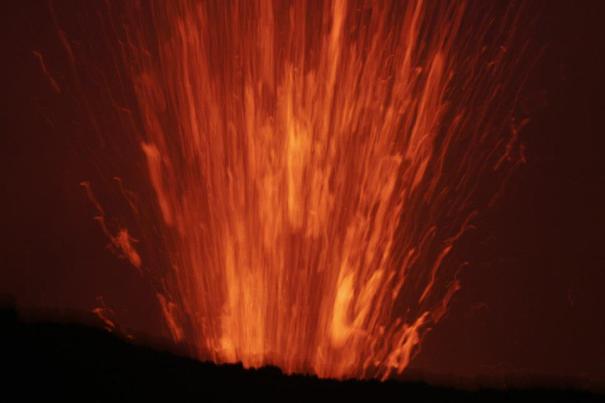
I took this photo whilst standing on the crater edge at Tanna Island in Vanuatu. From this point you can see down into the volcano crater,  a boiling cauldron of molten lava, somewhat like what our entire planet is soon to look like;
21148_10200351251116575_299026901_n
Our youth are lied to from birth. Let’s not be the last generation, at the edge of extinction, lying to the youth.

It is only a matter of time before the living will envy the dead. Let’s start the grieving process while the situation is still relatively stable.


Thursday, 9 June 2016

A record world fossil fuel consumption

Forget the propaganda hype about renewable energy.

This is the reality. They have no intention of taking the foot off the pedal.

World Sets Record For Fossil Fuel Consumption


8 June, 2016


Each year in June two very important reports are released that provide a comprehensive view of the global energymarkets. The highlight of the recently released Renewables 2016 Global Status Report was that the world’s renewable energy production has never been higher. But the biggest takeaway from this year’s BP Statistical Review, released Wednesday, may be that the world’s fossil fuel consumption has also never been higher.


While global coal consumption did decline by 1% in 2015, the world set new consumption records for petroleum and natural gas. The net impact was a total increase in the world’s fossil fuel consumption of about 0.6%. That may not seem like much, but the net increase in fossil fuel consumption — the equivalent of 127 million metric tons of petroleum — was 2.6 times the overall increase in the consumption of renewables (48 million metric tons of oil equivalent).


As a result, despite the record increase in renewable consumption, global carbon dioxide emissions once again set a new all-time record high. Carbon dioxide emissions in 2015 were 36 million metric tons higher than in 2014, and marked the 6th straight year a new record high has been set. But perhaps the silver lining is that 2015 marked the 2nd straight year that the increase was smaller than the year before. Carbon dioxide emissions in 2013 were 505 million tons higher than in 2012, but then 2014 and 2015 respectively saw increases of 224 million metric tons and 36 million metric tons.


The primary reason for the slowdown in the growth of carbon dioxide emissions was the reduction in global coal consumption, but this was offset by a nearly 2 million barrel per day (bpd) increase in global oil consumption. Notably, oil consumption in the U.S. rose for the 3rd straight year, and is now at the highest levels since 2008. U.S. crude oil consumption is now back to within 6% of the all-time high consumption level set in 2005.


Global crude oil production increased by 2.8 million bpd in 2015, led by a 1 million bpd increase in U.S. production. The bulk of the rest of the world’s oil production increase came from OPEC, which cumulatively boosted production by 1.6 million bpd over 2015. BP’s definition of crude oil “includes crude oil, shale oil, oil sands and NGLs (natural gas liquids – the liquid content of natural gas where this is recovered separately).” Per this definition, the U.S. was the world’s top crude oil producer with 12.7 million bpd of oil production in 2015 (the highest production number ever recorded for the U.S.). Saudi Arabia was in 2nd place at 12.0 million bpd.

Tuesday, 2 February 2016

Collapse in profits for BP

BP to announce 70% collapse in profits

Figures likely to be even worse after energy firm factors in writedowns and one-off charges as slump in oil price takes its toll


31 January, 2016


BP is expected to announce a near 70% collapse in underlying profits on Tuesday as low oil prices continue to take their toll.

The headline figures will be even worse once one-off charges are included.

City energy analysts predict the British oil company will report that earnings in the last quarter of 2015 fell to $730m (£514m), from $2.2bn a year earlier.

Oilslump - the true cost of falling prices

Brent crude fell the last quarter from around $77 a barrel to $44, a 43% fall, but the BP results have also been hit by other factors.

Despite the problems, analysts at Barclays Capital said BP was already doing well to cut its costs and could easily further trim them if the price of oil, currently at $34, were to remain close to $40.

BP could respond by reducing [capital expenditure] by a further 20% to $14bn, which would allow management to balance the books by 2018 with the current level of dividend maintained,” said Barclays in an investment note.

BP said it was aware of the forecasts but declined to comment further.
Meanwhile Shell, which reports its fourth-quarter results on Thursday, warned in a trading statement last week that its underlying profits could be halved.

Shell, which has just received the go-ahead from shareholders for a £35bn takeover of rival BG, is expecting to make additional write-offs of up to £5bn.
Concerns about the damage being done to Britain’s oil and gas industry has led the British prime minister, David Cameron, to pledge £250m to Aberdeen. About 70,000 jobs direct and indirect jobs have been lost around the UK due to the crude price slump.

Shell has already promised to cut 10,500 more jobs worldwide once the BG deal is consummated on 15 February. Some job cuts could come in Aberdeen.

Meanwhile, hopes were raised last week that Russia and Saudi Arabia may agreeat a meeting next month to hold back oil production in an attempt to push up energy prices.


Thursday, 1 May 2014

'Compromised oil pipeline' in Alaskan tundra

BP pipeline sprays ‘oily mist’ over 33 acres of Alaskan tundra


RT,
30 April, 2014
Alaska state officials confirmed Wednesday that an oily mist sprung from a compromised oil pipeline and sprayed into the wind without stopping for at least two hours, covering 33 acres of the frozen snow field in the oil well's vicinity.
The discovery was at the BP-owned Prudhoe oil field on Alaska’s North Slope, the northernmost region of the state where a number of profitable oil fields sit beneath the tundra. The Alaska Department of Environmental Conservation (DEC) revealed that BP officials found the mist during a routine inspection on Monday.
Initial reports said that 27 acres had been covered, although that figure was updated later on Wednesday. The cause is still under investigation, according to the Associated Press, but officials know that the mist was made up of a mixture of gas, crude oil, and water. They also reported that while the noxious mist was distributed over such a wide area by 30 mph winds, no wildlife was impacted.
BP spokeswoman Dawn Patience said the company is “still assessing repairs” and will soon know what, if any, long-term effects the spill could have.
The Prudhoe Bay region, like elsewhere in the North Slope, is home to a great number of migratory birds and caribou, as well as other animals, such as a massive porcupine herd. Clean-up efforts are expected to be complete before birds pass through the region again in the coming weeks.
The company was at fault in at least two oil spills in the same region since 2006. That year, an estimated 267,000 gallons of oil seeped through a quarter-inch sized hole in a corroded BP pipeline. That accident went unnoticed for five days, until an oil worker smelled the aroma of crude when driving through the area, according to Think Progress.
The company spent $500 million on upgrading 16 miles of pipeline that transported oil into a processing facility dubbed Gathering Center 2.
Instead of acting as a warning to the company, though, the 2006 spill only served as a preview for a 2009 spill that sent approximately 14,000 gallons from a pipeline into the tundra and wetlands of Prudhoe Bay.
The 2009 spill vividly demonstrates that BP has not adequately addressed the management and environmental compliance problems that have plagued it for many years,” US government lawyers said in a court filing that sought to levy steep fines onto BP, as quoted by Bloomberg.
This rupture was the result of a predictable and preventable freezing of produced water within the pipeline that caused the pipe to over-pressurize and burst. Eerily similar to the 2006 spill, BP ignored alarms that warned of the pipe’s eventual rupture and leak.”
Officials made the most recent finding less than a week after a report from the US National Research Council (NRC) announced that regulators are not prepared to effectively respond to an Arctic oil spill. The 198-page assessment authored by scientists at the request of the American Petroleum Institute and the Coast Guard found that while more research still needs to be done, the current situation is bleak.
The lack of infrastructure in the Arctic would be a significant liability in the event of a large oil spill,” the report stated, as quoted by the Associated Press. “It is unlikely that responders could quickly react to an oil spill unless there were improved port and air access, stronger supply chains and increased capacity to handle equipment, supplies and personnel.”
Most of the information regulators have gathered on how to respond to oil spills comes from warmer areas, such as the Gulf of Mexico – the site of another massive BP oil spill in April 2010. Yet the drilling areas far to the north remain largely isolated from the resources in the Gulf, with the Chukchi and Beaufort Seas located more than 1,000 miles from the nearest deep water port.
As such, the NRC recommended the US quickly institute “a comprehensive, collaborative, long-term Arctic oil spill research and development program.”

Wednesday, 26 March 2014

Oil leaked into Lake Michigan

Petcoke-Producing BP Refinery Leaks Oil Into Lake Michigan
A BP refinery in Whiting, Indiana leaked an unknown amount of oil into Lake Michigan Monday afternoon, an incident that occurred less than two weeks after the U.S. lifted BP’s ban on seeking new oil leases in the Gulf of Mexico.

Protesters outside the Indiana Statehouse call on Indiana regulators to require BP to cut its Whiting refinery’s mercury discharges into the lake in August 2013.

25 March, 2014


BP says the spill, which has since been stopped and contained, was caused by a “disruption in the refining process” at its Whiting refinery in northwest Indiana. Dan Goldblatt, spokesman at the Indiana Department of Environmental Management, told ThinkProgress that his office was notified at about 4:30 CDT Monday of an oil sheen, which EPA officials said on a press call Thursday totaled about 5,000 square yards, on Lake Michigan. Mike Beslow, On-Scene Coordinator for the EPA, said that when he visited the site around 9 p.m. Monday, the sheen was no longer visible. Neither Goldblatt nor EPA officials had information on how much oil had spilled, but CBS, citing unnamed sources, reports that between 10 and 12 barrels — around 500 gallons — spilled into the lake.


Lake Michigan acts as the drinking water source for 7 million people in the Chigago area alone, but EPA officials said on the call that the drinking water wouldn’t be affected by the spill. The EPA, BP and the Coast Guard are leading the cleanup effort, which involves placing booms on the water, scooping up oil, which has been turned hard and waxy by cold weather, with their hands, and cleaning up a nearby beach that was contaminated. BP told Reuters that they have had “no reports of any wildlife impacted,” and EPA officials confirmed this on the call.


The presence of a sheen on a body of water is typically viewed as a violation of the Clean Water Act, and EPA Region 5 Administrator Susan Hedman said during the call that officials would look into whether action should be taken against BP.


I can assure you that EPA’s lawyers will be looking at this matter and determining whether or not enforcement action will be appropriate,” she said.
The Whiting refinery, which was recently upgraded to process oil from the Canadian tar sands, has drawn the ire of environmentalists in the past, due to its pollution of Lake Michigan. Last September, Indiana regulators ruled that BP must cut the amount of mercury pollution it releases annually into Lake Michigan from the refinery from 23.1 parts per trillion of to 8.75 parts per trillion. The new rule marks a “modest but significant” change, according to the NRDC, but is still above the federal mercury limit of 1.3 parts per trillion.


The Whiting refinery was also at the center of a November lawsuit by Chicago residents, who sued BP, Koch Industries, and other companies over the storage of vast piles of petroleum coke, a byproduct left over from the refining of tar sands oil. The Whiting refinery currently produces about 600,000 tons per year of petcoke, but the recent $3.8 billion expansion has the potential to up its petcoke production to 2.2 million tons per year.


Spokespersons at BP did not immediately respond to ThinkProgress’ request for comment. The spill comes on the heels of a barge collision that spilled up to 170,000 gallons of oil into into Galveston Bay Saturday, and just over a week after a spill of 20,000 gallons of oil was reported in an Ohio nature reserve.

Monday, 17 March 2014

BP back in the Gulf


Four Years After Deepwater Horizon Disaster, U.S. Agrees To Let BP Oil Rigs Back Into The Gulf


15 March, 2014


Get ready, Gulf: BP is back.

The U.S. government on Thursday announced that it will lift the ban that prevented BP from seeking new oil leases in the Gulf of Mexico, ending a lawsuit filed by the British oil company that said it was being unfairly punished for its disastrous 2010 Deepwater Horizon oil spill. The announcement comes nearly four years after the Deepwater explosion, which killed 11 crewmen and resulted in the largest offshore oil spill in U.S. history.

This is a fair agreement that requires BP to improve its practices in order to meet the terms we’ve outlined together,” Craig Hooks, assistant administrator for EPA’s Office of Administration and Resources Management, said in a statement. “Many months of discussions and assessments have led up to this point, and I’m confident we’ve secured strong provisions to protect the integrity of federal procurement programs.”

Following the Deepwater spill, BP wasn’t always banned from seeking federal oil leases in the Gulf. For more than two and a half years after the disaster, the U.S. government continued to purchase fuel under contracts with BP. The last lease sale BP participated in was in June 2012, when they acquired deepwater leases. The U.S. government only announced that it would ban BP and its 21 related entities from seeking government contracts in November of 2012 and January of 2013.

BP filed its lawsuit against the U.S. government in August 2013, claiming the ban was unfair and didn’t take into account the company’s “strong safety record,” the lawsuit reads. The lawsuit sought to make the ban “null, void, and unenforceable,” and asked the court to prevent the EPA from enforcing it.

The agreement announced by EPA to let BP back into the Gulf will end that lawsuit, and will also establish a so-called “administrative agreement” designed to keep BP in check. Under the agreement, BP will be required to retain an EPA-approved independent auditor to conduct annual reviews and report on BP’s compliance. The agreement, EPA said, will include requirements on ethics, corporate governance, and safety procedures. There will be “zero tolerance” for retaliation against employees or contractors who raise safety concerns, the EPA said.

Just because BP wasn’t allowed to bid for new oil leases in the Gulf for the last few years, however, doesn’t mean that the company wasn’t drilling in the Gulf. BP had existing leases it was allowed to operate — more oil leases in the Gulf than any other driller, in fact. It also holds leases in the Gulf from non-U.S. contractors. In November, for example, the company added two new drilling rigs to its offshore Gulf of Mexico operations, under a long-term contract to BP from Seadrill Ltd, an international offshore drilling contractor.

That November announcement brought the company’s total number of Gulf rigs to nine. Now, with the ban on federal drilling leases lifted, the sky’s the limit.

Friday, 22 November 2013

Deepwater Horizon

BP Pays PR Trolls to Threaten Online Critics | Interview with Dahr Jamail


Abby Martin speaks with investigative journalist Dahr Jamail, who has uncovered BP's online scheme to silence critics of their Gulf of Mexico clean-up, with methods such as bribery and death threats


Monday, 21 October 2013

Gulf of Mexico ecology


Gulf ecosystem in crisis after BP spill
Three years after well blowout, declining seafood catches and deformities point to an environment in distress.

Dahr Jamail


20 October, 2013


New Orleans, US - Hundreds of kilograms of oily debris on beaches, declining seafood catches, and other troubling signs point towards an ecosystem in crisis in the wake of BP's 2010 oil disaster in the Gulf of Mexico.
"It's disturbing what we're seeing," Louisiana Oyster Task Force member Brad Robin told Al Jazeera. "We don't have any more baby crabs, which is a bad sign. We're seeing things we've never seen before."
Robin, a commercial oyster fisherman who is also a member of the Louisiana Government Advisory Board, said that of the sea ground where he has harvested oysters in the past, only 30 percent of it is productive now.
"We're seeing crabs with holes in their shells, other seafood deformities. The state of Louisiana oyster season opened on October 15, and we can't find any production out there yet. There is no life out there."
According to Robin, entire sectors of the Louisiana oyster harvest areas are "dead or mostly dead". "I got 10 boats in my fleet and only two of them are operating, because I don't have the production to run the rest. We're nowhere near back to whole, and I can't tell you when or if it'll come back."
State of Louisiana statistics confirm that overall seafood catch numbers since the spill have declined.
'Everything is down'
Robin is not the only member of the Gulf's seafood industry to report bleak news. Kathy Birren and her husband own Hernando Beach Seafood, a wholesale seafood business, in Florida.

Shrimp with tumours continue to be found along the impact zone, from Louisiana to Florida [Dean Blanchard]
"I've seen a lot of change since the spill," Birren told Al Jazeera. "Our stone crab harvest has dropped off and not come back; the numbers are way lower. Typically you'll see some good crabbing somewhere along the west coast of Florida, but this last year we've had problems everywhere."
Birren said the problems are not just with the crabs. "We've also had our grouper fishing down since the spill," she added. "We've seen fish with tar balls in their stomachs from as far down as the Florida Keys. We had a grouper with tar balls in its stomach last month. Overall, everything is down."
According to Birren, many fishermen in her area are giving up. "People are dropping out of the fishing business, and selling out cheap because they have to. I'm in west-central Florida, but fishermen all the way down to Key West are struggling to make it. I look at my son's future, as he's just getting into the business, and we're worried."
Dean Blanchard, owner of a seafood business in Grand Isle, Louisiana, is also deeply troubled by what he is seeing. "We have big tar mats coming up on Elmers Island, Fouchon, Grand Isle, and Grand Terre," Blanchard told Al Jazeera. "Every time we have bad weather we get fresh tar balls and mats."
Blanchard said his business generates only about 15 percent of what it did before the spill. "It looks like it's getting worse," he said. "I told my wife when she goes to the mall she can only spend 15 percent what she used to spend."
Blanchard has also seen shrimp brought in with deformities, and has taken photographs of shrimp with tumours (see above). Others lack eyes. He attributes the deformities to BP's use of toxic dispersants to sink the spilled oil. 

Eyeless shrimp, along with other seafood abnormalities, have become common in many areas along the Gulf Coast [Erika Blumenfeld/Al Jazeera]


"Everybody living down here watched them spray their dispersants day in and day out. They sprayed our bays and our beaches," he said. "We got a problem, because BP says they didn't spray down here, but we had a priest that even saw them spraying. So either we got a lying priest, or BP is lying."
BP and the Coast Guard have told the media they have never sprayed dispersants within 10 miles of the coast, and that dispersants have never been used in bays.
A decades-long recovery
On a more sombre note, Dr Ed Cake, a biological oceanographer and a marine biologist, believes it will likely take the Gulf decades to recover from the BP disaster.
"The impacts of the Ixtoc 1 blowout in the Bay of Campeche in 1979 are still being felt," said Cake, referring to a large oil spill near the Mexican coast, "and there are bays there where the oysters have still not returned. My prediction is we will be dealing with the impacts of this spill for several decades to come and it will outlive me."
According to Cake, blue crab and shrimp catches have fallen in Mississippi and Alabama since the spill, and he also expressed worries about ongoing dolphin die-offs. But his primary concern is the slow recovery of the region's oyster population.
"Mississippi recently opened their season, and their oyster fisherman are restricted to 12 sacks of oysters a day. But they can't even reach six," Cake said. "Thirty sacks would be a normal day for oysters - that was the previous limit - but that is restricted now because the stocks just aren't there."
Cake's conclusion is grim. "Here in the estuarine areas, where we have the oysters, I think it'll be a decade or two before we see any recovery."
BP previously provided Al Jazeera with a statement on this topic, a portion of which read: "Seafood from the Gulf of Mexico is among the most tested in the world, and, according to the FDA and NOAA, it is as safe now as it was before the accident."
BP claims that fish lesions are naturally common, and that before the spill there was documented evidence of lesions in the Gulf of Mexico caused by parasites and other agents.
More oil found
The second phase of the ongoing federal trial against BP investigates whether the company's actions to halt the flow of oil during the blowout were adequate, and aims to determine how much oil was released.
"BP is mounting an aggressive legal and public relations campaign to shield itself from liability and minimise the amount of oil spilled in the Gulf, as well as the ongoing impacts from the disaster," said Jonathan Henderson, an organiser for the Gulf Restoration Network, an environmental group.
Even Louisiana's Republican Governor Bobby Jindal agrees. Jindal recently said, "Three and a half years later, BP is spending more money - I want you to hear this - they are spending more money on television commercials than they have on actually restoring the natural resources they impacted."
As far away from the blowout site as Florida, researchers continue to find oil in both Tampa Bay and Sarasota Bay.
In Louisiana, according to the LA Coastal Protection and Restoration Authority (CPRA), more than 200 miles of shoreline have "some degree of oiling", including 14 miles that are moderately or heavily oiled. From March through August of this year, over three million pounds of oiled material have been collected in Louisiana, more than double the amount over the same time period last year. 
In addition, the CPRA reports that "investigations into the chemical composition of MC252 [BP's Macondo well] oil samples demonstrate that submerged oil is NOT substantially weathered or depleted of most PAH's [polycyclic aromatic hydrocarbons]," and "disputes…findings relied on by the USCG [US Coast Guard] that Deepwater Horizon oil is non-toxic".
The agency also expresses concerns that "submerged oil may continue to pose long term risk to nearshore ecosystems".
"New impacts to the Gulf's ecosystem and creatures also continue to emerge," Henderson told Al Jazeera. "This year alone, the National Marine Fisheries Service has recorded 212 dolphins and other marine mammal standings in the northern Gulf. A new scientific study conducted by NOAA, BP and university researchers also shows significant negative impacts on tiny organisms that live on the sea floor in a 57 square mile area around the Deepwater Horizon well site."
Numerous other impacts have been documented since the disaster began, including genetic disruptions forGulf killifish, harm to deepwater corals,and the die-off of tiny foraminifera that are an important part of the Gulf's food chain.
Ongoing studies continue to reveal toxins from BP's spill in water, soil, and seafood samples.
Meanwhile, fishermen in BP's impact zone wonder if things will ever return to normal. "Our future is very, very dim, and there are no sponge crabs out there, which is the future," Robin concluded. "I've never seen this in my lifespan. I'm not seeing a future, because everything out there is dead."