Showing posts with label pipeline. Show all posts

Thursday, 20 June 2019

Justin Trudeau is a snake oil salesman


Climate emergency’ on Monday, pipeline expansion on Tuesday: Trudeau the fraud strikes again
Justin Trudeau’s faux concern for the environment was always hypocritical and duplicitous — but there’s something especially slimy about declaring a climate emergency on Monday and approving an oil pipeline expansion on Tuesday.
Ć¢€˜Climate emergencyĆ¢€™ on Monday, pipeline expansion on Tuesday: Trudeau the fraud strikes again
RT,

19 June, 2019

Canada’s parliament voted on Monday night to declare a national climate emergency, calling climate change a “real and urgent crisis, driven by human activity.” The next day, Trudeau’s government green-lighted the environment-destroying Trans Mountain pipeline expansion (TMX), demonstrating either complete indifference to the motion put forward by his own environment minister — or a severe misunderstanding of the words “emergency” and “human activity.”

The so-called “climate emergency” motion was non-binding and meaningless, of course; politicians often expect to be patted on the back for gesture politics — as though merely acknowledging the existence of a problem while taking minimal action to affect any real change is somehow worthy of admiration.

This is the second time Trudeau’s Liberal government has approved the pipeline. Its previous approval was quashed by a court last year for failure to consider the environmental impact of tanker traffic and implications for First Nations people living in its path. The pipeline would triple the amount of oil shipped from the Alberta tar sands to the British Columbia coast. 

Environmental groups have warned of potential oil spills, increased greenhouse gas emissions, strain on already-struggling marine life and irreversible damage to indigenous land and water resources.

But it’s not just environmental activists warning of severe environmental repercussions. Canada’s own National Energy Board (NEB) found that the expansion would have “significant adverse environmental effects” for orca whales and said the effects of any oil spills would also be “significant.”

Despite the ill-effects, the NEB decided the expansion “can be justified” and is in the “public interest.” They did acknowledge that the undeniable environmental effects “weighed heavily” on them in the decision-making process. Indeed, it sounds like they were really losing sleep over it. What part of destroying the environment and biodiversity for future generations is in the “public interest” remains a mystery.

Trudeau’s government bought the pipeline from Kinder Morgan Canada Ltd for $3.4 billion last year and plans to sell it after completion. Trudeau has tried to justify the project by warning that Canadians are currently “prisoners to the American market” and pledging to put all tax profits from the project toward clean energy projects.

That’s like “declaring war on cancer and then announcing a campaign to promote smoking,”— according to Patrick McCully, energy program director at the Rainforest Action Network.

In another example of his pathetic gesture politics, Trudeau promised last week to ban single-use plastics “from coast to coast” from 2021 — more meaningless tokenism from Canada’s fraud-in-chief, who wants plastic out of the oceans, but isn’t too concerned about killing off the marine life that lives in them.

Trudeau swept to a landslide victory in 2015 with some clever progressive branding, but he has since lost his appeal to many genuinely progressive voters. It turns out that running around talking about “peoplekind” and giving motivational speeches at climate conferences isn’t actually enough to cut it with voters who genuinely care about the issues Trudeau only pretends to care about. The “man of substance,” as a writer for Canadian magazine Maclean’s put it in 2015, was just another snake oil salesman.

Environmental policy was one of the cornerstones of Trudeau’s last election campaign. Remember when he pledged to phase out federal fossil fuel subsidies? A report in 2018 named Canada as the largest provider of government subsidies for oil and gas production in the G7.

This is what happens when people fall for the “environmentalism” of supremely arrogant neocons like Trudeau and France’s equally stomach-churning Emmanuel Macron — two men who were hailed by liberal Western media as liberal saviors and anti-Trumps. In the US, Joe Biden with his “middle ground” approach to climate change falls into the same category, having all the hallmarks of the fake progressive more interested in hoovering up centrist votes than taking firm and principled positions on anything. As another Canadian election rolls around, Trudeau has promised to practice “positive politics” — whatever that means.

Fortunately, Trudeau’s approval of the pipeline project does not mean the expansion is a done deal — yet. There are still regulatory hoops for it to jump through and environmentalists and First Nations groups are gearing up for a fight, planning to mount new legal challenges and blockade its construction anywhere they can, the goal being to delay the project so much that it becomes too much of a financial burden to justify continuation.

Justin Trudeau does not care about climate change or the environment. He does not care about plastic in the oceans, marine life or protecting biodiversity. He cares about protecting an image of himself as an environmental champion — but that ship has well and truly sailed. You can't be an environmentalist and advocate for the building of oil pipelines that wreck the environment. The two do not compute.

Just like his slippery progressivism on a whole host of other issues, Trudeau’s flimsy environmentalism reveals him to be nothing more than a two-faced prevaricator accomplished in the art of doublespeak.

Danielle Ryan RT
Danielle Ryan is an Irish freelance writer based in Dublin. Her work​ ​has appeared in Salon, The Nation, Rethinking Russia, teleSUR, RBTH, The Calvert Journal​ ​and others. Follow her on Twitter @DanielleRy


Thursday, 6 November 2014

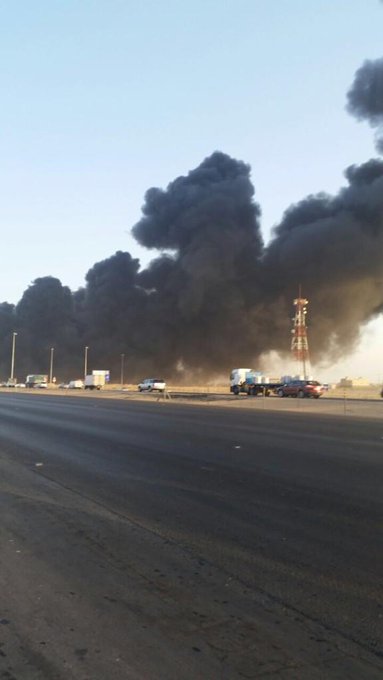
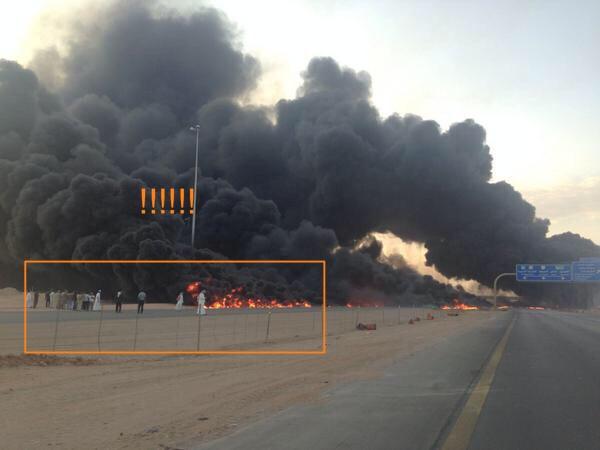
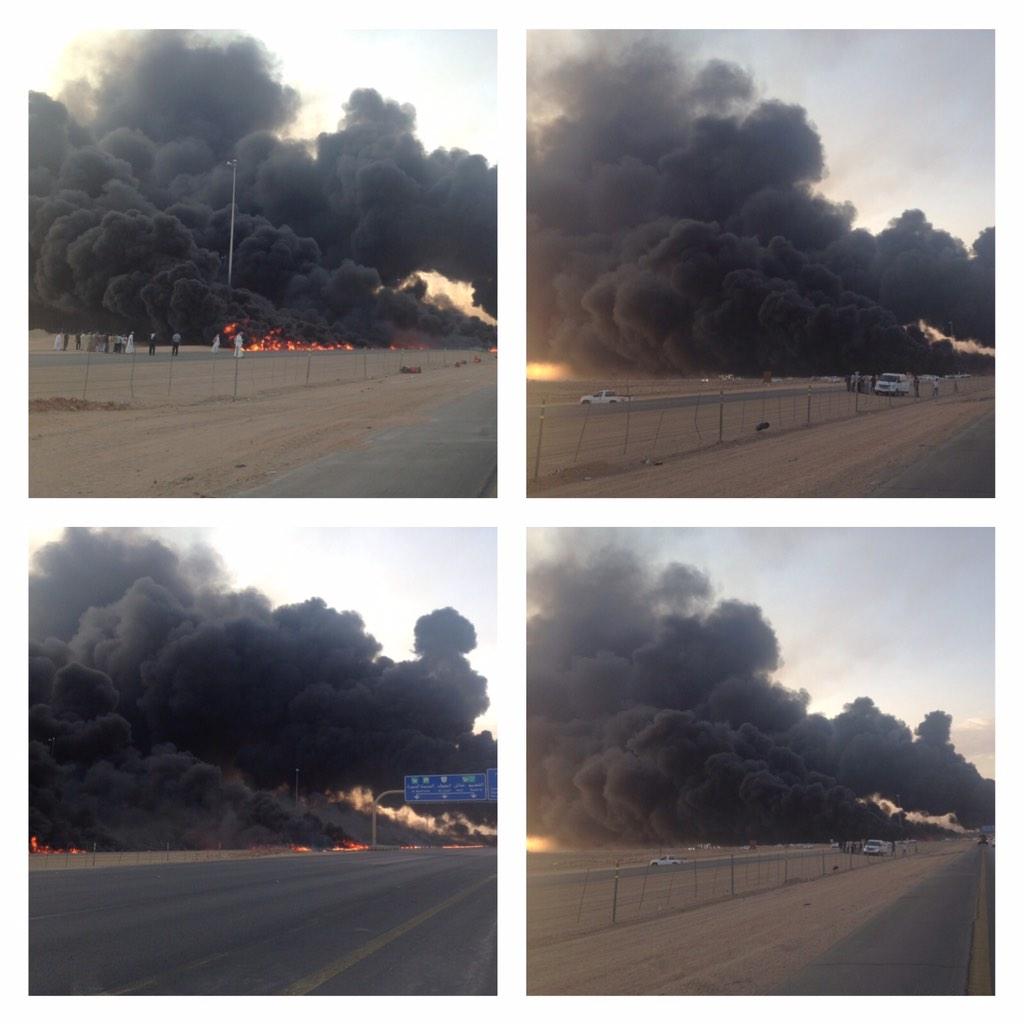
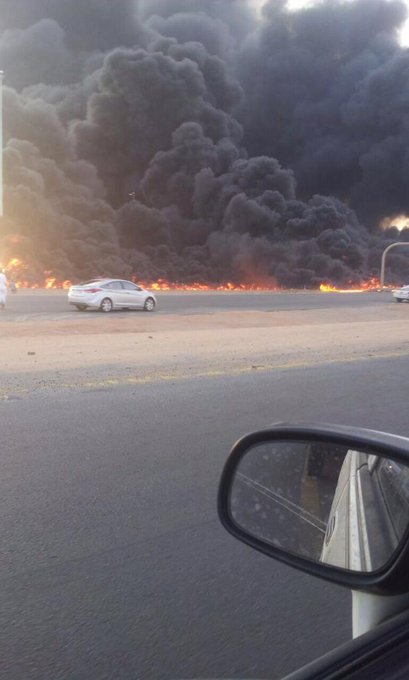
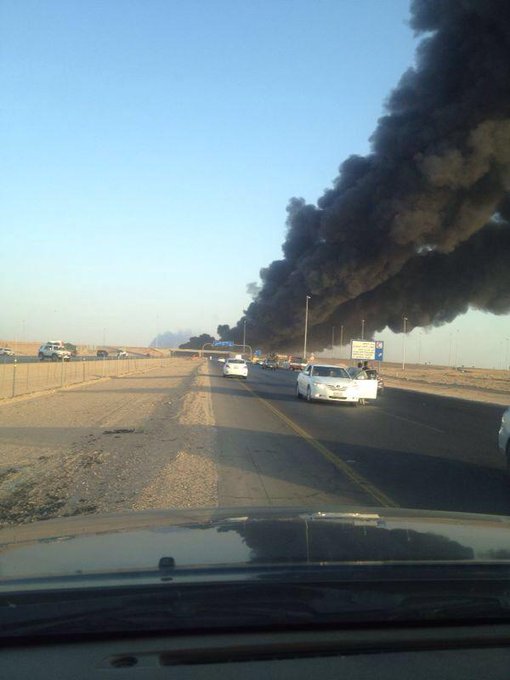
Concern about Saudi oil pipeline explosion

Largely unreported by western media


Saudi Stocks, Currency Tumble As Aramco Pipeline Explodes; ISIS Sabotage Concerns


UPDATE: Nothing to see here, move along...

  • ARABIAN SECURITY SOURCE SAYS FIRE OCCURRED IN AN OIL PIPELINE, NOT TERRORIST ATTACK.
  • FIRE BROKE OUT DURING REPAIERS, NOW UNDER CONTROL
*  *  *
It appears Saudi markets are back in play. As Bloomberg's Richard Breslow noted this morning,Riyal forwards have jerked notably higher (implying weakness expected) and the Tadawul All Share Index has dropped 7% in the last 2 days after the killing of Shi'ites by unknown parties and now news that a pipeline has exploded. 

As Breslow warns, "if that indeed signifies the spread of Islamic State into Saudi Arabia, it would be the first time they crossed Saudi borders. That would be a big deal and a major escalation of problems over in that part of the world, far beyond what it would do to capital markets."


Yesterday there were attacks on Shi'ites (as Reuters reported)


Saudi security forces on Tuesday shot dead a member of an armed group that killed five people in an overnight attack on Shi'ite Muslims marking an important religious anniversary, al-Arabiya television reported.
 
The late Monday assault on a Shi'ite gathering in al-Ahsa district is likely to test already strained relations between Sunnis and Shi'ites across the Middle East because it coincided with the annual Ashoura commemoration of Shi'ite Islam.
 
The Dubai-based al-Arabiya said security forces who had been hunting suspects in the al-Ahsa attack clashed with and killed "a wanted man" at a rest area in the al-Qassim province, north-west of the capital Riyadh.

... and today, what is allegedly an Aramco pipeline, just exploded near the town of Sudair, south of Riyadh.


The Region:
*  *  *
Has sent stocks and the currency reeling.
And sparked a $2 surge in WTI crude

View image on TwitterView image on Twitter
Ų§Ł„Ł…ŲŖŲ¬Ł…Ł‡Ų±ŁˆŁ† ممن ŁŠŲ¹Ų“Ł‚ŁˆŁ† Ų§Ł„ŁˆŁ‚ŁˆŁ على Ų§Ų±Ų¶ الحدث ŁˆŲµŁ„Łˆ بكثافة قبل الجهات Ų§Ł„Ų§Ł…Ł†ŁŠŲ© ŁˆŲ§Ł„Ų§Ų³Ų¹Ų§ŁŁŠŲ©
*  *  *

It would appear the Saudis might need US 'protection' after all.. how convenient as they continue their attacks on the US Shale industry.

As OilPro adds, two other discussions are going around trading desks:
  • This is a way to get oil prices to go back up without the Saudis appearing to give in and defend price by voluntarily cutting supply. A pipeline explosion will automatically decrease production.

  • The US Elections are over, time for prices at the pump to go back up now. This plays on the long-tenured theory that gasoline prices tend to be lowest right before elections as the incumbent party leverages their power to please the masses.


Friday, 27 June 2014

Oil pipeline explosion

This been a mystery. It turns out to have been an oil pipeline explosion near Tikrit in mid-April.

Aftermath of Oil Pipeline Explosion in Degla River

An known group of people blew up oil pipeline near Takreet in Iraq which caused oil leakage into Degla river and massive pollution


April 17, 2014

Militants on Thursday blew up two oil and gas pipelines in Iraq's northern Saladin province, a security official said.

"Militants detonated an explosive device near an oil pipeline and another near a gas pipeline in the town of Biji," Saladin Police Captain Omar al-Juburi told Anadolu Agency.

The explosions left thick black smoke in the air and oil spilling into the Tigris River, al-Juburi added, which prompted the local water authorities to cut off water supplies to the area's purification plants.

A water station was also completely burned down after local residents set fire to oil patches in the river, according to eyewitnesses.

"Water stations in [provincial capital] Tikrit and in the northern districts, along with southern-bound water pumps, might also be shut down within hours," said one Saladin water official.

Recent months have seen an uptick in violence across Iraq.

Tikrit in particular has seen recurrent bombings and attacks on security personnel and government buildings in recent months.

Observers warn that the recent surge in violence in Tikrit could impact April 30 parliamentary polls in the city.

Recent months have seen political upheaval across Iraq in general.


Meanwhile, the search revealed this from today - in India

15 killed in blast at GAIL pipeline in Andhra Pradesh

At least 15 people have been killed and 10 severely burnt in Andhra Pradesh after an explosion at a gas pipeline belonging to the state-owned Gas Authority of India Limited caused a massive fire.


Thursday, 1 May 2014

'Compromised oil pipeline' in Alaskan tundra

BP pipeline sprays ‘oily mist’ over 33 acres of Alaskan tundra


RT,
30 April, 2014
Alaska state officials confirmed Wednesday that an oily mist sprung from a compromised oil pipeline and sprayed into the wind without stopping for at least two hours, covering 33 acres of the frozen snow field in the oil well's vicinity.
The discovery was at the BP-owned Prudhoe oil field on Alaska’s North Slope, the northernmost region of the state where a number of profitable oil fields sit beneath the tundra. The Alaska Department of Environmental Conservation (DEC) revealed that BP officials found the mist during a routine inspection on Monday.
Initial reports said that 27 acres had been covered, although that figure was updated later on Wednesday. The cause is still under investigation, according to the Associated Press, but officials know that the mist was made up of a mixture of gas, crude oil, and water. They also reported that while the noxious mist was distributed over such a wide area by 30 mph winds, no wildlife was impacted.
BP spokeswoman Dawn Patience said the company is “still assessing repairs” and will soon know what, if any, long-term effects the spill could have.
The Prudhoe Bay region, like elsewhere in the North Slope, is home to a great number of migratory birds and caribou, as well as other animals, such as a massive porcupine herd. Clean-up efforts are expected to be complete before birds pass through the region again in the coming weeks.
The company was at fault in at least two oil spills in the same region since 2006. That year, an estimated 267,000 gallons of oil seeped through a quarter-inch sized hole in a corroded BP pipeline. That accident went unnoticed for five days, until an oil worker smelled the aroma of crude when driving through the area, according to Think Progress.
The company spent $500 million on upgrading 16 miles of pipeline that transported oil into a processing facility dubbed Gathering Center 2.
Instead of acting as a warning to the company, though, the 2006 spill only served as a preview for a 2009 spill that sent approximately 14,000 gallons from a pipeline into the tundra and wetlands of Prudhoe Bay.
The 2009 spill vividly demonstrates that BP has not adequately addressed the management and environmental compliance problems that have plagued it for many years,” US government lawyers said in a court filing that sought to levy steep fines onto BP, as quoted by Bloomberg.
This rupture was the result of a predictable and preventable freezing of produced water within the pipeline that caused the pipe to over-pressurize and burst. Eerily similar to the 2006 spill, BP ignored alarms that warned of the pipe’s eventual rupture and leak.”
Officials made the most recent finding less than a week after a report from the US National Research Council (NRC) announced that regulators are not prepared to effectively respond to an Arctic oil spill. The 198-page assessment authored by scientists at the request of the American Petroleum Institute and the Coast Guard found that while more research still needs to be done, the current situation is bleak.
The lack of infrastructure in the Arctic would be a significant liability in the event of a large oil spill,” the report stated, as quoted by the Associated Press. “It is unlikely that responders could quickly react to an oil spill unless there were improved port and air access, stronger supply chains and increased capacity to handle equipment, supplies and personnel.”
Most of the information regulators have gathered on how to respond to oil spills comes from warmer areas, such as the Gulf of Mexico – the site of another massive BP oil spill in April 2010. Yet the drilling areas far to the north remain largely isolated from the resources in the Gulf, with the Chukchi and Beaufort Seas located more than 1,000 miles from the nearest deep water port.
As such, the NRC recommended the US quickly institute “a comprehensive, collaborative, long-term Arctic oil spill research and development program.”

Thursday, 20 February 2014

“This pipeline will not be built,”

WILL THE NORTHERN GATEWAY PIPELINE PUSH THROUGH UNSURRENDERED FIRST NATIONS LAND IN BC?


VICE,
23 January, 2014


A few weeks ago the National Energy Board of Canada conditionally approved Enbridge’s plan to build twin pipelines called the Northern Gateway in northern Alberta and British Columbia. It was a grotesquely unpopular decision, with environmental concerns so ubiquitous among residents of BC that even pro-tar sands political parties are against it. The pipelines would carry diluent chemicals and bitumen between coastal tankers and Alberta’s tar sands, increasing export opportunities while introducing the risk of a spill to the coast, the Rocky Mountains, the Great Bear rainforest, and some of the leastcontaminated fresh-water rivers in the world. But the plan’s final approval, seemingly inevitable under Canada’s oil-drunk federal government, could result in unprecedented conflict: A broad coalition of politicians, citizens, environmental groups and indigenous nations are prepared to block the project with their bodies as it inches towards the coast.


At the Unist’ot’en encampment in Wet’suwet’en territory, people are already living in cabins that were built to blockade the Northern Gateway. Along with most other indigenous nations in BC, who have never given up their lands to the Canadian state, those at Unist’ot’en camp believe that this project escalates a conflict that is centuries old—they equate the Northern Gateway with a violation of their sovereignty and the extension of colonial law into their unsurrendered territories.

It’s appropriate then that Northern Gateway’s most enthusiastic cheerleader, Prime Minister Stephen Harper, told the G20 in 2009 that Canada “has no history of colonialism.” In thishistoricidal remark, Harper denied the often horrific strategies used by settlers and corporations to force indigenous people from their lands over hundreds of years, policies which are the veryfoundation of our country. But these acts of violence and dispossession, which Harper seeks to erase from history, will only intensify if Enbridge’s Northern Gateway is approved. This is because Enbridge plans to build the Northern Gateway predominantly across unsurrendered indigenous lands.

There are creative, subtle, and sometimes not-so-subtle ways that the practices of colonialism are still carried out. And this is absolutely one of them,” Jess Housty argued. She is an elected councillor of Heiltsuk Nation in BC who gained support through her anti-Enbridge activism. Speaking on behalf of her nation, Housty told me that the Northern Gateway is “an issue of sovereignty. It’s the point where we’re saying enough is enough, too much has been taken away. This is our place, this is our territory, these are our resources. We have a responsibility to steward them and we’re saying no. It’s about asserting our right to govern ourselves and to act as a sovereign nation.” Fighting the Northern Gateway is a matter of getting “the authority of tribal law recognized” and seeing “how it can be enforced and honoured and respected as a law of the land and a law of this place that has never been ceded by its original owners,” Housty said.

This sovereignty that many indigenous nations claim along the pipeline route is established in BC’s history of land disputes, which is unique among the Canadian provinces in that it is largely unresolved. Hayden King, director of Ryerson University’s Centre for Indigenous Governance, explained: “In the history of the BC treaty process very few agreements have been made. The vast majority of territory in British Columbia is unceded, unsurrendered indigenous territory.” But according to King, there are “two competing and contrasting perspectives on what unceded land, unceded territory means when it comes to consultation, development, rights, and so on.”

At one pole are the original inhabitants of these territories who have never signed away their lands and believe that they have the right to self-govern. This perspective is promoted by broad alliances of indigenous nations in BC, such as the Yinka-Dene alliance of 130 nations who have banned the transportation of oil through their territories and waterways under tribal law. Speaking on behalf of the alliance, Chief Martin Louie of Nadleh Whut’en First Nation was confident that this indigenous law is enforceable, particularly because most people in BC are also opposed to Enbridge’s project. He explained that there are “a lot of people that stand to help us fight this fight, whether it’s going to be in court or on the land… All these years I grew up with people calling British Columbia beautiful. It’s not going to be that way with all these projects going through it, and a lot of people are behind us on this.”


Unist’ot’en spokesperson Freda Huson explained that in Wet’suwet’en territory the traditional, consensus-based system of governance is “still alive and well here, even though a lot of other First Nations have lost their system.” Under this system they have banned all pipelines and established a rule that those looking to pass through the territory must answer a series of questions: “Who are you? Where are you from? How long do you plan to stay if we let you in? Do you work for the industry or government that’s destroying our lands? How will your visit benefit my people?” The last question, Huson said, is the one that “industry has trouble answering.”

We’ve written them several letters saying no to this project. Nothing they say or do will change our mind. Because the environmental concerns come before any money, and we’re not holding out just so we can get money from them. We don’t want their money. We want to keep our land for future generations,” Huson said.

But despite all this, Huson’s clan has repeatedly found that corporate surveyors are sneaking onto their land. In November of 2012 they issued a feather to a group of pipeline surveyors, which is “the last warning in our tradition that you’re trespassing when you haven’t even spoke to us and asked permission to be there. None of these companies have ever approached us.” Underhistorical Wet’suwet’en law, ignoring this warning and continuing to trespass is punishable by death.

Does Canadian law respect that perspective? Not really,” Hayden King said.

Proponents of this pipeline, like Enbridge and the Canadian state, hold a radically different understanding of what it means for indigenous land to be unceded. Under Canadian law, King explained, these parties “have a duty to consult and accommodate” indigenous peoples when proposing new projects. However “Canadian law is still very fuzzy about what consultation entails” and this could involve anything from writing a letter to actually giving indigenous groups veto power over proposals. But ultimately, King explained, consultation “doesn’t mean that native people can say no to development if they oppose it… Canada assumes that it has ultimate jurisdiction over this territory.”
Sentries guard Unist'ot'en land from trespassers.
We’re always going to have this disparity between the jurisdiction indigenous peoples believe they have when it comes to unsurrendered land and the jurisdiction that Canada believes it has over those unsurrendered lands… they’re just two separate ways of looking at the world. They’re incompatible,” King said.

But the incompatibility of these worldviews makes conflict inevitable. “We’ve seen over and over again how government, military, and police bulldoze indigenous people that are basically just trying to protect our lands,” Freda Huson said. “It’s actually them that instigate everything they try to turn it around via media… You’ve seen what happened across New Brunswick. It was a peaceful protest and they were macing the women and children.”

I asked Jess Housty of Heiltsuk Nation if she fears that the government will turn to violence to build the Northern Gateway when people along its route refuse to be moved. “I do not fear it but I anticipate it,” she said. But Housty would prefer a peaceful solution. “I have a firm belief that we need to resolve this by peaceful, logical means in any way we can. I believe that because that is what my elders have told me and that is what is consistent with my teachings as a Heiltsuk person. Having said that, if this continues to be escalated by the federal government, by the National Energy Board, by Enbridge and the proponents, there’s nothing that I won’t do to stop this pipeline and I know I won’t be alone in that. I say that with the spirit of my community behind me,” she explained.

At Unist’ot’en camp, where a much more militant strategy of land defence is already in place, Freda Huson believes the RCMP’s use of force is inevitable. “I believe they’ve been preparing for it because they opened a base for training in Prince George and they upped their training and security with the RCMP,” she said. Nonetheless, Huson remains confident that the pipeline will never be built. “If any of government or industry is listening, you don’t know what you’re up against.” Accordingly, the camp is currently investing in security equipment after several arsons occurred and a homemade bomb was set off in territory. The perpetuators of these acts are unknown, but Huson speculates that they could potentially be part of an RCMP dirty trickscampaign or that these acts may have been undertaken by corporate goons.

Enbridge’s spokesperson, Graham White, declined to comment on whether or not the company had consulted with the many indigenous communities that will be impacted by their project, or what they will do if communities along the route do not consent to its construction. “I really don’t see the point in me taking the time to provide any further comments,” he told me in an email. Mr. White might have been annoyed that I caught him in a lie the last time we spoke.

But in the case of the Northern Gateway, this process of consultation was undertaken by the National Energy Board’s Joint Review Panel. It was a process that may have fulfilled the government’s duty to consult, even though many nations refused to participate on the basis that they had no input into designing the process itself. “It’s a process that was not of our making as a community. It’s of course a process being imposed on us,” Jess Housty explained.

There was also a pervasive sense that the panel’s outcome was pre-determined and the hearings were just a public spectacle. “It’s not a meaningful consultation process if ‘no’ is not an acceptable end result. There was no way that this process was going to end in the Joint Review Panel recommending that cabinet reject this project and then cabinet rejects this project,” Housty said. This sentiment seems to be confirmed in the NEB’s final conclusion – after hearing 1,159 testimonies against the project and only two for it, from indigenous and non-indigenous groups alike, the NEB’s three person panel determined that “Canada and Canadians would be better off with the Enbridge Northern Gateway project than without it.”

But despite these criticisms, Housty’s nation decided that they would participate in this process and voice their concerns. For the arrival of the National Energy Board, Heiltsuk studentsorganized a peaceful protest at the airport that included children, elders, and hereditary chiefs in traditional regalia. When the NEB panel arrived, Housty recalls, they “walked off the plane, bee lined to a waiting taxi, took a water taxi across to the next island where they were staying at a resort, and then issued a letter saying that they were cancelling our hearings because they felt that their security was being threatened. It took a day and a half of negotiations to get the hearings back on track and that was time that was never adequately made up.”

When the hearings finally went forward, many speakers were unable to deliver their prepared testimonies due to time constraints. Those elders who spoke, according to Housty, “were antagonized by the panel. We had elders who walked off the stand in protest because they refused to suffer being disrespected that way by people who had come into our territory and who were supposed to be unbiased.” She recalls “the atmosphere in the room… was of three very distracted people who were doing a duty but doing it in a very perfunctory way.” Ultimately, she feels that her community was denied “their right to express themselves. And that’s a lot of hurt and anger and disrespect that’s still stirring in this community.”

Yet, with so much anger growing throughout Canada’s northwest, the NEB’s decision can in no way be final.

This pipeline will not be built,” Housty asserted. “I very firmly believe that the proponents of this pipeline underestimate the opposition to it. This is not just a First Nations issue; it’s not just an environmental issue. There is a huge and diverse constituency around this work, this advocacy work, this activism. The networks that have been built, the communities that have been built, are incredible and powerful and strong. These are people that are unlikely and often unlooked for allies that have never banded together as strongly as I’ve seen them band together here. It’s an incredible thing to watch.”