Showing posts with label Nicholas Humphrey. Show all posts

Tuesday, 30 June 2020

Nicholas Humphrey DENIES there is constant tracking of methane on the ESAS.

Where does this guy get off?


"Hard to know because there isn't constant tracking of it"

This makes my blood boil. It does not matter what they've said before that is good. The moment they lie or give out disinformation that's it for me.

Where does this guy get off?!  Is he such as "expert" that he has to talk down to the hoy-polloy and say the first thing that comes into his head because it suits him.

Nicholas Humphrey knows perfectly the research that is being done by Natalia Shakhova, Igor Semiletov and their team on the ground; he knows about CAMS and NOAA data; he knows that Margo is monitoring the methane every day of her life.

What he means is HE is not tracking it constantly.

But citizen scientists presumably don't know what they are doing, so should be ignored.

But it is our citizen scientists that are accurately pinpointing what is happening and if there is a  blue ocean event  it will be them that will bring you the news first.

Quite frankly, if I didn't have 30 years of knowledge I would be siding with the deniers the lies and disingenuousness of the climate change people are so bad (and I'm not just talking about Michael Mann.


Sunday, 21 June 2020

Nicholas Humphrey on 2020 as the hottest year on record


Hot Earth
Nicholas Humphrey


2020 is making a run for the hottest year on record. The incredible heat in Siberia has been forcing this possibility. 
January-May 2020 temperature anomaly map (relative to 1951-1980 climate) showing significant abnormal warm conditions over much of Eurasia so far in 2020.

January-May 2020 Top 5 warmest/coldest temperature ranks. Note the widespread areas of warmest or 2nd warmest temperatures for the period across the planet, with a large area of record high temperatures over Siberia.

Today, the town of Verhojansk (Verkhoyansk) in East Siberia reported an all-time record high temperature of 38 C (100.4 F)! The community is located at a latitude of 67.6 N and is also a possible hottest on record temperature within the Arctic Circle. Other temperatures across a wide expanse of Siberia were in the 30-35 C (86-95 F) range. Simply incredible. 


The current bout of heat in Central and East Siberia will continue for at least the next several days with temperatures averaging at least 10-15 C (18-27 F) above normal across a large area. Long-range models suggest the abnormally warm temperatures over Siberia will persist into early July.

We cannot forget sea ice as well; we are losing it rapidly this season.

---Meteorologist Nick Humphrey

Monday, 29 July 2019

A heat dome coming to the Arctic this week


Arctic Forecast for Heat Wave This Week


29 July, 2019

Highly anomalous heat from Europe will surge over Greenland surrounding areas Monday, peaking Tuesday-Thursday before decreasing in intensity over the weekend. This will cause a rapid rise in Greenland surface ice melt extent and more rapid Arctic sea ice losses. 
Also note a significant cool air mass for late-July/early August will surge across Scandinavia, Eastern Europe and western Russia this week. Sweden, Norway and Finland just saw some of their hottest temperatures on record. 
Normalized atmospheric height (pressure) anomaly in the middle atmosphere. Very prominent heat dome of high pressure over much of Greenland Tuesday night. 
Normalized near-surface temperature anomalies, with very high standard deviations (>2-5 sigma) over Greenland normal Tuesday night. Note, this ensemble model's climatology is 1999-2018, so it is certainly far more significant relative to pre-industrial (1720-1800) and even the most recent 30 yr period typically used in climate analysis in the US (1981-2010). 

7-Day Average forecast temperature anomalies over the Arctic Region. These values are relative to 1981-2010 climatology. Here they are relative to estimated 1720-1800 climatology (pre-industrial; +1.8 C to these values):
60-90 N: +2.556 C
66-90 N: +2.908 C
Greenland: +5.112 C
Arctic Ocean: +2.338 C
Forecast high temperatures over Greenland Wednesday.

As I showed in my previous Arctic post, in addition to heat causing widespread surface melt on the Greenland Ice Sheet and additional sea ice melting, a Pacific to Atlantic windflow pattern will be favorable to pulling sea ice away from the Canadian Archipelago and north coast of Greenland. Open water is likely to grow north of the coast of Greenland and farther to the West. This is concerning because it means the waters locally can warm significantly and the entire thin ice area will be more vulnerable to cyclones later in August and September. 

Current Arctic Conditions:
1. Overall sea Ice Extent - Daily record lows
2. Chukchi Sea Ice Extent - Daily record lows
3. Beaufort/Chukchi Combined Extent - Daily record lows
Special note: Global sea ice...which includes Antarctica...at daily record lows.
For daily Cryosphere updates, see HERE.
---Meteorologist Nick Humphrey

As temperatures soar, a ‘heat dome’ is coming to the Arctic

Tuesday, 23 July 2019

NOT TO BE MISSED interview with Dr. Peter Wadhams


This is one of the best interviews I have heard in a long time.

In this interview Peter Wadhams covers the denial (and consequential censorship) by the mainstream scientific community for no better reason that they think it can't be happening (and therefore it isn't).

One of the biggest problems I see right now is with certitude. All we can say is that based on the knowledge we have this is the conclusion we reach. There are many uncertainties in the science and all we can do is to infer the outcome from the evidence we have.

Interview with Dr. Peter Wadhams


23 June, 2019

Please watch this very important interview with Dr. Peter Wadhams. He is professor of Ocean Physics, and Head of the Polar Ocean Physics Group in the Department of Applied Mathematics and Theoretical Physics, University of Cambridge. Here he discusses the very real threat of abrupt releases of methane from the East Siberian Arctic Shelf (ESAS). He discusses what has been termed scientific reticence and (in his words) a "lack of objectivity" among some in the scientific community and those funding scientists' research, as well as issues in the peer-review process (also discussed by Dr. Natalia Shakhova who has conducted extensive Arctic methane research). There is also the problem of observational science evidence being set aside in favor of modeling which need the observations to correct them.

In this interview, Dr. Wadhams stated that he's not certain there has ever been a modeled study on the global effect of an abrupt methane release. Last year, I did find a study (Obata & Shibata, 2012), discussing the global effect and vegetation biomass damage from a sudden 1000-fold increase in atmospheric methane concentration specifically from methane hydrates (<1 ppm to 1000 ppm). It is from 2012, but it is really the best paper I have found on the issue, particularly the use of an Earth System Model to understand impacts. See the attachment below. Here is the abstract:

Decadal-time-scale responses of climate and the global carbon cycle to warming associated with rapid increases in atmospheric methane from a massive methane release from marine sedimentary methane hydrates are investigated with a coupled climate–carbon cycle model. A 1000-fold methane increase (from <1 to 1000 ppmv) causes surface air temperatures to increase with a global warming of >6°C within 80 yr. The amount of carbon stored in the land biosphere decreases by >25%. This is mostly due to a large decrease in tropical net primary production during the first few years (~−40%), which is caused by a decrease in photosynthesis and an increase in plant maintenance respiration with the early warming of ~3°C, leading to tropical forest dieback (>20%) and the largest decrease in vegetation carbon of >50% (~80% of the decrease in global vegetation carbon). The decrease in global land carbon is also partly due to forest diebacks (mainly boreal forest dieback by heat stress) at northern middle latitudes. In contrast, vegetation increases by >50% at northern high latitudes because of the amelioration to warm and wet conditions. Sensitivity experiments show that the warming of >6°C consists mainly of >5°C by the 1000-fold atmospheric methane and an additional increase of 1°C by the atmospheric CO2 increase due to the land CO2 release and that the CO2 fertilization of land plants prevents further warming of 1°C by limiting the atmospheric CO2 increase. The large decrease in land biomass estimated in this study suggests a critical situation for the land ecosystem or agricultural production, especially in the tropics. Because global methane content of marine methane hydrates is estimated at ~10 000 Gt, more intense warming leading to greater damage to the land biomass than the authors’ experiment (~2000 Gt) is possible in the future methane release event that would be caused by the ongoing anthropogenic warming. 
You can learn more about the methane danger and permafrost melt HERE, HERE, HERE , HERE , and HERE.

My thoughts -with these rapid changes underway, the likelihood is high that there will be sudden, irreversible and discontinuous change to an unfamiliar climate state very quickly. This will be caused by tipping points and such change will be on the order of years. This has been noted in Dansgaard-Oeschger events (during ice age/interglacial transitions), and during the Paleogene-Eocene Thermal Maximum (PETM) 55 million years ago (which may have included a huge spike in global temps within just a decade). I discuss more about Earth System Nonlinearity HERE.
And, in fact this may already be happening with regards to the ongoing abrupt collapse of Arctic and global sea ice.


Saturday, 15 June 2019

Headlines confirm all our worst fears about Arctic warming


(Much) faster than previously expected: Signs of positive feedbacks kicking in in the Arctic


I took the time out to listen to Nature Bats Last's interview with meteorologist, Nick Humphrey. I have largely stopped listening to every interview that comes my way but this was excellent.

In it he expressed some of my worst fears and on spec, within 24 hours we have seen headlines that confirm every bit of what he was saying and- need I say it? - nothing that would contradict it unless you include Nostrodoomus who thinks there is a 50:50 chance of an Ice Age (sic).

Reposted from last night:

Illustration for article titled Half of Greenland&#39;s Surface Started Melting This Week, Which Is Not Normal

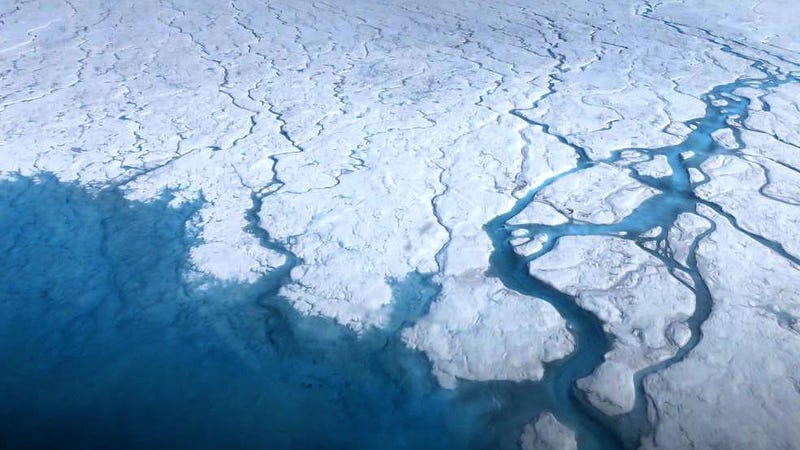
A major warm spell has caused nearly half the surface of the Greenland ice sheet to start melting, something that’s highly unusual for this time of year. And while this spike may pass, the gears could already be in motion for record-setting melt on the ice sheet’s western flank.


Greenland has been scorching (by Greenland standards) for the past few days, with temperatures rising 10-20 degrees Celsius (18-36 degrees Fahrenheit) above normal across the island. Ruth Mottram, a climate scientist with the Danish Meteorological Institute, told Earther that the weather station at the top of the ice sheet saw temperatures reach above freezing on Wednesday and they were headed that way again on Thursday. That puts them just a degree or so away from setting the all-time heat record for June, which is currently held by June 2012.


The spike in temperatures has caused a spike in melt. Roughly 45 percent of the ice sheet surface has been melting. Normally, less than 10 percent of the ice sheet surface is melting at this time of year. According to data from the National Snow and Ice Data Center, Wednesday set a daily record for the widest melt area on that date, with 275,000 square miles—an area bigger than Texas—of the ice sheet’s surface becoming a slushy, watery mess. Mottram said the much of the ice is likely to refreeze once the heat breaks, but it will be more primed to melt later in the season.

https://robinwestenra.blogspot.com/2019/06/half-of-greenlands-surface-started.html


An interview with Nicholas Humphrey

Nick Humphrey's website can be found HERE

Image result for meteorologist Nick Humphrey


In a wide-ranging interview with Guy Mcpherson and Kevin Hester Nicholas Humphrey expressed the opinion that we crossed one trigger point in the 1980's with accelerated ocean warming, drought in the Amazon and so on.


He thinks that we crossed another trigger point in the mid-2010's which brought an acceleration in everything and the unleashing of a multitude of positive feedbacks.

Being the honest player he is he thinks the future is short and does not see humans being able to survive much longer.Just how long he does not know (along with the rest of us).

People have been living longer because of technological advances (and I would say, cheap energy). We will lose that with civilisational collapse brought about by abrupt climate change and a lot of people are going to die quite quickly.

I have extracted two segments from the hour-long interview that accentuate two aspects of abrupt change.


The first has to do with the melting of land-based permafrost. Landslides and erosion have exposed ice to extremely rapid melting that no one could have foreseen.
 

The second relates to the floods in the US Mid-West. Land is becoming permanently un-farmable and people are leaving the land in a way that may become reminiscent of the Dust Bowl of the 1930's although it is very difficult to see where people might go in a world that has three times the population.


HEADLINES AND ARTICLES

Well, I suppose "not normal" is a change from "faster than expected.


https://earther.gizmodo.com/half-of-greenlands-surface-started-melting-this-week-w-1835483363?IR=T

Notice the "70 years early" bit. Some of us could say "we told you so"


In the Canadian Arctic, layers of permafrost that scientists expected to remain frozen for at least 70 years have already begun thawing. The once-frozen surface is now sinking and dotted with melt ponds and from above looks a bit like Swiss cheese, satellite images reveal.
"We were astounded that this system responded so quickly to the higher air temperatures," said Louise Farquharson, a co-author of the study and postdoctoral fellow at the Permafrost Laboratory at the University of Alaska Fairbanks.
Permafrost is ground that remains frozen for at least two years. It underlies about 15% of the unglaciated Northern Hemisphere and serves a critical role in the transfer of carbon from living things to the atmosphere, Farquharson said. [Photos: Perfectly Preserved Baby Horse Unearthed in Permafrost]
Farquharson is part of an international team of researchers monitoring environmental variables on three islands in the Canadian Arctic. The data they analyzed in this study, which was published Monday (June 10) in the journal Geophysical Research Letters, was gathered between 2003 and 2016.
The researchers recorded permafrost thawing to depths that were not expected until air temperatures reached levels the Intergovernmental Panel on Climate Change has predicted will occur after 2090, according to one of its "moderate" climate change models. The IPCC, which is a body of the United Nations, provides scientific information to help guide countries' climate policies.
The researchers believe higher summer temperatures, low levels of insulating vegetation and the presence of ground ice near the surface contributed to the exceptionally rapid and deep thawing.
The most striking evidence is visible to the naked eye. As upper layers of permafrost thaw and ice melts, the land settles unevenly, forming what is known as thermokarst topography. Landscapes in the Canadian Arctic that had been defined by gently rolling hills are now pockmarked with ditches and small ponds. The ground at the northernmost study site sank by about 35 inches (90 centimeters) over the course of the study.
"We had this flat terrain when we started monitoring," Farquharson told Live Science. "In 10 or so years, we saw the landscape transform."
Their data allowed the researchers to interpret the topographical changes happening before their eyes.
"We were able to tie together air temperature and ground temperature with the formation of this thermokarst terrain," Farquharson said.
https://www.livescience.com/65709-arctic-permafrost-melts-decades-early.html?fbclid=IwAR02A0aO2YgC1H-jdIBrh457XmDPL1Hy4dY6RYhNMATh0z0iwD8vBYhZyHg

A city in western Alaska has lost a huge stretch of riverbank to erosion that may turn it into an island, amid renewed warnings from scientists over the havoc triggered by the accelerating melting of the state’s ice and permafrost.

Residents of the small city of Akiak were alarmed to find the Kuskokwim River suddenly much closer to housing after about 75-100ft of riverbank disappeared over the course of just a few hours.

The erosion, which occurred late last month, stripped away the riverbank for the entire length of Akiak, which has a population of around 340.

We got about three houses in imminent danger, and the rest of them will be coming along pretty quickly,” said David Gilila, Akiak’s city administrator.

Gilila said he was appealing for funding to relocate some homes, warning that the water could soon surround the city. “We’ll still be here, but we’ll probably become an island,” he said.

The drastic reshaping of Akiak is probably down to thawing permafrost, the frozen organic matter held within soils. Alaska is heating up twice as quickly as the rest of the US as a result of human-driven climate breakdown, increasingly causing this permafrost to thaw and destabilize buildings and cause roads to buckle.

The changes are really accelerating in Alaska,” said Susan Natali, a scientist and Arctic expert at the Woods Hole Research Center in Massachusetts. “It’s pretty likely this riverbank in Akiak was lost because of thawing permafrost, given where it’s situated and the warm winter and spring they’ve had. It’s not a problem that’s going to go away.”


Alaska has just experienced its warmest spring on record, breaking a record only set in 2016. Since the 1970s, springtime in the state has heated up by around 2.2C (4F), double the global temperature rise of the past century.

The breakneck speed of Alaska’s rising heat is having cascading consequences, with vanishing sea ice exposing coastal communities to storms, altered wildlife and plant patterns that make it harder for people to find food. There is also a growing wildfire threat putting communities at risk.

Unless it causes buildings to topple, permafrost thawing is often a more obscure feature of this warming, although it could prove to be among the most significant. As the frozen ground across the Arctic melts, it releases a huge amount of methane, a potent greenhouse gas.

Scientists recently found this process could trigger a dangerous acceleration of global heating that would cause tens of trillions of dollars in climate-related damage. A separate study found that parts of the Canadian Arctic are experiencing a rate of permafrost thaw six times the long-term average.


In Alaska, there are dozens of towns that the federal government has identified as being in potential need of relocation due to the damage caused by the climate crisis. The village of Newtok in western Alaska was granted $15m last year to start shifting homes to safer ground but the vast majority of communities have no pathway to do likewise.

It’s a real challenge because in the US there isn’t the precedence to deal with this and there isn’t the political framework to deal with it either,” said Natali. “The numbers needing relocation will grow, the costs are going up and people’s lives and cultural practices will be impacted.


Every year there’s a new temperature record, it’s getting worse and worse and you feel like a broken record saying it. This should be the number one urgent conversation happening right now because it’s not just going to be Alaska, it’s going to be other communities all over the US,” Natali added

https://www.theguardian.com/environment/2019/jun/13/climate-crisis-alaska-is-melting-and-its-likely-to-accelerate-global-heating?fbclid=IwAR0ZwhV9EYf6dblg703VT5NxQ-rY-CarHvSU7EwivNoF8CiqBZHYZi8rgNs

Not expected until 2090!  Is 2019 the new 2100?


https://www.independent.co.uk/news/world/americas/climate-change-breakdown-arctic-frost-thawing-canada-environment-a8959056.html?utm_term=Autofeed&utm_medium=Social&utm_source=Facebook&fbclid=IwAR2S_F7pCAuru_TN3h1_IXbz6pfrq92KmTM8rtsjYv4-kT1Pqz_twzoEQTI#Echobox=1560536719


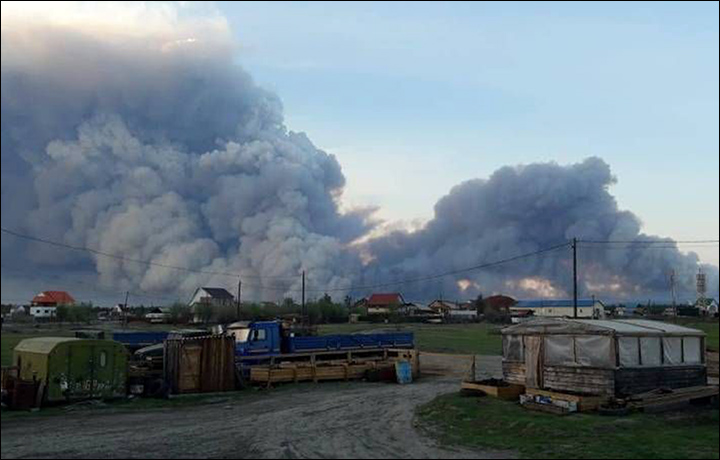
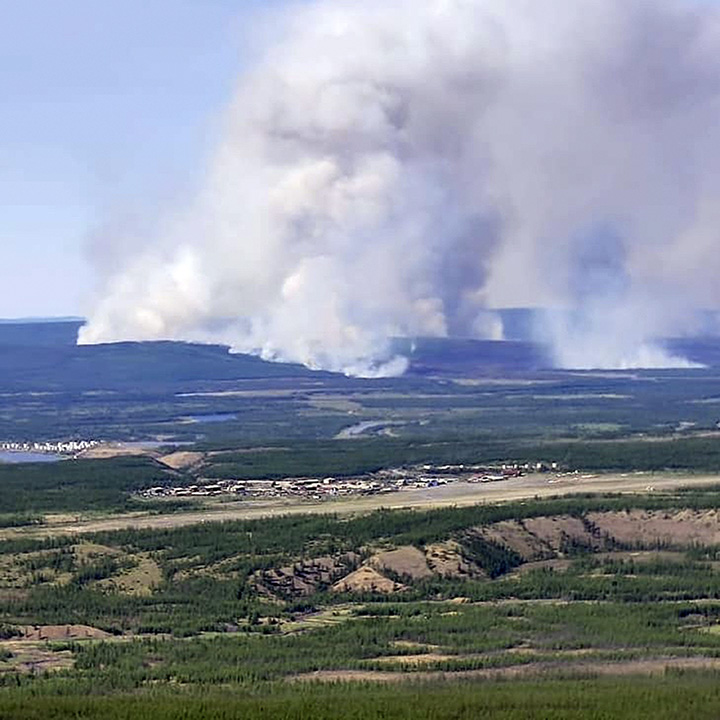
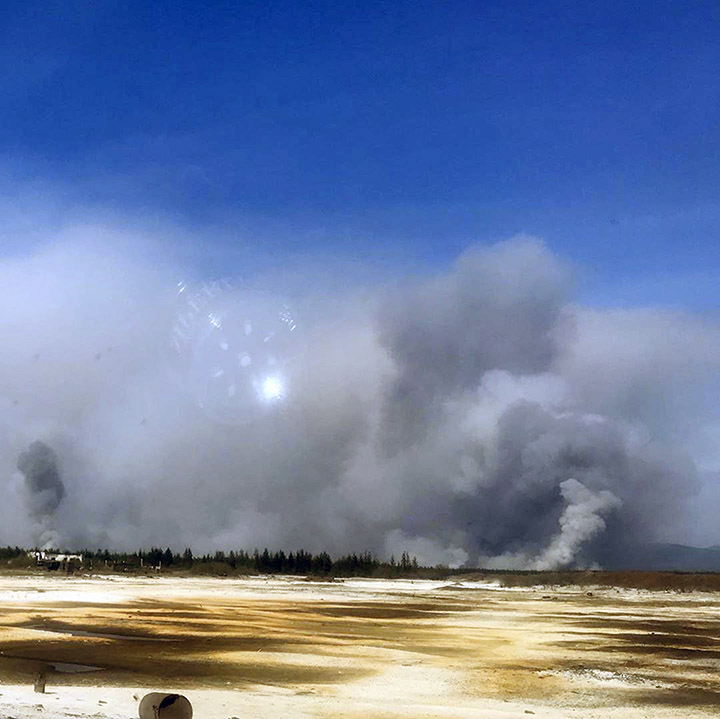
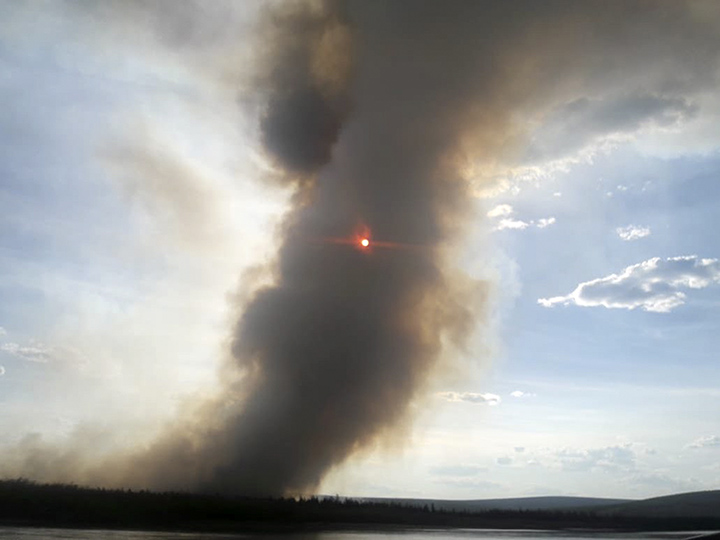
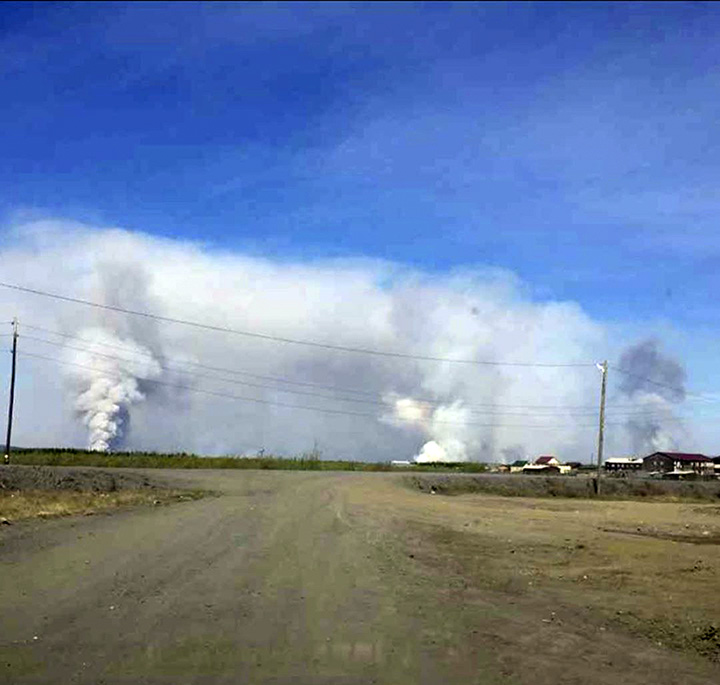
Alarming wildfires rage near giant ‘Mouth of Hell’ gash in the tundra, a wonder of Siberia
Destruction of trees by flames could see Batagai Depression ‘rapidly enlarge’ while remote local settlements also threatened.

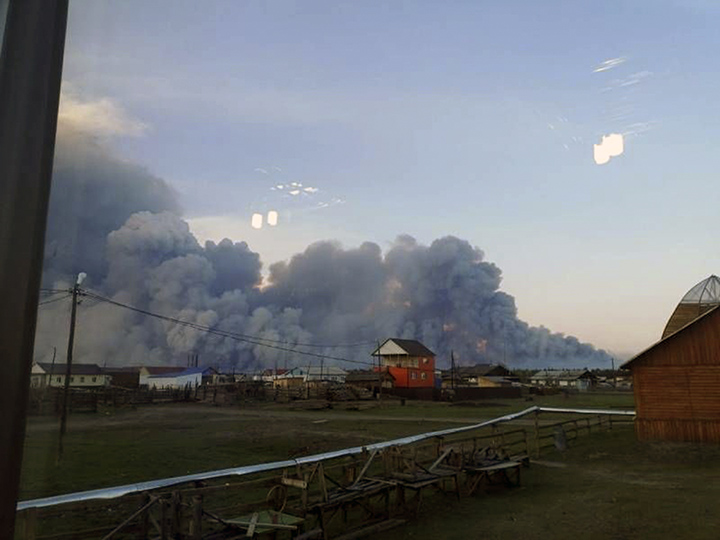
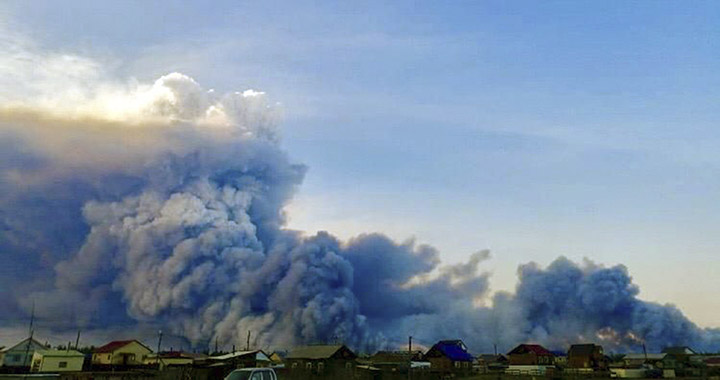
Wildfires in the vicinity have four epicentres. Picture: Social media
SiberianTimes,
June, 2019

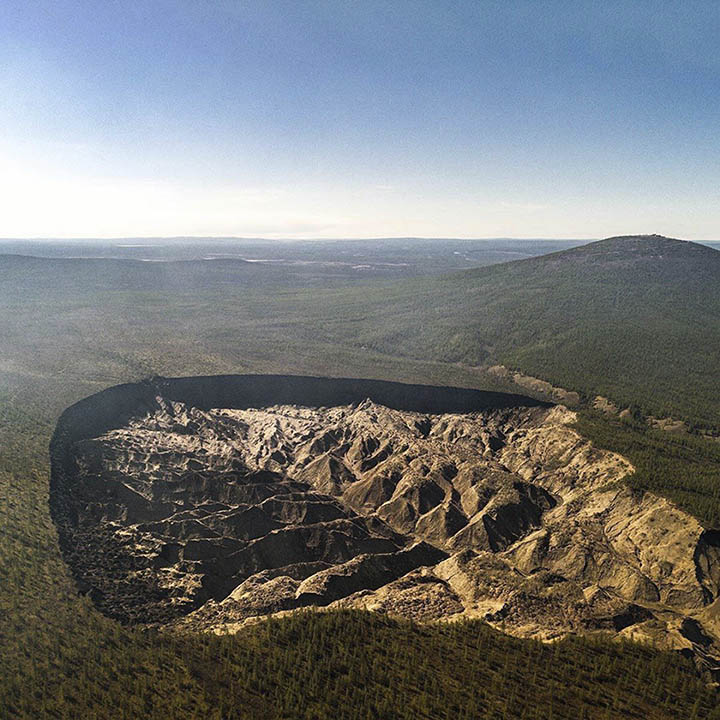
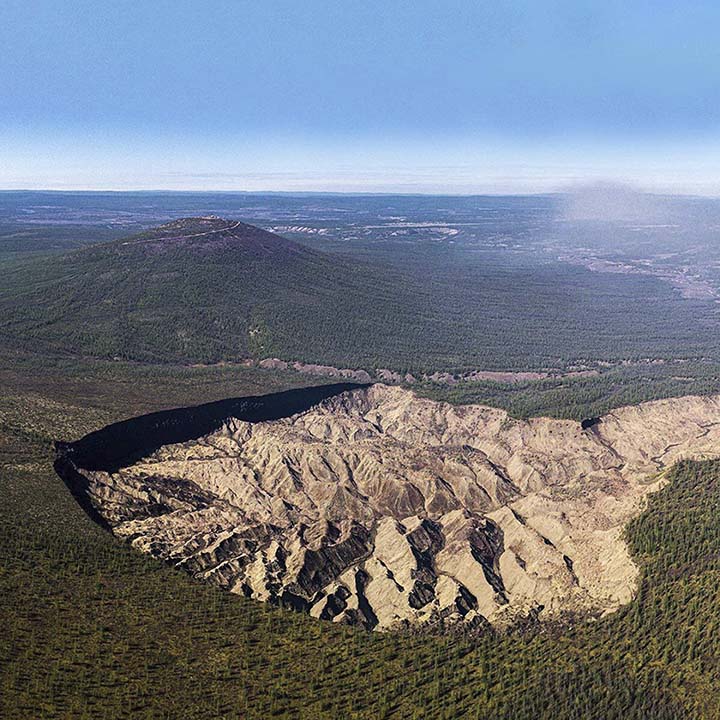
The fires are now raging some 10 to 15 kilometres from the megaslump crater - a large hole in the frozen Arctic soil which highlights the dramatic speed of thawing permafrost.

The Batagaika or Batagai "megaslump" is a tadpole-shaped depression around one kilometre long, 800 metres wide and 100 metres deep.

It is growing by some 15 to 30 metres a year - but if it is hit by the nearby inferno this would destroy trees on its rim and loosen the soil even more, resulting in further collapses.


Batagai area fires

Batagai area fires

Batagai area fires

Batagai area fires
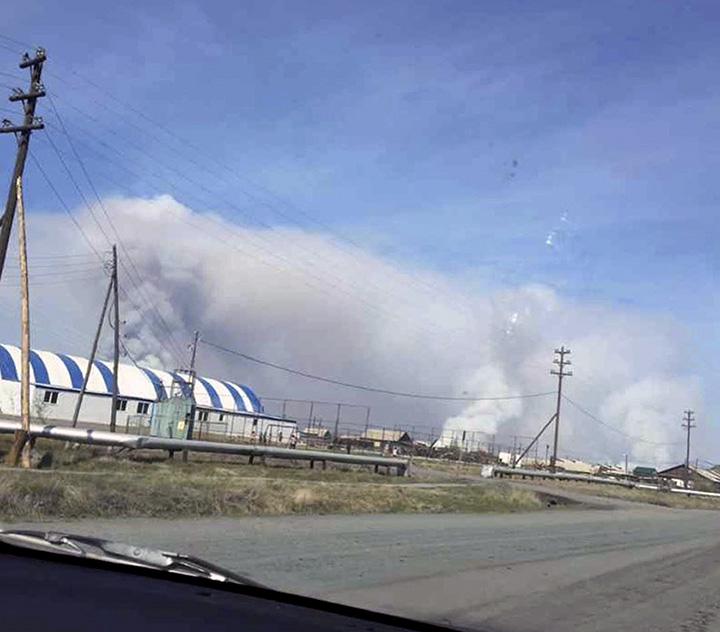
Meanwhile social media reports from locals spoke of  ‘a large, aggressive fire’ near Betenkes village which destroyed houses, barns, and haymaking fields. Pictures: Vesti Verkhoyanya, Social media
Changes in the local climate have seen an ‘almost snowless’ winter in this northern outpost with dry weather exacerbating the risk of wildfires spreading.

Wildfires in the vicinity have four epicentres, say in Verkhoyansk district in Yakutia region also known as Sakha Republic.

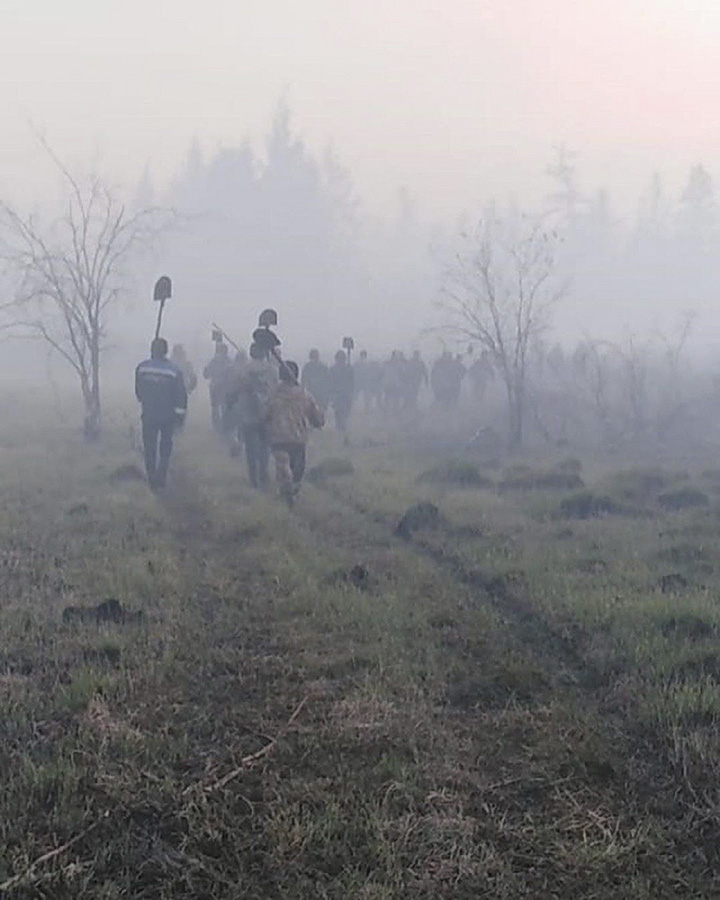
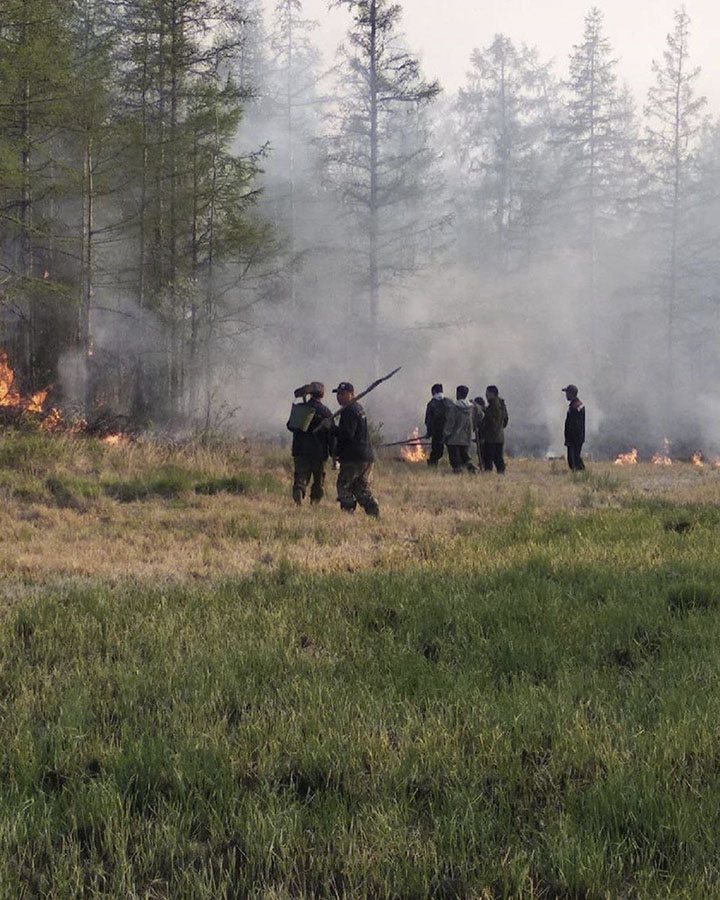
Head of the district, Gavril Chirikov, reported the arrival of firefighting teams with some 58 people in total deployed mainly on saving villages.

Natural fires also threaten the village of Batagai,’ he said.
Volunteer firefighters go into the forest

Volunteer firefighters at work
Volunteer firefighters go into the forest to extinguish the fire. Pictures: Social media
This settlement is some 8km from the world famous natural phenomenon.

A local oil depot is reported under threat.

Meanwhile social media reports from locals spoke of ‘a large, aggressive fire’ near Betenkes village which destroyed houses, barns, and haymaking fields.

Temperatures are 30C with no rain forecast. 
Batagai area fires

Batagai area fires

Batagai area fires
Temperatures are 30C with no rain forecast. Pictures: Social media 
Scientists are concerned over the fire reaching the depression.

Dr Petr Danilov, of the Research Institute of Applied Ecology of the North, in Yakutsk, said: ‘If the wildfires access the depression, it surely will have a strong impact on the speed it grows.’

Known by some as the ‘Mouth of Hell’, a locals see this spectacular crater as superstitious, and call it the "gateway to the underworld".
Batagai depression

Batagai depression
The Batagaika or Batagai "megaslump" is a tadpole-shaped depression around one kilometre long, 800 metres wide 
and 100 metres deep. Pictures: Slava Stepanov
The gash in the tundra was caused by the Soviets, who cleared forest here, but it is now being enlarged and shaped by climate change, according to scientists.

In the depression, scientists found a perfectly preserved prehistoric baby horse, an extinct foal from the cold-resistant Lenskaya species. 

There are hopes DNA from the foal will allow scientists to clone the species back to life.


Arctic melt goes into overdrive


14 June, 2019

Earlier this year, we saw the unprecedented disappearance of sea ice from the Bering Sea during a time of year when it should be gaining ice. This trend toward plummeting sea ice in the Alaskan and Canadian Arctic continues, this time centered in the Chukchi and Beaufort seas.

Why it matters: Sea ice loss is disrupting the balance of heat in the Northern Hemisphere, and it is reverberating throughout ecosystems, causing everything from plankton blooms near the Arctic Ocean surface to mass haul-outs of walruses in Russia and Alaska. It may also be disrupting weather patterns across the Northern Hemisphere.
The big picture: Across the entire Arctic, sea ice extent is at a record low for this point in the year, and depending on weather conditions during the summer, it's possible that 2019 could set a new record low ice extent.
  • The all-time record low sea ice extent was set in 2012, although subsequent years have nearly beaten that mark.
  • So far, weather conditions have favored an early start to the Greenland ice melt season, too, and ice melt there, unlike disappearing sea ice, contributes to global sea level rise.
  • The portion of Greenland experiencing melting ice hit a record high for the date on June 13, with temperatures rising to near freezing at Summit Station, in the center of the ice sheet.
  • The Arctic is warming at more than twice the rate of the rest of the world.
What they're saying:
  • "At the moment, you can essentially sail uninterrupted from the North Pacific to the Canadian Arctic," says Zack Labe, a climate scientist and Ph.D. candidate at the University of California, Irvine.
  • "The Arctic is a regulator of Northern Hemisphere climate, and while the ice that is melting now isn't going to affect whether you get a thunderstorm tomorrow, in the long term, these are going to have profound effects on your weather and climate down the road that you will have to take action on, like it or not," says Rick Thoman of the University of Alaska at Fairbanks.