Showing posts with label Natalia Shakhova. Show all posts

Tuesday, 23 July 2019

NOT TO BE MISSED interview with Dr. Peter Wadhams


This is one of the best interviews I have heard in a long time.

In this interview Peter Wadhams covers the denial (and consequential censorship) by the mainstream scientific community for no better reason that they think it can't be happening (and therefore it isn't).

One of the biggest problems I see right now is with certitude. All we can say is that based on the knowledge we have this is the conclusion we reach. There are many uncertainties in the science and all we can do is to infer the outcome from the evidence we have.

Interview with Dr. Peter Wadhams


23 June, 2019

Please watch this very important interview with Dr. Peter Wadhams. He is professor of Ocean Physics, and Head of the Polar Ocean Physics Group in the Department of Applied Mathematics and Theoretical Physics, University of Cambridge. Here he discusses the very real threat of abrupt releases of methane from the East Siberian Arctic Shelf (ESAS). He discusses what has been termed scientific reticence and (in his words) a "lack of objectivity" among some in the scientific community and those funding scientists' research, as well as issues in the peer-review process (also discussed by Dr. Natalia Shakhova who has conducted extensive Arctic methane research). There is also the problem of observational science evidence being set aside in favor of modeling which need the observations to correct them.

In this interview, Dr. Wadhams stated that he's not certain there has ever been a modeled study on the global effect of an abrupt methane release. Last year, I did find a study (Obata & Shibata, 2012), discussing the global effect and vegetation biomass damage from a sudden 1000-fold increase in atmospheric methane concentration specifically from methane hydrates (<1 ppm to 1000 ppm). It is from 2012, but it is really the best paper I have found on the issue, particularly the use of an Earth System Model to understand impacts. See the attachment below. Here is the abstract:

Decadal-time-scale responses of climate and the global carbon cycle to warming associated with rapid increases in atmospheric methane from a massive methane release from marine sedimentary methane hydrates are investigated with a coupled climate–carbon cycle model. A 1000-fold methane increase (from <1 to 1000 ppmv) causes surface air temperatures to increase with a global warming of >6°C within 80 yr. The amount of carbon stored in the land biosphere decreases by >25%. This is mostly due to a large decrease in tropical net primary production during the first few years (~−40%), which is caused by a decrease in photosynthesis and an increase in plant maintenance respiration with the early warming of ~3°C, leading to tropical forest dieback (>20%) and the largest decrease in vegetation carbon of >50% (~80% of the decrease in global vegetation carbon). The decrease in global land carbon is also partly due to forest diebacks (mainly boreal forest dieback by heat stress) at northern middle latitudes. In contrast, vegetation increases by >50% at northern high latitudes because of the amelioration to warm and wet conditions. Sensitivity experiments show that the warming of >6°C consists mainly of >5°C by the 1000-fold atmospheric methane and an additional increase of 1°C by the atmospheric CO2 increase due to the land CO2 release and that the CO2 fertilization of land plants prevents further warming of 1°C by limiting the atmospheric CO2 increase. The large decrease in land biomass estimated in this study suggests a critical situation for the land ecosystem or agricultural production, especially in the tropics. Because global methane content of marine methane hydrates is estimated at ~10 000 Gt, more intense warming leading to greater damage to the land biomass than the authors’ experiment (~2000 Gt) is possible in the future methane release event that would be caused by the ongoing anthropogenic warming. 
You can learn more about the methane danger and permafrost melt HERE, HERE, HERE , HERE , and HERE.

My thoughts -with these rapid changes underway, the likelihood is high that there will be sudden, irreversible and discontinuous change to an unfamiliar climate state very quickly. This will be caused by tipping points and such change will be on the order of years. This has been noted in Dansgaard-Oeschger events (during ice age/interglacial transitions), and during the Paleogene-Eocene Thermal Maximum (PETM) 55 million years ago (which may have included a huge spike in global temps within just a decade). I discuss more about Earth System Nonlinearity HERE.
And, in fact this may already be happening with regards to the ongoing abrupt collapse of Arctic and global sea ice.


Thursday, 18 July 2019

Another look at Arctic ice - 17 July, 2019


Margo & Robin Take Their 
First Look at Arctic Sea Ice 
for 2019 (July 17, 2019)

Temperatures are above zero throughout the Arctic


We are starting to get areas of ice breaking up at 83-85 
deg N


It is difficult to see what is happening in the high Arctic due to the preponderance of cloud but in places we can see the break-up of ice.

This shows the break-up of ice at 83N and shows signs of meltpools


A lot of melting to the north of Severnaya Zemluya in the Laptev Sea


Here some highlights from Natalia Shakhova et. al. latest paper that confirms a lot of what we have observed or inferred by observation 


https://www.mdpi.com/2076-3263/9/6/251/htm?fbclid=IwAR0PhRqTiaE3pmcKCiEfvHCCk5vNUck8rtyzp1G5k_HYbdbCPtMlEaHTo04

Increasing periods of open water implies an increasing number of storm events, when wind speed increases to ≥15 m s−1 and the boundary between sea surface and air increases many fold due to deep water mixing. Such events have the potential to rapidly ventilate bubble-transported and dissolved CH4 from the water column, producing high emission rates to the atmosphere. Because >75% of the total ESAS area is <50 m in depth, the water column provides bubbles with a very short conduit to the atmosphere. Storms enable more CH4 release because they destroy shallow water stratification and increase the boundary between sea surface and air, thus increasing gas exchange across phase boundaries. As a result, storm-induced CH4 “pulses” force a greater fraction of CH4 to bypass aqueous microbial filters and reach the atmosphere [20].


In addition, about 10% of the ESAS remains open water in winter due to formation of flaw polynyas. Formed simultaneously with land-fast ice in November, flaw polynyas propagate out of fast ice hundreds of kilometers north [82]. Flaw polynyas provide pathways for CH4 escape to the atmosphere during the arctic winter [17]. Areas of flaw polynyas in the ESAS increased dramatically (by up to five times) during the last decades [83], and now exceed the total area of Siberian wetlands [84] (Figure 7). This implies that the ESAS remains an active source of CH4 to the atmosphere year-round, even in the winter when terrestrial Arctic systems are dormant. Increasing storminess and rapid sea-ice retreat causing increased CH4 fluxes from the ESAS are possibly new climate-change-driven processes.


Continuing warming of the AO will strengthen these processes, and the role of the ESAS as a year-round contributor to global CH4 emissions will grow over time. The ESAS is a tectonically and seismically active area of the WO [85,86]. During seismic events, a large amount of over-pressurized gas can be delivered to the water column, not only via existing gas migration pathways, but also through permafrost breaks that can occur within otherwise continuous permafrost or pingo-like structures observed over the Arctic shelf [73].

Wednesday, 12 June 2019

The methane clathrate gun


The Latest on the Threat for 

Abrupt Methane Release 

from the East Siberian Sea


12 June, 2019

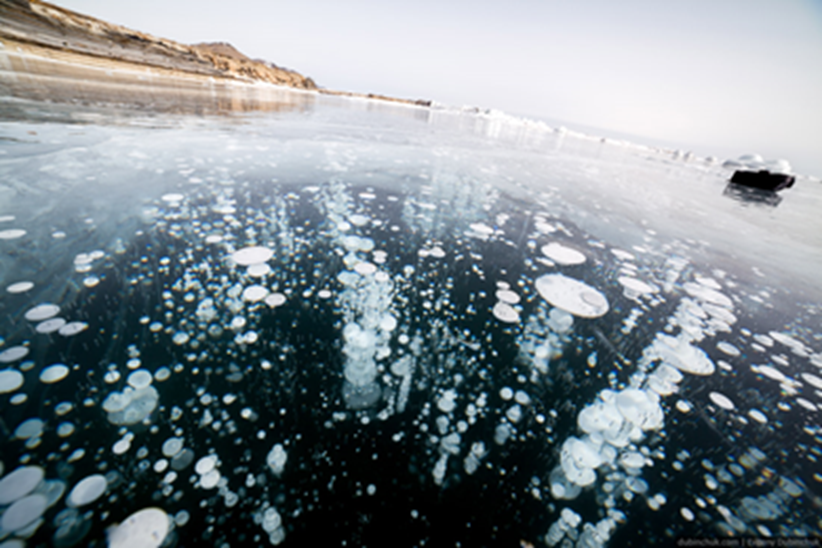
So I just read the latest paper by Shakhova, Semiletov and Chuvilin (2019) released in the past week basically refreshing people on the threat on abrupt methane release from the Eastern Siberian Arctic Shelf (ESAS). The paper is linked above and seems to have been written for scientists not directly in their field (more background and less field specific jargon, except when directly relevant). For those who not know, methane is a very powerful greenhouse gas (108 times as potent at warming than carbon dioxide on a 10 yr timescale; near 150+ at 5 yrs or less). It is a short lived gas (after about 12 yrs, it is converted to carbon dioxide and water). However, the methane concentration in the atmosphere is rapidly increasing because of both increasing industrial activity and releases from tropical and Arctic sources. The East Siberian subsea region has huge stores of carbon in the form of methane.

I consider Dr. Natalia Shakhova and Dr. Igor Semiletov the top scientists on the East Siberian Arctic Shelf and the huge threat from the methane stores there (accumulated during previous glacial periods and not released in significance during previous short interglacials). Other scientists critical of their work have not come close to the amount of field work they have done, nor understand the geophysical dynamics specific and unique to that area vs. other areas of the global ocean floor.

Discussion

In short, Shakhova, Semilitov & Chuvilin (2019) really do not hold back in this paper. They make it very clear the how and why behind the deterioration of methane hydrate stability (including the uncharacteristic lengthy natural Holocene era, now being "extended" by anthropogenic activity). For a general understanding of hydrates,
see this link.

It also makes clear the certainty of continued
rapid deterioration and increasing methane emissions because of 1) continued irreversible Arctic Ocean warming and sea-ice losses, 2) methane releases occurring all year round, not just in the warm season because of rapidly increasing open-water polynyas in the winter ice, 3), increasing storm activity in the Arctic mixing the shallow water layer over the continental shelf ("storm-induced CH4 pulses"), and 4) increasing vulnerability to tectonic activity. They also note that 5) "Because the ESAS composes ~8% of the world ocean continental shelf, its sedimentary drape area- and thickness-weighted fraction alone could contain 15 to 20% of global organic carbon inventory; Organic carbon provides the substrate for CH4 production."

There is also this (note that 1 teragram or "Tg" = 1 million tonnes. 1 billion tonnes is 1 gigatonne):

"It was suggested that ˃1400 Gt of CH4 could be preserved in the seabed of the ESAS [[90]. The current annual emission of CH4 to the atmosphere was calculated to be between 8 and 17 Tg annually [19][20]; this implies, conservatively, that equal amounts could have been potentially released annually during the previous climate epochs if permafrost had not restricted CH4 flux. Therefore, due to such restriction, during the time of one glacial period (~100 kYrs) ˃800 Gt of CH4 could have accumulated in the ESAS seabed as postponed potential fluxes. This amount of pre-formed gas preserved in the ESAS suggests a potential for possible massive/abrupt release of CH4, whether from destabilizing hydrates or from free gas accumulations beneath permafrost; such a release requires only a trigger."

In addition, they are critical of previous research by multiple research groups which they believe have serious methodology flaws and make note they are the only ones doing research of this kind in the ESAS (and in total have conducted the most extensive ocean floor survey of any region in the world). They, of course, also discuss past flaws in their methods which brought them to current conclusions.

Finally...and most blunt.

"Releases could potentially increase by 3–5 orders of magnitude, considering the sheer amount of CH4 preserved within the shallow ESAS seabed deposits and the documented thawing rates of subsea permafrost reported recently".

If you assume the current emissions rate averaged at 13 Tg/yr, that would mean abrupt releases 13,000 to 1,300,000 Tg/yr. 13 to 1300 gigatons. Basically they're making a case that the destruction of the subsea permafrost will lead to catastrophic releases of nearly all the gas (over years, not decades or nearly all at once) once the permafrost has become sufficiently weakened.

An abrupt release of methane would mean a significant acceleration in global warming, perhaps 1 degree C or more within years.

Here are links to other relevant papers by Shakhova et al. this decade:

Shakhova et al. (2017)
Shakhova et al. (2015)
Shakhova, Semiletov & Salyuk (2010)


For laypeople, here are a couple video intereviews with Shakhova which are must-sees.

YouTube Playlist

---Meteorologist Nick Humphrey

Monday, 3 June 2019

Russian scientists discover an entirely new reason for methane venting from the Arctic Shelf


I can just imagine the psycho Michael Mann rejecting this research on the grounds that it was done by Russians - an inferior species according to Democrats.

Scientists name a new reason for methane release in the Arctic

The study has been carried out by the experts from Skoltech, the Tomsk Polytechnic University and the Academy of Sciences’ Pacific Oceanology Institute


24 May, 2019


MOSCOW, May 24. /TASS/. Russian scientists opened a new mechanism, explaining influence from salt migration emerging from decomposition of huge gas (methane) hydrates reserves on the Arctic shelf, the Skolkovo Institute of Science and Technology’s (Skoltech) press service said. Results of the studies are published on Geosciences magazine’s website.


Methane is a main greenhouse gas, which affects the global warming. Russian scientists came to "understanding of the mechanism of massive methane release from bottom sediments of the East Siberian Arctic shelf," the article reads. Active releases not only influence the global warming, but also affect carbon balance and cause accidents in the Arctic, a most promising region for hydrocarbon production. This is why President of the Russian Academy of Sciences Alexander Sergeyev named as a priority the problem to study reasons of methane releases on the East-Siberian shelf, the press service said.


"Experts from Skoltech, the Tomsk Polytechnic University and the Academy of Sciences’ Pacific Oceanology Institute saw that one of the reasons for big methane emissions from bottom sediments on the East-Siberian shelf is destabilizing of gas hydrates, which are located on submarine permafrost, when they react with salt solutions (sea water), which migrate into the thawing underwater permafrost," the press service said.


"Gas hydrates are crystalline clathrate compounds that are formed from gas (mainly methane in natural conditions) and water under certain temperature and pressure conditions," the Russian scientists said in the article. "An important characteristic of gas hydrates is a huge accumulation of gas in the clathrate structure-up to 160 volumes of gas in one volume of hydrate."


"As it is well known, methane is one of the most active greenhouse gases. In this regard, the dissociation of Arctic gas hydrates, accompanied by the active emission of methane into the atmosphere, can have a significant greenhouse effect and cause climate change," the article reads.


"Special experiments were conducted on the interaction of frozen sandy sediments containing relict methane hydrates with salt solutions of different concentrations at negative temperatures to assess the conditions of intrapermafrost gas hydrates dissociation," the press service quoted Skoltech’s expert Evgeny Chuvilin as saying. "Experiments showed that the migration of salts into frozen hydrate-containing sediments activates the decomposition of pore gas hydrates and increase the methane emission. These results allowed for an understanding of the mechanism of massive methane release from bottom sediments of the East Siberian Arctic shelf."

About Skoltech

Skoltech is a non-governmental scientific and educational institution established in 2011 as part of a multi-year partnership with the Massachusetts Institute of Technology.