

Subscribe to

 Posts
All Comments
Showing posts with label permafrost. Show all posts
Showing posts with label permafrost. Show all posts
Saturday, 20 February 2021


Tuesday, 28 July 2020
permafrost poses the greatest threat to major Russian energy producers’ infrastructure
Melting Arctic permafrost
threatens Russian energy
firms’ bottom line – Morgan
Stanley

27 July, 2020
Rapidly melting Arctic permafrost poses the greatest threat to major Russian energy producers’ infrastructure and financial indicators, according to a new Morgan Stanley report obtained by the Vedomosti business daily.
Gazprom, Novatek, Alrosa and Norilsk Nickel — whose fuel tank leaked after sinking into thawing permafrost in May, resulting in a major environmental disaster — stand to lose the most from the phenomenon that releases carbon gases and further fuels global warming.
“Climate change in permafrost areas, which account for about 60% of Russian territory, leads to the release of large amounts of methane and carbon dioxide, reduces soil stability and creates risks for infrastructure,” Vedomosti quoted Morgan Stanley as saying Thursday.
The investment banking company noted that average temperatures in Russia have risen at 2.5 times the global rate since 1960 while Arctic temperatures have risen at 3-4 times the global rate since 2000. This heat reduces the bearing capacity of structural foundations in key hydrocarbon production regions by 25-75% compared to 1965.
Around 90% of Russia’s gas and diamonds, 30% of its oil and all of its palladium reserves are produced in areas covered by a thick layer of permafrost.
This means that these companies could feel the impact of climate change in the near future, according to Morgan Stanley’s analytical report.
Gazprom’s forecasted free cash flow for 2022, for example, risks being cut from $8.4 billion to $4 billion, while Nornickel’s predicted 2022 dividends could halve to $1.1 billion.
Friday, 5 June 2020
State of emergency in Norilsk after 20,000 tons of diesel leaks into Arctic river system
It has taken several days for this to make it into western MSM.

https://www.independent.co.uk/news/world/europe/putin-russia-fuel-leak-arctic-river-state-of-emergency-a9547586.html?fbclid=IwAR251YEiO2w-y5YauUZLejjkl23_leIbHY_Fwd7Xx-adePj5ZYW6aM6VQfQ#gsc.tab=0


https://www.abc.net.au/news/2020-06-04/tahmoor-mine-polluting-nepean-and-bargo-rivers/12315440?fbclid=IwAR1ElJcv2QA7JFJseOkKy043013sLGxor3h2p9Gqd2HAgIeXnDi5mmGVjYg
And elsewhere in Siberia.

https://siberiantimes.com/other/others/features/hurricane-force-winds-destroy-homes-welcome-to-new-normal-for-siberia-say-scientists/

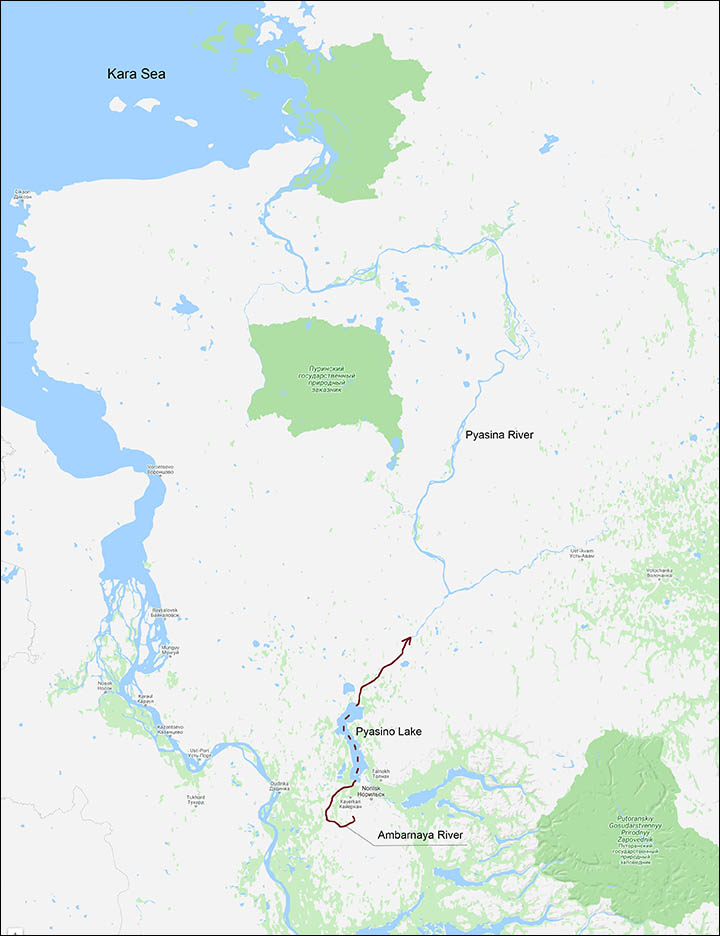
Vladimir Putin has announced a state of emergency in the region around the Arctic city of Norilsk after a massive fuel leak left two rivers with a bloody red tinge.
At least 21,000 tonnes of diesel is understood to have leaked from a local power plant on Friday. Initial reports suggested a car had crashed into one of the plant’s storage towers, but it transpired the tower first decompressed and then ruptured, resulting in a fire and further spillage. Remarkably, news of the accident took several days to reach the authorities.
Over two increasingly desperate days, officials in the power plant tried to deal with the problem themselves. By the time things were eventually referred higher up the chain, and Mr Putin was informed, over 100,000 sq metres of land had been affected.
Here is an article from the Siberian Times
State of emergency in Norilsk after 20,000 tons of diesel leaks into Arctic river system
Fear that thawing permafrost caused damage to storage tank.
By Svetlana Skarbo




https://www.abc.net.au/news/2020-06-04/tahmoor-mine-polluting-nepean-and-bargo-rivers/12315440?fbclid=IwAR1ElJcv2QA7JFJseOkKy043013sLGxor3h2p9Gqd2HAgIeXnDi5mmGVjYg
And elsewhere in Siberia.

https://siberiantimes.com/other/others/features/hurricane-force-winds-destroy-homes-welcome-to-new-normal-for-siberia-say-scientists/
Thursday, 24 October 2019
More CO2 released by permafrost during winter than absorbed in summer
Permafrost
emits more
carbon in winter than plants
absorb in summer: study

22
October, 2019
Research
has found Arctic soil has warmed to the point where it releases more
carbon in winter than northern plants can absorb during the summer.
The
finding means the extensive belt of tundra around the globe — a
vast reserve of carbon that dwarfs what's held in the atmosphere —
is becoming a source of greenhouse gas emissions responsible for
climate change.
"There's
a net loss," said Dalhousie University's Jocelyn Egan, one of 75
co-authors of a paper published in Nature Climate Change.
"In
a given year, more carbon is being lost than what is being taken in.
It is happening already."
The
research by scientists in 12 countries and from dozens of
institutions is the latest warning that northern natural systems that
once reliably kept carbon out of the atmosphere are starting to
release it.
Until
now, little was known about winter emissions from permafrost and the
soil above it. Even scientists assumed the microbial processes that
release the gases came to a halt in the cold.
"Most
people think in the winter, there's no respiration, that the microbes
eating the carbon that produce these emissions aren't active, which
isn't actually the case," Egan said.
The
scientists placed carbon dioxide monitors along the ground at more
than 100 sites around the circumpolar Arctic to see what was actually
happening and took more than 1,000 measurements.
They
found much more carbon was being released than previously thought.
The results found carbon dioxide emissions of 1.7 billion tonnes a
year are about twice as high as previous estimates.
Arctic
plants are thought to take in just over one billion tonnes of the gas
from the atmosphere every year during growing season. The net result
is that Arctic soil around the globe is probably already releasing
more than 600 million tonnes of CO2 annually.
Scientists
previously thought carbon absorbed by tundra plants during the summer
more or less made up for what was emitted in the winter as well as
for what was released from melting permafrost during warm months.
That's
not what's happening, said Egan.
"We're
seeing that the value emitted in the winter is larger than the net
uptake for the growing season."
What's
more, the pace of the emissions is likely to increase.
Under
a business-as-usual scenario, emissions from northern soil would be
likely to release 41 per cent more carbon by the end of the century.
But
the Arctic is already warming at three times the pace of the rest of
the globe. Even if significant mitigation efforts are made, those
emissions will increase by 17 per cent, said the report.
Egan
notes the research didn't measure methane, a greenhouse gas about 30
times more potent than carbon dioxide that is also released from
soil.
Her
findings echo previous studies.
Last
summer, research suggested that larger, hotter wildfires are turning
boreal forests into carbon sources. Another paper found that instead
of melting slowly and steadily, permafrost is subject to sudden
collapses that speed up the rate of carbon release.
Mitigation
won't stop the problem any more, said Egan, but it will help.
This
report by The Canadian Press was first published Oct. 22, 2019.
Friday, 18 October 2019
In Siberia formerly stable ground is warping beneath people's feet,
Melting permafrost in Siberia is creating climate change refugees
Villagers who once thrived along the Zyryanka river are seeing the formerly stable ground warping beneath their feet, exposing previously entombed plants and animals.
By Anton Troianovski and Chris Mooney
On
the Zyryanka river in Russia, Andrey
Danilov eases his motorboat on to the gravel riverbank, where the
bones of a woolly mammoth lie scattered on the beach. A putrid odour
fills the air – the stench of ancient plants and animals
decomposing after millennia entombed in a frozen purgatory.
“It
smells like dead bodies,” Danilov says. The skeletal remains were
left behind by mammoth hunters, hoping to strike it rich by pulling
prehistoric ivory tusks from a vast underground layer of ice and
frozen dirt called permafrost.
It has been rapidly thawing because Siberia is
warming up faster than almost anywhere else on Earth. Scientists
say the planet’s warming must not exceed 1.5C, but Siberia’s
temperatures are already far beyond that.
Washington
Post analysis
has found that the area near the town of Zyryanka, in an enormous
wedge of eastern Siberia called Yakutia, has warmed by more than 3C
since preindustrial times – roughly three times the global
average.
The
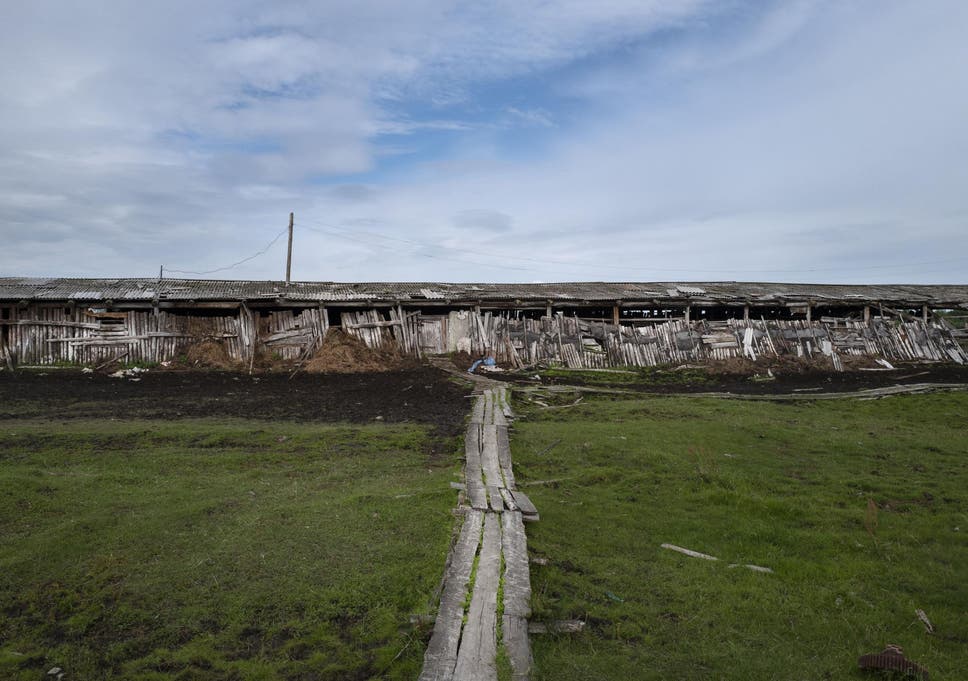
permafrost that once sustained farming – and upon which villages
and cities are built – is in the midst of a great thaw, blanketing
the region with swamps, lakes and odd bubbles of earth that render
the land virtually useless. “The warming got in the way of our
good life,” says Alexander Fedorov, deputy director of the Melnikov
Permafrost Institute in the regional capital of Yakutsk. “Every
year, things are getting worse and worse.”
For
the 5.4 million people who live in Russia’s permafrost zone, the
new climate has disrupted their homes and their livelihoods. Rivers
are rising and running faster and entire neighbourhoods are
falling into them. Arable land for farming has plummeted by more than
half, to just 120,000 acres in 2017.
In
Yakutia, an area one-third the size of the US, cattle and reindeer
herding has plunged 20 per cent, because the animal battle to
survive the warming climate’s destruction of pasture
land. Siberians who grew up learning to read nature’s subtlest
signals are being driven to migrate by a climate they no longer
understand.
This
migration from the countryside to cities and towns – also driven by
factors such as low investment and scarce internet connection –
represents one of the most significant and little-noticed movements
of climate refugees. The city of Yakutsk has seen its population
surge 20 per cent to more than 300,000 in the past decade.
And
then there’s the smell: as the permafrost thaws, animals and plants
frozen for thousands of years begin to decompose and send a steady
flow of carbon dioxide and other gases into the atmosphere,
accelerating climate
change.
“The permafrost is thawing so fast,” says Anna Liljedahl, an
associate professor at the University of Alaska in Fairbanks, “we
scientists can’t keep up anymore.”
Against
this backdrop, a booming cottage industry in mammoth hunting has
taken hold. The creatures’ long-frozen tusks, combined with
Chinese demand for ivory, have imbued struggling local economies
with a strike-it-rich ethos. Some people bask in the sudden influx of
money, but others watch in dismay as Siberia’s way of life is
washed away.
The
first sign of change was the birds. Over the past few decades, new
species started to show up in the Upper Kolyma District, an area on
the Arctic
Circle in
northeastern Siberia 1,000 miles west of Nome, Alaska. These new
arrivals included the mallard duck and barn swallow, whose normal
range was previously much further to the south. A study published by
Yakutsk scientist Roman Desyatkin last year stated that
ornithologists in the region have identified 48 new bird species in
the past half century – an increase of almost 20 per cent in
the known diversity of bird life.
Then the land started to change. Winters, though still brutal, turned milder and shorter. Fed by the rapidly thawing permafrost, rivers began flooding more, leaving some communities inaccessible for months and washing others away, along with the ground beneath them.
The
village of Nelemnoye was cut off for three months in late 2017, when
the lakes and rivers didn’t fully freeze, stranding residents who
use the frozen waters for transport. With the village in crisis, the
government dispatched a helicopter to take residents grocery
shopping.
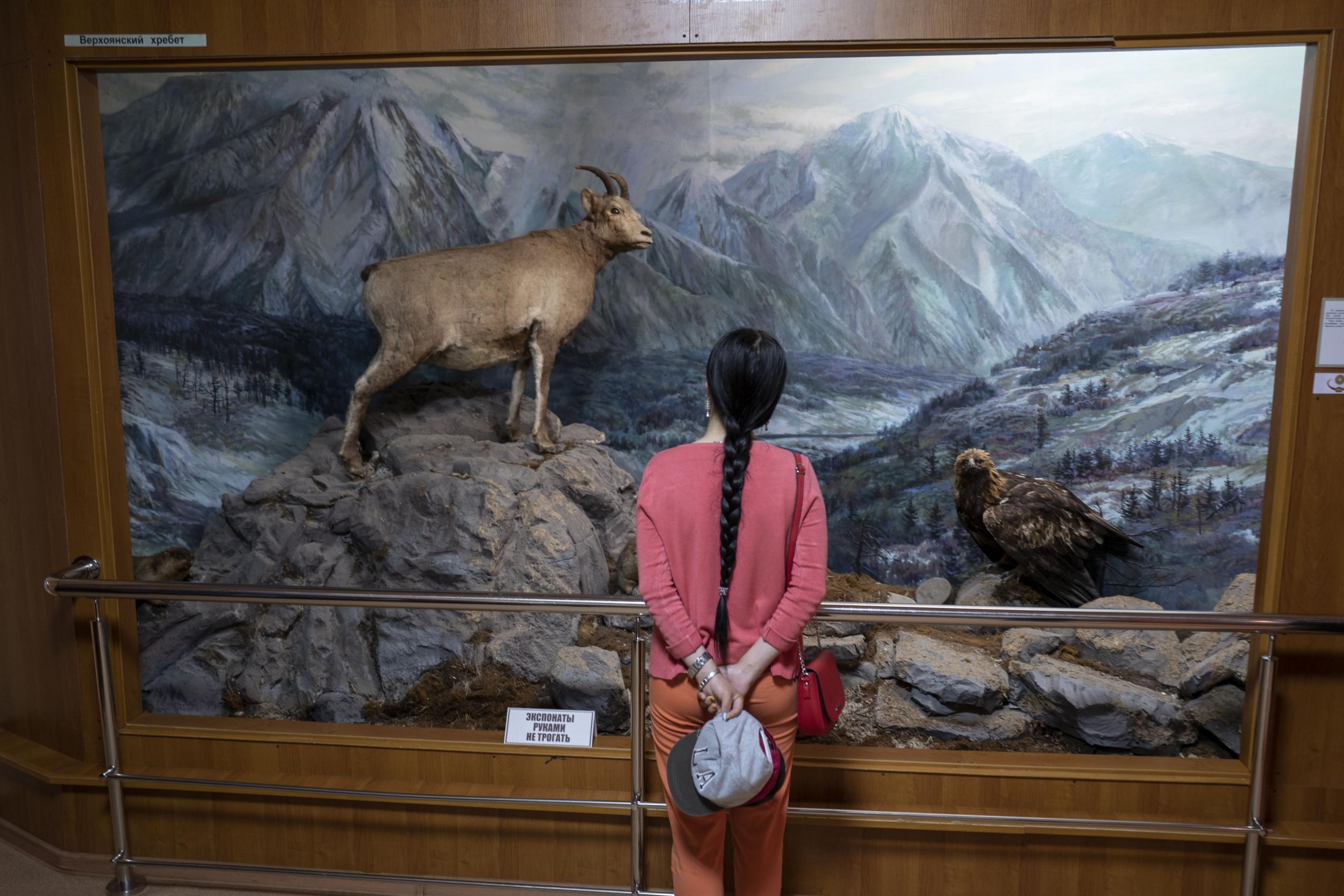
Claudia
Shalugina, 63, used to teach at the three-storey school in Zyryanka,
a 90-minute motorboat ride downriver. Around 10 years ago, the Kolyma
river washed away a section of Zyryanka, taking Shalugina’s school
with it. Satellite images show the loss of approximately 50 acres of
land along the riverside, according to the geographic information
firm Esri. Smoking a cigarette on the porch of the village library,
Shalugina offers her own analysis of the changing climate: “I
think, ‘Lord, it’s probably going to be the end of the world.’
”
Just
downstream from where the Zyryanka river flows into the mighty
Kolyma, three huge tractor trailers stand abandoned on the forested
riverbank. Weeds and wildflowers rise up around them. The frozen
river, used as a winter ice road, suddenly became too risky to drive
on. Spring had come early this year – again. “It used to be man
was in control,” says Pyotr Kaurgin, head of the Chukchi indigenous
community in the village of Kolymskoye, on the northern reaches of
the Kolyma river. “Now nature is in control.”
In
the summer, enormous fires tore through Siberian boreal forests,
unleashing yet more carbon into the atmosphere. Some scientists fear
worsening northern fires are amplifying the permafrost damage.
Meanwhile, six time zones away (but still in Siberia) on the Yamal
Peninsula, monstrous craters have opened up in the tundra. Scientists
suspect they represent sudden explosions of methane gas freed by
thawing permafrost.
Outside
Zyryanka, a once bustling farm has given way to a jumbled landscape
of dips, bumps, and puddles. The mud road, what’s left of it, banks
and turns at head-spinning angles until it runs into a widening
pond. “The earth is slowly sinking,” horse farmer Vladimir
Arkhipov says. “There’s more and more water and less and less
usable earth.”
The
impact on farming has been catastrophic. Arkhipov produces fermented
mare’s milk called kumys, a delicacy among the Sakha, the Turkic
people who make up roughly half the population of Yakutia. Arkhipov
also raises foals for meat, which, in Sakha culture, is sometimes
consumed, sliced thin, raw and frozen.
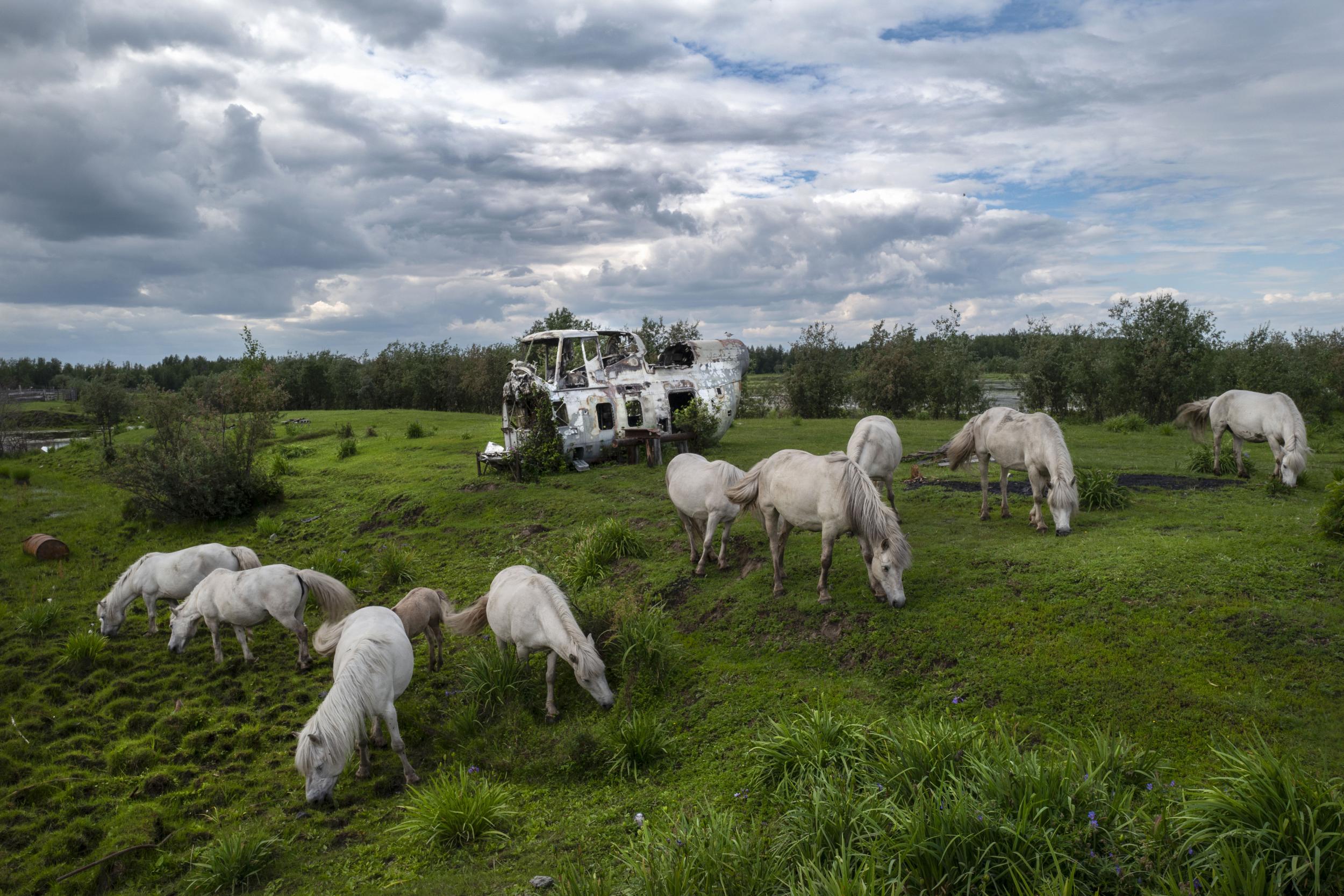
In
the past five years, Arkhipov says, he has lost close to four of his
70-odd acres of hay fields to permafrost-related flooding, meaning he
can feed three fewer horses in the winter. And during a freak
blizzard in late 2017 – an increasingly common occurrence in the
region as the climate changes, scientists say – 10 of his horses
died.
Due
to thawing permafrost – along with the demise of Soviet-era state
farms – the area of cultivated land in Yakutia has plummeted by
more than half since 1990. The region’s cattle herds have shrunk by
about 20 per cent, to 188,100 head in 2017 from 233,300 in 2011.
Reindeer herds have also declined sharply.
Fedorov
and other scientists say the degradation of crop and pastureland
caused by the thawing permafrost helped bring about the collapse of
the region’s agriculture.
Yegor
Prokopyev, the retired head of Nelemnoye, says climate change is the
latest shock to befall the Kolyma river region. There was communism
and forced collective farming, then capitalism and government
cutbacks. His grandfather, a peasant, was declared an enemy of the
working class and sent to one of this region’s many gulag prison
camps.
“As
soon as you start getting used to something, they’ll come up with
something else, and you have to adapt to everything all over again,”
Prokopyev says.
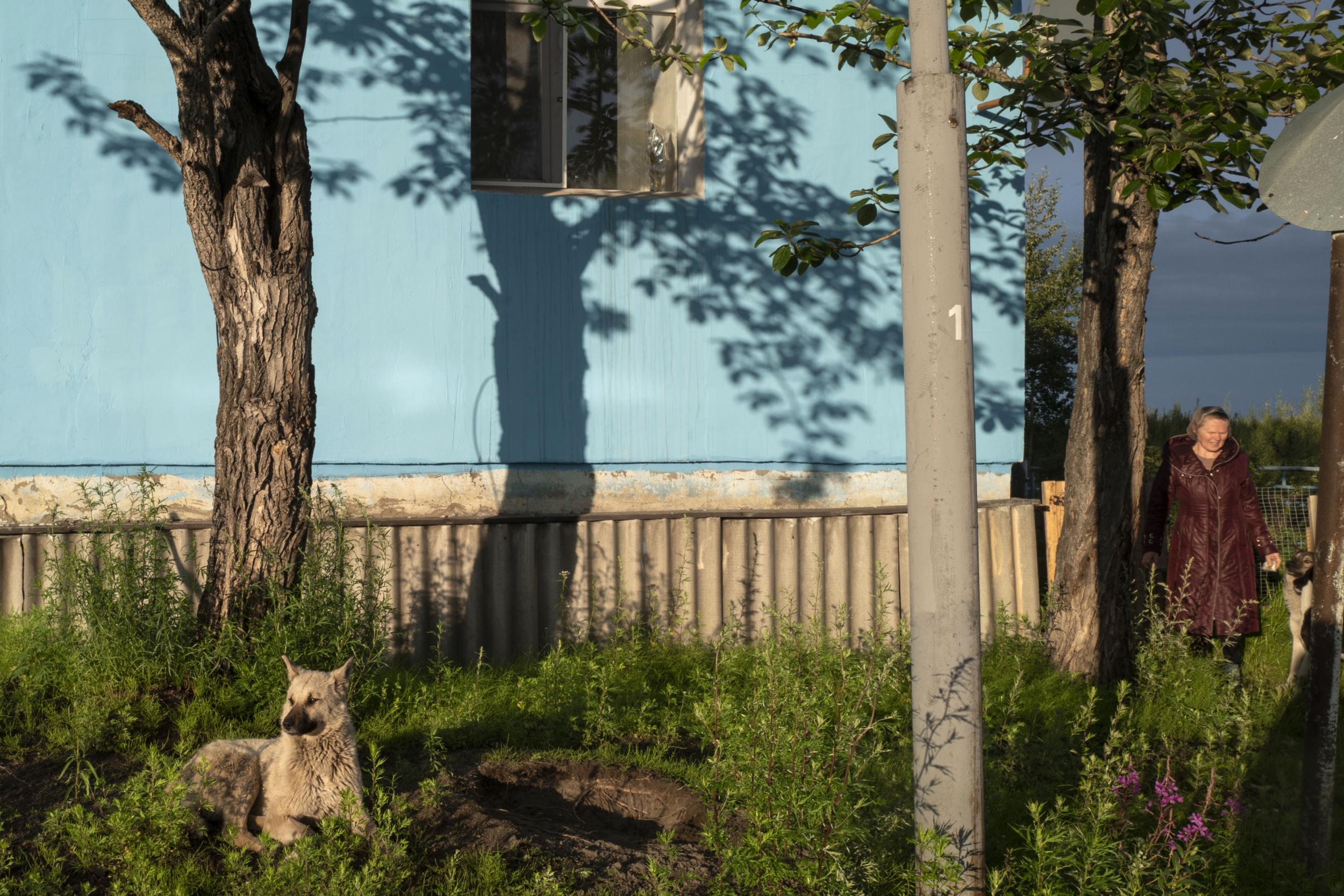
The
idea that warming brings disaster is ingrained in the tradition of
the Sakha people of Yakutia, the region laced by the Zyryanka and
Kolyma rivers. An old Sakha prophecy says: “They will survive until
the day when the Arctic Ocean melts.”
Village
elders recalled the phrase after an episode of catastrophic flooding
in 2005, according to Susan Crate, an anthropologist at George Mason
University, who has long studied climate change in Siberia. The
radical transformation underway here, she says, should serve as a
warning to people in every corner of the globe. “Changing our ways
is imminent,” Crate says.
Over
the past 50 years, temperatures across most of Yakutia have risen at
double or even triple the global average rate, according to work by
Yakutsk-based scientists Fedorov and Alexey Gorokhov. The town of
Zyryanka has warmed by just over 2C from 1966 to 2016, according to
their analysis.
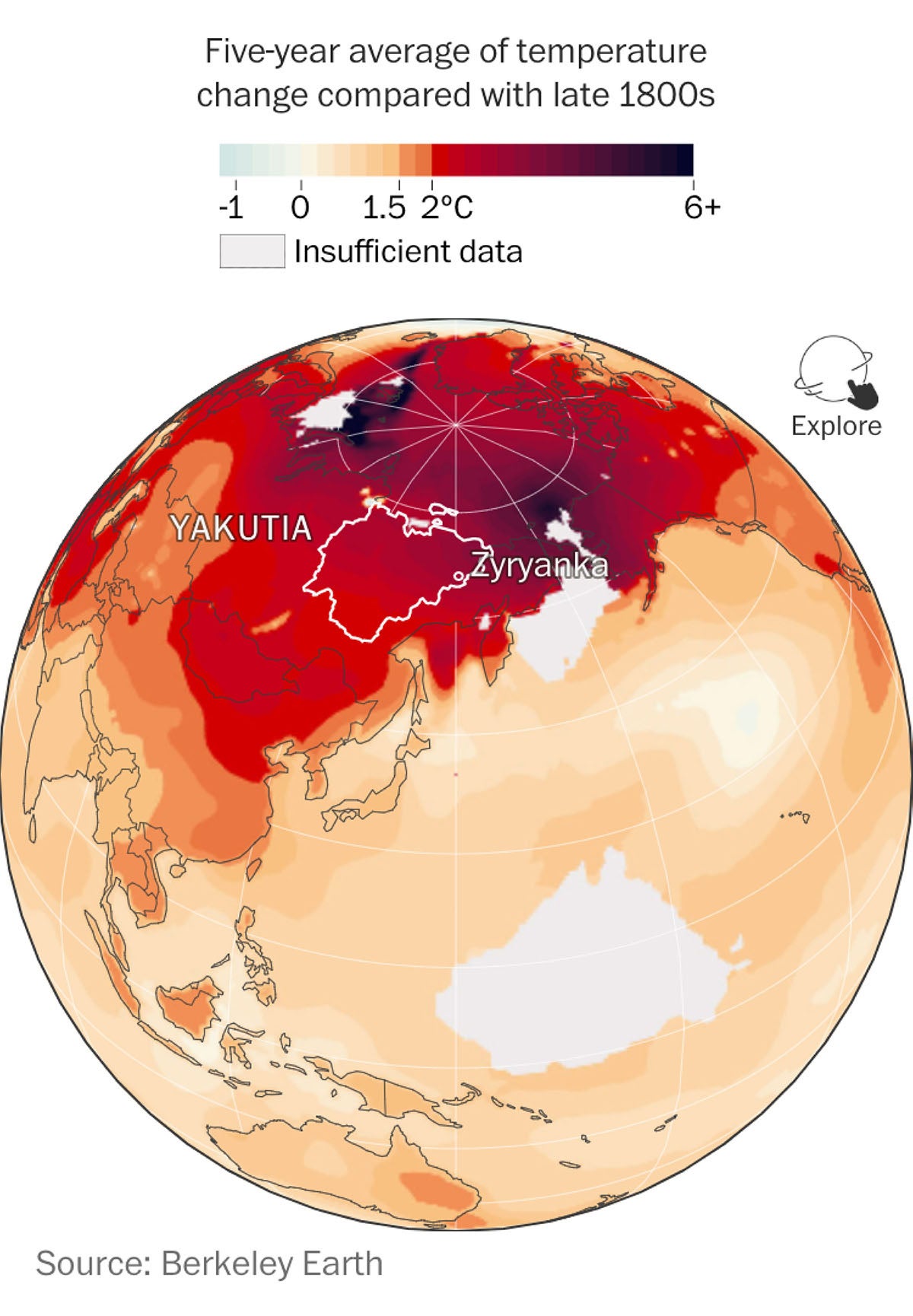
The Post’s analysis, which uses a data set from Berkeley Earth, looks further back. It shows that Zyryanka and the roughly 2,000-square-mile area surrounding it has warmed by more than 3C when the past five years are compared with the mid- to late 1800s. Some regions of Siberia bordering on the Arctic Ocean are warming even faster, the analysis shows.
Desyatkin,
at the Russian Academy of Sciences in Yakutsk, found that the changes
are even more dramatic underground. From 2005 to 2014, his team
found, the number of days with below-freezing temperatures three feet
below the surface fell from around 230 days a year to 190. That is
significant because enormous wedges of ice lie under Yakutia.
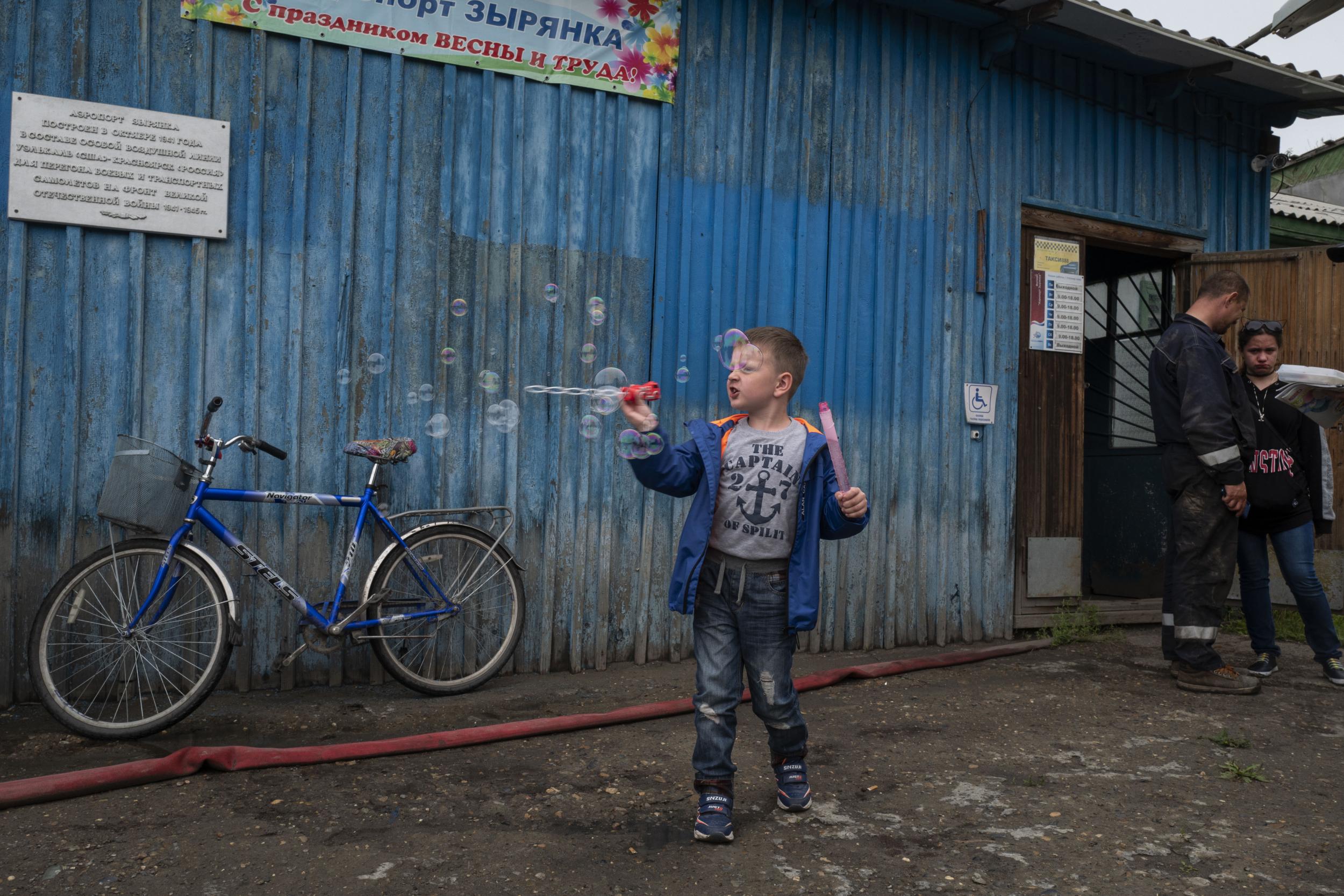
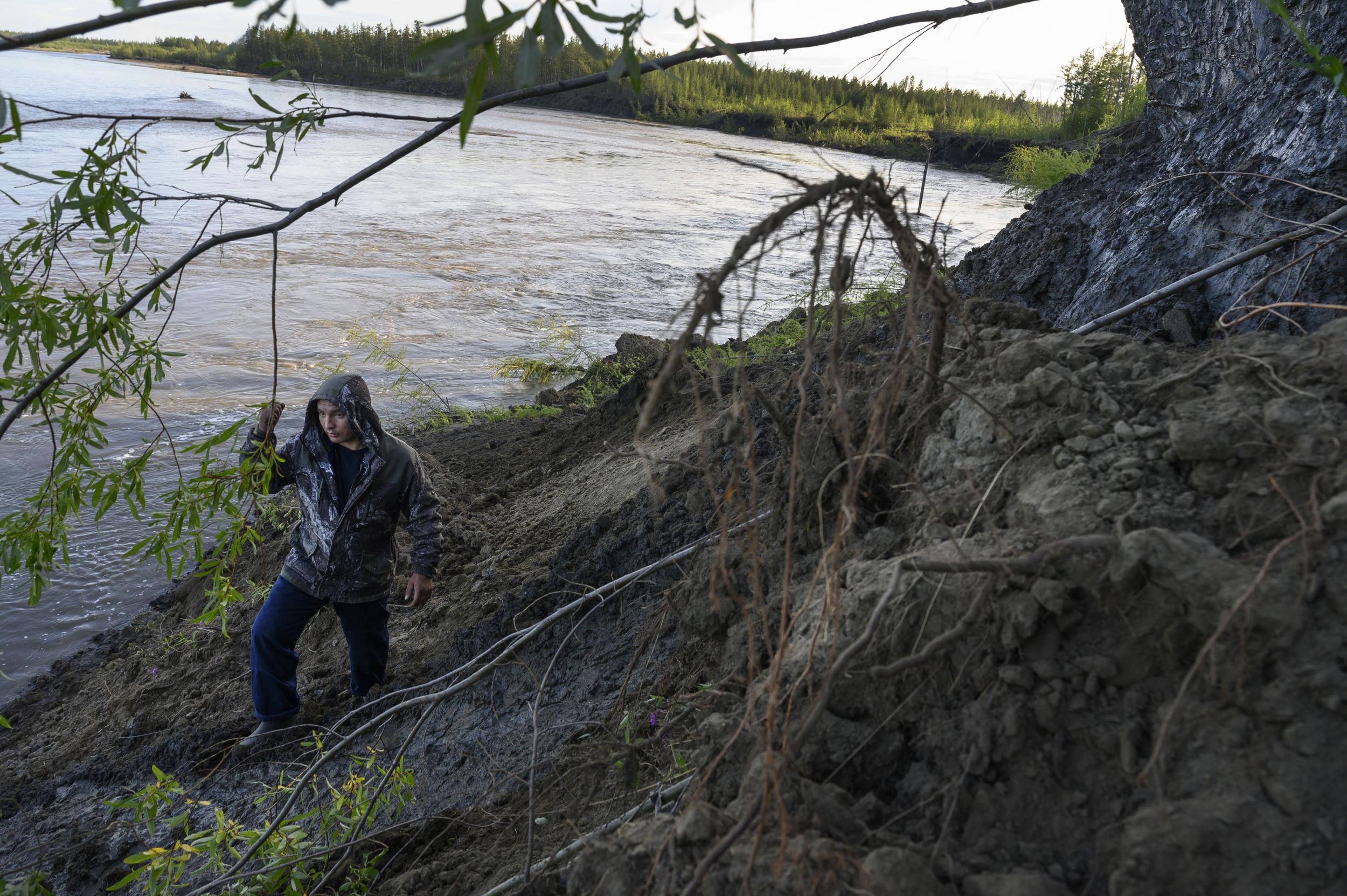
In some parts of the world, permafrost lies in a relatively thin layer just below the ground’s surface. But in much of Yakutia, the permafrost is of a special, icy and far thicker variety. Scientists call it Yedoma. Formed during the late Pleistocene, the Earth’s last glacial period, which ended about 11,700 years ago, Yedoma consists of thick layers of soil packed around gigantic lodes of embedded ice. Because Yedoma contains so much ice, it can melt quickly – reshaping the landscape as sudden lakes form and hillsides collapse.
Around
Zyryanka, exposed ice wedges glisten along the riverbanks. Their
slick, muddy surfaces form ghostly, moonlike grooves. Plant roots
dangle like Christmas ornaments from the top layer of soil, left
behind as the ice below it melts.
In
the 1970s, Desyatkin says, the ground in the Middle Kolyma District,
just north of Zyryanka, thawed to a depth of about two feet every
summer. Now it thaws to more than three feet. That extra foot of
thawing means that, on average, every square mile of territory has
been releasing an additional 700,000 gallons of water into the
environment every year, according to Desyatkin’s calculations.
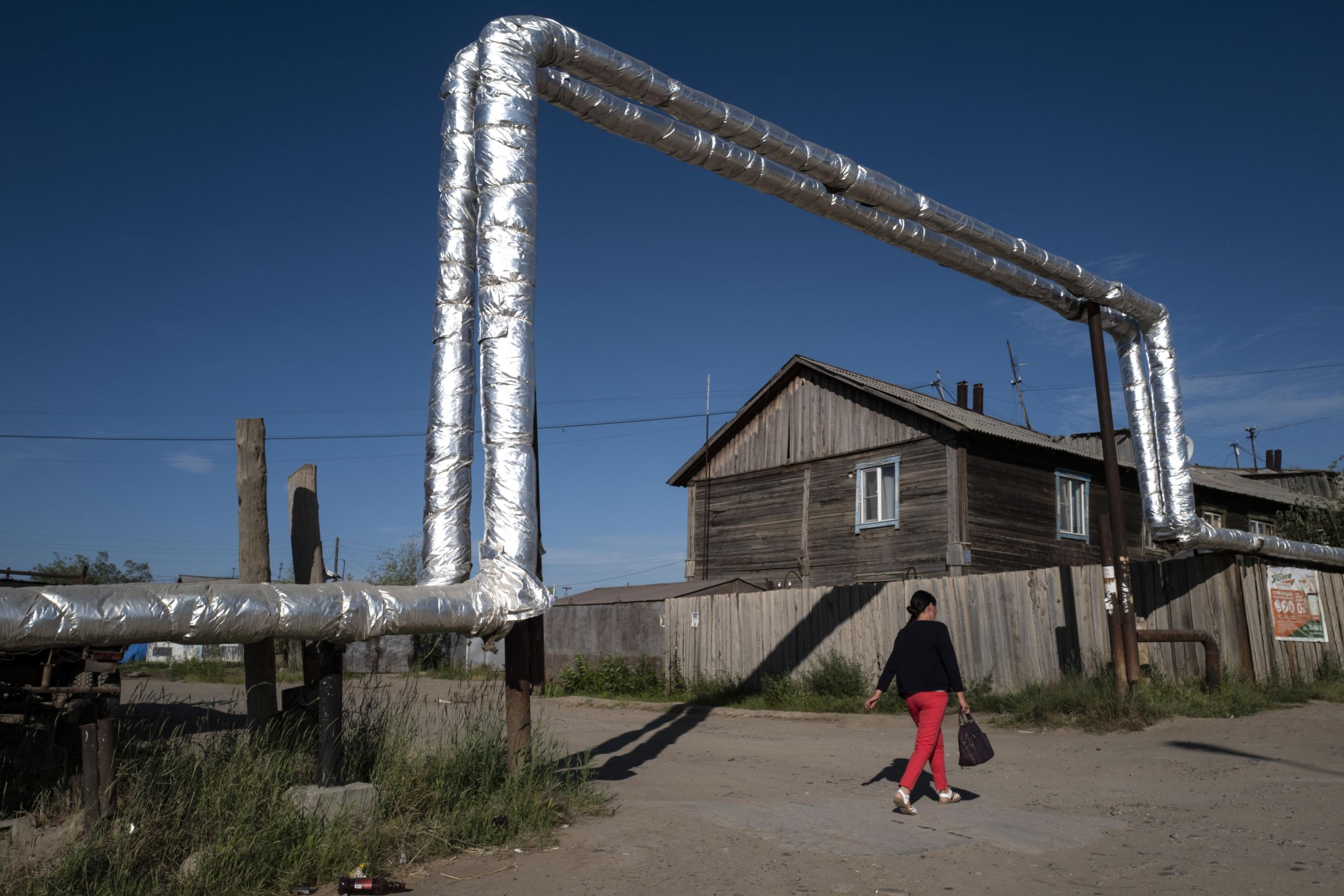
Meanwhile,
ancient plant and animal remains trapped inside the Yedoma are
exposed to non-freezing temperatures – or even the open air. That,
in turn, activates microbes, which break down the remains and unleash
carbon dioxide into the atmosphere, especially from the thawing plant
material.
Scientists
estimate that the Earth’s Yedoma regions contain between 327
billion and 466 billion tons of carbon. Were it all released into the
atmosphere, that would amount to more than half of all human-caused
emissions from greenhouse gases and deforestation between 1750 and
2011.
Although
the thawing of these ancient remains raises the threat of terrifying
consequences, it is, for some, the bright side of climate change.
“The thawing of the permafrost has a very good effect. The mammoth
bone comes out and brings us money,” says Yevgeny Konstantinov, a
newspaper editor in the Arctic town of Saskylakh. “Everyone rides
Jeeps now.”
In
recent years, demand from China has created a booming market for
mammoth ivory. People in Yakutia collected almost 80 tons in 2017,
according to official figures – a likely undercount, experts say. A
Yakutia official recently estimated annual sales to be as high as
$63m (£50m).
As
the permafrost thaws and riverbanks erode, more tusks will emerge.
Though mammoths disappeared from the Siberian mainland some 10,000
years ago, the government estimates that 500,000 tons of their tusks
are still buried in the frozen ground.
Supply
and demand are so great that some people are collecting mammoth tusks
at near-industrial scale. They use high-pressure hoses to blast away
riverbanks and hire teams of young men to comb the wilderness for
months at a time. People involved in the business, which isn’t
entirely legal, say some tusk prospectors have deployed underwater
cameras and scuba gear.
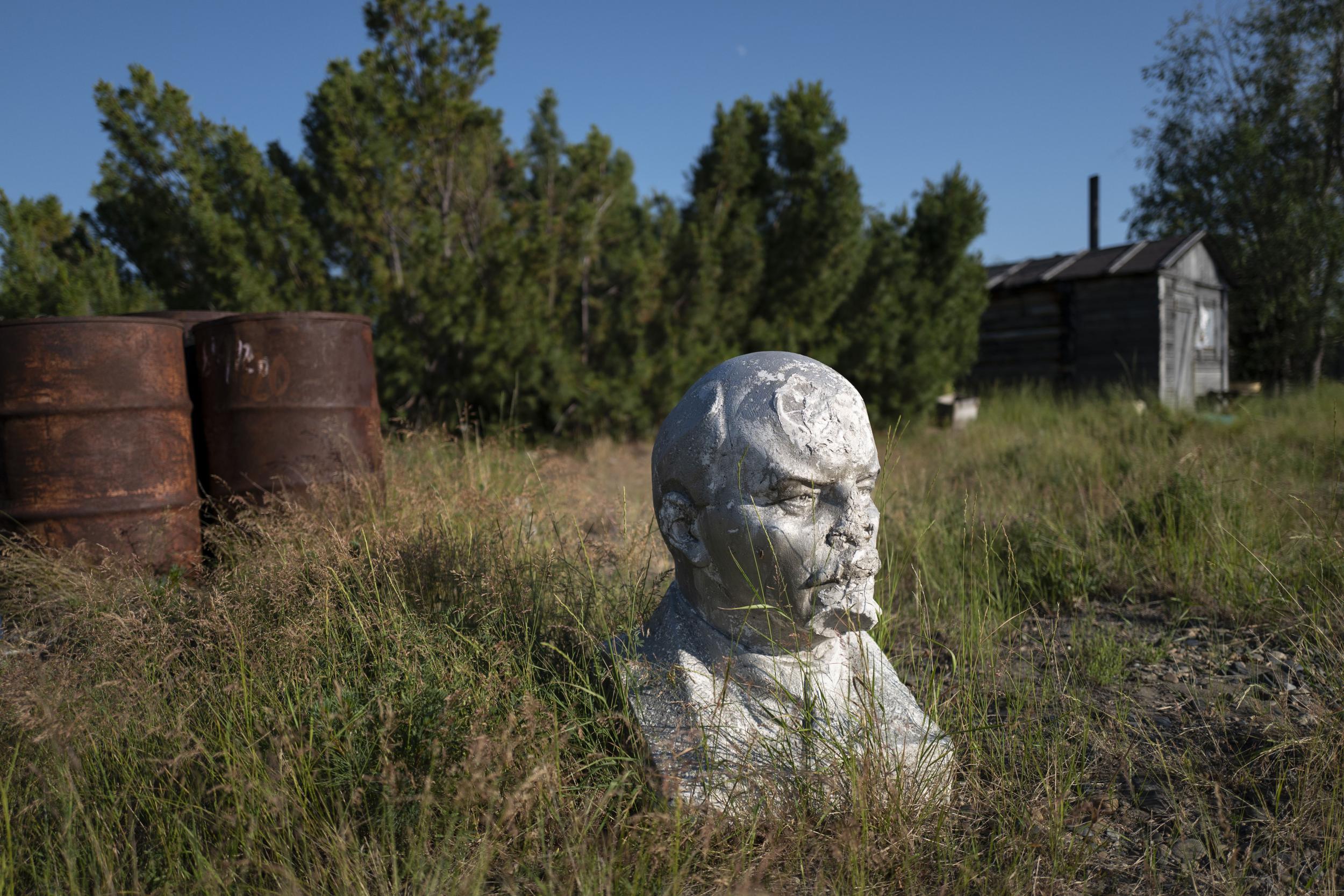
A
decaying bust of Vladimir Lenin sits on the banks of the Kolyma river
“You
get bit once, you catch the bug. It’s like a gold rush,” says
Alexey Sivtsev, a prospector in Zyryanka who says he is licensed to
collect tusks. In the glutted market, Sivtsev says, the price for top
quality tusks has fallen from about $500 per pound five years ago to
around $180.
According
to Sakha tradition, tusk-hunting violates the sacred ground and
brings bad tidings. Some Siberians worry that it also draws young
people into an underworld linked to organised crime. “Since all
this is connected to criminality, I’m worried that this mafia, as
we call it, is getting a basis for existing in our villages,” says
Vyacheslav Shadrin, who studies northern indigenous peoples at the
Russian Academy of Sciences in Yakutsk.
Konstantin
Gusev, a hunter in Nelemnoye, is still waiting for his mammoth
payday. Once, he found the tusk of an ancient woolly rhinoceros, but
threw it away. He later learned that such a find sells for $7,000 per
pound, making it among the most valuable animal remains buried
underground. Gusev now has his eye on a strip of riverbank where he
found a mammoth tooth. He invested in a water pump and hose to try to
uncover what’s underneath.
Vanda
Ignatyeva, a Yakutsk sociologist, says climate change is leaving
people with few choices: “They have to somehow support and feed
their families.”
The
mammoths aren’t enough to keep Gusev in the countryside, however:
the hunter says he is moving to Yakutsk to look for other kinds of
work.
Andrei
Zimzyulin lounges at his fishing camp on the riverbank
The
ducks and geese are just about gone, he says, moving possibly to new
habitats in Siberia as the climate shifts. The sable pelts aren’t
as thick as they used to be; the shorter winters mean that once
reliably frozen-over lakes and rivers are now less predictable,
making hunting grounds more difficult to reach and restricting his
ability to get goods to market. “Something is changing,” Gusev
says. “People are sitting around, trying to survive.”
In
Nelemnoye, the population has declined to 180 from 210 in the past
decade, according to village head Andrei Solntsev. Just 82 of the
residents have work. Many factors are pushing people to move to the
city – lack of internet access, poor flight connections, limited
job opportunities – but the uncertainty born of a changing climate
looms over everything.
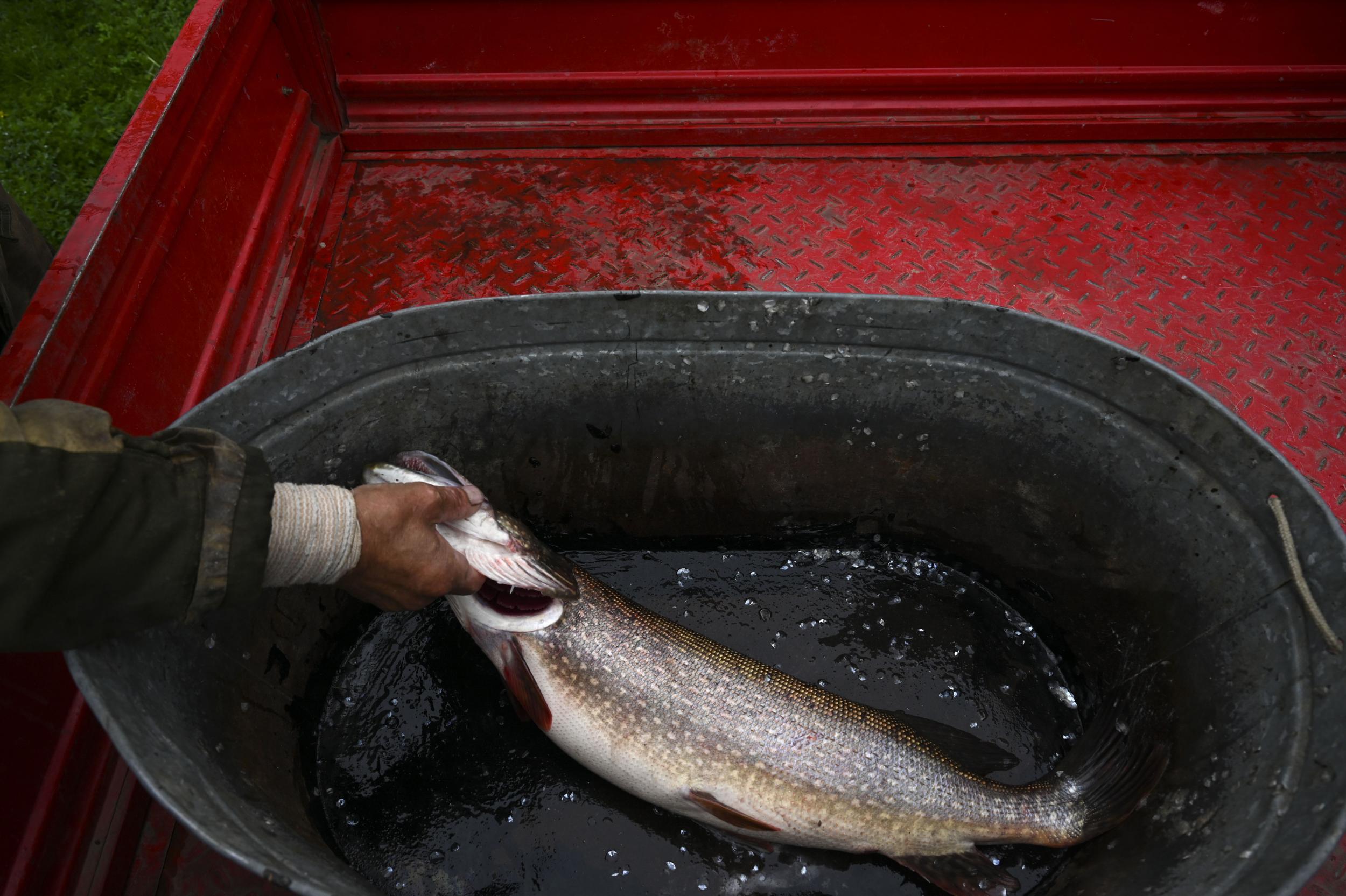
Innokenty
Dyachkov pulls a pike out of a tub in Nelemnoye. Fishing is the
lifeblood of the village
“We’re
already seeing the phenomenon of climate refugees,” Shadrin says.
But “it’s not like anyone is waiting for them here” in the
city, he states. “No one is ready to help them immediately...
They’re breaking away, becoming marginals.”
And
Yakutsk offers no escape from the warming climate. As the permafrost
thaws and recedes, a handful of apartment buildings there are showing
signs of structural problems. Sections of many older, wooden
buildings already sag towards the ground, rendered uninhabitable by
the unevenly thawing earth. New apartment blocks are being built on
massive pylons, extending ever deeper – more than 40 feet – below
ground.
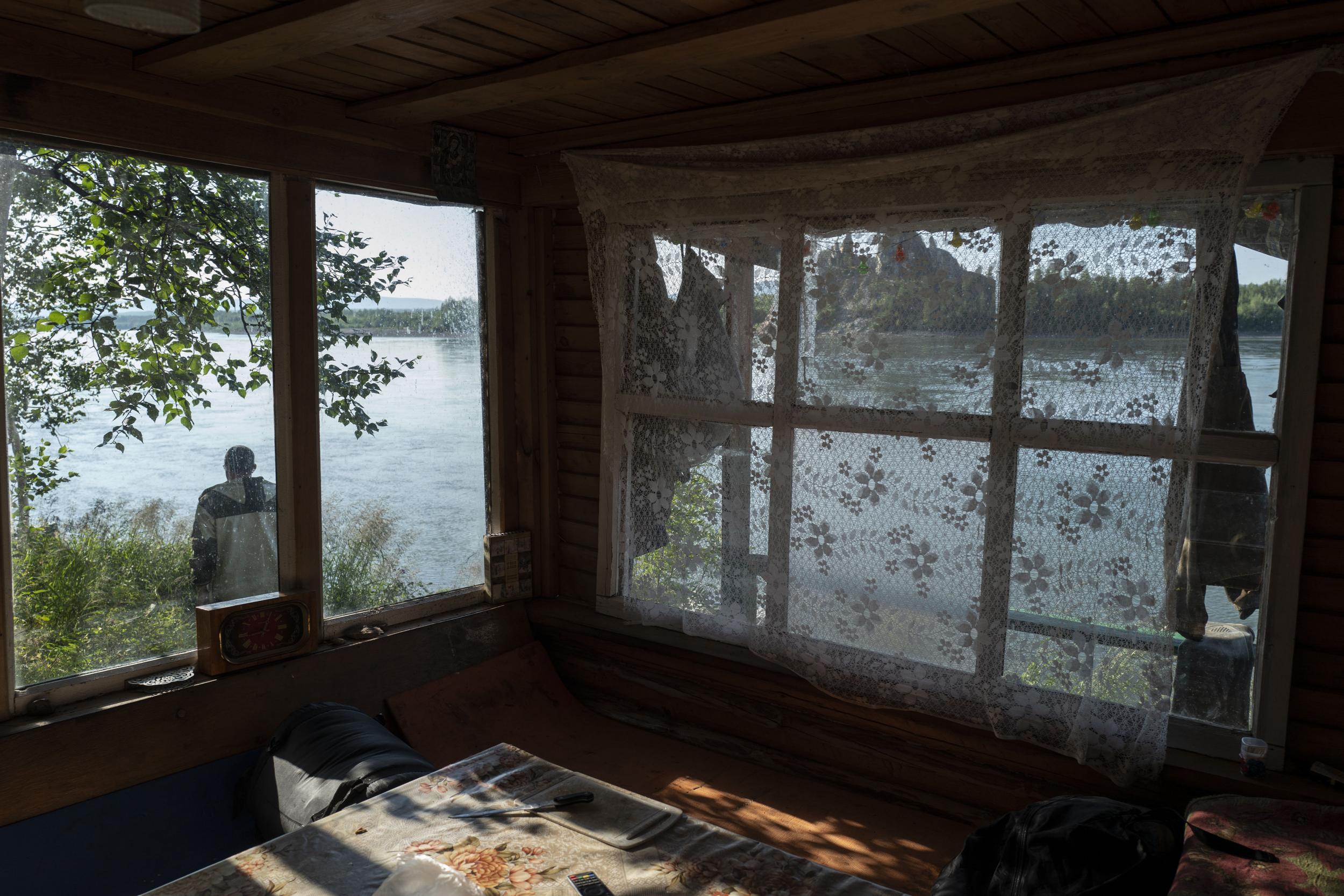
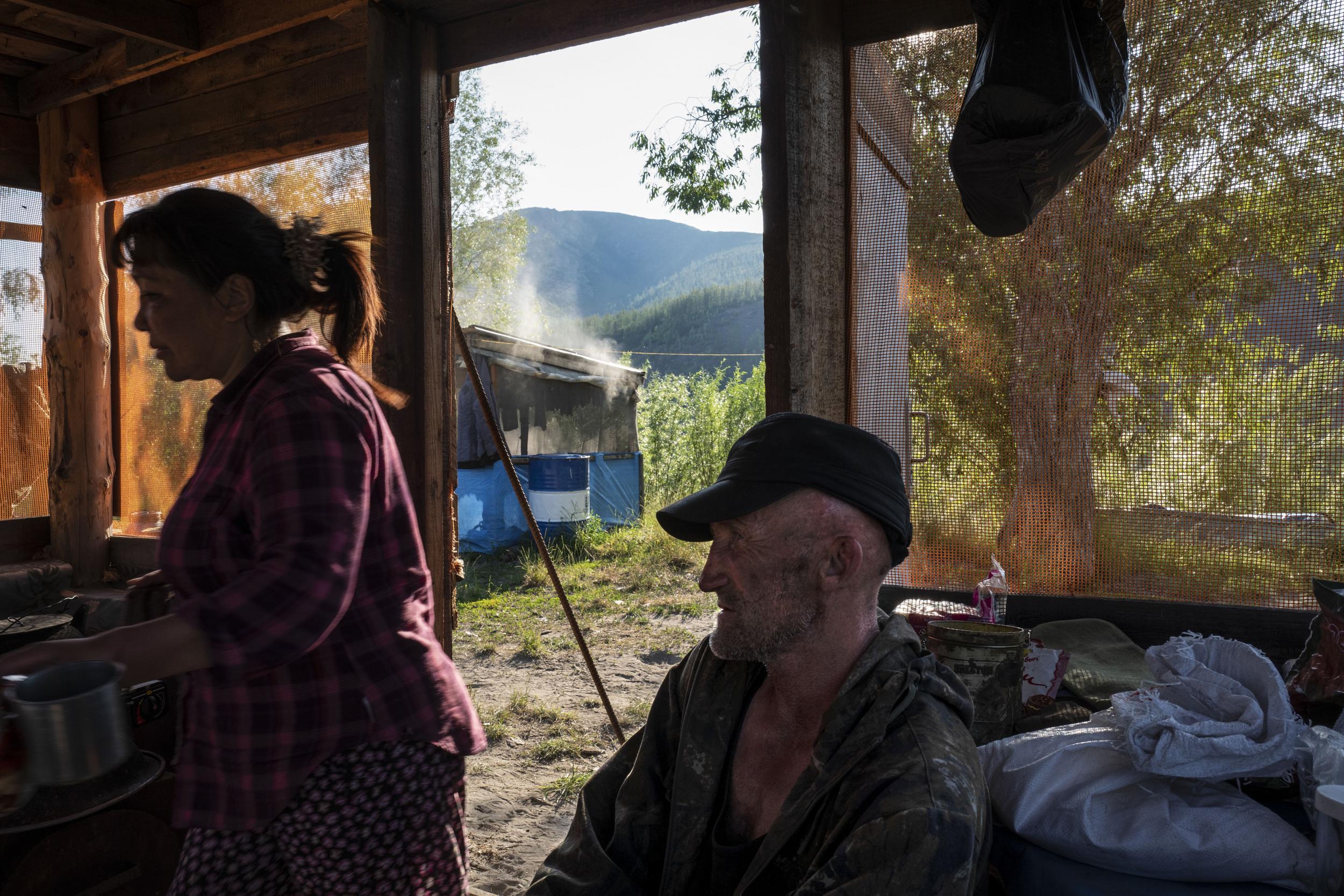
The
Kolyma river, seen through the windows of a hunting lodge
“The
cold is our protection,” Yakutsk Mayor Sardana Avksentyeva says.
“This isn’t a man-made catastrophe yet, but it’ll be
unavoidable if things continue at this pace.”
An
international team of scientists, led by Dmitry Streletskiy at George
Washington University, estimated in a study published this year that
the value of buildings and infrastructure on Russian permafrost
amounts to $300 billion – about 7.5 per cent of the nation’s
total annual economic output. They estimate the cost of mitigating
the damage wrought by thawing permafrost will probably total more
than $100bn by 2050.
But
people here are used to adapting. They survived the forced
collectivisation of the early Soviet Union. Gulag prisoners taught
them to grow potatoes. After the Soviet Union collapsed and the state
farms closed, they shifted to a greater reliance on hunting and
fishing.
Now,
Anatoly Sleptsov, 61, is once again embracing change. The pastures of
the village where he used to live have turned into swamps and lakes.
So he moved to firmer ground outside Zyryanka, where he’s
leveraging climate change to his advantage.
Though
Sleptsov’s attempt to create an Israeli-style kibbutz failed, he
figures the region can profit by marketing omega 3 fatty acids
extracted from its fish. Meanwhile, his potatoes are flowering
earlier and this year he started growing strawberries. “Next
thing,” he says, “we’ll have watermelon.”
Subscribe to:
Posts (Atom)