Showing posts with label methane hydrates. Show all posts

Saturday, 21 November 2020

Video and pictures from latest research mission show gas release in the Laptev and the East Siberian seas

 Bubbling methane craters and super seeps - is this the worrying new face of the undersea Arctic?

Video and pictures from latest research mission show gas release in the Laptev and the East Siberian seas.


By Valeria Sukhova, Olga Gertcyk

A team of 69 scientists from ten countries documented bubble clouds rising from a depth of around 300 metres (985ft) along a 150km (93 mile) undersea slope in the Laptev Sea, and confirmed high methane concentrations by hundreds of onboard chemical analysis. Picture: TPU

Siberian Times,

19 November 2020


Scientists have shared the first results of a trip to the world’s largest deposit of subsea permafrost and shallow methane hydrates. 

Fields of methane discharge continue to grow all along the East Siberian Arctic Ocean Shelf, with concentration of atmospheric methane above the fields reaching 16-32ppm (parts per million).

This is up to 15 times above the planetary average of 1.85ppm. 

The preliminary results are from this year’s only international scientific expedition to the eastern Arctic.

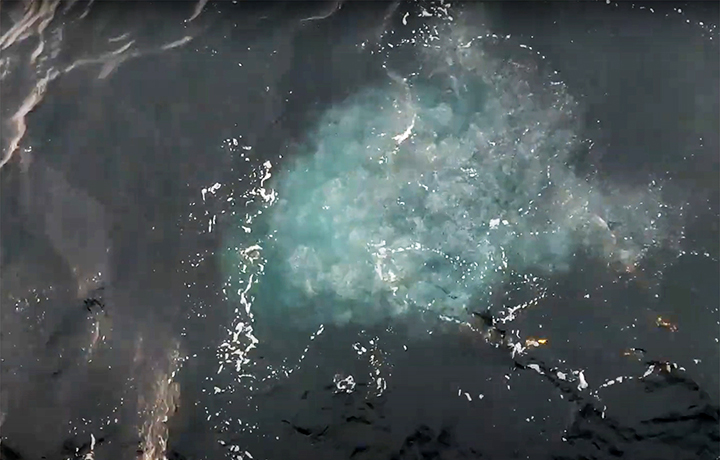
Methane bubbling in the Eastern Arctic, video from this autumn international expedition to the Laptev and to the East Siberian Sea  


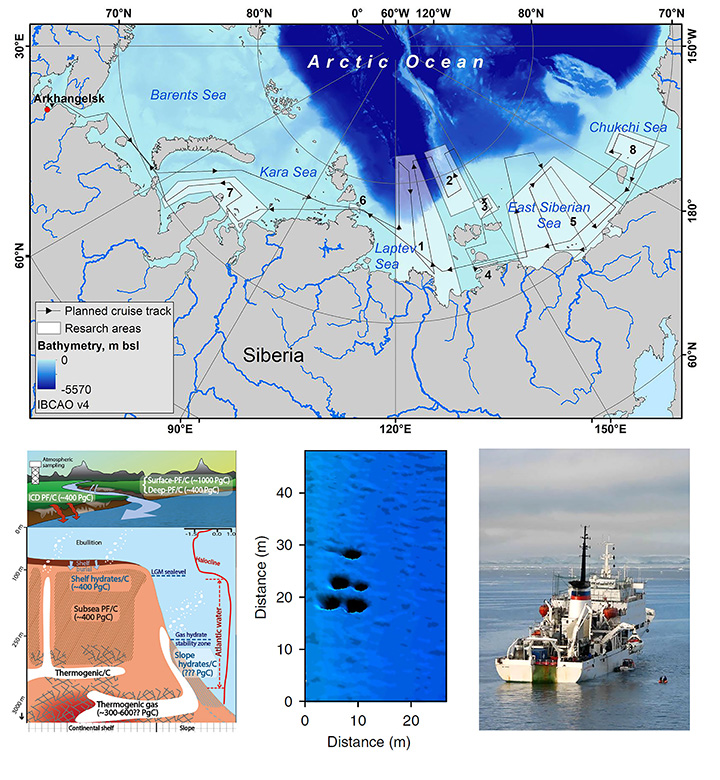
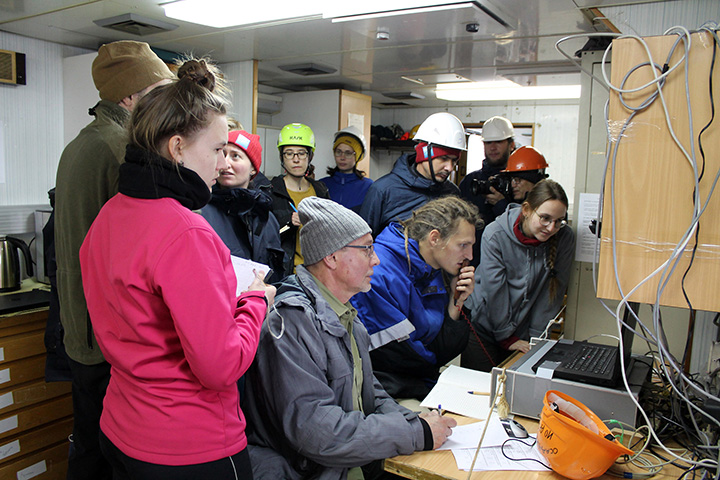
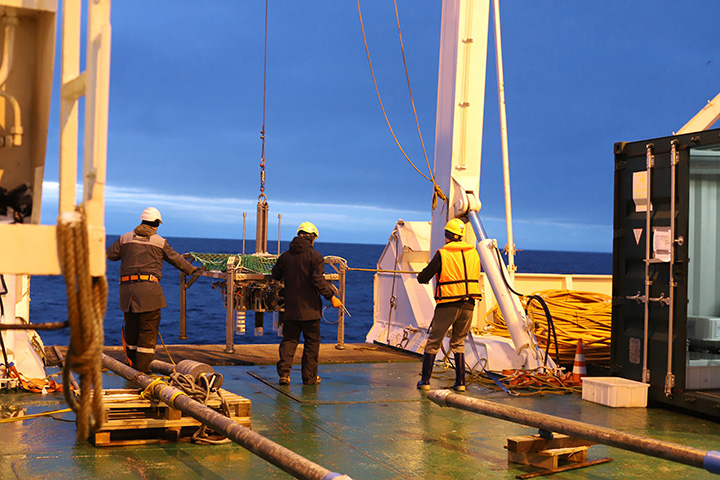
A team of 69 scientists from ten countries documented bubble clouds rising from a depth of around 300 metres (985ft) along a 150km (93 mile) undersea slope in the Laptev Sea, and confirmed high methane concentrations by hundreds of onboard chemical analysis.

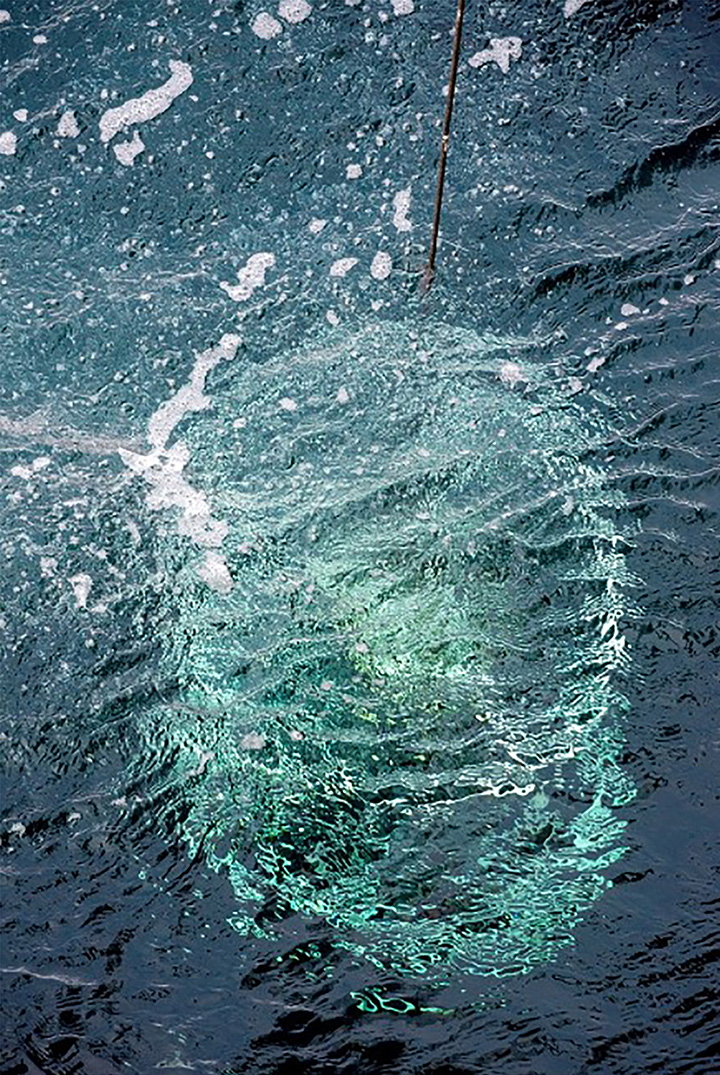
A second discovery is pockmarks and craters sunk deep in shelf sediments of both the Laptev and East Siberian seas, actively venting bubbles and strong methane signals. 

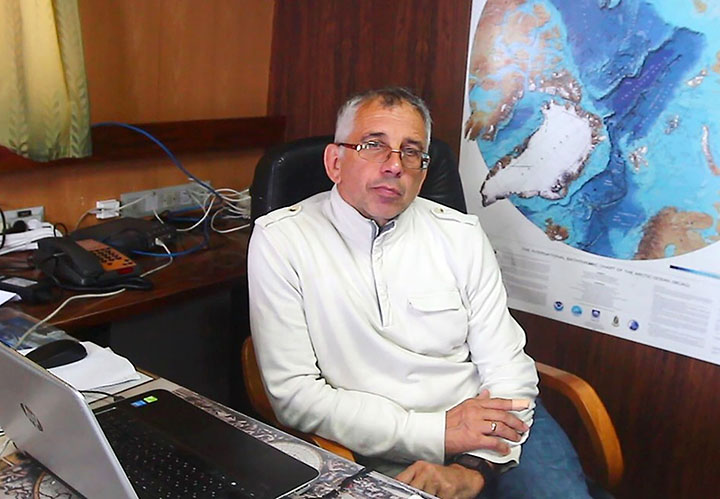
‘All previously discovered fields of methane discharge showed an increase to various degrees, now we need to figure out exactly how much they grew,’ said the head of the expedition Professor Igor Semiletov.

‘One of the new discoveries was a field of sea bottom craters in the shallow part of the Laptev Sea, some of them 30 metres (98 ft) in diameter. 

‘They look like holes in the permafrost and, as our studies showed, they were formed by massive methane discharge. 

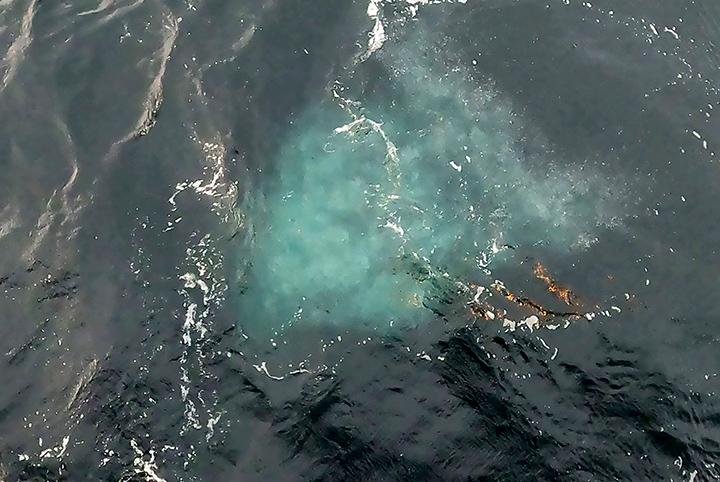
‘Also two more powerful seeps emitting methane through iceberg furrows were discovered in the East Siberian Sea.’
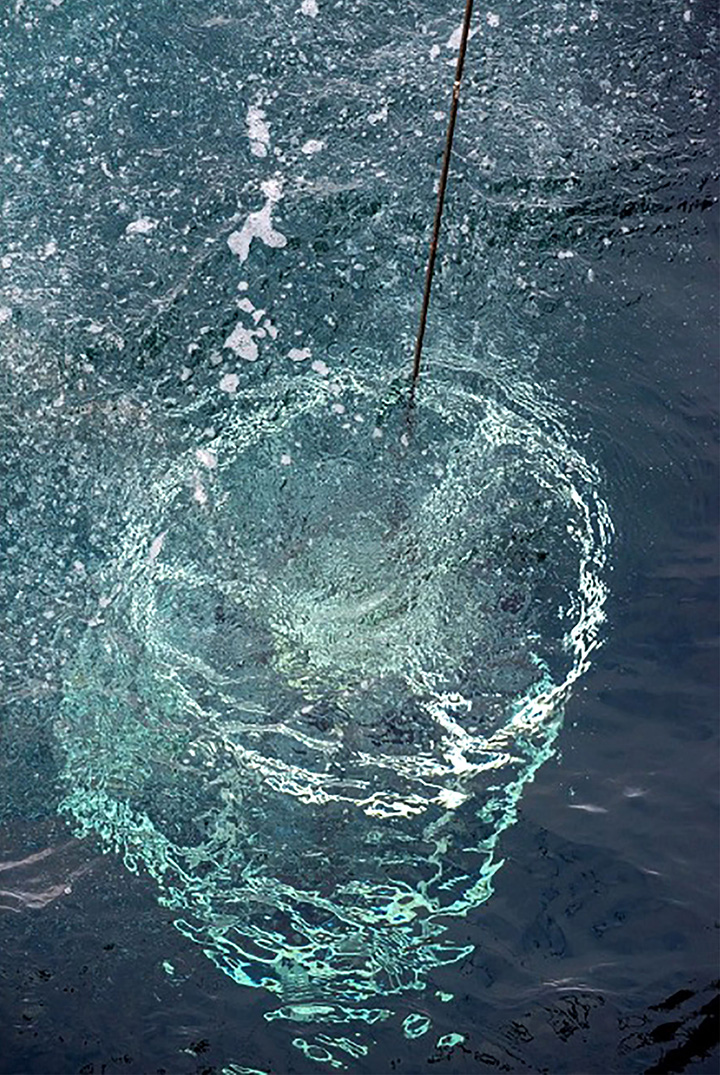
Bubbling methane craters and super seeps - is this the worrying new face of the undersea Arctic


Bubbling methane craters and super seeps - is this the worrying new face of the undersea Arctic


Bubbling methane craters and super seeps - is this the worrying new face of the undersea Arctic


Bubbling methane craters and super seeps - is this the worrying new face of the undersea Arctic


Bubbling methane craters and super seeps - is this the worrying new face of the undersea Arctic
‘All previously discovered fields of methane discharge showed an increase to various degrees, now we need to figure out exactly how much they grew,’ said the head of the expedition Professor Igor Semiletov. Pictures: ISSS2020, TPU


The expedition mapped over 1,000 large seep fields (areas of massive methane discharge over 100 metres or 328 ft) and mega seep fields, each over 1,000 metres in linear dimension. 

‘We believe these emissions at this stage have not yet any large impact on global atmospheric methane and climate, yet these huge carbon/GHG capacitors are clearly activated’, the expedition communication page said.

Six mega seeps were registered in both the Laptev and the East Siberian seas in what the scientists described as ‘the first comprehensive observation of active release from methane hydrates on the Siberian-Arctic slope system’.
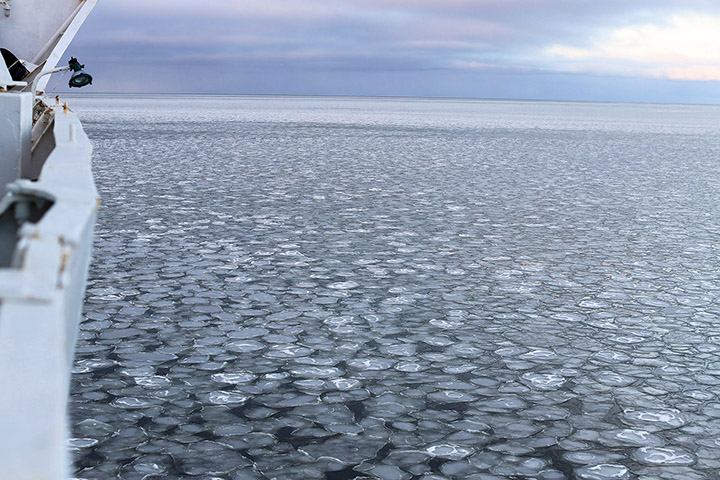
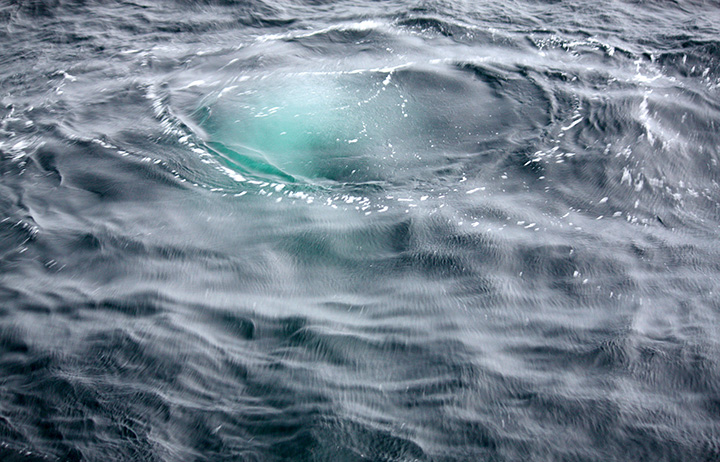
Bubbling methane craters and super seeps - is this the worrying new face of the undersea Arctic


Bubbling methane craters and super seeps - is this the worrying new face of the undersea Arctic


Bubbling methane craters and super seeps - is this the worrying new face of the undersea Arctic


Bubbling methane craters and super seeps - is this the worrying new face of the undersea Arctic


Bubbling methane craters and super seeps - is this the worrying new face of the undersea Arctic

‘All previously discovered fields of methane discharge showed an increase to various degrees, now we need to figure out exactly how much they grew,’ said the head of the expedition Professor Igor Semiletov (pictured). Pictures: ISSS2020, TPU


The expedition members spent 40 days on board the Akademik Keldysh research vessel, covering a distance of nearly 6,000 nautical miles.

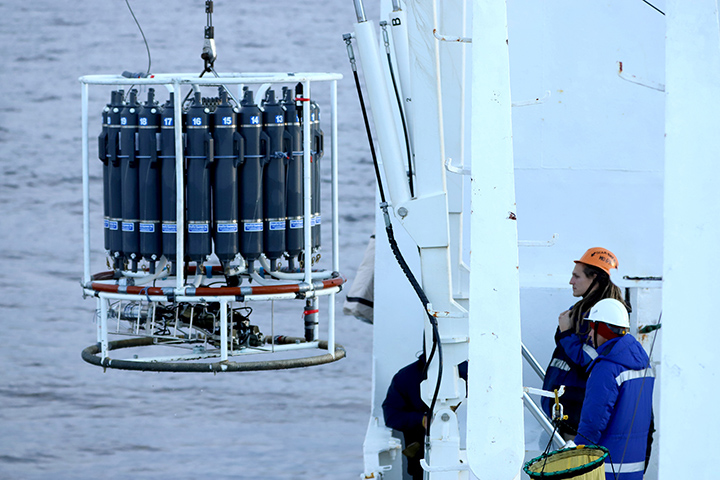
For the first time the scientists managed to take samples of bottom sediments in a methane seep near the delta of River Lena, one of Siberia’s giant waterways.

Along with the Lena, the East Siberian Arctic Shelf is fed by other large Arctic rivers like the Khatanga, Indigirka and Kolyma, which deliver significant quantities of organic matter thus making it particularly vulnerable to climate warming and erosion.

Wednesday, 28 October 2020

Media ADMITS to methane deposits starting to release

 Until today this has been roundly denied with Yale University putting out a series of videos a year or so ago


'Sleeping giant' Arctic 

methane deposits starting to 

release, scientists find

Exclusive: expedition discovers new source of greenhouse gas off East Siberian coast has been triggered 


The Guardian,

27 October, 2020


Scientists have found evidence that frozen methane deposits in the Arctic Ocean – known as the “sleeping giants of the carbon cycle” – have started to be released over a large area of the continental slope off the East Siberian coast, the Guardian can reveal.


High levels of the potent greenhouse gas have been detected down to a depth of 350 metres in the Laptev Sea near Russia, prompting concern among researchers that a new climate feedback loop may have been triggered that could accelerate the pace of global heating.


The slope sediments in the Arctic contain a huge quantity of frozen methane and other gases – known as hydrates. Methane has a warming effect 80 times stronger than carbon dioxide over 20 years. The United States Geological Survey has previously listed Arctic hydrate destabilisation as one of four most serious scenarios for abrupt climate change.


The international team onboard the Russian research ship R/V Akademik Keldysh said most of the bubbles were currently dissolving in the water but methane levels at the surface were four to eight times what would normally be expected and this was venting into the atmosphere.


“At this moment, there is unlikely to be any major impact on global warming, but the point is that this process has now been triggered. This East Siberian slope methane hydrate system has been perturbed and the process will be ongoing,” said the Swedish scientist Örjan Gustafsson, of Stockholm University, in a satellite call from the vessel.


The scientists – who are part of a multi-year International Shelf Study Expedition – stressed their findings were preliminary. The scale of methane releases will not be confirmed until they return, analyse the data and have their studies published in a peer-reviewed journal.


But the discovery of potentially destabilised slope frozen methane raises concerns that a new tipping point has been reached that could increase the speed of global heating.


The Arctic is considered ground zero in the debate about the vulnerability of frozen methane deposits in the ocean.


With the Arctic temperature now rising more than twice as fast as the global average, the question of when – or even whether – they will be released into the atmosphere has been a matter of considerable uncertainty in climate computer models.


The 60-member team on the Akademik Keldysh believe they are the first to observationally confirm the methane release is already under way across a wide area of the slope about 600km offshore.


At six monitoring points over a slope area 150km in length and 10km wide, they saw clouds of bubbles released from sediment.


At one location on the Laptev Sea slope at a depth of about 300 metres they found methane concentrations of up to 1,600 nanomoles per litre, which is 400 times higher than would be expected if the sea and the atmosphere were in equilibrium.


Igor Semiletov, of the Russian Academy of Sciences, who is the chief scientist onboard, said the discharges were “significantly larger” than anything found before. “The discovery of actively releasing shelf slope hydrates is very important and unknown until now,” he said. “This is a new page. Potentially they can have serious climate consequences, but we need more study before we can confirm that.”


The most likely cause of the instability is an intrusion of warm Atlantic currents into the east Arctic. This “Atlantification” is driven by human-induced climate disruption.


The latest discovery potentially marks the third source of methane emissions from the region. Semiletov, who has been studying this area for two decades, has previously reported the gas is being released from the shelf of the Arctic – the biggest of any sea.


For the second year in a row, his team have found crater-like pockmarks in the shallower parts of the Laptev Sea and East Siberian Sea that are discharging bubble jets of methane, which is reaching the sea surface at levels tens to hundreds of times higher than normal. This is similar to the craters and sinkholes reported from inland Siberian tundra earlier this autumn.


Temperatures in Siberia were 5C higher than average from January to June this year, an anomaly that was made at least 600 times more likely by human-caused emissions of carbon dioxide and methane. Last winter’s sea ice melted unusually early. This winter’s freeze has yet to begin, already a later start than at any time on record.


https://www.aces.su.se/research/projects/the-isss-2020-arctic-ocean-expedition/

From last year


https://www.theguardian.com/environment/2019/jun/07/oceans-demise-the-end-of-the-arctic-as-we-know-it

Sunday, 20 September 2020

Jennifer Hynes and Jim Massa on the methane monster

For those with some stomach for the truth.

This is the first I've heard of Jim Massa. He's worth listening to.

 Jennifer Hynes & Jim Massa recap the research- a sea that is "boiling" with methane......

Science Talk with Oceanographer Jim Massa. You Tube.  

https://www.youtube.com/channel/UCpHe...


Wednesday, 19 August 2020

Towards a methane hydrates tipping point

 Methane Hydrates Tipping Point threatens to get crossed

Arctic News,

18 August, 2020


The July 2020 ocean temperature anomaly on the Northern Hemisphere was 1.11°C or 2°F above the 20th century average, the highest July anomaly on record. The yellow circles onthe image below are July data and red circles are data for other months.

The July 2020 ocean temperature anomaly on the Northern Hemisphere was well above the latent heat tipping point of 1°C above the 20th century average, threatening to soon reach the methane hydrates tipping point of 1.35°C above the 20th century average.


These are only two of ten tipping points that are hitting the Arctic, as described in a earlier post, while additionally there are further tipping points that do not specifically hinge on what happens in the Arctic, e.g. the ozone layer is very vulnerable, as described in an earlier post.

The latent heat tipping point

An earlier analysis indicates that the latent heat tipping point gets crossed when ocean temperature anomalies on the Northern Hemisphere get higher than 1°C above the 20th century average. As above image indicates, the tipping point did get crossed temporarily on several occasions in recent years, but this year it looks to have been crossed irreversibly, as indicated by the trend.


As the image on the right indicates, there still is sea ice present in terms of volume. However, there now is virtually no ice left underneath the surface of the Arctic Ocean to act as a buffer.

In other words, the sea ice has virtually lost its capacity to act as a buffer to consume further heat entering the Arctic Ocean.

Once the latent heat tipping point is crossed, further incoming heat will have to get absorbed by the Arctic Ocean, instead of getting consumed by the melting of sea ice, as was previously the case.

As long as there is sea ice in the water, this sea ice will keep absorbing heat as it melts, so the temperature will not rise at the sea surface and remain at zero°C. The amount of energy that is consumed in the process of melting the ice is as much as it takes to heat an equivalent mass of water from zero°C to 80°C.


Ocean Heat

Meanwhile, global heating continues and more than 90% of global heating is going into oceans.


Arctic sea ice is getting very thin and, at this time of year, it is melting rapidly, due to heat entering the Arctic Ocean from above, from the Atlantic Ocean and the Pacific Ocean, and from rivers that end in the Arctic Ocean.

The two images below shows the difference in sea surface temperatures of the Arctic Ocean, between August 4, 2020, 12 GMT and a forecast for August 22, 2020, 12 GMT. The important difference between the two images is the shrinking of the pale blue area (where the sea surface temperature is below 0°C) in the Arctic Ocean and the increase in areas with other tints of blue (above 0°C).


The image below, from a recent post, shows ocean surface temperatures on August 10, 2020, with very high anomalies showing up where the sea ice has disappeared. The image also shows that the Arctic Ocean in many places is very shallow (right panel).

[ from earlier post ]

The dramatic decline of the sea ice is even more evident when looking at the fall in ice thickness. The navy.mil animation below was run on August 16, 2020, and shows sea ice thickness over 30 days (last 8 frames are forecasts for August 17 - August 24, 2020).


The methane hydrates tipping point

As discussed in earlier posts such as this one, the rising temperature of the Arctic Ocean threatens to destabilize methane hydrates contained in sediments at the seafloor of the Arctic Ocean.

As the top image shows, the methane hydrates tipping point could be crossed soon, as the Arctic Ocean is heating up dramatically, which is in part the result of the latent heat tipping point getting crossed, which makes that the temperature of the Arctic Ocean can rise very rapidly.

The methane hydrates tipping point threatens to get crossed as ocean temperature anomalies on the Northern Hemisphere become higher than 1.35°C above the 20th century average, which threatens to occur early next year.

Because the Arctic Ocean in many places is very shallow, heat can quickly reach sediments at the seafloor, which threatens to destabilize methane hydrates. The water of the Arctic Ocean is particularly shallow over the East Siberian Arctic Shelf (ESAS), making that the water there can warm up very quickly during summer heat peaks with heat reaching the seafloor and penetrating cracks in frozen sediments at the seafloor, which can lead to abrupt destabilization of methane hydrates contained in these sediments.

As discussed in an earlier post, the loss of subsurface sea ice is only one of ten tipping points hitting the Arctic. As the temperature of the oceans keeps rising, more heat will reach sediments at the seafloor of the Arctic Ocean that contain vast amounts of methane, as discussed in this page and this post.


Large abrupt methane releases in one spot will quickly deplete the oxygen in shallow waters, making it harder for microbes to break down the methane there, while methane that is rising through waters that are only shallow will also be able to enter the atmosphere very quickly, leaving little time for microbes to break down the methane.


As illustrated by the 2012 image on the right, a large abrupt release of methane from hydrates in the Arctic can have more warming impact than all carbon dioxide emitted by burning of fossil fuel in a year. This is the result of the high global warming potential (GWP) of methane following its release.

As this warming is concentrated in the Arctic, it will contribute to further methane releases from hydrates in the Arctic.

The situation is extremely dangerous, given the vast amounts of methane present in sediments in the ESAS and given that there is very little hydroxyl in the air over the Arctic to break down the methane.

[ from earlier post ]


Ominously, the MetOp-1 satellite recorded a peak methane level of 2434 parts per billion on the afternoon of August 14, 2020, at 321 mb, while mean methane levels were 1919 ppb.


The danger is further illustrated by the image below, posted in February 2019 and showing a potential rise of 18°C or 32.4°F from 1750 by the year 2026.


Indeed, a rise of 18°C could eventuate by 2026, as illustrated by the image below and as discussed in an earlier post.


The situation is dire and calls for immediate, comprehensive and effective action, as described in the Climate Plan.


Links

• NOAA Global Climate Report - July 2020
https://www.ncdc.noaa.gov/sotc/global/202007

• Danish Meteorological Institute - 5 Day Ocean Forecast - Universal (Greenwich) Time
http://ocean.dmi.dk/anim/index.uk.php

• Danish Meteorological Institute - sea ice thickness and volume
http://polarportal.dk/en/sea-ice-and-icebergs/sea-ice-thickness-and-volume

• NOAA ocean heat content
https://www.nodc.noaa.gov/OC5/3M_HEAT_CONTENT/index.html

• North Hole 2020?
https://arctic-news.blogspot.com/2020/08/north-hole-2020.html

• Arctic Hit By Ten Tipping Points
https://arctic-news.blogspot.com/2020/04/arctic-hit-by-ten-tipping-points.html

• Why stronger winds over the North Atlantic are so dangerous
https://arctic-news.blogspot.com/2020/02/why-stronger-winds-over-north-atlantic-are-so-dangerous.html

• Very High Greenhouse Gas Levels
https://arctic-news.blogspot.com/2020/05/very-high-greenhouse-gas-levels.html

• Critical Tipping Point Crossed In July 2019
https://arctic-news.blogspot.com/2019/09/critical-tipping-point-crossed-in-july-2019.html

• Fast Path to Extinction
https://arctic-news.blogspot.com/2020/06/fast-path-to-extinction.html

• Crossing the Paris Agreement thresholds
https://arctic-news.blogspot.com/p/crossing.html

• 2°C crossed
https://arctic-news.blogspot.com/2020/03/2c-crossed.html

• Why America should lead on climate
https://arctic-news.blogspot.com/2016/01/why-america-should-lead-on-climate.html

• Methane's Role in Arctic Warming
https://arctic-news.blogspot.com/2016/02/methanes-role-in-arctic-warming.html

• The Threat
https://arctic-news.blogspot.com/p/threat.html

• When will we die?
https://arctic-news.blogspot.com/2019/06/when-will-we-die.html

• A rise of 18°C or 32.4°F by 2026?
https://arctic-news.blogspot.com/2019/02/a-rise-of-18c-or-324f-by-2026.html

• Most Important Message Ever
https://arctic-news.blogspot.com/2019/07/most-important-message-ever.html

• Climate Plan
https://arctic-news.blogspot.com/p/climateplan.html

Monday, 16 December 2019

An important scientific paper that explains why methane emissions in the Arctic are HIGHER in WINTER


CONFIRMED: Methane 
releases increase over winter 
in the Barents & Kara Seas & 
Methane
Last winter (2018) Margo and I observed that methane levels actually went UP, something that didn't make sense to either of us.  After all, in winter, there is a layer of ice that would (presumably) stop a release of methane.

A recent paper by Leonid Yurganov et. al demonstrates that satellite obervations have shown that methane emissions have been higher in winter than they are in summer.
I am hugely grateful to Margo for unpacking this paper which, with its dense language and frequent abbreviations makes "incomprehensible" an understatement.
Margo explains this extremely important information that is likely to go largely unreported very clearly in the video below.


Perhaps I can explain it this way.

There is a layer in the Arctic, called the Pycnocline which prevents methane from clathrates from rising to the surface in summer. In winter the cooling surface and the warmer water coming in from the Atlantic breaks down this barrier.  This explains why methane emissions in the Kara and Laptev Seas are higher in winter than they are in summer.

You can read the paper HERE


Methane increase over the Barents and Kara seas after the autumn pycnocline breakdown: satellite observations Leonid YURGANOV1*, Frank MULLER-KARGER2& Ira LEIFER3 University of Maryland Baltimore County (ret), Baltimore, MD,

Abstract 

Seven operative thermal infrared (TIR) spectrometers launched at sun-synchronous polar orbits supply huge amounts of information about Arctic methane (CH4) year-round, day and night. TIR data are unique for estimating CH4 emissions from a warming Arctic, both terrestrial and marine. This report is based on publicly available CH4 concentrations retrieved by NOAA and NASA from spectra of TIR radiation delivered by EU IASI and US AIRS sounders. Data were filtered for high thermalcontrast in the troposphere. Validation versus aircraft measurements at three US continental sites reveal a reduced, but still significant sensitivity to CH4 anomalies in the troposphere below 4 km of altitude. The focus area is the Barents and Kara seas (BKS). BKS is impacted with warm Atlantic water and mostly free of sea ice. It is a shelf area with vast deposits of oil andnatural gas (~90% CH4), as well as methane hydrates and submarine permafrost. Although in summer AIRS and IASI observe no significant difference in CH4 between BKS and N. Atlantic, a strong, monthly positive CH4 spatial anomaly of up to 30 ppboccurs during late autumn–winter. One of explanations of this increase is a fall/winter pycnocline breakdown after a period ofblocked mixing caused by a stable density seawater stratification in summer: enhanced mixing lets CH4 to reach the sea surface and atmosphere.

The Arctic has experienced the fastest warming on Earth over recent decades, termed Arctic amplification, with the Arctic Ocean warming at nearly double the rate of the world’s oceans (Hoegh-Guldberg and Bruno, 2010). Due to Arctic warming, there is concern that the vast stores of the important greenhouse gas methane (CH4) in hydrates, permafrost, and other vulnerable reservoirs can be released to the atmosphere. The radiative impact of CH4 is second after carbon dioxide on century timescales, and larger on decadal timescales (Solomon et al., 2007). Warm Atlantic currents make the Barents and Kara seas (BKS) climatically important with respect to instability of seabed CH4 due to the input of warming seawater. The Barents Sea is a shallow-shelf sea (average depth 230 m) with depressions to 400 m. It currently is close to ice-free year-round (Onarheim and Ã…rthun, 2017). The Kara Sea is even shallower (average depth 100 m) and ice-free in summer.

The BKS has extensive proven oil and natural gas deposits,the latter of which are primarily CH4 (Shipilov and Murzin,2002). Although rather limited, existing data show these reservoirs drive CH4 seepage into the water column (Chand et al., 2014; Platt et al., 2018). At depths greater than 250 mCH4 forms hydrates that are stable in the cold BKS deep waters (~1 ). Additional seabed CH °C 4 is sequestered in the Kara Sea and the South Barents Sea as submarine permafrost (Osterkamp, 2010). Warming seabed water may destabilize submarine permafrost and hydrates, although specific mechanisms and timescales are uncertain.

Most seep bubble CH4 dissolves in process of ebullition in deep water where methanotrophic bacteriaoxidize it on weeks’ to years’ timescales (Reeburgh, 2007).  Only a small fraction of the seep bubble methane directly reaches the air. The seasonal summer pycnocline prevents vertical turbulent diffusion of methane, with concentrations near the seafloor that may be extremely high (Gentz et al.,2014). They studied dissolved CH4 concentrations to the West of Prins Karls Forland (Svalbard) in August 2010 (not in winter) and found that CH4 bubble plumes dissolved below the pycnocline and were not vertically mixing to the upper water column. They suggested that during winter in high latitudes after the summer stratification breaks down, vertical transport of CH4 from the bottom layer is not limited anymore, and CH4 can reach the sea surface. The most comprehensive CH4 measurements at the seafloor and in the atmosphere in the region were collected to the West of Svalbard in June–July, 2014, by Myhre et al. (2016).

They found that summer CH4 release from seabed sediments substantially increases CH4 concentrations above the seafloor with a sharp decrease above the pycnocline. They suggest that dissolved methane captured below the pycnocline may only be released to the atmosphere when physical processes remove the pycnocline as a dynamic barrier. Mau et al. (2017) field measurements between Svalbard and Bear Island in August–September, 2015, also demonstrated the pycnocline as a barrier for CH4. All three investigations came to a conclusion on insignificant methane flux in summer-early autumn around Svalbard and between Svalbard and Bear Island. Meanwhile, as it is well known (Rudels, 1993), during winter in high latitudes convective mixing extends to the seafloor. Currently, this seasonality ofpotential CH4 pathways has not been considered in CH4 budgets (Fisher et al., 2011; AMAP, 2015). To our best knowledge, direct measurements of CH4 flux in winter have not been published for the BKS to date. Summertime CH4 emission density near Svalbard was estimated by Myhre et al. (2016) as 0.04 nmol·m−2·s−1 . Formal extrapolation onto the whole year and total area of BKS (2.317×10⁹ km2) results in0.047 Tg CH4·a−1, i.e. negligible flux.

Shakhova et al. (2010) investigated summer and winter methane flux from the East Siberian Arctic Shelf (ESAS) encompassing the Laptev, East Siberian seas, and Russian part of the Chuckchi Sea. More than 5000 at-sea measurements of dissolved methane have been collected. Greater than 80% of ESAS bottom waters and greater than 50% of surface waters were supersaturated with methane regarding to the atmosphere. In summer diffusive and ebullition fluxes were estimated, respectively, as 1.24 Tg CH4 and 1.68 Tg CH4 (total summer 2.92 Tg CH4), in winter 3.23 Tg CH4 and 4.49 Tg CH4 (total winter 7.72 Tg CH4), totally 10.64 Tg CH4·a−1


An assessment by Berchetet al. (2016) based on surface NOAA network and inverse modeling is significantly lower: 0.5–4.3 Tg CH4·a− . Satellite observations are extremely useful for characterization of Arctic CH4, especially over open sea, due to their continuous and global data record. Thermal infrared (TIR) CH4 data are available globally, day and night, whereas SWIR
CH4 instruments are ineffective in the Arctic due to low or no sunlight, low reflectivity from water and ice, and long atmospheric optical path (Leifer et al., 2012). TIR orbital sensors include AIRS/Aqua, IASI/MetOp-A, B, C, CrIS/NPP,CrIS/NOAA-20, and GOSAT/TANSO-TIR (see a list of abbreviations at the end of the article). Example current SWIR sensors are TROPOMI and GOSAT-SWIR. CH4 retrievals for AIRS and IASI are publicly available (see links in Section 2.1). Yurganov et al. (2016) suggested a filtering technique for the Arctic data and presented data on seasonal, spacial and interannual variability of methane in the layer below 4 km. 
They concluded, “Seasonal increase in methane has been observed since late October–early November. This can be associated with the beginning of vertical convection in the ocean, caused by the cooling of the surface layers and the simultaneous increase in temperature of the underlying water layers. Bottom layers saturated with methane are brought to the surface” (translated from Russian). Preliminarily, Yurganov et al. (2016) assessed the annual emission of methane from the Arctic Ocean in 2010–2014 as ~2/3 of land emission to the North from 60°N. Arctic terrestrial emission is now estimated as 20–30 Tg·a−1 (AMAP, 2015). Therefore, total marine CH4 flux from the Arctic can be expected in the range 15–20 Tg CH4·a−1 (without the Sea of Okhotsk). The most recent analysis ofavailable measurements of the global methane flux from oceans (Weber at al., 2019) by training machine-learning models gave much lower oceanic flux (6–12 Tg CH4·a−1).
However, their conclusion that very shallow coastal waters contribute around 50% of the total methane emissions from the ocean agrees with our data for the Arctic (see below, Section 3). Here we show that CH4 spatial anomaly (SA) over BKS is seasonally growing together with the Mixed Layer Depth (MLD). Therefore, an increase of emission in winter, predicted by Gentz et al. (2013) and Myhre et al. (2016) agrees with remote sensing data and seasonal cycle of MLD. However, this agreement does not exclude other explanations of the effect and a confirmation of a significant wintertime flux from Arctic seas by direct measurements is necessary.After that it may be included into the methane bud

Conclusions

Satellite measurements of CH4 concentration in the lower 4 km of the troposphere reveal a significant, up to 30 ppb, monthly anomaly referenced to North Atlantic maximized in November–December–January over vast areas of BKS, as well as a part of the Greenland Sea. Satellite observations. Arctic methane: satellite data 389 show similar, but less pronounced, anomalies in
autumn–winter over other Arctic seas (Yurganov et al., 2016; Yurganov and Leifer, 2016a). This CH4 anomaly may be interpreted as intensification of CH4 flux induced by turbulent diffusion and/or convection after a breakdown of
the summer stratification. After a confirmation of a significant wintertime flux from Arctic seas by direct measurements the marine CH4 emission may be included into the methane budget.

Tuesday, 29 October 2019

First pictures of methane fountain in Eastern Siberia


First pictures and 
video of the largest 
methane fountain so 
far discovered in the 
Arctic Ocean
Subsea permafrost thaws faster than previously thought, Russian scientists say.
Bubbling water of the East Siberia Sea. Picture: Tomsk Polytechnic University
28 October, 2019


Unexpectedly high level of subsea permafrost degradation was recorded by a Russian-led scientific ]expedition that spent more than a month in the seas of the eastern Arctic.
A record high methane gas emission in a shape of an underwater ‘fountain’ was registered at the beginning of October east of Bennett island in the East Siberian Sea.


‘It was a needle in a haystack chase, to find an exact place of a methane seep in dark sea waters, but we found it!


'Just right off the Academician Keldysh scientists noticed a spot of emerald-coloured water, with gas rushing to surface in thousands of bubble threads’, said expedition member Sergey Nikiforov, a communications experts of the Tomsk Politechnical University.


The area of the fountain covered about five metres, with water ‘so violently
boiling with methane bubbles’ that scientists skipped using plastic cones for
sampling and instead collected the gas in buckets.


‘This was the most powerful seep I have ever observed. No one has ever recorded anything similar’ said head of the expedition Igor Semiletov, who has participated in 45 Arctic expeditions.

First pictures and video of the largest methane fountain so far discovered in the Arctic Ocean

First pictures and video of the largest methane fountain so far discovered in the Arctic Ocean

First pictures and video of the largest methane fountain so far discovered in the Arctic Ocean

First pictures and video of the largest methane fountain so far discovered in the Arctic Ocean

First pictures and video of the largest methane fountain so far discovered in the Arctic Ocean
Bubbling water of the East Siberia Sea. Pictures: Tomsk Polytechnic University

Unexpectedly high speed of degradation of subsea permafrost has been recorded.

'In some areas the roof of subsea permafrost thawed to the stability horizons of gas hydrates. Moreover, it has been proved that over the past 30 years speed of vertical degradation of subsea permafrost doubled compared to previous centuries and reached 18 centimetres per year which is significantly higher than in earlier estimates', said professor Semiletov.

'This result makes us reconsider the belief that subsea permafrost is stable and can only thaw by a few metres by the end of 21st century', he stressed.

First video of the largest methane seep (fountain) so far discovered in the Arctic Ocean, credit Tomsk Politechnic University


KEY FACTS

Expedition set off from Arkhangelsk, northwest Russia, on September 17.

  • It was organised by Shirshov Institute of Oceanography (Moscow) with the Ilyichev Pacific Ocean Institute of Oceanography (Vladivostok).
  • 65 scientists from 12 research organisations across 7 countries (Russia, Sweden, Norway, Netherlands, Italy, UK, USA) were on board of Academician Keldysh research vessel.
  • Researchers studied seas of the eastern Arctic: East Siberian sea, Laptev sea and Kara sea.
Aims of the expedition were


  • To study state of subsea (underwater) permafrost;
  • To study flows of greenhouse gases in the Arctic atmosphere;
  • To study ecological state of waters and seabed sediments along the Northern Sea Route (NSR).

What they actually established

  • High levels of degradation of subsea permafrost.
  • Speed of vertical degradation of subsea permafrost has doubled compared to previous centuries and turned out to be higher than earlier estimates.
  • Microplastic has been discovered in seas of the eastern Artic thousands miles away from residential settlements.

What else did researchers say?

Elena Kudryashova, rector of Northern Federal University, Arkhangelsk: 'Another important subject of our research was study of various types of microplastic in the seas of the eastern Arctic.

'It is important to compare and analyse results of all expeditions because microplastic represents a serious threat to organisms and sea ecosystems as a whole.'


Pictures of the methane gas seep credit Tomsk Polytechnic University

First pictures and video of the largest methane fountain so far discovered in the Arctic Ocean

First pictures and video of the largest methane fountain so far discovered in the Arctic Ocean

First pictures and video of the largest methane fountain so far discovered in the Arctic Ocean

First pictures and video of the largest methane fountain so far discovered in the Arctic Ocean

First pictures and video of the largest methane fountain so far discovered in the Arctic Ocean

First pictures and video of the largest methane fountain so far discovered in the Arctic Ocean

First pictures and video of the largest methane fountain so far discovered in the Arctic Ocean