Showing posts with label tourism. Show all posts

Sunday, 14 March 2021

Reflections on tourism in NZ, coal plants in China and methane emissions

Sunday musings


The Great Reset meets tourism in New Zealand - ""thoughtless, heedless tourism" is no longer welcome

https://robinwestenra.blogspot.com/2021/03/the-great-reset-meets-tourism-in-new.html

China Cuts Growth Outlook, Increases Military Spend, Shrugged Off Climate Change In Latest 'Five-Year Plan'

https://robinwestenra.blogspot.com/2021/03/chinas-new-five-year-plan-cuts-growth.html

Testing waters of East Siberian Arctic Ocean suggests origin of elevated methane is reservoir located in Laptev Sea

https://phys.org/news/2021-03-east-siberian-arctic-ocean-elevated.html


Methane, Sea Ice & Climate Roundup with Margo (Mar. 7, 2021)

https://www.youtube.com/watch?v=QUYpBTiWXSQ

Geert Vanden Bossche : Why mass vaccinaton amidst a pandemic creates an irrepressible monster

https://robinwestenra.blogspot.com/2021/03/geert-vanden-bossche-why-mass.html

Wednesday, 10 March 2021

The Great Reset meets tourism in New Zealand - ""thoughtless, heedless tourism" is no longer welcome

 I now have to get my news about my own country from a You Tuber from Romania.

As you can see all the coverage has come from overseas media sites.


Nothing from RNZ, TVNZ, Newshub, Radio NZ that I could see - no headlines - just this one article from a second-tier website.


https://www.newsroom.co.nz/pro/curb-some-flyers-to-nz-says-air-nz-adviser

A year ago we welcomed tourists to the country - the more the merrier - and the locals could go to hell - but suddenly, with the Great Reset, they are not welcome any more and the whole industry is described as "thoughtless, heedless tourism" and are not welcome.

What used to be a petty-minded, isolated, narrow-minded little country at the end of the world is becoming more so by the minute, with bells on.

All this in the name of "saving the planet" while the rich fly around in their private jets and local businesses are sent to the wall.

New Zealand to tax flights to get less tourists


Charge more for flights to deter tourists and help the planet, says Air NZ adviser

MSN News,

8 March, 2021


Air New Zealand’s chief environmental adviser has said he is in favour of increasing the price of flights to New Zealand and “putting off some people coming” as the country considers a new approach to tourism post-Covid.


In an interview with Newsroom published on Tuesday, the airline’s chief environmental adviser, Sir Jonathon Porritt, said he supported hiking the price of international flights to pay for the greenhouse gas emissions they generated.


His comments followed a recommendation by the parliamentary commissioner for the environment, Simon Upton, that people departing New Zealand (including citizens) should be required to pay a departure tax to offset the environmental cost of flying .


As proposed by Upton, the tax could add as much as $155 (£80) to an economy fare to the United Kingdom and would be used to fund climate initiatives in the Pacific.


Porritt would not be drawn on whether he supported the passenger tax, as it was tabled for discussion at Air NZ’s three-day sustainability advisory panel at the end of the month.


Related: Could Covid give New Zealand's struggling tourism sector a chance to go green?


But he said that the aviation industry urgently needed to be forced to reduce its emissions and that there was “no going back” to tourism as it was pre-Covid. Porritt said air travel was a privilege, not a right.


“Controversial though it may be, I’m in favour of putting off some people coming to New Zealand. I just don’t believe in the idea that the number of international visitors to New Zealand can grow and grow and grow without limits. I just don’t believe that is credible [or] right. So, if a higher price for the privilege of flying to New Zealand puts some people off, good.”


Regina Scheyvens, a professor in development studies at Massey University, welcomed Porritt’s comments and said it was “promising” that Upton’s proposed departure tax was to be discussed by the airline.


“We can talk all we like about carrots or incentives for the aviation industry to change, but we keep also hearing that aviation wants to get back to business as usual in many parts of the world – we just can’t afford to do that because the environmental and human costs are too high.”


In 2019, there had been about 3.9m international visitor arrivals in New Zealand –leading Upton to warn of a looming environmental and social crisis of the kind created by “over-tourism” in European cities.


Related: Could Covid give New Zealand's struggling tourism sector a chance to go green?


But there has been little political will to act given tourism’s contribution to the economy. The industry is considered New Zealand’s highest export earner; pre-Covid, international visitors were contributing $17.5bn annually.


After nearly a year of closed borders, many businesses and communities dependant on tourists from overseas are now in crisis. Air New Zealand itself posted a $72m half-year loss earlier this month.


Prime Minister Jacinda Ardern indicated on Radio New Zealand today that borders could reopen at the end of this year, coinciding with the completion of the immunisation rollout.


But the government was being urged to take action beforehand to ensure tourism returns at a sustainable level.


In his report tabled to parliament last month, Upton urged the government to take advantage of the pause created by Covid-19 and transition “to a form of tourism that is less environmentally harmful – and more resilient”.


Among his recommendations were to make government funding for tourism infrastructure conditional on meeting environmental criteria and iwi consultation; crack down on freedom camping; and give the Department of Conservation more teeth to protect New Zealand’s wilderness.


The tourism minister, Stuart Nash, has so far demonstrated reluctance for the idea of a departure tax to dampen visitor numbers to New Zealand.


But Scheyvens said Air New Zealand could be proactive in changing its business model to reflect the true cost of flying, “and show some leadership in the global aviation industry”.


It was an opportunity for the airline to establish itself as “seriously committed to operating in more sustainable ways” that could have repercussions for tourism, within New Zealand and beyond, said Scheyvens.


“We do now need a completely new way of moving forward. That doesn’t mean that people can’t or won’t be able to travel internationally, but it means that many of us will have to reconsider whether we can afford it.”


Monday, 21 January 2019

Overseas media covers New Zealand's water scandal

At first I got excited, thinking it was a bit of original kiwi journalism but it turns out to be from Reuters.

New Zealand's deteriorating water raises a stink
By Praveen Menon
21 January, 2019

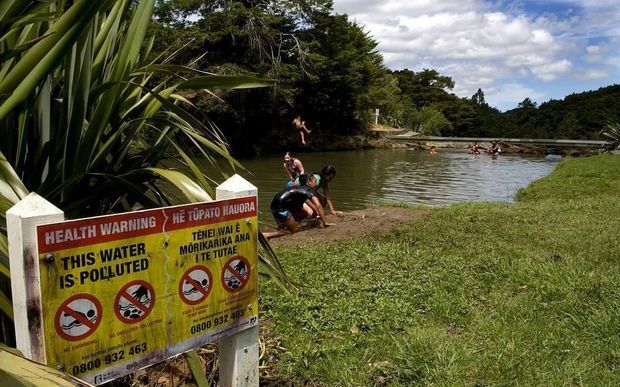
100% Pure? New Zealand's clean, green image took a beating this summer as tourists travelling through the countryside posted pictures of lakes and rivers off limits due to contamination by farm effluent, garbage and human faeces.

Polluted riverExperts say the water quality of once pristine rivers and lakes has deteriorated. (File photo) Photo: RNZ


A booming dairy farming industry, along with a surge in tourists seeking unspoiled natural attractions, has taken its toll on the country's environment, heavily marketed as '100% Pure'.

Particularly affected is its vast network of once pristine rivers and lakes, which are now some of the most polluted among OECD countries, according to some experts.

About 60 percent of them were unfit for swimming, the Environment Ministry said in a report in 2014. Experts said water quality had deteriorated further since.

In a Colmar Brunton survey conducted last month, 82 percent of respondents said they were "extremely or very" concerned about the pollution of rivers and lakes, more than any other issue including living costs, child poverty and climate change.

"(New Zealanders) are extremely worried that they are losing their ability to swim, fish and gather food from their rivers, lakes and streams," said Martin Taylor, the chief executive of Fish & Game New Zealand, a non-government agency that commissioned the survey.

"People see those activities as their birthright, but over the last 20 years, that right is being lost because the level of pollution in waterways has increased as farming intensifies."

With an election coming next year, political experts said water pollution could be a key issue for Prime Minister Jacinda Ardern. Ms Ardern led a coalition to power in 2017 promising social reforms and laws to protect the environment, but business confidence has suffered under her government.

#toomanycows


RNZ reporter Carol Stiles sent in a picture of cows having a chilly start to the day in Taumarunui on 27 June, 2018.Effluent from dairy farms has been blamed in the past for contaminating waters. Photo: RNZ/ Carol Stiles

More than 13,000 people signed a #toomanycows Greenpeace campaign on Twitter launched last week calling for a ban on synthetic nitrogen fertiliser.

"New Zealand already has way too many cows, and synthetic nitrogen is the key driver of the dairy intensification and expansion that leads to the dangerous double whammy of harm to rivers and climate," said Nick Young from Greenpeace.

New Zealand has nearly five million cows, more than its human population of about 4.7 million.

Popular swimming holes near the famed Mt Taranaki in the west of New Zealand's North Island were shut this month due to high E. coli bacteria, an indicator of faecal contamination. Tests are underway to determine the cause, but effluent from nearby dairy farms has been blamed in the past for contaminating these waters.

DairyNZ Chief Executive Tim Mackle said dairy farmers had been doing their bit, with 97 percent of waterways on dairy farms fenced off from cows, and significant work done to establish riparian margins and wetlands.

"The reality is that all types of land use contribute to water quality - and that farming, whether it's vegetables, fruit, beef, sheep, dairy, deer or even wine - must all work together to make sure waterways are protected," Mackle said in a statement.

"The most polluted rivers actually run through urban centres, and this is where the public can do their bit too."

Only about 15 percent of New Zealand's streams run through dairy farms, he added.

'Own goal'


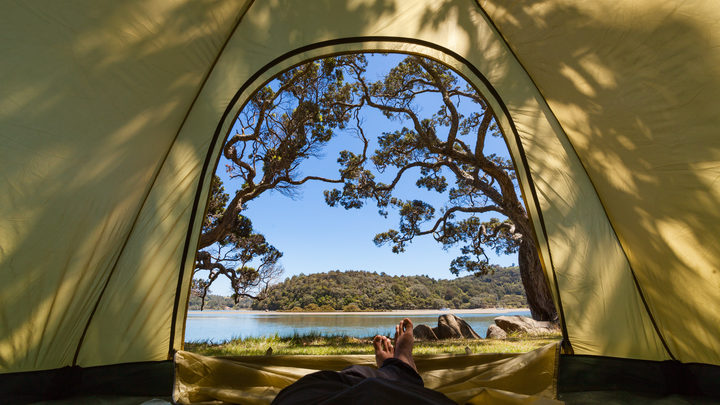
view of ocean from a tentPhoto: Courtesy of Off The Beaten Track

Dairy and tourism directly contribute about 3.5 percent and 6.1 percent respectively to New Zealand's $200 billion GDP.

Both industries rely on the country's clean, green image with cascading rivers, unspoiled forests and lush pastures that made it the ideal backdrop for the popular Lord of the Rings and The Hobbit movie series.

The sparsely populated country is spread over a mountainous area about the size of the UK or California, more than a quarter of which is set aside for reserves and national parks.

Hoards of tourists are expected to arrive in the country next month during the Chinese New Year, a peak travel season, which residents feel will take a further toll on the natural environment. Chinese are the second largest source of tourists to New Zealand after neighbouring Australia, according to 2018 data.

Apart from polluting the water, residents also fear mass tourism and freedom campers may destroy the country's iconic landscape, as seen in places like Venice, Boracay and Bali.

Overcrowding in Venice forced the local administration to restrict access to tourists while Boracay was shut down last year, after mass tourism turned the famed Philippines island into a "cesspool".

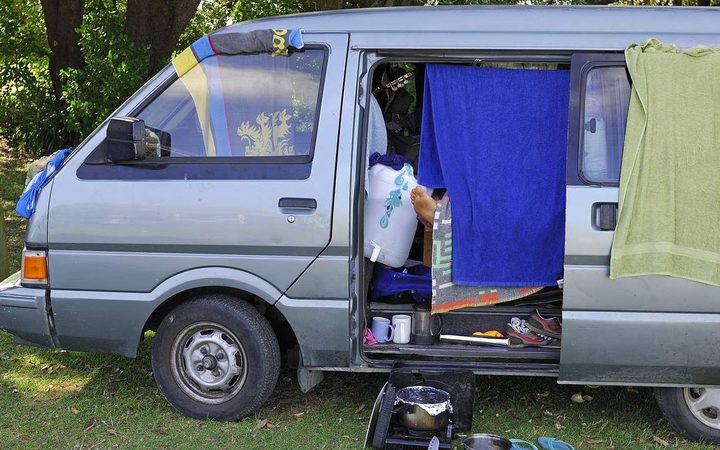
A freedom camper.


A freedom camper. Photo: PHOTO NZ

Richard Davies, tourism policy manager at the Ministry of Business, Innovation and Employment, said the increase in the number of campers had caused problems in some areas, waste being one of them.

"We have a collective duty to care for our environment and for New Zealand, and there have been a number of initiatives to help educate local and international campers on how to camp responsibility, and funding for infrastructure to help local bodies to address the issues that can arise," he said.

Mike Joy, a senior researcher at Victoria University of Wellington's Institute for Governance and Policy Studies said the environment was paying the price for hands-off governance and the intensification of dairy and tourism industries.

"It's an own goal... they are shooting themselves in the foot. The biggest value add this country can have is its clean, green image and they are just ruining that image," Mr Joy said.

The government has said it was committed to improving water quality. In 2017 it set a national target of making 90 percent of New Zealand's large rivers and lakes swimmable by 2040, with an interim target of 80 percent swimmable by 2030.

Mr Joy, who is a member of some government working groups, said change would only happen if governments took on the powerful dairy and tourism industries.

"Right now, a lot more money is spent on spin and propaganda but there's been very little change."
- Reuters

Thursday, 3 May 2018

Destruction of the planet's thermostat turned into a glossy tourist promotion

This is the description that comes with this:


"Red sails - Icebergs - Amazing Landscape - Smiling People. I Just LOVE this amazing film from Greenland"
I cannot find the words to describe my reaction to this - possibly IMMORAL.
If they want to attract people to Greenland they should say "come and visit while the ice is still there"
As the ice melts this video turns Greenland into a tourist destination
Red sails - Icebergs - Amazing Landscape - Smiling People. I Just LOVE this amazing film from Greenland.  Credit: Dennis Schmelz Filmmaker
I don't know if it is the same yacht as in the video but in 2016 a yacht sailed around the Arctic in 7 weeks, something that was previously done over two summers.

Irish-built yacht sails round Arctic in seven weeks

Record speed of voyage that took two summers 15 years ago highlights severity of ice melt

Thu, Oct 13, 2016, 01:00
Irish boat ‘Northabout’, with a British crew, completed the circumnavigation of the North Pole in seven weeks. Photograph: Polar Ocean Challenge
An Irish-built yacht which took two summers to make the first circumnavigation of the Arctic ice cap by a small boat has completed a similar voyage in just seven weeks due to global warming.
The 15-metre aluminium yacht Northabout was due to reach the Co Mayo coast on Wednesday night and sail from Blacksod Bay into Westport on Thursday.
On board for the record-breaking voyage was Irish woman Barbara Fitzpatrick (49) from Ballybay, Co Monaghan, who has become the first Irish woman to sail through both the Northeast and Northwest passages.
Five years ago, sailors Máire Breathnach and Sibéal Turraoin from Ring, Co Waterford, set the record for the first Irish women to sail through the Northwest passage – then an ice-bound Arctic route linking the Atlantic and Pacific.
Ms Fitzpatrick was one of two women – the second being North American sailor Constance Difede – to complete the anti-clockwise polar circumnavigation from Russia to Canada and west Greenland which was led by English adventurer David Hempleman-Adams.
The crew panel included 14-year-old British schoolboy Ben Edwards, who was raising funds for Crohn’s disease and ulcerative colitis in children.
“We had an amazing trip – polar bears with their cubs, seals every day – but it was quite a surprise to see how the ice had melted, as I had been to the North Pole and South poles before and had skied across Baffin Island in the Arctic,” Ms Fitzpatrick said, speaking from her home in Bath.
Shocked
Adventurer and Northabout builder Jarlath Cunnane said he was shocked by the quick nature of the voyage.
Mr Cunnane, from Co Mayo, was skipper of the Irish expedition on Northabout which navigated the Northwest and Northeast passages in the Arctic in 2001 and 2004 respectively. He was awarded the Blue Water Medal by the Cruising Club of America for his efforts.
“We would never have imagined that within 14 years of setting out on our two-season voyage, climate change could have such an impact,” he said.
Dr Michael Brogan, who was a fellow member of the original Northabout voyage, recalled that both the Northeast and Northwest passages were “choked with ice” between 2001 and 2005.
“It’s scary how the ice has disappeared in 10-15 years, but it is also a testament to Jarlath who built the boat that Northabout has achieved and survived those two historic voyages,” Dr Brogan said.
Mr Hempleman-Adams purchased Northabout from the Irish team with an aim of trying to break the polar circumnavigation record.
The businessman has already climbed the highest peaks on all seven continents and travelled to the north and south geographical and magnetic Poles. He has broken 47 Federation Aeronautique Internationale ballooning records.
He and his crew left the yacht in Greenland, and Northabout was then sailed by a professional crew to Ireland, en route to the boat’s new home port of Bristol, England.

Sunday, 21 August 2016

Cruising in the North-West Passage : jolly good fun at the end of time

Celebrating the End of Ice at the End of Time


CNN makes witnessing the demise of the Arctic’s ice and the start of an extinction event look like jolly good fun.


"Cruising can be fun, luxurious or relaxing depending on where you go, but we’re going to tell you about a cruise that’s altogether different..."


No mention of climate change, ice melt or even environmental affects for them.


How you respond to the following item from CNN will largely provide a litmus test as to what sort sort of a human being you are.

Watch the CNN video HERE


At least the following al-Jazeera piece references the problems

Luxury cruise ship sets sail for unprecedented Arctic Northwest Passage


al-Jazeera


The biggest cruise ship to use the Northwest Passage is on a trip around the Arctic Ocean.


1500 people are on board, hoping to see some of the world's most isolated areas.

But there are concerns about people's safety and what that means for the delicate ecosystem.


Al Jazeera’s Caroline Malone reports.


The Upside of Global Warming: Luxury “Northwest Passage” Cruises for the Filthy Rich


It has been described in the press as “the world’s most dangerous cruise“ and in glossy marketing copy as “the ultimate expedition for the true explorer.” It is a historic voyage, one that marks the opening of one of Earth’s last frontiers.


It is also an abomination—a massive, diesel-burning, waste-dumping, ice-destroying, golf-ball-smacking middle finger to what remains of the planet, courtesy of precisely 1,089 of its richest and most destructive inhabitants. And it’s all made possible by runaway climate change, the existential global crisis that these same people and their ilk have disproportionately helped to create.

MSNBC can at least devote a few paragraphs to this.

Melting water pours from ice face of Brasvellbreen Icefield on stormy summer morning.
Paul Souders | Getty Images

Melting water pours from ice face of Brasvellbreen Icefield on stormy summer morning.
Arctic sea ice is melting at a rate far faster than anyone thought, and it is already wildly, and perhaps permanently, changing the region, and the planet.


Historically, sea ice forms every winter across the top of the planet, and covers much of the Arctic Ocean. Every summer, the ice melts a bit and retreats, only to repeat the cycle again. But since the 1980s, the ice has been retreating further and further overall, contributing to sea level rise, changes to ecosystems, and erosion so severe it is biting off chunks of coastlines in Alaska, Canada and elsewhere.

As 2016 continues apace to be one of the warmest years on record, Arctic sea ice levels appear to be among the lowest on record, said Tom Wagner, program manager for NASA's cryosphere research — a name given to the study of frozen regions of the planet. "It doesn't look like the ice is healing or growing back."


An animation showing the annual retreat of Arctic ice between 1989 and 2015. (Source: NASA)

"By some accounts we have lost more than two-thirds of the ice that used to be back in the 1980s," Wagner said. "This looks to be a very, very long-term trend and we are only going to be losing more ice.

This matters because the "health" of the ice is considered a general indicator of what is going on in the Earth's total climate system.

"This is not something that will affect humanity in the far off future," Wagner said, "loss of this ice is already wildly changing the Arctic," and rippling outward to the rest of the planet.

"The planet is not just changing, it is changed," Wagner said. "And we have to deal with the change that has occurred. The melting of the glaciers in Alaska and Canada and Greenland is already raising sea levels to the point that Miami and New York are experiencing flooding."

****


A postscript from Kevin Hester -

So let me get this straight.

An ice breaker will plough ahead clearing the way for the modern day Titantic to steam into the fragile sea ice pouring millions of tonnes of hot coolant water back into the arctic waters to speed up the ice melt.

The wake from these boats will make the water choppier and reduce the albedo of the water due to waves.

The exhausts will project heat, carbon and black soot into the air when the soot settles it will reduce the albedo of the ice it lands on.

In the night when no one can see both boats will switch to cheap, high sulphur bunker fuel to reduce costs.


What did I miss?

Sunday, 29 May 2016

Australian tourism

Visit Australia!


Australia, Fearing Fewer Tourists, Has Chapter Taken Out of Climate Report


27 May, 2016

Leading scientists in Australia and abroad have expressed concern that a new United Nations report about the impact of climate change on dozens of World Heritage sites is absent a chapter describing damage to the Great Barrier Reef, after the Australian government requested that the section be cut.

“I was amazed,” the lead author of the report, Adam Markham, deputy director of climate and energy programs at the Union of Concerned Scientists, said by telephone.

The Australian government requested that the chapter be removed from the report, issued by Unesco and the United Nations Environment Program on Thursday, so that further accounts of damage to the reef, the world’s largest coral ecosystem, would not adversely affect tourism.

In a statement on Friday, the Department of the Environment said “experience had shown that negative comments about the status of World Heritage-listed properties impacted on tourism.” The statement went on to say that the department did not support any of the country’s World Heritage-listed properties being included in “such a publication.’’

Environment Minister Greg Hunt had not been informed of the department’s decision, the statement said, but concerns had been relayed to Australia’s ambassador to the United Nations Educational, Scientific and Cultural Organization, or Unesco.

“But as far as I can see, it is in the newspapers every day,” Mr. Markham said. “Pretty much everyone in the world knows there is a problem on the Great Barrier Reef.”

Mr. Markham said he had thought the report would galvanize support for important sites suffering degradation as sea levels and temperatures rise, and as extreme weather damages the environment.

The Great Barrier Reef, which stretches from the tip of northern Queensland more than 1,400 miles southward along Australia’s east coast, has experienced significant coral bleaching over the last year. Bleaching can lead to coral death.

The chapter removed from the report, now published on the website of the Union of Concerned Scientists, warns that Australia is the world’s fourth-largest coal producer and that risks come with plans to expand coal mining and shipping near the reef.


“Its future is at risk, and climate change is the primary long-term threat,” the chapter says.

Australian scientists who reviewed the chapter before the report was published said they were surprised it had been cut.

Ove Hoegh-Guldberg, a director of the Global Change Institute at the University of Queensland, said the report contained nothing new.

“I was naturally a bit disappointed, because the process had not preserved the science,” he said. “And in one sense, if you were trying not to draw attention to the problems on the reef, this would not be the way to do it.”

Prof. Will Steffen of the Climate Change Institute at Australian National University said it was troubling that a government department had succeeded in censoring a global report.

“Australia is the only inhabited continent that is not featured in the report,” he said. “Information is the currency of democracy, and the idea that government officials would exert pressure to censor scientific information on our greatest national treasure is extremely disturbing.”

Australia’s conservative coalition government, in the middle of a re-election campaign, has received little support for its approach to climate change. Prime Minister Malcolm Turnbull did not mention it in a major campaign speech recently and has done little to convince voters that his government believes it is an election issue.

Australia’s national science agency, the Commonwealth Scientific and Industrial Research Organization, or Csiro, is in the middle of a restructuring that includes cutting the number of climate scientists it employs, drawing criticism from scientists at its partner organizations, including NASA.

The inclusion of the Great Barrier Reef in the United Nations report was founded on its significance, Mr. Markham said, adding that references to the island of Tasmania and to Kakadu National Park, in the Northern Territory, had also been removed from the report.

The report does not cover all World Heritage sites; rather, its authors started with about 100 natural and human-made monuments, including Yellowstone National Park and the Statue of Liberty, and winnowed that list to 31 sites in 29 countries.

Terry Hughes, the director of the Center of Excellence for Coral Reef Studies at the Australian Research Council who spent days in April flying over the Great Barrier Reef tracking bleaching and coral mortality rates, said it was astonishing that the reef would be excluded from such a report.

“There is an unprecedented bleaching event underway,” Professor Hughes said. “Climate change and coral bleaching is the single biggest threat to the tourism industry, and the reef itself.”