Showing posts with label coral. Show all posts

Monday, 1 April 2019

Bleaching at Lor Howe Islandm the southernmost coral reef in the world
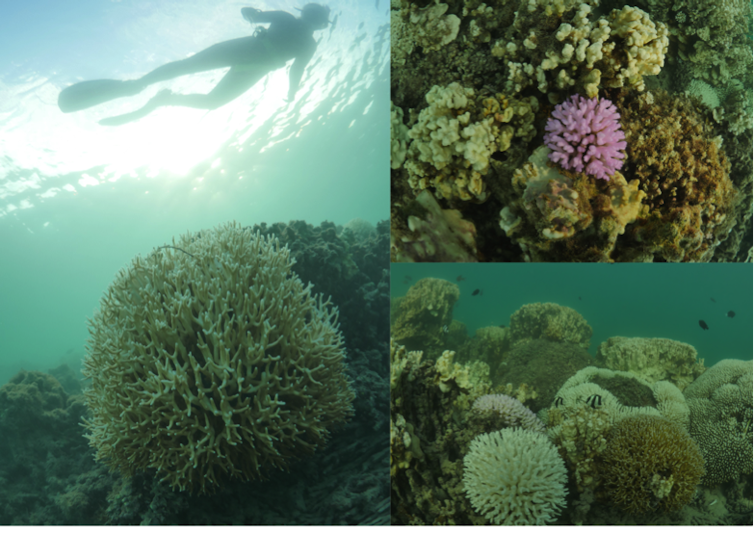

Bleaching has struck the southernmost coral reef in the world

1 April, 2019


This month corals in Lord Howe Island Marine Park began showing signs of bleaching. The 145,000 hectare marine park contains the most southerly coral reef in the world, in one of the most isolated ecosystems on the planet.
Following early reports of bleaching in the area, researchers from three Australian universities and two government agencies have worked together throughout March to investigate and document the bleaching.
Sustained heat stress has seen 90% of some reefs bleached, although other parts of the marine park have escaped largely unscathed.

Bleaching is uneven

Lord Howe Island was named a UNESCO World Heritage site in 1982. It is the coral reef closest to a pole, and contains many species found nowhere else in the world.

Two of us (Tess Moriarty and Rosie Steinberg) have surveyed reefs across Lord Howe Island Marine Park to determine the extent of bleaching in the populations of hard coral, soft coral, and anemones. This research found severe bleaching on the inshore lagoon reefs, where up to 95% of corals are showing signs of extensive bleaching.
However, bleaching is highly variable across Lord Howe Island. Some areas within the Lord Howe Island lagoon coral reef are not showing signs of bleaching and have remained healthy and vibrant throughout the summer. There are also corals on the outer reef and at deeper reef sites that have remained healthy, with minimal or no bleaching.
One surveyed reef location in Lord Howe Island Marine Park is severely impacted, with more than 90% of corals bleached; at the next most affected reef site roughly 50% of corals are bleached, and the remaining sites are less than 30% bleached. At least three sites have less than 5% bleached corals.
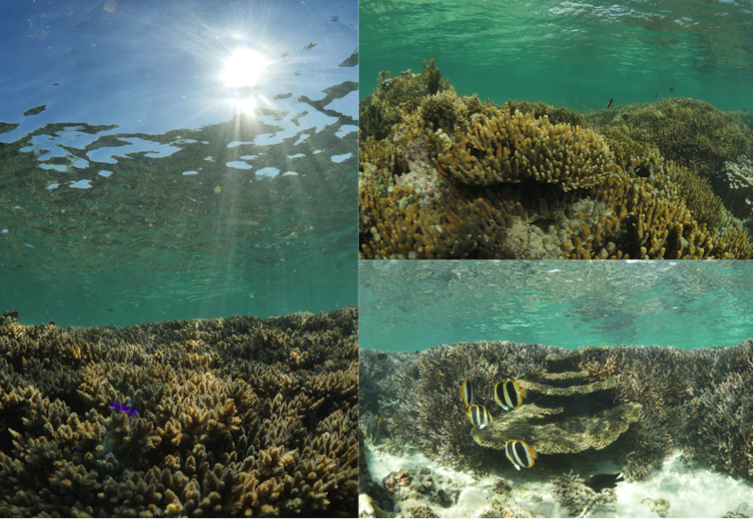
Healthy coral photographed at Lord Howe marine park in March 2019. Author provided

Over the past week heat stress has continued in this area, and return visits to these sites revealed that the coral condition has worsened. There is evidence that some corals are now dying on the most severely affected reefs.
Forecasts for the coming week indicate that water temperatures are likely to cool below the bleaching threshold, which will hopefully provide timely relief for corals in this valuable reef ecosystem. In the coming days, weeks and months we will continue to monitor the affected reefs and determine the impact of this event to the reef system, and investigate coral recovery.

What’s causing the bleaching?

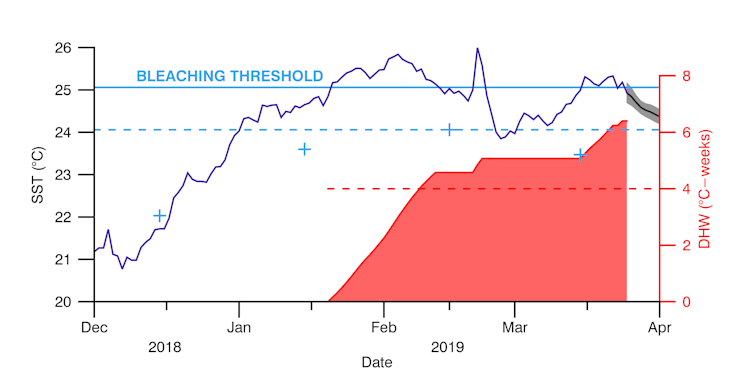
The bleaching was caused by high seawater temperature from a persistent summer marine heatwave off southeastern Australia. Temperature in January was a full degree Celsius warmer than usual, and from the end of January to mid-February temperatures remained above the local bleaching threshold.
Sustained heat stressed the Lord Howe Island reefs, and put them at risk. They had a temporary reprieve with cooler temperatures in late February, but by March another increase put the ocean temperature well above safe levels. This is now the third recorded bleaching event to have occurred on this remote reef system.
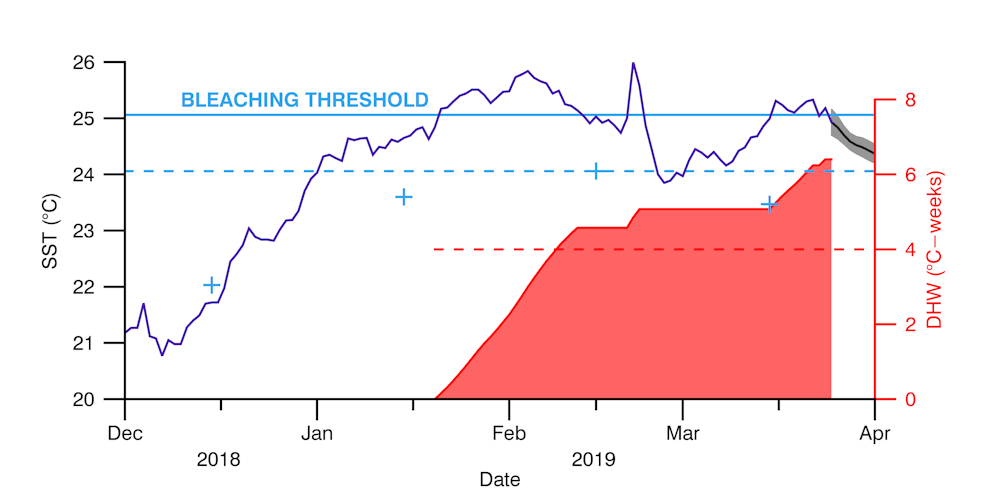
Satellite monitoring of sea-surface temperature (SST) revealed three periods in excess of the Bleaching Threshold during which heat stress accumulated (measured as Degree Heating Weeks, DHW). Since January 2019, SST (purple) exceeded expected monthly average values (blue +) by as much as 2°C. The grey line and envelope indicate the predicted range of SST in the near future.
 Source: NOAA Coral Reef Watch
However, this heatwave has not equally affected the whole reef system. In parts of the lagoon areas the water can be cooler, due to factors like ocean currents and fresh groundwater intrusion, protecting some areas from bleaching. Some coral varieties are also more heat-resistant, and a particular reef that has been exposed to high temperatures in the past may better cope with the current conditions. For a complex variety of reasons, the bleaching is unevenly affecting the whole marine park.
Coral bleaching is the greatest threat to the sustainability of coral reefs worldwide and is now clearly one of the greatest challenges we face in responding to the impact of global climate change. UNESCO World Heritage regions, such as the Lord Howe Island Group, require urgent action to address the cause and impact of a changing climate, coupled with continued management to ensure these systems remain intact for future generations

Friday, 10 February 2017

Cooling period is over - гermanent coal bleaching

The Permanent Global Coral Bleaching Event


9 February, 2017

Despite La Nina, Ocean surfaces have not cooled enough to end the worst global coral bleaching event on record. What this means is that many reefs, including the Great Barrier Reef, are again under a rising risk of bleaching and mortality for the coming months. This is unheard of. Never before has a mass coral bleaching event lasted for so long or extended through the period of natural variability related ocean surface cooling called La Nina. Perhaps more ominously, the global coral bleaching and die off that began in 2014 may now be a practically permanent ocean feature of the presently destabilized world climate system.

Cool La Nina is Over

According to NOAA, the periodic cooling of ocean surfaces in the Pacific called La Nina is now over. And since La Nina brings with it a variable related low point of broader Earth surface temperatures, after a few months lag, we can expect the globe to start to warm up again.

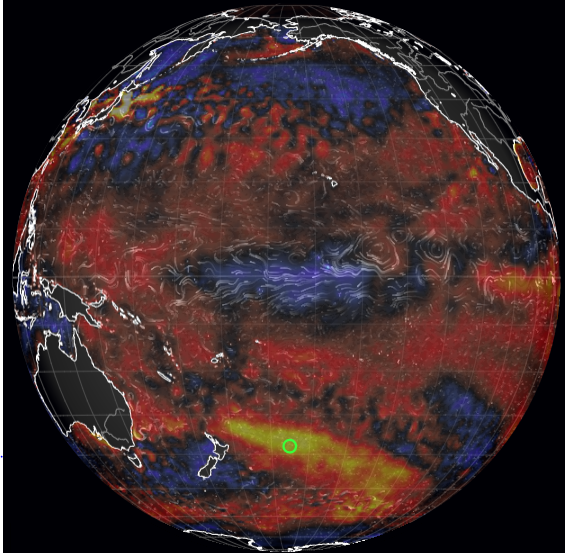
sea-surface-temperature-anomalies-feb-9-pacific
(The above map shows sea surface temperature anomalies in the Pacific Ocean on February 9 of 2017. Presently SSTs over the entire Pacific range from about -1.5 C below average to +5 C above average. And as you can see, the Ocean is considerably warmer than normal, despite La Nina. Over the next 1-2 years, this is likely the coolest the Pacific will get. In just one decade’s time, under human-forced warming, it will take a very strong La Nina and a strongly negative Pacific Decadal Oscillation to produce similar sea surface temperatures. Image source: Earth Nullschool.)

Problem is, the Earth is still ridiculously warm, despite La Nina. Temperatures, driven inexorably higher by fossil fuel burning, have probably bottomed out at about 1 degrees Celsius hotter than 1880s averages during December, January and February of 2016-2017.
What this means is that the likely range for annual global temperatures over the next 5 years will be about 1 to 1.3 C above 1880s averages. These readings are so high (the warmest in 115,000 years) and have risen so much, in such a geologically short span of time, that many of the world’s more sensitive species are now being pushed out of their habitats and are undergoing considerable heat-related mortality events.
Great Barrier Reef Under Threat From Bleaching for Second Year in a Row

Perhaps the most obvious of these horrendous fossil-fuel burning spurred instances is the global coral bleaching event that began in 2014. More ominously, it now appears that surface temperatures in the range of 1 C hotter than 1880s and above may well be enough to push the world into a permanent or near-permanent state of global coral bleaching and mortality. What this means is that each year, from now on, there is a considerable risk of widespread coral bleaching. It also means that reefs impacted by bleaching will tend to have shorter cool periods in which to recover.
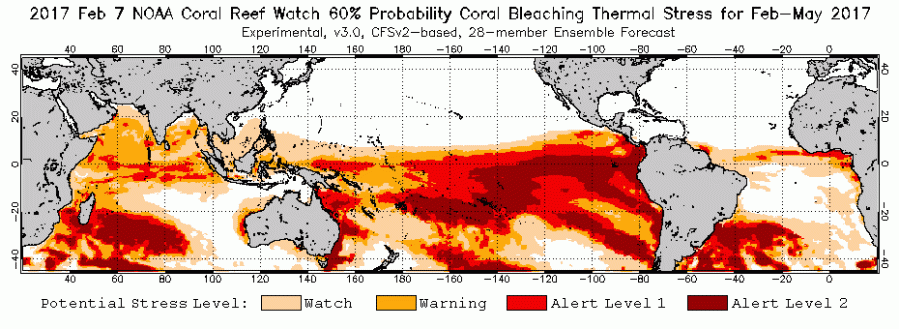
global-coral-bleaching-forecast
(NOAA’s 60 percent certainty map shows very widespread coral bleaching expected over the next few months. Presently, bleaching is predicted for the region of the Great Barrier Reef. But other reef systems [see below] fall under higher risks for considerable reef mortality events in the current forecast. Image source: NOAA.)

For February through May of 2017, very warm and warming sea surface temperatures in the Southern Hemisphere are expected to produce extraordinarily widespread risks of coral bleaching. Many areas are predicted to see the highest coral bleaching alert level NOAA has a measure for.
According to NOAA:
Multiple coral reef regions are already experiencing Alert Level 1 bleaching stress (associated with significant coral bleaching). Alert Level 2 bleaching stress (associated with widespread coral bleaching and significant mortality) is expected in the Northern Cook IslandsSouthern Cook Islands, the SamoasWallis & Futuna,Northern TongaSouthern Tonga, the Society Archipelago, and the Austral Islandsin the next 1-4 weeks. Alert Level 1 bleaching conditions are also expected in theTuamotu Archipelago in the next 1-4 weeks and in Tuvalu in the next 5-8 weeks.

The prediction map also includes the potential for high alert levels (level 1) for sections of the Great Barrier Reef which last year experienced its worst coral bleaching event on record. Needless to say, a second year of bleaching would be a devastating additional blow to a critical ocean life support system and one of Australia’s priceless national treasures.
Links:

Hat tip to George Hayduke


Friday, 22 July 2016

Kiribati has lost 80 % of its live corals in 10 months

El Nino is Basically Over — But this Global Coral Bleaching Event Just Won’t End


21 July, 2016

Back in 2014, an unsuspecting world was on the verge of a major global temperature increase. But despite warnings from scientists like Dr. Kevin Trenberth that deep ocean warming had sped up and would eventually result in rapid surface warming, the big media meme at the time was that global warming had ‘paused.’ Originating in The Economist, and swiftly spreading to numerous other news outlets, this particular blast of bad information fed the public a big helping of false sense of security.

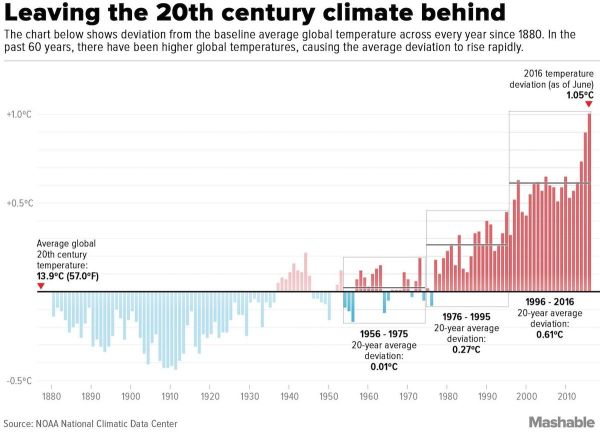
In 2014 through 2016, maximum global temperatures jumped from around 0.65 degrees Celsius to around 1 C above the 20th-century average. In just three years’ time, the whole of the Earth’s surface had warmed by about 0.35 C. This is like cramming all of the warming from 1880 to 1980 into the three-year 2014-to-2016 period. Never before in all of the global climate record starting in the late 19th century has the Earth warmed so much in so short a time.

Leaving 20th Century Climate Behind
(Huge jump in global temperatures over the past three years has probably passed a number of climate thresholds — including temperature thresholds for key sea creatures like corals. Data Source: NOAA. Image source: Mashable.)

Global warming hadn’t paused at all. It was just getting ready to hit the accelerator.
Global Heat Spurs Bleaching, Mass Coral Mortality

All this newly-added surface heat represents a big step up into much warmer conditions for the global climate. What this means is that even the coolest months now will probably approximate the warmest months during the big super El Niño of 1998. Such a large temperature increase in so short a period means that the world has likely hit a number of tipping points for geophysical and ecological harm. One of the most visible of these tipping points involves an ongoing ecological crisis — a global coral bleaching event.
Perhaps the most vivid and heart-wrenching example of what is a very wide-ranging coral mortality situation is the bleaching-related damage to Australia’s Great Barrier Reef. In a terrible blow to one of the world’s most stunning natural wonders, about a quarter of the Great Barrier Reef’s corals have already been killed off — an event that some scientists say may eventually lead to 100 percent mortality of the Reef’s corals. (see a related report in The Guardian).

American Samoa Bleaching
(Coral bleaching events like this one in American Samoa during 2015 have been happening around the world since 2014. It’s a global event that’s still ongoing despite a turn toward La Niña conditions in the Pacific. This is the longest global coral bleaching event ever recorded, and one that could continue into 2017 or beyond. Image source: Nature.)

The Great Barrier Reef is not the only reef system to suffer. In fact, the added heat due to human-forced warming of the atmosphere and oceans has generated bleaching-induced heat stress and mass coral mortality the world over. And some of the world’s other great reef systems, including Kiribati, which lost 80 percent of its live corals in 10 months, have been hit so hard it’s doubtful they’ll ever recover.
The Seemingly Never-Ending Global Coral Bleaching Event

At issue is the fact that all this added global heat is creating a situation where reefs bleach year after year and, in some cases (as was the case with parts of the Great Barrier Reef this year) even bleach during winter. It’s a coral mass mortality that falls under the definition of a global bleaching event. But it’s also happening with an intensity, persistence, and duration that we’ve never seen before.
Beginning in 2014 with the big warm-up that preceded the 2015-2016 El Niño, the present global coral bleaching event is now, according to NOAA, the longest-running and the most extensive such event to have occurred in the modern record. NOAA notes:
the current global coral bleaching event is the longest ever recorded. It has affected more reefs than any previous global bleaching event and has been worse in some locales (e.g., Great Barrier Reef, Kiribati). Thermal stress during this event also has caused mass bleaching in several reefs that never bleached before (e.g., northernmost Great Barrier Reef).
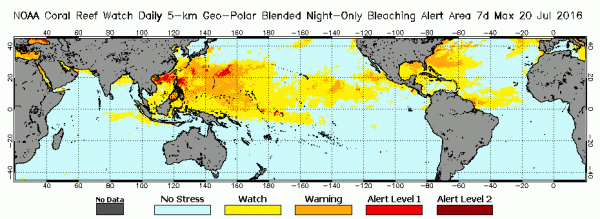
Global coral bleaching event continues
(Global coral bleaching event extent as of July 20 according to NOAA. Note that sections of bleaching watch and warning conditions now extend across the northern edges of NOAA’s map, an indication that latitudinal extent of bleaching is expanding beyond typical ranges even as bleaching due to rising ocean temperatures appears to be becoming a near-constant issue for world corals. Image source: NOAA.)

NOAA had initially forecast that this very-long-duration bleaching event would end sometime in 2016 as El Niño faded out. However, with sea-surface temperatures in the equatorial Pacific hitting the cool side of natural climate variability in the form of La Niña-like conditions during recent weeks, and the current global coral bleaching event still going strong, one has to wonder if oceans have now become hot enough to spur widespread bleaching at almost any time.

NOAA now predicts a possible end to the current global bleaching event in 2017, giving the event a four-year duration. But with global temperatures continuing to warm, what we may be seeing is the start of an unbroken or nearly unbroken period of expanding coral bleaching, a time when global stress to corals due to high ocean temperatures is practically continuous.
Links/Attribution/Statements

Hat tip to June
Hat tip to Colorado Bob
Hat tip to DT Lange


Friday, 8 July 2016

Death of the Oceans

Super-warm seas wiped out an entire underwater forest, scientists report


7 July, 2016

This year, the tragic die-off of large volumes of coral at the treasured Great Barrier Reef has provided a climate change shock like few others. The cause was too much warm water — which seems to have pushed the corals past a thermal survival threshold. And that warm water, in turn, is tied to climate change.

Now, however, a team of researchers has revealed that another Australian coastal ecosystem that gets less attention — Australia’s kelp-dominated Great Southern Reef, which covers a huge expanse along its more temperate southern and southwestern coasts — saw an equally dramatic ecosystem upheaval five years ago. And the cause was the same — what the scientists call an “extreme marine heat wave.”

Some of the same types of drivers are behind all of this, and I think this really emphasizes the manifestation of these climate-driven events; it’s more than just the coral reefs that are being affected by this,” says Thomas Wernberg, a marine biologist at the University of Western Australia who led the new research, which appeared Thursday in the journal Science. Wernberg conducted the research with 21 other authors from a variety of institutions in Australia and abroad.

Many Americans will be familiar with the towering kelp forests off the coast of California, where these enormous organisms can grow to be more than 100 feet tall. The kelp off Australia’s southern and southwestern coasts aren’t nearly as tall, but they are still the backbone of a rich ecosystem, and the researchers refer to the organisms as creating a “kelp forest.” Wernberg and his colleagues estimate the Southern Reef as a whole to be worth $10 billion each year in economic terms due to tourism, fisheries and other benefits.

But in 2011, a surge of ocean temperatures between 3 and 5 degrees Celsius above normal — conditions that for the kelp represented “the hottest in recorded history, and that’s going back 215 years,” Wernberg says — took a devastating toll on a major part of this ecosystem.

In the most northern (in the Southern Hemisphere, the warmest) latitudes, along the southwest coast of Australia south of Kalbarri, kelp forests died in dramatic numbers, suggesting the temperatures had “exceeded a physiological tipping point for kelp forests,” the study reports.

When the heat wave happened, all of those northern kelp forests were basically wiped out in a couple of months,” says Wernberg. “And southwards, at least a couple-hundred kilometers, there were quite substantial impacts, but you gradually got more and more kelps as you went farther south.”

Here’s a pair of before and after photos, taken by Wernberg, that show the dramatic change:


Rocky reefs in Kalbarri before, left, and after, right, a 2011 marine heatwave wiped out underwater forests of Australian kelps. (T. Wernberg)

Rocky reefs in Kalbarri before, left, and after, right, a 2011 marine heatwave wiped out underwater forests of Australian kelps. (T. Wernberg)
The study, based on years of underwater surveys, finds that before the marine heat wave in late 2010, kelp covered around 70 percent of reefs in the midwestern Australia coastal area — but afterward, in 2013, their area had declined by 43 percent, or 963 square kilometers (371 square miles).

Moreover, north of 29 degrees North latitude, kelp forests were gone entirely or 90 percent decimated. This represented “a 100-kilometer range contraction” as well as “functional extinction from 370 [square kilometers] of reef,” the scientists report. (That’s 142 square miles.)

And it is not like the kelp then came back afterward or recovered. Rather, the study reports that more tropical species of fish seized the opportunity to colonize the warmer waters, including grazing fish that ate kelp as it started to regrow. As a result, the ecosystem, sparked by one extreme event, underwent what the scientists call a “rapid climate-driven regime shift,” from which it simply may not return unless the warming trend itself reverses.

I can’t remember having seen or heard about anything similar,” Wernberg says.

Although it does not perform a formal statistical attribution for the marine heat wave, the paper clearly suggests this is all tied to climate change, noting that the Indian Ocean, off Australia’s western coast, is “a ‘hot spot’ where the rate of ocean warming is in the top-10 percent globally.” Another such hot spot, incidentally, has been off the U.S. East Coast in the Gulf of Maine, where similarly dramatic effects have been observed.

It was extreme, so very rare by all accounts — I don’t believe it was ‘natural,’ ” Wernberg wrote by email.

In sum, we are starting to see that with certain very sensitive ecosystems, temperature surges can have devastating and perhaps irreversible effects. And one can argue this fits a key definition of “dangerous climate change,” which turns on whether we are able to stop the increase of greenhouse gases at a rate “sufficient to allow ecosystems to adapt naturally.”

That certainly doesn’t seem to be what happened in the kelp forests off Australia’s western coast. “The future of kelp forest


Wednesday, 18 May 2016

The Dying Earth - news from the Indian subcontinent and Sri Lanka

It feels like 60C (140F) Indian temperatures hits deadly limit as high humidity increases danger


Photo hindustantimes.com
16 May, 2016

Delhi is scorching hot.

The maximum temperature recorded on Sunday was 44 degrees Celsius, breaking all records - and the coming days will offer no relief to locals.

According to the MeT department, the temperature is going to stay at a sweltering 44 degrees till Wednesday.

"The heat waves will continue to haunt the residents for few more days.
The mercury might drop a little by the end of this weekend," a senior official from the MeT department said.

With the rise in humidity levels, cases of viral fever, diarrhoea, heat stroke and chicken pox have also increased.

Graph Wikipedia Click on image

For example, if the air temperature is 96 °F / 36 °C and the relative humidity is 65%, the heat index is 121 °F / 49 °C.

Various hospitals in the city are witnessing a sudden spike in the number of patients.

Acute diarrhoea is usually caused by a bacterial, viral, or parasitic infection.
Diarrhoea can cause dehydration, which is harmful to many key bodily functions including muscle activity.

Dr AK Shukla, senior consultant, internal medicine, Kailash Hospital, Sector 27, Noida, said of the increase in patients:

"Most of them are diagnosed with serious conditions.


Low blood pressure, watery stool, severe vomiting and dehydrations are some of the symptoms.

In one of the cases, a patient also suffered from kidney dehydration.

Doctors are advising people to avoid eating stale food and maintain proper hygiene in order to stay protected from water-borne diseчase.

"Around two-three patients diagnosed with diarrhoea require admission daily.
It is advisable not to consume any food from outside, people should eat homemade food and drink only boiled water in this season," said Dr Ajay Aggarwal, head of department, internal medicine, Fortis hospital, Sector 62, Noida.

Doctors have warned that this weather will continue for at least a month, so people should not take any symptoms lightly.

The onset of the monsoon over Kerala is likely to be delayed by six days beyond its scheduled date of June 1, the Indian Meteorological Department (IMD) said on Sunday.

This is expected to delay monsoon in other parts of the country as well.
"Forecast suggests that monsoon onset over Kerala this year is likely to be slightly delayed.

The Southwest monsoon is likely to set over Kerala on June 7 with a model error of plus or minus four days," the IMD said in its onset forecast for monsoon, released on Sunday. June 1 is the official onset date of the monsoon in India, when it is expected to hit Kerala.

The forecast of the monsoon's onset has proved to be correct during the past 11 years (from 2005-2015), except in 2015.

This includes the error margin of plus or minus 4 days.

IMD director general Laxman Singh Rathore said the delay in the monsoon was not an unusual phenomenon.

However, he said there would be some relief to South Indian states from the intense heat as there could be some rainfall in the coming days.

"Currently there is a low pressure area in the Bay of Bengal which will become a depression and hit Tamil Nadu coast by tonight.

This will bring good amount of rainfall to the state, parts of South Interior Karnataka and parts of Kerala," Rathore said.

Skymet, a private forecasting agency,had forecast that the monsoon would hit Kerala between May 28 and 30.

The IMD has already made a forecast that the monsoon will be above normal this year.

The monsoon season delivers 70 per cent of India's annual rainfall, which is crucial for agriculture and economic growth that has been hampered by back-to-back droughts.

The meteorological department in April had forecast an above-average monsoon for the year.


Wet Bulb Temperature and the threat it poses in a time of Abrupt Climate Change

In a recent study with Matt Huber, we showed that it doesn't take that many degrees of global warming to permit peak heat summertime heat stress to (occasionally) become unsurvivable, in many parts of the world that are currently highly populated.

We came to this conclusion by considering a meteorological quantity called the wet-bulb temperature. You measure this quantity with a normal thermometer that has a damp cloth covering the bulb. It is always lower than the usual or "dry-bulb" temperature; how much lower depends on the humidity. At 100% humidity (in a cloud or fog) they match. In Sydney and Melbourne, even during the hottest weather, the wet-bulb usually peaks in the low 20's C. The highest values in the world are about 30-31C, during the worst heat/humidity events in India, the Amazon, and a few other very humid places. 


Sri Lanka landslide buries three villages; death toll unknown

17 May, 2016

A landslide in Sri Lanka, triggered by more than three days of rain, buried three villages in a central district and the death toll is yet to be determined, government officials and area residents said on Tuesday.

Torrential rains have forced more than 137,000 people from their homes so far and killed at least 11.

Rohan Dias, a deputy police inspector, said rescue operations at the villages in the central district of Kegalle was continuing in the night.

"There were about 150 families in those villages and we don't know how many survived," Dias told Reuters.

"There are about 800 people gathered in the nearby temples including the people from the neighboring villages fearing their villages could also be affected. There are another 400 people in the roads who have come to see their relatives."

W.M. Abeywickrema, Kegalle district secretary, told a local private channel that around 400 people had been rescued so far.

"I saw a whole rock came down and buried many houses. There are people inside," one middle-aged woman told the channel.

Military Spokesman Jayanath Jayaweera said 174 service personnel and 8 army officers had been deployed to the rescue area in Aranayaka in Kegalle district.

Troops also have launched rescue operations in inundated areas of the Indian Ocean island, with boats and helicopters pulling more than 200 people trapped in the northwestern coastal district of Puttalam to safety, officials said.

"This is the worst torrential rain we have seen since 2010," said Pradeep Kodippili, a spokesman for the disaster management center. Nineteen of Sri Lanka's 25 districts have been hit.

Heavy rains have also struck the neighboring Indian states of Tamil Nadu and Kerala. More than 100 houses were damaged in coastal Kerala and about 50 families had been shifted to a relief camp in the state capital, Thiruvananthapuram, a state official said.

The weather department has forecast heavy rains across Tamil Nadu over the next two days and warned fishermen not to go out to sea.


Flooded roads and fallen trees led to traffic jams in the Sri Lankan capital, Colombo. Trains were halted as water submerged railway tracks, officials said.

Flooding and drought are cyclical in Sri Lanka, which is battered by a southern monsoon between May and September, while a northeastern monsoon runs from December to February


17 People Killed, 4 Missing in Western Indonesia Floods


ABC News,
16 May, 2016

Rescuers on Monday found the bodies of 17 people who were among 20 university students and two guides who went missing in rain-triggered floods and landslides at a popular waterfall in western Indonesia, an official said.

One student was found alive and was being treated at a hospital, said Darwin Surbakti, an official from the local Disaster Management Agency. The search for the four people still missing was to be resumed Tuesday.

"Rescuers have discovered 17 bodies, of which 14 have been recovered while three others are still under the rubble," Surbakti said.

The disaster occurred Sunday as more than 70 students were visiting the Dua Warna waterfall in Sibolangit in North Sumatra province.

Six bodies were found about 3 kilometers (2 miles) downstream from the waterfall, Surbakti said.

In Jakarta, Sutopo Purwo Nugroho, spokesman for the National Disaster Management Agency, said 300 rescuers including soldiers, police and teams from the National Search and Rescue Agency had been mobilized to search for the victims.

Seasonal rains often cause flooding and landslides in Indonesia, a chain of 17,000 islands where millions of people live in mountainous areas or flood-prone plains close to rivers

Heart wrenching’: India’s coral reefs experiencing widespread bleaching, scientist says


The record-breaking surface temperatures turn shallow reefs ghostly pale as they bleach. Photo courtesy of NCF.

11 May, 2016

Last month, scientists reported that Australia’s Great Barrier Reef corals were experiencing “the worst mass bleaching event in its history”. Of the 500 coral reefs they observed while flying over 4,000 kilometers (~2,485 miles) of the Great Barrier Reef, only four reefs did not show any sign of bleaching. Terry Hughes, convenor of Australia’s National Coral Bleaching Taskforce, called it the “saddest research trip” of his life.

Other scientists have called the underwater sight of widespread bleaching “catastrophic”.

In other parts of the world too, similar “catastrophic” scenes are playing out. Off the south-western coast of India, the lesser-known coral reefs of the Lakshadweep Archipelago in northern Indian Ocean are struggling to survive.

A small team of six field biologists from the Nature Conservation Foundation in India, have observed soaring sea surface temperatures and widespread coral bleaching this year. In every reef that the team has surveyed in 2016 so far, corals are turning white or pale. Moreover, the heat stress has already killed many corals in the region, the team said in a statement.

Lakshadweep’s corals are not new to bleaching. In 1998 and 2010, similar El Niño events have had calamitous impacts on the reefs. While the Lakshadweep reefs recovered from the 1998 event, recovery following the 2010 event has been slower. And with the ongoing El Niño event, scientists are seriously concerned.

We are currently halfway through a mixed recovery from the 2010 El Niño event, and we were only now beginning to see the first signs of regrowth in some areas,” Rohan Arthur, who heads NCF’s reef program, told Mongabay. “This makes the present El Niño even more heart wrenching since it has hit the Lakshadweep before these reefs have had the ability to recover completely from the last catastrophic disturbance.”

But Arthur is also hopeful. He said that Lakshadweep’s reefs have recovered in the past (following the 1998 El Niño event), and the reefs could show resilience once again.

Mongabay spoke with Arthur about the state of coral reefs in the Lakshadweep Archipelago and their ability to bounce back.


Beyond India: There's drought on five continents and it's breaking records

As 2016 continues to break all temperature records, taps and wells around the world are running dry


Sctoll,in

16 May, 2016

India is in the grip of a drought that in some parts of the country has been going on for five consecutive years. Scientists attribute the successively weaker monsoons to the El Niño effect, a warming of temperatures in the Pacific Ocean, off the coast of South America, that skews wind and pressure systems around the world.

With the El Niño finally on the wane since January, researchers now suggest that it will be followed by a La Nina phenomenon, characterised instead by cooling Pacific temperatures and for India, more rain.

But the weather formation's impact has not been limited just to the Indian monsoon. It is also among the reasons that every month since May 2015 has broken temperature record highs and why severe floods and droughts have been recorded around the world.

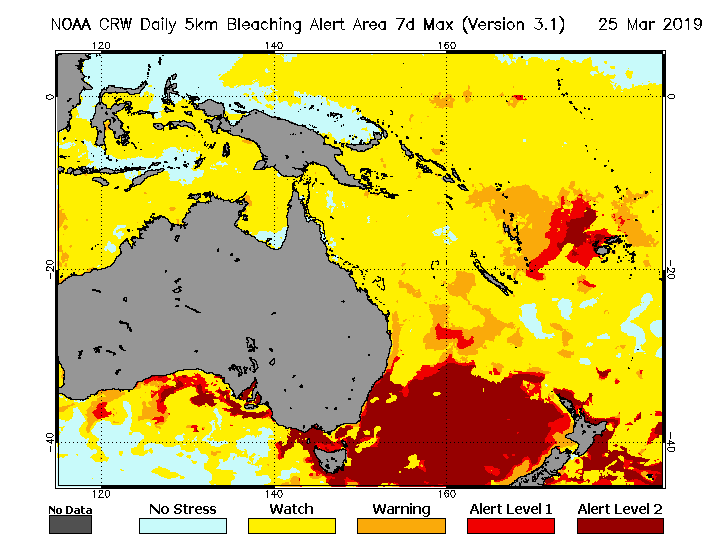
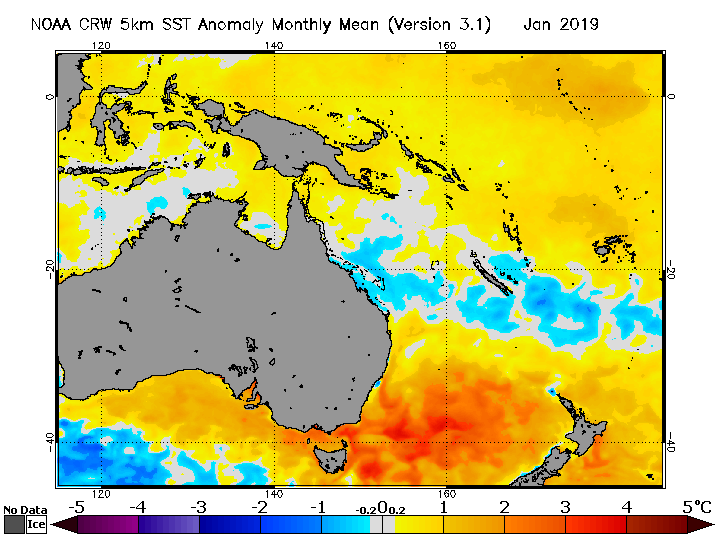
Acute water distress of any kind triggers migrations. The longer the drought, as the example of Syria shows, the worse the exodus and resulting violence. As this daily drought risk map by El Dorado Weather shows, pretty much every single continent apart from the poles has regions facing crippling droughts.
World Wide Daily Drought Risk Map. Photo credit: El Dorado WeatherWorld Wide Daily Drought Risk Map. Photo credit: El Dorado Weather
AfricaOn Wednesday, Kenya announced that it would shut down refugee camps in Dadaab, near its Somalia border. A severe drought in Somalia has left close to one million people, or nearly one in 12 people, struggling to meet their food needs, according to a United Nations reports. Tens of thousands have fled the country to the Dadaab camp.

Lesotho, Malawi, Mozambique, Swaziland and Zimbabwe in southern Africa are so near the brink that they have declared national drought disasters. Ethiopia, further north and the worst affected in terms of food, also happens to be in the middle of deep political turmoil. More than 36 million people are threatened by hunger across that part of the continent.

Namibia, on Africa’s south western coast has also been suffering from a huge rainfall deficit. On Thursday, Coca Cola announced that it would stop all canned drink production in the country. Instead, to meet Namibia’s demand, it will import these from neighbouring South Africa. Many parts of South Africa have not had rain for three consecutive years.

AsiaThe heat waves that swept across India in March and April also affected South East Asia. Cambodia, Laos and Thailand, which all recorded temperatures up to 44.6 degrees centigrade. All countries have suffered agricultural losses, citizens are struggling to find water, and wild animals are dying of dehydration.

The situation there is so bad that China released water from one of six dams on the upper Mekong river in April. These dams are thought to have caused a water shortage in the downstream region in the first place. China itself has not been immune to droughts, with at least 110 cities reportedly facing severe water shortages.

Australia

The worst recorded drought in Australia’s living memory finally broke after rain in January eased water stress in parts of Queensland. In May, rain finally brought relief to the country's northern region.

Researchers, however are concerned that Australia has underestimated just how bad its weather extremes can get. A recent study of an ice core in New South Wales has revealed that in the last millennium, the region had droughts lasting up to 12 years and periods of wet weather for 10. The longest drought recorded by humans in Australia was only eight years, during World War II, and the rest of the century too had seen milder extremes than there had been in the long term.

North America

Scientists found similar results by examining tree ring data in British Columbia in Canada as well. They found 16 droughts worse than the standards scientists use today to declare droughts in Canada. While current standards are based on around 50 years of meteorological information, the tree ring study went back 350 years.

A massive forest fire that caused more than 80,000 residents of Fort McMurray to flee their homes early in May is still raging in Alberta, Canada. The cause of the fire was unusually dry and warm conditions triggered by the El Niño. 

Temperatures were almost 100% above normal. In 2015, Canada got only 65% of its long-term average rainfall. Contrast that with India’s southwest monsoon, which ended in October at 86% of the long-term average.

The worst drought in the history of California in the United States has only just about broken its grip, with snow finally falling in its Sierra Nevada mountains. State administration, however, has no plans of easing water restrictions and instead made some of its emergency water cuts permanent in an announcement on May 9.

South America

A two-year drought in south east Brazil just ended after heavy rain in January finally replenished reservoirs there. The drought, which was Brazil’s worst in 80 years, led to severe water shortages in São Paulo and Rio de Janeiro, two of the largest cities of the southern hemisphere.

Like India, large parts of Venezuela have been drought-hit for three consecutive years. As it happens, Venezuela is also one of the worst affected by the Zika virus in its surroundings, as an article in The Atlanticpoints out. How does the virus spread? Through mosquitoes that breed in stored water – being used to slake thirst.

In January, Venezuelan water minister Ernesto Paiva announced an “extraordinary plan” to tackle the water shortage. These "extraordinary" measures include rationing water, preventing pipeline leaks and ending illegal water use. There is no indication of how well they have worked