NEW
DELHI – The terrorist organization Daesh (“Islamic State, IS,
ISIS, ISIL) announced the creation of its“ province ”in India
after a clash between the“ caliphate ”and security forces in the
Kashmir region disputed by the Indians and Pakistanis. There are no
real confirmations of the IS statements, other than the earlier
clashes of Islamist militants with law enforcement agencies in the
town of Amshipor of the Indian state of Jammu and Kashmir, at the
moment, but the organization announced the creation of “Vilayeta
Hind “, reported Reuters on May 11th, 2019.
IS’s
statement on the creation of a new “province” seems to be
intended to strengthen its position after the “Caliphate” lost
its last settlement in Syria under its control in March – Baghos
village in Deir ez-Zor province.
According
to experts, after the defeats in Iraq and Syria, the “caliphate”
shifts attention from the Middle East to Asia, as evidenced by a
series of terrorist acts in Sri Lanka on Easter Sunday April 21,
which killed 253 people.
“Creating
a province in a region where there is nothing like actual control is
absurd, but it should not be written off,” said Rita
Katz ,
director of the analytical organization SITE Intel Group, which
tracks the activity of Islamic extremists. “The world may turn
a blind eye to these statements (IS), but for jihadists in vulnerable
regions of the world, these are important gestures that can lay the
foundation for restoring the caliphate card.”
At
the same time, both Reuters reports and IS claims must be taken with
a high degree of skepticism, as both organizations are linked to the
U.S intelligence organs and are capable and interested in creating
disinformation and misinformation. FRN will be following these
developments with all possibilities in mind. However, India has a
history in dealing with Islamic extremism in the form of terrorism
ever since British imperialists fomented a lasting geopolitical and
ideological-religious division, creating Pakistan and India as
separate states along religious and semi-ethnic (regionalist) lines.
COLOMBO
(News 1st) – Lebanese news outlet Alahed News reports that they
have obtained a top-secret document sent by the Saudi Arabian
Ministry of Foreign Affairs to the Saudi Ambassador to Sri Lanka,
Abdul Nasser al-Harethi.
The
letter which was sent 5 days prior to the attack seems to indicate
that the
Saudi Arabian Ministry of Foreign Affairs was aware of the attack
that took place on Easter Sunday.
The
letter signed by Saudi Foreign Minister Ibrahim bin Abdul Aziz
al-Assaf instructs the Ambassador to carry out the following steps.
“First:
You should delete all documents, computer data and latest
correspondence with domestic and foreign members and groups, in
addition to imposing a curfew for the embassy personnel unless it is
necessary.
Second:
You should inform all those related to the Kingdom of Saudi Arabia
including counsellors, security forces and intelligence during the
three coming days, especially on the Christian Easter Day, to avoid
presence in public and crowded places namely churches.
Third:
You should send written news about the Sri Lankan authorities and
their viewpoints regularly to this ministry …”
However,
2 days ago the Saudi Arabian Embassy in Sri Lanka advised its
nationals to leave Sri Lanka, due to the prevailing situation in the
country.
The
embassy, in a tweet, said;
“Due
to the current security situation in the Republic of Sri Lanka, the
embassy advises citizens in Sri Lanka to leave.”
Sri
Lanka President Maithripala Sirisena says his security forces would
"eradicate terrorism" following devastating suicide attacks
on Easter Sunday and restore stability before a presidential election
due by year-end.
Sirisena
also said in an interview he believed Islamic State (IS) was behind
the April 21 attacks, which targeted churches and luxury hotels and
killed more than 250 people including 42 foreign nationals. The group
has claimed responsibility.
"Elections
cannot be postponed, therefore before the elections I will bring
about stability and I will eradicate terrorism," Sirisena told
Reuters on Saturday.
The
presidential vote is likely to take place between November 10 and
December 10 and sources close to Sirisena say he would seek
re-election.
"We
have already identified all active members of the group and it's a
case of now arresting them," Sirisena said, adding that there
were a further 25 to 30 "active members" linked to the
bombings still at large.
Sirisena
said all indications suggested IS had been involved, adding: "It's
crystal clear because after the attacks the IS organisation made an
announcement claiming responsibility for the bombings."
Sri
Lanka authorities have previously said they suspect the attackers had
international links, although the precise nature of those connections
is not known.
Police
have said two previously little-known groups - National Thawheedh
Jamaath and Jammiyathul Millathu Ibrahim - carried out the bombings.
Sirisena
said intelligence services from eight countries, including the US
Federal Bureau of Investigation and Interpol, were helping Sri Lanka
with the investigation.
Local
intelligence officials believe Zahran Hashim, a radical
Tamil-speaking preacher from the east of the Indian Ocean island
nation, may have been a key player in plotting the bombings.
Officials believe he was one of nine suicide bombers.
Sirisena
said the military and police have made huge progress with their
investigations, but emphasised that more needs to be done.
"There
are another 25-30 suspects still at large, but there is no
information yet to say these suspects are suicide bombers."
Scores
of suspected Islamists have been arrested after the Easter attacks
Sri
Lanka's security forces were on high alert amid intelligence reports
that militants were likely to strike before the start of the Islamic
holy month of Ramadan, due to begin on Monday.
The
government has banned women from wearing face veils under an
emergency law that was put in place after the attacks.
"This
is not a Sri Lanka issue, it's a global terrorist movement,"
Sirisena said.
"Even
advanced countries like the US, Russia, UK, Germany, India and
Australia together haven't been able to completely eradicate this IS
global terrorism menace."
Sri
Lanka's leaders, including the president, have come under heavy
criticism for failing to heed warnings from Indian intelligence
services - at least three in April alone - that an attack was
imminent.
Critics
said infighting between the president and Prime Minister Ranil
Wickremesinghe had undermined the response to the militant threat.
But Sirisena said he and the prime minister were co-operating on
national security issues.
The
tourism sector has grown rapidly in the last decade since the Sri
Lankan government defeated the rebel Tamil Tigers. Around 2.5 million
tourists visit the island nation each year.
"It's
a big blow to the economy, as well as the tourism industry,"
Sirisena said. "For the economy to develop it's important
tourism to return to where it was before the attacks."
Sri Lanka, Easter Sunday, 21 April 2019: More than half a dozen bomb blasts shook the country killing from 250 to more than 350 people. Depending on who counts, the death toll varies. The devastation took place in in several catholic churches and luxury hotels. Other explosions, including from – what they say – are suicide bombers, have since killed another several dozens of people. Many are children, women – christen worshippers. Why the luxury hotels? Western (Christian) tourists?
Yesterday, another explosion ripped through a suspicious building, killing 18, including children and women. Again, they, the ‘authorities’, say suicide bombers, who didn’t want their ‘cache’ to be discovered. Conveniently they are all dead – the “suicide bombers”. Nobody can ask them any questions.
There was a lot of confusion, and still is, all through Sri Lanka. Nobody claimed credit for the massacres. There were rumors that Sri Lanka’s President received warnings ahead of the attacks from foreign intelligence, but ignored them. The President denies these allegations. And the explosions continue.
Finally, the verdict is in. The culprits are an Islamic terrorist group, associated with ISIS. What else is new.
Sri Lanka’s population is composed of about 70% Buddhists, 13% Hindus, almost 10% Muslims, mainly Sunni, the Salafi version, and about 7% Christians. The New York times reports that the accused mastermind of the terror attacks was strongly influenced by Wahhabism, the same extreme hardliners that control most of Saudi Arabia.
Hatred between religions seems on the rise. In New Zealand a few weeks ago a white supremacist assaulted a mosque, killing 50. This past weekend, a shooting in a Synagogue near San Diego, California, killed a woman. The murderer said he was inspired by the New Zealand massacre. Are these spontaneous, interreligious mini-wars part of a foreign directed ‘divide to conquer’ effort, a strategy that has been used by empires for centuries, but seems to be alive and well with the current Washington based empire?
MintPress News reports that
“Sri Lanka Easter attacks are the handiwork of terrorists returning from fighting in Syria, practicing the Saudi-backed Wahhabi Salafist ideology,”adding, “though not confirmed yet, they, [the attacks], are in keeping with the modus operandi of Saudi-sponsored Wahhabi terrorism worldwide. [The] Saudi sponsorship of Salafi Wahhabi dogma [is found] across the globe. From Boko Haram to ISIS, and from the Taliban to Al Qaeda, a common ideological thread runs through these terror groups. This is the Saudi-sponsored Wahhabi Salafi ideology whose South Asian counterpart is Deobandi. For abbreviation purposes, it is becoming increasingly common to term this interconnected ideology as WSD (Wahhabi Salafi Deobandi).”
May we expect a wave of Saudi-sponsored WSD terrorism in the east too? – Is the horror Saudi government protected by the US, because it does its bidding? And this bidding leads to making gradually Islam extremism the justification for NATO bases around the globe? – Perhaps in Sri Lanka, tomorrow? So far Sri Lanka is clean from NATO. Sri Lanka has not even an association agreement with NATO.
Just look at the world-geostrategic location of Sri Lanka, linking the Arabian Sea with the Indian Ocean. Sri Lanka may also have a direct, open-sea connection with the small British island of Diego Garcia, in the Chagos Archipelago, north-east of Madagascar. Diego Garcia hosts the US’s largest Navy base outside the American Continent. Many of the drone killings in Yemen, Syria and other places in the Middle East originate from Diego Garcia. The “civil war” in Syria was (and still is) largely directed from Diego Garcia, as well as from Djibouti.
Wouldn’t it be logical for NATO to set up base in Sri Lanka to control South East Asia? Saudi guided WSD attacks would create the necessary chaos justifying Western secret services – plus NATO – to descend on Colombo, to create further protests and anarchy – a never-ending internal strife, giving the war industry a new never-ending flow of profit, hence, further justifying the never-ending war on terror – and, thereby, moving yet an inch closer to Full Spectrum Dominance over Mother Earth and her hapless spectators, what western humanity has become – a bunch of complacent consumers, drenched in turbo-capitalist market ideology, too comfortable to go on the barricades.
The key and engine to all of this is NATO, whose modus operandi is killing for a living, for dominance and for profit. If there is ever to be Peace – and that’s what the vast majority of the inhabitants of this globe wants – I’m not exaggerating pretending that 99.99% of world population wants to live in peace – then NATO must go, NATO must be dismantled.
So, Europe which has the largest membership in NATO (27 out of 29 nations) has to put the money where her mouth is: Europe calls for Peace, Europe claims to be Peace-loving – really? Then put your money into creating Peace – pulling out of NATO, refusing at once to fund this killing machine under the pretext of “protecting Europe”. Protecting Europe from what? From whom? – Not from Russia – despite all the highly propagandized and highly corporate-funded Russiagate / Russiaphobia, exacerbated by a new artificially implanted fear – China. These countries have no history of expansion, like the west.
They only seek friendly relations of trade, of transport, cultural and research interconnectivity within the supercontinent, Eurasia, and ultimately, they promote a multi-polar world. The best example is the Chinese President Xi’s ingenuity – the Belt and Road Initiative (BRI) that just finished its highly successful forum in Beijing – where more than 120 nations signed memoranda of understanding (MOU) and cooperation agreements with China for tens of billions of dollars equivalent. – What a way of cooperating, instead of sowing western-style belligerence.
Europe and the rest of the world is not in danger, except in danger of itself for being a vassal of the US and for hosting 30-plus NATO bases which would be first in the line of fire, if the east is forced to defend itself from that permanent Pentagon-NATO driven aggression.
Europe withhold your funding for NATO, get out of NATO, dismantle NATO, – NOW, before NATO sets up yet another base in Asia, before NATO spreads more death around the globe.
*
Note to readers: please click the share buttons below. Forward this article to your email lists. Crosspost on your blog site, internet forums. etc.
This article was originally published on New Eastern Outlook.
Peter Koenig is an economist and geopolitical analyst. He is also a water resources and environmental specialist. He worked for over 30 years with the World Bank and the World Health Organization around the world in the fields of environment and water. He lectures at universities in the US, Europe and South America. He writes regularly for Global Research; ICH; RT; Sputnik; PressTV; The 21st Century; TeleSUR; The Saker Blog, the New Eastern Outlook (NEO); and other internet sites. He is the author of Implosion – An Economic Thriller about War, Environmental Destruction and Corporate Greed – fiction based on facts and on 30 years of World Bank experience around the globe. He is also a co-author of The World Order and Revolution! – Essays from the Resistance. He is a Research Associate of the Centre for Research on Globalization
More
than a dozen suspected jihadis (and a few civilians) died during a
fierce gun battle on Friday between Sri Lankan police and terror
suspects as dozens of suspected ISIS-affiliated jihadis from domestic
terror organizations National Thawheedh Jamaath and Jammiyathul
Millathu Ibrahim were rounded up in a crackdown meant to stave off
any additional terror attacks.
According
to a Reuters report
from Friday, among the 15 dead were the father and two brothers of
the mastermind of last week's Easter Sunday bombings, which left 253
dead and another 500 injured. As we
reported on
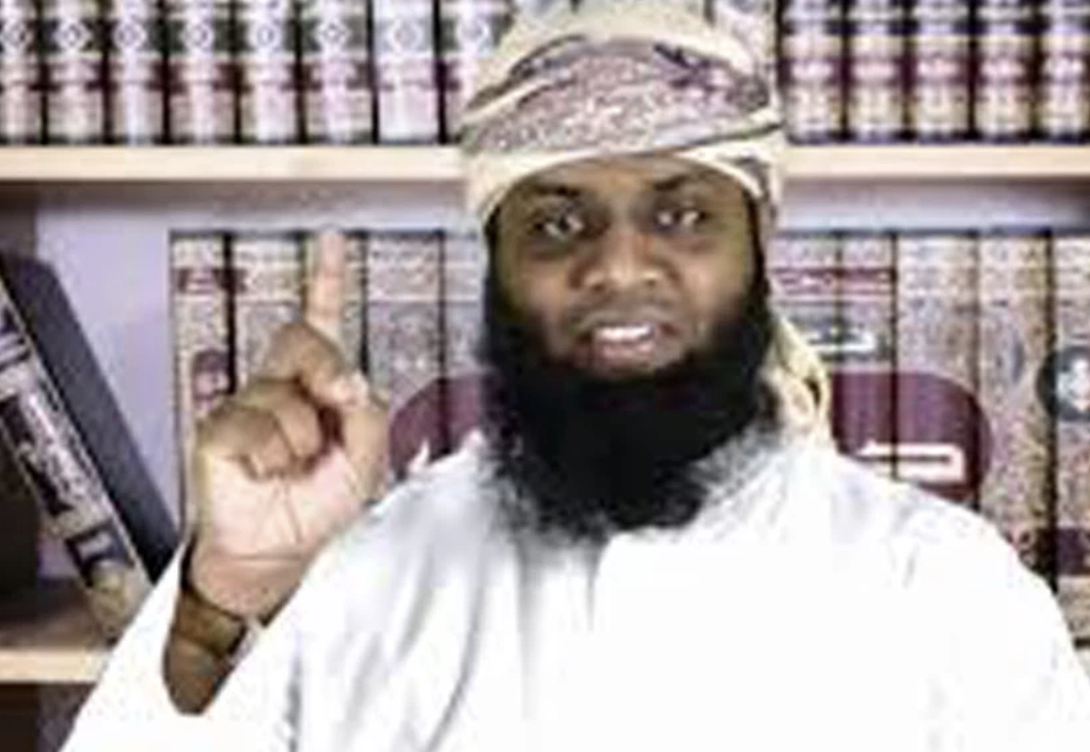
Friday, a radical preacher named Zahran Hashim has been identified as
the primary architect of the series of bombings at three churches and
three luxury hotels. Hashim was a leader of the National Thawheedh
Jamaath, and had been arrested over his involvement in the defacing
of Buddhist statues. In a series of videos posted to YouTube, the
radical Imam had called for violence against all non-believers.
Zahran
Hashim
In
one of these videos, Zainee Hashim, Rilwan Hashim and their father
Mohamed Hashim, all of whom were killed by police, could be seen
calling for war against nonbelievers. The attack occurred when police
raided a suspect terrorist hideout on Sri Lanka's east coast not far
from one of the bombings in Batticaloa.
A
family member confirmed to Sri Lankan police the identities of
Hashim's brothers and fathers. As comments from Hashim's sister that
circulated in the press suggest, not all of his family members shared
his extreme, violent views.
"Even
if he is my brother, I cannot accept this. I don't care about him any
more," his
sister said.
Nearly
10,000 soldiers have been deployed across the island to hunt down
members of the Islamist groups who carried out the attacks. Police
have already detained more than 100 people, including foreigners from
Syria and Egypt, in the wake of the bombings.
In
one of the videos that circulated online, Rilwan Hashim can bee heard
calling for jihad and the deaths of non-believers.
"We
will destroy these non-believers to protect this land and therefore
we need to do jihad," Rilwan
said.
"We
need to teach a proper lesson for these non-believers who have been
destroying Muslims."
However,
authorities have warned that more terrorists might be on the loose.
Though so far, there haven't been any more incidences of violence
since Friday.
COLOMBO,
Sri Lanka — While monitoring the usual channels, Indian police
stumbled upon something extraordinary: a detailed plot for what would
become the bloodiest attack linked to the Islamic State group in
South Asia.
Police
were investigating suspected sympathizers of the withered caliphate
in southern India when a name they had no record of surfaced —
National Towheed Jamaat, the Sri Lankan IS-backed militant
organization that authorities say conducted the coordinated Easter
Sunday attacks on churches and hotels in Sri Lanka that killed more
than 250 people.
Indian
police managed to break into the group’s communications and began
tapping into the plot, according to Ajai Sahni, executive director of
the Institute for Conflict Management in New Delhi.
“That
is why the kind of detailing of the incident they received was very,
very specific,” Sahni said. “They knew the group, they knew the
targets, they knew the time, they knew the whereabouts of the suicide
bombers, and all of this was communicated to the Sri Lankan
government.”
Top
Sri Lankan officials have acknowledged that some of the island
nation’s intelligence units were given advance notice about the
attacks — starting weeks ago and up until the morning of the
bombings — but that little was done to prevent them.
Both
President Maithripala Sirisena, who is also Sri Lanka’s minister of
defense and in charge of national police, and Prime Minister Ranil
Wickremesinghe, who has been kept out of high-level security meetings
since Sirisena tried to oust him last fall, said they only learned
about the plot after it had been carried out.
“The
fact is, it’s very, very specific information and that has been
conveyed to everyone in writing. That is the action that was missing
in some cases. That’s what we’re investigating,” Wickremesinghe
said.
The
first intelligence brief from India arrived April 4, more than two
weeks before the bombings. It said a suicide terrorist attack was
planned against “some important churches” and listed six people
likely to be involved.
Nearly
100 ISIS Terrorist Arrests Prompt Worries About Caravan
The
deputy inspector of police shared the report with at least four
security unit directors, including those responsible for “VIPs”
and foreign embassies, along with a memo, urging the directors to pay
extra attention to the places and people in their care.
India’s
final intelligence warning came just before the Easter morning
blasts, Sahni said.
Why
the warnings went unheeded is the subject of intense public debate,
with some blaming the dismantling of a system built by former
strongman President Mahinda Rajapaksa for rapid response to rebel
activity during Sri Lanka’s long civil war.
Sri
Lankan military finds 15 bodies, including 6 kids, after shootout at
suspected militant hideout
For
26 years, the Tamil Tigers militants from Sri Lanka’s minority
Tamil ethnic community fought for independence from the Buddhist,
ethnically Sinhalese-majority state. Military forces under
Rajapaksa’s brother, then-Secretary of Defense Gotabhaya Rajapaksa,
brutally crushed them in 2009.
The
current state minister of defense, Ruwan Wijewardene, said “weakness”
within Sri Lanka’s security apparatus led to the failure to prevent
the Easter bombings.
Sirisena,
while campaigning for the 2015 election to defeat Rajapaksa, had
stressed the need for fresh investigations of military officials,
including intelligence officers accused of abducting and killing
civilians, political opponents and journalists during the civil war.
Since
then, some military officials have been arrested on charges related
to their actions during the war and remanded in detention facilities.
Court cases are ongoing.
But
on Friday, Sirisena, perhaps with an eye toward the 2020 election,
said that arresting military intelligence officials after the civil
war had weakened national security. He promised a shake-up, asking
for the resignations of both his secretary of defense and inspector
general of police.
Series
of blasts kill more than 200 at Sri Lankan churches, hotels on Easter
Sunday
Some
experts believe Sri Lankan security forces may not have given much
credence to Indian intelligence because of its controversial role in
the civil war.
India’s
Research and Analysis Wing, or RAW, the country’s external
intelligence group, initially supported Tamil separatists, training
and arming the Liberation Tigers of Tamil Eelman in the 1970s. But
after the group’s terrorist activities in the 1980s, RAW withdrew
its support.
New
Delhi made a pact with Colombo in 1987 to send peacekeeping forces to
the island on its southern tip, and they ended up fighting the
rebels. They were asked to withdraw a few years later amid
allegations of abuses against Tamils. In 1991, Indian Prime Minister
Rajiv Gandhi was assassinated by a Tamil Tiger suicide bomber.
India
questioned Sri Lanka’s heavy-handed approach to defeating the
Tigers in the final months of the war, when tens of thousands of
civilians were reportedly killed by government troops. Thousands more
are still missing. Ethnic minority Tamils in the country’s north
and east are still reeling from the effects of the war.
Indian
security and intelligence agencies lost some of their “moral
authority” with the Sri Lankans, said M.K. Narayanan, the former
head of India’s external intelligence service.
“What
really happened was India lost moral authority. India did not accept
the policies that were being followed, so they lost a lot of support
in Sri Lanka,” he said.
Genealogical
and cultural ties between Sri Lanka and India date back thousands of
years. According to folklore, the island’s majority Sinhalese are
descendants of an Indian prince banished there 2,000 years ago.
The
nation’s minority Tamils, meanwhile, are in part the descendants of
more than a million tea and rubber plantation workers brought to Sri
Lanka from southern India by British colonial rulers in the 18th and
19th centuries.
And
India shares intelligence with its neighbors in part to keep them
within its sphere of influence, Narayanan said.
Located
just 23 kilometers (14 miles) off its southeast coast, India sees Sri
Lanka as a bulwark in its military defenses to ward off potential
Chinese incursions. Soon after the Easter attacks, India deployed
naval and coast guard ships along the narrow Palk Strait.
Terror
attack in Sri Lanka: ISIS linked to Western Intelligence Agencies;
link between Christchurch and Sri Lanka? GLADIO Strategy of Tensions;
history of Sri Lanka and who’s backing them now; Pamela Geller,
Rita Katz and Amaq News agency – PR for ISIS and links to Israeli
intelligence?
Manfred
Petritsch on Sri Lanka attacks; Sri Lankan Christians letter of
forgiveness: Letter to the killers of Easter Sunday massacre in Sri
Lanka; investment in Sri Lanka from China: Is China's investment in
Sri Lankan project a debt trap? India and Modi election links?
US
Christian Zionist Secretary of State Mike Pompeo threatens to
sanction any country that buys oil from Iran, WW3 provocation! WW3
The recent, tragic Easter attack in the South Asian state of Sri Lanka – killing and injuring hundreds – follows a now unfortunately all too familiar formula.
The authorities in Sri Lanka said a little-known radical Islamist group, the National Thowheeth Jama’ath, [believed to have ties to the Islamic State] carried out the attacks, with help from international militants.
It is also reported that these extremists received assistance for the large-scale attack from foreign sponsors. The attack has put Sri Lanka on the map for many in the general public for the first time – but for all the wrong reasons.
Countering OBOR: Divide and Destroy
Sri Lanka has recently and decisively pivoted toward Beijing as a major partner of the One Belt, One Road (OBOR) initiative. This is despite Washington’s best efforts to prevent it from doing so.
Consequently, extremists fuelled by Washington’s “clash of civilizations” have helped set the stage for growing violence between Sir Lanka’s majority Buddhists and its minority Muslim communities. The resulting violence serves as a medium for US coercion, destabilization, and intervention aimed at undermining Sri Lanka’s unity as a nation, and thus its viability as a partner for China.
A nearly identical ploy has been used in nearby Myanmar where US-backed Buddhist extremists battle against US-Saudi-Qatari backed extremism rising from the ranks of the nation’s Muslim Rohingya minority.
The resulting violence and growing humanitarian crisis – without coincidence – is unfolding in Myanmar’s Rakhine state – precisely where China is attempting to build another leg of its region-spanning OBOR initiative.
Sri Lanka has signed on to OBOR in a big way, with major rail, port, airport, and highway projects all moving forward with Beijing’s support. Sri Lanka is also considered by Western policymakers as one of several among China’s strategic “String of Pearls,” strong points where China can secure maritime routes through waters traditionally dominated by the United States.
Washington’s ability to compete with China regarding regional development is nonexistent. Instead, the US has tried to tempt nations like Sri Lanka with military aid.
The US funding for Sri Lanka is part of a US$300 million package Washington is setting aside for South and Southeast Asia to ensure a “free, open, and rules-based order in the Indo-Pacific region”.
It is obvious that “military aid” can in no way compete with massive investments by China aimed at spurring national development through tangible infrastructure projects.
America’s inability to compete openly and on equal economic footing has given way to political interference and even the use of violence.
Sri Lanka’s Crisis Linked to US-Driven Crisis in Myanmar
Simultaneously, US-funded fronts posing as nongovernmental organizations (NGOs) have worked to co-opt and wield Rohingya communities as an equal but opposing political weapon while US-allies Saudi Arabia and Qatar have begun radicalizing and arming factions within Rohingya communities to carry out armed violence across Rakhine state.
The resulting conflagration affords the US and its partners a pretext to intervene on an ever expanding scale – giving Washington access to and leverage over Myanmar to counter Beijing’s growing influence.
And in precisely the same way the US has inserted itself into the heart of Myanmar’s political affairs – it is attempting to do so again in other Asian nations – including now Sri Lanka.
Articles from across the Western media including the UK Independent’s 2018 article titled, “Violent Buddhist extremists are targeting Muslims in Sri Lanka,” even establish direct links between Myanmar’s and Sri Lanka’s growing conflicts. The article would admit (emphasis added):
Currently, Sri Lanka’s most active Buddhist extremist group is Bodu Bala Sena (Buddhist power force, or BBS). BBS entered politics in 2012 with a Buddhist-nationalist ideology and agenda, its leaders claiming that Sri Lankans had become immoral and turned away from Buddhism. And whom does it blame? Sri Lankan Muslims.
BBS’s rhetoric takes its cue from other populist anti-Muslim movements around the globe, claiming that Muslims are “taking over” the country thanks to a high birth rate. It also accuses Muslim organisations of funding international terrorism with money from Halal-certified food industries. These aren’t just empty words; in 2014, one of their anti-Muslim protest rallies in the southern town of Aluthgama ended with the death of four Muslims.
BBS also has links to Myanmar’s extremist 969 movement. Led by nationalist monk Ashin Wirathu, who calls himself the “Burmese Bin Laden”, it is notorious for its hardline rhetoric against the Rohingya Muslim community.
The West’s use of “Islamophobia” to sell its serial wars of aggression and to divide nations around the globe is a classic example of “divide and conquer.
While the West no longer possesses any real means to “conquer” the nations it is now targeting – it does possess the capacity to use resulting divisions to destroy them. If the US cannot hold primacy over Asia – no one will. It is a “War on Peace” waged under the guise of a “War on Terrorism.”
Sri Lanka appears to be but the latest victim of Washington’s now trademark “slash and burn” foreign policy – where it is fueling conflict to consume political orders that oppose its interests, and building upon the ashes ones that do serve them instead.
In the coming days, weeks, and months – not only will more information emerge linking the recent attacks in Sri Lanka to Washington, Riyadh, and Doha’s global network of terrorism – but additional pressure will also be mounted upon Sri Lanka to divest from Beijing and pivot back toward the West.
In reality – Sri Lanka’s violence is an artificial construct carried out by a tiny minority of extremists on either side of an equally artificial ethnoreligious divide. The nation and the region must unite in purpose – as peace and stability benefit them all – while chaos benefits only a handful of waning interests from afar.
Tony Cartalucci is Bangkok-based geopolitical researcher and writer, especially for the online magazine “New Eastern Outlook” where this article was originally published. He is a frequent contributor to Global Research. Adam Garrie, who used to write for the Duran has a singular view on this. He allows his strongly pro-Duterte and pro-Pakistani views to colour his judgement in my view. He has been pointing the finger at India and denied any involvement with Muslim extremism before it was revealed who was behind the attack.

 Posts
Posts