Showing posts with label floods. Show all posts

Saturday, 21 November 2020

Major floods in Napier, New Zealand

I have been so preoccupied that I have neglected events in my own country

Napier clean-up pauses for another night of heavy rain

Radio NZ,

10 November, 2020


Flood-hit Napier residents remain on alert as more heavy rain is falling on the city, with another day of rain still to come.
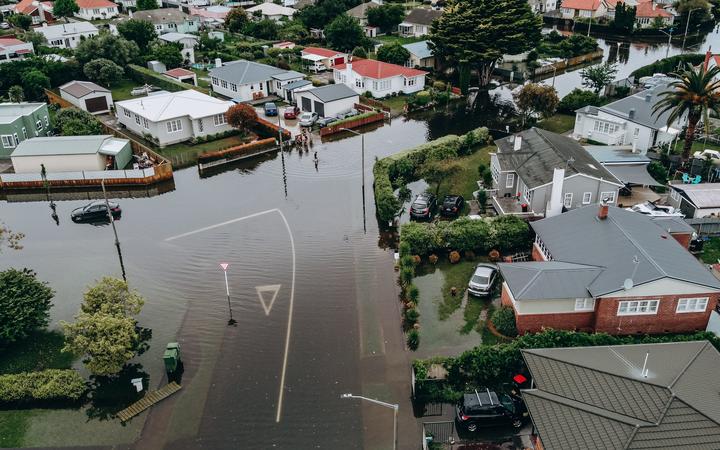
Napier flood - Marewa suburb

Flooding in Marewa, Napier, on Tuesday. Photo: RNZ / Dom Thomas

Residents are on the edge of their seats waiting for the downfalls to clear, but MetService has forecast heavy rain overnight for the area and until 8pm Wednesday, with rainfall as intense as 75mm/h possible if there are thunderstorms.

About 250mm of rain hit the Hawke's Bay city on Monday afternoon and evening, causing slips, flooding low lying suburbs, and rushing through properties.

Napier is still under a local state of emergency, and Civil Defence has called on people to avoid any non-essential travel. Anyone in danger is reminded to call 111, and a free phone number has also been set up non-urgent assistance: 0800 422 923.

The city's mayor Kirsten Wise says the Kennedy Park evacuation centre remains open, and around 30 people are expected to shelter there tonight.

After a day assessing damage to properties, Fire and Emergency NZ says at least 16 properties were uninhabitable, and those families have been evacuated. But it was continuing to assess more properties.

Napier Hill and the suburbs of Maraenui, Marewa, Pirimai and Onekawa are the worst hit, and FENZ says damage to some properties is severe.

Anyone concerned about their safety has been asked to try to organise safe places to stay with friends or family, but the Kennedy Park evacuation centre remains open to those who need it.

Three marae are also on standby to provide emergency shelter, in case more places are needed.

There is no boil water notice for the city at this stage, but extra water testing is being carried out by the council, and extra chlorine has been added to the water supply as a precaution.

The flood waters have likely been significantly contaminated with sewage, and people should wash their hands thoroughly after touching it, and discard any food that has been in contact with it, including garden vegetables.

Anyone whose house was flooded has been warned not to turn on their power or gas until their supplier has checked and told them it's safe to use.

No caption

The clean-up today in Brewster St, Napier. Photo: RNZ/ Tom Kitchin

The power company Unison says about 140 houses remain without power, down from more than 3000 on Monday night.

Crews worked tirelessly throughout Tuesday to reconnect homes and businesses in the flood-hit city, and would continue tonight as long as it was safe and practical to do so.

Unison says there is far more significant damage to the network than first anticipated.

Meanwhile, the city's wastewater system is still overloaded, and Napier City Council is asking people not take baths, use the dishwasher or flush toilets unless absolutely necessary. And to keep showers short.

The storm has been described as a one-in-250 year event.

Ongoing Civil Defence updates are available here. 


https://www.rnz.co.nz/news/national/431039/napier-flood-cabins-considered-for-affected-residents-as-rental-market-dries-up

Sunday, 20 September 2020

Famine in China?

Another famine coming? China struggles to meet basic food demands 


the Hill,

17 September, 2020


China, which embarked on the mission of becoming a superpower by showing its economic and military might to the world, now may be brought to its knees over a shortage of food. Reduction in overall domestic food production; a recent deluge in the Yangtze River basin, the rice bowl of China; and a slash in imports, mostly aggravated by deteriorating diplomatic relations, has caused Beijing to hit the panic button.

Chinese President Xi Jinping recently launched the “Clean Plate” campaign to ensure that food supplies do not deplete quickly and bring about a repetition of the 1959 Great Famine, in which millions of people starved to death. And recent skirmishes along the Sino-Indian border, as well as China’s aggression in the South China Sea, may be Xi’s strategy to divert attention from China’s pending food crisis, just as Mao Zedong did in 1962 to mask the failed Great Leap Forward movement.

The Yangtze River basin, which accounts for 70 percent of China’s rice production, has seen the worst floods since 1939, damaging millions of acres of cropland. According to the China Meteorological Administration, the country has experienced a 20 percent increase in heavy rainfall since 1961, taking the water level of more than 400 rivers above the flood control line, with 33 of them reaching record highs. The heavy rain has ravaged vast swaths of industrial and agricultural land, and experts warn the worst may be yet to come. 

Soaring prices of agricultural products are stoking food-security jitters in China. According to the China’s National Bureau of Statistics, food prices went up by 13 percent in July, compared to the previous July; the price of pork rose about 85 percent. On a year-on-year basis, food prices have increased by 10 percent in 2020 — the price of corn is 20 percent higher and the price of soybeans, 30 percent.

According to global financial group Nomura, China’s agricultural GDP could fall by nearly a percentage point in the July-September quarter, rendering losses of $1.7 billion (USD) in the agriculture output. Chinese brokerage firm Shenwan Hongyuan has anticipated that China could lose 11.2 million tons of grains this year, compared to last year. Although Xi claimed that the country’s grain output increased this year, imports of grains have gone up almost 22 percent, to 74 million tons in the first half of this year. Imports of wheat went up by a whopping 197 percent during the period.

This has forced Beijing to release 62.5 tons of rice, 50 tons of corn and 760,000 tons of soybeans from its strategic reserve — the amount is significantly higher than last year. 

Insect infestations also have caused great damage to China’s food sector. An invasion of fall armyworms and locusts devoured millions of acres of wheat and corn crops this year. African swine fever has forced authorities to kill more than 180 million pigs, or about 40 percent of China’s swine population, causing prices to soar. Imports of meat have jumped significantly in just one year.

It may come as no surprise that China has spoiled bilateral relations with those nations on whom it depends for its food. Increased hostilities, coupled with pandemic-related disruption in the supply chain and global commodity markets, have created huge barriers for Beijing to meet its domestic consumption demands and ensure enough stock for “rainy days.”

The United States, Canada, Australia, New Zealand and Indonesia are among the top exporters of agriculture commodities to China. Despite its dispute over tariffs with the U.S., China still remains heavily dependent on the United States to meet its food demand. China’s agricultural imports in 2019 were pegged at $13.8 billion (USD), up from $9.1 billion in 2018, according to the U.S. Department of Agriculture. Even during the first quarter of 2020, China imported farm products from the U.S. worth $5.08 billion, while its exports dropped by 17.2 percent in January and February and 6.6 percent in March.

Beijing has shot itself in its foot by banning agricultural products from Australia over its demand for an independent inquiry into the COVID-19 outbreak. Similarly, farm trade with Canada, New Zealand, Indonesia and India are in the doldrums over different issues, including the potential security threat from Huawei and border skirmishes. China’s food shortfall will only get worse in coming years unless it undertakes major agricultural reforms, warns the Chinese Academy of Social Sciences.

A key question is, can China buy enough food to feed its 1.4 billion people if domestic production does not increase and imports are its only mainstay? Surely, China’s food self-sufficiency rate must increase, but the current situation appears to preclude such an improvement.

It is difficult to ascertain the real situation since information coming out of China may not reflect the true severity of the crisis. However, Xi’s statements on the need for “gastronomic discipline” are reminiscent of similar instructions issued by Mao in 1959, at the beginning of the Great Famine (1958-1962). A combination of factors indicate that China is at risk for this history to repeat itself — a massive food shortage that could worsen into one of its biggest crises since the founding of the People’s Republic in 1949.

Jianli Yang is founder and president of Citizen Power Initiatives for China, a Tiananmen Massacre survivor, and a former political prisoner in China.


Sunday, 2 August 2020

What is the reality of the floods in China?

China floods affect 54.8 
million people, inflict US$20 
billion in losses
China's reports of deaths, damaged homes suspiciously low given scale of disaster


29 July, 2020


TAIPEI (Taiwan News) — The massive floods which have ravaged China over the past two months have inflicted a heavy toll on the communist country in terms of damages to property and direct economic losses, with the vaunted Three Gorges Dam seemingly inadequate in reducing these effects and the death toll remaining suspiciously low.

After two months of torrential rains and tremendous flooding across the Yangtze River, Yellow River, and Huai River, China's state-run media mouthpiece Xinhua on Wednesday (July 29) cited the Ministry of Emergency Management as saying that the "rain-triggered floods" have affected 54.8 million people in 27 provincial-level regions as of Tuesday (July 28). Despite the vast scale of the disaster across China over two months, the government is reporting a miraculously low 158 dead or missing.

Xinhua says that 3.76 million people have been evacuated from flood-ravaged areas. Amid the onslaught, 41,000 homes have collapsed and 368,000 have been damaged.

A total of 5.283 hectares of farmland has been damaged and direct economic losses have climbed to 144.43 billion Chinese yuan (about 20.66 billion U.S. dollars). Compared with the average over the same period in the past five years, the number of people affected by floods this year has increased by 23.4 percent, the number of evacuations has increased by 36.7 percent, and direct economic losses have increased by 13.8%.

Suspiciously, the number of dead and missing persons has decreased by 53.9 percent and the number of collapsed houses has dropped by 68.4 percent. Given that this year's floods have not only surpassed anything seen in the past five years but also since 1998 and beyond, it is odd that the number of deaths and collapsed homes would actually decrease, possibly indicating undercounting by officials.

Although it is predicted that the heavy rainfall in the middle and lower reaches of the Yangtze River will ease on Wednesday, the official Weibo page of China's Ministry of Emergency Management (MEM) stated that the government has decided to maintain the secondary flood control response on the Yangtze and Huaihe Rivers as well as required key areas to the north so as to strengthen the implementation of flood prevention.

On Sunday (July 26), China's state-run mouthpiece Xinhua announced that the "No. 3 Flood" of the year had been declared for the embattled Three Gorges Dam that day. By 2 p.m., the dam's reservoir recorded an inflow of 50,000 cubic meters per second, and it is expected to peak at 60,000 cubic meters per second by Tuesday, according to China's Ministry of Water Resources.

By 8 a.m. on Tuesday, the flood passed through the Three Gorges Reservoir area and was advancing to the middle and lower reaches. The main channel of the middle and lower reaches of the Yangtze River was still maintaining a high water level.

Although the water level of the main channel of the middle and upper reaches of the Huai River is slowly decreasing, it has exceeded the warning level for an extended period of time. As of Wednesday, the water level of the middle and lower reaches of the Yangtze River below the city of Shishou in Hubei Province and the Poyang and Dongting Lakes continues to exceed the warning level.

It is expected that heavy rains and floods may occur in the Yellow River basin at any time after the rain belt moves north on Wednesday. According to The Beijing News, after the rain belt moves north on Wednesday, heavy rainfall will occur in the Huanghuai region, North China, and Northeast China, and heavy floods may occur in the Hai River, Yellow River, and Songliao rivers.

Tuesday, 28 July 2020

Hubei Residents Evacuated in China as Deadly Flood Hits Three Gorges Dam


Hubei Residents Evacuated in 


China as Deadly Flood Hits 

Three Gorges Dam on 


Yangtze River


China’s flooding woes continued over the weekend, with torrential rain causing deadly flooding in Hubei province. Xinhua cited local officials as saying five people were killed.
This footage, shared by fire officials, shows rescuers using a dinghy to make their way through waterlogged streets.

Chine Fire said heavy rain caused serious flooding in Hubei’s Jianshi County, and three fire department vehicles and 21 firefighters were dispatched to rescue 70 people.

Weeks of torrential rain have affected millions of people in China. Floodwater was discharged from the Three Gorges Dam in Hubei on Sunday.


3 Gorges dam ILLUSION 
theory in China & what Angry 
Chinese did


2 hour update, 19cm rise kow to 162.45 meters, inflow tapering off a bit to 55k, discharge still 38.4k

Wuhan up to 28.48 meters, flow is 61.2k

Cuntan dowm to 180.28 and flow of 43.1k

At this rate water level will rise almost 1 m in 10 hours ,2 m in 20 hours .Max designated height for this dam is 175 m.It will take 130 hours to rise of 13 meters and overtopping the dam .130 hours is 5 days and 10 hours !


Daytime Turns to 'Night' as Torrential Rain and Hail Slams Northeast China


Third flood of monsoon 
season for Yangtze River 
piles pressure on China’s 
Three Gorges Dam

Sunday, 19 July 2020

What is going on in China?

This short segment gives a pretty good background to what is happening on the Yangstse River.


If you think this is biased just try the mainland CGTN!


Behind the Dam 


Could you be impacted if the Three Gorges Dam in China collapsed? 

As natural and man-made disasters crop up more and more through China, the longevity of the Three Gorges Dam is receiving more scrutiny. 

The dam itself appears to have been a vanity project, all for one man’s financial gain. 

With so much money involved, American investments included, if disaster were to strike, how much of that would wash away? 

Join Zooming In’s Simone Gao on this episode of the China Angle to look at the 
man behind the dam

Urgent: China dam disaster in Enshi City, Hubei Province - July 17, 2020


I was beginning to think that Epoch Times is propaganda until I went back to check on the Chinese network, CGTN.

A year ago if was an outward-looking channel with interesting interviews etc., but it has now turned into a propaganda outlet worthy of Chairman Mao


This would be typical of their fare.


Another fairly biased report from India which is in a propaganda war with China.It makes connections that may not be there but otherwise is worth looking at.

Bank Run crisis makes China put severe withdrawal limits on its 

frightened citizens


This article, cited in the video, appeared in the South China Morning Post in June.  When I looked it was no longer there and I had to put in the full title verbatim into the search engine to find it.

Obviously, we are not supposed to know.


China’s banking system 

begins to crack at its grass 

roots as two bank runs take 

place within a week
  • Local governments and police in both Hebei and Shanxi provinces were forced to intervene after rumours concerning Baoding Bank and Yangquan Commercial Bank
  • China is hoping to rely on its small lenders amid the fallout from the coronavirus to provide funds to small factories and farmers


https://www.sammyboy.com/threads/china-banking-system-collapsing-2-bank-runs-in-1-week-bankrupt.288057/?fbclid=IwAR2J1LqU0OqTW66grUfXW5GupiN_hlpqb2A4Yv_MUcj4eZ1ZYQkVIFZm3z4

Amanda Lee
 in Beijing

Published: 8:15pm, 23 Jun, 2020


China’s US$40 trillion banking system is seeing growing signs of trouble at its grass roots with bank runs happening at two small local lenders last week, a sign that a mountain of debt and an unprecedented economic contraction has started to take a toll.

Local governments and police in both Baoding city in Hebei province and Yangquan, a coal mine town in Shanxi province, last week pleaded with customers not to withdraw cash from local banks despite various unsubstantiated rumours.

On Saturday, the city of Baoding said on its official WeChat account that Baoding Bank was operating normally and people “should not believe in or spread rumours … and should jointly be safeguarding good financial and social order” after a group of depositors rushed to withdraw money from the bank.
Local police issued a statement saying it had arrested two individuals for spreading rumours that led to “panic among the public”.


The government and police in Yangquan were forced to issue a statement after local depositors rushed to Yangquan Commercial Bank. Photo: Handout
Three days earlier, the government and police in Yangquan were forced to issue a similar statement after local depositors rushed to Yangquan Commercial Bank.


According to a local government notice on Wednesday, the local government pleaded the public not to withdraw cash from the bank in groups and “be watchful of risks of holding a lot of cash”.


Local branches of China’s central bank and the banking regulator also issued statements seeking to assure the public that their savings at the banks were safe.


Phone calls made to both banks went unanswered on Tuesday.


Bank runs are not necessary for most savers as bank deposits in China are guaranteed up to 500,000 yuan (US$70,000) per bank, however, investment wealth management products and trust investment plans, which are popular among Chinese residents and are often sold via bank branches, are not protected.


The Bank of Gansu, which raised HK$6 billion (US$848,000) through an initial public offering in Hong Kong in January 2018, was hit by a bank run in April, while Yingkou Coastal Bank in the rust-belt province of Liaoning received a large volume of over-the-counter requests to withdraw cash in November.


And while bank runs are often calmed quickly after intervention by the local governments, they provide reminders of the troubled balance sheets of
small Chinese banks amid souring loans and darkening growth prospects which have been exacerbated by the coronavirus.

Baoding Bank said in its financial statements that its non-performing loan ratio had increased steadily to 2.12 per cent at the end of 2019 from 2.09 per cent in 2018 and 1.84 per cent in 2017.


Yangquan Bank has not published its 2019 data, but its non-performing loan ratio had more than doubled to 2.57 per cent in 2018 from 1.03 per cent at the end of 2017.

The emergence of small lenders in China in the last decade is the result of the state-led growth model which in turn has promoted local governments’ debt-fuelled spending. However, many are now facing a mix of problems including rising non-performing loans, insufficient capital and poor governance.


According to figures released by the China Banking and Insurance Regulatory Commission, the average non-performing loans ratio at city commercial banks – a group that includes both Baoding Bank and Yangquan Commercial Bank – was 2.45 per cent as of the first quarter of 2020, about 1.7 times of the average of 1.41 per cent for big four state banks over the same period.


What we’ve seen is that in many occasions, in cities and counties, there are some consolidations in small lenders. Especially the very weak ones Steven Chan


But the real picture could be much worse after the central government last year took control of Baoshang Bank as the lender in Inner Mongolia, once a star performer, was unable to sustain operations and was recapitalised and reformed.

Last year, the central government was also forced to bail out the
Bank of Jinzhou and Hengfeng Bank.


“What we’ve seen is that in many occasions, in cities and counties, there are some consolidations in small lenders,” said Steven Chan, executive director of equity research at Haitong International. “Especially the very weak ones.”
For the Chinese financial authority under Vice-Premier Liu He, the bottom line is that problems at individual institutions will not evolve into “systemic risks”. The pressure to solve the problems of local institutions are often put on
local authorities,and Beijing is very discreet in directly bailing out local banks.


We expect the slowing of loan growth for regional banks to continue in the rest of 2020 as regulators act to resolve the most vulnerable regional banks Moody’s

The small banks’ woes come at a time when Beijing needs them the most as the Chinese authority is relying on small lenders, which often serve small businesses, to provide credit to factories and farms so that the so-called economic cells of the Chinese economy can survive the impact of the coronavirus.


China’s banking regulator is drafting a plan concerning recapitalisation of small lenders, although details have yet to be published. According to the 21st Century Business Herald, China is thinking of selling 200 billion yuan (US$28 billion) worth special bonds, usually used to fund infrastructure projects, to raise funds for the state owners of local banks.


“We expect the slowing of loan growth for regional banks to continue in the rest of 2020 as regulators act to resolve the most vulnerable regional banks,” said Moody’s in a report published last week, adding that city commercial banks’ lower profitability also makes it unlikely that they can replenish their capital by earnings alone.


Here are some other headlines


Alleged video from China: Uighurs 

blindfolded, shackled and herded on 

trains for concentration camps