Showing posts with label Novaya Zemlya. Show all posts

Sunday, 7 July 2019

PIctures from the Arctic


Here are some pictures from the Arctic.

Arctic ice disntegrating along with “strange” cloud formations

The following is from Harold Hensell, via Facebook


Laptev Sea Ice disintegrating fast 07 06 2018
Worldview  


The following are kindly provided by Margo. I am posting them without comment for now


Sunday, 23 June 2019

Strange skies and a methane burst over Svalbard - 19 June, 2019


Strange skies over Svalbard and a methane burst – 19 June, 2019


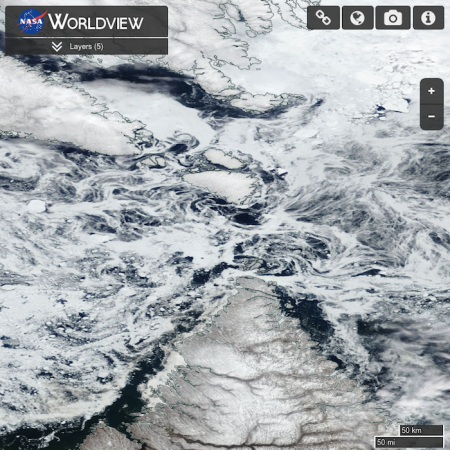
There has been what is an increasing phenomenon of strange cloud formations over Novaya Zemlya in Northern Siberia and Svalbard (which coincided with a methane burst).I give my musings as to what this might be about.


 Novaya Zemlya on the 21th June


Svalbard on the 19th June

Focusing in...


A methane burst on the same day


Friday, 8 March 2019

What is with that strange surface ice in the Arctic?

Looking at “grease ice” in the 
Arctic
What evidence is there for or against ice nucleation?

55tf


This is yet another attempt to make sense of the polar ice and nucleation. 

Dane Wigington actually provides very little in the way of direct evidence

"Sea surface chemical ice nucleation creates extremely anomalous patterns that resemble a chemical spill dispersion (because that is exactly what these patterns are). The recent NASA satellite images below (taken in the polar regions) provide shocking proof of these sea surface patterns."

We are very unlikely to actually catch planes spraying the Arctic region so until that happens Ice nucleation remains a working hypothesis that goes a long way to explaining the strange anomalies we are observing, including seeing us "dodging the bullet" every year when it looks as if we might be headed for a blue sea event.

The whole thing is that we are seeing the creation of ice in conditions that seem to be too warm for the creation of ice, especially in water (both in the cases of Greenland and Novaya Zemlya) that are too warm for sea ice to fall.

First, I wanted to look at the concept of "grease ice" as a possible explanation.This is from Wikpedia:


Grease ice is a very thin, soupy layer of frazil crystals clumped together, which makes the ocean surface resemble an oil slick. Grease ice is the second stage in the formation of solid sea ice after ice floes and then frazil ice.
New sea ice formation takes place throughout the winter in the Arctic. The first ice that forms in a polynya are loose ice crystals called frazil ice. If the level of turbulence is sufficient, the frazil ice will be mixed down into the upper layer and form a surface layer of grease ice.
The term ‘grease ice’ follows World Meteorological Organization nomenclature. Grease ice differs from ‘slush’, where slush is similarly created by snow falling into the top layer of an ocean basin, river, or lake. The two terms are related due to the process of ice crystals being blown into a polynya which can be the initiation of the grease ice layer, given a minimum level of mixing and cooling of the ocean surface.
Formation
When the water surface begins to lose heat rapidly, the water becomes supercooled. Turbulence, caused by strong winds or flow from a river, will mix the supercooled water throughout its entire depth. The supercooled water will already be encouraging the formation of small ice crystals (frazil ice) and the crystals will be mixed into the upper layer and form a surface layer.
Sea ice growth in turbulent water differs from sea ice growth in calm water. In turbulent water, the ice crystals accumulate at the surface, forming a grease-ice layer composed of individual ice crystals and small irregular clumps of ice crystals. In calm water conditions, nilas, a thick elastic crust, forms at the surface, which thickens as water molecules freeze to the ice-water interface.

ReferencesEdit

Parkinson, Claire L.; Comiso, Josefino C.; Zwally, H. Jay; Cavalieri, Donald J.; Gloersen, Per; Campbell, William J. (1987), Arctic Sea Ice, 1973-1976: Satellite Passive-Microwave Observations, Washington, DC: NASA Scientific and Technical Information Branch, p. 3, OCLC 14586790
Smedsrud, Lars H.; Skogseth, Ragnheid (2006), Field Measurements of Arctic Grease Ice Properties and Processes, Cold Regions Science and Technology 44, pp. 171–183


The above reads more like a description than an explanation, and certainly this statement, "When the water surface begins to lose heat rapidly, the water becomes supercooled" could apply just as much to ice nucleation as to any natural phenomenon.

So this doesn't really prove or disprove anything.

So, we are back to sea surface temperature.

We know that -

The amount of salt in sea water also determines the temperature at which sea water freezes. Adding salt to water lowers the freezing temperature. Water with a salinity of 17‰ freezes at about 30°F (-1°C) and 35‰ water freezes at about about 28.5°F (-2°C). Yet, despite the saltiness of the ocean, sea ice contains very little salt, about a tenth of the amount of salt that sea water has. This is because ice will not incorporate sea salt into its crystal structure. Therefore, sea ice is actually drinkable.


Changes in the Arctic mean that warm, salty water has moved into the polar region meaning that salinity levels are at about 35 per cent.


So ice in the region should only form at -2 degrees Celsius (or lower than that seeing we are talking about ocean water, not water in a glass)

I will look at two regions where we see exactly the conditions Dane Wigington is talking about identified by Margo in her video from yesterday.

There are areas of "grease ice"or ice nucleation off the coast of Greenland and of Novaya Zemlya in the Barents Sea.


GREENLAND

This is a shot taken off the coast of Greenland, north of Iceland


This overlay on NASA Worldview is used to identify sea surface temperature.

This indicates a temperature on the green area as 264 degrees Kelvin (-9 degrees C)
The alternative  measurement is with Earth Nullschool which shows a temperature of -1.2 degrees Celsius.

NOVAYA ZEMLYA


This photo shows another strange phenomenon of "tentacles" coming off the ice.


NASA Worldvew shows a sea surface temeperature of 223 degrees Kelvin whih I say does not compute as it translates into -50 degrees Celsius, which does not make any sense, given that we are looking at open water where the temperature was measured.

Earth Nullschool shows a temperature of approximately -0.7 degrees Celsius.

I would day, given that we are looking at sea surface temperature in open water as opposed to ice that this may be the more realistic figure

If so, it is too warm for ice to form.

In view of any significant countervailing evidence I will stick to the hypothesis that ice is being created in the Arctic to hide the true state of affairs.

Wednesday, 27 February 2019

Methane emissions - 21/ 02 - .26/ 02

Methane emissions – 21 to 26 February, 2019


Margo is taking an enforced break from her daily reports so I have updated the situation in a short video


This shows blue see on the west of Novaya Zemlya. You can see some "beamed" EMF clouds as well


East Side of the Arctic Ocean. Night time view.
02 25 2019
1. wide view
No photo description available.

2, closer view. 
Image may contain: text, water and outdoor


Tuesday, 26 February 2019

Michael Shellenberger - the shill for the nuclear industry


Propaganda for the nuclear energy produced on cue

Image result for nuclear radiation
When is something just a “co-incidence” and when are we just being paranoid”?

Well, I am not much of a believer in “coiincidence”
On February 20, 2019 Margo produced the following video in which she discusses the following article from Zero Hedge.
The article makes the point that never has there been less concern about nuclear weapons and a new generation of mini -nukes shows that on one side only the fear of mutually-assured destruction (MAD) is over.
One side is disinterested in mutual anything and fully intend to USE nuclear weapons


The World’s Most Dangerous Nuclear Weapon Just Rolled Off the Assembly Line

Within one day this article, penned by one Michael Schellingberger appeared in Forbes the very next day, February 21, 2019
StopLetting Your Cartoon Fears Of Nuclear Bombs Kill The Planet


It's hard to believe that humankind would kill off our best hope for preventing catastrophic climate change out of an exaggerated fear of nuclear weapons, but that is precisely what we are in the process of doing.

***
Last year, on June 18 Margo did a very comprehensive and excellent report on Novaya Zemlya as a smoking gun for rapid Arctic warming.


On cue, the very next day, the same author produced this article with an almost identical title as the one from the other day.

This came together with a cartoon of a poor, frightened woman.

What could be more ridiculous than fearing nuclear waste?

Forget Chernobyl, forget Fukushima. It's all a complete nothingburger and needed the "save the planet" (for the elite).


Everybody wants to do something about nuclear waste. Nuclear plant operators and most House members want to bury it in Nevada. A bipartisan group of senators wants states to compete for it. And Bill Gates and other entrepreneurs want to reuse it as fuel in next generation reactors.
Almost everybody is wrong to do so. Nuclear waste has never been a real problem. In fact, it’s the best solution to the environmental impacts from energy production.

Consider:
  • No way of making electricity other than nuclear power safely manages and pays for any its waste.
In other words, nuclear power’s waste by-products aren‘t a mark against the technology, they are its key selling point.

Who Is the author?

Michael Shellenberger describes hinself as a "ecological modernist" and "eco-pragmatist”


He writes about himself:

"I am a Time Magazine “Hero of the Environment,” Green Book Award Winner, and President of Environmental Progress, a research and policy organization. My writings have appeared in The New York Times, Washington Post and Wall Street Journal, Scientific American, Nature Energy, and PLOS Biology. My TED talks have been viewed over 1.5 million times"

You won't see it in print but he is also a sociopathic liar in league with the nuclear energy.  
How much did he sell his soul for?

P.S. Here is Margo's report where she discusses this - 

Wednesday, 20 February 2019

Observations of sea ice on the east cast of Novaya Zemlya

Sea ice on the east coast of Novaya Zemlya
This year is colder than last year

Trying to monitor what is happening with the sea ice is difficult. Trying to get an accurate picture depends sometimes depends on contradictory data. For instance, data on sea ice thickness from the EU is quite different from that from the US Navy.

This article explains the difficulty although it does not refer to the many years of work that Peter Wadhams has done by measuring sea ice thickness by sonar from a submarine. As a layman and non-expert it seems to me that this must be more accurate than satellite measurements.


But that is no longer available to us.


I have become convinced that the best way to look at this is to choose a data set and go with that. Trying to compare different sets of data is a frustrating exercise.

However, as well as looking at the shorter-term data on a day-by-day, week-by-week basis can be misleading. We also need to do comparisons over a period of time.

I have therefore made a comparison (using NASA Worldview) over several of the last 10 years 

I have taken screenshots of the sea ice in the same position on the east coast of Novaya Zemlya in the Kara Sea.

The orientation differs from the map - you have to turn the map 90 degrees counterclockwise to get a true orientation.

As discovered by Margo if you turn on a layer for Ice Surface Temperature you can discover  which areas are cloud-free (difficult when  looking at ice).  Not only that but you can get a temperature (ind degrees Kelvin) for the surface ice.

Another difficulty is the wide difference between two data sets, Earth Nullschool and NASA Worldview.

While Worldview tells me that the ice surface temperature is 250K (-23C) Nullschoold tells me that the sea surface temperature (SST) is -1.8C (271K).

Is one of them inaccurate or are they measuring something different?
Here are views with corresponding temperatures (as per NASA Worldview)

2009

Temperature - 245K (-28C)


2010
Temperature - 245K (-28C)

2012
Temperature - 269K (-4C)


2016


2017
Temperature - 269K (-4C)


2018
Temperature - 270K (-3C)


2019
Temperature - 250K (-23C)


If I was to make some quick observations it would be the following:

  • Prior to 2012 this part of the Kara Sea was fully-frozen
  • Since 2012 it has been largely ice-free at this time of year.
  • This year, although the ice is breaking up and is of poor quality conditions are colder than they have been in previous years
  • Despite all of this it is abundantly clear that methane is coming to the surface. You can see it and it has to come from somewhere.