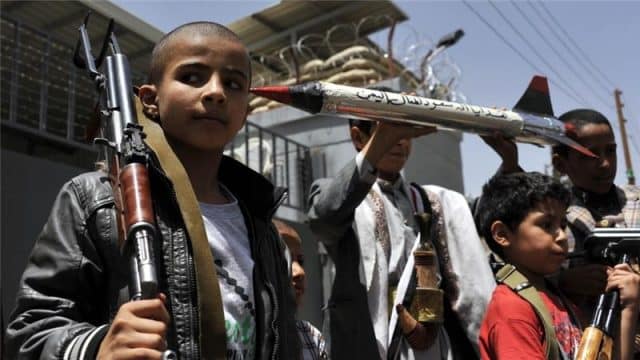
BOMBING SYRIA: OBAMA-TRUMP-BIDEN WAR HAWKS LIVE ON TO FIGHT ANOTHER DAY
Today on TruNews, we discuss the continuance of the bomb-first, kill-brown foreign policy which has defined America for the past 20 years, and we address the Khashoggi report, pinning responsibility for the murder of the CIA journalist solely on Kushner’s sleepover sidekick Mohammed bin Salman.
We also detail the opening day of CPAC 2021, with rousing speeches against censorship and communism from Florida Governor Ron DeSantis and Rep. Matt Gaetz.
Rick Wiles, Doc Burkhart, Edward Szall. Airdate 02/26/2021
Stocks
are cratering as markets close on Monday, with the Dow down close to
7 percent in the largest single-day drop in NYSE history and the S&P
and Nasdaq not far behind. Coronavirus and a drop in oil prices are
to blame.
The
Dow was down 7.8 percent at the close of trading on Monday, with the
S&P and Nasdaq not far behind at -7.61 percent and -7.29 percent,
respectively. Plunging oil prices - the commodity lost 30 percent of
its value overnight - and coronavirus-related panic took a big bite
out of stock values, leading to one of the worst trading days since
the 2008 crisis.
The
US wasn’t alone in having its bottom drop out - markets around the
world were feeling the sting, from Greece - hit the worst with a 13
percent drop - to China, which got off comparatively easy at -3
percent. However, China has been feeling the effects of the
coronavirus panic for longer than anyone.
The
epidemic, which has hit most of the world’s economic hotspots, has
depressed demand for oil, leading to the price drop that triggered
the day’s panic-selling - a vicious cycle that doesn't seem likely
to stop anytime soon.
The
epidemic, which has hit most of the world’s economic hotspots, has
depressed demand for oil, and last week’s OPEC meeting failed to
reach an agreement to further cut production to shore up prices.
Russia objected to the production cut, instead holding out to
maintain existing cuts, only for Saudi Arabia to offer its oil at an
even deeper discount - while suggesting it would increase production.
The resulting price war triggered a massive tumble in value, sending
the commodity down to levels not seen since the 1991 Gulf War.
While
Russia has insisted it can weather the collapse, analysts have warned
that both the Saudis, whose economy is almost entirely dependent on
oil, and the US shale industry, which pays considerably more to get
the commodity out of the ground, are imperiled by continued low
prices.
But
the crash could be just a temporary setback. “Markets nearly always
overreact in the short term,” Peter C. Earle, a research fellow at
the American Institute for Economic Research, told RT. “At present
equity markets around the world are responding to uncertainty about
the economic impact of the coronavirus. But while the Saudi move is
likely to be bad for oil companies, oil is a major factor of
production and lowe
E-mini
futures on the S&P 500 Index sank 5% to 2,819 as of 8:05 p.m. in
New York, hitting a limit triggered when the measure falls 5% from
the price calculated in the last 30 seconds of trading.
Friday.
The curb means the contract can’t trade at a lower price for the
remainder of the overnight session, although transactions at or above
the threshold are allowed.
As
of 10:00 PM eastern Daylight Time (EDT) the Dow Jones Industrial
Average (DJIA) is about $0.30 away from ALSO TRIGGERING.
Developing
. . .
UPDATE
11:00 PM EDT --
In
Tokyo, the Nikkei is bleeding: -6.16%!!!!!
In
Hong Kong, the Hang Seng: -4.4%
Israel:
-4.78%
Russia:
-4.97%
Germany
DAX 10,820.5 -707.0 -6.13%
UPDATE
-- ALL FUTURES HALTED
In
the midst of financial-market spasms as the day began in Asia Monday,
trading in some of the world’s most popular equity contracts went
quiet when declines reached 5%, setting off Chicago Mercantile
Exchange limits that keep prices from falling further.
“These
things are all designed to stop a market panic and cause a bit of a
pause in trading,” said Shane Oliver, head of investment strategy
and chief economist at AMP Capital Investors. “It can have the
perverse effect of increasing the downward pressure on other markets,
particularly until the U.S. market opens.”
E-mini
futures on the S&P 500 Index sank 5% to 2,819 by 9:05 a.m. in
Tokyo. After briefly rallying, they slipped back to the limit-down
level and held there for much of the Asian trading day. The curb
means the contract can’t trade at a lower price for the remainder
of the overnight session, although transactions at or above the
threshold are allowed. An exchange-traded fund tracking the S&P
500 that isn’t subject to trading curbs was down 6.3% at 5:52 p.m.
in Tokyo.
“Most
of these down opens have seen dip buyers come in -- we should know in
the first 90 minutes of trading” if they are out of ammunition,
saidMichael O’Rourke, chief market strategist at JonesTrading. “If
we don’t bounce quickly in those first 90 minutes, it sets up to be
a long and likely ugly day.”
President Hassan Rouhani vowed Monday that Iran would respond to an attack on one of its oil tankers in the Red Sea, saying the evidence suggested it was the work of a government not a terrorist group.
Addressing reporters in his first news conference since the U.S. abandoned the 2015 nuclear deal last year, Rouhani said officials in Tehran had seen footage of the incident and it was likely that several rockets were aimed at the tanker. He stopped short of assigning blame, but the vessel was sailing near the Saudi port of Jeddah at the time of the attack.
“This wasn’t a terrorist move, nor was it carried out by an individual. It was carried out by a government,” Rouhani said, adding that officials were also assessing rocket fragments.
The Gulf has seen a surge in tit-for-tat attacks on oil facilities, drones and shipping traffic since Donald Trump’s administration tightened sanctions on Iran’s oil exports earlier this year. The measures are part of Trump’s “maximum pressure” policy aimed at forcing Iran to curb its ballistic missile program and support for proxy militia around the Middle East, but have been met with defiance by the Iranian government, which has, instead, rolled back its own compliance with the nuclear accord.
Although all sides have said they want to avoid war, repeated incidents pose a growing risk to supplies from the world’s most important oil-producing region.
The attack on the Sabiti tanker came weeks after a drone strike on a major Saudi oil facility which the kingdom blamed on Iran. Iranian officials have said they weren’t involved in the attack, which rattled global oil markets, and was claimed by Iranian-backed Houthi rebels in Yemen.
Iran
releases new photos of
tanker attacked off Saudi
coast
The picture released on October 14, 2019, shows a view of the Iranian oil tanker which was hit off Saudi Arabia.
New pictures have been released of an Iranian oil tanker which was recently damaged in a suspicious attack in waters off the Saudi coast in the Red Sea.
One of the photos, which were released on Monday, shows two gaping holes in the hull of the tanker Sabiti, owned by the National Iranian Tanker Company (NITC).
Other photos show the crew aboard the vessel as well as close-up views of the holes.
The picture released on October 14, 2019 shows the crew of the Iranian oil tanker which was hit off the Saudi coast on Friday.
The oil tanker was hit by two separate explosions about 60 miles (96 km) from the Saudi port city of Jeddah on Friday. The blasts caused an oil spill that was stopped shortly afterwards.
This picture released on October 14, 2019 shows a view of a hole on the Iranian oil tanker which was hit off the Saudi coast on Friday.
The Port and Maritime Organization of Iran (PMO) said Saudi authorities had refused to provide help to Sabiti after it came under attacks by two missiles fired from an unknown location.
Government spokesman Ali Rabiei said Iran was investigating the case but "avoiding hastiness."
"An appropriate response will be given to the designers of this cowardly attack, but we will wait until all aspects are clarified," he added.
This picture released on October 14, 2019 shows a view of the Iranian oil tanker which was hit off the Saudi coast on Friday.
Secretary of Iran's Supreme National Security Council (SNSC) Ali Shamkhani said the country will not leave "piracy and banditry" in international waters unanswered.
The Iranian tanker is currently heading back to the Persian Gulf with Larak Island as its destination, unconfirmed reports say.
The incident is the latest involving oil tankers in the Red Sea and Persian Gulf region, a vital waterway linking oil-producing countries to world markets.
the Duran RT
CrossTalk host Peter Lavelle and The Duran’s Alex Christoforou
discuss the PBS Frontline documentary with Saudi Crown Prince
Mohammed bin Salman, who for the first time, discusses the murder of
journalist Jamal Khashoggi.
MBS
is on the ropes as his vicious war in Yemen is imploding, with more
attacks on Saudi Arabia and its infrastructure inevitable, unless he
can agree to stop the war against Houthi rebels and find common
ground with historic enemies in his middle east neighborhood.
See:
CrossTalk on Trump & Iran: ‘Locked and loaded’
In
late September, Yemen’s Houthis carried out a large-scale operation
against Saudi-led forces on the border with the southern Saudi
province of Narjan. According to a spokesperson for the Armed Forces
of the Houthi Government, the Houthis fully defeated at least 3
brigades of Saudi-backed forces. The Yemeni force killed 500
personnel, injured 2,000 others, destroyed 15 vehicles and seized a
large number of weapons and military equipment.
Brig.
Gen. Yahya Sari noted that the operation involved a coordinated
effort of ground, missile, and air forces. They conducted at least 21
missile and drone strikes on positions of Saudi-led forces. As a
result of the operation, the Houthis captured 350km2 from Saudi-led
forces.
Brig.
Gen. Sari said that aircraft of the Saudi-led coalition conducted at
least 300 indiscriminate airstrikes in a desperate attempt to stop
the Houthis’ advance. These strikes killed at least 200
coalition-backed personnel, according to the Houthis.
The
Saudi-led coalition and mainstream media are now attempting to
downplay recent military developments. However, videos and photos
from the ground demonstrate that Saudi-led forces in fact suffered a
devastating defeat in the area.
The
Houthi advance on the Yemeni-Saudi border became a second major blow
to Saudi Arabia in September. After almost 5 years of the Saudi
invasion of Yemen, the Kingdom found itself in a no win situation.
At
the same time, the Saudi-led coalition itself is steadily crumbling
because of internal contradictions. The port city of Aden remains in
the center of tensions between Saudi-backed and UAE-backed forces.
Local sources say that the withdrawal of the best detachments of
UAE-backed forces from frontlines in central and northern Yemen may
be one of the reasons behind the success of the Houthi operation in
the border area.
Never
underestimate the power of blowback. Right now, Crown Prince Mohammad
bin Salman (MBS), the de facto ruler of the House of Saud, is staring
at it, an ominous abyss opened by the Houthis in Yemen.
This
past weekend, Yemeni Armed Forces spokesman Brigadier Yahya al-Sari
clinically described how Ansarallah, also known as the Houthi rebel
movement, aided by what Yemenis describe as “popular committees,”
captured three Saudi brigades of 2,400 – ragged – soldiers, plus
Yemeni and Sudanese mercenaries as well as several hundred battle
vehicles. At least 500 Saudi soldiers were killed, Ansarallah said.
(A spokesman for the Saudi-led coalition denied the claim).
This
was part of the significantly named Operation Nasrallah in Najran
province, Saudi Arabia. The Houthis, who did learn a lot, tactically
and strategically, from Hezbollah, duly praised mujahideen and
‘popular committees’ involved in Operation Nasrallah.
Col.
Pat Lang, in his blog, offers a particularly useful observation on
the captured Saudi vehicles. Some belonged to the Saudi National
Guard (SANG): “I suppose these troops were from the modernized SANG
that the US has worked hard to train and equip for fifty years or
more. The easy surrender of these Bedouins is very bad news for the
Saudi monarchy.”
Crown
Prince Mohammad Bin Salman. Photo: Mandel Ngan / AFP
Najran,
the site of the successful raid, is a Shi’ite majority province.
But unlike the Eastern province, concentrating the bulk of the Saudi
oil industry, where the Shi’ites are Twelvers – believers in
twelve divinely ordained leaders, awaiting the reappearance of the
last of those twelve imams as the promised Mahdi – in Najran the
majority are Ismailis. Until recently, they had been relatively
accommodating to the rabidly anti-Shi’ite House of Saud.
Not
anymore. As I reported before, increasingly daring Houthi operations
inside Saudi Arabia can only be successful with solid, on-the-ground
intelligence.
As
for the captured, ragged Saudi soldiers, Mohamed Al-Bukhaiti, who is
part of Ansarallah’s political wing, confirms they are mostly
takfiris – true believers who think they see among their fellow
Muslims legions of apostates, deserving of the death penalty – and
jihadis.
In
Beirut, I spent a long time in detailed conversations with Hassan Ali
Al-Emad, scholar, politician and the son of an influential Yemeni
shaykh dominating 12 tribes. Originally a Zaydi himself, Al-Emad with
the help of other Yemeni sources confirmed that the main actors are
in fact the Houthi movement – and not only the Houthi tribe, which
is only one tribe among many Zaydi tribes in north Yemen. The capital
Sana’a was taken over by the Houthi movement, and not only the
Houthi tribe.
This
is essential to understand the fact that most of north Yemen has by
now adhered to the Houthi movement – which also happens to double
as the government of north Yemen. It’s not far-fetched to project
that the Houthi movement may end up uniting the overwhelming majority
of Yemen against the House of Saud.
What
MBZ is up to
Al-Emad
was keen to point out that among the dizzyingly complex Yemeni tribal
mosaic, the only unifying factor is the fight against a foreign
invader – and in this case serial bomber, responsible since 2015
for provoking the most serious humanitarian crisis in the world
according to the UN. I remarked to Al-Emad that the Yemeni tribal
pattern was much like Afghanistan’s. He visibly enjoyed the
comparison.
Al-Emad
also confirmed that mercenaries fighting in south Yemen are joining
the Houthi movement en masse. That will pose even more challenges for
the so-called “coalition” that’s been bombing Yemen since 2015,
which is now reduced to the House of Saud after the UAE opted for
“talks.”
On
the ground, the situation is actually even murkier. The Houthis –
supported by Iran – may be fighting Riyadh, but they are also
fighting al-Qaeda remnants and a few Daesh jihadis. The House of Saud
creates the illusion they are doing the same. In fact, they do
nothing.
Additionally,
the Houthis are also fighting the Southern Transitional Council,
formed only two years ago. This is a separatist outfit that wants an
independent South Yemen. Yet the STC is most of all a UAE fifth
column, funded and weaponized by Abu Dhabi.
In this undated file photo, Houthi rebels in Sanaa raise their weapons
and shout slogans during a gathering aimed at mobilizing more
fighters before heading to battlefronts. Photo: Hani Al-Ansi/dpa
So
what is Abu Dhabi supremo Mohammed Bin Zayed (MBZ), MBS’s mentor,
really up to in Yemen? Follow the (oil) money. What really matters is
full control of the immensely strategic Bab-el-Mandeb strait
connecting the Red Sea to the Gulf of Aden. It’s all about oil
trade and connectivity. China, with a base in nearby Djibouti, is
paying enormous attention to what’s happening in Aden and south
Yemen.
Meanwhile,
Yemen’s “government,” led by President Abd Rabbu Mansour Hadi,
remains an inefficient fiction. Basically the only thing Hadi does is
to support the Southern Transitional Council to fight the Houthis.
Enter
yet another, fascinating oil angle. Hadi is actually moving his
operation to mythical Ma’arib – the fabled capital of Bilqis, the
Queen of Sheba.
Much
like Freud comparing the layers of the unconscious to the layers of
Roman ruins, there are myriad, superimposed Ma’aribs in Yemen’s
extraordinary history. Ma’arib was the original capital of Arabia
Felix, praised by eminent historians such as Strabo and Diodorus
Siculus, a city sending a thousand talents of incense to Babylon
every twelve moons for the feast of Baal or selling ivory, gold and
leopard skins to the caravans of Hatshepsut, the Queen of Egypt.
Ma’arib’s
gaze is fixed on the Rub al-Khali, the Great Desert Void, dreaming of
a new Arabian Empire – certainly not ruled by the shabby, corrupt,
supremely ignorant House of Saud. Enter, again, the UAE angle.
Ma’arib
happens to be the land of origin of Sheikh Zayed, MBZ’s father.
That’s where his tribe departed from. In the 1970s, Sheikh Zayed
was actually financing an army of archeologists and agricultural
engineers involved in the rebirth of Ma’arib. Today, as the hidden
power behind governor Sultan al-Aradah, his son MBZ would like to
control it to perhaps fulfill Daddy’s dream. The problem is, the
Houthis will never let him.
The
desert holds all secrets
Trying
to decode the Yemeni puzzle is like being immersed in a Jorge Luis
Borges labyrinth of mirrors. Actually a pyramid of mirrors. In
Beirut, I had the privilege of sharing countless stories with my
friend Princess Vittoria Alliata from Sicily, the epitome of cool
aristocracy, a renowned Islamologist and the first Italian translator
of Lord of the Rings (Tolkien absolutely loved it).
Vittoria,
who translated our conversations with al-Emad, graciously gave me one
of the few remaining copies of the 1980 first edition by Garzanti of
her spellbinding Harem, a study of women in the Arab world in the
form of travel memories. In it, I found this immaculately Borgesian
passage by Hasan ibn Ahmad al-Hamdani, written way back in 935 AD in
Sana’a:
“In
the sands of the desert is buried an upside-down pyramid; it contains
the truth of the human race. Truth is buried in the desert sands, so
the one who by chance discovers it shall be regarded by men as a
madman with his brains burned by solitude and the sun.”
The
fact that the barbarians of the House of Saud are aiming to destroy
Arabia Felix – the seat of a fabulous, millennia-old desert
civilization and store of knowledge – speaks volumes about our
tawdry times. True Yemenis see right through it.
In
more prosaic terms, after the spectacular, game-changing attack on
Abqaiq, the Houthi movement, via President of Yemen’s Supreme
Political Council Mahdi al-Mashat, offered a ceasefire to MBS. His
entourage only accepted a “partial” stop to the relentless
bombing campaign. So more daring operations, complete with drone
swarms and Quds-1 missiles, are inevitable. As Bukhaiti remarked,
they “will target more vital and critical facilities of Saudis.”
A
taste of what is in store was the fire on Jeddah’s train station –
which is the $7 billion-plus hub of MBS’s 300km high-speed rail
link to Mecca and Medina. The Arab street is consumed by rumors that
the Houthis won’t stop before they reach Mecca.
An
image from a video made available in July 2019 by the Yemeni Shiite
Houthi group’s press office shows ballistic missiles, labeled ‘Made
in Yemen,’ at a recent exhibition of missiles and drones at an
undisclosed location in Yemen. Photo: AFP
As
for the capabilities of the Yemeni Quds-1 cruise missile, here is a
superb technical analysis, which comes with a crucial insight in view
of the UK, German and French claims that Iran is behind the Saudi oil
attacks: “Notably, the Pentagon has not accused Iran of the strike
and is keeping quiet, knowing full well that the Quds cruise missile
came from Houthi territory.”
After
Abqaiq and Operation Nasrallah, to say that MBS is wallowing in a
vicious blowback swamp is an understatement. The relentless bombing
of Yemen for over four years during his term as minister of defense
is his Frankenstein baby.
In
Beirut, I also spent many hours discussing the internal Saudi
quagmire with analysts of the organized opposition, who run the
website The Saudi Reality.
Among
other things, they said that Jamal Khashoggi was killed because the
Saudi consul in Istanbul exaggerated the dose of the shot to paralyze
him. Then he was bone-sawed and the body was burned – so no wonder
it was never found.
The
opposition sees the internal Saudi dynamics as MBS being Trump’s
man in Riyadh – because of the oil angle – while the CIA, like
Khashoggi, would rather deal with a constitutional monarchy and have
its own asset in command.
Total
instability reigns. The only certainty is that the Houthi movement’s
increasingly sophisticated offensive will continue to be deployed
inside Saudi Arabia, unless MBS shelves his vicious war. Otherwise,
he’d better start booking a one-way ticket to London.
Saudi
Arabian fighter jets participated in a recent operation targeting
Iranian militia positions in the eastern Syrian city of Albu Kamal
across from the Iraqi border, according to a report by Independent
Arabia citing a western source.
The
source told the news outlet that the operations resulted in the
killing and wounding of several militants as well as the destruction
of several weapons depots, including missiles and drones.
Saudi
fighter jets, including jets [from other countries] monitored changes
in the positions of Iranian militias, especially those of the Quds
Force in Albu Kamal and other areas in the Iraqi-Syrian border,
destroying warehouses, batteries, missiles and a drone base all
believed were about to be used by Iran to strike other Saudi targets
after targeting Aramco,” the western source, who declined to be
named, told Independent Arabia.
The
report said that unidentified drones were reported in the skies over
Albu Kamal city and areas under the control of Iranian militias on
Wednesday.
A
day earlier, the Syrian Observatory for Human Rights said overnight
airstrikes killed 10 pro-Iranian Iraqi militiamen in Albu Kamal
without specifying who carried them out.
The
report noted that the strike was the second of its kind to target
Iranian and pro-Iran militias in the city this month.
An
Al Arabiya correspondent said that explosions were heard in the Iraqi
town of Qa’im on Tuesday near the Syrian border at around 12:30 am.
Last
Update: Wednesday, 18 September 2019 KSA 21:10 - GMT 18:10
[ Editor’s Note: This morning finds Yemen wanting full credit for the ARAMCO attacks, insisting that US radars in Saudi Arabia cannot stop their drones. The other side of the story by late last night found the US trying to pin it on Iranian militias in Iraq, claiming a N by NW incoming flight route.
As usual, no independently certified evidence is presented to support this – something that is becoming routine operating procedure and a dangerous one. Iraq stepped in saying it would not allow such attacks to be conducted from its territory.
A quick review of the US Patriot batteries in the region last night, looking for where its radars should have tracked missile paths if the claims from being fired from Iraq are true, did not reveal a specific location; but I found lots of reports that the Patriot system has a huge failure rate.
As for the Houthi missiles, when approaching near the target, the war head separates and the resulting debris of falling missiles has always been claimed as a Patriot hit. With full military censorship, the Saudis have no problem hiding the truth. Their drones do not do this, being suicide drones.
The Houthis were brash enough this morning to threaten Saudi Arabia that its attacks would continue until it stopped its attacks and lifted the Yemen blockade.
We will be tracking this story carefully, as in my recent NEO posting yesterday, I had posed that we were one event away from a major shooting war in the Mideast; with the usual bad actors looking to benefit. I will let you guess who they are… Jim W. Dean ]
Jim's Editor’s Notes are solely crowdfunded via PayPal Jim's work includes research, field trips, Heritage TV Legacy archiving & more. Thanks for helping. Click to donate >>
Yemen is proud of its missiles
– First published … September 16, 2019 –
Yemen’s military has warned foreigners in Saudi Arabia to leave Aramco’s oil processing plants, saying they are still a target and can be attacked “at any moment.”
The warning came after Houthis and their allies in the Yemeni army deployed as many as 10 drones to bomb Abqaiq and Khurais oil facilities run by the Saudi state-owned oil company before dawn Saturday.
Spokesman for the Yemeni armed forces, General Yahya Sare’a, said in a tweet Monday that the attacks in the kingdom’s eastern region had been carried out by drones with normal and jet engines.
He said Saudi Arabia should stop its “aggression and blockade on Yemen,” or see the Yemeni army hit the kingdom “anywhere and anytime” it chooses.
Other Yemeni officials dismissed claims that the country is incapable of carrying out on its own the kind of attacks that targeted two plants at the heart of Saudi Arabia’s oil industry.
Mohammed al-Bukhaiti, a member of Yemen’s Supreme Political Council, pledged that Yemeni forces will continue to pound the Saudi oil industry until the kingdom ends its deadly war.
The unprecedented attack knocked out more than half of Saudi crude output, or 5% of global supply, prompting Saudi and US officials to claim without any evidence that it probably originated from Iraq or Iran.
Bukhaiti told Iran’s Tasnim news agency that blaming the attacks on other countries shows “cowardice” in facing up to the reality of Yemen’s military power.
“Saudi Arabia declared war against Yemen on the grounds that our missile inventory posed a threat to its security,” he said. “Today, we are surprised to see that when we hit Saudi oil wells, they exonerate Yemen from conducting these strikes and accuse others of doing them.”
“This is viewed as an own criminal decree of conviction. It also shows their cowardice,” Bukhaiti added.
US Secretary of State Michael Pompeo was quick to blame Iran for the brazen attacks, claiming there was no evidence the drones had originated from Yemen.
Bukhaiti mocked the proposition, saying Washington resorted to such rhetoric to hide the fact that their radars were simply incapable of tracking Yemeni drones.
“America and Saudi Arabia’s radars cannot intercept Yemeni aircraft. If they could intercept them, they would have shot them down,” he argued.
Bukhiati said the fact that Pompeo did not produce evidence to substantiate his claim showed they were “bankrupt” both politically and militarily.
Iranian Foreign Ministry spokesman Abbas Mousavi dismissed Pompeo’s allegations as “blind and fruitless remarks” that were “meaningless” in a diplomatic context.
Iranian Foreign Minister Mohammad Javad Zarif also responded to Pompeo, saying the United States had failed in its campaign of “maximum pressure” and was now “turning to ‘max deceit’.”
Bukhiati made it clear that the Houthis would only stop attacking Saudi Arabia once it abandons “serving US interests” and starts respecting the interests of its own people.
“Ending the war now is no longer a shared interest of Yemen and Saudi Arabia. Rather, it benefits Saudis more than it does Yemen because Yemen doesn’t have much to lose,” he said. “Yet we are witnessing Saudi Arabia’s stubbornness because it is the United States that decides for them.”
“These attacks will automatically stop when Saudi Arabia ends its aggression and lifts its blockade against Yemen,” he said. “These operations will only expand and target facilities that are more vital and more sensitive than oil facilities.”
Iran, Iraq not involved in Aramco attacks: Yemen air force
Yemen’s air force also issued a statement on Sunday, denying reports that Iran and even Iraq might have played a role in the attack.
“We confirm that these operations were carried out from Yemeni territories and by the Yemeni Army and Popular Committees,” said Brigadier General Abdullah al-Jefri, head of the Yemeni air forces.
“Therefore, whatever is being said about Iran’s support for us or allegations that these attacks were carried out from inside Iraq or through Lebanon’s Hezbollah are absolutely wrong,” he said. “Such statements and blind and fruitless accusations are unfathomable and meaningless,” he added.
Iraq denies allegations on Aramco attacks
The Iraqi cabinet said Sunday that claims about its territory being used as a base for the attacks held no value, stressing that the country would never become a platform to attack other countries.
“Iraq denies what has been circulated by some media outlets and social media about the use of its territories to attack Saudi oil installations by drones, and affirms its constitutional commitment to preventing the use of its territories for aggression on its neighbors, brothers, and friends,” the Cabinet Office said in a press statement.
“The Iraqi government will deal firmly against anyone who tries to violate the Constitution. It has formed a committee of the relevant Iraqi parties to follow up information and developments,” explained the Cabinet Office.
The statement also called on warring parties to stop hostilities, expressing concern that “escalation and military solutions would complicate the humanitarian and political situation, and threaten our common security as well as regional and international security.”

 Posts
Posts





 In
In