Showing posts with label New Mexico. Show all posts

Saturday, 31 August 2019

The latest from the Jeffrey Epstein case - 30 August, 2019


Mossad Parlor Probe: Sheriff Proposes Citizens Petition Grand Jury to Investigate Zorro Ranch


Today on TRUNEWS we exclusively report that a man named David Starofsky had an RV and Jeep Liberty parked at the convicted pedophile Jeffrey Epstein’s New Mexico Zorro Ranch the day that he died. We also speak with Cibola County Sheriff Tony Mace about the potential of a local posse of law enforcement officers raiding the property and how residents can convene a citizen’s grand jury to hand down indictments against other high profile players in what appears to be the largest state-backed blackmail spy operation in modern history, spanning the better part of three decades, and entrapping the who’s who of international politics. 

Rick Wiles, Edward Szall, Doc Burkhart. Airdate: August 30, 2019.


Officials in the US state of New Mexico are in the process of canceling state land leases for the Zorro Ranch, owned by an convicted sex offender and pedophile Jeffrey Epstein, Fox News reported on Friday.
According to the media report, New Mexico Attorney General Hector Balderas found that the deceased pedophile had improperly leased the land from the state.
"Having fully reviewed the referral from the State Land Commissioner in connection with my office’s investigation into criminal conduct related to Jeffrey Epstein in New Mexico, I am issuing a determination that the State Land Commissioner should immediately retake State trust lands and cancel leases that were improperly given to him [...] The original leases to Epstein appear to have no beneficial use justification to the State, but rather appear to simply have been taken by him to increase privacy and the landmass surrounding his estate. This sweetheart deal must be canceled and reassigned to a New Mexico ranching family", Hector Balderas said, cited by Fox News.
Several of Epstein’s alleged sex-slave victims have reported that they were assaulted at this particular ranch.
“The rising number of allegations from survivors saying they were trafficked to the Zorro Ranch is reason enough for us to rip these leases in half and seize back this public land”, Land Commissioner Stephanie Garcia said in a statement, cited by Fox News.

​Taking back parcels of state-owned land could make it easier to search the estate – the only one of Epstein properties that has not yet been raided by authorities, Fox News said.

​“Our desire to cancel these leases is because we don't want to conduct business with Epstein or his companies [...] The existence of these leases wouldn't prevent law enforcement agency from raiding the house”, the New Mexico State Land Office said in a statement, cited by Fox News.

​According to the media report, the leases date back to 1993 and were officially granted to Epstein’s holding company, Cypress Inc., in 1997, for livestock grazing. But the ranch reportedly was not used for that purpose. According to New Mexico authorities, Cypress Inc. violated the lease contract.
The deceased Epstein, a convicted sex offender, had been under investigation for nearly two decades at the time of his death. He was arrested in 2005 for molesting an underage girl. After being convicted of being a sex offender and pedophile, Epstein served a light sentence of just 13 months.
In July 2019, Epstein was arrested a second time and charged with trafficking minor girls at his residences for sex. Some of the charges date back to the 2000s. Epstein pleaded not guilty to all charges but faced up to 45 years in prison had he been convicted.
Epstein's death by hanging has been met with suspicion as the American pedophile is linked to many famous and powerful people, including US Presidents Bill Clinton and Donald Trump, UK royal Prince Andrew and numerous powerful Saudis and Europeans, and was inexplicably taken off suicide watch despite reportedly trying to kill himself just weeks earlier.
On Tuesday, a hearing under oath featured emotional testimony from 16 women who detailed how Epstein abused them and were treated as sex slaves. Many of Epstein's alleged victims reportedly believe that he would never face real justice in court due to his powerful friends and great wealth.


Wednesday, 6 June 2018

Several wildfires have forced evacuations in California, Colorado and New Mexico


California Fire Burns More Than 2 Square Miles within Hours as Wildfires Blaze in the West
  • Several wildfires have forced evacuations in California, Colorado and New Mexico.
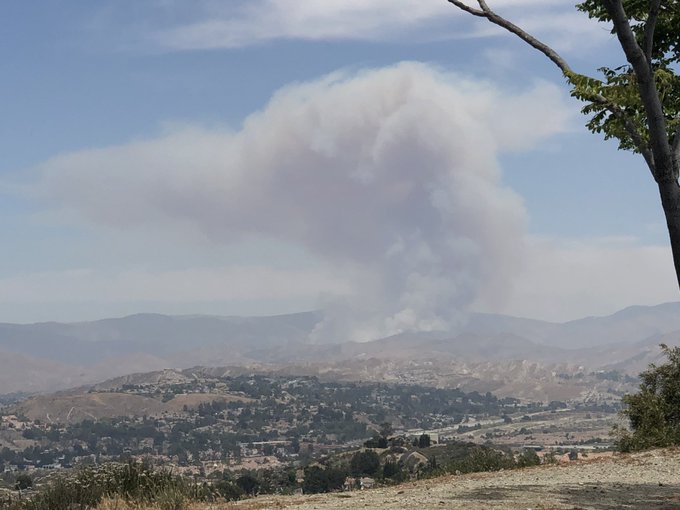
  • The Stone Fire burning in Agua Dulce, California, grew to more than 2 square miles in a few hours' time.
  • The 416 Fire in Colorado has burned into the San Juan National Forest and spurred more than 800 homes to be evacuated.
  • Fourteen buildings have been destroyed in a New Mexico inferno, and hundreds of homes are threatened, officials said.

5 June, 2018

Fires in Colorado, New Mexico and California have forced evacuations amid dry conditions and severe drought.

A blaze burning Monday in Los Angeles County exploded in size, consuming more than 2 square miles in a few hours, according to InciWeb, a government incident information system. The fire had reportedly burned 20 acres around 1 p.m. local time and was estimated to be more than 200 acres an hour later.

The fast-moving blaze burning in the town of Agua Dulce, roughly 50 miles north of Los Angeles, prompted the Sheriff's Office to order evacuations. No deaths have been reported, but a firefighter suffered minor injuries, according to the Associated Press. The fire is now 30 percent contained.


Residents were told to flee areas near Anthony Road and the Sierra Highway due to the blaze, CBS Los Angeles reported. The county fire department requested aircraft to help fight the flames from the sky

The cause of the fire is under investigation.

The blaze, dubbed the 416 Fire, was spotted north of Durango Friday morning and was being fueled by shifting winds onto the San Juan National Forest. More than 3 square miles were scorched by Tuesday morning. The fire is 10 percent contained.

In addition to the more than 800 homes evacuated, another 700 homes were told to be ready to leave on a moment's notice. About 500 residences are threatened in the Highway 550 corridor, InciWeb said

Highway 550 was partially reopened Sunday, according to CBS Denver, but the Durango and Silverton Narrow Gauge Railroad canceled all rides through June 10 due to the severe fire danger.

Several witnesses have indicated that the inferno was sparked by someone near the train tracks, but no official cause has been released, according to the Durango Herald.

Ute Park Fire, New Mexico

Residents have been ordered to evacuate an area of northern New Mexico as an aggressive wildfire burned more than 57 square miles of land.

The so-called Ute Park Fire destroyed 14 unoccupied structures at the Boy Scouts' Philmont Ranch overnight as it burned near Highway 64 in Ute Park. More than 200 buildings in Ute Park are threatened by the fire, according to KOAT.com.

However, there was some good news Monday: with the fire threat in steady decline, hundreds of residents in and around the town of Cimarron were cleared to return to their homes, officials said. Precipitation helped firefighters battle the blaze Sunday, and it is now 25 percent contained, according to InciWeb.

Several roads in the area were closed as the fire jumped over highways Friday and into the weekend.

Officials also said the fire danger forced the closure of the Santa Fe National Forest Friday morning, the Santa Fe New Mexican reported. It will remain closed until conditions improve, the report added.

"Under current conditions, one abandoned campfire could cause a catastrophic wildfire, and we are not willing to take that chance with the natural and cultural resources under our protection and care," National Forest Supervisor James Melonas said in a statement to the Santa Fe New Mexican.

Northern New Mexico has been in a prolonged period of extreme drought. Areas in and around Ute Park are currently in exceptional drought – the worst category – according to the U.S. Drought Monitor.

The cause of the fire remains under investigation.

Wednesday, 28 March 2018

Severe drought in New Mexico

I am becoming less interested in the large number of general articles on climate change that softpeddle the whole thing - articles like this - 

Extreme weather is here to stay as whole world faces upsurge in major storms

If you still need persuading you have not been paying attention.


I am more interested in climate change news – what is happening to the ice, signs of crop failire and/or famine.


I expect that in the coming months the news will become more and more dominated by stories like this.

New Mexico farmers battle drought conditions


Severe drought conditions across New Mexico are forcing farmers to be creative and efficient in the way they plant their crops so they don’t use too much water. Glen Duggins, the owner of Five-Star Chile and a board member on the Middle Rio Grande Conservancy District, says rainwater and snowmelt were collected during last season’s wet winter, therefore there is enough water for farmers to irrigate despite the drought. However, if we have another winter like the one that just passed, Duggins says farmers will have to cut back more on irrigating in 2019.

Saturday, 18 June 2016

Extreme heat and wildfires in US southwest

With the forecasts for this weekend I suspect there will lots more news of this sort to come. I can’t keep up.


Heat-Stoked Wildfires Erupt Across US West — Out of Control Blaze Rages Near Oil Processing Facility


16 June, 2016


A potential record southwestern heatwave is building — predicted to hit peak intensity by the middle of next week. But, already, higher than normal temperatures and strong southerly winds are lighting off severe wildfires throughout the drought-stricken US West.

Fires Prompt Evacuations, Declarations of Emergency Across US Southwest


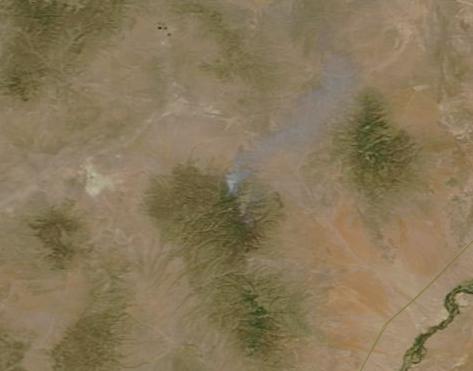
Doghead Fire June 15 New Mexico
(A crown fire southeast of Albuquerque forces the residents of 50 homes to flee as the governor of New Mexico declared a state of emergency Wednesday. Satellite image source:LANCE MODIS.)

In eastern Arizona, a small town was evacuated and residents of five more were given orders to prepare to leave as the Cedar Creek Fire devoured 4 square miles Wednesday evening. The fire continued to grow throughout the night and by Thursday morning had expanded to cover fully 8.5 square miles. Firefighters are now struggling to contain the blaze but hot weather and 30 mile per hour winds predicted Thursday present serious challenges.

Homes in Utah were also blanketed by smoke and haze as fires threatened. In Iron county, 40 mile per hour winds stoked yet another explosive blaze, cutting off Bumblebee Road and forcing 20 residences to be evacuated. As of last report, the fire was 400 acres in size, but this is likely to be a low estimate as 80 firefighters are now attempting to contain the blaze.

Southwest Drought Fuels Wildfire Near Santa Barbara Oil Refinery

It’s a rash of wildfires fueled by above normal temperatures and an endemic and steadily worsening drying of the region. Ongoing conditions related to human-caused climate change. And California has seen the worst of it. There, extreme drought has now lasted for three years. And in all of the past nine years, California has only seen two non-drought years.
Dry US West
(Dry US West. Dry conditions expanded to cover much of the US West this week ahead of a powerful and potentially record heatwave. Coincident with human-forced warming, an expansion of drought is expected in the US West. A condition that has born out in the form of worsening drying conditions for this region of the US over the past 2-3 decades. Image source: US Drought Monitor.)

In the south, near Santa Barbara, rainfall totals again fell short of average this Winter. Another dry season in a very dry decade that has provided ample bone-dry vegetation as fuel for wildfires.
By late Wednesday, these dry, warm conditions combined with strong sundowner winds to stoke fire dangers near the city. At that time, a 300 acre blaze burning near an oil facility exploded to cover about 2 miles of ground. By early Thursday, the huge blaze was raging out of control along a ridge near an Exxon-Mobile oil processing station.

Hundreds of campers were evacuated from the burning ridge as firefighters rushed in. The oil facility has now been emptied of non-essential personnel and more than 500 firefighters are attempting to erect a defensive line in order to contain the blaze. Currently, there appears to be no severe threat the fire will ignite fuels within the Exxon facility. But 40 mile per hour winds are predicted for later today and the nearby fire could be poised for more explosive growth.
Sherpa fire Near Exxon Mobile Oil Refinery
(Fire rages near Exxon Mobile oil processing facility in Santa Barbara, California on Wednesday. Firefighters had a brief respite as winds died down Thursday morning. However, fire conditions are expected to rapidly worsen by Thursday afternoon with the return of strong sundowner winds. Image source: Pete Demetrio.)

Dangerous Infrastructure — Oil Facilities Vulnerable to the Fires of Climate Change

This is the second time that a large oil facility has been threatened this year by a wildfire. In Canada, the Fort McMurray Fire forced the evacuation and shut down of large tar sands production facilities as barracks for oil workers succumbed to that massive blaze.
Human caused climate change is increasing instances of wildfires around the world through the combined forces of increased drought, rising temperatures, and more intense rates of evaporation. And in what could well be called an ironic twist of fate, the very fossil fuel infrastructure that is causing the warming is also quite vulnerable to the fires it has helped to light off.

If we were to use a metaphor, we could compare it to playing with fireworks on a 100+ degree (F) Fourth of July day in a big puddle of gasoline. In other words, this is the very definition of irresponsible. And the potential for tragedy here is enormous. Fossil fuel facilities contain massive amounts of volatile explosive compounds. Explosions at refineries due to accidents are among the most powerful manmade (if unintended) violent outbursts on Earth. And the very use and production of that fuel makes it more and more likely that a wildfire will set off a very real manmade firestorm at one of these many massive facilities.
Fire danger map US
(US fire danger map shows high to extreme potentials for wildfires across large sections of the country. Fire risk is likely to intensify over the coming week as a record heatwave is predicted to build across the country. Today’s outbreak, therefore, may just be the start. Image source: US Fire Service.)

It’s just one more example of how dangerous and irresponsible the global fossil fuel industry has become. And in this instance they are increasing risks to life and property not just to those who live anywhere near an oil or gas facility — but for anyone living pretty much anywhere at all. In other words, the fires are getting worse because we are burning fossil fuels. And the very fossil fuel facilities that are causing this problem are threatened.
Links:
Hat Tip to DT Lange


Tuesday, 11 August 2015

Pollution in the United States

Massive Mine Waste Spill Reaches New Mexico

The Animas River in Colorado turned orange with toxins after a spill sent a million gallons of mine waste into a waterway last week. Photo credit:  La Plata County Emergency Management

Eco Watch,
10 August, 2015


Just days after workers with the Environmental Protection Agency (EPA) accidentally spilled a million gallons of toxic mine waste into a Colorado waterway, the free-flowing slщudge that turned portions of the state’s Animas River orange reached New Mexico, where health and wildlife officials say they were not alerted to any impending contamination.

The Animas River in Colorado turned orange with toxins after a spill sent a million gallons of mine waste into a waterway last week. Photo credit: La Plata County Emergency Management
As the cities of Aztec and Bloomfield scrambled to cut off the river’s access to water treatment plants, they criticized the EPA for what they said was a lackluster effort in providing warnings or answers about the spill. The contaminants seeping into the river—at a rate of 548 gallons per minute—include arsenic, copper, zinc, lead, aluminum and cadmium.

The Animas flows into the San Juan River in New Mexico, which in turn joins the Colorado River in Utah’s Lake Powell.
Workers unleashed the waste while using heavy machinery to investigate toxic materials at Colorado’s non-functioning Gold King Mine. But the accident, while “unexpected” by EPA’s admission, is a reminder that defunct mines still heavy with contaminates exist throughout the West.

The Associated Press writes:

Until the late 1970s there were no regulations on mining in most of the region, meaning anyone could dig a hole where they liked and search for gold, silver, copper or zinc. Abandoned mines fill up with groundwater and snowmelt that becomes tainted with acids and heavy metals from mining veins which can trickle into the region’s waterways. Experts estimate there are 55,000 such abandoned mines from Colorado to Idaho to California and federal and state authorities have struggled to clean them for decades. The federal government says 40 percent of the headwaters of Western waterways have been contaminated from mine runoff.

There are a number of factors which contribute to the abandonment of such sites. One is cost, as cleaning up toxic materials can be an expensive endeavor. But more complex is the legal liability involved. According to the Clean Water Act, anyone who “[d]ischarges a pollutant from a point source into a water of the U.S.” without a permit can be prosecuted for a federal crime, even if they were trying to clean up pollution. That has prevented green groups from engaging in those cleanup efforts—particularly as an ongoing push for a “Good Samaritan” exception to the law has gone ignored by the federal government, AP writes.

“There’s still a whole generation of abandoned mines that needs to be dealt with,” Steve Kandell of Trout Unlimited, one of the organizations backing the “Good Samaritan” bill, told the AP.

Yet that ongoing issue is exactly what the EPA crew had been attempting to address last week—and the reason it won’t accept help. The Denver Post reports:
Silverton and San Juan County officials have resisted efforts to launch a full-scale federal “Superfund” cleanup to address this problem due to fears of a stigma that could hurt the tourism they count on for business.

“These are historic abandoned mines that have had acid drainage for decades. That is the very reason why we were up there,” EPA regional chief McGrath said. “We were trying to reach that drainage coming off the Gold King Mine. They were trying to put in a treatment system.

“We have been in conversations with the town of Silverton … and the state of Colorado about listing this area under Superfund. And if it is listed then, of course, removal (of waste) is part of Superfund that would allow us to take action up there. We have not been able to move this area to a listing under the Superfund.”
In the meantime, cities have closed access of the river to recreational and agricultural users, while health and wildlife officials conduct additional tests to determine the potential impacts of the spill. Long-term exposure to arsenic and lead can be fatal to humans.

Recent heavy rains have also raised the prospect that some of the waste which washed up onshore as it flowed down the Animas last week would rinse back out into the river, causing additional damage.

“It’s hard to know what is going to happen as more river flows join it,” EPA’s on-scene coordinator Craig Myers, in Durango, told the Post. “It is diluting. (The sludge of contaminants) is going to be settling out in place.”

La Plata county director of emergency management Butch Knowlton was more direct in his assessment. “The population that lives along this river is at the mercy of the EPA,” he said


Thousands Of Mines With Toxic Water Lie Under The West


California aquifers contaminated with billions of gallons of fracking wastewater


California, United States (Reuters / Lucy Nicholson)
RT,
9 August, 2015

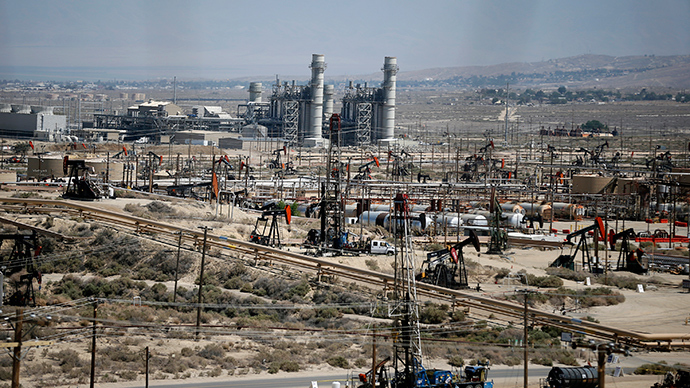
Industry illegally injected about 3 billion gallons of fracking wastewater into central California drinking-water and farm-irrigation aquifers, the state found after the US Environmental Protection Agency ordered a review of possible contamination.

According to documents obtained by the Center for Biological Diversity, the California State Water Resources Board found that at least nine of the 11 hydraulic fracturing, or fracking, wastewater injection sites that were shut down in July upon suspicion of contamination were in fact riddled with toxic fluids used to unleash energy reserves deep underground. The aquifers, protected by state law and the federal Safe Water Drinking Act, supply quality water in a state currently suffering unprecedented drought.


The documents also show that the Central Valley Water Board found high levels of toxic chemicals - including arsenic, thallium, and nitrates - in water-supply wells near the wastewater-disposal sites.

Arsenic is a carcinogen that weakens the immune system, and thallium is a common component in rat poison.

“Arsenic and thallium are extremely dangerous chemicals,” said Timothy Krantz, a professor of environmental studies at the University of Redlands, according to the Center for Biological Diversity.

“The fact that high concentrations are showing up in multiple water wells close to wastewater injection sites raises major concerns about the health and safety of nearby residents.”

The Center for Biological Diversity obtained a letter from the state Water Board to the USEnvironmental Protection Agency (EPA)that said the Central Valley Regional Water Board discovered the health violations. Following theJuly suspensionof the 11 injection sites, the EPA ordered a review of aquifers in the area to be completed within 60 days.

The state Water Board also said that 19 more injection wells may have also contaminated sensitive, protected aquifers, while dozens more wells have been the source of wastewater dumped into aquifers of unknown quality.

Despite these damning findings, the extent of wastewater pollution is still undetermined, as the Central Valley Water Board has thus far only tested eight water wells of the more than 100 in the area, according to the documents. Half of those tested came up positive for containing an excessive amount of toxic chemicals.

To unleash oil or natural gas, fracking requires blasting large volumes of highly pressurized water, sand, and other chemicals into layers of rock. The contents of fracking fluid include chemicals that the energy industry and many government officials will not name, yet they insist the chemicals do not endanger human health, contradictingfindingsby scientists and environmentalists. Toxic fracking wastewater is then either stored in deep underground wells, disposed of in open pits for evaporation, sprayed into waste fields, or used over again.

Fracking has been linked to groundwater contamination, an uptick in earthquakes, exacerbation of drought conditions and a host of health concerns for humans and the local environment.

A recent study by the US Drought Monitor noted that 58 percent of California is experiencing “exceptional drought,” which is the most serious category on the agency’s five-level scale. Meanwhile, a fracking job can require as much as 140,000 to 150,000 gallons of water per day, water that then cannot be consumed or used in farming operations.

The Center for Biological Diversity noted that the contamination of water sources could be much worse in another regard, as flowback water that comes from oil wells in the state can contain levels of benzene, toluene, and other toxic chemicals that are hundreds of times higher than legally allowed. Flowback fluid is then released back into wastewater storage wells. Chemicals like benzene can take years to eventually find their way to water sources.

“Clean water is one of California’s most crucial resources, and these documents make it clear that state regulators have utterly failed to protect our water from oil industry pollution,”said Hollin Kretzmann, an attorney for the Center for Biological Diversity.

“Much more testing is needed to gauge the full extent of water pollution and the threat to public health. But Governor [Jerry] Brown should move quickly to halt fracking to ward off a surge in oil industry wastewater that California simply isn’t prepared to dispose of safely.”