Wednesday, 30 April 2014

Botched execution

This is sick!!

US Prisoner Dies In 'Botched' Execution - Execution Stops After Vein 'Exploded' - 30 April 2014


US Prisoner Dies In 'Botched' Execution - Execution Stops After Vein 'Exploded' - 30 April 2014

A death row inmate in Oklahoma died of a heart attack after his execution was halted because the lethal injection of three drugs appeared to be botched.

Clayton Lockett, 38, experienced a vein failure which prevented the deadly drug cocktail from working properly.

The execution was halted after 20 minutes, during which he writhed and shook uncontrollably, US media report.

The execution of fellow inmate Charles Warner, who was due to be put to death two hours later, has been postponed.

A spokesman for the Oklahoma Department of Corrections told US media Lockett died of a heart attack following injection of three lethal drugs.


John Kerry on Israel

John "hairstyle in seach of a brain" Kerry tried to look tough with the zionist state - for a day

John Kerry backpedals on Israel ‘apartheid state’ comment
Secretary of State John Kerry, under fire for warning that Israel risks becoming “an apartheid state” in the absence of a peace deal, released a statement Monday evening pushing back hard.


29 April, 2014


“I will not allow my commitment to Israel to be questioned by anyone, particularly for partisan, political purposes,” Kerry said in a release put out by the State Department. “… If I could rewind the tape, I would have chosen a different word to describe my firm belief that the only way in the long term to have a Jewish state and two nations and two peoples living side by side in peace and security is through a two state solution.”

The tape in question was published by the Daily Beast on Sunday — a recording of Kerry’s comments to a meeting of the Trilateral Commission on Friday in which he lamented the breakdown of talks between the Israelis and Palestinians.


“A two-state solution will be clearly underscored as the only real alternative. Because a unitary state winds up either being an apartheid state with second-class citizens — or it ends up being a state that destroys the capacity of Israel to be a Jewish state,” Kerry says in the recording.

From across the spectrum of right to left, the condemnations rolled in Monday. Anti-Defamation League national director Abe Foxman called the apartheid comment “startling and deeply disappointing.” The American Israel Public Affairs Committee said the comment was “deeply troubling” and “inappropriate.” In a statement, AIPAC said, “Any suggestion that Israel is, or is at risk of becoming, an apartheid state is offensive and inappropriate.”

In addition, Republican Jewish Coalition executive director Matt Brooks called it “inflammatory and inaccurate.” The National Jewish Democratic Council expressed its “deep disappointment.” Sen. Ted Cruz (R-Texas) called on Kerry to resign.

Kerry was speaking at the end of the most difficult week yet in his attempts to make progress on peace between the Israelis and Palestinians — and just ahead of the official April 29 deadline for extending negotiations.


Just a few weeks ago, Kerry left the region in frustration and declared “reality-check time” when the two sides could not agree to terms in a prisoner exchange. Just last week, Palestinian President Mahmoud Abbas announced plans to strike a reconciliation deal with Hamas — which the United States and Israel designate a terrorist organization, but which has political control in the Gaza Strip — ending a nearly decadelong split between that group and Abbas’ Palestinian Authority, which has control over the West Bank.

Abbas’ outreach to Hamas drew the condemnation of Israeli Prime Minister Benjamin Netanyahu, who said Israel would never negotiate with a government that accepts Hamas, which officially calls for the destruction of Israel. In response, the State Department said last week it acknowledged that the reconciliation would create conditions that the Israelis can’t be expected to negotiate under.

President Barack Obama gave his own disappointed assessment of the status of the peace process at a news conference Friday in South Korea, adding his own point of warning.

“There may come a point at which there just needs to be a pause, and both sides need to look at the alternatives,” Obama said. “As I’ve said in the past and I will continue to repeat: Nobody has offered me a serious scenario in which peace is not made between Israelis and Palestinians and we have a secure, democratic Jewish state of Israel and the Palestinians have a state.”


Kerry still declared himself hopeful earlier last week — but by Friday, special peace envoy Martin Indyk was headed back to Washington and the secretary of state was blaming both sides in a private meeting with leaders from North America, Western Europe and Japan.

The “apartheid” reference in those remarks was an attempt to warn what might happen if the two sides aren’t able to reach a solution — though in his apology he said, “I do not believe, nor have I ever stated, publicly or privately, that Israel is an apartheid state or that it intends to become one.”

Kerry, in his statement, said that everything in his record showed him to be a strong supporter of Israel, arguing that his word choice had created a “misimpression.”


“For more than thirty years in the United States Senate, I didn’t just speak words in support of Israel, I walked the walk when it came time to vote and when it came time to fight. As Secretary of State, I have spent countless hours working with Prime Minister Netanyahu and Justice Minister [Tzipi] Livni [who is leading peace talks for the Israelis] because I believe in the kind of future that Israel not only wants, but Israel deserves,” Kerry said. “I want to see a two state solution that results in a secure Jewish state and a prosperous Palestinian state, and I’ve actually worked for it.”

“While Justice Minister Livni, former Prime Ministers [Ehud] Barak and [Ehud] Ohlmert have all invoked the specter of apartheid to underscore the dangers of a unitary state for the future,” Kerry concluded, “it is a word best left out of the debate here at home.”


From yesterday -

Israel risks becoming apartheid state if peace talks fail, says John Kerry

It is believed to be the first time a US official of Kerry's standing has used the term 'apartheid' in the context of Israel


28 April, 2014

The US secretary of state, John Kerry, has warned in a closed-door meeting in Washington that Israel risks becoming an "apartheid state" if US-sponsored efforts to reach an Israeli-Palestinian peace settlement fail.

In an apparent sign of Kerry's deep frustration over the almost certain collapse of the current nine-month round of peace talks – due to conclude on Tuesday – he blamed both sides for the lack of progress and said failure could lead to a resumption of Palestinian violence against Israeli citizens.

The remarks were made on Friday at the Trilateral Commission, a non-governmental organisation of experts and officials from the US, western Europe, Russia and Japan. A recording was acquired by the Daily Beast website.

Kerry also suggested that a change of either Israeli or Palestinian leadership might create more favourable conditions for peace and the final, long-delayed agreement on the shape of a Palestinian state.

Aftewards, as a public storm grew around the remarks, Kerry issued a statement regretting the use of the word apartheid, saying it had opened him to "partisan political" attacks.

"If I could rewind the tape, I would have chosen a different word," he said.

Israeli leaders had made similar points in the past but "apartheid [is] a word best left out of the debate here at home", Kerry said.

Regardless of the apology, Kerry's remarks represent a significant departure, as senior US officials historically have avoided the word "apartheid" relating to Israeli policies. It is believed to be the first time a US official of Kerry's standing has used the contentious term in the context of Israel, even if only as a warning for the future.

The Emergency Committee for Israel, whose chairman is the prominent neo-conservative William Kristol, said: "On Friday secretary of state John Kerry raised the spectre of Israel as an 'apartheid state'. Even Barack Obama condemned the use of this term when running for president in 2008. It is no longer enough for the White House to clean up after the messes John Kerry has made. It is time for John Kerry to step down as secretary of state, or for President Obama to fire him."

Although the danger to Israel of a failure to move towards a two-state solution has been framed by Israeli politicians in terms similar to those used by Kerry, US officials have long been wary of following suit. When the former president Jimmy Carter used it for the tile of his 2006 book Palestine: Peace or Apartheid it caused controversy.

Kerry's comments reflect similar recent warnings to Israel from western diplomats that the collapse of the peace talks might lead to the country's increasing isolation.

Kerry said: "A two-state solution will be clearly underscored as the only real alternative. Because a unitary state winds up either being an apartheid state with second-class citizens – or it ends up being a state that destroys the capacity of Israel to be a Jewish state.

"Once you put that frame in your mind, that reality, which is the bottom line, you understand how imperative it is to get to the two-state solution, which both leaders, even yesterday, said they remain deeply committed to."

Kerry has had a sometimes strained relationship with some senior Israeli officials as the peace talks have become gridlocked. In January Israel's defence minister, Moshe Ya'alon, described Kerry as "obsessive and messianic".

In 2008 in an interview during his election campaign, Barack Obama explicitly rejected "injecting a term like apartheid" into the discussion over Israel and Palestine. "It's emotionally loaded, historically inaccurate, and it's not what I believe," he said.

Attempting to defuse the row, Jen Psaki, spokesperson for the US state department, said: "Secretary Kerry, like justice minister Livni and previous Israeli prime ministers Olmert and Barak, was reiterating why there's no such thing as a one-state solution if you believe, as he does, in the principle of a Jewish state.

"[Kerry] was talking about the kind of future Israel wants and the kind of future both Israelis and Palestinians would want to envision. The only way to have two nations and two peoples living side by side in peace and security is through a two-state solution. And without a two-state solution, the level of prosperity and security the Israeli and Palestinian people deserve isn't possible."


Extreme weather in United States

There will be more on this as information comes to hand.

Tornadoes and lethal storms sweep central and south US
Deadly storm system continues on destructive path through states including Mississippi, Arkansas, Oklahoma and Iowa


29 April, 2014


More lethal storms have swept the southern and central US, wreaking further havoc in a second day of devastating weather.

Tornados on Monday killed 11 people in southern states, flipping vehicles and tearing through hundreds of homes and businesses. On Sunday, the same weather system left at least 19 people dead.

Devastating scenes were reported in the northern Mississippi towns of Tupelo and Louisville – where TV footage showed upended cars, downed power lines and damaged buildings – as well as in Athens, Alabama, where two people were reported killed.

"It was real bad. We're trying to pull people out," Tupelo police chief Bart Aguirre told Reuters, referring to emergency crews going house to house searching damaged buildings.

"It's a very serious situation," said the Tupelo mayor, Jason Shelton. "I am just encouraging everyone to stay inside and be weather aware. There is still a very real danger of another line coming through and people still need to be inside."


The Mississippi governor, Phil Bryant, had declared a state of emergency for the state in anticipation of Monday’s storms.

Tupelo residents whose homes were destroyed sought refuge in a Red Cross shelter at a downtown sports arena. "I heard snapping and I said ‘Get down on the floor!' And then the trees started falling over," said Moe Kirk Bristow.

The storm sent staff at a TV news station running for cover. NBC affiliate WTVA-TV chief meteorologist Matt Laubhan in Tupelo was reporting live on the weather around 3pm when he realised the twister was coming close enough that maybe he and his staff should abandon the television studio.

"This is a tornado ripping through the city of Tupelo as we speak. And this could be deadly," he said in a segment that was widely shared on social media.

Emergency officials in Alabama said a tornado caused widespread damage and one death in Limestone county and killed two people at a trailer park in Athens.

Western Georgia and Tennessee braced as the storm system moved towards mid-Atlantic states.
The National Weather Service warned of baseball-sized hail and dangerous winds.

"This is a multi-day event and today is the second day of significant tornado risk and unfortunately, probably not the last," Bill Bunting, operations chief at the NWS Storm Predictions Center, told Reuters.

Intense storms have rattled the region since Sunday night when a swarm of tornadoes drove through Arkansas, Oklahoma and Kansas, hitting communities that are still recovering from a strong storm system that left 316 people dead in May 2011.

The largest tornado hit on Sunday around 7pm local time about 10 miles west of Little Rock, Arkansas. The twister continued for 80 miles, growing to be half a mile wide.

At least 14 people in Arkansas were killed, according to the state’s governor, Mike Beebe. At an earlier conference Beebe mistakenly said 16 people had been killed. Several of the victims were in Faulkner county, where the suburbs of Mayflower and Vilonia are considered to be hardest hit by the storm.

"It sounded like a constant rolling, roaring sound," Mayflower resident Becky Naylor told the Associated Press. "Trees were really bending and the light poles were actually shaking and moving. That's before we shut the door and we've only shut the door to the storm cellar two times."


More than 150 homes were destroyed in Faulkner county and the local hospital, Conway Regional Medical Center, said about 100 people were treated for injuries. Among the rubble in Vilonia was the remains of structures and homes rebuilt after the 2011 storm devastated the city. One of these structures was a new $14m intermediate school set to open in the fall. "'There's just really nothing there anymore,” said the Vilonia schools superintendent, Frank Mitchell. “We're probably going to have to start all over again.”

The US president, Barack Obama, sent his condolences to the affected communities from the Philippines where he was holding a joint press conference with the country’s president, Benigno Aquino. Obama was in the Philippines as part of a trip through Asia.

The Federal Emergency Management Agency was working with local officials in the area to co-ordinate recovery and response, said the president. "Your country will be there to help you recover and rebuild, as long as it takes,” he said.

Arkansas emergency workers and volunteers were conducting door-to-door house checks because of the far-ranging destruction in rural communities and loss of power in several areas. The NWS advised emergency workers to be cautious with recovery efforts as the next round of storms loomed.

A home in north-west Louisiana was heavily damaged on Monday morning, around 3.15am. A teenager in the home suffered minor injuries but the rest of the people remained safe. The storm took out power in the area and authorities were analysing damage throughout the morning.

Officials in Missouri, Nebraska and Iowa also reported damage from the storms.


Dust storm near Burlington, CO


Ukraine update - 04/29.2014

Kiev government powerless as east Ukraine slips out of its control

Pro-Russian crowd storms regional HQ in Luhansk while Donetsk looks likely to declare autonomy after May vote


Ukraine's beleaguered government appeared to have lost control of law and order in the east of the country on Tuesday, after police again failed to stop a pro-Russian crowd from seizing a key administrative building.

Some 3,000 activists – some in masks and military fatigues – stormed the regional government HQ in the eastern city of Luhansk. Police supposed to guard the building let the crowd inside. A pro-Russian militia had occupied the security service office in Luhansk, a town of 465,000, just 20 miles (32km) from the Russian border.

The unwillingness of security structures to defend public buildings from separatist occupation has been a theme in eastern Ukraine since early April. Supporters of the "Donetsk People's Republic" have taken over a string of city halls and police stations. An armed unit from Crimea – led by an alleged Russian colonel – has also established a de facto military capital in the town of Slavyansk.

But in recent days Kiev's tentative grip on local law enforcement in the east appears to have slipped completely. In Luhansk riot police stood passively in a courtyard, kettled in by separatists armed with bats and hammers. "The regional leadership does not control its police force," Stanislav Rechynsky, an aide to the interior minister in Kiev, told Reuters. "The local police did nothing."

In a statement on Tuesday, Ukraine's interim president, Oleksandr Turchynov, said: "The vast majority of law enforcement officials in the east are not able to fulfil their obligation to protect our citizens."

On Monday in Donetsk another contingent of riot police in full battle gear had looked on as pro-Russian thugs attacked a peaceful pro-unity rally. The separatists beat Ukraine supporters with iron rods. Fourteen people needed hospital treatment. Two were seriously injured. The mob also took five hostages: supporters of the city's Shakhtar Donetsk football team, who had formed a protective cordon at the front of the rally. The five were taken to an office near Donetsk's occupied regional administration. They were eventually released on Tuesday.

Later on Tuesday, seven or eight police officers in light blue uniforms stood outside the office where the hostages had been kept. The scene was peaceful. A few feet away volunteers from the "Donetsk People's Republic", dressed in military fatigues, guarded the entrance. They wore orange and black ribbons, the symbols of the "republic's" anti-Kiev revolution. The two groups appeared to be on friendly terms.

Asked if the police had gone over to the separatists, the captain in charge, Yevgeny, said: "Among the police there are different opinions. Obviously our job is to uphold the law and apply it neutrally."

The "republic" has announced its own self-organised referendum on the region's future status, to be held on 11 May. "I don't make any secret of the fact that I'm for a referendum," Yevgeny added. Another policeman chipped in: "We'll take part. Personally I'm for Russia".

The police were reluctant to talk about the bloody events of the previous night, when they failed to protect civilians from attack. But one officer who was there said: "This situation is all Kiev's fault. They say we in the east are slaves, half-humans. They revere people like Stepan Bandera [the second world war Ukrainian nationalist leader] who shot our brothers. We are normal citizens like everyone else."

Standing next to their patrol car, still striped with Ukraine's blue and yellow colours, the officers reeled off a list of grievances. These included low pay – $200-$250 (£120) a month. (One policewoman, Svetlana, said: "I'm supposed to give my life for this. Who is going to come to my mother afterwards and say "thanks for your daughter?") They also complained that a mistrustful Kiev had confiscated their service revolvers three weeks ago. "I can't exactly defend myself," Yevgeny said, showing off his empty holster.

The captain said he was one of 400 Donetsk region police officers sent to the capital to deal with anti-Yanukovych demonstrations, which began last November. The experience had left him bitterly disillusioned. He had nothing but contempt for the new government, part-formed from the protest movement, he said. Other officers who had not been in Kiev repeated claims made by Russian TV that the Maidan protesters were paid narco-maniacs, and unemployed "fascists".

The police even had sympathy for pro-Russian gunmen in Slavyansk, who are holding 40 people prisoner, including seven European military observers. One officer said: "Kiev started all this by arresting our activists. They [in Slavyansk] are merely defending their rights."

The US embassy in Kiev said on Tuesday the abduction of the OSCE inspectors and the attack on demonstrators by pro-Russian thugs in Donetsk on Monday were acts of "terrorism".

"There is no place for these examples of inhuman behaviour in a modern, democratic society. This is terrorism, pure and simple," it said in a statement.

On Tuesday the EU followed the US in widening sanctions, naming a further 15 people it is targeting because of their roles in the Ukraine crisis. The list included General Valery Gerasimov, chief of the Russian general staff and first deputy defence minister, and Lieutenant General Igor Sergun, identified as the head of GRU, the Russian military intelligence agency.

The Russian foreign minister, Sergei Lavrov, dismissed the new sanctions. "We reject the sanctions … imposed by the United States and the European Union against all common sense, in relation to the events in Ukraine."

One pro-Russian activist, 39-year-old Igor Vasilyovich, said at least half of the local police supported the cause. "They understand that without Russia we can't live properly," he said. Igor admitted that not everybody in Donetsk – population one million – was an enthusiast for the new unelected "republic". "We're the active minority. We'll lead the passive majority," he said. But what if the "republic" didn't succeed? "Then we'll start a partisan war," he replied.

Serhiy Taruta, the new governor sent by Kiev to head the Donetsk region, admits that the police and security services in the east are not doing their job. His officials attribute this to what they call "post-Maidan syndrome".

Many were sent to the capital, and were told that the protesters in Kiev were their enemies. Now back in the east, the same enemies are running the country. They are also unsure whether Viktor Yanukovych – the president who fled to Russia – might come back again.

One official said: "They [the police in the east] feel a mental fight over who is their master. The problem is they are not sure if it is Kiev, or Yanukovych and his family. We've had a lot of conversations with commanders and officers. They are people from here, and they feel angry and afraid."

The official said the Donetsk police were acutely aware that the Russian police salary was $2,000 – 10 times higher than their own. They also regarded the Berkut riot police – disbanded for their alleged role in the shooing of Maidan protesters – as local heroes. The Donetsk police chief Konstantin Pozhidaev was doing all he could, the official said, conceding: "It will take more time to achieve meaningful order."

With a separatist referendum looming, Donetsk's pro-Kiev administrators have little time left. Much of the region is unlikely to vote, but that will probably not deter the "People's Republic" from declaring an overwhelming victory. One self-appointed "deputy", Anatoly Aneshenko, said on Tuesday the oblast or region was certain to declare autonomy.

What would happen to those who opposed this outcome? "Well, they can leave," he said.


Anti-Kiev protesters take control of govt buildings in Lugansk Region, east Ukraine


RT,
29 April, 2014


Anti-government protesters have taken control of the regional administration building and prosecutor’s office in the city of Lugansk, eastern Ukraine. Protests continue as the deadline for the protesters’ ultimatum to the government expired.
For more videos and photos from the scene, follow RT’s stringer Graham Phillips on Twitter

“The building is ours. That’s it,” local protest leader Oleg Dereko told RIA Novosti.
“A regional administration building has been taken by storm,” an activist who asked not to be named has told RT. “A coordination committee and militia are now inside and are getting ready for an emergency meeting.”

The Ukrainian flag on the building has been replaced with Russia's tricolor.
Another activist, who said he is now inside the regional administration office, has told RT that the building was seized without using any weapons. He has said that anti-government protesters are now negotiating with armed police, who activists blocked in the back yard, in order to persuade them to surrender their weapons and leave.
A small group of guards barricaded themselves in one of the corridors of the building, according to footage from the scene. The protesters convinced them to leave.


The protesters, some of them armed with clubs and metal shields, have spread throughout the building.
No injuries or violence were reported during the takeover.
"There are no injured. We are peaceful people,” Dereko said.

The police guards from the building have gathered in the courtyard. They are standing holding their shields, while protesters, who are also present there, cheering them for not confronting the activists with violence.


Fortifications quickly moved into place at government building in central #Lugansk,v few police still in building now pic.twitter.com/VkWXfjGgWE
— GrahamWPhillips (@GrahamWP_UK) April 29, 2014

Protesters rallied towards the regional administration building when none of the officials responded to their ultimatum to local government issued on Sunday. The people are demanding amnesty for all political prisoners, the holding of a referendum and making Russian also an official language.
"We waited till 14:00 local time, the time we expected the reply by. No answer was received. Kiev has completely ignored our demands,” Oleg Dereko told RIA Novosti.

Aleksey Uskoryakin, another protest leader, said the take-over was not planned. The protesters wanted to hold a rally and send a delegation to talk to regional MPs, but they were absent in the building. Emotions got the better of the situation, resulting in seizure of the building, in which several windows were broken.
RIA Novosti / Vitaly Belousov


The protesters are contemplating a possible release of the building, “if the governor and lawmakers agree to negotiate.”

Activists estimate there are over 3, 000 people remain outside the building and more continue to arrive.
“There are over 3,000 people on the square. People are arriving; the square is filling up with people. The governor has not come out yet and no announcements have been made. Everyone is waiting for a response on the ultimatum, the deadline has passed already,” Dereko told the news agency.

Several hundred protesters then moved to the local prosecutor’s office, which they seized shortly after.
According to media estimates, some 700 people approached the building and started hurling stones, breaking windows and knocking down doors. It took them ten minutes to get inside, Interfax news agency reported.
The agency stressed that no law enforcement officers were at the scene.


Putin: Washington behind Ukraine events all along, though flying low 
The US has been behind the Ukrainian crisis from the beginning, but was initially flying low, Russian President Vladimir Putin has said. He added that if sanctions continue, Russia will have to reconsider who has access to key sectors if its economy.


RT,
29 April, 2014


“I think what is happening now shows us who really was mastering the process from the beginning. But in the beginning, the United States preferred to remain in the shadow,” Putin said, as quoted by RIA Novosti.

Putin stated that since the US has taken a lead role in resolving the political crisis in Ukraine, it is “telling that they originally were behind this process, but now they just have emerged as leaders” of it.

The "Maidan cookies" policy paves the way to a broader crisis, Putin warned, referring to US officials showing up in central Kiev and encouraging protesters during demonstrations.

“It is necessary to understand that the situation is serious and try to find serious approaches to the solution,” he said.

Putin said that he has called on Kiev to start an all-Ukrainian dialogue, adding that other countries should not be blamed for the crisis.

“[They should] treat equally the rights of those living in other areas of Ukraine, first of all, I mean, the east and southeast, establish a dialogue, find a compromise," he told journalists while speaking about the measures necessary to put an end to the crisis. “Here's what you need to do; searching for the guilty outside Ukraine is wrong.”

Regarding the last row of sanctions imposed on Russia by the US and the EU, Vladimir Putin said he sees no need for counter sanctions.

"We would very much wish not to resort to any measures in response," he told reporters. "But if something like that continues, we will of course have to think about who is working in the key sectors of the Russian economy, including the energy sector, and how."


At the same time, the US and EU sanctions will not harm the Eurasian integration process, which is meant to lead to the creation of the Eurasian Economic Union, based on a Customs Union and common economic space among Russia, Kazakhstan, and Belarus, he said.


Video: US deploys troops to Estonia


The US airborne division, which is to take part in NATO exercise 'Spring Storm' in May arrived in Estonia. Around 150 personnel arrived in the military transport aircraft to the Amari airbase, according to the country's defense ministry. -


Donetsk violence video: Tension, anger, brutality unleashed on east Ukraine city streets

Pro- and-anti-Kiev protest rallies took place simultaneously in the city. The police failed to contain the crowd as protesters clashed with each other, using firecrackers, smoke grenades, baseball bats and sticks.


From yesterday - 

Tuesday, 29 April 2014

Banking deaths

Suspicious Deaths of Bankers Are Now Classified as “Trade Secrets”
It doesn’t get any more Orwellian than this...


By Pam Martens and Russ Martens: April 28, 2014


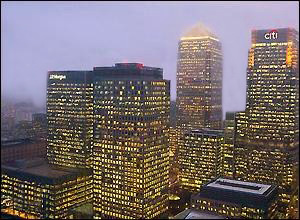
(Left) JPMorgan's European Headquarters at 25 Bank Street, London Where Gabriel Magee Died on January 27 or January 28, 2014

28 April, 2014
It doesn’t get any more Orwellian than this: Wall Street mega banks crash the U.S. financial system in 2008. Hundreds of thousands of financial industry workers lose their jobs. Then, beginning late last year, a rash of suspicious deaths start to occur among current and former bank employees.  Next we learn that four of the Wall Street mega banks likely hold over $680 billion face amount of life insurance on their workers, payable to the banks, not the families. We ask their Federal regulator for the details of this life insurance under a Freedom of Information Act request and we’re told the information constitutes “trade secrets.”

According to the Centers for Disease Control and Prevention, the life expectancy of a 25 year old male with a Bachelor’s degree or higher as of 2006 was 81 years of age. But in the past five months, five highly educated JPMorgan male employees in their 30s and one former employee aged 28, have died under suspicious circumstances, including three of whom allegedly leaped off buildings – a statistical rarity even during the height of the financial crisis in 2008.
There is one other major obstacle to brushing away these deaths as random occurrences – they are not happening at JPMorgan’s closest peer bank – Citigroup. Both JPMorgan and Citigroup are global financial institutions with both commercial banking and investment banking operations. Their employee counts are similar – 260,000 employees for JPMorgan versus 251,000 for Citigroup.

Both JPMorgan and Citigroup also own massive amounts of bank-owned life insurance (BOLI), a controversial practice that pays the corporation when a current or former employee dies. (In the case of former employees, the banks conduct regular “death sweeps” of public records using former employees’ Social Security numbers to learn if a former employee has died and then submits a request for payment of the death benefit to the insurance company.)

Wall Street On Parade carefully researched public death announcements over the past 12 months which named the decedent as a current or former employee of Citigroup or its commercial banking unit, Citibank. We found no data suggesting Citigroup was experiencing the same rash of deaths of young men in their 30s as JPMorgan Chase. Nor did we discover any press reports of leaps from buildings among Citigroup’s workers.

Given the above set of facts, on March 21 of this year, we wrote to the regulator of national banks, the Office of the Comptroller of the Currency (OCC), seeking the following information under the Freedom of Information Act (See OCC Response to Wall Street On Parade’s Request for Banker Death Information):
The number of deaths from 2008 through March 21, 2014 on which JPMorgan Chase collected death benefits; the total face amount of BOLI life insurance in force at JPMorgan; the total number of former and current employees of JPMorgan Chase who are insured under these policies; any peer studies showing the same data comparing JPMorgan Chase with Bank of America, Wells Fargo and Citigroup.

The OCC responded politely by letter dated April 18, after first calling a few days earlier to inform us that we would be getting nothing under the sunshine law request. (On Wall Street, sunshine routinely means dark curtain.) The OCC letter advised that documents relevant to our request were being withheld on the basis that they are “privileged or contains trade secrets, or commercial or financial information, furnished in confidence, that relates to the business, personal, or financial affairs of any person,” or  relate to “a record contained in or related to an examination.”

The ironic reality is that the documents do not pertain to the personal financial affairs of individuals who have a privacy right. Individuals are not going to receive the proceeds of this life insurance for the most part. In many cases, they do not even know that multi-million dollar policies that pay upon their death have been taken out by their employer or former employer. Equally important, JPMorgan is a publicly traded company whose shareholders have a right under securities laws to understand the quality of its earnings – are those earnings coming from traditional banking and investment banking operations or is this ghoulish practice of profiting from the death of workers now a major contributor to profits on Wall Street?

As it turns out, one aspect of the information cavalierly denied to us by the OCC is publicly available to those willing to hunt for it. On March 24 of this year, we reported that JPMorgan Chase held $10.4 billion in BOLI assets at its insured depository bank as of December 31, 2013.

We reached out to BOLI expert, Michael D. Myers, to understand what JPMorgan’s $10.4 billion in BOLI assets at its commercial bank might represent in terms of face amount of life insurance on its workers. Myers said: “Without knowing the length of the investment or its rate of return, it is difficult to estimate the face amount of the insurance coverage.  However, a cash value of $10.4 billion could easily translate into more than $100 billion in actual insurance coverage and possibly two or three times that amount” said Myers, a partner in the Houston, Texas law firm McClanahan Myers Espey, L.L.P.

Myers’ and his firm have represented the families of deceased employees for almost two decades in cases involving corporate-owned life insurance against employers such as Wal-Mart Stores, Inc., Fina Oil and Chemical Co., and American Greetings Corp. (Families may be entitled to the proceeds of these policies if employee consent was required under State law and was never given and/or if the corporation cannot show it had an “insurable interest” in the employee — a tough test to meet if it’s a non key employee or if the employee has left the firm.)

As it turns out, the $10.4 billion significantly understates the amount of money JPMorgan has tied up in seeking to profit from workers’ deaths. Since Wall Street banks are structured as holding companies, we decided to see what type of financial information might be available at the Federal Financial Institutions Examination Council (FFIEC), a federal interagency that promotes uniform reporting standards among banking regulators.

The FFIEC’s web site provided access to the consolidated financial statements of the bank holding companies of not just JPMorgan Chase but all of the largest Wall Street banks. We conducted our own peer review study with the information that was available.


Four of Wall Street’s largest banks hold a total of $68.1 billion in BOLI assets. Using Michael Myers’ approximate 10 to 1 ratio, that would mean that over time, just these four banks could potentially collect upwards of $681 billion in tax free income from life insurance proceeds on their current and former workers. (Death benefits are received tax free as is the buildup in cash value in the policies.) The breakdown in BOLI assets is as follows as of December 31, 2013:
Bank of America    $22.7 billion
Wells Fargo             18.7 billion
JPMorgan Chase      17.9 billion
Citigroup                   8.8 billion

In addition to specifics on the BOLI assets, the consolidated financial statements also showed what each bank was reporting as “Earnings on/increase in value of cash surrender value of life insurance” as of December 31, 2013. Those amounts are as follows:

Bank of America   $625 million
Wells Fargo           566 million
JPMorgan Chase    686 million
Citigroup                     0

Given the size of these numbers, there is another aspect to BOLI that should raise alarm bells among both regulators and shareholders. The Wall Street banks are using a process called “separate accounts” for large amounts of their BOLI assets with reports of some funds never actually leaving the bank and/or being invested in hedge funds, suggesting lessons from the past have not been learned.

On May 20, 2008, Bloomberg News reported that Wachovia Corp. (now owned by Wells Fargo) and Fifth Third Bancorp reported major losses on failed gambles with BOLI assets. “Wachovia reported a $315 million first-quarter loss in its bank-owned life insurance program, known as BOLI, because of investments in hedge funds managed by Citigroup Inc. Fifth Third said in a lawsuit filed last month that it had losses of $323 million from Citigroup’s Falcon funds, which slumped more than 50 percent in the past year as the subprime market collapsed.” Citigroup’s Falcon Strategies hedge fund had lost as much as 75 percent of its value by May 2008.

Following are the names and circumstances of the five young men in their 30s employed by JPMorgan who experienced sudden deaths since December along with the one former employee.

Joseph M. Ambrosio, age 34, of Sayreville, New Jersey, passed away on December 7, 2013 at Raritan Bay Medical Center, Perth Amboy, New Jersey. He was employed as a Financial Analyst for J.P. Morgan Chase in Menlo Park. On March 18, 2014, Wall Street On Parade learned from an immediate member of the family that Joseph M. Ambrosio died suddenly from Acute Respiratory Syndrome.


Jason Alan Salais, 34 years old, died December 15, 2013 outside a Walgreens inPearland, Texas. A family member confirmed that the cause of death was a heart attack. According to the LinkedIn profile for Salais, he was engaged in Client Technology Service “L3 Operate Support” and previously “FXO Operate L2 Support” at JPMorgan. Prior to joining JPMorgan in 2008, Salais had worked as a Client Software Technician at SunGard and a UNIX Systems Analyst at Logix Communications.


Gabriel Magee, 39, died on the evening of January 27, 2014 or the morning of January 28, 2014. Magee was discovered at approximately 8:02 a.m. lying on a 9th level rooftop at the Canary Wharf European headquarters of JPMorgan Chase at 25 Bank Street, London. His specific area of specialty at JPMorgan was “Technical architecture oversight for planning, development, and operation of systems for fixed income securities and interest rate derivatives.” A coroner’s inquest to determine the cause of death is scheduled for May 20, 2014 in London.


Ryan Crane, age 37, died February 3, 2014, at his home in Stamford, Connecticut. The Chief Medical Examiner’s office is still in the process of determining a cause of death. Crane was an Executive Director involved in trading at JPMorgan’s New York office. Crane’s death on February 3 was not reported by any major media until February 13, ten days later, when Bloomberg News ran a brief story.


Dennis Li (Junjie), 33 years old, died February 18, 2014 as a result of a purported fall from the 30-story Chater House office building in Hong Kong where JPMorgan occupied the upper floors. Li is reported to have been an accounting major who worked in the finance department of the bank.


Kenneth Bellando, age 28, was found outside his East Side Manhattan apartment building on March 12, 2014.  The building from which Bellando allegedly jumped was only six stories – by no means ensuring that death would result. The young Bellando had previously worked for JPMorgan Chase as an analyst and was the brother of JPMorgan employee John Bellando, who was referenced in the Senate Permanent Subcommittee on Investigations’ report on how JPMorgan had hid losses and lied to regulators in the London Whale derivatives trading debacle that resulted in losses of at least $6.2 billion.


Related Articles: