RT
In this week’s episode of On Contact, Chris Hedges discusses the criticism and censorship of Michael Moore's film Planet of the Humans with the director, Jeff Gibbs.
CH: Welcome to On Contact. Today, we discuss the censorship of Michael Moore's film "Planet of the Humans" with the Director, Jeff Gibbs.
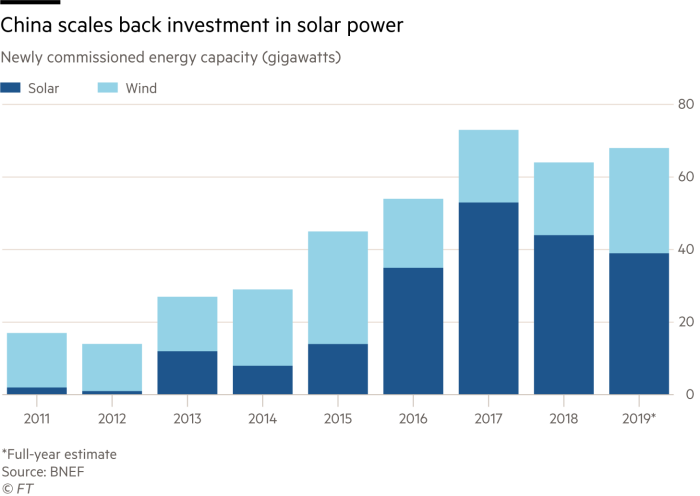
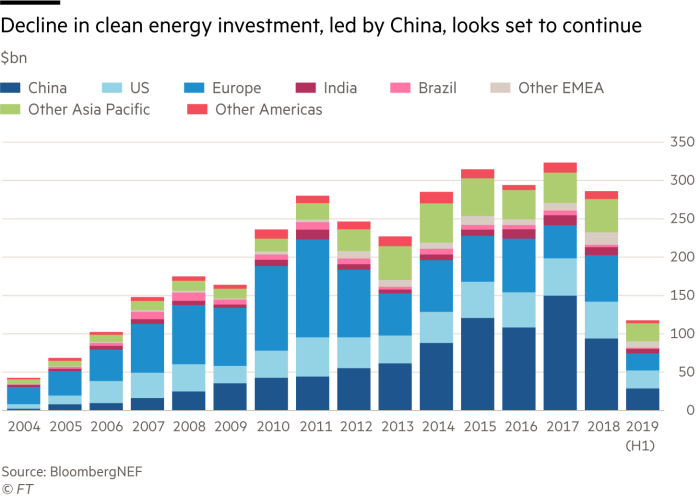
JG: Perhaps it's a form of denial to actually instead of understanding that this civilization, industrial civilization, the human species, were hitting limits and we're going to crash, we're instead kind of hoping that this fantasy will save us. And as I discover that I'm not saying that all environmental leaders are on the take, but one of the things that our critics ignore is that the shocking list of things that you dive--when you divest from fossil fuels and you invest in supposedly sustainable, you wind up investing in big ag, you wind up investing in mining, in banks, and all this--that part of the film was hardly talked about.
CH: Michael Moore and Jeff Gibbs released a film in April called "Planet of the Humans." It was a frontal assault on the failures of the environmental movement, accusing it of pedaling falsehoods and selling out to corporate donors. It derided the idea that we can halt the current ecocide with renewable energy. The film lambasts environmentalists for celebrating the replacing of coal plants with so-called natural gas plants, and then calling these natural gas plants clean or green, or describing the burning of trees as a renewable energy source. Whatever you think of the film, it is factually incontrovertible that the leading environmental groups, by misreading the nature of power, have failed. The activism, protests, lobbying, petitions, appeals to the United Nations and misguided trust in Liberal politicians such as Barack Obama and Al Gore, along with the work countless NGOs have been accompanied by a 60% rise in global CO2 or carbon dioxide emissions since 1990. During the last decade, the increase in CO2 was a hundred to two hundred times faster than what the Earth experienced during the transition from the last ice age. The United Nations estimates this will be augmented by a 40% rise in CO2 emissions in the next 10 years. We are now at 417 parts per million of CO2 in the air. It is believed to be the highest concentration since humans evolved. We will embrace a new paradigm for resistance or die. Joining me to discuss the film and the reaction to it by environmentalists is Jeff Gibbs. So lay out, Jeff, what you, I think, did quite successfully, what you sought to do in the film, and then we'll talk a little bit about how it's been attacked and finally censored to forcing you to take it down off of YouTube. So, just for people who haven't seen it, and also tell people how they can see it, talk about what you did.
JG: Well, at first, I wanted to make a nature film. I was thinking, oh, if we only make a film--if I only make a film showing how bad things are, finally at long last we'll get it. And friends were telling me, "No, no." People sort of know that it's bad. I'm like, "No, no. I'm just convinced I could do it." So, as I'm making my nature film on the decline of the natural world, I began to discover that green energy isn't really what it seems. You know, I first go to a Solar Festival and they say they're powering out solar and turns out they brought in some generators. The generators were [INDISTINCT] they're plugged in to the grid. So, it's my journey of everywhere I look
CH: Let me just interrupt you there because, Jeff, you do that and then 10 years later you go to another Solar Festival, and there are still generators while on the stage they're announcing that it's all powered with solar panels?
JG: Yeah, Denis Hayes, the founder of Earth Day, and, you know, the--and the--you know, people say, "Oh, you've got all day?" And I tell them, no, your documentaries take place over time. This is my journey of discovery that every time I peek behind the curtain, it wasn't what it seemed, and then it gets worse and worse. I discovered that there was this thing called biomass and biofuels, which are really the lion's share of green energy around the world. And so I--and then, you know, why is this happening? Why are we in denial? And I discovered the relationship with capitalism and industrialism, and how basically--shockingly to me because I was a hippie, you know, living in the woods, thought I could just, you know, have these [INDISTINCT] solar panels when I discovered how they're made and how industrial this is.
And basically, without a giant industrial civilization, you're not going to have a nuclear power plant. You're not going to have a solar panel. You're not going to have--even some of the technology to produce gas and oil is just so complex now. So, it's really my discovery that we're looking--that perhaps it's a form of denial to actually, instead of understanding that this civilization, industrial civilization, the human species were hitting limits, and we're going to crash, we're instead kind of hoping that this fantasy will save us. And as I discover that--I'm not saying that all environmental leaders are on the take, but one of the things that our critics ignore is that the shocking list of things that you--when you divest from fossil fuels and you invest in supposedly sustainable, you wind up investing in big ag, you wind up investing in mining, in banks, and all this--that part of the film was hardly talked about. You know, you wind up being Bill McKibben, you know, who's, you know, been a--been a hero to me, you know, at times, onstage with somebody that worked for Goldman Sachs, agreeing to help raise 40 to 50 trillion dollars. And so you have to ask yourself, even if everything we say about renewables is true, you were still driving--it's still powering this industrial civilization that's driving us off the cliff. So, that's my journey of my discovery and really my plea to recognize that the only way, you know, we've got to create community, we've got to regain control from capitalism and industrialism. And, you know, this civilization with almost eight billion people, especially at the level of consumption what--that would make Romans blush, is just--it's unsustainable. And you've written and talked about that, but everything I read about civilizations is they have an expiration date. And we're in denial that ours have one, too.
CH: Yeah.
JG: So…
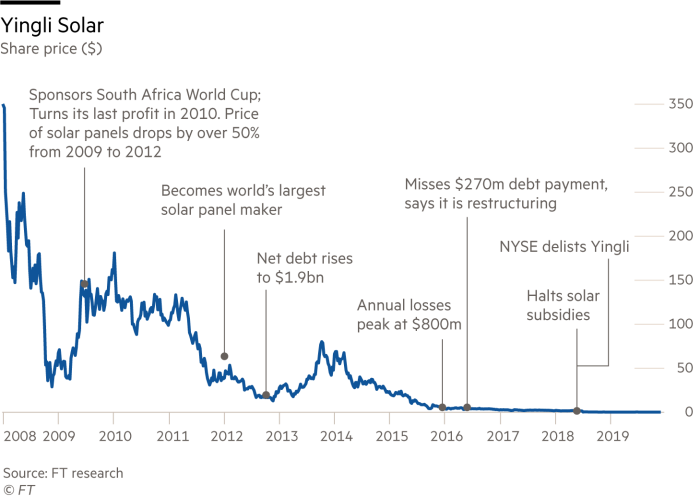
CH: Right. One of the things that I thought the film did very well was implode the myth that for instance solar panels are in any way going to address the crisis. And I didn't know until I saw the film that it's such a glass, the process of making solar panels itself is environmentally very destructive. Just mention that and then we'll go into how the film's been attacked.
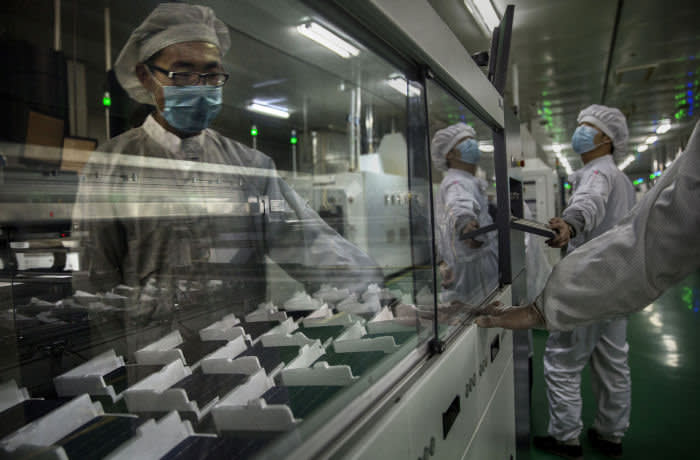
JG: Sure. The traditional--the most common solar panels photovoltaic use silicon which I--Ozzie and I--Ozzie Zehner who's in the film and who's a producer, we spent years trying to figure out where they got that from and finally we discovered through industry sources it takes rare-mined quartz. And then we discovered that you actually have to put--not only you have to use a lot of energy but you have to put coal in the form of carbon right in the furnace to process the quartz. And the same is true of steel and cement, all the things that power industrial civilization. And all of the so-called alternatives, they want to make solar panels without silicon. Well, that you have to use some other toxic material, one of them is so toxic that they recommend not putting it on the rooftop. So I began to realize there's no easy way out at this level, and maybe you've realized that a while ago. And then one other thing I want to say about the film is it broadens out--like the Extinction Rebellion, extinction isn't just about climate. We're in this huge biodiversity collapse well that even if we stop climate, that's still going to proceed. So, really, it's too much to jam into an hour and a half film, but we--I tried my best.
CH: So, the film was savagely attacked. I don't think that word is hyperbolic, by Bill McKibben, head of 350.org, by the filmmaker Josh Fox, by Naomi Klein. Fox started an action letter that described the film as dangerous, misleading, and destructive. He wrote an article for the nation with the headline "Meet the new flack for oil and gas, Michael Moore." Who produced the film with you and called the film "unscientific, outdated, full of falsehoods, and benefitting fossil fuel industry promoters and climate deniers." And then on May 28th, I think it racked up over eight million views in over--in just over a month. They got the pressure so YouTube removed the film. They justified taking down the film. You've since put up a different version. They justified taking it down because of what they said was a four-second piece of footage that supposedly violate copyright laws. And that's what I found so disturbing, the censorship of the film being cheered on by the left. And, of course, major digital platforms have already marginalized or banished many of us including myself on the left. And so talk a little bit about the response, and then let's go into the censorship because Michael Moore is a very well-known filmmaker. We're not talking about, you know, these outliers like Alex Jones.
JG: Yeah, it's really--and what you've went through is really dismaying and what others have went through. You know, you're a fantastic author. I've learned so much from you. And just--and it's just frightening to think about what happens to people that dare step outside of the boundaries and to be accused of profile [INDISTINCT] you know, anyone paying attention might realize Fahrenheit 9/11 is about this got off a horrible war for oil and corporate power. We've literally feared for our lives while making that film. It's hard to look back on that time now, but we kept our drapes closed because we're [BLEEP] the Saudis and the bin Ladens, the oil companies. You know, the Bushes, I mean, you name it. And that--you know, I can't tell you the anguish making a film like that put us through. And so the ironic thing to me is that, you know, what we're showing you, and everybody's got the right to their own opinion and their own stories, I believe that this false promise that renewables are going to displace fossil fuels has led us to a situation where we just--where you describe where the fossil fuel use just keeps going up and up and up. And that happens for a couple of reasons. It's both because of, as you see in the film, the intermittency which we tend to laugh off is such a profound issue. In Michigan, solar only can produce about 13% of the available energy, you know. So if they're rated at a hundred megawatts, they can only produce, like, 13% of that because of the intermittency. So what we wind up having is this whole array of natural gas plants being built out. And so you don't see a decrease, and worse because, nobody calls out the growth and the capitalistic expansion, the imperialism that you talk about, how we--the machine just keeps growing so when we got nuclear, we didn't get off coal and oil, we just kept using it . And if everything they say was true about solar and wind, we would just--this machine we just keep using more and consuming more. And what they don't want to talk about is that all around the world, we sort of got a new form of imperialism, you know, almost slavery in the form of mining. And we really underestimate the amount of mining that's happening on this planet, and especially the southern hemisphere where we can't see it. You know, lithium, iron, copper, cobalt, as you see quickly in the film. These already contribute 10% of global energy emissions, the energy needed for mining. So it's just--you know, I--the censorship and the attacks were both dismaying and at the same time kind of like--I--it made me realize what a threat the move is to them. Josh Fox started the attacks in us with a lie. He said that our distributor pulled the film. What--we were the only distributors through YouTube. So, even the Film For Action that he said pulled the film called him and said, "That's not true." And he still kept it going. It got picked up in USA Today. I don't know if you found this and…
CH: I want to talk a little bit about what it is I think you attacked. And I--and I think that these people are--and I know all of them. I think they're in the business of selling hope. They're not in the business of speaking truth. And it's a false hope, as your film I think correctly documents. But I wondered if you could comment on that. Because when you're in the business of selling hope, that's a form of advertising, and in many cases, a form of moral posturing and self-promotion.
JG: Yeah. Selling hope, you know, this--I think hope weirdly enough is what happens in the business world, you know. If you get a job for a corporation or a company, or a logging company or, you know, a widget-making company, you know, they don't want to hear the problems, they want to hear the solutions. And it's--and it might sound weird to people, that's amazingly corporate to be focused on the hope. It also allows us to just keep doing what we're doing. And I think that's a problem that we're just going to keep until we run off the cliff. But I heard that all while making the film, as long as--you got to give people hope. And I think I learned this from you is that, you know, when the stuff is hitting the fan, you got to make a plan based on reality. And if you don't make a plan based on reality, you're--we're doomed. So I actually think this film is the most hopeful thing you can watch.
CH: No. I would agree. I always feel that, you know, I don't believe in manipulating information to sell hope. But, of course, especially given the climate crisis, it is--it is dark, foreboding, and frightening. We're going to take a break. When we come back, we'll continue our conversation with Director Jeff Gibbs about his film "Planet of the Humans." Welcome back to On Contact. We continue our conversation with Director Jeff Gibbs about the film he made with Michael Moore, "Planet of the Humans." So before the break, we are talking about that notion of selling hope and I think you're right, that it--it's that mania for hope that infects American culture and very easily slides into self-delusion and illusion which I think, given the catastrophic failure of the environmental movement, I read the statistics at the opening of the show, is counterproductive to everything that we want but talk a little bit about--because the--as you pointed out, the attacks were vicious and personal, but by laying this information out, it's not just that you shattered the--this narrative positive, hopeful, happy, narrative that we can, you know, windmill or wind farm our way out of this, but I think also the film said something about the prominent, most prominent environmentalist that, at its core, probably triggered most of the anger, what was that?
JG: I think it's just seeing them and the relationships with the billionaires and our--and our corporate leaders, and I think--I don't think they--that gets talked about enough, you know. We don't see just Bill McKibben, we see Al Gore, you know, forming a partnership with David Blood, a former CEO of a certain part of Goldman Sachs, they formed a partnership before an inconvenient truth came out. Like, that part of the film's never even mentioned, just like how--that's like conflict of interest 101 to be set up to profit from a film that you're making and not even reveal that, and I think people have tried to talk about Gore's relationship and his property from this, and it just gets blown off. Bill McKibben who signed many wonderful things, but I think he took a wrong turn once you're on stage with the man from--the same man from Golden Sachs and you're promising to lead the charge. For one thing, for both Gore and McKibben, once you make that commitment, it prevents you from being a free-thinker. Once the Sierra Club forms a partnership with Michael Bloomberg, it--does Michael Bloomberg get changed or does the Sierra Club get changed? Does Bill McKibben get changed or does the billionaire get changed? I think well--however well-intended we wind up getting changed, you know, there's so many ridiculous attacks around it, like, we never--I never accused Bill McKibben of taking money, I don't know what his finances are, but I do know that having--the people you're in relationship with affects you deeply. I've seen people at universities and then you've probably seen this in your lifetime, when it comes to laying people off, the reason--why do they lay off their lower rung people? Because those aren't their friends among other things. I've seen--I worked at a college where they laid off, you know, tons and tons of students and faculty and staff rather than lay off one vice president, you know, who could--they could've saved the same amount of money. So, yeah, I'm just stunned that they don't see, you know, nobody's talking about Bill McKibben and the Sierra Club promoting these green investment funds and then they contain the very banks including BlackRock that the Sierra Club and 350.org have campaigns against, then they include the very biomass plants, you know. Even as we wrapped up the film in 2019 and 2020, these funds still contained this giant biomass operations, Weyerhaeuser, the logging company, and this one in Florida, I'm blanking on the name right now, but it's cited by the Sierra Club in their op ed saying that they hate biomass. So, you know, I take them with their words in the film, they also--they also don't like showing Bill McKibben endorsing a small biomass plant in the Middlebury College. My point is if you're one of the environmental leaders of the planet and you happen to endorse a small, clean coal plant, nobody would think that was a one-off.
CH: So McKibben writes--I've always known about that--about that. McKibben writes in Rolling Stone on that issue and says that, "Yes, you were right, he did endorse it." But then he changed his position and you didn't note that. How would you respond?
JG: Because the double messaging of the--of the--of the environmental movement is noted in the film, that they say one thing and they do another. If you really take [INDISTINCT] the biomass plant, you're endorsed to be closed. If you're against coal, you're going to call for coal plants to be closed, you're not just going to write an op ed. So, the Paris Climate Agreement, there were a hundred and something models about how that was going to be affected. A hundred of them contained biomass and biofuels. You know, just this last few months, the democratic bills before congress for clean energy contained biomass diesel, biomass this, ethanol this, you know, there's no visible opposition to this. So to me, it was just a CYA thing to write these op eds and the Sierra Club did the same thing. So that's--it was noted that there's a mixed messaging about biomass and I thought that was sufficient because if you--Bill McKibben, right now, if you want to actually be against biomass, join us in closing down and removing these from all the legislations around the world, and have 350 put it on the top of their platform then we'll begin the conversation.
CH: Let's talk a little bit about what our--what we do have to do in order to save ourselves from this impending ecocide. You opened the film asking a question at this point whether it's possible Clive Hamilton, Lovelock, others have come to the conclusion that it's not--we're finished, especially since so much heat is stored in the oceans, you know. Even if we stop all carbon admissions today, which isn't happening, carbon admissions will continue to rise exponentially. But, I mean, I think what the film does well is lay out the crisis that faces us and how little or no time we have left. But talk about what we, you know, what we do have to do, what the kinds of things we should be doing.
JG: Yeah. I purposely don't go into a lot of specifics in the film because to me, breaking the spell that this client--this environmental movement that's imbedded with Corporate America is going to save us as the first job, the next is to really come to terms with accepting that we're in the endgame right now. And if you're a nonhuman, collapse is already the deal across the planet. We've lost, what, 90% of the large fish in the ocean. There was a study in Germany, 75% of insects died off in, like, 30 years. So I really do think it's true that the Extinction Rebellion is probably the closest to accepting that extinction is real and it's happening. And once we begin that, I think we have to work on multi levels. I mean, there's--where's the UN Climate Conference? It actually talks about how we're going to end growth, you know. That discussion doesn't happen even though people will speak about growth and everybody knows that's true, it's not part of the conversation. So, I actually think the first step is making it part of the conversation but here we are living in Northern Michigan, you know, we go out--we put up windows and solar panels, but we--we're not--the airport doubled in size, you know, the traffic has tripled here, so both on the macro level and on the local level, we've got away from a really funny--for what we used to fight for was this industrial machine has to be slowed, what would do that [INDISTINCT] across the planet. And there's so many local battles while we're doing this, like, the monarch butterflies are dying off, you know, where's the campaign to not have lawns anymore, or to not be plowing up the roadside? It's just--I think it's a, in a way, a callback to what many of us have known in our environmental origins but we got away from. If you want to sequester your money, if you want to put your money to use, you know, buy up land that can be set aside, better yet buy a plant that indigenous people can take over and manage the right way, you know, manage, live, you know, cooperatively with. So hopefully we'll deal with this down the road. It's a good question but I think what I'm dismayed is that you can't--you're not even allowed to have the story, a story out there questioning, you know, whether the dominant story is true and that's extremely frightening to me because we've been--we've tried--we submitted op eds to many mainstream publications, we've been turned away, Newsweek wrote an [INDISTINCT] piece, they refused to acknowledge our response, several liberal websites, I don't know if you ran into this, I was shocked, they won't print this. So we're hoping what will come out is not just the leadership but many of these people, if not all of them, receive funding from these same big foundations, The Rockefellers, what's the one in Sweden? The Rasmuson Foundation that's mentioned in the film, that Bill McKibben stumbles over, we're all imbed with our billionaires directly or indirectly in the environmental movement.
CH: One of the things you confront is population growth and you have a graph in the film, you know, that population had remained steady until the industrial revolution, and that also is kind of an anathema for the left.
JG: Yeah, that's--what's ironic about including population is actually, I've been [BLEEP] the population movement does not talk about consumption, does not talk about grow--industrial growth or has not enough, and so I actually included the population because that's just a biological reality that everything from the united nations reports to the WWF acknowledges this growth, but I actually added in the consumption on top of it to show that that's potentiated it to, you know, by--from a factor of 10 to a factor of a hundred. And I think that's where we need to start with, dealing with this growth machine and in the short term, we have enough resources to take care of everyone and I think population will take care of itself if we do a better job of taking care of people.
CH: I want to end by talking about the danger of these kinds of censorship because when the left cheers this on, historically, what they don't realize is that they're the primary target, that it's always, you know, those figures or entities on the fringes that are attacked and used as a justification for shutting down discourse and I kind of see that happening with you and Michael Moore.
JG: Yeah. I mean, if it wasn't for Michael, I think we'd be in big trouble because this is my first film and I'm not a public figure, you know. We're still waiting for YouTube to decide, you know, what to do and our options are limited, you--it seems like the internet opens things up but you've got YouTube, Vimeo, people barely heard of, which is subject of the same kind of rules. We've got, what, Facebook? I mean, where do we go other than establishing somewhere to view this film, you know, overseas or something in some server? And just to be clear, these four seconds that were claimed, that was of a rear earth mine in China that's at the core of where all of our modern electronics come from. It showed this toxic lake stretching to the horizon. The fact that we can't show that is painful and it's--and it's kind of frightening in a way because that's at the heart of the solution, but if we can't fair use that, we're not going to go to China, right? I'm not going to go to China. Are they going to let us in to film this lake? So the--we can't use this little piece of history. It is a horrible, horrible precedent. And then RET Large would be shut out just to get our responses out, that is shocking, you can go to our website, Planet of the Humans, we posted many of them but we got to do something about this and I invite people to email us from the website, or from Facebook, or whatever because we've got to break this. I don't know how we'd break it, Chris. You've been victimized by the same…
CH: Right. [INDISTINCT] and all--Google, Facebook, they've already--Twitter, using algorithms to shut people such as myself out. I mean, this is a process that's already begun and, of course, which you have now experienced. Thanks, Jeff. That was Jeff Gibbs, director of the film "Planet for the Humans."

 Posts
Posts