Showing posts with label Chris Hedges. Show all posts

Monday, 18 January 2021

SANE voices from the Left

From the (sane) Left 

America Has The Tinder To 

IGNITE Social Uprising - Chris 

Hedges


Glenn Greenwald to RT | 

'Dems serve militarism, 

imperialism, and corporatism'


Tuesday, 8 September 2020

Chris Hedges interviews Jeff Gibbs, maker of "Planet of the Humans"

On Contact: Planet of the Humans with Jeff Gibbs 


RT


In this week’s episode of On Contact, Chris Hedges discusses the criticism and censorship of Michael Moore's film Planet of the Humans with the director, Jeff Gibbs.

CH: Welcome to On Contact. Today, we discuss the censorship of Michael Moore's film "Planet of the Humans" with the Director, Jeff Gibbs.

JG: Perhaps it's a form of denial to actually instead of understanding that this civilization, industrial civilization, the human species, were hitting limits and we're going to crash, we're instead kind of hoping that this fantasy will save us. And as I discover that I'm not saying that all environmental leaders are on the take, but one of the things that our critics ignore is that the shocking list of things that you dive--when you divest from fossil fuels and you invest in supposedly sustainable, you wind up investing in big ag, you wind up investing in mining, in banks, and all this--that part of the film was hardly talked about.

CH: Michael Moore and Jeff Gibbs released a film in April called "Planet of the Humans." It was a frontal assault on the failures of the environmental movement, accusing it of pedaling falsehoods and selling out to corporate donors. It derided the idea that we can halt the current ecocide with renewable energy. The film lambasts environmentalists for celebrating the replacing of coal plants with so-called natural gas plants, and then calling these natural gas plants clean or green, or describing the burning of trees as a renewable energy source. Whatever you think of the film, it is factually incontrovertible that the leading environmental groups, by misreading the nature of power, have failed. The activism, protests, lobbying, petitions, appeals to the United Nations and misguided trust in Liberal politicians such as Barack Obama and Al Gore, along with the work countless NGOs have been accompanied by a 60% rise in global CO2 or carbon dioxide emissions since 1990. During the last decade, the increase in CO2 was a hundred to two hundred times faster than what the Earth experienced during the transition from the last ice age. The United Nations estimates this will be augmented by a 40% rise in CO2 emissions in the next 10 years. We are now at 417 parts per million of CO2 in the air. It is believed to be the highest concentration since humans evolved. We will embrace a new paradigm for resistance or die. Joining me to discuss the film and the reaction to it by environmentalists is Jeff Gibbs. So lay out, Jeff, what you, I think, did quite successfully, what you sought to do in the film, and then we'll talk a little bit about how it's been attacked and finally censored to forcing you to take it down off of YouTube. So, just for people who haven't seen it, and also tell people how they can see it, talk about what you did.

JG: Well, at first, I wanted to make a nature film. I was thinking, oh, if we only make a film--if I only make a film showing how bad things are, finally at long last we'll get it. And friends were telling me, "No, no." People sort of know that it's bad. I'm like, "No, no. I'm just convinced I could do it." So, as I'm making my nature film on the decline of the natural world, I began to discover that green energy isn't really what it seems. You know, I first go to a Solar Festival and they say they're powering out solar and turns out they brought in some generators. The generators were [INDISTINCT] they're plugged in to the grid. So, it's my journey of everywhere I look

CH: Let me just interrupt you there because, Jeff, you do that and then 10 years later you go to another Solar Festival, and there are still generators while on the stage they're announcing that it's all powered with solar panels?

JG: Yeah, Denis Hayes, the founder of Earth Day, and, you know, the--and the--you know, people say, "Oh, you've got all day?" And I tell them, no, your documentaries take place over time. This is my journey of discovery that every time I peek behind the curtain, it wasn't what it seemed, and then it gets worse and worse. I discovered that there was this thing called biomass and biofuels, which are really the lion's share of green energy around the world. And so I--and then, you know, why is this happening? Why are we in denial? And I discovered the relationship with capitalism and industrialism, and how basically--shockingly to me because I was a hippie, you know, living in the woods, thought I could just, you know, have these [INDISTINCT] solar panels when I discovered how they're made and how industrial this is. 

And basically, without a giant industrial civilization, you're not going to have a nuclear power plant. You're not going to have a solar panel. You're not going to have--even some of the technology to produce gas and oil is just so complex now. So, it's really my discovery that we're looking--that perhaps it's a form of denial to actually, instead of understanding that this civilization, industrial civilization, the human species were hitting limits, and we're going to crash, we're instead kind of hoping that this fantasy will save us. And as I discover that--I'm not saying that all environmental leaders are on the take, but one of the things that our critics ignore is that the shocking list of things that you--when you divest from fossil fuels and you invest in supposedly sustainable, you wind up investing in big ag, you wind up investing in mining, in banks, and all this--that part of the film was hardly talked about. You know, you wind up being Bill McKibben, you know, who's, you know, been a--been a hero to me, you know, at times, onstage with somebody that worked for Goldman Sachs, agreeing to help raise 40 to 50 trillion dollars. And so you have to ask yourself, even if everything we say about renewables is true, you were still driving--it's still powering this industrial civilization that's driving us off the cliff. So, that's my journey of my discovery and really my plea to recognize that the only way, you know, we've got to create community, we've got to regain control from capitalism and industrialism. And, you know, this civilization with almost eight billion people, especially at the level of consumption what--that would make Romans blush, is just--it's unsustainable. And you've written and talked about that, but everything I read about civilizations is they have an expiration date. And we're in denial that ours have one, too.

CH: Yeah.

JG: So…

CH: Right. One of the things that I thought the film did very well was implode the myth that for instance solar panels are in any way going to address the crisis. And I didn't know until I saw the film that it's such a glass, the process of making solar panels itself is environmentally very destructive. Just mention that and then we'll go into how the film's been attacked.


JG: Sure. The traditional--the most common solar panels photovoltaic use silicon which I--Ozzie and I--Ozzie Zehner who's in the film and who's a producer, we spent years trying to figure out where they got that from and finally we discovered through industry sources it takes rare-mined quartz. And then we discovered that you actually have to put--not only you have to use a lot of energy but you have to put coal in the form of carbon right in the furnace to process the quartz. And the same is true of steel and cement, all the things that power industrial civilization. And all of the so-called alternatives, they want to make solar panels without silicon. Well, that you have to use some other toxic material, one of them is so toxic that they recommend not putting it on the rooftop. So I began to realize there's no easy way out at this level, and maybe you've realized that a while ago. And then one other thing I want to say about the film is it broadens out--like the Extinction Rebellion, extinction isn't just about climate. We're in this huge biodiversity collapse well that even if we stop climate, that's still going to proceed. So, really, it's too much to jam into an hour and a half film, but we--I tried my best.

CH: So, the film was savagely attacked. I don't think that word is hyperbolic, by Bill McKibben, head of 350.org, by the filmmaker Josh Fox, by Naomi Klein. Fox started an action letter that described the film as dangerous, misleading, and destructive. He wrote an article for the nation with the headline "Meet the new flack for oil and gas, Michael Moore." Who produced the film with you and called the film "unscientific, outdated, full of falsehoods, and benefitting fossil fuel industry promoters and climate deniers." And then on May 28th, I think it racked up over eight million views in over--in just over a month. They got the pressure so YouTube removed the film. They justified taking down the film. You've since put up a different version. They justified taking it down because of what they said was a four-second piece of footage that supposedly violate copyright laws. And that's what I found so disturbing, the censorship of the film being cheered on by the left. And, of course, major digital platforms have already marginalized or banished many of us including myself on the left. And so talk a little bit about the response, and then let's go into the censorship because Michael Moore is a very well-known filmmaker. We're not talking about, you know, these outliers like Alex Jones.

JG: Yeah, it's really--and what you've went through is really dismaying and what others have went through. You know, you're a fantastic author. I've learned so much from you. And just--and it's just frightening to think about what happens to people that dare step outside of the boundaries and to be accused of profile [INDISTINCT] you know, anyone paying attention might realize Fahrenheit 9/11 is about this got off a horrible war for oil and corporate power. We've literally feared for our lives while making that film. It's hard to look back on that time now, but we kept our drapes closed because we're [BLEEP] the Saudis and the bin Ladens, the oil companies. You know, the Bushes, I mean, you name it. And that--you know, I can't tell you the anguish making a film like that put us through. And so the ironic thing to me is that, you know, what we're showing you, and everybody's got the right to their own opinion and their own stories, I believe that this false promise that renewables are going to displace fossil fuels has led us to a situation where we just--where you describe where the fossil fuel use just keeps going up and up and up. And that happens for a couple of reasons. It's both because of, as you see in the film, the intermittency which we tend to laugh off is such a profound issue. In Michigan, solar only can produce about 13% of the available energy, you know. So if they're rated at a hundred megawatts, they can only produce, like, 13% of that because of the intermittency. So what we wind up having is this whole array of natural gas plants being built out. And so you don't see a decrease, and worse because, nobody calls out the growth and the capitalistic expansion, the imperialism that you talk about, how we--the machine just keeps growing so when we got nuclear, we didn't get off coal and oil, we just kept using it . And if everything they say was true about solar and wind, we would just--this machine we just keep using more and consuming more. And what they don't want to talk about is that all around the world, we sort of got a new form of imperialism, you know, almost slavery in the form of mining. And we really underestimate the amount of mining that's happening on this planet, and especially the southern hemisphere where we can't see it. You know, lithium, iron, copper, cobalt, as you see quickly in the film. These already contribute 10% of global energy emissions, the energy needed for mining. So it's just--you know, I--the censorship and the attacks were both dismaying and at the same time kind of like--I--it made me realize what a threat the move is to them. Josh Fox started the attacks in us with a lie. He said that our distributor pulled the film. What--we were the only distributors through YouTube. So, even the Film For Action that he said pulled the film called him and said, "That's not true." And he still kept it going. It got picked up in USA Today. I don't know if you found this and…

CH: I want to talk a little bit about what it is I think you attacked. And I--and I think that these people are--and I know all of them. I think they're in the business of selling hope. They're not in the business of speaking truth. And it's a false hope, as your film I think correctly documents. But I wondered if you could comment on that. Because when you're in the business of selling hope, that's a form of advertising, and in many cases, a form of moral posturing and self-promotion.


JG: Yeah. Selling hope, you know, this--I think hope weirdly enough is what happens in the business world, you know. If you get a job for a corporation or a company, or a logging company or, you know, a widget-making company, you know, they don't want to hear the problems, they want to hear the solutions. And it's--and it might sound weird to people, that's amazingly corporate to be focused on the hope. It also allows us to just keep doing what we're doing. And I think that's a problem that we're just going to keep until we run off the cliff. But I heard that all while making the film, as long as--you got to give people hope. And I think I learned this from you is that, you know, when the stuff is hitting the fan, you got to make a plan based on reality. And if you don't make a plan based on reality, you're--we're doomed. So I actually think this film is the most hopeful thing you can watch.

CH: No. I would agree. I always feel that, you know, I don't believe in manipulating information to sell hope. But, of course, especially given the climate crisis, it is--it is dark, foreboding, and frightening. We're going to take a break. When we come back, we'll continue our conversation with Director Jeff Gibbs about his film "Planet of the Humans." Welcome back to On Contact. We continue our conversation with Director Jeff Gibbs about the film he made with Michael Moore, "Planet of the Humans." So before the break, we are talking about that notion of selling hope and I think you're right, that it--it's that mania for hope that infects American culture and very easily slides into self-delusion and illusion which I think, given the catastrophic failure of the environmental movement, I read the statistics at the opening of the show, is counterproductive to everything that we want but talk a little bit about--because the--as you pointed out, the attacks were vicious and personal, but by laying this information out, it's not just that you shattered the--this narrative positive, hopeful, happy, narrative that we can, you know, windmill or wind farm our way out of this, but I think also the film said something about the prominent, most prominent environmentalist that, at its core, probably triggered most of the anger, what was that?

JG: I think it's just seeing them and the relationships with the billionaires and our--and our corporate leaders, and I think--I don't think they--that gets talked about enough, you know. We don't see just Bill McKibben, we see Al Gore, you know, forming a partnership with David Blood, a former CEO of a certain part of Goldman Sachs, they formed a partnership before an inconvenient truth came out. Like, that part of the film's never even mentioned, just like how--that's like conflict of interest 101 to be set up to profit from a film that you're making and not even reveal that, and I think people have tried to talk about Gore's relationship and his property from this, and it just gets blown off. Bill McKibben who signed many wonderful things, but I think he took a wrong turn once you're on stage with the man from--the same man from Golden Sachs and you're promising to lead the charge. For one thing, for both Gore and McKibben, once you make that commitment, it prevents you from being a free-thinker. Once the Sierra Club forms a partnership with Michael Bloomberg, it--does Michael Bloomberg get changed or does the Sierra Club get changed? Does Bill McKibben get changed or does the billionaire get changed? I think well--however well-intended we wind up getting changed, you know, there's so many ridiculous attacks around it, like, we never--I never accused Bill McKibben of taking money, I don't know what his finances are, but I do know that having--the people you're in relationship with affects you deeply. I've seen people at universities and then you've probably seen this in your lifetime, when it comes to laying people off, the reason--why do they lay off their lower rung people? Because those aren't their friends among other things. I've seen--I worked at a college where they laid off, you know, tons and tons of students and faculty and staff rather than lay off one vice president, you know, who could--they could've saved the same amount of money. So, yeah, I'm just stunned that they don't see, you know, nobody's talking about Bill McKibben and the Sierra Club promoting these green investment funds and then they contain the very banks including BlackRock that the Sierra Club and 350.org have campaigns against, then they include the very biomass plants, you know. Even as we wrapped up the film in 2019 and 2020, these funds still contained this giant biomass operations, Weyerhaeuser, the logging company, and this one in Florida, I'm blanking on the name right now, but it's cited by the Sierra Club in their op ed saying that they hate biomass. So, you know, I take them with their words in the film, they also--they also don't like showing Bill McKibben endorsing a small biomass plant in the Middlebury College. My point is if you're one of the environmental leaders of the planet and you happen to endorse a small, clean coal plant, nobody would think that was a one-off.


CH: So McKibben writes--I've always known about that--about that. McKibben writes in Rolling Stone on that issue and says that, "Yes, you were right, he did endorse it." But then he changed his position and you didn't note that. How would you respond?


JG: Because the double messaging of the--of the--of the environmental movement is noted in the film, that they say one thing and they do another. If you really take [INDISTINCT] the biomass plant, you're endorsed to be closed. If you're against coal, you're going to call for coal plants to be closed, you're not just going to write an op ed. So, the Paris Climate Agreement, there were a hundred and something models about how that was going to be affected. A hundred of them contained biomass and biofuels. You know, just this last few months, the democratic bills before congress for clean energy contained biomass diesel, biomass this, ethanol this, you know, there's no visible opposition to this. So to me, it was just a CYA thing to write these op eds and the Sierra Club did the same thing. So that's--it was noted that there's a mixed messaging about biomass and I thought that was sufficient because if you--Bill McKibben, right now, if you want to actually be against biomass, join us in closing down and removing these from all the legislations around the world, and have 350 put it on the top of their platform then we'll begin the conversation.


CH: Let's talk a little bit about what our--what we do have to do in order to save ourselves from this impending ecocide. You opened the film asking a question at this point whether it's possible Clive Hamilton, Lovelock, others have come to the conclusion that it's not--we're finished, especially since so much heat is stored in the oceans, you know. Even if we stop all carbon admissions today, which isn't happening, carbon admissions will continue to rise exponentially. But, I mean, I think what the film does well is lay out the crisis that faces us and how little or no time we have left. But talk about what we, you know, what we do have to do, what the kinds of things we should be doing.


JG: Yeah. I purposely don't go into a lot of specifics in the film because to me, breaking the spell that this client--this environmental movement that's imbedded with Corporate America is going to save us as the first job, the next is to really come to terms with accepting that we're in the endgame right now. And if you're a nonhuman, collapse is already the deal across the planet. We've lost, what, 90% of the large fish in the ocean. There was a study in Germany, 75% of insects died off in, like, 30 years. So I really do think it's true that the Extinction Rebellion is probably the closest to accepting that extinction is real and it's happening. And once we begin that, I think we have to work on multi levels. I mean, there's--where's the UN Climate Conference? It actually talks about how we're going to end growth, you know. That discussion doesn't happen even though people will speak about growth and everybody knows that's true, it's not part of the conversation. So, I actually think the first step is making it part of the conversation but here we are living in Northern Michigan, you know, we go out--we put up windows and solar panels, but we--we're not--the airport doubled in size, you know, the traffic has tripled here, so both on the macro level and on the local level, we've got away from a really funny--for what we used to fight for was this industrial machine has to be slowed, what would do that [INDISTINCT] across the planet. And there's so many local battles while we're doing this, like, the monarch butterflies are dying off, you know, where's the campaign to not have lawns anymore, or to not be plowing up the roadside? It's just--I think it's a, in a way, a callback to what many of us have known in our environmental origins but we got away from. If you want to sequester your money, if you want to put your money to use, you know, buy up land that can be set aside, better yet buy a plant that indigenous people can take over and manage the right way, you know, manage, live, you know, cooperatively with. So hopefully we'll deal with this down the road. It's a good question but I think what I'm dismayed is that you can't--you're not even allowed to have the story, a story out there questioning, you know, whether the dominant story is true and that's extremely frightening to me because we've been--we've tried--we submitted op eds to many mainstream publications, we've been turned away, Newsweek wrote an [INDISTINCT] piece, they refused to acknowledge our response, several liberal websites, I don't know if you ran into this, I was shocked, they won't print this. So we're hoping what will come out is not just the leadership but many of these people, if not all of them, receive funding from these same big foundations, The Rockefellers, what's the one in Sweden? The Rasmuson Foundation that's mentioned in the film, that Bill McKibben stumbles over, we're all imbed with our billionaires directly or indirectly in the environmental movement.


CH: One of the things you confront is population growth and you have a graph in the film, you know, that population had remained steady until the industrial revolution, and that also is kind of an anathema for the left.


JG: Yeah, that's--what's ironic about including population is actually, I've been [BLEEP] the population movement does not talk about consumption, does not talk about grow--industrial growth or has not enough, and so I actually included the population because that's just a biological reality that everything from the united nations reports to the WWF acknowledges this growth, but I actually added in the consumption on top of it to show that that's potentiated it to, you know, by--from a factor of 10 to a factor of a hundred. And I think that's where we need to start with, dealing with this growth machine and in the short term, we have enough resources to take care of everyone and I think population will take care of itself if we do a better job of taking care of people.


CH: I want to end by talking about the danger of these kinds of censorship because when the left cheers this on, historically, what they don't realize is that they're the primary target, that it's always, you know, those figures or entities on the fringes that are attacked and used as a justification for shutting down discourse and I kind of see that happening with you and Michael Moore.


JG: Yeah. I mean, if it wasn't for Michael, I think we'd be in big trouble because this is my first film and I'm not a public figure, you know. We're still waiting for YouTube to decide, you know, what to do and our options are limited, you--it seems like the internet opens things up but you've got YouTube, Vimeo, people barely heard of, which is subject of the same kind of rules. We've got, what, Facebook? I mean, where do we go other than establishing somewhere to view this film, you know, overseas or something in some server? And just to be clear, these four seconds that were claimed, that was of a rear earth mine in China that's at the core of where all of our modern electronics come from. It showed this toxic lake stretching to the horizon. The fact that we can't show that is painful and it's--and it's kind of frightening in a way because that's at the heart of the solution, but if we can't fair use that, we're not going to go to China, right? I'm not going to go to China. Are they going to let us in to film this lake? So the--we can't use this little piece of history. It is a horrible, horrible precedent. And then RET Large would be shut out just to get our responses out, that is shocking, you can go to our website, Planet of the Humans, we posted many of them but we got to do something about this and I invite people to email us from the website, or from Facebook, or whatever because we've got to break this. I don't know how we'd break it, Chris. You've been victimized by the same…


CH: Right. [INDISTINCT] and all--Google, Facebook, they've already--Twitter, using algorithms to shut people such as myself out. I mean, this is a process that's already begun and, of course, which you have now experienced. Thanks, Jeff. That was Jeff Gibbs, director of the film "Planet for the Humans."

Monday, 17 June 2019

Chris Hedges interviews WikiLeaks editor in chief, Kristinn Hrafnsson.


On Contact: Kristinn Hrafnsson of WikiLeaks


Chris Hedges discusses the US extradition request for Julian Assange with WikiLeaks editor in chief, Kristinn Hrafnsson.


Saturday, 15 June 2019

Chris Hedges - Imperialism on Trial


Chris Hedges - Imperialism on Trial - Free Julian Assange - 11th June 2019


Part one


Part two

Thursday, 13 June 2019

Meeting in support of Julian Assange featuring Chris Hedges, George Galloway et al.


Imperialism on Trial - Free 
Julian Assange


Extraordinary & persistent 

illegality’: UK's MI5 accused 

of mishandling bulk 

surveillance data

‘Extraordinary & persistent illegality’: UK's MI5 accused of mishandling bulk surveillance data

RT,
12 June,2019

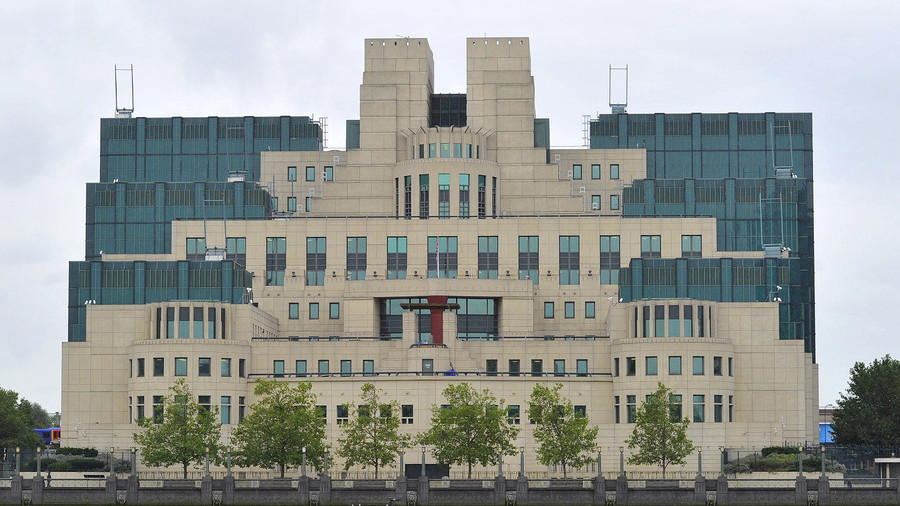
UK domestic counter-intelligence service MI5 has been accused in High Court of violating data collection and storage privileges by storing private citizens’ information in bulk without proper protections.

MI5 has no control of its storage of vast volumes of people’s calls, messages, web browsing history, as well as other personal data that the agency has managed to obtain on the basis of surveillance warrants, which were often issued under false pretext, the High Court heard on Tuesday in a legal challenge brought by the human rights organization Liberty.


MI6, MI5 & GCHQ in court over mass surveillance practices


Liberty claims that the MI5 persistently violates privileges obtained by the Investigatory Powers Act (IPA), which allows the security services to hack individuals' computers and phones in the name of national security. The agency’s failures have been identified by the head of the Investigatory Powers Commissioner’s Office (IPCO), Sir Adrian Fulford, who is tasked with safeguarding the storage and timely deletion of bulk data. A series of 10 documents and letters from MI5 and IPCO have been shared with the court in support of the claims.

The spy agency has been aware of breaches of compliance with the IPA for at least three years but has “kept the failings secret,” according to the evidence presented. The MI5 handling of people’s data was found to be “undoubtedly unlawful” by Fulford, who accused the intelligence service of “historical lack of compliance” with IPA safeguards.

Furthermore, the spying apparatus is being accused of misleading the judges when applying for surveillance warrants under false assurance that proper storage of the data will be met. Hacking warrants would have never been issued if breaches were known, Fulford pointed out.

UK home secretary wants closed hearing to keep MI5 security breaches secret from public and media


MI5 have been holding on to people's data - ordinary people's data, your data, my data - illegally for many years,” Megan Goulding, a lawyer for Liberty, said. “Not only that, they've been trying to keep their really serious errors secret - secret from the security services watchdog, who's supposed to know about them, secret from the Home Office, secret from the prime minister and secret from the public.”

According to Yair Cohen, a social media lawyer and the author of the book ‘The Net is Closing: Birth of the e-police’, the issue here is not necessarily the collection of the data but the way it has been unlawfully stored.

The storage of the data exceeded the time it was allowed to be stored, which means that the whole exercise can be rendered unlawful,” Cohen told RT. Failure to erase bulk data once it is no longer needed could “endanger people whose data MI5 possessed,” he claimed.

This type of data has been kept in an insecure manner. It means that it was perhaps open for hundreds of people to view it...maybe there would have been leaks of the data to all sort of organizations that shouldn't really be accessing the data for national security reasons,” Cohen explained.

UK intelligence agencies acted 'unlawfully' when spying on NGO campaigning against them - court


Sunday, 26 May 2019

Chris Hedges and Stephen Cohen - the meeting of great minds


On Contact: War with Russia? w/Stephen F. Cohen


RT

Chris Hedges discusses the potential of “War with Russia?” with Stephen F. Cohen, Professor of Russian Studies and History Emeritus at New York University

Saturday, 13 April 2019

Chris Hedges: Julian Assange's arrest presages an Orwellian dystopia and corporate totalitarianism


Chris Hedges hits the nail on the head

The Martyrdom of Julian Assange

Chris Hedges
11 April, 2019

The arrest Thursday of Julian Assange eviscerates all pretense of the rule of law and the rights of a free press. The illegalities, embraced by the Ecuadorian, British and U.S. governments, in the seizure of Assange are ominous. They presage a world where the internal workings, abuses, corruption, lies and crimes, especially war crimes, carried out by corporate states and the global ruling elite will be masked from the public. They presage a world where those with the courage and integrity to expose the misuse of power will be hunted down, tortured, subjected to sham trials and given lifetime prison terms in solitary confinement. They presage an Orwellian dystopia where news is replaced with propaganda, trivia and entertainment. The arrest of Assange, I fear, marks the official beginning of the corporate totalitarianism that will define our lives.

Under what law did Ecuadorian President Lenin Moreno capriciously terminate Julian Assange’s rights of asylum as a political refugee? Under what law did Moreno authorize British police to enter the Ecuadorian Embassy—diplomatically sanctioned sovereign territory—to arrest a naturalized citizen of Ecuador? Under what law did Prime Minister Theresa May order the British police to grab Assange, who has never committed a crime? Under what law did President Donald Trump demand the extradition of Assange, who is not a U.S. citizen and whose news organization is not based in the United States?

I am sure government attorneys are skillfully doing what has become de rigueur for the corporate state, using specious legal arguments to eviscerate enshrined rights by judicial fiat. This is how we have the right to privacy with no privacy. This is how we have “free” elections funded by corporate money, covered by a compliant corporate media and under iron corporate control. This is how we have a legislative process in which corporate lobbyists write the legislation and corporate-indentured politicians vote it into law. This is how we have the right to due process with no due process. This is how we have a government—whose fundamental responsibility is to protect citizens—that orders and carries out the assassination of its own citizens such as the radical cleric Anwar al-Awlaki and his 16-year-old son. This is how we have a press legally permitted to publish classified information and a publisher sitting in jail in Britain awaiting extradition to the United States and a whistleblower, Chelsea Manning, in a jail cell in the United States.

Britain will use as its legal cover for the arrest the extradition request from Washington based on conspiracy charges. This legal argument, in a functioning judiciary, would be thrown out of court. Unfortunately, we no longer have a functioning judiciary. We will soon know if Britain as well lacks one.

Assange was granted asylum in the embassy in 2012 to avoid extradition to Sweden to answer questions about sexual offense allegations that were eventually dropped. Assange and his lawyers always argued that if he was put in Swedish custody he would be extradited to the United States. Once he was granted asylum and Ecuadorian citizenship the British government refused to grant Assange safe passage to the London airport, trapping him in the embassy for seven years as his health steadily deteriorated.

The Trump administration will seek to try Assange on charges that he conspired with Manning in 2010 to steal the Iraq and Afghanistan war logs obtained by WikiLeaks. The half a million internal documents leaked by Manning from the Pentagon and the State Department, along with the 2007 video of U.S. helicopter pilots nonchalantly gunning down Iraqi civilians, including children, and two Reuters journalists, provided copious evidence of the hypocrisy, indiscriminate violence, and routine use of torture, lies, bribery and crude tactics of intimidation by the U.S. government in its foreign relations and wars in the Middle East. Assange and WikiLeaks allowed us to see the inner workings of empire—the most important role of a press—and for this they became empire’s prey.

U.S. government lawyers will attempt to separate WikiLeaks and Assange from The New York Times and the British newspaper The Guardian, both of which also published the leaked material from Manning, by implicating Assange in the theft of the documents. Manning was repeatedly and often brutally pressured during her detention and trial to implicate Assange in the seizure of the material, something she steadfastly refused to do. She is currently in jail because of her refusal to testify, without her lawyer, in front of the grand jury assembled for the Assange case. President Barack Obama granted Manning, who was given a 35-year sentence, clemency after she served seven years in a military prison.

Once the documents and videos provided by Manning to Assange and WikiLeaks were published and disseminated by news organizations such as The New York Times and The Guardian, the press callously, and foolishly, turned on Assange. News organizations that had run WikiLeaks material over several days soon served as conduits in a black propaganda campaign to discredit Assange and WikiLeaks. This coordinated smear campaign was detailed in a leaked Pentagon document prepared by the Cyber Counterintelligence Assessments Branch and dated March 8, 2008. The document called on the U.S. to eradicate the “feeling of trust” that is WikiLeaks’ “center of gravity” and destroy Assange’s reputation.

Assange, who with the Manning leaks had exposed the war crimes, lies and criminal manipulations of the George W. Bush administration, soon earned the ire of the Democratic Party establishment by publishing 70,000 hacked emails belonging to the Democratic National Committee (DNC) and senior Democratic officials. The emails were copied from the accounts of John Podesta, Hillary Clinton’s campaign chairman. The Podesta emails exposed the donation of millions of dollars from Saudi Arabia and Qatar, two of the major funders of Islamic State, to the Clinton Foundation. It exposed the $657,000 that Goldman Sachs paid to Hillary Clinton to give talks, a sum so large it can only be considered a bribe. It exposed Clinton’s repeated mendacity. She was caught in the emails, for example, telling the financial elites that she wanted “open trade and open borders” and believed Wall Street executives were best positioned to manage the economy, a statement that contradicted her campaign statements. It exposed the Clinton campaign’s efforts to influence the Republican primaries to ensure that Trump was the Republican nominee. It exposed Clinton’s advance knowledge of questions in a primary debate. It exposed Clinton as the primary architect of the war in Libya, a war she believed would burnish her credentials as a presidential candidate. Journalists can argue that this information, like the war logs, should have remained hidden, but they can’t then call themselves journalists.

The Democratic leadership, intent on blaming Russia for its election loss, charges that the Podesta emails were obtained by Russian government hackers, although James Comey, the former FBI director, has conceded that the emails were probably delivered to WikiLeaks by an intermediary. Assange has said the emails were not provided by “state actors.”

WikiLeaks has done more to expose the abuses of power and crimes of the American Empire than any other news organization. In addition to the war logs and the Podesta emails, it made public the hacking tools used by the CIA and the National Security Agency and their interference in foreign elections, including in the French elections. It disclosed the internal conspiracy against British Labour Party leader Jeremy Corbyn by Labour members of Parliament. It intervened to save Edward Snowden, who made public the wholesale surveillance of the American public by our intelligence agencies, from extradition to the United States by helping him flee from Hong Kong to Moscow. The Snowden leaks also revealed that Assange was on a U.S. “manhunt target list.”

A haggard-looking Assange, as he was dragged out of the embassy by British police, shook his finger and shouted: “The U.K. must resist this attempt by the Trump administration. … The U.K. must resist!”

We all must resist. We must, in every way possible, put pressure on the British government to halt the judicial lynching of Assange. If Assange is extradited and tried, it will create a legal precedent that will terminate the ability of the press, which Trump repeatedly has called “the enemy of the people,” to hold power accountable. The crimes of war and finance, the persecution of dissidents, minorities and immigrants, the pillaging by corporations of the nation and the ecosystem and the ruthless impoverishment of working men and women to swell the bank accounts of the rich and consolidate the global oligarchs’ total grip on power will not only expand, but will no longer be part of public debate. First Assange. Then us.


Sunday, 24 February 2019

Chris Hedges interviews Dahr Jamail on the cliamte emergency


On Contact: Climate emergency with Dahr Jamail


The glaciers in Alaska alone are losing an estimated 75 billion tons of ice every year. The oceans, which absorb over 90 percent of the excess heat trapped by greenhouses gases in the atmosphere, are warming and acidifying, melting the polar ice caps and resulting in rising sea levels and oxygen-starved ocean dead zones. 

We await a 50-gigaton burp, or “pulse,” of methane from thawing Arctic permafrost beneath the East Siberian Arctic Shelf, which will release about 2/3 of the total carbon dioxide pumped into the atmosphere since the beginning of the industrial era. 

Some 150 to 200 species of plant, insect, bird and mammal are going extinct every 24 hours, 1000 times the “natural” or “background” rate. This pace of extinction is greater than anything the world has experienced since the disappearance of the dinosaurs 65 million years ago. 

Chris Hedges speaks to journalist and author Dahr Jamail about his new book The End of Ice: Bearing Witness and Finding Meaning in the Path of Climate Disruption and the climate emergency.


Tuesday, 2 October 2018

"America: The Farewell Tour"


These are difficult words to write for me as I have always looked up to Chris Hedges in a way I have towards Noam Chomsky.

Perhaps it is an indication that he has not changed, and I haven't changed but the times have changed radically since the heady days of Occupy and when he successfuly sued the Obama legislation over the NDAA?

Hedges is still one of the most clear-seeing commentators shown by the fact that he has been pushed by the Deep State to the margins.

However, for all that I found his presentation far too painfully ideological for me.

The dangers associated with a rapid collapse of the United States are all-too-clear and especially the dangers of a theocratic, right-wing Christian regime. However, I no longer see any "solutions" in a left-wing socialist movement any more than than a right-wing populist movement.

Hedges paints a picture of the anti-imperialist Left being pushed to the edges on the internet but totally ignores that the anti-war Right is equally in the sights of Silicon Valley and the Deep State.

He is also guilty of a mistake I never thought he would fall into – and that is anachronism – the judging of the past in the terms of present-day "identity politics". He says that the Founding Fathers were racists,mysogonist, which of course they were. He is giving succour to the Left who are keen on tearing down statues and banning books they don't like.

In short, I am not as uncritically supportive as I once was

It is worth listening to his brief comments on climate change and I am deeply in favour of seeing things as they are without recourse to hope..

Chris Hedges, "America: The Farewell Tour"

 
A longtime foreign correspondent, Hedges has reported from more than fifty countries. His latest book is a profound exploration of one of the most troubled: today’s United States. Hedges, author of American Fascists and War Is a Force That Gives Us Meaning, cites the opioid crisis, the increases in gambling and magical thinking, and the explosion of xenophobia as symptoms of a society that has lost hope. He traces this disillusionment to the twin ills of a de facto corporate coup d’état and a failed democracy. The anger and frustration these have spawned helped bring Trump to power and Hedges issues a passionate call to action to reverse them. 
 
Chris Hedges is a Pulitzer Prize–winning journalist who was a foreign correspondent for fifteen years for The New York Times where he served as the Middle East Bureau Chief and Balkan Bureau Chief for the paper. He previously worked overseas for The Dallas Morning News, The Christian Science Monitor, and NPR. He writes a weekly column for the online magazine Truthdig out of Los Angeles and is host of the Emmy Award–winning RT America show On Contact. Hedges, who holds a Master of Divinity from Harvard University, is the author of the bestsellers American Fascists, Days of Destruction, Days of Revolt, and was a National Book Critics Circle finalist for War Is a Force That Gives Us Meaning. He has taught at Columbia University, New York University, Princeton University, and the University of Toronto. He currently teaches college credit courses in the New Jersey prison system.

Monday, 2 July 2018

Chris Hedges on the coming collapse


Chris Hedges: The Coming Collapse

1 July, 2018


The Trump administration did not rise, prima facie, like Venus on a half shell from the sea. Donald Trump is the result of a long process of political, cultural and social decay. He is a product of our failed democracy. The longer we perpetuate the fiction that we live in a functioning democracy, that Trump and the political mutations around him are somehow an aberrant deviation that can be vanquished in the next election, the more we will hurtle toward tyranny. The problem is not Trump. It is a political system, dominated by corporate power and the mandarins of the two major political parties, in which we don’t count. We will wrest back political control by dismantling the corporate state, and this means massive and sustained civil disobedience, like that demonstrated by teachers around the country this year. If we do not stand up we will enter a new dark age.

The Democratic Party, which helped build our system of inverted totalitarianism, is once again held up by many on the left as the savior. Yet the party steadfastly refuses to address the social inequality that led to the election of Trump and the insurgency by Bernie Sanders. It is deaf, dumb and blind to the very real economic suffering that plagues over half the country. It will not fight to pay workers a living wage. It will not defy the pharmaceutical and insurance industries to provide Medicare for all. It will not curb the voracious appetite of the military that is disemboweling the country and promoting the prosecution of futile and costly foreign wars. It will not restore our lost civil liberties, including the right to privacy, freedom from government surveillance, and due process. It will not get corporate and dark money out of politics. It will not demilitarize our police and reform a prison system that has 25 percent of the world’s prisoners although the United States has only 5 percent of the world’s population. It plays to the margins, especially in election seasons, refusing to address substantive political and social problems and instead focusing on narrow cultural issues like gay rights, abortion and gun control in our peculiar species of anti-politics.


This is a doomed tactic, but one that is understandable. The leadership of the party, the Clintons, Nancy Pelosi, Chuck Schumer, Tom Perez, are creations of corporate America. In an open and democratic political process, one not dominated by party elites and corporate money, these people would not hold political power. They know this. They would rather implode the entire system than give up their positions of privilege. And that, I fear, is what will happen. The idea that the Democratic Party is in any way a bulwark against despotism defies the last three decades of its political activity. It is the guarantor of despotism.


Trump has tapped into the hatred that huge segments of the American public have for a political and economic system that has betrayed them. He may be inept, degenerate, dishonest and a narcissist, but he adeptly ridicules the system they despise. His cruel and demeaning taunts directed at government agencies, laws and the established elites resonate with people for whom these agencies, laws and elites have become hostile forces. And for many who see no shift in the political landscape to alleviate their suffering, Trump’s cruelty and invective are at least cathartic.


Trump, like all despots, has no ethical core. He chooses his allies and appointees based on their personal loyalty and fawning obsequiousness to him. He will sell anyone out. He is corrupt, amassing money for himself—he made $40 million from his Washington, D.C., hotel alone last year—and his corporate allies. He is dismantling government institutions that once provided some regulation and oversight. He is an enemy of the open society. This makes him dangerous. His turbocharged assault on the last vestiges of democratic institutions and norms means there will soon be nothing, even in name, to protect us from corporate totalitarianism.

But the warnings from the architects of our failed democracy against creeping fascism, Madeleine Albright among them, are risible. They show how disconnected the elites have become from the zeitgeist. None of these elites have credibility. They built the edifice of lies, deceit and corporate pillage that made Trump possible. And the more Trump demeans these elites, and the more they cry out like Cassandras, the more he salvages his disastrous presidency and enables the kleptocrats pillaging the country as it swiftly disintegrates.


The press is one of the principal pillars of Trump’s despotism. It chatters endlessly like 18th-century courtiers at the court of Versailles about the foibles of the monarch while the peasants lack bread. It drones on and on and on about empty topics such as Russian meddling and a payoff to a porn actress that have nothing to do with the daily hell that, for many, defines life in America. It refuses to critique or investigate the abuses by corporate power, which has destroyed our democracy and economy and orchestrated the largest transfer of wealth upward in American history. The corporate press is a decayed relic that, in exchange for money and access, committed cultural suicide. And when Trump attacks it over “fake news,” he expresses, once again, the deep hatred of all those the press ignores. The press worships the idol of Mammon as slavishly as Trump does. It loves the reality-show presidency. The press, especially the cable news shows, keeps the lights on and the cameras rolling so viewers will be glued to a 21st-century version of “The Cabinet of Dr. Caligari.” It is good for ratings. It is good for profits. But it accelerates the decline.


All this will soon be compounded by financial collapse. Wall Street banks have been handed $16 trillion in bailouts and other subsidies by the Federal Reserve and Congress at nearly zero percent interest since the 2008 financial collapse. They have used this money, as well as the money saved through the huge tax cuts imposed last year, to buy back their own stock, raising the compensation and bonuses of their managers and thrusting the society deeper into untenable debt peonage. Sheldon Adelson’s casino operations alone got a $670 million tax break under the 2017 legislation. The ratio of CEO to worker pay now averages 339 to 1, with the highest gap approaching 5,000 to 1. This circular use of money to make and hoard money is what Karl Marx called “fictitious capital.” The steady increase in public debt, corporate debt, credit card debt and student loan debt will ultimately lead, as Nomi Prins writes, to “a tipping point—when money coming in to furnish that debt, or available to borrow, simply won’t cover the interest payments. Then debt bubbles will pop, beginning with higher yielding bonds.”


An economy reliant on debt for its growth causes our interest rate to jump to 28 percent when we are late on a credit card payment. It is why our wages are stagnant or have declined in real terms—if we earned a sustainable income we would not have to borrow money to survive. It is why a university education, houses, medical bills and utilities cost so much. The system is designed so we can never free ourselves from debt.

However, the next financial crash, as Prins points out in her book “Collusion: How Central Bankers Rigged the World,” won’t be like the last one. This is because, as she says, “there is no Plan B.” Interest rates can’t go any lower. There has been no growth in the real economy. The next time, there will be no way out. Once the economy crashes and the rage across the country explodes into a firestorm, the political freaks will appear, ones that will make Trump look sagacious and benign.

And so, to quote Vladimir Lenin, what must be done?

We must invest our energy in building parallel, popular institutions to protect ourselves and to pit power against power. These parallel institutions, including unions, community development organizations, local currencies, alternative political parties and food cooperatives, will have to be constructed town by town. 


The elites in a time of distress will retreat to their gated compounds and leave us to fend for ourselves. Basic services, from garbage collection to public transportation, food distribution and health care, will collapse. Massive unemployment and underemployment, triggering social unrest, will be dealt with not through government job creation but the brutality of militarized police and a complete suspension of civil liberties.Critics of the system, already pushed to the margins, will be silenced and attacked as enemies of the state. The last vestiges of labor unions will be targeted for abolition, a process that will soon be accelerated given the expected ruling in a case before the Supreme Court that will cripple the ability of public-sector unions to represent workers. The dollar will stop being the world’s reserve currency, causing a steep devaluation. Banks will close. Global warming will extract heavier and heavier costs, especially on the coastal populations, farming and the infrastructure, costs that the depleted state will be unable to address. The corporate press, like the ruling elites, will go from burlesque to absurdism, its rhetoric so patently fictitious it will, as in all totalitarian states, be unmoored from reality. The media outlets will all sound as fatuous as Trump. And, to quote W.H. Auden, “the little children will die in the streets.”

As a foreign correspondent I covered collapsed societies, including the former Yugoslavia. It is impossible for any doomed population to grasp how fragile the decayed financial, social and political system is on the eve of implosion.


All the harbingers of collapse are visiblecrumbling infrastructure; chronic underemployment and unemployment; the indiscriminate use of lethal force by police; political paralysis and stagnation; an economy built on the scaffolding of debt; nihilistic mass shootings in schools, universities, workplaces, malls, concert venues and movie theaters; opioid overdoses that kill some 64,000 people a year; an epidemic of suicides; unsustainable military expansion; gambling as a desperate tool of economic development and government revenue; the capture of power by a tiny, corrupt clique; censorship; the physical diminishing of public institutions ranging from schools and libraries to courts and medical facilities; the incessant bombardment by electronic hallucinations to divert us from the depressing sight that has become America and keep us trapped in illusions.


We suffer the usual pathologies of impending death. I would be happy to be wrong. But I have seen this before. I know the warning signs. All I can say is get ready.
*  *  *
Truthdig is running a reader-funded project to document the Poor People’s Campaign. Please help us by making a donation.


Chris Hedges interviews Seymour Hersh

A quest for truth with investigative journalist, Seymour M. Hersh


Pulitzer Prize-winning investigative journalist, Seymour M. Hersh discusses the quest for truth with host, Chris Hedges.