Showing posts with label polar bears. Show all posts

Sunday, 21 April 2019

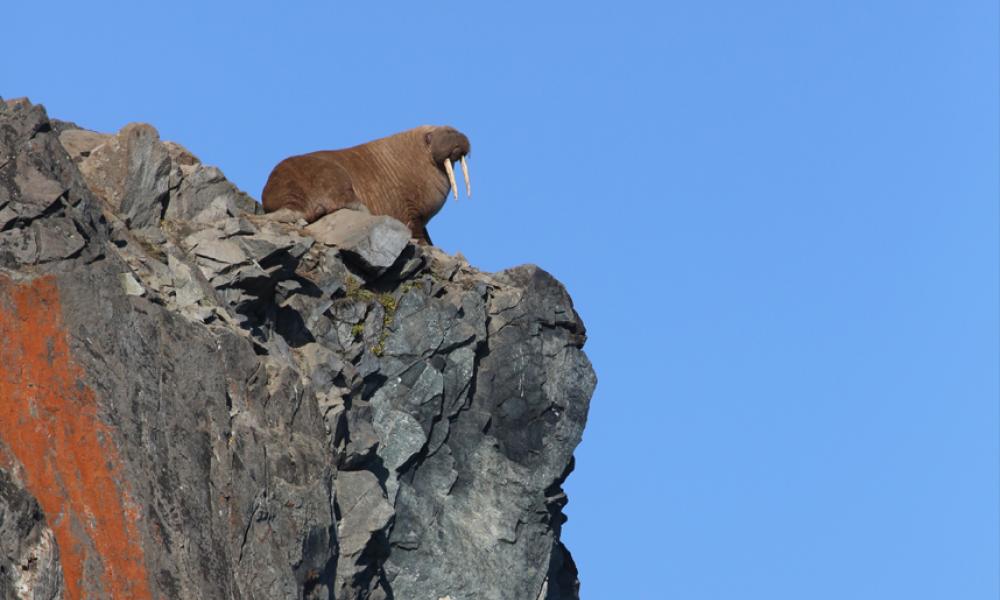
What about those walruses that fell off an ice-free cliff in Siberia?

David Attenborough's”
Our Planet”


It is Easter here, so I had an opportunity to watch the first 2 episodes of Netflix's “Our Planet”, narrated by David Attenborough.

It is as good as any of his previous series although I have atrong aversion to the modern photography which seems anything but real to me.

I watched the second episode carefully, especially the controversial scene of the walruses falling to their deaths off a cliff.


There have been some pretty loud headlines around the world proclaiming that the scene was "fake" that has naturally been picked up by the climate change denial community.

Netflixis accused of 'eco-tragedy porn' in new Attenborough documentary featuring walruses falling to their deaths 'because of climate change' after zoologist claims they were being CHASED by polar bears'


https://wattsupwiththat.com/2019/04/07/attenboroughs-tragedy-porn-of-walruses-plunging-to-their-deaths-because-of-climate-change-is-contrived-nonsense/

The denier article refers back to a "fake" video of a starving polar bear in 2017 while the Daily Mail cites an article from the pretty credible Siberian Times.


Village besieged by polar bears as hundreds of terrorised walruses fall 38 metres to their deaths


Just looking with a fairly untrained eye it did not look at all as if the walruses were trying to get away from polar bears (and what were they doing on the cliff?). They looked as if they were trying to get down but lost the struggle to get back up the scree slope.

The following article from the person who made the film makes it clear that they had expert advice from a Russian expert, Anatoly Kochnev, on walruses who has been witnessing the disapearance of the ice over time.


See this article - Bear is no game

Arctic wildlife captured by photographer and polar scientist Anatoly Kochnev

His Russian language blog is HERE

The Disturbing Walrus Scene in Our Planet
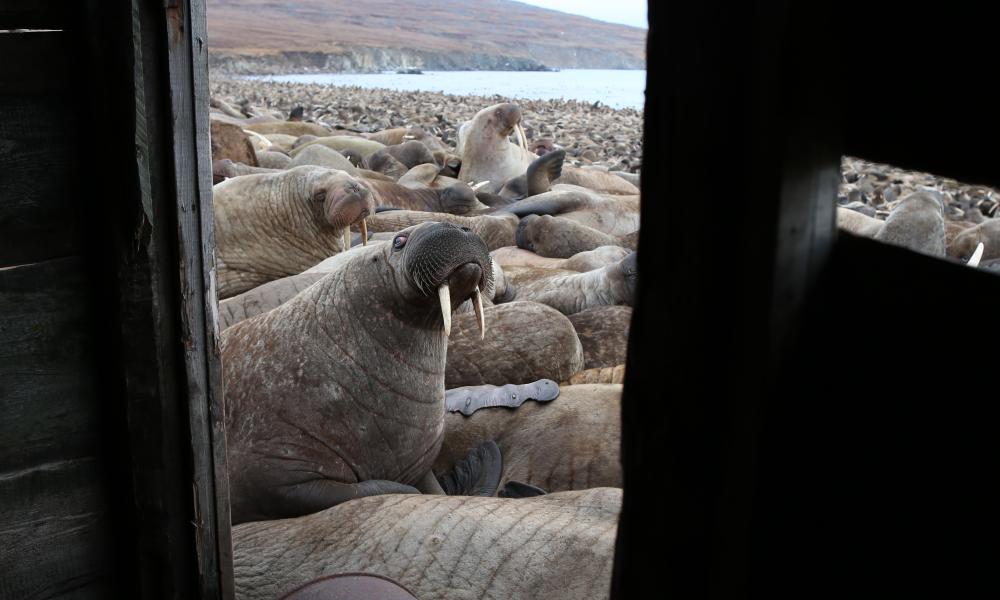
A shocking sequence shows the huge mammals scaling steep cliffs, then falling to their death.

Thumbnail


HEAR FROM SOPHIE LANFEAR, DIRECTOR OF THE OUR PLANET FROZEN EPISODE


1. HOW DID YOU FILM THIS SEQUENCE?
Filming these sorts of scenes is never easy and this was a particularly emotional one.

Walruses as you can imagine are frightened of people, something that we were exceptionally mindful of when filming them. When approaching the walruses we made sure we were downwind of them and that we could not be seen. We only stood up when it was safe to do so and when we weren't at risk of scaring any walrus. Sometimes that meant crawling in on our bellies and using whatever cover we could find to hide ourselves. It could take over an hour for us to get in position, but it was worth it to have peace of mind that we were not disturbing the walrus by approaching slowly and extremely cautiously.

Thumbnail
2. DID YOU TAKE ANY SPECIAL MEASURES TO MAKE SURE YOU DIDN’T DISTURB THE ANIMALS?

We had a scientist with us at all times (Anatoly Kochnev, Russian Academy of Sciences, whose work studying walrus behaviour in Russia is supported by WWF) monitoring us and making sure that we did not disturb the walruses. If on occasion Anatoly could not be with us, then he provided us with one of his trusted field biologists who were also there to study the walrus.

Before filming, Anatoly briefed us on how to behave around walrus and we agreed that we would only position ourselves where he thought we would not disturb the walrus. Anatoly specified the best/safest spots to film from and we adhered to his instruction. At the cliff site, we did not get closer than about 50m to the walrus. At the mass haul out site, where the walrus surrounded the cabin, we only attempted to film outside the cabin when Anatoly deemed it safe to do so and he monitored us at all times and limited how long we could be outside the cabin. The walruses were inquisitive of us but we were extremely careful when moving, doing so very slowly and careful not to break the "line" of the cabin.

3. WHY DID THE WALRUS CLIMB THE CLIFFS? AND WHY DID THEY THROW THEMSELVES OFF IT?
The exact reasons behind why walrus climb cliffs is hard to pin down, however we saw walrus climb up when there was no more space on the beach below. Once the area below the cliffs was full, they spread out around and eventually up the cliffs and the majority were unable to find their way safely down, with tragic consequences.

It is important to remember the long-term context of this situation. Anatoly has been monitoring these Russian coastal sites for 35 years. These long-term observations reveal that in recent years (especially the last 10 years) walrus are coming ashore to rest much more frequently now than they did in the past and at some sites, in much larger numbers and especially females with their calves. This is because of sea ice loss, which is caused by climate change. It is important to note, that this research pertains to pacific walrus, which are the ones we filmed for the sequence.

***
I don't find it difficult to accept that filmakers such as Netflix could fake things to make a point. However, in this case I beg to differ.

So, the question has to be asked if the voice of a Russian academic is to be ignored in this.

I have great admiration for David Attenborough and am pleased that this message is being put out. I can understand the sentiment but the evidence points, not to an ice-free Arctic by 2040 but long before that.

All of that makes the following from Attenborough meaningless sentiment:

We can still stabilize our planet once more, but there is not much time. It will require significant global cooperation on issues like population growth, climate change and management of the oceans

We will need to confront difficult questions like meat consumption and the point of new technologies. For any of this to succeed, we will need most people on earth to understand the challenges and see the value in taking action.”


Saturday, 9 December 2017

The plight pf polar bears in a land without ice

Heart-Wrenching Video Shows Starving Polar Bear on Iceless Land

Lack of sea ice is making it more difficult for polar bears to find food.


7 December, 2017


When photographer Paul Nicklen and filmmakers from conservation group Sea Legacy arrived in the Baffin Islands in late summer, they came across a heartbreaking sight: a starving polar bear on its deathbed.

Image result for Heart-Wrenching Video Shows Starving Polar Bear on Iceless Land

Nicklen is no stranger to bears. From the time he was a child growing up in Canada's far north the biologist turned wildlife photographer has seen over 3,000 bears in the wild. But the emaciated polar bear, featured in videos Nicklen published to social media on December 5, was one of the most gut-wrenching sights he's ever seen.

"We stood there crying—filming with tears rolling down our cheeks," he said.

Video shows the polar bear clinging to life, its white hair limply covering its thin, bony frame. One of the bear's back legs drags behind it as it walks, likely due to muscle atrophy. Looking for food, the polar bear slowly rummages through a nearby trashcan used seasonally by Inuit fishers. It finds nothing and resignedly collapses back down onto the ground.


In the days since Nicklen posted the footage, he's been asked why he didn’t intervene.

"Of course, that crossed my mind," said Nicklen. "But it's not like I walk around with a tranquilizer gun or 400 pounds of seal meat."

And even if he did, said Nicklen, he only would have been prolonging the bear's misery. Plus, feeding wild polar bears is illegal in Canada.

The wildlife photographer says he filmed the bear's slow, beleaguered death because he didn't want it to die in vain.

"When scientists say bears are going extinct, I want people to realize what it looks like. Bears are going to starve to death," said Nicklen. "This is what a starving bear looks like."

THE CLIMATE CHANGE LINK

By telling the story of one polar bear, Nicklen hopes to convey a larger message about how a warming climate has deadly consequences.

Polar bears have long been unwitting mascots for the effects of climate change. As animals that live only in Arctic regions, they're often the first to feel the impacts of warming temperatures and rising seas.

The large, half-ton bears find concentrations of seals on sea ice. During summer months, it's not uncommon for polar bears to go months without eating while they wait for Arctic ice to solidify.

In 2002, a World Wildlife Fund report predicted that climate change could eventually lead to polar bear endangerment or extinction. Even then, the report found that polar bears were moving from ice to land earlier and staying on land longer, unhealthily extending the bears' fasting season. By the end of summer, most bears studied by the World Wildlife Fund showed signs of starvation.

Fifteen years later, polar bears' icy hunting grounds are in even worse shape. The National Snow and Ice Data Center, which tracks sea ice cover annually, has regularly noted record lows in sea ice coverage—a decline that is expected to only get worse. (Read more about drastic predictions for dwindling sea ice.)

A study recently published in the journal Biosciences looked at how climate science is often falsely discredited. The study found climate deniers are able to downplay the threat of climate change by discrediting the threat facing polar bears.


However, a study published last year by the European Geosciences Union and this year by the U.S. Geological Survey confirms melting sea ice continues to be an existential threat to polar bears.

Tuesday, 3 October 2017

The plight of the polar bears


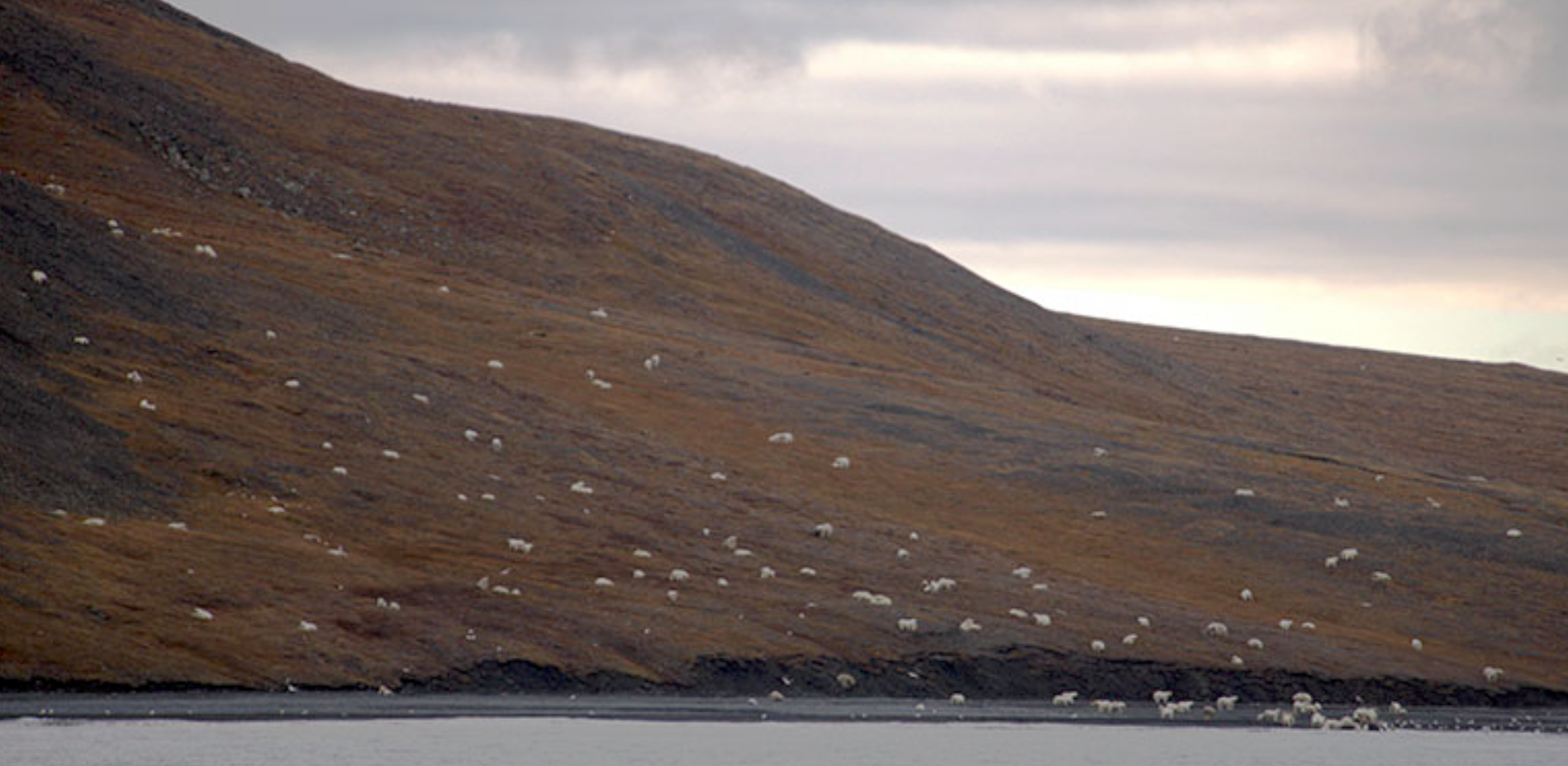
'There Are No Words': Tourists Spot Hundreds Of Polar Bears Swarming Whale Carcass In Siberia

1 September, 2017


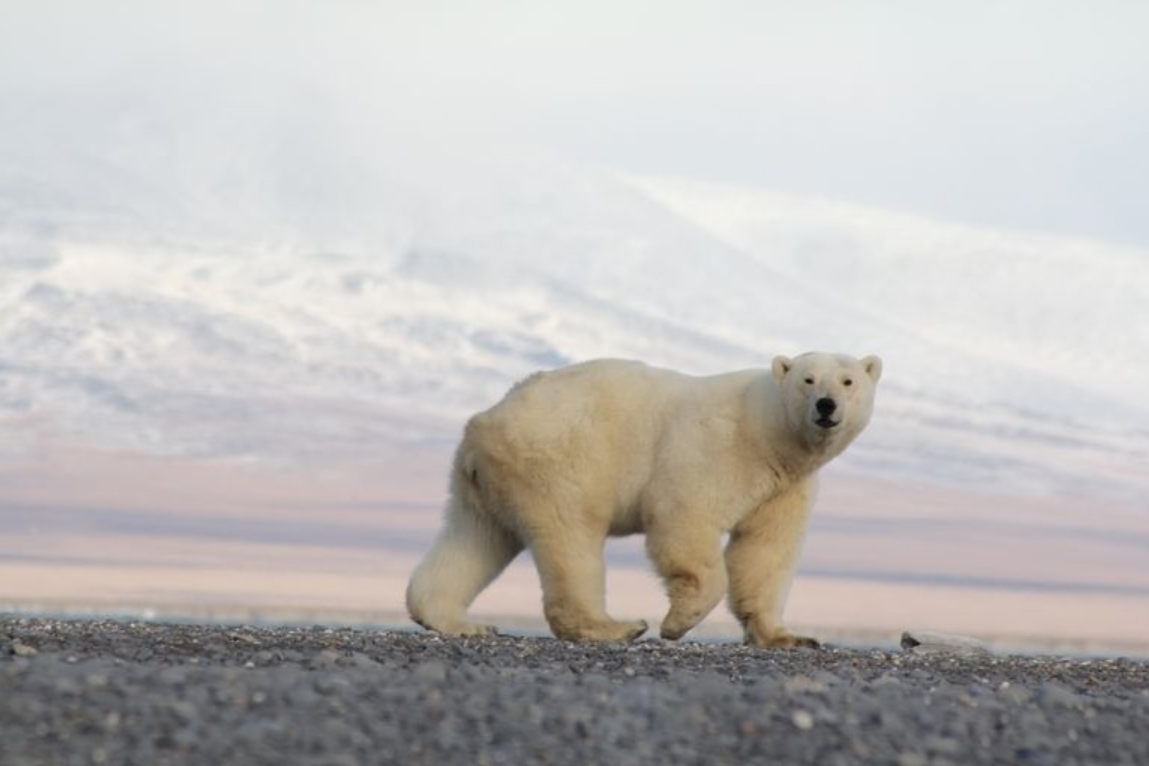
There are around 26,000 polar bears on the planet, out there doing their best as the ice caps melt. We've all seen the infamous starving polar bear picture, which has become a symbol (rightfully or not) of the impact of climate change on vulnerable species. But last week, instead of starvation came a story of glut.


On September 19, a bowhead whale carcass washed ashore the remote Wrangel Island State Nature Reserve off the Northern coast of Siberia. Nearly one per cent of the world's polar bears amassed beside it for a Siberian feast.
Image: Alexander Gruzdev, Wrangel Island State Nature Reserve


"You had to live it to believe it, even now there are people pinching themselves to make sure it really happened," Rodney Russ, Expedition Leader, Owner and Founder of Heritage Expeditions writes in his blog.
Russ counted at least 150 polar bears in the group, while a Wrangel Island news release cites 230 as the most conservative estimate.
Image: Alexander Gruzdev, Wrangel Island State Nature Reserve

The gathering was unique simply because so many humans were there to see it. Scientists from nearby Chukotka, Siberia and as far away as Alaska who study polar bears were informed of the event and are making observations, according to the release. 
Polar bears aren't classified as endangered — many of their populations have healthy numbers, though some are in decline. Yet, due to melting polar ice caps and a warming globe, there's a lot of concern for this charismatic species and its habitat, as well as concern about hunting, according to the World Wildlife Fund. The International Union for the Conservation of Nature lists the bears as vulnerable for that reason. 

I've reached out to the scientists at Wrangel Island for more information about the gathering. But for the tourists on the boat, it was an experience of a lifetime.
"We launched the Zodiacs," writes Russ, referring to a brand name of inflatable rafts, "for a closer look and that is the memory we will all carry with us. There are no words to describe it."


Monday, 21 November 2016

4 million views on Seemorerocks

I reached a milestone overnight – 4 million views on Seemorerocks.

This coincides with the visit of Guy McPherson to New Zealand who touches down in a couple of days.

I have also been at this every day (sometimes for many hours) for the lat 5 years and 7 months.

When I started my main focus was on resilience in the face of the numerous disasters which face us.

Back then climate change was not foremost in my mind. We hadn’t even heard of positive feedbacks and it was not obvious to most of us that we were rapidly entering a climate emergency.

It is amazing how much has changed in that times; and how little it has changed.

Many things that were predicted are now coming to pass (especially as it relates to decline of Empire)

During that time I have seen my health decline and so personal resilience has gone out the window.

Things are coming together in such a way that I am having to radically reassess many aspects of my life and that includes this blog.

I cannot continue to spend so much time collecting stories which when I look at them largely repeat themselves.

No doubt I will be writing on this in the next little while between now and the end of the year.

May I finish with sincere thanks for all the support people have shown by tuning into this blog on a regular basis. 


A milestone: Seemorerocks reaches 4 million views


I am reposting this article which at 23,400 views was the most-read item I have posted on this blog.
How to bear the unbearable?
Seemorerocks


It is beyond my ability to find the words to describe the pain and distress this picture evokes in me.  It break my heart to look at it but look I must.


For me this bear is emblematic for all life on the planet - all birds, mammals, fish and invertebrates - that are being destroyed by abrupt climate change unleashed on this world in a mad, suicidal quest for Infinite Growth.

It is this picture that the likes of Stephen Harper and his cronies does not want you to see. For him the destruction of this bear and all members of his species is a perfectly acceptable price to pay to keep going a paradigm that is dead but does not know it yet.

This image does not, alas, evoke tears in me but I feel a deep pain at the core of my Being that I am learning to live with and make peace with.

How to bear the unbearable?
....

POSTSCRIPT

For all the doubting thomases who have been hiding out somewhere and failed to notice that the planet is rapidly warming (see other stories on this blog) and think that the photo was photoshopped, or the bear is sick this is not the case.

If you want to see the original story GO HERE


For those who believe that Stephen Harper Is not responsible and someone else (the Chinese, Putin, or whoever) I will simply point their attention to the tarsands and to the fact that scientists doing research on the plight of the polar bears are being muzzled and the results of their research suppressed

Saturday, 29 November 2014

More on the plight of the polar bears

Polar bears disappearing from southern Beaufort Sea  ‘We suspect that they are dying of starvation’

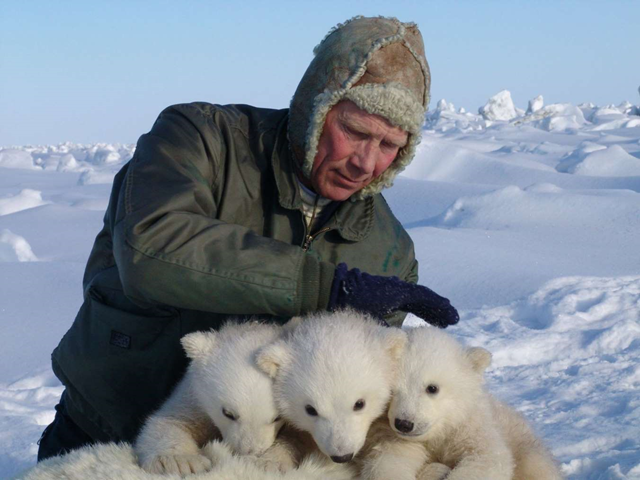
This handout photo provided by the US Geological Survey, taken in 2005 shows Steve Amstrup holding triplet polar bear cubs in Prudhoe Bay, Alaska. A new U.S.-Canada study says a key polar bear population fell nearly in half in the past decade, with scientists seeing a dramatic increase in young cubs dying. Researchers chiefly blame shrinking sea ice from global warming. Scientists from the U.S. Geological Survey and Environment Canada tagged and released polar bears in the southern Beaufort Sea from 2001 to 2010. The bear population shrank to about 900 in 2010, down from about 1,600 in 2004. Photo: USGS / AP Photo
18 November, 2014


By SETH BORENSTEIN, AP Science Writer
17 November 2014

WASHINGTON (Associated Press) – A key polar bear population fell nearly by half in the past decade, a new U.S.-Canada study [pdf] found, with scientists seeing a dramatic increase in young cubs starving and dying.

Researchers chiefly blame shrinking sea ice from global warming.

Scientists from the U.S. Geological Survey and Environment Canada captured, tagged and released polar bears in the southern Beaufort Sea from 2001 to 2010. The bear population shrank to about 900 in 2010, down from about 1,600 in 2004. That area is one of two main U.S. polar bear regions.

"These estimates suggest to me that the habitat is getting less stable for polar bears," said study lead author Jeff Bromaghin, a USGS statistician.

Wildlife biologist Steve Amstrup, who started the study for the USGS and left to become chief scientist at the conservation group Polar Bear International, said his early research in the 1980s found about 1,800 polar bears in the region.

"The habitat was profoundly different by the late 1990s, early 2000s," said Amstrup, a co-author of the study in the journal Ecological Applications.

Bromaghin said only two of 80 polar bear cubs the team tracked between 2004 and 2007 survived. Normally about half of cubs live.

"We suspect that they are dying of starvation," Bromaghin said. […]


[more]

Study: Polar bears disappearing from key region
ABSTRACT: In the southern Beaufort Sea of the U.S. and Canada, prior investigations have linked declines in summer sea ice to reduced physical condition, growth, and survival of polar bears. Combined with projections of population decline due to continued climate warming and the ensuing loss of sea ice habitat, those findings contributed to the 2008 decision to list the species as threatened under the U.S. Endangered Species Act. Here, we used mark-recapture models to investigate the population dynamics of polar bears in the southern Beaufort Sea from 2001 to 2010, years during which the spatial and temporal extent of summer sea ice generally declined. Low survival from 2004 through 2006 led to a 25-50% decline in abundance. We hypothesize that low survival during this period resulted from 1) unfavorable ice conditions that limited access to prey during multiple seasons; and possibly 2) low prey abundance. For reasons that are not clear, survival of adults and cubs began to improve in 2007 and abundance was comparatively stable from 2008 to 2010 with approximately 900 bears in 2010 (90% C.I. 606-1,212). However, survival of subadult bears declined throughout the entire period. Reduced spatial and temporal availability of sea ice is expected to increasingly force population dynamics of polar bears as the climate continues to warm. However, in the short term, our findings suggest that factors other than sea ice can influence survival. A refined understanding of the ecological mechanisms underlying polar bear population dynamics is necessary to improve projections of their future status and facilitate development of management strategies.


Thursday, 20 November 2014

The plight of the polar bear

I was told on very good authority that the Harper's Canadian government is suppressing research into the plight of the polar bears and scientists are afraid to speak out

40% decline in polar bears in Alaska, western Canada heightens concern
By MICHAEL MUSKAL


Polar bears

17 November, 2014

The number of polar bears in eastern Alaska and western Canada has declined by 40%, according to a scientific study that raises more questions about the impact of global warming on the creature that has become the symbol of some of its worst effects.

The study, published in the current issue of Ecological Applications, was carried out by scientists from several groups, including the U.S. Geological Survey and Environment Canada, that tagged and released polar bears in the southern Beaufort Sea from 2001 to 2010. The bear population in the area shrank to about 900 in 2010, down from about 1,600 in 2004, according to their findings.

Perhaps even more worrisome, just two of 80 polar bear cubs that the international team tracked between 2003 and 2007 survived, according to the study. Normally about half of the cubs live.

Climate change is not some future threat,” Sarah Uhlemann, senior attorney for the Center for Biological Diversity, one of the groups that has been fighting to save polar bears, told The Times. “Global warming is happening now and killing polar bears now.”


Polar bears have long been followed as scientists watch for early signs of global warming. The bears are especially at risk as Arctic ice melts.

They spend much of their waking lives on Arctic sea ice floes, eating seals that are also dependent on sea ice. As the ice has dramatically shrunk, the bears have been forced into long, painful swims in search of new ice. One of the marathon aquatic excursions in 2011 lasted nine days and 426 miles; the mother lost 22% of her body weight and her cub died.

Groups have been fighting for years in the courts to protect the bears and have won a threatened status for them under the federal Endangered Species Act. Groups have been seeking even more protection, and the latest data could be part of a push to get the bears placed on the endangered species list, Uhlemann said.

Global warming has put Alaska’s polar bears in a deadly downward spiral,” Uhlemann said. “If we don’t act now, we will lose polar bears in Alaska.”

Polar bears suffered particularly low survival rates between 2004 and 2006, when “unfavorable ice conditions” limited their access to ice seals, their favored prey, according to the study.

The bear population in the southern Beaufort Sea appears to have stabilized between 2008 and 2010, according to scientists. They said the stabilization appeared to be due to unusual oceanographic conditions, less competition or behavioral changes. Some polar bears stayed on land during the summer, feeding on subsistence-hunted bowhead whale carcasses.


Given projections for continued climate warming,” these changes are “unlikely to counterbalance the extensive habitat degradation projected to occur over the long term,” the report found.

Conservationists have predicted that more than two-thirds of the world’s polar bear subpopulations could be extinct by 2050.

We’re very worried that eastern Alaska’s polar bears may be among the first to go,” Uhlemann said. “The United States and the world have to get serious about reducing greenhouse gases if we want polar bears to survive.”


Russia, Norway plan polar bear census
Ten years ago the number of polar bears stood at 3,000

© ITAR-TASS/Konstantin Lemeshev

18 November, 2014

YEKATERINBURG, November 18. /TASS/. Russian and Norwegian scientists are planning to count polar bears for the first time in ten years, a deputy chief of the Russian Arctic national park said on Tuesday.

Bears will be counted in the Russian Arctic in August 2015. The previous census was conducted in August 2004 when polar bears were counted on the Novaya Zemlya and Franz Josef Land archipelagos in the Arctic, on the Chukotka Peninsula in Russia's Far East and in Alaska.

"Ten years ago the number of polar bears stood at 3,000," Maria Gavrilo said.
She said that some bears could have died of starvation in ten years or migrate to other territories following seals, their main prey.

The United States and Canada have already conducted a similar research in their Arctic territories where the population of polar bears decreased from 1,600 to 900 in ten years.


Thursday, 13 November 2014

The plight of the polar bears

This article is from a few months ago.

This information is being suppressed and I was old some time ago that Canadian scientists doing research on polar bears are afraid to speak out on this.

This information has to be spread far and wide.

Starved polar bear perished due to record sea-ice melt, says expert
Climate change has reduced ice in the Arctic to record lows in the past year, forcing animals to range further in search of food

A male Polar Bear (Ursus maritimus) starved to death due to climate change, Svalbard, Norway
This 16-year-old male polar bear died of starvation resulting from the lack of ice on which to hunt seals. Photograph: Ashley Cooper/Global Warming Images

6 August, 2014

A starved polar bear found found dead in Svalbard as "little more than skin and bones" perished due to a lack of sea ice on which to hunt seals, according to a renowned polar bear expert.

Climate change has reduced sea ice in the Arctic to record lows in the last year and Dr Ian Stirling, who has studied the bears for almost 40 years and examined the animal, said the lack of ice forced the bear into ranging far and wide in an ultimately unsuccessful search for food.

"From his lying position in death the bear appears to simply have starved and died where he dropped," Stirling said. "He had no external suggestion of any remaining fat, having been reduced to little more than skin and one."

The bear had been examined by scientists from the Norwegian Polar Institute in April in the southern part of Svalbard, an Arctic island archipelago, and appeared healthy. The same bear had been captured in the same area in previous years, suggesting that the discovery of its body, 250km away in northern Svalbard in July, represented an unusual movement away from its normal range. The bear probably followed the fjords inland as it trekked north, meaning it may have walked double or treble that distance.

Polar bears feed almost exclusively on seals and need sea ice to capture their prey. But 2012 saw the lowest level of sea ice in the Arctic on record. Prond Robertson, at the Norwegian Meteorological Institute, said: "The sea ice break up around Svalbard in 2013 was both fast and very early." He said recent years had been poor for ice around the islands: "Warm water entered the western fjords in 2005-06 and since then has not shifted."

Stirling, now at Polar Bears International and previously at the University of Alberta and the Canadian Wildlife Service, said: "Most of the fjords and inter-island channels in Svalbard did not freeze normally last winter and so many potential areas known to that bear for hunting seals in spring do not appear to have been as productive as in a normal winter. As a result the bear likely went looking for food in another area but appears to have been unsuccessful."

A thin female Polar Bear wearing a radio collar for tracking on Spitsbergen, Svalbard, NorwayScientists are tracking polar bears with radio collars in Svalbard, Norway, to monitor their search for food. Photograph: Ashley Cooper/Global Warming Images
Research published in May showed that loss of sea ice was harming the health, breeding success and population size of the polar bears of Hudson Bay, Canada, as they spent longer on land waiting for the sea to refreeze. Other work has shown polar bear weights are declining. In February a panel of polar bear experts published a paper stating that rapid ice loss meant options such the feeding of starving bears by humans needed to be considered to protect the 20,000-25,000 animals thought to remain.

The International Union for the Conservation of Nature, the world's largest professional conservation network, states that of the 19 populations of polar bear around the Arctic, data is available for 12. Of those, eight are declining, three are stable and one is increasing.

The IUCN predicts that increasing ice loss will mean between one-third and a half of polar bears will be lost in the next three generations, about 45 years. But the US and Russian governments said in March that faster-than-expected ice losses could mean two-thirds are lost.

Attributing a single incident to climate change can be controversial, but Douglas Richardson, head of living collections at the Highland Wildlife Park near Kingussie, said: "It's not just one bear though. There are an increasing number of bears in this condition: they are just not putting down enough fat to survive their summer fast. This particular polar bear is the latest bit of evidence of the impact of climate change."

Ice loss due to climate change is "absolutely, categorically and without question" the cause of falling polar bear populations, said Richardson, who cares for the UK's only publicly kept polar bears. He said 16 years was not particularly old for a wild male polar bear, which usually live into their early 20s. "There may have been some underlying disease, but I would be surprised if this was anything other than starvation," he said. "Once polar bears reach adulthood they are normally nigh on indestructible, they are hard as nails."

Jeff Flocken, at the International Fund for Animal Welfare, said: "While it is difficult to ascribe a single death or act to climate change it couldn't be clearer that drastic and long-term changes in their Arctic habitat threaten the survival of the polar bear. The threat of habitat loss from climate change, exacerbated by unsustainable killing for commercial trade in Canada, could lead to the demise of one of the world's most iconic animals, and this would be a true tragedy."