Showing posts with label petrodollar. Show all posts

Saturday, 10 November 2018

India, Russia and China all agree to abandon $US for transactions


MAJOR: DOLLAR FACING DEVALUATION, FREE-FALL AS INDIA, RUSSIA, CHINA ALL AGREE TO ABANDON USD FOR TRANSACTIONS
By Paul Antonopoulos


8 November, 2018

In a major development, India has officially joined the recent announcements of Russia and China; all three parties will entirely eliminate the USD from inter-national transactions.

India has announced it will pay for the supply of Russian S-400 anti-missile systems in rubles, while China plans to make bilateral agreements in national currencies by the end of that year, Russian policymakers said.
The contract for delivery of Russian systems S-400 to New Delhi was closed on October 5 and estimated at $5 billion.
The greatest benefit of transactions in national currencies is the absence of currency fluctuations. An equally important problem in trade involving US dollars is the high probability of sanctions, which Washington “distributes” this year in all directions.
In April, Indian media reported that Delhi’s financial institutions froze about two billion dollars allocated to pay for major projects, including the reconstruction of the Russian nuclear submarine INS Chakra. The reason for this was that Washington included Russia’s state-controlled arms export company Rosoboronexport on the sanctions list, which for banking institutions practically means prohibiting any transactions in the US currency.
Even with US restrictions, India has opted to maintain relations with the most reliable partner in the field of military-technical cooperation and arms supply, ie Russia.
According to the World Peace Research Institute in Stockholm (SIPRI), from 2007 to 2017, Moscow provided arms to New Delhi worth $24.5 billion, while Washington – only $3.1 billion.
The Russian-Indian negotiations involve not only the supply of weapons, but also civilian products.
“The share of export rubles payments is 20%, while in imports it is about 21%,” said Russian Deputy Prime Minister Yuri Borisov, adding that Moscow will increase “payments in national currencies as a means of resolving the problem of default.”
Russia’s Vnesheconombank (VEB) director Igor Shuvalov has stated that Russia and China have their own channels of interaction and that Beijing is keen to use them.
The banker pointed out that bilateral consultations will take place in the coming weeks, during which the interaction between the financial institutions of both countries will be decided.
Russia and China are increasingly canceling contracts in dollars, given the large growth in their trade. Last year alone, trade between Moscow and Washington was $23.6 billion, while between Russia and China was $84.9 billion, a difference of almost 360%.
The three largest developing nations, namely Russia, China and India, have shown the world how to get rid of dependence on the dollar. Bilateral trade in these countries’ national currencies opens up prospects for other growing economies to be able to get rid of the hegemony of the dollar.

Monday, 8 October 2018

The oil wars


Despite the president’s Alzheimers or narcissism (or because of it? He is capable of saying things that are brutally true that others’ would dare.

Saudi Arabia can survive ‘2,000 years’ without US help & not face civil war like America – MBS

Saudi Arabia can survive ‘2,000 years’ without US help & not face civil war like America – MBS

RT,
6 Octoer, 2018

Saudi society fully supports the royals and those few fringe extremist elements who stir trouble are being dealt with, believes crown prince Mohammed bin Salman, who claimed the kingdom can survive for 2,000 years on its own.


Known in the West by his initials MBS, the crown prince may, as he said, ‘love’ working with the US and Trump but, when it comes to thinking of examples of successful managers of social change, he is decidedly ‘America last.’ Any drastic financial, political and legal reforms come with a hefty price tag, he emphasized, drawing parallels with the history of the United States.

“...if you look at the United States of America, when for example they wanted to free the slaves. What was the price? Civil war. It divided America for a few years. Thousands, tens of thousands of people died to win freedom for the slaves,” Bin Salman told Bloomberg, in a wide-ranging interview published Friday.


“Here we are trying to get rid of extremism and terrorism without civil war, without stopping the country from growing, with continuous progress in all elements,” the crown prince added. “So if there is a small price in that area, it’s better than paying a big debt to do that move.”

Two weeks? Try 2,000 years!


Bin Salman brushed off US President Donald Trump’s somewhat humiliating comments about Saudi Arabia perishing within two weeks without American support, saying that his kingdom existed decades before the US and will need “something like around 2,000 years to maybe face some dangers.”
 

“Actually, we will pay nothing for our security," the prince firmly stated, explaining that since Trump’s statements were clearly addressed to a domestic audience he did not find them offensive.


“We believe that all the armaments we have from the United States of America are paid for, it’s not free armament,” he reiterated. Explaining that, after Trump became US president, Saudi Arabia has already agreed to procure nearly 60 percent of its arms from Washington, he emphasized that Riyadh owes nothing extra because it always pays for weapons supplies in cash.


“I love working with him. I really like working with him,” bin Salman said of Trump, calling his comments a “one percent”disagreement between allies.

Saudis aren’t scared, only 1,500 ‘extremists’ arrested in 3 years


Bin Salman has been the public face of “reforms” that Riyadh has embarked on to diversify its economy and relax some of its laws – such as allowing women to drive, for example – since he became crown prince of Saudi Arabia in 2017.
Asked about discontent with the pace of those reforms and why some Saudis seem afraid to speak to journalists, bin Salman said they shouldn’t be and that only those “extremists” who organize street protests or cooperate with foreign “intelligence agencies” should fear imminent arrest. In the course of “fighting extremism, fighting terrorism” over the past three years, only “about 1,500” people have been arrested, he claimed, comparing it to 50,000 in Turkey after the attempted military coup there.


Anyone shown to have “links with intelligence against Saudi Arabia or extremism or terrorists” will face Saudi law, bin Salman stated. “We have do to this. We cannot fight extremists having 500 or 700 extremists on the streets recruiting people.” He named Iran and Qatar as the main suspects.


While the Salafist Saudi Kingdom has long been at odds with the predominantly Shia Islamic Republic on the other side of the Gulf, relations with Qatar have soured in recent years. Riyadh and its allies declared a blockade of the peninsular monarchy in June 2107, accusing Qatar, the owners of Al Jazeera, of secretly collaborating with Iran and of supporting Islamic State (IS, formerly ISIS/ISIL) and other terrorists. The tensions show no signs of ending anytime soon.


Saudi Arabia Tells Trump No More Oil

  • This is a risk for Saudi Arabia, because Saudi Arabia has always depended a great deal on the United States
  • the Trump administration has its answer--Saudi Arabia does not intend to deploy any more of its vaunted spare capacity to counter rising prices

5 October, 2018

Saudi Arabian Crown Prince Mohammad bin Salman responded publicly to President Donald Trump's recent spate of Tweets and statements concerning oil. While the President has been asking for Saudi Arabia to increase oil production to flood the market and keep prices down, the prince said no. This is a risk for Saudi Arabia, because Saudi Arabia has always depended a great deal on the United States --even its currency is pegged directly to the U.S. dollar--and the Trump administration has shown that it will take a hard stance on economic issues even with its closest allies.


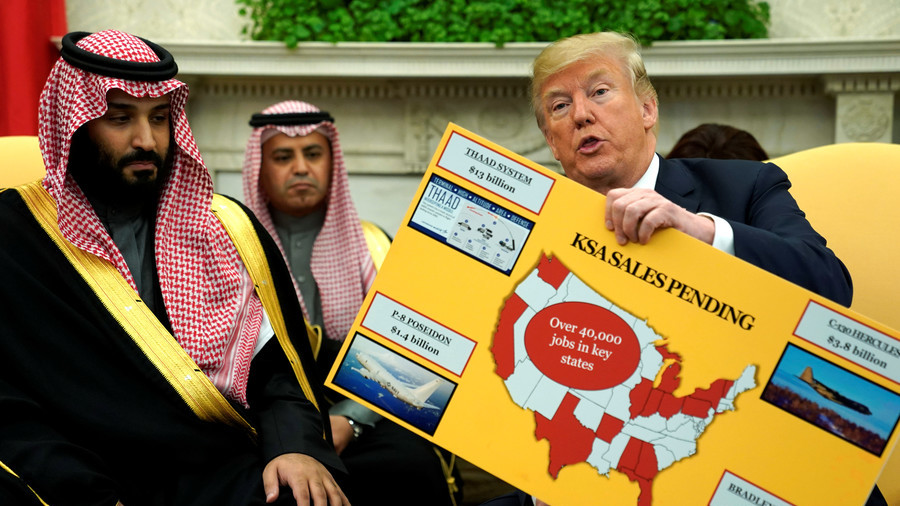
President Donald Trump meets with Saudi Crown Prince Mohammed bin Salman in the Oval Office of the White House, Tuesday, March 20, 2018, in Washington. (AP Photo/Evan Vucci)

This week, oil prices reached highs not seen in four years. The international benchmark, Brent, hit $86 per barrel and the U.S. benchmark, WTI jumped to over $76 per barrel. U.S. President Donald Trump has been unrelenting in his public and private pressure on OPEC and Saudi Arabia to produce more oil and lower prices. After all, from his perspective, the increase in prices is a result of his new sanctions against Iran - which Saudi Arabia fully supports - and therefore, Saudi Arabia should deploy its spare capacity to ensure that American consumers don't face undue pain at the pump.

Saudi Arabian oil minister Khalid al Falih tried to reassure markets that Saudi Arabia would increase production but that the market is actually very well supplied. The 9% increase in oil prices over the past 3 months, he said, is the fault of financial speculators, not a lack of supply. He's right, but the market and the speculators didn't believe him.

That wasn't what the Trump administration wanted to hear, so the President ratcheted up his war of words during a rally in Mississippi. He delivered a low level threat to Saudi Arabia's King Salman when he said the following:

We protect Saudi Arabia. Would you say they're rich? And I love the King ... King Salman but I said 'King, we're protecting you. You might not be there for two weeks without us. You have to pay for your military.

Still, oil prices barely budged and the AAA reported that gasoline prices in the United States have reached their highest levels in 4 years.

Soon after, Saudi crown prince Mohammad bin Salman addressed global oil prices in an interview with Bloomberg where he said,

The request that America made to Saudi Arabia and other OPEC countries is to be sure that if there is any loss of supply from Iran, that we will supply that. And that happened....So we export as much as 2 barrels for any barrel that disappeared from Iran recently. So we did our job and more. We believe the higher price that we have in the last month, it’s not because of Iran. It’s mostly because of things happening in Canada, and Mexico, Libya, Venezuela and other countries that moved the price a little bit higher.

Now the Trump administration has its answer--Saudi Arabia does not intend to deploy any more of its vaunted spare capacity to counter rising prices . There is still the opportunity for more oil to come on to the market from other places - the neutral zone between Saudi Arabia and Kuwait, the United States, Canada, Iraq, Kazakhstan, Azerbaijan, Libya and Nigeria. But all of those will take some time and investment. Saudi Arabia could put another 500,000 barrels per day on the market tomorrow - if it wanted to. But according to the crown prince, it does not.

Now the ball is in President Trump's court.


Ellen R. Wald, Ph.D. is a historian and consultant on energy and geopolitics. She is the author of Saudi, Inc., president of Transversal Consulting & a Senior Fellow at the Atlantic Council


Kuwait Oil to U.S. Stops for 1st Time Since 1990-91 Gulf War
  • Kuwait is selling oil into Asia where it fetches higher prices
  • U.S. net imports of foreign oil have dropped to a 45-year low

2 October, 2018

Kuwait has all but stopped shipping crude to the U.S. for the first time since the aftermath of Saddam Hussein’s invasion in 1990, eroding an economic link between Washington and the Arab petro-monarchy.

The halt is the latest sign that booming demand for oil in Asia, particularly as the U.S. re-imposes sanctions on Iran, and rising supplies from America on the back of the shale revolution are re-drawing petroleum trade routes.


U.S. imports of Kuwaiti crude fell to zero over four weeks through late September, the first time that shipments have completely stopped since weekly data became available in June 2010, according to the U.S. Energy Information Administration. Based on monthly data, Kuwaiti shipments to the U.S. haven’t stopped since May 1992, when the OPEC producer was still recovering from oil-field fires ignited by retreating Iraqi troops in the first Gulf War.

Kuwait is diverting its barrels instead into the more lucrative Asian market, where prices are higher for the type of high-sulfur crude the small Middle Eastern nation pumps, according to a person familiar with the matter, who asked not to be identified because the matter isn’t public.

Kuwaiti oil fetches about $80 a barrel in Asia compared with about $79 in the U.S., according to Bloomberg calculations based on benchmark prices and the country’s official selling prices. Kuwaiti crude sells at about $76 a barrel in Europe.

“Iranian sanctions are providing a chance for others to sell more into Asia where prices are better than for sales into the U.S.,” Andy Lipow, president of consultant Lipow Oil Associates LLC, said in Houston.

While its shipments to the U.S. have plunged, Kuwait faces limits on its production due to a dispute with Saudi Arabia over shared oil fields along their border where both nations in the past pumped as much as 500,000 barrels a day. The shared fields in the so-called neutral zone halted production more than three years ago, though the two governments are in talks to reactivate them.

Kuwait Petroleum Corporation’s reduction of crude exports were "coordinated with U.S. and European clients," the company said in a statement on Kuwait News Agency (KUNA) website. The American market is "strategically important" and its supply contracts are "functional", the state-owned oil producer said.

Kuwait has typically exported about 80 percent of its oil to Asia, and those shipments are increasing with the ramp-up of operations at the Nghi Son Refinery and Petrochemical Co. in Vietnam. KPC co-owns the plant, which can process 200,000 barrels a day.


INDIA TO BUY 9 MILLION BARRELS OF IRANIAN OIL IN NOVEMBER DESPITE US SANCTIONS: MEDIA

India To Buy 9 Million Barrels Of Iranian Oil In November Despite US Sanctions: Media
An Iranian crude oil supertanker anchored off Singapore. IMAGE: REUTERS

India will buy 9 million barrels of Iranian oil in November despite US sanctions, Reuters reported on October 5 citing “two industrial sources”.
“Refiners have placed November nominations to lift 1.25 million tonnes [about 9 million barrels] of oil from Iran,” Reuters quoted one of the sources as saying.

According to the report, Indian Oil Corp will lift 6 million barrels of Iranian oil and Mangalore Refinery and Petrochemicals Ltd 3 million barrels.
The US sanctions targeting Iran’s oil sector are set to be imposed on November 4. The Trump adminsitration claims that the move is designed to limit the Iranian economic capabilities and thus its involvement in conflicts in Syria and Iraq. Furthermore, Washington hopes that this will force Teheran to request negotiations to reach a new “pro-US” deal on its missile and nuclear programs.
It’s intersting to note that on October 5, India reached with Russia a contract on deliver of S-400 air defense systems. This move also came despite US threats to impose sanctions on any power buying Russian weapons and military equipment.


India’s purchases of US crude oil have fallen by 75 percent over the past four months as the subcontinent stocks up on Iranian crude, Reuters has reported.

Wednesday, 16 May 2018

Europe to drop petrodollar in trade with Iran?

Europe to ditch US dollar in payments for Iranian oil – source


16 May, 2018


The European Union is planning to switch payments to the euro for its oil purchases from Iran, eliminating US dollar transactions, a diplomatic source told Sputnik.

Brussels has been at odds with Washington over the US withdrawal from the Iran nuclear deal, which was reached during the administration of Barack Obama. President Donald Trump has pledged to re-impose sanctions against the Islamic Republic.


“I’m privy to the information that the EU is going to shift from dollar to euro to pay for crude from Iran,” the source told the agency.

EU and Iran to keep nuclear deal in place https://on.rt.com/95cf 

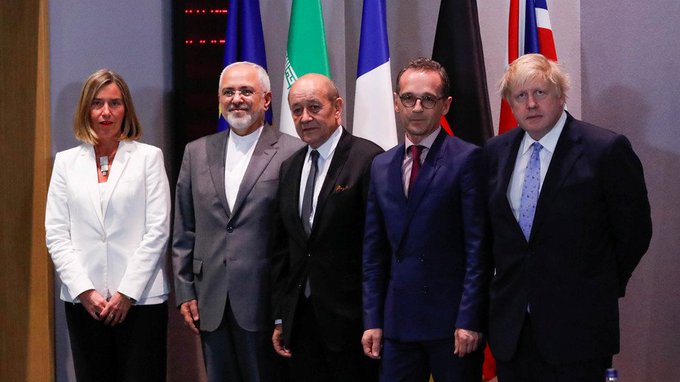
Earlier this week, EU foreign policy chief Federica Mogherini said that the foreign ministers of the UK, France, Germany, and Iran had agreed to work out practical solutions in response to Washington’s move in the next few weeks. The bloc is reportedly planning to maintain and deepen economic ties with Iran, including in the area of oil and gas supplies.


Mogherini stressed that the sides should jointly work on the lifting of sanctions as an integral part of the historic nuclear deal. “We're not naive and know it will be difficult for all sides.”


The Iran nuclear deal, known as the Joint Comprehensive Plan of Action (JCPOA), was sealed three years ago in Vienna between Tehran and the P5+1 powers (China, France, Russia, UK, US, plus Germany). The agreement saw decades-long international sanctions lifted in exchange for Iran curbing its controversial nuclear program. On January 16, 2016, the parties to the deal announced the beginning of its implementation.


Lifting of international sanctions gave the Islamic republic access to the world's markets for the first time in nearly four decades. Since then Tehran managed to significantly to raise its exports of crude.


However, oil is pegged to the US dollar on international markets, making it difficult for Iran's partners to make payments for crude and for Tehran to receive them. Switching to alternative settlement currencies allows both sides to continue trading despite US sanctions.

Tuesday, 24 April 2018

Iran moves way from the dollar

Iran dumps dollar for euro in foreign trade transactions

Iran dumps dollar for euro in foreign trade transactions

RT,
23 April, 2018


As part of its years-long effort to reduce reliance on US currency amid a deepening standoff with Washington, Tehran has announced it will start reporting foreign currency amounts in euros rather than dollars.
The governor of Iran’s central bank (CBI) Valiollah Seif said that Supreme Leader Ayatollah Ali Khamenei had welcomed his suggestion of replacing the dollar with the euro in foreign trade, as the “dollar has no place in our transactions today.” The new policy could reportedly encourage government bodies and firms linked to the state to increase their use of the euro at the expense of the American currency.
France will start offering euro-denominated credits to Iranian buyers of its goods later this year to keep its trade out of the reach of US sanctions, said the head of state-owned French investment bank Bpifrance.
According to CBI’s Director of Foreign Exchange Rules and Policies Affairs Mehdi Kasraeipour, the share of the greenback in Iran’s trade activities is not high. As part of a trade embargo, US banks are banned from dealing with Iran
Last month, Tehran announced that purchase orders by merchants that are based on US currency would no longer be allowed to go through import procedures. The step followed an official request by the CBI and was specifically meant to address fluctuations in market rates of the US dollar.
The Iranian currency has lost almost half of its value on the free market since last September. The rial has plunged to a record low of about 60,000 against the dollar before authorities set a fixed rate of 42,000 and warned Iranians they would face penalties for using other rates.
Khamenei blamed foreign enemies for the “recent issues in the currency market” and asked Iran’s intelligence services to defuse the plots against the Islamic republic.

Tehran, which has long sought to switch to non-dollar-based trade, had already signed agreements with several countries. It’s in talks with Russia on using national currencies in settlements.
While meeting with Russian President Vladimir Putin in November, Khamenei said the best way to beat US sanctions against the two countries was joint efforts to dump the American currency in bilateral trade. He told President Putin that, by using methods such as eliminating the US dollar and replacing it with national currencies in transactions between two or more parties, the sides could “isolate the Americans.”

Tuesday, 27 March 2018

The story of China's launch of the PetroYuan is blacklisted

The revolution will not be televised
Censorship of news of the PetroYuan

China resets global monetary system

We already know that everything in our media is manipulated but as it becomes clear, as we are clearly moving towards war that everything is in the media is a BIG LIE.

As the entirety of the world media is obsessed with Stormy Daniels and publish lies to justify their aggressive actions they completely ignore the one factor that explains everything.

The introduction of the PetroYuan which clearly marks the end of the dominance of the AngloZionist Empire. If you can no longer force countries at the point of a gun (literally) to pay for oil  in dollars you are no longer able to dictate. 

You are part of a multi-polar world.

That is what the imperialists are fighting against.

Wars can be (and ARE) fought over this. Just think Gaddhafi and Saddam Hussein.

I decided to check the financial press - and who better than this than Bloomberg?

This was the result.

CAN YOU FUCKING IMAGINE IT?.

I thought that I must be imagining this and that I had better check across the internet so I put in a Google seach.

This is what I got.


That's right. A big fat Zero apart from the alternative media which has been covering this for a long time now. I had been wondering whether this might just be speculation.

Just to prove it was not a figment of my (or Zero Hedge's) imagination it figured prominently in the South China Morning Post (SCMP)


Long anticipated debut of yuan-denominated contracts comes after China surpassed the US to become the world’s largest crude importer in 2017


Interestingly, not quite 6 months ago this is what the SCMP was loudly proclaiming.
Sorry folks, but there is no Chinese alternative to the petrodollar

‘Those who foresee in the pipeline a petroyuan to effectively challenge the hegemony of the petrodollar are ignoring the practical realities of the global financial system’

It is the alternative media that speaks the truth. This is from Adam Garrie


This morning, history was made as China began trading Yuan denominated oil futures contracts on the Shanghai International Energy Exchange. According to Liu Shiyu, the Chairman of the China Securities Regulatory Commission (CSRC),

“We have the confidence, determination and ability to build a crude oil futures market with Chinese characteristics, and make due contributions to better protect the legitimate rights and interests of investors, and better serve the high-quality development of the real economy”.

Russia and China roll our gold-backed currency


How China Just “Reset” the Global Monetary System With Gold


Russia and China Roll Out 100% Gold-Backed Currency

Russia and China have outlined plans to create a 100 percent gold-backed currency system to replace the US dollar as the world’s dominant currency.

The Central Bank of Russia has been steadily amassing vast gold reserves since 2015 – accumulating 1,828.56 tons by the end of 2017 – making it the fifth largest gold reserve in the world.


Goldtelegraph.com reports: Russia has been aggressively increasing its gold reserves for a reason. It has seen the US dollar dominate as a global currency and is working with China to end the US/Western currency supremacy.

Their strategy appears to be working. Russia and China are in the midst of rumors of introducing gold-backed futures to circumvent the U.S dollar....

Here are some earlier article that are relevant to this dicussion:


I think, in conclusion we can conclude that today’s events are reolutionary – but as we know the ‘revolution will not be televised”