Showing posts with label ozone hole. Show all posts

Saturday, 24 October 2020

Largest and Deepest Ozone Hole in Antarctica in Years

It seems to be just a few months ago that they were crowing about how the hole in the Antarctic ozone hole was 'healing' and at its smallest size.  Now, you cannot even find those items in the search engines!

Reports like this to me reveal just how bad the situation must be and is being hidden. 

Dane Wigington is amongst the very few that says the situation is getting worse - much worse - and I believe him.


https://www.geoengineeringwatch.org/category/geoengineering/results-of/ozone/

 Antarctica Wakes Up to Largest and Deepest Ozone Hole in Years


Sputnik

23 October, 2020


Both small and short-lived ozone holes, as well as bigger ones are known to be driven by very special meteorological conditions: cold stratosphere temperatures have been found to be behind astonishing increases in their size, whereas warming typically causes them to shrink.

A hole in the ozone layer over Antarctica occurs regularly, but now it has expanded to one of its biggest recorded sizes over the past few years, scientists report, as cited by Science Alert.


Fresh estimates from the European Space Agency's Copernicus Sentinel-5P satellite show that the ozone hole reached a maximum size of roughly 25 million square kilometres on 2 October, thereby outpacing the measurements of 2018 and 2015's ozone holes - 22.9 and 25.6 million square kilometres respectively.

Yet, 2020’s maximum peak isn't the largest on record. That title belongs to the 29.9-million square kilometre hole registered back in 2000, however, this year’s hole is still one of the deepest in recent years.

Atmospheric scientist Vincent-Henri Peuch from the European Centre for Medium-Range Weather Forecasts admits there is a certain variability in the development of such holes from year to year, noting that while it resembles the one from 2018, it “is definitely in the upper part of the pack of the last 15 years or so”.

Researchers say the 2020 event has been caused by a strong polar vortex, which is a wind phenomenon that keeps stratospheric temperatures above Antarctica cold, causing the hole to grow. Warmer temperatures in Antarctica last year, by contrast, helped bring about a record-low ozone hole size, as scientists explained at the time.

"It's important to recognise that what we're seeing [in 2019] is due to warmer stratospheric temperatures”, Paul Newman, the chief scientist for Earth Sciences at NASA's Goddard Space Flight Centre in Greenbelt, Maryland, noted about the shrinking ozone hole last year.

As an ozone hole over Antarctica either shrinks or grows as time passes, gas concentrations inside the hole fall when temperatures in the stratosphere go down. When this happens - specifically, when polar stratosphere clouds form at temperatures below –78°C (–108.4°F), chemical reactions ruin ozone molecules when solar radiation takes hold.

"With the sunlight returning to the South Pole in the last weeks, we saw continued ozone depletion over the area”, Peuch noted, further drawing parallels between the 2019 and this year’s events.

"After the unusually small and short-lived ozone hole in 2019, which was driven by special meteorological conditions, we are registering a rather large one again this year, which confirms that we need to continue enforcing the Montreal Protocol banning emissions of ozone depleting chemicals”.

The Montreal Protocol was a key achievement in recent international environmental activity, as it aims to phase out the manufacturing of harmful chlorofluorocarbons (CFCs) – chemicals previously used in refrigerators, packaging, and sprays – that destroy ozone molecules in sunlight and fuel harmful depletion of the ozone layer which serves as a shield against deadly ultraviolet radiation.


https://www.sciencealert.com/the-ozone-hole-over-antarctica-has-grown-to-one-of-its-largest-sizes-in-recent-times

Friday, 2 October 2020

Unprecedented ozone hole over Antarctica

 This could be the lowest ozone minumum since 2006


1/2 On 29 Sep 2020 #Ozone in the #OzoneLayer over the Antarctic Neumayer Station was almost completely deleted between 50-100 hPa as seen in O3 profiles from sonde & #AtmosphereMonitoring Service #OzoneHole.


A record-breaking ozone hole that formed over the Arctic this spring has closed, researchers announced late last week.

Scientists at the Copernicus' Atmospheric Monitoring Service tracking the "rather unusual" ozone hole announced Thursday on Twitter that it had ended. The group said the hole was caused by a polar vortex and closed when that vortex split.

"COVID19 and the associated lockdowns probably had nothing to do with this," the group said repeatedly on Twitter. "It's been driven by an unusually strong and long-lived polar vortex, and isn't related to air quality changes."

From earlier in the year.  This is ALL I could find on the topic.

How bizarre to even suggest that a larger ozone hole could be due to coronavirus!!


https://www.usatoday.com/story/news/world/2020/04/28/record-breaking-arctic-ozone-hole-closes-but-not-due-coronavirus/3039230001/

28 April, 2020


In Antarctica:Ozone hole shrinks to smallest size on record, and it's not related to global warming

A polar vortex is a large area of cold air high in the atmosphere that normally spins over the North Pole. An ozone hole is a dramatic thinning of the ozone layer that's typically boosted in size by colder temperatures. 

Ozone holes have formed annually for the past 35 years in the Antarctic because of human-made chemicals migrating into the stratosphere and accumulating inside a strong polar vortex, the group said. Because of unusually warm temperatures high above Antarctica, the ozone hole shrank to its smallest size on record last October.

In the Arctic however, polar vortexes are much weaker, meaning the conditions needed for such strong ozone depletion aren't normally found, making this ozone hole "unprecedented."

Ozone depletion over the Arctic in 2020 was so severe that most of the ozone at an altitude of around 11 miles had been depleted. Researchers said the last time a similarly strong chemical ozone depletion was observed over the Arctic was in spring 2011.

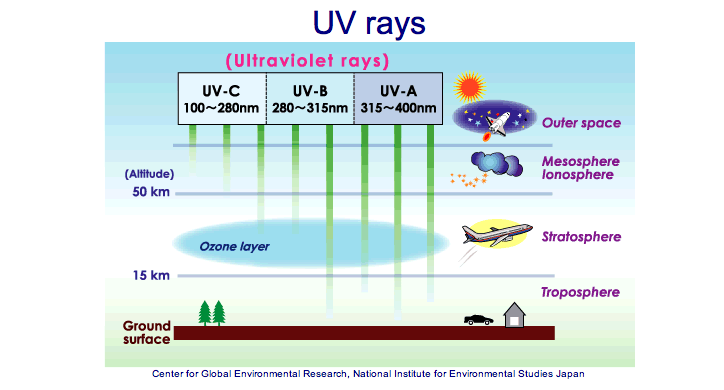
The ozone layer is important because it acts like a sunscreen, blocking potentially harmful ultraviolet energy from reaching our planet's surface. Without it, humans and animals can experience increased rates of skin cancer and other ailments such as cataracts.

The naturally occurring ozone high up in the atmosphere is the "good" ozone and is in contrast to the "bad" ozone near the surface, which is man-made pollution that can cause respiratory problems.

Follow N'dea Yancey-Bragg on Twitter: @NdeaYanceyBragg

Thursday, 12 September 2019

A rapid decrease in the Antarctic ozone hole. Really


Revisiting ozone depletion in Antarctica and the Tropics

A couple of days ago CAMS published an article in which they point to a very unusual ozone hole, one which they claim points to a reduction in the size of the ozone layer.


Is this credible despite the scientific consensus?

Meanwhile the high levels of ozone in the tropics as well as very high measurements of ultra-violet radiation is under-reported or ignored.

Here is my report:


CAMS monitors a very unusual 2019 ozone hole


This is an excellent report from Margo who has been monitoring this - 

Looking at Ozone - (June 24, 2018)

Part one:


Part two: 


Record levels of solar ultraviolet measured in South America


Ozone layer not recovering over populated areas, scientists warn


The Ozone Layer Recovery Lie And Climate Engineering Denial, Both Are Breaking Down


Record Shattering UV Radiation Levels Finally Confirmed


Record levels of solar ultraviolet measured in South America


Declining Humidity Is Defying Global Warming Models


Ozone Depletion, Global Warming & Geoengineering: Prof David Karoly (December 2015)


Ozone NOT Protected Scientists Say


Friday, 6 September 2019

Geoengineering and Ozone Depletion


I wish to acknowledge my gratitude to Margo of Margo's Healing Corner.  She has been tirelessly monitoring the situation with global ozone for about a year and is the source of my understanding on this.

If the ozone hole is “healing” 


why are levels in Antarctica 

so low?


Copernicus - Ozone forecast


Geoengineering is Destroying the Ozone Layer


This is an previous item I have done

Is the Ozone Layer Collapsing?


Ozone Layer Collapse, A Former NASA Contract Engineer Warns Of Planetary Omnicide ( Dane Wigington )


From Wikipedia - Ozone depletion


Disturbing losses of protective ozone near Earth’s equator may be tied to short-lived chemicals


The ozone layer is thinning in places around the equator


Remember the Ozone Hole? Now There's Proof It's Healing.


Scientists find evidence that the hole is finally shrinking, thanks to the phasing out of harmful chemicals 30 years ago.


Ozone Hole Shrinks to Record Low


https://www.livescience.com/27049-ozone-hole-shrinks-record-low.html?fbclid=IwAR0_oHyILhnyfCCvyqTMW9LQto6btJC8JzRqWQfR6_vkUN2SOS8qEXHK41o

This BBC item refers to fraud in the reporting of greenhouse gasses (rather than CFC's) that are used in refrigeration.

'Dodgy' greenhouse gas data threatens Paris accord

mountain


This young chap gives a pretty good overview
Geoengineering and Ozone Depletion


Ozone Depletion, Global Warming & Geoengineering: Prof David Karoly (December, 2015)