

I have not reported on Fukushima in a while. It does NOT mean I have forgotten about it!
Subscribe to

 Posts
All Comments
Posts
All Comments
Showing posts with label Fukushima. Show all posts
Showing posts with label Fukushima. Show all posts
Thursday, 26 December 2019


Tuesday, 15 October 2019
Typhoon Hagibis hits Japan Sweeps Away Radioactive Soil & Waste
Radiation
Alert: Super
Typhoon Hagibis hits Japan
Sweeping Away Radioactive
Soil & Waste
Fairewinds,
12 October, 2019
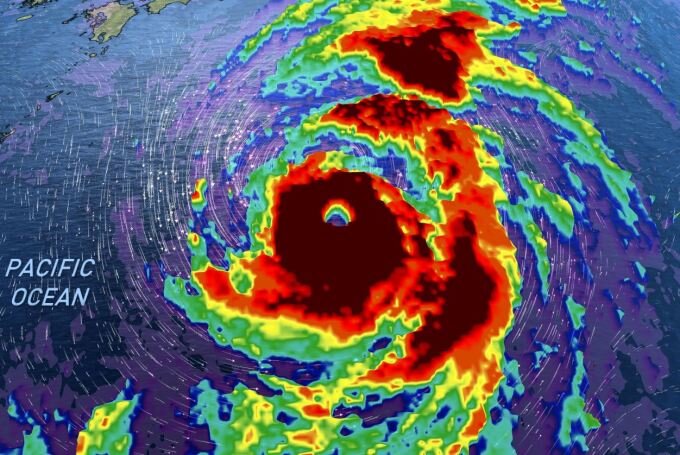
Fukushima Daiichi’s radioactive waste is on the move again as Hagibis, the worst typhoon to hit Japan since 1958, dropped 30” of rain in 24 hours and millions of people were forced to evacuate due to flooding.
12 October, 2019
Fukushima Daiichi’s radioactive waste is on the move again as Hagibis, the worst typhoon to hit Japan since 1958, dropped 30” of rain in 24 hours and millions of people were forced to evacuate due to flooding.
From the minute we learned of this Super Typhoon threat, we were gravely concerned for the people of Japan and the tons of highly radioactive debris sitting on the edge of the volatile Pacific Ocean on the former site of the six Fukushima Daiichi atomic power reactors. Three of those nuclear power plants had meltdowns in March 2011 leaving more highly toxic radioactivity than anyone ever anticipated having in one spot. Some of that poisonous debris has been raked up and confined to thousands of giant 1-ton jumbo plastic bags that were right in the path of Hagibis. As we watched the news of the approaching Pacific super typhoon (tropical cyclone) with its 150 mile per hour (mph) winds, we worried for the people of Japan who have already faced the worst nuclear disaster on the planet.
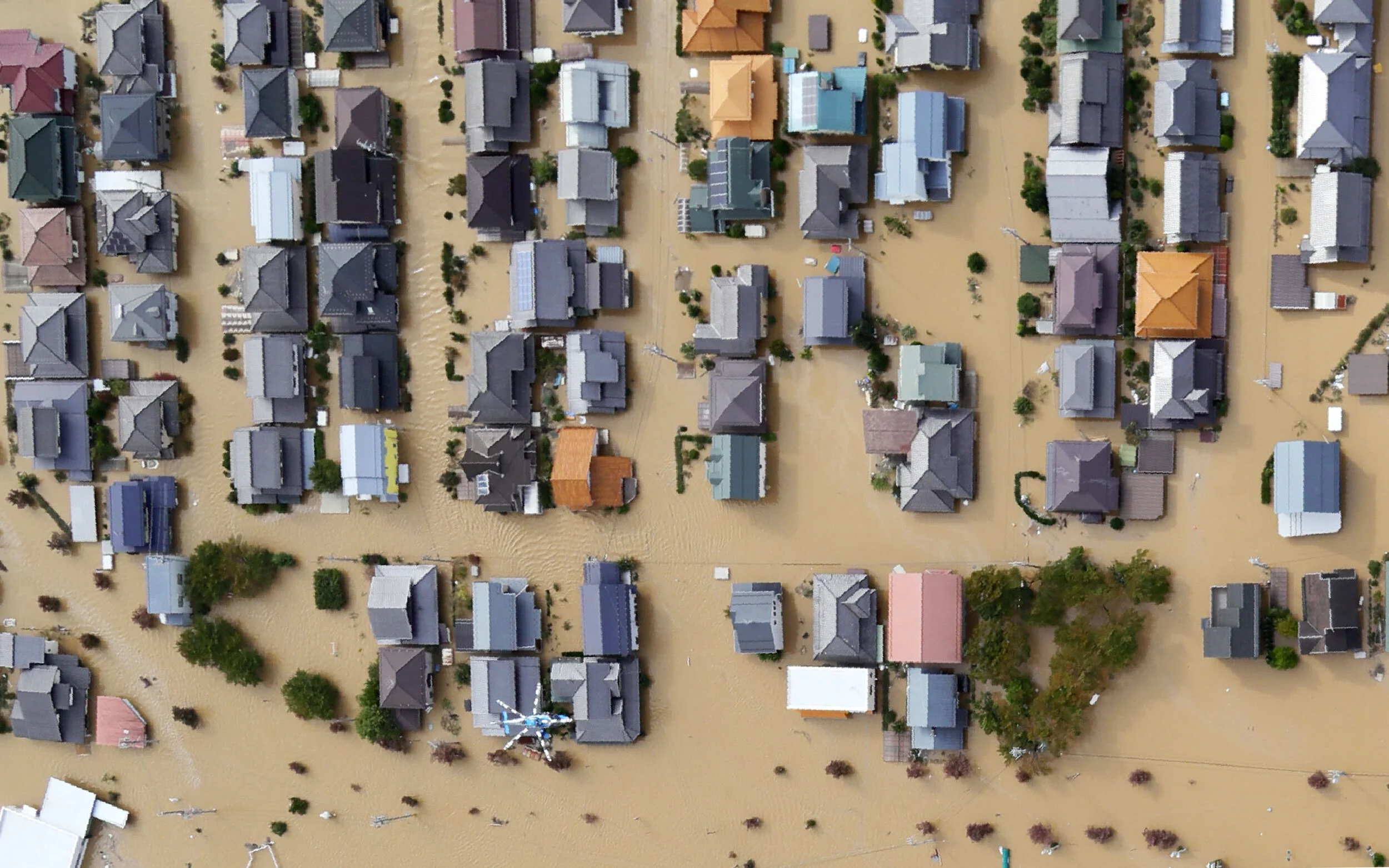
Since these events are just beginning to unfold, the amount of radioactive material released into the Pacific Ocean and surrounding environment is unknown as of Monday morning, October 14.
As reported by MSN news:
Contaminated waste from damaged nuclear plant in Fukushima swept away by Typhoon Hagibis
… the city of Tamura in Fukushima Prefecture said Sunday that an unknown number of bags containing contaminated waste from the plant were lost. Officials say heavy rains carried the bags to the nearby Furumichi River. That river connects to another river and flows into the Pacific Ocean. The city retrieved ten bags from the river but they haven't been able to confirm how many went missing out of the more than 2-thousand 6-hundred bags kept in a temporary storage.
Now, government authorities in Japan have begun the arduous task searching for an unknown number of bags of radioactive waste that were swept away by Super Typhoon Hagibis. Each bag weighs more than one ton; the plastic material of which they were fabricated was anticipated to last only 5 to 7 years before the toxic debris would require a final dumping place, a temporary storage facility, or new bags to assure no leakage of the poisonous dirt and vegetation within.

Readers of the Fairewinds twitter feed will note that on Friday we expressed real concern about the status of Fukushima Daiichi and its highly radioactive dirt and debris in the face of this climate crisis weather event.
Unfortunately, our worst fears from Friday are true. While damage reports are understandably still very incomplete, here is a video of one nuclear waste storage area that was undermined by heavy rain, spilling its radioactive contents into a river that runs into the Pacific Ocean.
Even more disturbing is this report from the New York Times:
Was the nuclear reactor at Fukushima struck?
In Fukushima Prefecture, where a huge earthquake and tsunami caused the Daiichi nuclear power plant to melt down in 2011, a burst levee flooded the banks of the Abukuma River after heavy rains.
Separately, Tokyo Electric Power said it was inspecting the nuclear plant for damage from the heavy rains.
In the city of Tamura, floodwaters displaced huge bags containing contaminated waste gathered during the cleanup of areas around the Fukushima Daiichi nuclear plant, Kyodo News reported. A river washed away an unknown number of the bags, which were in a temporary storage area, it said.
The contents of the bags, which hold up to 1.3 tons, were unclear, but they are most likely filled with irradiated topsoil and other refuse from the cleanup that followed the meltdown. Ten of the bags were recovered undamaged, Kyodo News said, and the authorities are cataloging the remaining ones to see how many were still missing.”
While a first read of this story may seem to repeat the previously quoted story of bags being washed away, what we at Fairewinds find additionally disturbing is that a levee (dam) has also burst. It is well known that enormous amounts of radioactive material from the Fukushima meltdowns have settled on the bottom of stream beds and behind levees throughout Japan. As this and other levees and dams burst, they will release even more of that radiation into swollen streams and rivers where it will settle anew in crop lands and populated areas that were previously thought to be cleaned.
Our concern is magnified because people and animals cannot see, taste, or smell this migrating radioactivity. If we look at the radioactively contaminated dirt, trees, and vegetation dispersed by this super typhoon, it will not look any different from any other river mud or debris, so people and animals will not know that it is contaminated with the most toxic substances known to humans. As our tagline says “Radiation Knows No Borders,” and unlike an oil spills, plastics, and some chemical leaks, there is no color or smell for anyone to know they should watch out!
This is a developing story, and since the meltdowns in 2011, Fairewinds has kept you informed, and we and our colleagues will continue to do so.

Monday, 1 April 2019
Revisiting Fukushima
I really miss ENENews.
Latest study shows an increase in levels of Fukushima-related contamination in Alaskan waters as Tokyo reassure the world all is well with 2020 Olympics


Photo
he10castnetwallpaper.blogspot.com
the Big Wobble,
the Big Wobble,
30
April, 2019
The
latest study shows an increase in levels of Fukushima-related
contamination off the shores of Alaska, regular readers of The Big
Wobble will know Bill Laughing-Bear has been keeping an eye on fish
in Alaskan waters and has warned us all of rising radioactive
contamination for years now.
Recently other warnings have been published as the slow drip-drip-drop of information is slowly increasing.
Recently other warnings have been published as the slow drip-drip-drop of information is slowly increasing.
In 2017, A study by the University of Hawaiʻi at Mānoa revealed almost 50% of fish consumed on the islands of Hawai’i were contaminated with caesium 134 the radioactive finger-print of Fukushima.
The report also showed that migrating organisms can transport the Fukushima-signature (caesium 134) over significant distances as they showed detectable 134Cs (6.3±1.5 Bq/kg) in Pacific bluefin tuna caught off the California coast only a year after the incident.
Another study found caesium 134 in longfin tuna (Albacore) along the western coast of the US just one year after the Fukushima disaster.
The recent findings as you might expect are being played down and the usual sound-bites are telling us "it's nothing to worry about," something the powers that be have been saying for 8 years now.
The latest study by Alaska Sea Grant agent, Gay Sheffield claimed, a slightly elevated level of radioactive contamination connected to the Fukushima nuclear disaster has been detected in the northern Bering Sea.
The level of caesium-137, a radioactive isotope, is extremely low and not considered a health concern, according to state epidemiologists.
The sampling, conducted by residents of Saint Lawrence Island, documents the Fukushima plume’s northern edge arriving in the Bering Sea for the first time and shows levels of caesium-137 higher than they were before the 2011 nuclear power plant accident in Japan.
The 2020 Tokyo Olympic Games perfect platform to reassure the world all is well at the Fukushima site despite leaking radioactive isotopes for the next 300 years


Photo aasarchitecture.com
-
Tokyo is spending at least $20 billion to organize the Olympics.
-
The 2020 Olympic Games is allowing the Japanese government to focus on the games while their unsuccessful attempt to clean-up the ongoing spread of leaking radioactivity from Fukushima approaches its first 10 years since the disaster.
-
Fukushima site will be entirely cleaned and decommissioned in less than forty years, a date that will definitely slip AFTER the 2020 Tokyo Olympics are held, and one that is scientifically impossible since some radioactive isotopes will be spread across the Fukushima site and surrounding landscape for 300 years and others for 250,000 years.
-
When the Olympic torch route and Olympic stadium samples were tested, we found samples of dirt in Fukushima’s Olympic Baseball Stadium that were highly radioactive, registering 6,000 Bq/kg of Cesium, which is 3,000 times more radioactive than dirt in the US.
-
Last year, a study by the University of Hawaiʻi at Mānoa revealed almost 50% of fish consumed on the islands of Hawai’i were contaminated with caesium 134 the radioactive finger-print of Fukushima.
Fifty-six years after having organised the Olympic Games, the Japanese capital will be hosting a Summer edition for the second time, from 24 July to 9 August 2020, more than 9 years after the March 11, 2011 earthquake, tsunami and triple meltdowns at Fukushima Daiichi.
The 2020 Olympic Games is allowing the Japanese government to focus on the games while their unsuccessful attempt to clean-up the ongoing spread of leaking radioactivity from Fukushima approaches its first 10 years since the disaster.
According to Arnie Gundersen of the Fairwinds website, the government of Japan claims that the Fukushima site will be entirely cleaned and decommissioned in less than forty years, a date that will definitely slip AFTER the 2020 Tokyo Olympics are held, and one that is scientifically impossible since some radioactive isotopes will be spread across the Fukushima site and surrounding landscape for 300 years and others for 250,000 years.
Fukushima’s radioactive reactor cores have been in direct contact with groundwater for the last eight years, and then that highly toxic radioactive water enters the Pacific Ocean.
"When the disaster struck TEPCO wanted to build an ice wall to prevent the spread of the contamination, which I knew would fail," claimed Arnie Gundersen.
"The problem with freezing the soil is that as soon as you get an earthquake, (which is a matter of when and not if), you lose power and then your ice turns to mush and you're stuck."
Gundersen, who has visited the Fukushima power plant in the past, said a better solution would be to dig a two-meter wide trench down to bedrock level and fill it with a material called zeolite: a volcanic material that comes from Mother Nature.
TEPCO’s ice wall has not eliminated radiation from spreading via groundwater. How will Fukushima’s owner TEPCO and the government of Japan successfully clean and mitigate the damage caused by the three atomic reactors that each lost their fuel to a meltdown? These problems were never anticipated in Japan where these reactors were built and operated or in the United States where the Fukushima nuclear plants were engineered and designed and the parts were manufactured.
Since the meltdowns in 2011, Fairewinds notified the world that the recovery plans for the proposed cleanup would be almost untenable, calling it a ‘long slog’.
Just this week, A report from Reuters, claimed most of that water - stored in 1,000 tanks around the plant - will need to be reprocessed before it is released into the ocean, the most likely scenario for disposal.
Reprocessing could take nearly two years and divert personnel and energy from dismantling the tsunami-wrecked reactors, a project that will take up to 40 years, (which is only an estimate as Tepco who still haven't invented the technology to fix the problem, they could still be trying to fix the problem in 2060.)
It is unclear how much that would delay decommissioning.
But any delay could be pricey; the government estimated in 2016 that the total cost of plant dismantling, decontamination of affected areas, and compensation, would amount to 21.5 trillion yen ($192.5 billion), an incredible 20 per cent of the country’s annual budget.
Tepco is already running out of space to store treated water.
And should another big quake strike, experts say tanks could crack, unleashing tainted liquid and washing highly radioactive debris into the ocean.
Last year, a study by the University of Hawaiʻi at Mānoa revealed almost 50% of fish consumed on the islands of Hawai’i were contaminated with caesium 134 the radioactive finger-print of Fukushima.
The report also showed that migrating organisms can transport the Fukushima-signature (caesium 134) over significant distances as they showed detectable 134Cs (6.3±1.5 Bq/kg) in Pacific bluefin tuna caught off the California coast only a year after the incident.
Another study found caesium 134 in longfin tuna (Albacore) along the western coast of the US just one year after the Fukushima disaster.
The 2020 Tokyo Olympics will be used as the perfect propaganda tool, as a symbol of hope and recovery, however, when the glitter and glam are peeled away, the reality is 300 tons of radioactive water is leaking daily into the Pacific and there is no known technology to fix it.
To determine whether or not Olympic athletes might be affected by fallout emanating from the disaster site, Dr Marco Kaltofen and Arnie Gundersen were sponsored by Fairewinds Energy Education to look at Olympic venues during the fall of 2017.
We took simple dirt and dust samples along the Olympic torch route as well as inside Fukushima’s Olympic stadium and as far away as Tokyo.
When the Olympic torch route and Olympic stadium samples were tested, we found samples of dirt in Fukushima’s Olympic Baseball Stadium that were highly radioactive, registering 6,000 Bq/kg of Cesium, which is 3,000 times more radioactive than dirt in the US.
We also found that simple parking lot of radiation levels were 50-times higher there than here in the US.
The bottom line is that to reduce cleanup costs while spending enormous funds on the Olympics, the government of Japan treats its 160,000 Fukushima evacuees as if they were radiation Guinea Pigs, forcing them to return to recontaminated areas to try and convince the world everything is ok, meanwhile making it difficult for serious scientists to accurately assess the effects of radiation on these evacuees.
The billions of dollars being spent on the Olympics would be much better used to help those displaced by the Fukushima Daiichi disaster.
Help these families find permanent homes and employment and new supportive communities far away from the contaminated areas that they are now forcibly being returned to.
Read, Atomic Balm Part 1: Prime Minister Abe Uses The Tokyo Olympics As Snake Oil Cure For The Fukushima Daiichi Nuclear Meltdowns
Thursday, 17 January 2019
Revisiting Fukushima
Time to revisit a slow-moving extinction event
FUKUSHIMA Update 2018 (IT'S ALL DEAD!)
WatchmanReview
We don't hear much about Fukushima, do we? There is good reason for the media to ignore it. Join me as we look at the Fukushima nuclear disaster...then to now. The truth needs told, and it's scarier than you can imagine.
Thursday, 1 November 2018
An update on Fukuhima
FUKUSHIMA
Update 2018 (IT'S ALL DEAD!)
WatchmanReview
We don't hear much about Fukushima, do we? There is good reason for the media to ignore it. Join me as we look at the Fukushima nuclear disaster...then to now. The truth needs told, and it's scarier than you can imagine.
Friday, 24 August 2018
Fuksuhma plant "looks drowned"
Fukushima Daiichi Looks Drowned
22
August, 2019
I
realize this series of posts on Fukushima Daiichi's webcam imagery
may seem tiresome to some readers. However, I've been watching the
plant for 7 years and am very aware of changes in emissions
patterns.
Today the plant looks drowned, especially as viewed through the cam focused on units 1 and 2:
Today the plant looks drowned, especially as viewed through the cam focused on units 1 and 2:
Now:

Yesterday

Yesterday I noted that the lens has some sort of "stuff" on it but that alone does not explain the higher level of emissions that are visible on both cams and during day time hours (see my post from yesterday and screenshot of cam 4).
The
weather in Fukushima presently is 82F, 42% chance of precipitation,
with 84% humidity, which are pretty typical.
Yesterday
the Wall Street Journal ran an article in their print edition titled,
"New Challenge to 'Abenomics' Rises in Japan" (8/22/2018 p.
A9) that begins with the following text:
Prime
Minister Shinzo Abe's policies have benefited the titans of business
with whom he likes to play golf but have left millions of people
behind, said a former defense minister [Shigeru Ishiba] who is
making a long-shot bid to lead the ruling party.
This
sense that many of today's leaders are detached from the needs of
"the people" because of their close alliances with "the
titans of business" is not restricted to Japan.
Our time for fixing catastrophic risks, such as those posed by Fukushima Daiichi, is limited and elapsing.
As Rome burned and as the Titanic sank, the majority of elites were distracted by their privilege until they too went down with their wrecked domains....
Our time for fixing catastrophic risks, such as those posed by Fukushima Daiichi, is limited and elapsing.
As Rome burned and as the Titanic sank, the majority of elites were distracted by their privilege until they too went down with their wrecked domains....
Sunday, 5 August 2018
Typhoon alert for Japan and Fukushima
Cyclone
alert: Typhoon Shanshan is forecast to cause waves as high as 17.34 m
or 56.9 ft near Japan on
August 9, 2018.

Strong winds and heavy rain are expected to hit the greater Tokyo area, threatening to cause winds and flooding damage, as well as power outages, mudslides and transport disruptions.
The cyclone is also
threatening to affect the Fukushima area north of Tokyo.
Created by Sam Carana for Arctic-news.blogspot.com
Created by Sam Carana for Arctic-news.blogspot.com
Thursday, 21 September 2017
4 major earthquakes in 24 hours
Japan earthquake: Magnitude 6.1 tremors hit east coast
The
earthquake struck early in the morning
20
September, 2017
An
earthquake with a magnitude of 6.1 has been detected off the coast of
Japan.
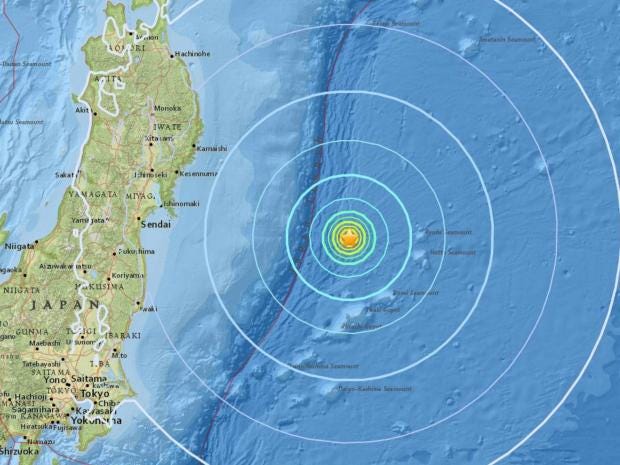
The
US Geological Survey said that the earthquake struck about 175 miles
south east of Kamaishi, and around 200 miles east of Fukushima.
It
is the third major earthquake to strike around the world in the last
24 hours - following one in Mexico that measured a magnitude of 7.1,
while another 6.1 magnitude earthquake stuck New Zealand.
The
depth of the earthquake, which struck at 2.37am local time, was
measured at 10km. Details of any damage are yet to emerge, and no
tsunami warning has yet been issued.
Only
41 people reported feeling the effects of the quake to the US
Geological Survey.
A
tsunami sparked by an earthquake in the Pacific hit the nuclear plant
in Fukushima in 2011 causing a major disaster - with the water
disabling the emergency generators required to cool the reactors at
the plant after they had automatically shut down.
An
earthquake with a magnitude of 6.1 has been detected off the coast of
Japan.
The
US Geological Survey said that the earthquake struck about 175 miles
south east of Kamaishi, and around 200 miles east of Fukushima.
It
is the third major earthquake to strike around the world in the last
24 hours - following one in Mexico that measured a magnitude of 7.1,
while another 6.1 magnitude earthquake stuck New Zealand.
The
depth of the earthquake, which struck at 2.37am local time, was
measured at 10km. Details of any damage are yet to emerge, and no
tsunami warning has yet been issued.
Only
41 people reported feeling the effects of the quake to the US
Geological Survey.
A
tsunami sparked by an earthquake in the Pacific hit the nuclear plant
in Fukushima in 2011 causing a major disaster - with the water
disabling the emergency generators required to cool the reactors at
the plant after they had automatically shut down.
New Zealand hit by strong 6.1 magnitude earthquake just hours after Mexico City disaster
Tremors
recorded 140 miles west of sub-Antarctic Auckland Island, according
to US Geological Survey
theIndependent,
19 September, 2017
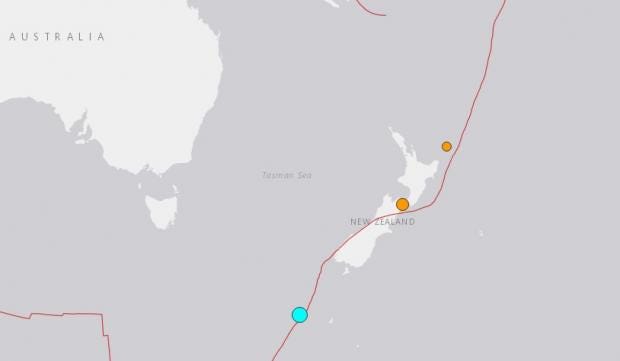
An undersea earthquake with a magnitude of 6.1 struck in the remote Southern Ocean south of New Zealand on Wednesday, the US Geological Survey (USGS) said.
The quake, at a shallow depth of 10 km (6 miles), was recorded 211 km (140 miles) west of the sub-Antarctic Auckland Island, off New Zealand's South Island, the USGS said.
There were no tsunami warnings issued immediately after the quake.
The quake was felt strongly in the capital Wellington but no damage to buildings has been reported.
Train services were briefly disrupted in the area.
Two smaller quakes — a 4.7 and 5.0 magnitude — were also recorded off the New Zealand coast.
New Zealand is prone to earthquakes as the country is situated on the boundary of two major tectonic plates, the Pacific and Australian plates.
6.4 magnitude earthquake strikes Vanuatu

Radio NZ,
21 September, 2017
A 6.4 magnitude earthquake has hit Vanuatu, 85km northwest of Isangel, the US Geological Survey says.
In a post a short time ago, the Pacific Tsunami Warning Centre said a destructive Pacific-wide tsunami was not expected.
The quake struck the centre of Erromango Island at a depth of 200km.
Erromango has a population of just under 2000 people.
Vanuatu - like other countries along the Pacific's 'Ring of Fire' - is prone to earthquakes.
Mexico suffers volcano eruption same day as deadly quake


As if Tuesday’s deadly earthquake in Mexico wasn’t enough, a volcano also erupted amid the violent shaking.
Volcano Popocatepetl — about 45 miles southeast of quake-ravaged Mexico City and about 30 miles from the temblor’s epicenter — belched ash and gas as the 7.1-magnitude temblor rocked the country’s central region.
The 17,700-foot peak also blew its top amid the Aug. 21 solar eclipse.
Tuesday’s earthquake, which claimed at least 225 lives, and the death toll continues to rise as rescuers pick through the rubble, was not responsible for the eruption, according to National Coordinator of Civil Protection, Luis Felipe Puente.
A church at the foot of the mountain collapsed during the quake and eruption, killing 15 parishioners worshipping inside.
Pope Francis said he was praying for victims in the majority-Catholic country.
“In this moment of pain, I want to express my closeness and prayers to all the beloved Mexican people,” he said.
"This is a natural disaster, we cannot avoid, we can't stop it exploding"Bali's Governor warns of imminent eruption on Gunung Agung, volcano

Bali's Governor has urged people to remain calm amid fears of a volcanic eruption on the holiday island.
Seismic activity at the Mount Agung, or Gunung Agung, volcano significantly increased on Monday, leading authorities to issue a level 3, or high, alert and evacuate areas within 7.5 kilometres.
"We see that the earthquake frequency is very high, this is worrying when it comes to eruption," said Kasbani, the head of the Centre for Volcanology and Geological Hazard Mitigation.
"The areas should be closed, no hiking because the seismic activity will trigger dangerous gas." Mount Agung is a popular hiking spot for foreign tourists.
Kasbani said no volcanic ash had been detected but smoke was rising from the crater.
The alert level would be raised to 4, or dangerous, if it became clear an eruption was imminent.
Scenes from Mexico City

- An undersea earthquake with a magnitude of 5.7 struck off the coast of Bali
- The quake was detected north-east of Kemeduran and sparked tsunami fears
- Quake was 125km north-east of Surabaya and had a depth of 588km
- It's the latest in a series of earthquakes that have rocked 'The Ring of Fire'
Subscribe to:
Posts (Atom)