Showing posts with label wildlife. Show all posts

Friday, 2 August 2019


Massive wildlife tragedy as bears and foxes flee taiga, while smaller animals suffocate in smoke
Siberian Times,

1 August, 2019


All they can do is to flee and seek food elsewhere, with local residents trying to do 

all they can to help. Pictures - here and below with a rabbit - were taken in Yakutia 

by photographer Natalia Negnyurova who said she aimed to attract attention to 

the threat that wildfires 


Wild animals are turning to humans as they escape gas-chamber-like woods, 
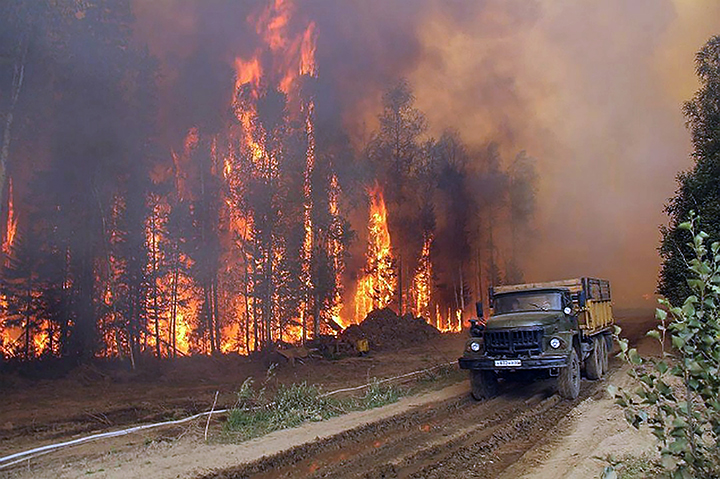
with wildfires continuing to rage across almost 3 million hectares. 

Even the Arctic is on fire, with smoke blanketing an area larger than the European 
Union, and a state of emergency declared in several large areas of Siberia. 

And a dire warning has been sounded about a major change in climate in Siberia.
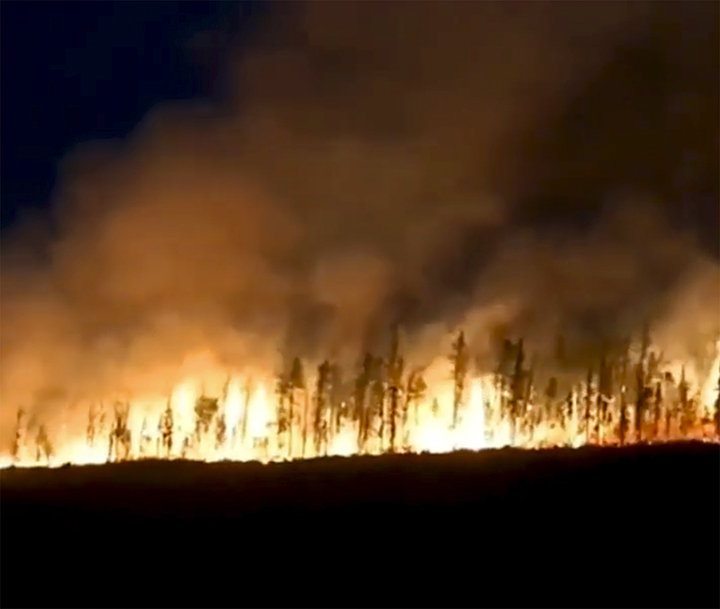
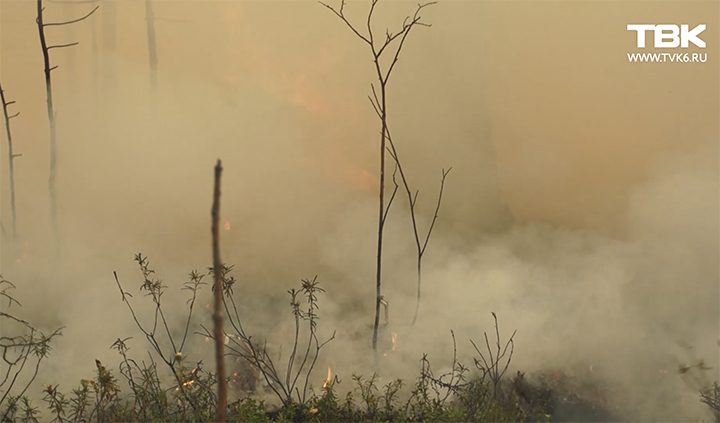
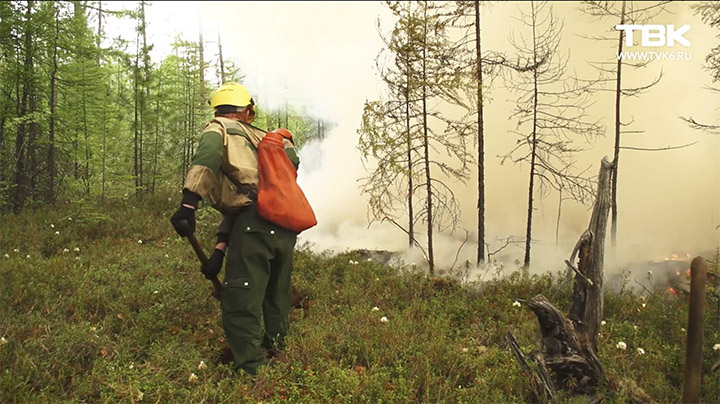
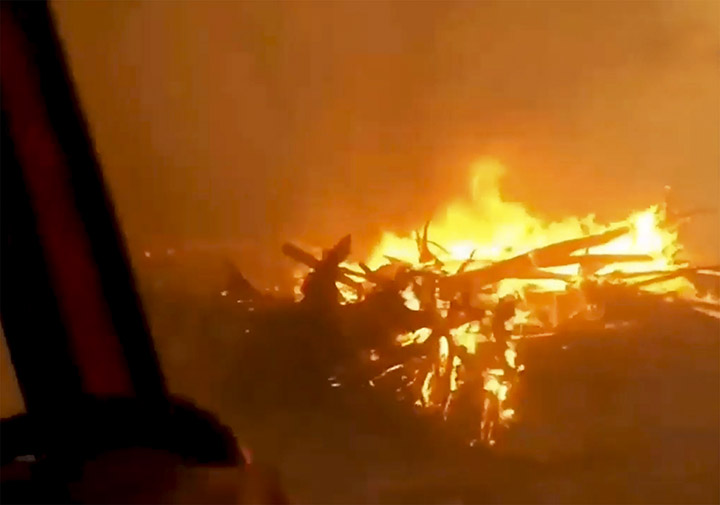
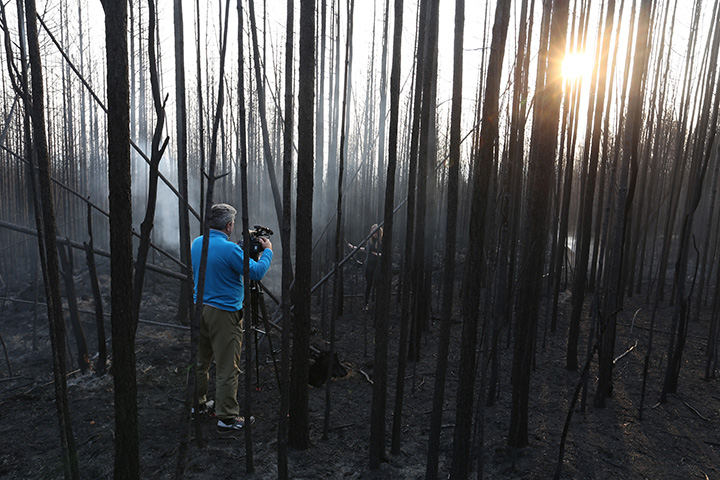
Wildfire raging in Boguchany district, Krasnoyarsk region.
Maksim Yakovenko, head of the Russian Federal Service on Hydrometeorology 
and Environmental Monitoring said: ‘The key issue was forest firefighting, so I 
would like to say that the situation will be worsening each year because (of) 
climate change.

Temperatures in some Siberian regions had already exceeded average levels by 8 to 10 degrees Centigrade, he said.

‘It means that in the future we will be facing lasting heatwaves, drying soils, and so the temperatures will be rising, not exponentially, but at a significant pace, higher than on average across the world. 

‘That is why, the climatic situation will deteriorate (in Siberia).’
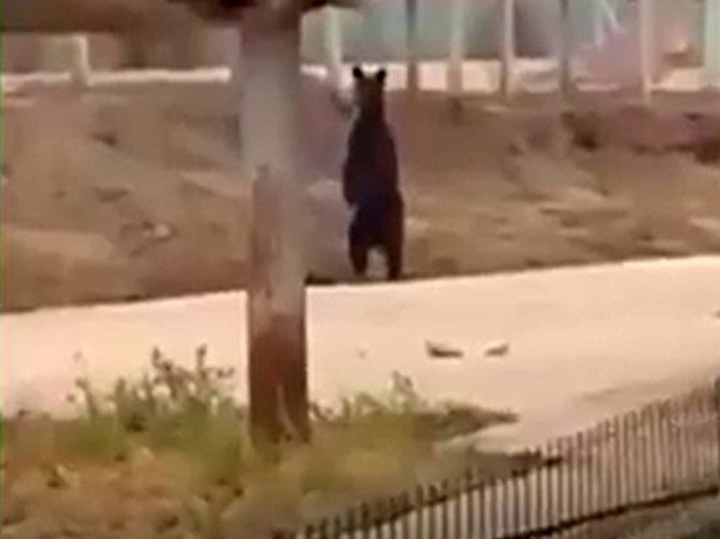
Fox

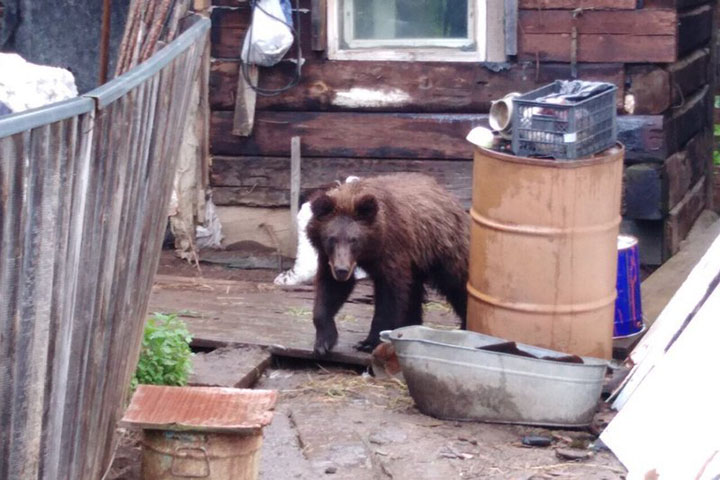
Bear cub in Ust-Kut

Bear cub in Ust-Kut

Aggressive bear in Zamzor village
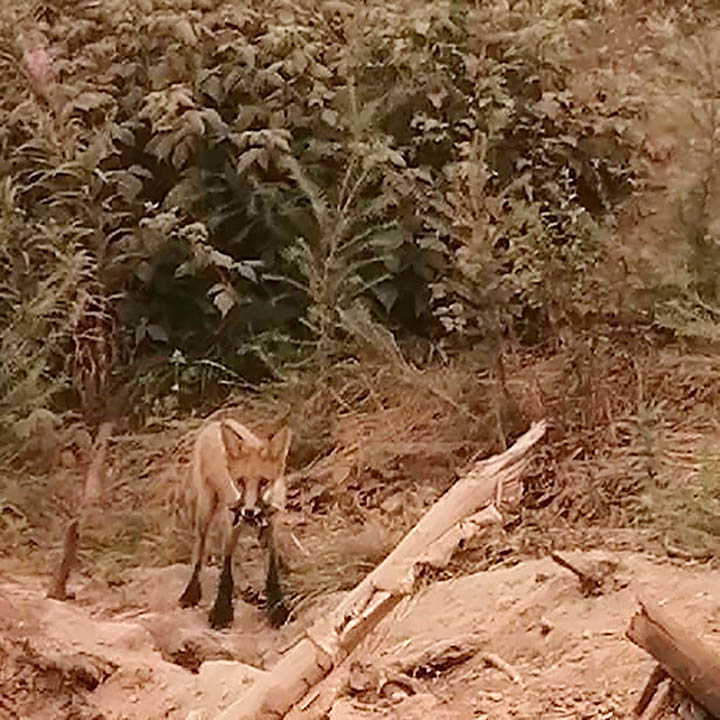
Fox and bears that came to people to seek help. But the one, who came to the village of 
Zamzor, Irkutsk region (bottom), turned to be agressive and was shot.
While President Putin ordered Ministry of Defence to get army involved in 
extinguishing wildfires, there is no system in place to help wild animals. 

All they can do is to flee and seek food elsewhere, with local residents trying to do 
all they can to help.


But they can also pose a threat to humans. 


‘A small brown bear walked out of woods last night. 


‘It was all skin and bones, with visible traces of burns and so exhausted that it 
wasn’t scared of people’, said resident of Angarsk Maya Fleishter.


‘My husband who is now in the Ust-Kut taiga gave the bear cookies and water.’ 
‘The bear growled at first, but then gulped water and took cookies, making all the watching - and who themselves spent last week suffocating from fumes - cry.’ 
Bear cub spotted neat the town of Ust-Kut.
Panicking animals are reported to be seen east and west of Lake Baikal, including 
on the territory of vast Krasnoyarsk region and in Russia’s coldest region Yakutia 
which is also on fire.  

A family of foxes, with the mother managing to take her young cubs out of the 
woods and moving them to live right next to a road, in full view of shift workers at Ichedinsky oil mine, said one report. 


‘Don’t try to stand in their way’, warned Moscow biologist Sergey Naidenko of 
Severtsov Institute of Ecology and Evolution.


‘Fleeing wild animals won’t seek conflict with humans, all you need to do if one of 
more of them got into your gated territory is to open doors and not scare them. 

‘Much as we would all like to feed the wild animals I would still warn against doing
it. 

‘You might be like once feeding an exhausted bear, but there is never a guarantee 
that it won’t attack you next second’, Naidenko said.
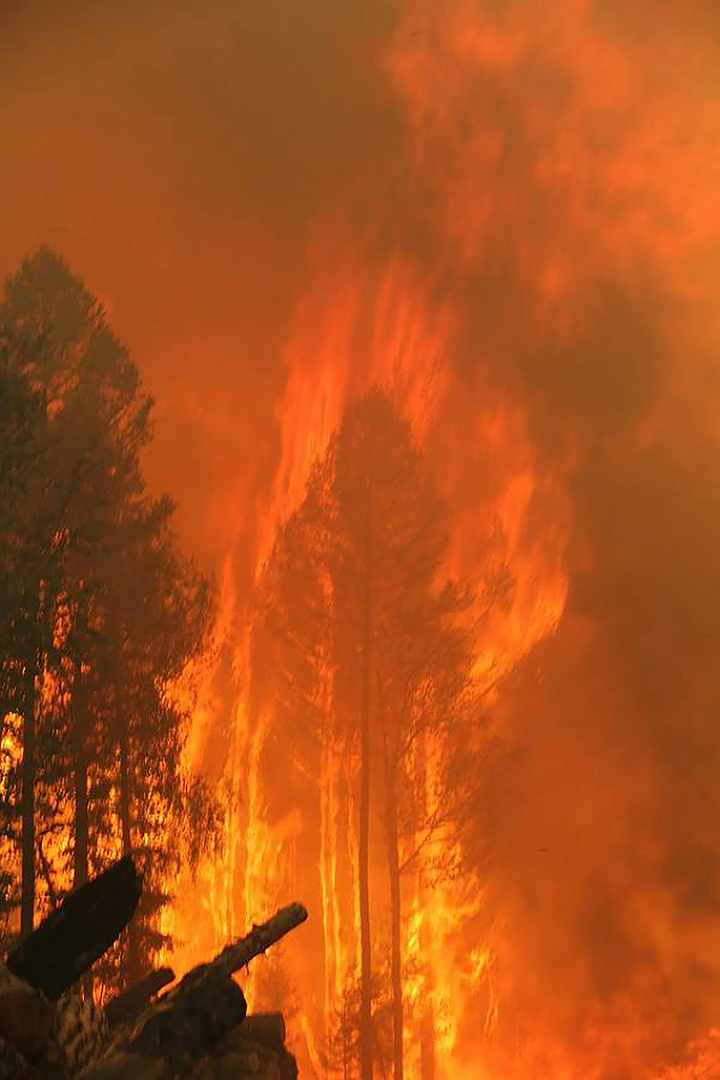
Wildfires in Krasnoyarsk region

Wildfires in Irkutsk region

Wildfires in Krasnoyarsk region

Wildfires in Krasnoyarsk region

Wildfires in Krasnoyarsk region

Wildfires in Irkutsk region

Wildfires in Krasnoyarsk region

Burned down forest
'The situation will be worsening each year because (of) climate change.'
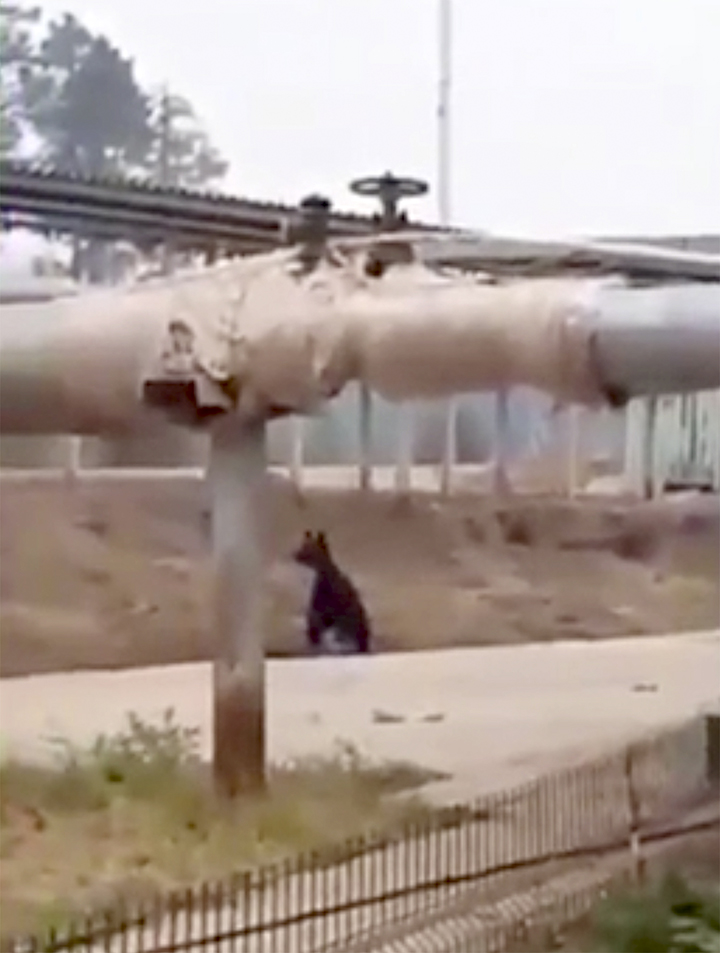
Several days ago in Yakutia young brown bears invaded one the region’s remote villages, killing several dogs chained in yards.

Most of large animals like bears, deers, boars and wolves should be able to save themselves and run away from fire, the Russian biologist believes.


Mothers with young cubs - at this time of year this would include lynxes, foxes and
hares - would be affected the most as there is little they can do to move their little 
ones.


Slow moving hedgehogs are ‘doomed’, said Naidenko, as well as most of smaller animals like mice whose strategy to avoid fire is to hide in holes. 
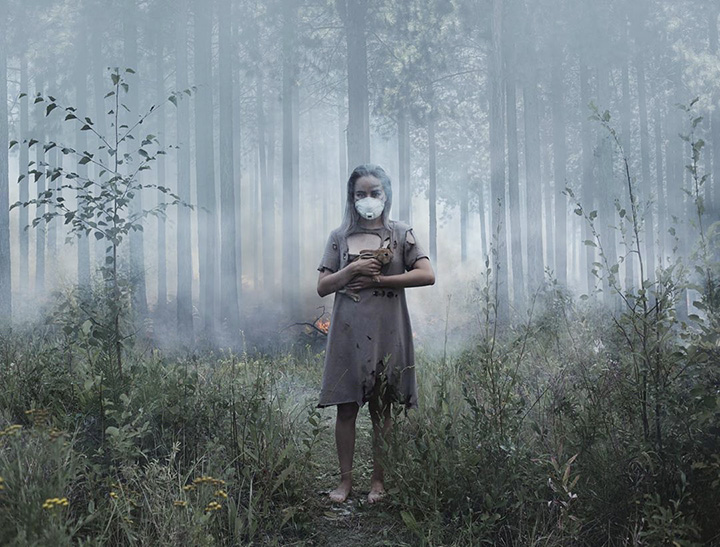
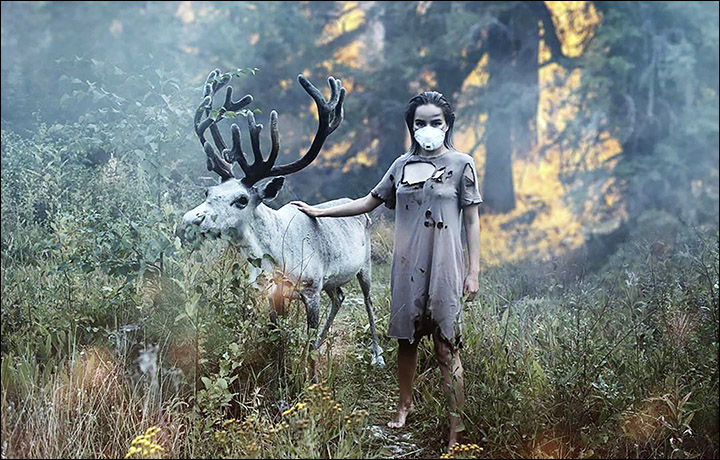
Project of Natalia Negnyurova
Yakutsk photographer Natalia Negnyurova who took this and the above picture with a 
reindeer explained: ‘After we posted the pictures, many messaged us worrying that 
'model' animals were distressed from being so close to fire. We took both pictures in the 
woods on Yakutia, with a rabbit and a reindeer. The smoke was a bit enhanced while the 
fire was added later via photo editor'.
 ‘For various types of mice everything will depend on how deep are their holes, 
and on how quick will the fire be above them. If they survive fire, next struggle 
would be to find food on burnt soil’, Naidenko explained.  


A zoo park called Lesnaya Skazka from Barnaul offered its space to save at least 
some wild animals. 


‘We can host up to 30 large animals on 7 hectares of our free land’, said zoo director Sergey Pisarev. 


‘Yesterday we had visitors from Irkutsk, who said that it was mainly elks and deers seen running out of woods.’

Wednesday, 30 January 2019

The devastation of a prolonged marine heatwave

The language is changing and a more realistic tone is being used compared with last year when a similar, but more serious, marine heatwave was simply put down to la-Nina.

Warm New Zealand seas could be 'devastating', NIWA warns


27 January, 2019


Signs of another marine heat wave should direct attention to the serious impact of warming oceans, write Craig Stevens and Ben Noll of NIWA.

As New Zealanders are enjoying their days at the beach, unusually warm ocean temperatures look to be a harbinger of another marine heatwave.
Despite the exceptional conditions during last year's heatwave in the Tasman Sea, this summer's sea surface temperatures to the north and east of New Zealand are even warmer.

The latest NIWA climate assessment shows that sea surface temperatures in coastal waters around New Zealand are well above average. Marine heatwave conditions are already occurring in parts of the Tasman Sea and the ocean around New Zealand and looking to become the new normal.

What's in a name

Currently, marine heatwaves are defined as periods that last for five or more days with temperatures warmer than the 90th percentile based on a 30-year historical baseline. Given we are likely to experience many more such events as the oceans continue to warm, it is time to understand and categorise the intensity of marine heat.

The names Hurricane Katrina, tropical cyclone Giselle (which sank the ferry Wahine 50 years ago), tropical cyclone Winston give a malevolent personality to geophysical phenomena. Importantly they get graded into categories, so we can rapidly assess their potential impact.

An Australian team has developed a classification scheme for marine heatwaves. The team used an approach similar to that used for hurricanes and cyclones – changing conditions can be slotted into to a sequence of categories. 

At the moment it looks like we are in marine heat wave category one conditions, but potentially entering category two if it continues to warm

Turning the heat up on marine life

A marine heatwave is potentially devastating for marine ecosystems. It is also an indication that the hidden buffer in the climate system – the fact that the oceans have absorbed 93% of the excess heat – is starting to change. Individual warm seasons have always occurred, but in future there will be more of them and they will keep getting warmer.

The Great Barrier Reef has already been hit hard by a succession of marine heatwave events, bleaching the iconic corals and changing the structure of the ecosystem it supports.
Further south, off Tasmania's east coast, a number of species that normally occur in tropical waters have extended their range further south. A number of fish species, lobster and octopus species have also taken up residence along the Tasmanian coast, displacing some of the species that call this coast home. Mobile species can escape the warmer temperatures, but sedentary plants and animals are hardest hit.

In New Zealand, aquaculture industries will find it more difficult to grow fish or mussels as coastal waters continue to warm. If the same trends seen off Tasmania occur here, areas with substantial kelp canopies will struggle and start to be replaced by species normally seen further north. But the impacts will likely be very variable because the warming will be heavily influenced by wind and ocean currents and different locations will feel changes to a greater or lesser extent.


Predicting the seasons

As important as it is to identify a marine heatwave at the time, reliable predictions of developing conditions would help fishers, aquaculture companies and local authorities – and in fact anyone living and working around the ocean.
Seasonal forecasting a few months ahead is difficult. It falls between weather and climate predictions. In a collaboration between the National Institute of Water and Atmospheric Research and the Australian Bureau of Meteorology, we are examining how well long-term forecasts of ocean conditions around New Zealand stack up. Early forecasts suggested this summer would not be as warm as last year. But it now looks like this summer will again be very warm in the ocean.

One of the important points to keep in mind is that when we are at the beach, we are sampling only the surface temperature. The same is true of satellites – they monitor less than the top millimetre of the ocean.
Sea surface temperatures are several degrees above normal at the moment. But in deeper waters, because of the high heat content of water, even a tenth of a degree is significant. Temperature in the deeper ocean is monitored by a network of moored buoys on and off the continental shelf along the Australian coast. New Zealand has almost nothing that would be comparable.

Measuring temperature in real time

What we can look to, in the absence of moored buoys, is a fleet of ocean robots that monitor temperature in real time. Argo floats drift with ocean currents, sink to two kilometres every ten days and then collect data as they return to the surface.

These data allowed us to identify that the 2017/18 marine heatwave around New Zealand remained shallow. Most of the warmer water was in the upper 30 metres. Looking at the present summer conditions, one Argo robot off New Zealand’s west coast shows it is almost four degrees above normal in the upper 40 metres of the ocean. On the east coast, near the Chatham Islands, another float shows warmed layers to 20 metres deep. To the south, the warming goes deeper, down to almost 80 metres.
Our work using the Australian Bureau of Meteorology forecast model highlights how variable the ocean around New Zealand is. Different issues emerge in different regions, even if they are geographically close.

The research on categories of marine heatwaves shows we will have to keep shifting what we regard as a heat wave as the ocean continues to warm. None of this should come as a surprise. We have known for some time that the world’s oceans are storing most of the additional heat and the impacts of a warming ocean will be serious.

The Conversation.
Craig Stevens is Associate Professor in Ocean Physics, National Institute of Water and Atmospheric Research and Ben Noll is Meteorologist/forecaster, National Institute of Water and Atmospheric Research

This article is republished from The Conversation under a Creative Commons license. Read the original article.


Saturday, 21 May 2016

Bear habitat destroyed in Alberta by fires

The only material from Alberta, Canada that I could find on You Tube relating to bears was killing them.

Hungry black bears descend on Fort McMurray


CTV,
20 May, 2016


With their habitat destroyed by northern Alberta’s raging wildfire, hungry black bears are now moving into the evacuated city of Fort McMurray to scavenge for food.

“What we’ve got is tons of spoiling food inside houses in the heart of prime black bear range,” University of Alberta conservation biologist Lee Foote told CTV News on Friday. “You couldn’t create a better potential to attract black bears from a large area... and there are a lot of black bears in the area.”

Although the number of bears that have entered the city remains unknown, YouTube footage has surfaced of the animals scavenging through burning debris. Residents are expected to begin returning to the city on June 1.

“It hasn’t played out to be a big problem yet because we don’t have a lot of people in Fort McMurray,” Foote says. “But when they return and have their hands full with cleanup and fixing up, they need to keep watching over their shoulder.”

Black bears, Foote says, are typically non-aggressive, with attacks on humans being extremely rare. But that doesn’t mean that Fort Mac residents should be blasé about their furry new neighbours. If encountering a bear, Foote says that you should make sure not to corner the animal, get between it and food or startle a mother with cubs. Rotten food, he adds, should only be disposed of in properly-sealed metal bins. Local authorities should always be called in for help.

“The Fort McMurray folks are really quite bear aware,” Foote says. “But this is going to be a different type of emboldened, entitled bear -- if you will. They have had free reign of the place for a while, it’s prime fattening-up season just out of hibernation, and it could be a problem.”

Tuesday, 1 December 2015

The Sound of Silence


Bernie Krause is an audio ecologist. This year he noticed a precipitous drop in the sounds of one his favorite field recording sites, a change he attributes in large part to California's drought.


'A great silence is spreading over the natural world'


Bernie Krause has spent 40 years recording nature's sounds. But such is the rate of species and habitat loss that his tapes may become our only record of the original diversity of life


The Guardian,
3 September, 2015
"The birds are silent in the woods.
Just wait: Soon enough
You will be quiet too"
- Robert Hass
When musician and naturalist Bernie Krause drops his microphones into the pristine coral reef waters of Fiji, he picks up a raucous mix of sighs, 
beats,glissandos, cries, groans, tones, grunts, beats and click.

The water pulsates with the sound of creatures vying for acoustic bandwidth. He hears crustaceans, parrot fish, anemones, wrasses, sharks, shrimps, puffers and surgeonfish. Some gnash their teeth, others use their bladders or tails to make sound. Sea anemones grunt and belch. Every creature on the reef makes its own sound.

But half a mile away, where the same reef is badly damaged, he can only pick up the sound of waves and a few snapping shrimp. It is, he says, the desolate sound of extinction.

Krause, whose electronic music with Paul Beaver was used on classic films like Rosemary's Baby and Apocalypse Now, and who worked regularly with Bob Dylan, George Harrison and The Byrds, has spent 40 years recording over 15,000 species, collecting 4,500 hours of sound from many of the world's pristine habitats.

But such is the rate of species extinction and the deterioration of pristine habitat that he estimates half these recordings are now archives, impossible to repeat because the habitats no longer exist or because they have been so compromised by human noise. His tapes are possibly the only record of the original diversity of life in these place.

"A great silence is spreading over the natural world even as the sound of man is becoming deafening," he writes in a new book, The Great Animal Orchestra. "Little by little the vast orchestra of life, the chorus of the natural world, is in the process of being quietened. There has been a massive decrease in the density and diversity of key vocal creatures, both large and small. The sense of desolation extends beyond mere silence.

"If you listen to a damaged soundscape … the community [of life] has been altered, and organisms have been destroyed, lost their habitat or been left to re-establish their places in the spectrum. As a result, some voices are gone entirely, while others aggressively compete to establish a new place in the increasingly disjointed chorus."

Hawaii, he says, is the extinction capital of the world. "In a couple of centuries since the islands were populated by Europeans, half the 140 bird species have disappeared. In Madagascar, 15 species of lemur, an elephant bird, a pygmy hippo and an estimated half of all the animals have gone extinct."

Even partially disturbed habitats lose much of their life for many years, says Krause. Recordings of a meadow in the Sierra Nevada mountains east of San Francisco before the surrounding forest was selectively logged in the 1980s sounds very different to when Krause returned a year later.

"The overall richness of sound was gone, as was the thriving density and diversity of birds. The only prominent sounds were the stream and the hammering of a Williamson's sapsucker. Over the 20 years I have returned a dozen times to the same spot at the same time of year but the bio-acoustic vitality I had captured before logging has not yet returned."