Showing posts with label bailout. Show all posts

Sunday, 19 July 2015

Varoufakis Slams Bailout #3

The BBC, the scumbags that they are,  and source of this latest interview with Varoufakis in their report on this provide only a 44 second segment. 

Any news outlet worth its name would have published the entire internview


Varoufakis Slams Bailout #3 As "Greatest Macroeconomic Disaster In History" While Tsipras "Doesn't Eat Or Sleep"
 Yanis Varoufakis © Jean-Paul Pelissier

19 July, 2015

In an rare convergence of Greek and German viewpoints, overnight former Greek finance minister Yanis Varoufakis told the BBC that "economic reforms imposed on his country by creditors are "going to fail", ahead of talks on a huge bailout. At the same time, Germany's most noted Eurosceptic, Hans-Werner Sinn, in an interview with the newspaper "Passauer Neue Presse" also earlier today warned that any new aid would be "totally worthless" and "would never come back."

In what was practically a race who can find harsher terms to describe the Greek bailout, Varoufakis said that Greece was subject to a programme that will "go down in history as the greatest disaster of macroeconomic management ever".

As reported yesterday, the German parliament approved the opening of negotiations of Greece's third €86 billion bailout when it rushed to vote through a bridge loan to Greece so the insolvent nation had some funds to repay the ECB's Monday debt maturity, as well as repay the roughly €2 billion for Greece is in default to the IMF. Of note was the jump in German MPs who voted "no" to 119 from just 32 in the February vote to extend the Greek bailout.

In a damning assessment, Varoufakis told the BBC's Mark Lobel: "This programme is going to fail whoever undertakes its implementation."

Asked how long that would take, he replied: "It has failed already."

He also said Greek Prime Minister Alexis Tsipras, who has admitted that he does not believe in the bailout, had little option but to sign. "We were given a choice between being executed and capitulating. And he decided that capitulation was the ultimate strategy."

Which also happens to be Varoufakis' biggest failure: his strategy was accurate and his math was correct that to Europe a Grexit would be far more expensive than keeping Greece in the Euro, however Europe was just as accurate in realizing Greece has no Plan B for its banking system as Greece had never prepared either a plan for a parallel currency nor how to obtain Debtor in Possession funding, which is what a bankrupt Greece would need - ostensibly either from China or Russia - to fund it in the interim period in which it was ending its tumultuous relationship with Europe.

Understandably Greece did not want to push the Grexit line too hard for obvious reasons - it was all part of the "blame game" - however now that Germany itself has opened a Pandora's box it can't close ever again when it brought up the possibility of a temporary Grexit, Greece should most certainly prepare for the worst case the next time it has to rerun the entire bailout tragedy in 6-9 months, or perhaps sooner.

However, none of this will be Varoufakis' problem any more - instead we hope his successor learns from Yanis' mistakes. And speaking of his successors, late yesterday Tsipras has announced a cabinet reshuffle, sacking several ministers who voted against the reforms in parliament this week. But he opted not to bring in technocrats or opposition politicians as replacements.

As a result, it now seems that Tsipras will preside over ministers who, like himself, harbor serious doubts about the reform program. Which is why we truly hope they are prepared to implement the missing Plan B when the time comes next.
Finally, in what is perhaps the best anecdote about Greece right now, AFP reported that "embattled Greek Prime Minister Alexis Tsipras eats and sleeps poorly and rarely manages to see his family, his mother told a tabloid on Saturday."

"Alexis lately does not eat, does not sleep, but he has no choice -- he has a debt to the people who put their faith in him," Aristi Tsipras, 73, told Parapolitika weekly.

"I rarely see him any more. He goes from the airport straight to parliament. He has no time to see his children, how can he see me?" Aristi Tsipras said.
"When we speak, I tell him to do the best for the country and take care of himself. He tells me not to worry, and that everything will be fine," she said.

Unfortunately it won't be, however that will only be revealed when not only the PM can "no longer eat or sleep", but the entire country of Greece, too.


Greatest disaster’: Varoufakis says new Greek bailout doomed


RT,
18 July, 2015


Former Greek Finance Minister Yanis Varoufakis has warned that the economic reforms from Greece’s debt holders are doomed to fail. The assessment comes as PM Alexis Tsipras has reshuffled his cabinet in efforts to secure a third bailout package.

The EU is preparing to start talks with Athens on a third bailout which could reach €86 billion ($93 billion), but the reform program laid down by Brussels as a precondition for the bailout will "go down in history as the greatest disaster of macroeconomic management ever," Varoufakis told BBC.

This programme is going to fail whoever undertakes its implementation,” he said. Asked when will it fail, he replied, It has failed already.”

Varoufakis stressed that in given conditions Prime Minister Alexis Tsipras, who himself does not believe in the bailout, had little option but to sign the agreement. 

We were given a choice between being executed and capitulating. And he decided that capitulation was the ultimate strategy,” Varoufakis said.

On Saturday, new cabinet ministers were sworn in after Tsipras replaced hardliners in his government, following the agreement with the EU creditors.
Energy Minister Panagiotis Lafazanis and his two deputies were sacked. Lafazanis has been replaced by Panos Skourletis, who initially appointed the Minister of Labour and Social Solidarity in January.

The reshuffle marked “an adjustment by the government to a new reality,” said Skourletis.

Germany’s parliament approved the beginning of the talks on a third Greek bailout on Friday. In order to secure it, Greece will have to implement further unpopular austerity measures.

Our aim is to negotiate hard for the terms of the agreement, not just to seal it, but on how it will be implemented. There are many vague terms in the text," 
George Katrougalos, who was appointed Labor Minister in the latest reshuffle, told RT


Katrougalos said that the end of austerity is the only realistic promise,” because austerity feeds recession.”

© Alkis Konstantinidis
© Alkis Konstantinidis, Reuters

It is the balance of power at the European level that forces us to accept the agreement, because an alternative would be a continuation of the closure of the banks and practically the sudden death of our economy,” said Katrougalos, adding that the Greek government is not happy with the agreement that has been enforced upon the country.

Katrougalos said that by agreeing with Europe, the Greek government was not backtracking from its promises to the people and that the public referendum that rejected the EU’s tough conditions was necessary to show the European elites that there are alternatives to their economic policies.

Another aim of the referendum was to “protect our government from a soft coup d’etat that aimed to overthrow us,”Katrougalos told RT.

We hope that in the future we can have a better balance of power [within Europe] to shift the existing one in the favor of the progressive, social Europe,” Katrougalos concluded.

The EU-Greece talks are not going to be easy and will take up to four weeks, warned the head of the eurogroup of finance ministers, Jeroen Dijsselbloem.


Thursday, 16 July 2015

A 'yes' vote in Greek parliament

Obviously, there is much more on this to come


BREAKING: A Resounding 'Nai': Greek Parliament Votes to Accept EU Bailout Plan

Despite mass anti-austerity protests earlier on Wednesday, the Greek parliament has approved the proposals from eurozone members as the first step to open negotiations for a bailout


15 July, 2015


With of a 228 in favor, 64 against, and 6 neglecting to vote, the Greek parliament has approved the bailout proposal.

Former finance minister Yanis Varoufakis voted to reject the deal. Given that Varoufakis had earlier compared the package to the Treaty of Versaille, his decision was not surprising, but could potentially lead to his ouster as a Syriza MP. House Speaker Zoe Konstantopoulou also rejeted the proposal, after earlier warning that it could lead to social genocide.

Riot police stand amongst the flames from exploded petrol bombs thrown by a small group of anti-austerity demonstrators in front of parliament in Athens, Greece July 15, 2015

While Greek Prime Minister Alexis Tspiras called the bailout package "irrational," he had nevertheless actively lobbied parliament to approve the proposal to prevent Greece's exit from the eurozone.

"The Greek people are fully conscious and can understand the difference between those who fight in an unfair battle and those who just hand in their weapons," Tsipras told parliament just before the vote.

As a part of the 86 billion euro bailout, the Greek government will have to enact strict austerity measures. These include a top VAT rate of 23% to take in processed foods, 13% rate to cover fresh food, energy bills, and water, and 6% rate for medicines and books. It will also raise the corporate tax rate from 26% to 29% and install a luxury tax on cars, boats, and swimming pools. Early retirement for Greek citizens will also be affected.


Expressing their opposition to the austerity measures, demonstrators gathered throughout Athens earlier on Wednesday, leading to clashes between protesters and riot police. Law enforcement deployed tear gas and pepper spray, while protesters threw Molotov cocktails and rocks.

Over half of the members of the central committee of the ruling Syriza party signed a statement condemning the bailout, saying it amounted to a coup against Greece by European leaders.

"It may pass through parliament," Greek energy minister Panagiotis Lafazanis said in an earlier statement. "But the people will never accept it and they will be unified in their fight against it."

Agreed to by eurozone leaders in Brussels on Monday, the proposal was rejected by the International Monetary Fund, who considered the austerity measures did not go far enough.

DETAILS TO FOLLOW


As the Greek parliament considers the controversial EU bailout plan, violent protests have erupted in the capital.

Greek MPs are expected to approve an 86 billion euro bailout deal which would come with an increased retirement age for Greek citizens and increased tax rates.

Nearly 12,500 people are believed to be participating in the anti-austerity rally in Syntagma Square. Journalists on the scene reported pepper spray and tear gas being released by riot police against


Sunday, 29 March 2015

Greece: If talks with EU fail....

Athens warns of bad consequences if talks with EU fail


Greece has submitted its economic reform proposals to the European Commission. The leftist government in Athens has however threatened to stop meeting debt obligations if negotiations fail.

Greece’s international economic affairs minister has said Athens wants an agreement with the EU but it’s prepared to go its own way in the event of a QUOTE bad scenario. 

The government, dominated by the anti-austerity Syriza party, has assembled a package of 18 reforms in the hope of unlocking 10-point-7 billion dollars in financial assistance provided by international creditors. Greece will run out of money on April 20 unless it can secure emergency funding from the lenders. 

There are concerns in Greece that the government’s proposed measures may not be sufficient to convince key creditors to release bailout funding.


Greek Energy Minister Slams "Unscrupulous, Imperialist" Germany, Will Seek "Bold Alternatives" In Russia


28 March, 2015


With fresh rumors springing late on Friday that "this" just may be the weekend Greece - with close to no funds left in either the financial or government sector - imposes capital controls, a precursor to a full-fledged Grexit, the situation in Athens is on a knife's edge. Yesterday is also when the Syriza government submitted its list of 18 proposed reforms to the Troika: a reform package which the Guardian dubs "reform-for-cash", as Greece hopes the roughly €3 billion in revenue generated from the reforms will unlock €7.2 billion in financial assistance.


Rather, make that promises of reforms to generate €3 billion in revenue. Because the question, and problem for Athens, is which comes first: does Greece implement the reforms and generate the revenue or does Europe disburse the funds. It is a problem because the reforms will be extremely unpopular if and when they pass. According to Bloomberg, which sources Greek Skai TV, among the proposed reforms is an increase on the duty paid on cigarettes and alcohol. 

Other proposals include:

  • Lift sales tax on certain items while keeping a low rate for food products

  • Combat tax evasion including fines for non-payment of tax or failing to declare income; combat black market trade of fuel

  • Intensive controls of the names in Lagarde-List (more than 2,000 name suspect of tax evasion) and money transfers abroad.

  • Online system connecting companies to tax offices, and electronic system for the payment of Value Added Tax

  • Freeze early pensions, consolidate social security funds, create a national wealth und

  • Continue with certain privatizations

  • Encourage issuance of retail sales receipts including linking collection to participation in a lottery

  • Overhaul tax process for games of chance, real estate and heating oil

  • Issue licenses for media companies
The 18 proposals, three times as many as put forward and dismissed by prime minister Alexis Tsipras’s government last month, anticipate GDP growth of 1.4% this year: about 1% less than where the most optimistic analysts see the US growing. The package also endorsed finance minister Yanis Varoufakis’s argument that the primary surplus demanded of Greece would have to be reduced. As such, the primary surplus was estimated to hit 1.5% in 2015 – half that in the country’s existing bailout programme. Unfortunately for Greece, considering the collapse in tax collections in recent months, Athens can kiss any hope of a positive primary surplus goodbye.

Since all of these proposals, if implemented, will lead to increased tax revenues and thus a decrease in the already low quality of Greek life, whether for everyone or just the 1%, they will be met with stern opposition, especially since they will be seen as going against Syriza's original radical pre-electoral agenda. Which is also why as the Guardian reported, "the country’s international economic affairs minister, Euclid Tsakalotos, raised the stakes, saying while Greece wanted an agreement it was prepared to go its own way “in the event of a bad scenario... We are working in the spirit of compromise, we want a solution, but if things don’t go well you have to bear the bad scenario in mind as well. That is the nature of negotiations.”

Once again Greece is unable to determine when it has lost the negotiations, and while giving with one hand, it tries to take with the other. And this is the biggest problem, because for Europe while the amount of the money transfer is modest, what it wants more than anything is to see the "radical" spirit of the Syriza government crushed.The problem for Greece is that this is not happening, especially with statements such as this:

The government is not going to continue servicing public debt with its own funds if lenders do not immediately proceed with the disbursement of funds which have been put on hold since 2014," said government aides. “The country has not taken receipt of an aid instalment from the EU or IMF since August 2014 even though it has habitually fulfilled its obligations.”

Then there was the prime minister himself, who said in an interview with Real News that Greece won’t agree to any wage or pension cuts nor allow mass redundancies. Again: the issue is that the Troika, or whatever it is called, wants precisely this: they want real reforms, by which they mean that Greece finally has to implement some/any of the long ago promised and never delivered redundancies in the government sector.

What is surprising is just how naive Tsipras now appears with his continued populist rhetoric even after it has been revealed that he has no more leverage, with the threat of Grexit taken off the table. Some of his other soundbites:
  • An agreement in June with Greece’s creditors will only concern changing debt repayment terms and debt relief measures

  • Democratic Europe won’t choose a rupture regarding Greece

  • One of government's priorities is beginning and completing tender for broadcasting licenses

  • Won’t tolerate officials who put personal political interests above those of govt and Syriza party
And then there is the Greek energy minister, Panagiotis Lafazanis, who said in an interview with Kefalaio newspaper that the "only way for Greece to exit its crisis is through tough confrontation, if not conflict, with "German Europe."

Making sure the ongoing negotiations between (almost completely broke) Greece and the Troika take 1.4% steps forward and ten steps back, the energy minister said the Greek reform list can’t be opposed to Syriza’s radical program or be above popular will, sovereignty. As noted above, this is precisely what it would take for the Troika to release the funds.

Reuters confirmed as much earlier when it eported that as Athens battles to have a list of reforms accepted by its EU partners in order to secure much-needed funds to stave off bankruptcy, Lafazanis criticized Berlin and said the government must not roll back on its commitments.

"No list should go over the will and sovereignty of the people," he told Kefalaio newspaper in an interview on Saturday."The Germanized European Union is literally choking our country and tightening week by week the noose around the economy," he said.

Virtually assuring Germany's fure, Lafazanis said that "if the government suspends pre-election promises, Greece will be driven over cliff’s edge" adding that "privatizations, especially in strategic areas, can’t and won’t happen." Alas, the Troika said it will, and the Troika writes the checks, so...

The punchline: "Greece is at more than breaking point; urgently needs big, bold alternatives to “German, incumbent Europe"and that "creditors behaving as unscrupulous imperialists towards distant colony, threatening submission or economic suffocation."

More importantly, Lafazanis has some ideas where to find said "big, bold alternatives." In Moscow.

Greece's Energy Minister Panagiotis Lafazanis will meet his Russian counterpart and the CEO of energy giant Gazprom in Moscow on Monday, as he hit out at the EU and Germany for tightening a 'noose' around the Greek economy.
Outspoken Lafazanis, on the left wing of Greece's co-ruling Syriza party, will meet Russian Energy Minister Alexander Novak and Gazprom Chief Executive Alexei Miller as well as other senior government officials, the energy ministry said on Saturday.
Lafazanis' visit will come just over a week before Tsipras is due to meet Russian President Vladimir Putin in Moscow although the Greek government has stressed it is not seeking funding from the Kremlin.


It is not seeking funding form the Kremlin yet. Because once the first week of April comes and goes and Greece officially runs out of money, it will go to anyone who can provide it with the funds needed to avoid civil war, even if that means switching its allegiance from Europe to the Eurasian Economic Union, something Russia is eagerly looking forward to, and something we predicted would be the endgame months ago.


After weeks of ugly threats and stalling tactics from both sides, Athens is approaching another crunch week in deciding its economic fate

As the EU, ECB and IMF pore over Athens’s latest attempt to unlock financial aid, minister says country is prepared to go it alone ‘if things do not go well’


Is Brussels Warming to Tsipras' Proposals?
Greece's Prime Minister seems to be playing all the cards right to influence the country's best case scenario for financial bailout. Newly submitted documents seem to be getting a warmer reception by Brussels. Just how sweet the coming Russia-Greece potential may be, remains to be seen

Phil Butler


Alexis Tsipras - Courtesy Blömke/Kosinsky/Tschöpe

28 5arch, 2014

In the run-up to meetings between Greek Prime Minister Alexis Tsipras and Russian President Vladimir Putin early next month, EU and IMF leadership seem to be softening their position where much needed Greece funds are concerned. Scheduled to begin examining Greece's revamped reforms pledges, the so-called Brussels Group is today examining the documents submitted. In the larger frame, it still remains to be seen what the Kremlin play will be on Greek geo-strategy and economics.

Last week, Greece sent the country's creditors a long list of reforms along with a pledge to create a budget surplus this year. The "Brussels Group" nod will be needed in order for Tsipras to get unfrozen much needed funds, and to prevent default. The rub for Greece right now is to create the economic atmosphere needed to satisfy Brussels, while at the same time living up to anti-austerity pledges to the Greek people. It is not clear at this time whether or not Tsipras has hedged on the promise, in order to glean the funding to stay solvent.

The mood in between Greece and its lenders improved rather dramatically on the news Tsipras had accelerated a meetup with Putin in Moscow, the obvious fears being a Greco-Russian alliance of one sort or another. France, for one, is now trying to play mediator in between Tsipras' group and the hard line coming from Merkel's (above) German bankers. On this Merkel's opposition, Thomas Oppermann, the Social Democrat Bundestag floor leader, declared a coming catastrophe should Greece default. He told Bloomberg and other media:

A Greek exit from the euro zone would be a political disaster, not only for the euro zone but for the whole idea of Europe.”

Evidence of Germany’s and Greece's "disconnect" surfaced in questioned news from the former's Bild newspaper, a report claiming controversial Greek finance minister Yanis Varoufakis was considering resigning. As for the minister's take, since the latest negotiations, he's kept a fairly low profile. This could be a sign Greece prefers an EU deal, rather than some more extreme move toward aligning with Putin and Russia. The famous or infamous (depending on to whom you speak) Tyler Durden, over at Zero Hedge, encapsulates the middle view with:

"As Syriza faces the unenviable proposition of either completely giving up on its campaign promises or plunging the Greek economy and banking system into a drachma death spiral, it appears as though Athens is playing the one card it has left, which is threatening to effectively surrender itself to the Kremlin."

Other subtle indicators on the state of Greece finances are reflected in the county having sold off a good number of commodities, including the Bank of Greece unloading 5,849 Sovereign coins back in January. With Russia investing in gold more than most any other nation, it's better than speculation to wonder at a direct loan from Moscow with just such collateral in mind. Putin has been hedging toward putting Russia on the gold standard, a move some experts say would be at least a pint sized stake through the heart of America's Federal Reserve. Russia currently maintains over 1200 tons of the precious metal in reserve.

Meanwhile Fitch cut Greece's credit rating Friday, out of fears the country would go belly up on indebtedness, according to EUBusiness. New from Gold Seek frames what seems a "do or die" negotiation showdown this weekend. Total bank deposits in Greece fell to €152.4 billion euros in February, down from €160.3 billion in January, or the lowest deposits level since June 2005.

It would seem timing is crucial here in between the parties concerned. If the EU-Greek bailout talks flop, before Tsipras visits Moscow, then clearly Putin will hold all the cards. The IMF, EU, and interested parties in the west surely know this. I'd be very surprised if the "Brussels Group" failed to give the go ahead to at least postpone Greece's departure. The only card yet to be played is under the dome of the Kremlin Senate.


Tuesday, 17 March 2015

US announces crude oil buy-up

Russia gets the last laugh. This was supposed to crash the Russian economy


In the US, yet more debt to put off the evil day


Bailout for Big Oil? US Quietly Announces Crude Buy-Up

The Department of Energy said Friday it's considering buying 5 million barrels of oil for the Strategic Petroleum Reserve (SPR) in a move that could signal a government plan to bolster an industry suffering from collapsing prices.


Sputnik News,
17 March, 2015


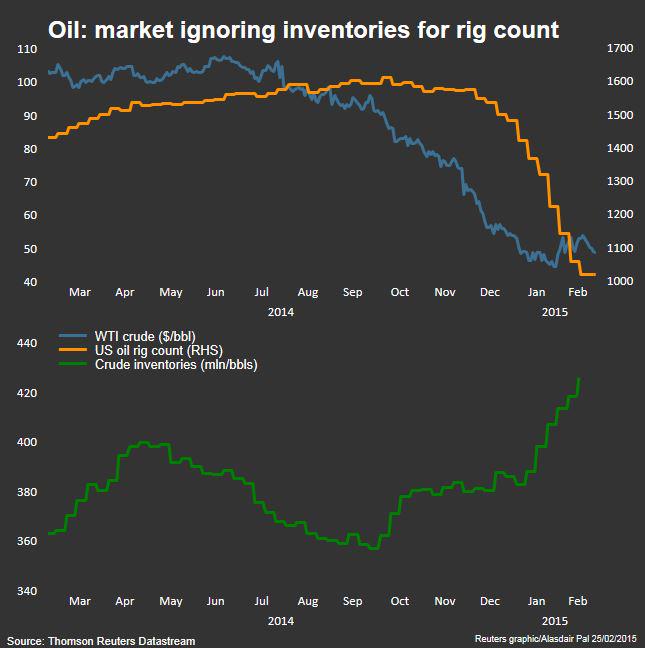
The price of oil has fallen precipitously — dropping nearly 60% since June. And while the average American may be appreciating relief at the pump provided by $45-a barrel crude, everyone from the oil companies themselves to the Wall Street financiers that lend to and trade on their business has been panicking over the falling profitability of the industry.


View image on Twitter

The US oil bust just got worse: http://wolfstreet.com/2015/03/13/no-bottom-yet-under-the-fracking-bust/  Exactly as I warned in June 2014: http://www.forbes.com/sites/jessecolombo/2014/06/09/9-reasons-why-oil-prices-may-be-headed-for-a-bust/ 

The Strategic Petroleum Reserve was created after the Arab oil embargo of the 1970s as an emergency pool of oil in case of sudden instability. But in recent years, as the US has become less dependent on foreign oil, and thus less vulnerable to fluctuations abroad, there's more often been talk of shrinking the overall reserve. 

In March 2014, the US surprised markets by selling off 5 million barrels of oil from the SPR in a test sale, while prices were high, which some interpreted as an attempt to lower prices as a jab at Russia for perceived aggression in Ukraine. And legally, the government is supposed to replace anything sold off within a year. 


President Barack Obama pauses during a news conference in the East Room of the White House, on Wednesday, Nov. 5, 2014, in Washington. Obama is telling Americans who voted for change: I hear you.
© AP Photo/ Evan Vcci


US Senators Oppose Obama's Atlantic Offshore Drilling Proposal


Some of the funds from the 2014 sale were used to create a gas reserve in the Northeast "in order to address some of the resiliency needs in the region made evident by Superstorm Sandy in 2012," a DOE spokeswoman told Reuters. The funds left over after that project are what is being used for the current low-price buyback. 

While it could be construed as simply an attempt to buy low aftering selling high, others see it as a move to help a flagging industry whose profitability may be more of a government concern that the purchasing power of someone filling up a gas tank. 

"When the government starts buying crude oil, it's signaling that they're picking a bottom for the market," Carl Larry, director of business development at Frost & Sullivan told Reuters. "This has to be more of a financial play."

View image on Twitter

Whopping crude inventory build in the US - oil price is yet to react to the tanks nearly being full, in my view


While it remains to be seen what impact this will have on the oil market, for perspective, 5 million barrels is just over half of a day's production in the US at current rates. The SPR is the largest emergency supply of oil in the world with a capacity for over 700 million barrels.

The crude would be bought for delivery sometime in June or July most likely, though some may arrive as early as May. 

After a five-year boom in production and a decrease in foreign oil imports, the government is expected to consider decreasing the overall size of the SPR. Any such plans are expected to be part of the DOE's quadrennial energy review, due to be released in the coming weeks.