Showing posts with label Victoria Nuland. Show all posts

Wednesday, 20 July 2016

The neo-con position on Erdogan's apology

Nuland: the U.S. believes Erdogan's apology to Russia is inappropriate


29 June, 2016
State Department spokesman Victoria Nuland commented on the apology of the President of Turkey Erdogan to Russia for the downed plane. Nuland said that the United States considers Erdogan's apology is misplaced.
"We are very surprised by such behavior of Turkey's President Erdogan Rajaa. We believe these apologies are misplaced and would like to listen to the position of Erdogan personally. As a partner in NATO, Erdogan disappoints us. We hope that the apology to Turkey over the downed Russian plane will be invalid. Otherwise, States will be forced to change its relations with Turkey," said Nuland.

Nuland Also called on Erdogan not to change its position on the conflict in Syria

"USA urge Turkey to remain faithful to the democratic principles for which we fight in Syria. Different position of our partner in NATO, we believe it is unacceptable," said Nuland.

(http://xx-football.com/ar...)

Friday, 24 July 2015

Ukraine - Important article by Robert Parry

Read this and weep. Could it turn into a nuclear war?
--Helen Caldicott


The Mess That Nuland Made
Assistant Secretary of State Victoria Nuland engineered Ukraine’s “regime change” in early 2014 without weighing the likely chaos and consequences. Now, as neo-Nazis turn their guns on the government, it’s hard to see how anyone can clean up the mess that Nuland made, writes Robert Parry.

Victoria Nuland. (photo: unknown)


22 July, 2015

s the Ukrainian army squares off against ultra-right and neo-Nazi militias in the west and violence against ethnic Russians continues in the east, the obvious folly of the Obama administration’s Ukraine policy has come into focus even for many who tried to ignore the facts, or what you might call “the mess that Victoria Nuland made.”

Assistant Secretary of State for European Affairs “Toria” Nuland was the “mastermind” behind the Feb. 22, 2014 “regime change” in Ukraine, plotting the overthrow of the democratically elected government of President Viktor Yanukovych while convincing the ever-gullible U.S. mainstream media that the coup wasn’t really a coup but a victory for “democracy.”

To sell this latest neocon-driven “regime change” to the American people, the ugliness of the coup-makers had to be systematically airbrushed, particularly the key role of neo-Nazis and other ultra-nationalists from the Right Sektor. For the U.S.-organized propaganda campaign to work, the coup-makers had to wear white hats, not brown shirts.

So, for nearly a year and a half, the West’s mainstream media, especially The New York Times and The Washington Post, twisted their reporting into all kinds of contortions to avoid telling their readers that the new regime in Kiev was permeated by and dependent on neo-Nazi fighters and Ukrainian ultra-nationalists who wanted a pure-blood Ukraine, without ethnic Russians.

Any mention of that sordid reality was deemed “Russian propaganda” and anyone who spoke this inconvenient truth was a “stooge of Moscow.” It wasn’t until July 7 that the Times admitted the importance of the neo-Nazis and other ultra-nationalists in waging war against ethnic Russian rebels in the east. The Times also reported that these far-right forces had been joined by Islamic militants. Some of those jihadists have been called “brothers” of the hyper-brutal Islamic State.

Though the Times sought to spin this remarkable military alliance – neo-Nazi militias and Islamic jihadists – as a positive, the reality had to be jarring for readers who had bought into the Western propaganda about noble “pro-democracy” forces resisting evil “Russian aggression.”

Perhaps the Times sensed that it could no longer keep the lid on the troubling truth in Ukraine. For weeks, the Right Sektor militias and the neo-Nazi Azov battalion have been warning the civilian government in Kiev that they might turn on it and create a new order more to their liking.

Clashes in the West

Then, on Saturday, violent clashes broke out in the western Ukrainian town of Mukachevo, allegedly over the control of cigarette-smuggling routes. Right Sektor paramilitaries sprayed police officers with bullets from a belt-fed machinegun, and police – backed by Ukrainian government troops – returned fire. Several deaths and multiple injuries were reported.

Tensions escalated on Monday with President Petro Poroshenko ordering national security forces to disarm “armed cells” of political movements. Meanwhile, the Right Sektor dispatched reinforcements to the area while other militiamen converged on the capital of Kiev.

While President Poroshenko and Right Sektor leader Dmitry Yarosh may succeed in tamping down this latest flare-up of hostilities, they may be only postponing the inevitable: a conflict between the U.S.-backed authorities in Kiev and the neo-Nazis and other right-wing fighters who spearheaded last year’s coup and have been at the front lines of the fighting against ethnic Russian rebels in the east.

The Ukrainian right-wing extremists feel they have carried the heaviest burden in the war against the ethnic Russians and resent the politicians living in the relative safety and comfort of Kiev. In March, Poroshenko also fired thuggish oligarch Igor Kolomoisky as governor of the southeastern province of Dnipropetrovsk Oblast. Kolomoisky had been the primary benefactor of the Right Sektor militias.

So, as has become apparent across Europe and even in Washington, the Ukraine crisis is spinning out of control, making the State Department’s preferred narrative of the conflict – that it’s all Russian President Vladimir Putin’s fault – harder and harder to sell.

How Ukraine is supposed to pull itself out of what looks like a death spiral – a possible two-front war in the east and the west along with a crashing economy – is hard to comprehend. The European Union, confronting budgetary crises over Greece and other EU members, has little money or patience for Ukraine, its neo-Nazis and its socio-political chaos.

America’s neocons at The Washington Post and elsewhere still rant about the need for the Obama administration to sink more billions upon billions of dollars into post-coup Ukraine because it “shares our values.” But that argument, too, is collapsing as Americans see the heart of a racist nationalism beating inside Ukraine’s new order.

Another Neocon ‘Regime Change’

Much of what has happened, of course, was predictable and indeed was predicted, but neocon Nuland couldn’t resist the temptation to pull off a “regime change” that she could call her own.

Her husband (and arch-neocon) Robert Kagan had co-founded the Project for the New American Century in 1998 around a demand for “regime change” in Iraq, a project that was accomplished in 2003 with President George W. Bush’s invasion.

As with Nuland in Ukraine, Kagan and his fellow neocons thought they could engineer an easy invasion of Iraq, oust Saddam Hussein and install some hand-picked client – in Iraq, Ahmed Chalabi was to be “the guy.” But they failed to take into account the harsh realities of Iraq, such as the fissures between Sunnis and Shiites, exposed by the U.S.-led invasion and occupation.

In Ukraine, Nuland and her neocon and liberal-interventionist friends saw the chance to poke Putin in the eye by encouraging violent protests to overthrow Russia-friendly President Yanukovych and put in place a new regime hostile to Moscow.

Carl Gershman, the neocon president of the U.S.-taxpayer-funded National Endowment for Democracy, explained the plan in a Post op-ed on Sept. 26, 2013. Gershman called Ukraine “the biggest prize” and an important interim step toward toppling Putin, who “may find himself on the losing end not just in the near abroad but within Russia itself.”

For her part, Nuland passed out cookies to anti-Yanukovych demonstrators at the Maidan square, reminded Ukrainian business leaders that the U.S. had invested $5 billion in their “European aspirations,” declared “fuck the EU” for its less aggressive approach, and discussed with U.S. Ambassador Geoffrey Pyatt who the new leaders of Ukraine should be. “Yats is the guy,” she said, referring to Arseniy Yatsenyuk.

Nuland saw her big chance on Feb. 20, 2014, when a mysterious sniper – apparently firing from a building controlled by the Right Sektor – shot and killed both police and protesters, escalating the crisis. On Feb. 21, in a desperate bid to avert more violence, Yanukovych agreed to a European-guaranteed plan in which he accepted reduced powers and called for early elections so he could be voted out of office.

But that wasn’t enough for the anti-Yanukovych forces who – led by Right Sektor and neo-Nazi militias – overran government buildings on Feb. 22, forcing Yanukovych and many of his officials to flee for their lives. With armed thugs patrolling the corridors of power, the final path to “regime change” was clear.
Instead of trying to salvage the Feb. 21 agreement, Nuland and European officials arranged for an unconstitutional procedure to strip Yanukovych of the presidency and declared the new regime “legitimate.” Nuland’s “guy” – Yatsenyuk – became prime minister.

While Nuland and her neocon cohorts celebrated, their “regime change” prompted an obvious reaction from Putin, who recognized the strategic threat that this hostile new regime posed to the historic Russian naval base at Sevastopol in Crimea. On Feb. 23, he began to take steps to protect those Russian interests.

Ethnic Hatreds

What the coup also did was revive long pent-up antagonisms between the ethnic Ukrainians in the west, including elements that had supported Adolf Hitler’s invasion of the Soviet Union during World War Two, and ethnic Russians in the south and east who feared the anti-Russian sentiments emanating from Kiev.

First, in Crimea and then in the so-called Donbas region, these ethnic Russians, who had been Yanukovych’s political base, resisted what they viewed as the illegitimate overthrow of their elected president. Both areas held referenda seeking separation from Ukraine, a move that Russia accepted in Crimea but resisted with the Donbas.

However, when the Kiev regime announced an “anti-terrorism operation” against the Donbas and dispatched neo-Nazi and other extremist militias to be the tip of the spear, Moscow began quietly assisting the embattled ethnic Russian rebels, a move that Nuland, the Obama administration and the mainstream news media called “Russian aggression.”

Amid the Western hysteria over Russia’s supposedly “imperial designs” and the thorough demonizing of Putin, President Barack Obama essentially authorized a new Cold War against Russia, reflected now in new U.S. strategic planning that could cost the U.S. taxpayers trillions of dollars and risk a possible nuclear confrontation.

Yet, despite the extraordinary costs and dangers, Nuland failed to appreciate the practical on-the-ground realities, much as her husband and other neocons did in Iraq. While Nuland got her hand-picked client Yatsenyuk installed and he did oversee a U.S.-demanded “neo-liberal” economic plan – slashing pensions, heating assistance and other social programs – the chaos that her “regime change” unleashed transformed Ukraine into a financial black hole.

With few prospects for a clear-cut victory over the ethnic Russian resistance in the east – and with the neo-Nazi/Islamist militias increasingly restless over the stalemate – the chances to restore any meaningful sense of order in the country appear remote. Unemployment is soaring and the government is essentially bankrupt.

The last best hope for some stability may have been the Minsk-2 agreement in February 2015, calling for a federalized system to give the Donbas more autonomy, but Nuland’s Prime Minister Yatsenyuk sabotaged the deal in March by inserting a poison pill that essentially demanded that the ethnic Russian rebels first surrender.

Now, the Ukraine chaos threatens to spiral even further out of control with the neo-Nazis and other right-wing militias – supplied with a bounty of weapons to kill ethnic Russians in the east – turning on the political leadership in Kiev.

In other words, the neocons have struck again, dreaming up a “regime change” scheme that ignored practical realities, such as ethnic and religious fissures. Then, as the blood flowed and the suffering worsened, the neocons just sought out someone else to blame.

Thus, it seems unlikely that Nuland, regarded by some in Washington as the new “star” in U.S. foreign policy, will be fired for her dangerous incompetence, just as most neocons who authored the Iraq disaster remain “respected” experts employed by major think tanks, given prized space on op-ed pages, and consulted at the highest levels of the U.S. government.

[For more on these topics, see Consortiumnews.com’s “Obama’s True Foreign Policy Weakness” and “A Family Business of Perpetual War.”]


Investigative reporter Robert Parry broke many of the Iran-Contra stories for The Associated Press and Newsweek in the 1980s. You can buy his latest book, America’s Stolen Narrative, either in print here or as an e-book (from Amazon and barnesandnoble.com). You also can order Robert Parry’s trilogy on the Bush Family and its connections to various right-wing operatives for only $34. The trilogy includes America’s Stolen Narrative. For details on this offer, click here.


Saturday, 11 July 2015

Nuland headed for Balkans and Ukraine

The neocon angel of death is winding towards the Balkans


Department of state: assistant Secretary Nuland will visit the Balkans and Ukraine


As a reminder - 


Assistant Secretary of state Victoria Nuland begins a trip around the Balkans and Ukraine, where he will discuss bilateral and regional cooperation, informs the state Department.

On the last working day of the week Nuland will visit the city of Dubrovnik in Croatia, where he will speak at the 10th Croatian forum on the Western Balkans and transatlantic relations. She will also hold meetings with the country leaders and European leaders participating in the forum on " regional and energy security."

On the first day weekend authorized the state Department to take part in the events in Bosnia and Herzegovina, on the 20th anniversary of the tragic events in Srebrenica, and to meet with representatives of the authorities.

Until Tuesday Nuland Also planning to visit Montenegro, Kosovo, Macedonia, Albania and Serbia, where he will meet with government officials, political leaders, members of civil society, which will discuss " bilateral and regional issues, including the Euro-Atlantic and regional integration ".

For example, the report States Department of state, Kosovo and Serbia she will discuss bilateral dialogue within the framework of implementation of the Brussels agreement of 2013 for the normalization of relations.

During 15-16 July in Kyiv, Assistant Secretary to meet with representatives of the Ukrainian authorities, politicians, businessmen and members of civil society to discuss bilateral and regional issues ".

Wednesday, 11 March 2015

US-Russian relations: the rhetoric is heating up

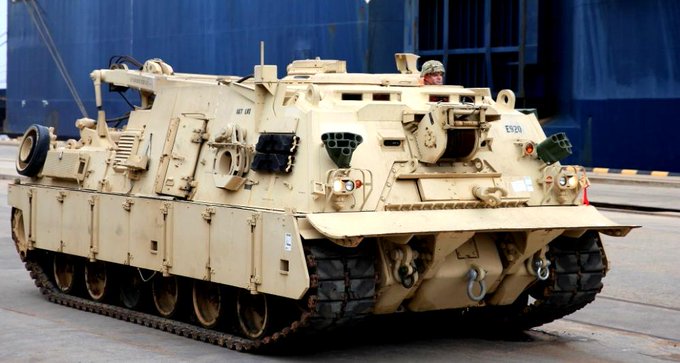
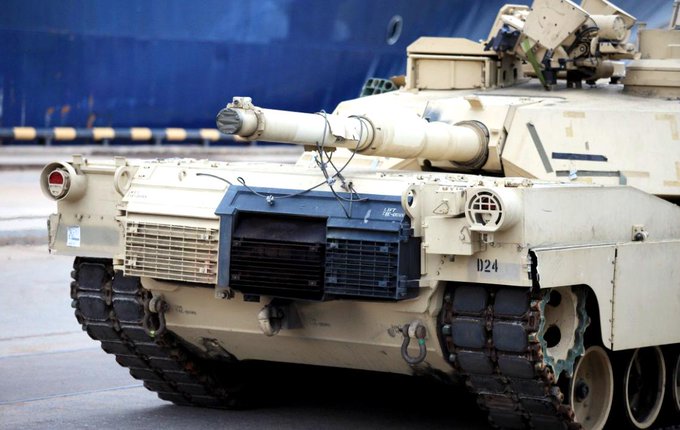
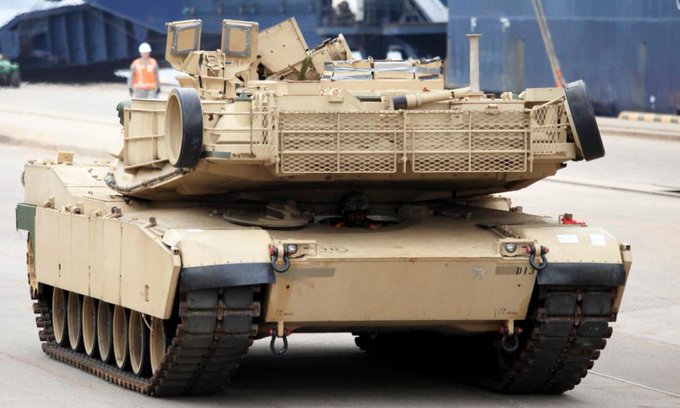
US Sends Over 100 US Tanks, Armor To Latvia As Nuland "Confirms" Russia Delivering Weapons

U.S. Assistant Secretary of State Victoria Nuland.(Reuters / Gleb Garanich )


10 March, 2015

No lesser trustworthy character than Assistant Secretary of State Victoria Nuland explained this morning that the US can "confirm" new Russian weapons delivery to Ukraine and that they "can tell" when Russia sends in new weapons (though offering no explanation of this statement). This comment to the Senate Committee comes a day after the US delivered 'lethal aid' to Latvia - 120 armored units (including tanks) - with US Army General John O’Conner who witnessed the tanks arriving on Latvian soil said, "Freedom must be fought for, freedom must be defended." And finally, one more shot in the eye of the germans, deputy under-secretary of Defense Brian McKeon said the US is "actively considering more weapons for Ukraine,"seemingly implying they alreadt sent some?

The rhetoric is heating up

*ASSISTANT SEC. OF STATE NULAND SPEAKS BEFORE SENATE COMMITTEE
*U.S. CAN CONFIRM NEW RUSSIAN WEAPONS DELIVERY TO UKRAINE:NULAND

*NULAND SAYS U.S. CAN TELL IF RUSSIA SENDS IN NEW WEAPONS
*NULAND SAYS UKRAINE LEADERS KNOW IN RACE TO REFORM GOVERNMENT

*DEPUTY UNDER SECRETARY OF DEFENSE BRIAN MCKEON SPEAKS TO SENATE

*U.S. 'ACTIVELY' CONSIDERING MORE WEAPONS FOR UKRAINE: MCKEON
And this comes a day after the US delivered lethal aid to Latvia...


Latvia has confirmed more than 120 armored units, including tanks, have been delivered by the US. According to the Latvian Ministry of Defense, these include M1A2 Abrams tanks and M2A3 Bradley armored vehicles.

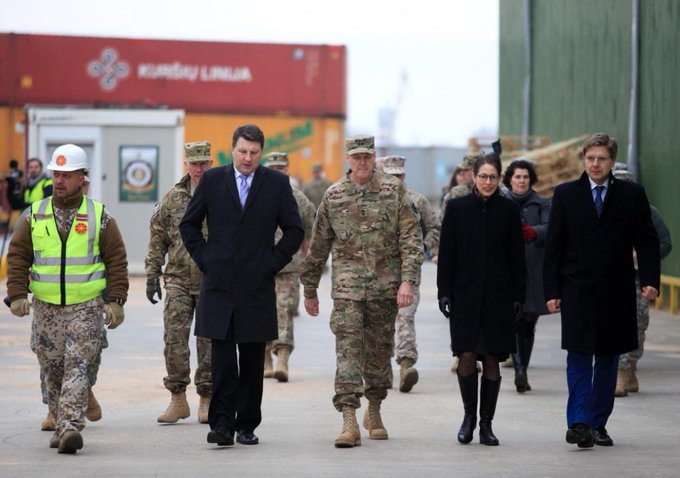
The move to deploy yet more tanks and armored vehicles was welcomed by Latvian Minister of Defense Raymond Vejonis."The presence of our allies (US and NATO) in Latvia is a confirmation of solidarity and security in the region," Vejonis said in a statement on Twitter.

The tanks were delivered to Latvia via Riga Freeport after being offloaded from the carrier ship Liberty Promise on Monday. US Army General John O’Conner who witnessed the tanks arriving on Latvian soil said,“Freedom must be fought for, freedom must be defended," as reported by the US Embassy Riga Twitter feed.

...

He also added their delivery would "demonstrate resolve to President Putin and Russia that collectively we can come together," while General O’Connor also mentioned, they would stay "for as long as required to deter Russian aggression,” as reported by AFP.
*  *  *

View image on TwitterView image on TwitterView image on TwitterView image on Twitter
Abrams & Bradley Tanks arrive in Latvia--ready for Operation Atlantic Resolve: http://goo.gl/jSV850 
View image on TwitterView image on TwitterView image on Twitter
Latvia -- Joint mortar training with US-Latvian forces in Operation at Ādaži


*  *  *
Leaving the situation ever more dangerous...

*  *  *


The United States government is applying pressure to European countries that oppose sanctions against Russia, US Assistant Secretary of State for European Affairs Victoria Nuland said at a US Senate hearing on Tuesday.

“We continue to talk to them bilaterally about these issues,” Nuland said of Hungary, Greece, and Cyprus, whose leaders have opposed anti-Russian sanctions. “I will make another trip out to some of those countries in the coming days and weeks.”
 
Nuland noted that “despite some publically stated concerns, those countries have supported sanctions” in the European Union Council.

*  *  *

Sunday, 8 March 2015

Germany slams NATO European commander’s comments on Ukraine as ‘dangerous propaganda’

Differences between America and Europe, as well as American undermining of the ceasefire, have come into the open with this article from Germany's Spiegel

Breedlove's Bellicosity: Berlin Alarmed by Aggressive NATO Stance on Ukraine
US President Obama supports Chancellor Merkel's efforts at finding a diplomatic solution to the Ukraine crisis. But hawks in Washington seem determined to torpedo Berlin's approach. And NATO's top commander in Europe hasn't been helping either

Top NATO commander General Philip Breedlove has raised hackles in Germany with his public statements about the Ukraine crisis.Zoom

AP
Top NATO commander General Philip Breedlove has raised hackles in Germany with his public statements about the Ukraine crisis.

7 March, 2015


It was quiet in eastern Ukraine last Wednesday. Indeed, it was another quiet day in an extended stretch of relative calm. The battles between the Ukrainian army and the pro-Russian separatists had largely stopped and heavy weaponry was being withdrawn. The Minsk cease-fire wasn't holding perfectly, but it was holding.

On that same day, General Philip Breedlove, the top NATO commander in Europe, stepped before the press in Washington. Putin, the 59-year-old said, had once again "upped the ante" in eastern Ukraine -- with "well over a thousand combat vehicles, Russian combat forces, some of their most sophisticated air defense, battalions of artillery" having been sent to the Donbass. "What is clear," Breedlove said, "is that right now, it is not getting better. It is getting worse every day."

German leaders in Berlin were stunned. They didn't understand what Breedlove was talking about. And it wasn't the first time. Once again, the German government, supported by intelligence gathered by the Bundesnachrichtendienst (BND), Germany's foreign intelligence agency, did not share the view of NATO's Supreme Allied Commander Europe (SACEUR).

The pattern has become a familiar one. For months, Breedlove has been commenting on Russian activities in eastern Ukraine, speaking of troop advances on the border, the amassing of munitions and alleged columns of Russian tanks. Over and over again, Breedlove's numbers have been significantly higher than those in the possession of America's NATO allies in Europe. As such, he is playing directly into the hands of the hardliners in the US Congress and in NATO.


The German government is alarmed. Are the Americans trying to thwart European efforts at mediation led by Chancellor Angela Merkel? Sources in the Chancellery have referred to Breedlove's comments as "dangerous propaganda." Foreign Minister Frank-Walter Steinmeier even found it necessary recently to bring up Breedlove's comments with NATO General Secretary Jens Stoltenberg.

The 'Super Hawk'


But Breedlove hasn't been the only source of friction. Europeans have also begun to see others as hindrances in their search for a diplomatic solution to the Ukraine conflict. First and foremost among them is Victoria Nuland, head of European affairs at the US State Department. She and others would like to see Washington deliver arms to Ukraine and are supported by Congressional Republicans as well as many powerful Democrats.


Indeed, US President Barack Obama seems almost isolated. He has thrown his support behind Merkel's diplomatic efforts for the time being, but he has also done little to quiet those who would seek to increase tensions with Russia and deliver weapons to Ukraine. Sources in Washington say that Breedlove's bellicose comments are first cleared with the White House and the Pentagon. The general, they say, has the role of the "super hawk," whose role is that of increasing the pressure on America's more reserved trans-Atlantic partners.

German Chancellor Angela Merkel and US President Barack Obama after a Feb. 9 meeting in Washington: Increasing pressure on America's more reserved trans-Atlantic partners. Getty Images  - German Chancellor Angela Merkel and US President Barack Obama after a Feb. 9 meeting in Washington: Increasing pressure on America's more reserved trans-Atlantic partners.

A mixture of political argumentation and military propaganda is necessary. But for months now, many in the Chancellery simply shake their heads each time NATO, under Breedlove's leadership, goes public with striking announcements about Russian troop or tank movements. To be sure, neither Berlin's Russia experts nor BND intelligence analysts doubt that Moscow is supporting the pro-Russian separatists. The BND even has proof of such support.


But it is the tone of Breedlove's announcements that makes Berlin uneasy. False claims and exaggerated accounts, warned a top German official during a recent meeting on Ukraine, have put NATO -- and by extension, the entire West -- in danger of losing its credщbility.


There are plenty of examples. Just over three weeks ago, during the cease-fire talks in Minsk, the Ukrainian military warned that the Russians -- even as the diplomatic marathon was ongoing -- had moved 50 tanks and dozens of rockets across the border into Luhansk. Just one day earlier, US Lieutenant General Ben Hodges had announced "direct Russian military intervention."


Senior officials in Berlin immediately asked the BND for an assessment, but the intelligence agency's satellite images showed just a few armored vehicles. Even those American intelligence officials who supply the BND with daily situation reports were much more reserved about the incident than Hodges was in his public statements. One intelligence agent says it "remains a riddle until today" how the general reached his conclusions.


Much More Cautious

"The German intelligence services generally appraise the threat level much more cautiously than the Americans do," an international military expert in Kiev confirmed.


At the beginning of the crisis, General Breedlove announced that the Russians had assembled 40,000 troops on the Ukrainian border and warned that an invasion could take place at any moment. The situation, he said, was "incredibly concerning." But intelligence officials from NATO member states had already excluded the possibility of a Russian invasion. They believed that neither the composition nor the equipment of the troops was consistent with an imminent invasion.


The experts contradicted Breedlove's view in almost every respect. There weren't 40,000 soldiers on the border, they believed, rather there were much less than 30,000 and perhaps even fewer than 20,000. Furthermore, most of the military equipment had not been brought to the border for a possible invasion, but had already been there prior to the beginning of the conflict. Furthermore, there was no evidence of logistical preparation for an invasion, such as a field headquarters.


Breedlove, though, repeatedly made inexact, contradictory or even flat-out inaccurate statements. On Nov. 18, 2014, he told the German newspaper Frankfurter Allgemeine Zeitung that there were "regular Russian army units in eastern Ukraine." One day later, he told the website of the German newsmagazine Stern that they weren't fighting units, but "mostly trainers and advisors."


He initially said there were "between 250 and 300" of them, and then "between 300 and 500." For a time, NATO was even saying there were 1,000 of them.


The fact that NATO has no intelligence agency of its own plays into Breedlove's hands. The alliance relies on intelligence gathered by agents from the US, Britain, Germany and other member states. As such, SACEUR has a wide range of information to choose from.


Influencing Breedlove


On Nov. 12, during a visit to Sofia, Bulgaria, Breedlove reported that "we have seen columns of Russian equipment -- primarily Russian tanks, Russian artillery, Russian air defense systems and Russian combat troops -- entering into Ukraine." It was, he noted, "the same thing that OSCE is reporting." But the OSCE had only observed military convoys within eastern Ukraine. OSCE observers had said nothing about troops marching in from Russia.


Breedlove sees no reason to revise his approach. "I stand by all the public statements I have made during the Ukraine crisis," he wrote to SPIEGEL in response to a request for a statement accompanied by a list of his controversial claims. He wrote that it was to be expected that assessments of NATO's intelligence center, which receives information from all 33 alliance members in addition to partner states, doesn't always match assessments made by individual nations. "It is normal that not everyone agrees with the assessments that I provide," he wrote.


He says that NATO's strategy is to "release clear, accurate and timely information regarding ongoing events." He also wrote that: "As an alliance based on the fundamental values of freedom and democracy, our response to propaganda cannot be more propaganda. It can only be the truth."


The German government, meanwhile, is doing what it can to influence Breedlove. Sources in Berlin say that conversations to this end have taken place in recent weeks. But there are many at NATO headquarters in Brussels who are likewise concerned about Breedlove's statements. On Tuesday of last week, Breedlove's public appearances were an official item on the agenda of the North Atlantic Council's weekly lunch meeting. Several ambassadors present criticized Breedlove and expressed their incredulity at some of the commander's statements.


The government in Berlin is concerned that Breedlove's statements could harm the West's credibility. The West can't counter Russian propaganda with its own propaganda, "rather it must use arguments that are worthy of a constitutional state." Berlin sources also say that it has become conspicuous that Breedlove's controversial statements are often made just as a step forward has been made in the difficult negotiations aimed at a political resolution. Berlin sources say that 
Germany should be able to depend on its allies to support its efforts at peace.


Pressure on Obama


German foreign policy experts are united in their view of Breedlove as a hawk. "I would prefer that Breedlove's comments on political questions be intelligent and reserved," says Social Democrat parliamentarian Niels Annen, for example. 

"Instead, NATO in the past has always announced a new Russian offensive just as, from our point of view, the time had come for cautious optimism." Annen, who has long specialized in foreign policy, has also been frequently dissatisfied with the information provided by NATO headquarters. "We parliamentarians were often confused by information regarding alleged troop movements that were inconsistent with the information we had," he says.


The pressure on Obama from the Republicans, but also from his own political camp, is intense. Should the ceasefire in eastern Ukraine not hold, it will likely be difficult to continue refusing Kiev's requests for shipments of so-called "defensive weapons." And that would represent a dramatic escalation of the crisis. Moscow has already begun issuing threats in anticipation of such deliveries. "Any weapons deliveries to Kiev will escalate the tensions and would unhinge European security," Nikolai Patrushev, secretary of Russia's national security council, told the Russian newspaper Komsomolskaya Pravda on Wednesday.


Although President Obama has decided for the time being to give European diplomacy a chance, hawks like Breedlove or Victoria Nuland are doing what they can to pave the way for weapons deliveries. "We can fight against the Europeans, fight against them rhetorically," Nuland said during a private meeting of American officials on the sidelines of the Munich Security Conference at the beginning of February.
US diplomat Victoria Nuland: Paving the way for weapons deliveries.
In reporting on the meeting later, the German tabloid Bild reported that Nuland referred to the chancellor's early February trip to Moscow for talks with Putin as "Merkel's Moscow stuff." No wonder, then, that people in Berlin have the impression that important power brokers in Washington are working against the Europeans. Berlin officials have noticed that, following the visit of American politicians or military leaders in Kiev, Ukrainian officials are much more bellicose and optimistic about the Ukrainian military's ability to win the conflict on the battlefield. "We then have to laboriously bring the Ukrainians back onto the course of negotiations," said one Berlin official.

Nuland Diplomacy

Nuland, who is seen as a possible secretary of state should the Republicans win back the White House in next year's presidential election, is an important voice in US policy concerning Ukraine and Russia. She has never sought to hide her emotional bond to Russia, even saying "I love Russia." Her grandparents immigrated to the US from Bessarabia, which belonged to the Russian empire at the time. Nuland speaks Russian fluently.


She is also very direct. She can be very keen and entertaining, but has been known to take on an undiplomatic tone -- and has not always been wrong to do so. Mykola Asarov, who was prime minister under toppled Ukrainian President Viktor Yanukovych, recalls that Nuland basically blackmailed Yanukovych in order to prevent greater bloodshed in Kiev during the Maidan protests. "No violence against the protesters or you'll fall," Nuland told him according to Asarov. She also, he said, threatened tough economic and political sanctions against both Ukraine and the country's leaders. According to Asarov, Nuland said that, were violence used against the protesters on Maidan Square, information about the money he and his cronies had taken out of the country would be made public.


Nuland has also been open -- at least internally -- about her contempt for European weakness and is famous for having said "Fuck the EU" during the initial days of the Ukraine crisis in February of 2014. Her husband, the neo-conservative Robert Kagan, is, after all, the originator of the idea that Americans are from Mars and Europeans, unwilling as they are to realize that true security depends on military power, are from Venus.


When it comes to the goal of delivering weapons to Ukraine, Nuland and Breedlove work hand-in-hand. On the first day of the Munich Security Conference, the two gathered the US delegation behind closed doors to discuss their strategy for breaking Europe's resistance to arming Ukraine.


On the seventh floor of the Bayerischer Hof hotel in the heart of Munich, it was Nuland who began coaching. "While talking to the Europeans this weekend, you need to make the case that Russia is putting in more and more offensive stuff while we want to help the Ukrainians defend against these systems," Nuland said. "It is defensive in nature although some of it has lethality."


Training Troops?


Breedlove complemented that with the military details, saying that moderate weapons aid was inevitable -- otherwise neither sanctions nor diplomatic pressure would have any effect. "If we can increase the cost for Russia on the battlefield, the other tools will become more effective," he said. "That's what we should do here."

In Berlin, top politicians have always considered a common position vis-a-vis Russia as a necessary prerequisite for success in peace efforts. For the time being, that common front is still holding, but the dispute is a fundamental one -- and hinges on the question of whether diplomacy can be successful without the threat of military action. Additionally, the trans-Atlantic partners also have differing goals. Whereas the aim of the Franco-German initiative is to stabilize the situation in Ukraine, it is Russia that concerns hawks within the US administration. They want to drive back Moscow's influence in the region and destabilize Putin's power. For them, the dream outcome would be regime change in Moscow.


A massive troop training range is located in Yavoriv in western Ukraine near the Polish border. During Soviet times, it served as the westernmost military district in the Soviet Union. Since 1998, though, it has been used for joint exercises by Ukrainian forces together with the United States and NATO. Yavoriv is also the site where US soldiers want to train members of the Ukrainian National Guard for their future battle against the separatists. According to the Pentagon's plans, American officers would train the Ukrainians on how to use American artillery-locating radar devices. At least that's what US Army in Europe commander Lt. Gen. Hodges announced in January.


The training was actually supposed to start at the beginning of March. Before it began, however, President Obama temporarily put it on hold in order to give the ceasefire agreement reached in Minsk a chance. Still, the hawks remain confident that they will soon come a step closer to their goal. On Tuesday, Hodges said during an appearance in Berlin that he expects the training will still begin at some point this month.


By Matthias Gebauer, Christiane Hoffmann, Marc Hujer, Gordon Repinski, Matthias Schepp, Christoph Schult, Holger Stark and Klaus Wiegrefe


See also – from RT

Germany slams NATO European commander’s comments on Ukraine as ‘dangerous propaganda’ – Spiegel


And from Reuters