With the daily soaring infection rate and death toll inside Iran officially at 124 deaths amid 4747 confirmed cases as of early Friday — though true numbers are believed much higher — all eyes are on the largely unprepared country given it's the biggest outbreak epicenter outside the virus' origin country of China.
Health officials worry that Iran could be a sign of things to come in the much of the rest of the world — a deeply alarming prospect given a member of Iran's National Committee for Influenza and specialist in infectious diseases, Dr. Masoud Mardani, has just issued a stark warning for the capital city of Tehran, brimming with about 9 million people and over 12 million in the greater metropolitan area.
Dr. Mardai said he expects30 to 40 percent of Tehran's populationto be infected with coronavirus within the next two weeks.
“Coronavirus is rapidly spreading … we estimate that 30 to 40 percent of Tehran’s population will be infected by the end of this (Persian) month.”
The current Persian month is the last month of the Persian calendar and ends on March 20, Al Arabiya English notes.
According to a summary of his statements given to an Iranian newspaper, he said further:
...an infected person could transmit the virus to four people at the same time. Therefore it is expected that 30-40 per cent of Tehran’s population will be infected with the virus by March.
He pointed out that many Iranians visit health centers and hospitals when they have regular flu, believing it is a coronavirus.
Dr. Mardai is urging people who think they're sick to stay home instead of potentially infecting overcrowding medical clinics and hospitals.
#coronavirus Iran: Population seeking help in hospitals for coronavirus. "We estimate that 30 to 40% of Tehran's population will be infected with COVID-19 by March 20," says Dr. Massoud Mardani, member of Iran's National Influenza Committee. Tehran population: 12 million.
nstead, they should receive treatment at home rather than hospitals in these circumstances. He pointed out that if the patient feels the three distinctive symptoms of the coronavirus; then he must be immediately transferred to the hospital and be subjected to quarantine.
This further means that the next two weeks could see overall global numbers of confirmed cases soar, if his predictions are correct.
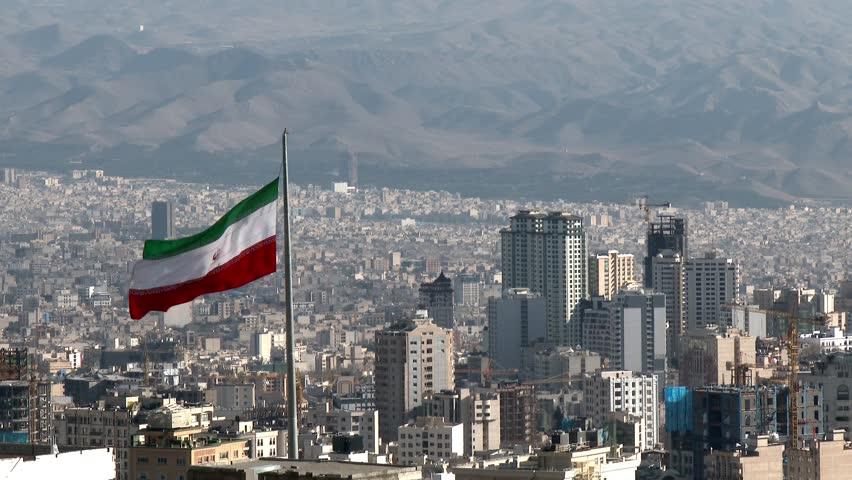
Tehran, source: Shutterstock.
Even though Iran's official confirmed Covid-19 cases are in the thousands, it was over a week ago that specialists were already speculating that the true number had already reached 20,000 at that point.
Inability for rapid and effective testing, as well as alleged lack of transparency especially in the early weeks of the outbreak, means we will likely see numbers explode exponentially as has already been happening over the past days.
A
multi-prong terrorist attack has struck Iran’s capital city this
morning. Gunmen and suicide bombers converged on three targets
including Iran’s Parliament building and the mausoleum of
Imam Khomeini, killing staff and members of the public.
According Tasnim
News, the
terrorist attack has killed seven people so far, while 4 others are
being held hostage on the top floors of the building:
0802
GMT: Sources
told Tasnim that the Islamic Revolution Guards Corps (IRGC) hostage
rescue teams have killed one of the four gunmen inside the
parliament. No official has verified the statement yet.
0823
GMT: A
blast occurs on the fifth floor of the parliament building. Snipers
have been stationed all around the parliament.
Police
helicopters have been deployed over the government building, and
the site has been locked down, and security services had phone
lines in the complex disconnected, and mobiles jammed.
In
a separate incident, terrorist gunmen opened fire at the
mausoleum of the Imam Khomeini, the founder of the Islamic Republic
of Iran, south of Tehran. Tasnim reports
that terrorists had entered the mausoleum from its western gate:
0722
GMT: Following
the shooting, a gunman blew himself and another was shot to death by
police forces and a women was also arrested.
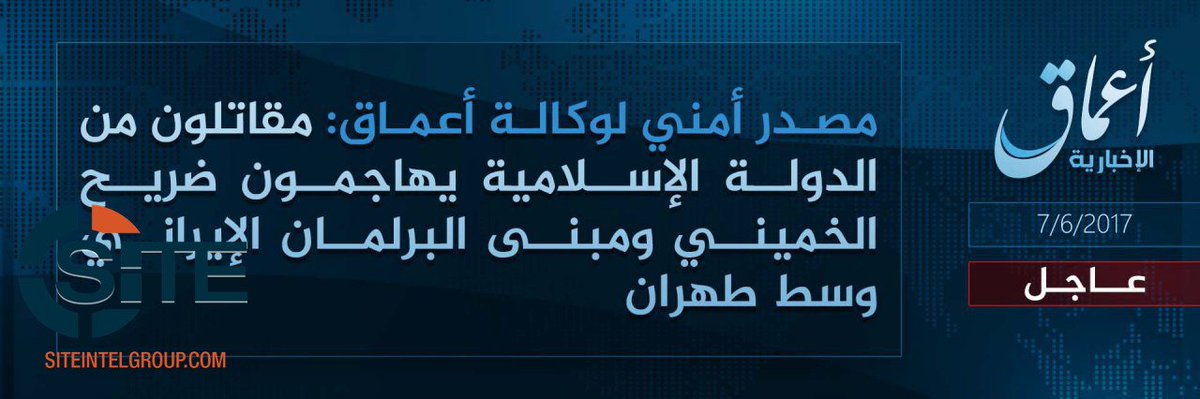
Islamic
State claimed responsibility for the attacks according to the
ISIS propaganda arm, Amaq news agency.
The
moment the bomb went off, captured on CCTV (Image courtesy of
Tasnim News)
Aftermath
of suicide bomb at tomb of Imam Khomeini (Image courtesy of
Tasnim News)
Terrorists’
kit left behind during fighting(Image
courtesy of Tasnim News)
A
third plot was also foiled Iran’s internal intelligence agency.
According to Iranian state broadcaster Irib, “Members of a third
group were arrested before being able to carry out any attack.”
The
attacks appear to be specifically designed to promote a
US-Israeli-Saudi sectarian narrative in the region designed to stoke
tensions between different religious sects of Islam. Regarding
this,The
Guardian reports:
“Shia
Iran has been singled out as a target by Sunni jihadis, including
Isis, but has largely escaped attacks within its urban
centres. Iran provides
ground forces to fight Isis and other rebel groups in Syria and
Iraq.”
“Isis
published a rare video in Persian in March, warning that it “will
conquer Iran and
restore it to the Sunni Muslim nation as it was before”. The group
and other extremists consider Shias to be apostates, and the video
accuses Iranians of persecuting Sunnis over the centuries.”
Iran’s
Parliament (Majlis) and the mausoleum of the late founder of the
Islamic Republic Imam Khomeini in the capital Tehran have come under
terrorist attacks.
According
to reports, a dozen people have been killed in Wednesday's attacks
while another 42 have been injured and admitted to 3 hospitals to
receive treatment.
The
Daesh Takfiri terrorist group has claimed responsibility for the
attacks.
Saudi
Foreign Minister Adel al-Jubeir has said in Berlin that he believes
the Gulf states can resolve the dispute themselves, but that Qatar
must take several steps in order to restore ties.
"The
issue with Qatar goes back a number of years. There was an
understanding for Qatar to take measures about supporting some
organizations and some individuals. Qatar committed to deal with the
issue but regrettably we didn't see an appropriate response. And this
is what led some countries to take measures against Qatar," he
said.
"We
took these measures with great pain and we took them for Qatar's
interests, for the interests of the region and for the sake of
stability and security. We hope the brothers in Qatar will take the
appropriate measures to avoid this crisis."
"This
terrorist attack happened only a week after the meeting between the
US president [Donald Trump] and the [Saudi] backward leaders who
support terrorists. The fact that Daesh has claimed responsibility
proves that they were involved in the brutal attack," a
statement read as quoted by Reuters.
Earlier
in the day, a group of four people in women's clothes opened fire in
the building of the Iranian Parliament, with a subsequent explosion.
Another attack involving an explosion took place near the Imam
Khomeini shrine.
The
Iranian Justice Ministry said earlier in the day that at least 12
people were killed and 39 injured in the attacks on the parliament
and the Imam Khomeini shrine, also in Tehran.
In
the ongoing diplomatic crisis between Qatar and its Gulf/Arab peers,
which is either the result of Saudi nat gas envy or - for those who
watch CNN - Russian hacking, Turkey has emerged as a vocal supporter
of the small but wealthy state. On Tuesday, Turkish President Recep
Erdogan defended Qatar, saying he personally would have intervened if
accusations that the tiny Gulf emirate supports "terrorism"
were true and said he intends to "develop" ties with the
embattled Gulf state hit by sanctions from Saudi Arabia and its
allies.
"Let
me say at the outset that we do not think the sanctions against Qatar
are good," Erdogan said in a speech in Ankara."Turkey will
continue and will develop our ties with Qatar, as with all our
friends who have supported us in the most difficult moments," he
added in reference to last year's failed coup. The support puts
Turkey in a complicated position because while the NATO member has
close ties with Qatar it also has good relations with the other Gulf
states, especially Saudi Arabia.
Turkey's
support for Qatar also has ideological reasons as in the past both
both have provided support for the Muslim Brotherhood in Egypt and
backed rebels fighting to overthrow Syrian President Bashar al-Assad.
Erdogan
was careful not to criticise Riyadh, calling on the member nations of
the Gulf Cooperation Council to "resolve their differences
through dialogue".
"Efforts
to isolate Qatar ... will not solve any problem," said Erdogan,
praising Doha's "cool-headedness" and "constructive
approach".
"Presenting
Qatar as a supporter of terrorism is a serious accusation," the
Turkish leader said. "I know [Qatar's leaders] well and if that
had been the case, I would have been the first head of state to
confront them" which of course is ironic coming from
near-dictator, who last year cracked down on over 100,000 Turkish
citizens accusing them of cooperating with Fethulah Gulen's "shadow
state", and who has been accused of using false flag terrorist
attacks to crack down on the Kurdish minority in his country.
On
Wednesday morning Turkish support for Qatar escalated after the
country's parliament was expected to fast-track a draft bill allowing
its troops to be deployed to a Turkish military base in Qatar,
officials from the ruling AK Party and the nationalist opposition
said.
According
to Reuters, lawmakers from Erdogan's AK Party have proposed debating
two pieces of legislation: allowing Turkish troops to be deployed in
Qatar and approving an accord between the two countries on military
training cooperation, AKP and nationalist opposition officials said.
The draft bills, which were drawn up before the spat between Qatar
and its Arab neighbours erupted, are expected to be approved by the
Ankara parliament later on Wednesday.
Just
like the US with its CENTCOM base, as part of an agreement signed in
2014 Turkey set up a military base in Qatar, its first such
installation in the Middle East. In 2016 Ahmet Davutoglu, then
Turkish prime minister, visited the base where 150 troops have
already been stationed, the Turkish daily Hurriyet reported.
In
an interview with Reuters in late 2015, Ahmet Demirok, Turkey's
ambassador to Qatar at the time, said 3,000 ground troops would
eventually be deployed at the base, planned to serve primarily as a
venue for joint training exercises.
The
imminent Turkish decision to deploy troops comes as a Saudi 24 hour
ultimatum, issued on Tuesday night, and containing 10 conditions
among which demands by Saudi Arabia is that Qatar end all ties Muslim
Brotherhood and Hamas, is ticking. While it was unclear what the
outcome would be should Qatar fail to comply, some analysts have gone
so far as to suggest a "military confrontation."
As
we reported last night, speaking to Al Jazeera, analyst Giorgio
Cafiero of Gulf State Analytics, a geopolitical risk consultancy
based in Washington, DC, said: "I think the Kuwaitis as well as
Omanis ... fear the prospects of these tensions escalating in ways
which could undermine the interest of all six members of the GCC.
"There
are many analysts who believe that a potential break-up of the GCC
has to be considered right now. If these countries fail to resolve
their issues and such tensions reaches new heights, we have to be
very open to the possibility of these six Arab countries no longer
being able to unite under the banner of one council," said
Cafiero.
He
added that if tension escalates, some have warned of a "military
confrontation". From Press TV
Turkey's
parliament approves a measure to deploy troops to a Turkish military
base in Qatar amid a widening rift between the Arab country and
neighbors in the Persian Gulf region.

 Posts