

BREAKING!
NORTH KOREA AGREES TO DISMANTLE MAJOR NUCLEAR TEST SITE
Subscribe to

 Posts
All Comments
Posts
All Comments
Showing posts with label Korea. Show all posts
Showing posts with label Korea. Show all posts
Wednesday, 19 September 2018


Sunday, 12 August 2018
The Australian media opens to the possibility of war
A
major new war is looming — and this one sits worryingly close to
home
A
“TICKING time bomb” on Australia’s doorstep is counting down to
war — and an expert says the world is blind to it.

26
November, 2014
A
MAJOR new war is looming — and this one sits worryingly close to
home.
Asia is at risk of
descending into a region-wide crisis with global implications, a
leading expert in Asia-Pacific affairs has warned.Dr Brendan Taylor, Associate Professor at ANU Coral Bell School of Asia Pacific Affairs, argues Asia is at a dangerous crossroads in his new book The Four Flashpoints: How Asia Goes to War.
A lot is happening in the northeast. China is set to overtake the United States as the world’s dominant power over the next decade. Questions remain over Kim Jong-un’s supposed dismantling of his nuclear arsenal. Japan is building up its military power again, and regional battles for ownership of lucrative oceans are intensifying.
At the same time, Asia is going through a series of individual crises that feed off and escalate one another — a similar pattern that occurred before the outbreak of World War I and II.
Dr Taylor argues there are four key “flashpoints” — politically unstable areas with the potential to erupt into sudden conflict — and all are situated within the continent.
“The risk of major war in Asia is much greater today than most individuals assume,” he warns. “All it would take is an accidental clash between the wrong two militarities, at the wrong place or the wrong time, and a highly dangerous escalation could occur. Asia has been lucky so far that it hasn’t.”
But what are the four “flashpoints” — and how bad is the situation?
SOUTH CHINA SEA
A lot has been said about China’s rising superpower status.
According to the Lowy Institute’s latest Asia Power Index, China is set to surpass the United States as the most powerful country in the Asia-Pacific region by 2030.
Nowhere is this more clear than in the South China Sea, a marginal sea in the Pacific Ocean bordered by 10 competing countries. Over the past five years, the size and scale of China’s land-reclamation has intensified, with satellite evidence of military build-up and threats uttered to the rest of the world — including Australia.
The sea continues some of the world’s most important shipping lanes, and is believed to hold trillions of dollars in undiscovered oil and gas reserves.
The South China Sea has long been considered a potential outbreak spot for a global war.
The prospect of war breaking out over the South China Sea continues to be a major discussion point.
It’s perhaps surprising, then, that Dr Taylor says the South China Sea is the least likely of the four major flashpoints to erupt into war.
He notes that, while a lot of countries are involved in the ownership debacle, most of them aren’t interested enough to go to war over it.
But whether the West can keep the waters free in the face of an increasingly aggressive China is another thing. “Washington will find it increasingly harder to stare down Beijing in the South China Sea; geography favours China too strongly.”
Meanwhile, in the sea to China’s east, a similar — if not more worrying situation — is bubbling.
EAST CHINA SEA
You probably haven’t heard of this conflict in nearly as much detail. But the threat of escalating into war is just as real — if not more so — than the South China Sea.
The East China Sea is a disputed region situated in the middle of China, Japan, South Korea and Taiwan, believed to hold valuable natural resources.
At 1.25 million square kilometres, it’s less than half the size of the South China Sea, and receives significantly less media attention. But it’s just as hotly contested — and includes stand-offs between Japan and South Korea, Japan and China, and Taiwan.
The threat of the East China Sea escalating into war is just as real — if not more so — than the South China Sea.
While its location makes it less relevant to Australia than the South China Sea, this body of water has caused controversy for several years, with China’s vessels repeatedly sailing into the disputed waters.
“The prospect of Japan developing nuclear weapons is no longer unthinkable,” said Dr Taylor.
Noting a complicated relationship between China and Japan, he warns the East China Sea conflict could spark war between Japan and China over an “accidental military clash or a miscalculation”, as well as “virulent nationalism” between the two countries.
As Dr Taylor notes, one of the main reasons Japan is increasing its involvement in the South China Sea is out of concern that what China might get away with there will set the terms for what it can do in the East China Sea.
The resulting conflict could be catastrophic.
THE KOREAN PENINSULA
Tensions between North Korea and the wider world made a peak last year with the trade of threats between US President Donald Trump and Kim Jong-un.
Despite a symbolic pledge towards peace at the recent Singapore summit, Dr Taylor says the risk of escalation remains of the Korean peninsula.
He warns that the faltering of these diplomatic efforts could still lead to a strike from Mr Kim, should he read too much into American rhetoric and US military preparations.
“Or Kim, feeling invulnerable because of his burgeoning nuclear and missile arsenal, and buoyed by the prospect of a faltering US-South Korea alliance, could launch a surprise conventional strike against Seoul with a view to reunifying Korea by force.”
There are concerns Kim Jong-un isn’t dismantling his nuclear arsenal as promised in the June Singapore summit with Donald Trump.
Even if Mr Trump and Chinese President Xi Jinping were to strike a deal and trade North Korea for Taiwan, he said it’s unlikely Mr Kim would go down without a fight.
“In a worst-case scenario, he (Kim) even might unleash his nuclear arsenal on the world. Troublingly, declining powers throughout history have shown a tendency to lash out.”
Just last week, new evidence from satellite photos revealed renewed activity at the North Korean factory that produced the country’s first intercontinental ballistic missiles capable of reaching the United States.
The satellite images sparked fears Mr Kim was not keeping his word to dismantle his nuclear and ballistic missile program.
TAIWAN
Taiwan is only 36,000 square kilometres — but the island is hugely controversial.
Beijing sees the island as part of China, and is prepared to reunify the two nations by force if necessary, even though the island has its own self-ruling democratic government, and views itself as a sovereign nation.
While the US has continued to supply Taiwan with military arms for decades — despite officially recognising only China — Dr Taylor describes Taiwan as a “ticking time bomb”.
“America's military ability to defend Taiwan is already at its limit,” he writes. “The US advantage will likely be gone in a decade … allowing Beijing to deny America access to this theatre.
“America’s ability to intervene in the Taiwan Strait is receding, while an attempt to re-engage carries the risk of sparking “a war like no other”.”
Donald Trump has taken a harder line on Taiwan recently, which Dr Taylor believes is “a reflection of his frustration at Beijing’s unwillingness to deal more decisively with Pyongyang or to de-escalate in the South China Sea”.
He notes there are concerns Mr Trump may be willing to trade away US support for Taiwan in exchange for China’s help with resolving the North Korean issue.
Taiwan has its own democratic government, but China still views it as part of the mainland country.
Taiwan has its own democratic government, but China still views it as part of the mainland country.Source:Supplied
Dr Taylor notes that there “seems a strange complacency” about the prospect of war in Asia, “even as the key players understand how devastating a major war would be”.
The good news is that finding a solution isn’t impossible — but it won’t be easy. “It will require careful management of Asia’s increasingly interconnected flashpoints, which each require subtly different methods of control,” warns Dr Taylor. “More importantly, it will demand of Asia’s leaders a much greater sense of urgency than has so far been shown.
“Because time is running short. The doomsday clock is ticking, and midnight is almost upon us.”
You can listen to this on ABC HERE
The Four Flashpoints: How Asia Goes to War by Brendan Taylor (published by La Trobe University Press) is out now.
Monday, 19 February 2018
Sunday Wire - 02/18/2018
‘The Golden Age of Stupid’
with guests Mike Robinson, Marwa Osman
This week the SUNDAY
WIRE broadcasts LIVE as host Patrick Henningsen is joined
in-studio by Mike Robinson editor of the UK Column to discuss this week’s top stories
from the US, Europe and beyond.
In the first hour we’ll cover the latest ‘Russian Troll’ indictment in the US, and the bizarre Florida School Shooting and more.
Later in the second hour we’ll go live to Beirut, Lebanon to speak with journalist Marwa Osman about US Secretary of State Rex Tillerson’s recent visit to Lebanon, and what the US and Israel are really up to Syria and the Middle East.
Finally in the final hour, we’ll hopefully connect by Sunday Wire roving correspondent for culture & sport, Basil Valentine, to talk about US VP Mike Pence’s awful diplomatic display at the Winter Olympics in South Korea.
Enjoy the show…
In the first hour we’ll cover the latest ‘Russian Troll’ indictment in the US, and the bizarre Florida School Shooting and more.
Later in the second hour we’ll go live to Beirut, Lebanon to speak with journalist Marwa Osman about US Secretary of State Rex Tillerson’s recent visit to Lebanon, and what the US and Israel are really up to Syria and the Middle East.
Finally in the final hour, we’ll hopefully connect by Sunday Wire roving correspondent for culture & sport, Basil Valentine, to talk about US VP Mike Pence’s awful diplomatic display at the Winter Olympics in South Korea.
Enjoy the show…
Wednesday, 17 January 2018
US' EC-130H Compass Call aircraft that attack enemy plane's communication sent to Korea
US
Air Force Sends DOS-Attacking Aircraft to Korean Peninsula

16
January, 2018
According
to reports Monday, the US' EC-130H Compass Call aircraft, which is
capable of issuing a denial of service attack an enemy plane's
communication abilities, was deployed to South Korea's Osan Air Force
Base January 4.
Though
it's unclear why the state-of-the-art tactical aircraft was deployed
to the base, some critics have speculated that it may be used
to collect data on North Korea's military during the
2018 Olympic Games set to begin February 9.
Per
the US Air Force, the Compass Call is a "tactical weapon system"
that can use "noise jamming to disrupt enemy command and
control communications and deny time-critical adversary coordination
essential for enemy force management."
Based
at Arizona's Davis-Monthan Air Force Base, the aircraft
reportedly made its way to South Korea after stopping
off at Japan's Yokota Air Base, KBS World Radio reported. There
are only 13 other EC-130Hs active in the US Air Force.
"If
we can shut down or deny their communication," Lt. Col.
Chris Weaton of the Electronic Combat Squadron said in a
statement, "then we are causing chaos."
This
chaos, Weaton says, gives US forces a chance to take advantage
of the scramble and carry out their own attacks. An
estimated four of the US' 13 EC-130Hs are operating in Iraq
and Syria, Business Insider reported.
US
Bombers, Warships Summoned to Korean Peninsula as Olympic Games
Approach

16
January, 2018
The
US military is bolstering its presence around the Korean Peninsula as
the Olympic Games draw closer.
One
new amphibious assault ship, an extra aircraft carrier and a slew of
stealth bombers were moved to the Indo-Pacific region in recent days
and weeks, Military.com reports. On January 11, a trio of
nuclear-capable B-2 Spirit bombers touched down at Andersen Air Force
Base, Guam. On January 14, the USS Wasp amphibious assault ship, a
type of American helicopter carrier that also carries Marine ground
forces, arrived at its new homeport of Sasebo, Japan, with a squadron
of F-35B joint strike fighters operated by the 31st Marine
Expeditionary Unit. The USS Carl Vinson aircraft carrier is also en
route to the Western Pacific.
Amphibious
Assault Ship With First Squadron of F-35Bs Joins US 7th Fleet
The
deployments show that despite the agreement to postpone US-South
Korea military exercises until after the Winter Games, the Pentagon
has no plans of letting its guard down, Stars and Stripes notes.
The
same may not be true of the two Koreas, however. Last week, officials
from the two countries met for the first time in two years. The
meeting resulted in an agreement for North Korea to send its
largest-ever delegation to the Olympic games in Pyeongchang. South
Korea's government has said that officials from Seoul and Pyongyang
will meet again Wednesday at the demilitarized zone dividing the
Korean Peninsula.
A
newspaper run by North Korea's Workers' Party stated in a commentary
published over the weekend that the military maneuvers amounted to
"an unpardonable military provocation chilling the atmosphere
for improved inter-Korean relations."
"The
US imperialist warmongers would be well-advised to ponder over [the]
disastrous consequences to be entailed by their military provocations
against the DPRK [Democratic People's Republic of Korea] possessed of
powerful nuclear deterrence," the Korean Workers' Party added.
Meanwhile,
the Pentagon has rejected the notion that the military movements are
aimed at any one country in particular. "You would be wrong to
view the bomber deployment within the single lens of what it means to
the Korean Peninsula. It affects allies across the Pacific," the
Defense Department's joint staff director, Lt. Gen. Kenneth McKenzie,
told reporters last Thursday.
When
asked whether the vessels and warships in the Western Pacific were
aimed at sending a message to Beijing, McKenzie remarked, "I
think when we move bombers across the globe, we send a signal to
everyone."
Friday, 6 October 2017
The cost of Trump's war
2 million may die if North Korea nukes Seoul and Tokyo – report
RT,
5 October, 2017
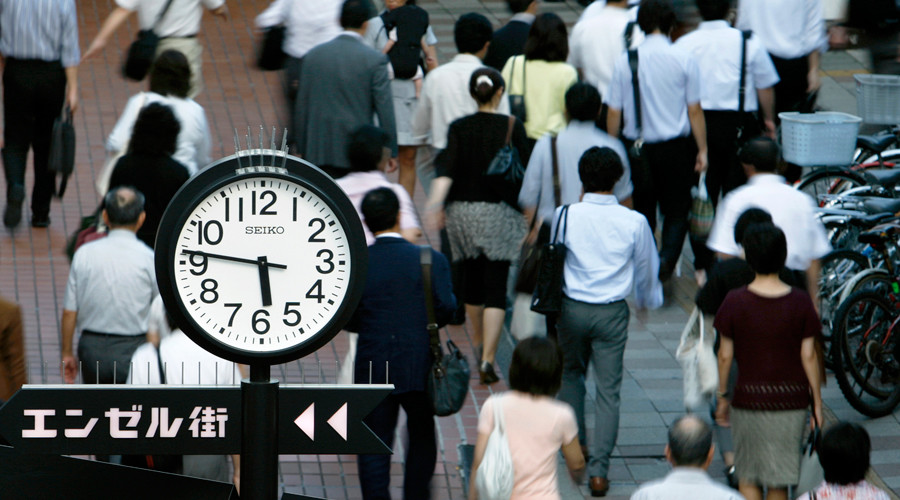
As tensions rise on the Korean Peninsula, a new report has estimated that, should North Korea deploy its nuclear arsenal on Seoul and Tokyo, the death toll could be up to 2.1 million, with around 8 million injured.
Over the past few months, the stand-off, with Pyongyang on one side, and the US and its allies on the other, has been escalating, with belligerent rhetoric and provocative military posturing on both sides. Amid these tensions, a study by 38 North – a site on North Korean affairs run by Johns Hopkins University’s School of Advanced International Studies – has revealed the potential consequences of a nuclear strike launched by the North on its neighbors.
The report’s author, Michael J. Zagurek Jr., notes that “history is replete with ‘rational actors’ grossly miscalculating, especially in crisis situations,” and that another nuclear or missile test might trigger a hostile reaction from the United States, prompting a nuclear strike from the North Korean regime.
Estimating that Pyongyang has a nuclear arsenal of 25 warheads, Zagurek calculated what would happen if leader Kim Jong-un decides to launch all of them at Seoul and Tokyo, since both Japan and South Korea are key US allies. Accounting for missile defense systems such as the THAAD, deployed in South Korea, and the Aegis Ashore ABM, due to be installed in Japan, he said that “not all 25 North Korean nuclear missile warheads will detonate on their targets.”
Zagurek gave estimates of the casualty rates from 20 percent, 50 percent and 80 percent of the missiles hitting their targets. According to the highest estimates, 2.1 million people would be killed and another 7.7 million wounded.
Japan is the only country to have had two atomic bombs detonate on its territory as an act of war. On August 6, 1945, an American B-29 bomber dropped the world’s first deployed nuclear weapon over Hiroshima, Japan, killing 80,000 and obliterating 90 percent of the city. This was followed three days later by another bomb dropped on Nagasaki, which killed another 40,000. Earlier that year, Tokyo was firebombed by American planes, leading to 100,000 civilian deaths.
However, as the report notes, population density in metropolitan Japan and South Korea is a lot higher than it was several decades ago. Also, the bombs dropped on Hiroshima and Nagasaki had a strength of around 15-25 kilotons, while the device tested by North Korea in September had a likely strength of 108-205 kilotons.
The situation on the Korean Peninsula is being aggravated by both North Korea and the US and its allies. Pyongyang has carried out a number of nuclear tests and missile launches, while the United States has continued to carry out joint exercises with South Korea and Japan while escalating its rhetoric against Pyongyang.
Russia and China have proposed a ‘double-freeze’ solution, in which the US ceases its drills with South Korea in exchange for the North suspending its weapons programs. The US, however, has not accepted the proposal, saying it has every right to carry out exercises with its allies.
Moscow and Beijing have repeatedly stated that the crisis can be resolved only through peaceful means.
On Wednesday, Russian President Vladimir Putin also pointed out that should someone decide to attack North Korea in “a disarming strike,” the aftermath of it would be uncertain as “no one knows for sure what is where.”
Washington earlier said that it would only talk to Pyongyang about bringing back Americans who are being detained in North Korea.
“Beyond that, there will be no conversations with North Korea at this time,” White House spokeswoman Sarah Sanders stated
Sunday, 3 November 2013
Pollution
Toxic
Smog from China Engulfs Korea

3
November 2013
Heavy
smog blanketed Korea this week blown in by northwesterly winds from
China. The concentration of ultrafine particles is often at its worst
between December and March, with most of the smog comes from Beijing
and surrounding Hebei Province.
The
smog crosses the West Sea and reaches the Korean peninsula anywhere
between six hours and a day later. Meteorologists say the smog is
diluted as it crosses the West Sea, but 40 to 50 percent still
reaches Korea.
On
Thursday, the concentration of ultrafine particles in Dongducheon,
Gyeonggi Province north of Seoul, reached 255㎍/㎥,
five times the normal level in the region. It stood at 138 ㎍/㎥
in Incheon
and 112㎍/㎥
in the
capital.
The
concentration of ultrafine particles in Dongducheon was 2.5 times
greater than the safe level set by the Environment Ministry of 100㎍/㎥
per day.
Winter
smog carries more ultrafine particles and is more hazardous than the
sandstorms that blow over here in spring. According to the National
Institute of Environmental Research, around 20 to 30 percent of
sandstorms consist of ultrafine particles, but smog contains 60 to 70
percent.
Dust
can cause asthma and other respiratory illnesses as well as
cardiovascular diseases, but the most hazardous substance is
ultrafine particles that are not filtered by the bronchial tubes and
directly enter the lungs, where they can cause pneumonia.
Smog
also contains toxic heavy metals such as lead, cadmium and arsenic.
"Unlike sandstorms, smog contains various chemicals and heavy
metals that react with the sunlight and multiply," said Chun
Young-shin at the Korea Meteorological Administration.
It
is difficult to predict smog levels since it is not clear where it
originates and how many pollutants it contains. The Chinese
government does not reveal data about the origin of pollutants, but
the most polluted parts of China are along the east coast, which is
near Korea.
Chances
of smog increase each time northwesterly winds blow over from China.
Although the concentration of ultrafine particles in smog weakened
temporarily between Wednesday and Thursday, the KMA warned it will
rise again on Friday.
Korea,
China and Japan decided in a regional meeting in May to form a joint
committee to discuss this problem. Chung Bok-young at the Environment
Ministry said the Korean government hopes to gain access to Chinese
data while offering to share clean fuel technology with China.
But
it will take some time before the trilateral group can be formed.
"The only thing we can do right now is to try to predict exact
smog levels and prepare to deal with it as best we can," said a
KMA official.
At
present, the KMA announces forecasts only of fine particles but not
of ultrafine ones. There are only 20 sensors in Korea that can detect
ultrafine particles. The ministry plans to provide forecasts for
ultrafine particles starting in 2015.
Wednesday, 14 August 2013
The Big Cover-Up
China
Falls Under Suspicion of Covering Up Deaths as Ocean Heat Dome
Expands to Blanket Korea and Japan

US
Weather Fatalities by Type
13
August, 2013
According
to recent reports from NOAA and the CDC,
heat is the most lethal form of weather in the United States. Death
and injury rates have been on the rise as human-forced temperature
increases have expanded, surging northward into major metro areas
such as New York City. The CDC report showed a growing number of heat
deaths and injuries for this northern region, with the New York Metro
area seeing an average of 13 deaths and over 440 heat injuries each
year during the period from 2000 to 2011. Nationwide, the average
number of heat fatalities surged to 117 during a period from 2003 to
2011.
Heatwaves
have hit the NYC region time and time again over the past decade,
driving the death and injury rate inexorably higher. However, the
heat impacting that area is paltry when compared to the extreme and
deadly temperatures that have broiled southeastern China since late
July. For more than three weeks, the Shanghai region of China has
experienced almost daily temperatures in excess of 100 degrees
Fahrenheit and sweltered under very high humidity for such hot
conditions. This
combination has pushed wet bulb temperatures (a measure that
simulates the temperature of human skin) into a range of 29 to 32
degrees Celsius,
very close to the lethal human limit of 35 degrees C.
On
Sunday, an extreme heat pulse sent thermometers soaring to 109
degrees Fahrenheit in the city of Shengxian — its hottest
temperature ever recorded and a scorching 32.3 degree wet bulb
temperature. Meanwhile, on the same day, Hangzhou had hit a new all
time record high temperature of 105.8 degrees Fahrenheit, the twelfth
time since July 24th that Hangzhou has tied or broken its old all
time temperature record which, in some cases, was set just the day
before.
High
heat and humidity of this kind is deadly to humans because as
temperatures approach 35 degree C wet bulb readings, it is nearly
impossible for the human body to carry away the excess heat it
generates through evaporation. Never has a wet bulb temperature of 35
degrees C been recorded by humans. However, climate scientists such
as James Hansen have asserted that it’s just a matter of time under
the current regime of human-caused warming before we hit that ominous
mark.
So
have thousands died?

Road
Sign Burns Under Record Heat in Shanghai Region
As
reports of vehicle fires and sporadically smoldering infrastructure
in the massive Chinese heatwave flared, suspicions emerged that
Chinese officials are covering up what are potentially thousands of
heat-related deaths.
According
to Chinese news agencies, the official report is that about two dozen
have died so far in Shanghai’s record-shattering heatwave. But
similar heat in Europe and Russia resulted in tens of thousands of
deaths over the past decade. At issue is the fact that China’s
current record heat and humidity are at levels never before
experienced in its weather history and that this event is even more
intense than the deadly heatwaves of Europe and Russia. Add to this
extraordinarily dangerous event the fact that more than 400 million
people live in the region of China currently being socked by record
heat and the vague reports coming out of China seem highly
incongruent.
Never
before has such high wet bulb temperatures hit a region of so dense a
population. Yet China has only continued to report the vague ‘dozens’
estimate. It was this discrepancy that caused
WeatherUnderground Historian Christopher Burt to speculate that China
may be covering up a catastrophic rash of fatalities:
Eastern
China, where about 30% of the population of the country and 5% of the
global population reside (approximately 400 million people) has
undergone a heat wave unprecedented in its history. No one really
knows how many have died as a result of the heat wave (Chinese news
sources claim ‘about two dozen’), but statistically it is almost
certain that many thousands must have perished as the result of the
heat over the past month.
If
Christopher Burt’s, quite rational, analysis ends up proving true,
we can expect reports of fatalities to begin to slowly trickle out of
China. Misreporting and under-reporting of Chinese heatwave
casualties would also be yet one more instance of government
officials and mainstream media downplaying and under-reporting the
effects of catastrophic events related to human-caused climate
change. Such under-reporting is yet one more manifestation of a
dangerous and paralyzing denial that has so hampered an effective
response to these increasingly dangerous and self-inflicted events.
Making
such a call, however, is possibly premature as residents of this
region are more acclimated to excessive heat than Europeans or
Russians. As Burt notes:
One
thing to keep in mind, however, is that it is ALWAYS hot and humid in
eastern China during the summer (unlike Russia and Western Europe),
so perhaps the population has learned to adapt to extreme heat.
The
Ocean Heat Dome Expands to Cover Korea and Japan

Ocean
Heat Dome Over China, Korea and Japan
A
sprawling heat dome high pressure system that has scorched a region
stretching from coastal China to a large expanse of the Pacific Ocean
shifted eastward into Korea and Japan over the weekend. Southern
Japan saw temperatures surge into the 100s with Shimanto recording
the highest temperature ever measured in Japan of 105.8 degrees
Fahrenheit (41 degrees Celsius). Tokyo, meanwhile, broke the record
for its hottest minimum temperature at 86.7 degrees Fahrenheit (30.4
C).
South
Korea, over the same period, reported 8 deaths as temperatures soared
to 102.2 degrees Fahrenheit (39 C) in Busan. Temperatures in Seoul
hit the still hot, but more moderate, 90s (32 C +).
Both
South Korea and Japan are surrounded on multiple sides by water. This
geographic feature would usually provide a cooling effect as ocean
temperatures are typically many degrees cooler than land
temperatures. But, in this case, a massive heat dome is baking the
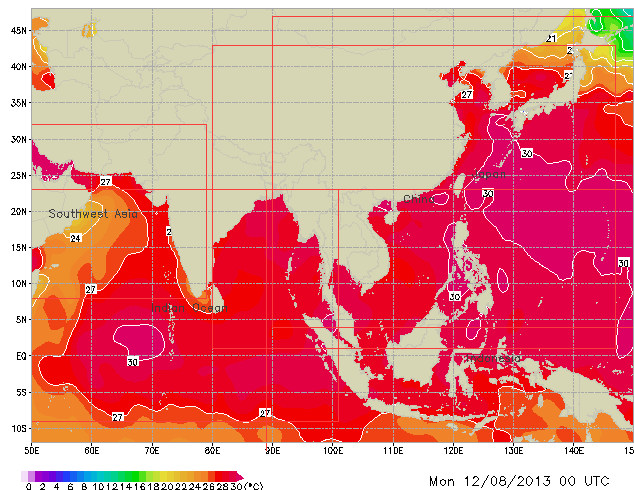
ocean itself to unprecedented high surface water temperatures. As a
result, a large area of open ocean now shows readings above 30
degrees Celsius ( 86 Fahrenheit). This extremely hot, near 90 degree
water, has formed the central pulse of the current heatwave even as
it has pumped extraordinarily humid air for such hot conditions over
adjacent land areas. A shift to the north of this large and still
growing region of extraordinarily hot ocean water led to the record
steamy conditions over Japan and Korea during the past few days —
both of which can expect little relief from the now, very hot, water.

Forecasts
for Shanghai, Korea, and Japan call for slightly less sweltering
temperatures in the upper 90s with more isolated readings in the 100s
as clouds are expected to move in and increase chances of rainfall by
later this week. A slight improvement but a welcome change,
nonetheless. Meanwhile, hot ocean conditions create a risk for
continued very hot temperatures for much of this coastal region.
Thursday, 30 May 2013
Nuclear news
S.
Korea shuts faulty nuclear reactors

28
May, 2013
SEOUL
- South Korea on Tuesday shut down two nuclear reactors and delayed
the scheduled start of operations at two others as part of a widening
investigation into a scandal involving fake safety certificates.
South
Korea's nuclear power reactor in Gori near the southern port of
Busan, is shown under construction February 5, 2013. South Korea on
Tuesday shut down two nuclear reactors and delayed the scheduled
start of operations at two others as part of a widening investigation
into a scandal involving fake safety certificates.
The
latest move means 10 of the South's 23 nuclear reactors are currently
offline for various reasons, stoking fears of a possible energy
shortfall this summer.
Nuclear
power is meant to meet more than 35 percent of national electricity
needs.
The
Nuclear Safety and Security Commission (NSSC) said it had shut down
two reactors -- one at the Gori nuclear complex and another at the
Wolseong plant -- after learning that both had used parts supplied
with forged quality warranties.
The
scheduled resumption of another reactor under maintenance at Gori,
and the start of a new reactor at Wolseong were postponed for the
same reason, the commission said.
Parts
used at all four reactors will have to be replaced, it added.
South
Korea's nuclear sector has been dogged by a series of malfunctions,
forced shutdowns and corruption scandals that have undermined public
confidence already shaken by the 2011 Fukushima nuclear disaster in
Japan.
All
parts supplied for use in South Korean reactors require quality and
safety warranties from one of 12 international organisations
designated by Seoul.
Last
year, officials said eight suppliers were found to have faked
warranties covering thousands of items used in a number of reactors.
Although
they were "non-core" components that presented no public
safety risk, the authorities instigated an inspection of all reactors
nationwide and ordered the replacement of any parts supplied with
forged documentation.
Earlier
this month, six nuclear power engineers and suppliers were jailed for
their part in the scandal.
In
May last year, five senior officials of the state-run Korea Hydro
Nuclear Power Co. were charged with trying to cover up a potentially
dangerous power failure at the country's oldest Gori-1 reactor.
Despite
increasing public concern, the government has vowed to push ahead
with its nuclear power programme, and plans to build an additional 16
reactors by 2030.
Tape,
broomsticks, and safety cones used at nuclear power plants to manage
leaks
29
May, 2013
Many,
if not all of our readers, saw the photo that was leaked out of the
San Onofre Nuclear Generating Station to the press, which showed a
massive pipe that had been leaking saltwater which had been directed
into a floor drain using plastic, tape, and broomsticks.
“If
that’s nuclear technology at work and that’s how we’re going to
control leaks I think the public should know,” the inside source at
San Onofre said.

This
week, TEPCO released their own version of this photo, which was taken
inside of the crippled Unit 4 reactor building, showing a orange
safety cone which has been flipped upside down to direct leaking
materials into a hose which has been attached with duct tape.

EPA:
Radioactive waste at Bridgeton landfill poses no public danger
The
Environmental Protection Agency says a March aerial survey of the
West Lake Landfill in Bridgeton has determined radioactive waste
buried there does not pose a danger to the public.
KMOV,
29
May, 2013
The
agency scheduled a 2 p.m. press conference to focus on the results
taken from the March 8 survey.
A
plane was used during the survey to identify surface areas that emit
gamma radiation. The aircraft was a specially equipped plane that can
detect radiation and dangerous chemicals and has been used at the
inauguration and the Super Bowl.
The
200-acre landfill contains two areas where waste from World War
II-era nuclear weapons manufacturing was buried in the 1970s.
But
the survey “determined that radiologically-contaminated wastes
buried there in the 1970s remain contained within secure, fenced
areas of the Superfund site, and do not pose public health risks,”
according to the report issued by the EPA.
The
agency said it would hold a public meeting at Pattonville High School
on June 25 to further discuss the survey’s results, as well as
future plans for the West Lake Landfill.
Area
residents have long been concerned about the radioactive waste
illegally dumped at the landfill and were encouraged by the initial
testing in March.
“At
the meeting they said that they were going to send a plane and they
did and that’s encouraging,” said resident Dawn Chapman. “That
shows that they’re not just giving lip service.”
But
environmentalist group Missouri Coalition for the Environment
responded with concern. According to spokesperson Ed Smith, the EPA
only tested for one of three types of radiation.
"The
concerns we have [are that] the alpha and beta radiation can attach
to particles such as dirt and blow off site," he said.
The
EPA responded by downplaying concerns.
"The
state of Missouri did a radiation survey just this month which did
not detect any radiation around the perimeter of the site, above
background levels," said EPA project manager Dan Gravatt.
The
report was released as operators of the landfill next door have been
removing six pipes they believe will help eliminate a strong odor
that is bothering residents who live nearby.
But
a group of concerned citizens announced work being done to fix the
smoldering deep within the site isn’t working.
The
group, called Missouri Coalition for the Environment, said a fire
continues to move toward the radioactive waste. They said it has
moved 200 feet closer in the last three months.
The
Missouri Department of Natural Resources has been monitoring the hot
spots at the landfill, and posting the temperature readings online.
Organizers
are now saying Republic Services has failed in taking the lead to fix
the problem and it’s now time for the state and federal government
to take over.
Republic
Services responded to the concerns by releasing a statement.
“At
currently measured rates of movement it would take more than 10 years
(for the smoldering) to reach the edge of the north quarry,” the
statement read.
The
pipe-removal process, expected to last through mid-June, is also
expected to make the smell worse for about two weeks. Eventually, the
company will put a plastic cap over the landfill.
The
company has offered to relocate about 270 households within a mile of
the landfill while the work proceeds.
Still,
others said they would remain in their homes for fear of theft.
A
spokesperson for Republic Services said security should not be an
issue. Bridgeton police officers have been be keeping an extra watch
on the three neighborhoods involved in the voluntary evacuation.
Last
week, Missouri Attorney General Chris Koster and Bridgeton Police
Chief Don Hood confirmed reaffirmed their commitment to provide extra
security.
Subscribe to:
Posts (Atom)