Facebook
Taps Militarist Think Tank Atlantic Council to Police its Content
From
Alex Jones to alleged Russian trolls, major internet companies are
increasingly policing content on their platforms.
Max Blumenthal of
the Grayzone Project says the partnership between Facebook and the
Atlantic Council highlights "the merger of the national security
state and Silicon Valley."
Russiagate
has deepened the partnership between Washington and Silicon Valley,
and leftist websites are among the first casualties.
After falsely
accusing an anti-white supremacist rally event page of being a fake,
Facebook shut down the page of VenezuelaAnalysis.com for several
hours without explanation.
We speak to VA founder and TRNN host Greg
Wilpert, as well as the Grayzone Project's Max Blumenthal
RT, 10 September, 2017 Cubans
are dealing with the aftermath of deadly Hurricane Irma, the most
powerful storm to hit the country since 1932.
Irma
was a Category 5 storm, the highest possible ranking on the
Saffir–Simpson scale, when it bashed Cuba on Saturday morning.
The
hurricane, which had already wrought havoc across the Caribbean and
killed 22 people, brought winds of 200kph, uprooting trees, tearing
off roofs and leaving widespread flooding in its wake.
The
government had ordered the evacuation of more than a million people
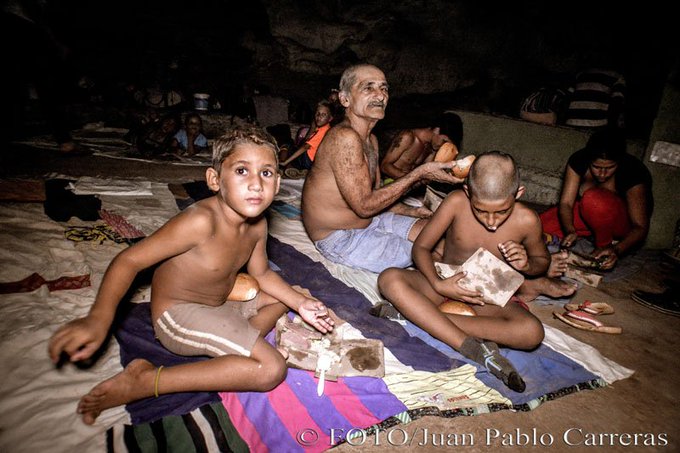
in advance of the storm landing. Juan Pablo Carreras, a photographer
with Cuban news outlet ACN, captured
pictures of
many of the evacuees taking refuge in underground bunkers in advance
of Irma’s arrival.
The
storm weakened to a Category 3 as it moved north along a 320-km
stretch of the coastline.
However,
it later regained strength as it moved further north towards Florida.
Cubans awoke Sunday morning to find destruction similar to that
suffered by other Caribbean islands lashed by the powerful storm.
While
the eastern and northern coasts were the worst hit, the force of the
storm sent flooding further inland and for a period on Saturday, Irma
covered most of the island.
ACN noted that
the Civil Defense put the provinces of Mayabeque and Artemisa and the
capital Havana in an "alarm phase" at 8am on Saturday.
The
island’s famous tourist areas, including Cayos Coco, Guillermo, and
Varadero, all sustained serious damage as the storm walloped the
island’s eastern seaboard. However, no deaths have been reported.
Irma
leaves Cuba late Saturday with staggering damage to infrastructure
and agriculture
As Irma left Cuba late on
Saturday and directed its 200kmh winds towards Florida, authorities
on the island were assessing the damage.
They warned of
staggering damage to keys off the northern coast studded with
all-inclusive resorts and cities, as well as farmland in central
Cuba.
There were no immediate reports of deaths in Cuba - a
country that prides itself on its disaster preparedness - but
authorities were trying to restore power, clear roads and warning
that people should stay off the streets of Havana because flooding
could continue into Monday.
Residents of "the capital
should know that the flooding is going to last more than 36 hours,
in other words, it is going to persist," Colonel Luis Angel
Macareno said late on Saturday, adding that the waters had reached
about 600 meters into Havana.
As Irma rolled in, Cuban soldiers
went through coastal towns to force residents to evacuate, taking
people to shelters at government buildings and schools - and even
caves.
Video images from northern and eastern Cuba showed
uprooted utility poles and signs, many downed trees and extensive
damage to roofs.
Witnesses said a provincial museum near the
eye of the storm was in ruins.
And authorities in the city of
Santa Clara said 39 buildings collapsed.
More than 5,000
tourists were evacuated from the keys off Cuba's north-central
coast, where the government has built dozens of resorts in recent
years.
Civil defence official Gregorio Torres said authorities
were trying to tally the extent of the damage in eastern Cuba, home
to hundreds of rural communities and farmland.

 Posts
Posts