Showing posts with label radioactivity. Show all posts

Sunday, 4 March 2018

Radioactive releases from Russia's new weapons

I don't want to pour cold water over this report, which is likely to be true but I do wonder whether the same people might be among the first to deny the extent of damage wrought by Fukushima - or abrupt climate change for that matter.

And we all know (sic) that there has never been any radioactive releases from American testing.

Is Putin’s new nuclear systems source of mysterious radioactivity in the air?

If it is true that Russia have tested its new nuclear-powered missiles, some radioactive releases could occur, says Norwegian nuclear safety expert.


3 March, 2016

Flexing his nuclear muscles like never before, the Russian President in his annual state-of-the-nation speech presented two new nuclear-powered delivering systems for warheads.

Several times over the last two years, tiny small traces of radioactive iodine-131 have been measured in Europe, especially in the Scandinavian countries. National radiation agencies have been unable to direct the source of release, speculating in everything from leakages at a medical isotope production facility to leakages from operative nuclear reactors.

In Norway and Finland, radioactive isotopes were discovered at monitoring stations in January and March last year, as well as in January and February this year. The first cloud of radioactivity last year was first detected at Svanhovd air filter station on Norway’s border to Russia in the north, but spread over most of Europe south to France and Spain over the following two weeks.

Authorities underline that the levels were nearly undetectable and are far from presenting any health concern to population.

«Nobody has anything like this»

Spending much of speech to lawmakers in Moscow on Thursday talking about nuclear weapons, Vladimir Putin sent a clear message to the United States. Russia has developed new missiles and a underwater torpedo that would be immune to ballistic missiles shields and other means to stop an nuclear attack.

«Nobody has anything like this,» Putin said simultaneously as a video animation was displayed on big screens. Two of the screened weapons Putin presented are new nuclear-powered delivery systems.

The nuclear-powered underwater drone is known from before, although it is highly unclear how far Russian weapons constructers have come in regards towards deploying such massive drone.

Arctic test?


More remarkable is the nuclear-powered cruise missile. Using nuclear power for a missile has the advantage of extending the range significantly. On Putin’s screen, the video animation showed the missile flying southbound through the Atlantic, before turning north again on the west coast of South America.
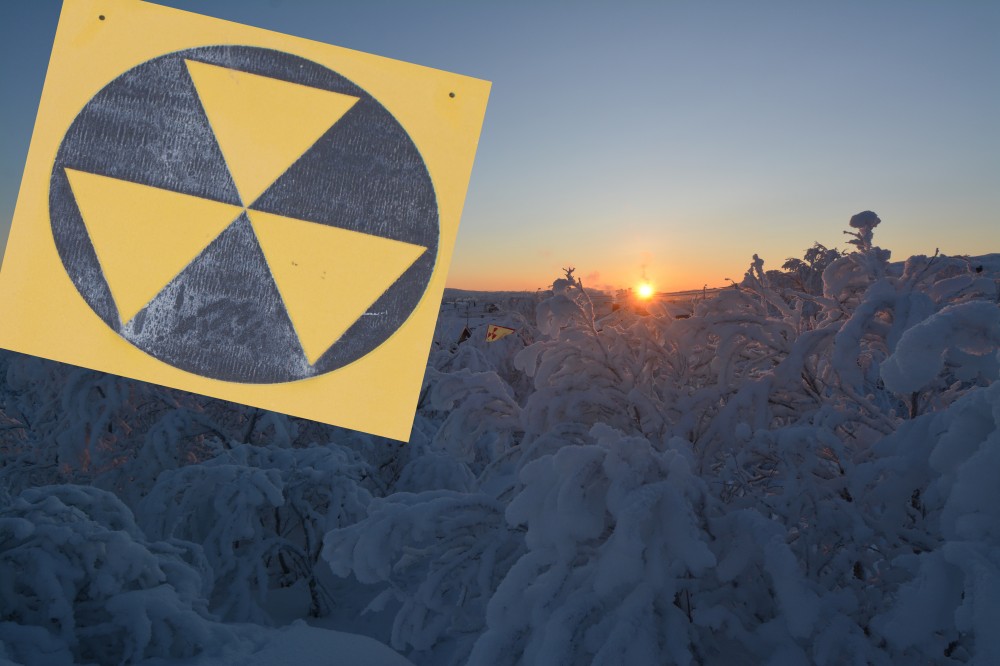
Small amounts of the radionuclide Iodine-131 of anthropogenic origin was measured in the Pasvik valley in January. Photos: Thomas Nilsen

On Thursday this week, Fox News reporter Lucas Tomlinson sent a tweet where he quoted U.S. officials saying «Russia’s nuke powered cruise missile not operational yet, still in ‘R&D’ phase and has crashed recently in testing in the Arctic, despite claims by Putin today.»

Tomlinson’s tweet is referred to in an article in the Washington Post.

If this is true or not is difficult to check. According to a source in Russia’s military-industrial complex speaking to Vedomosti, the radiation safety during the testing of the missile was ensured. «The nuclear installation on board was represented by an electric power supply,» the source said.

That could have been the case if the missile was tested on-ground, but unlikely if it was a real flight test. 

Talking about the successful test, President Vladimir Putin said in his speech that the missile was launched with a nuclear installation. «At the end of 2017, a successful launch of the newest Russian cruise-missile with a nuclear-power plant took place at Russia’s Central Range,» Putin told the applauding audience.

Likely radioactive releases

Nils Bøhmer, a nuclear physicist with the Bellona Foundation in Oslo says to the Barents Observer that a test of a nuclear-powered cruise missile would most likely have caused releases of detectable isotopes.

«If it is true that Russia has tested its new nuclear-powered missile, some radioactive released could have occurred,” Bøhmer says and points to the United States’ on-ground testing of reactors for a nuclear-powered aircraft back in the late 1950s. «That project was cancelled because of high releases of radioactivity behind the engines at the test site in Idaho Falls,» Nils Bøhmer explains.

He says there could be a connection between the mysterious iodine-131 detected and Russia’s new missile. «This could be explained by the secret testing of Russia’s new nuclear-powered missile. Because of short half-life of eight days of iodine-131, this isotope measured in the air could only be explained by reactor operations. Other isotopes, like Cecium-137 that has a half-life of 30 years is found in nature long after the releases have happened. This could explain why only iodine-131 is detected, because Cesium-137 is masked by the releases from the Chernobyl accident,» Bøhmer tells.

A nuclear-powered cruise-missile with a small reactor would most likely have an partly open-air cooling system, where isotopes simply would fly out as the missile speeds away.

Nuclear sniffer

The United States’ so-called “nuclear sniffer” WC-135 plane has by several occasions since early 2017 been deployed to the British air base in Surrey. From the base, the plane has made take-offs for flights to Norway and Baltic Sea area to monitor radioactivity levels, the newspaper Independent reported in February last year.

WC-135 can detect and identify radioactive isotopes from nuclear weapons testing as well as releases from reactors or other sources.

Althoug Nils Bøhmer agrees with radiation safety authorities in the Nordic countries that the levels measured do not present any health risk to population, he is concerned. «We know from history that when military scientists are developing weapons involving nuclear technology, safety is not always the number one priority.»

«The releases of radioactivity could be quite high directly at the site where the nuclear-powered cruise-missile is tested, which could lead to potential health concerns for the local population,» Nils Bøhmer says. 

«It is also said by Putin that Russia is developing a new underwater nuclear-powered drone. Very little information is know about the technology on-board this drone, but one could speculate that also this nuclear-powered vehicle could lead to radioactive releases.» 

Bøhmer says such radioactive releases could contaminate the fishing ground of the Barents Sea, if the testing takes parts in those areas.

The Barents Observer reported about the new underwater drone, known as STATUS-6, first time in 2016. 


Tuesday, 15 April 2014

Fukushima


Fresh Fukushima leakage: over 200 tons of radioactive water pumped wrong way


14 April, 2014

Some 203 tons of highly radioactive water have been erroneously pumped at the crippled Fukushima nuclear power plant to the basement of an engineering and utilities service building, rather than to special-purpose storage tanks, according to the plant operator Tokyo Electric Power Company, TEPCO. But TEPCO points out that there is no further leakage threat, since the basement is in no way linked to drainage systems.

According to urgent radiation level gauging, there’s been no change in the level of radiation in the ground waters around the nuclear plant.

TEPCO is continuously pumping water into the three damaged reactors to cool them. The water pours out through holes in the facilities into the basements of the buildings. It is then pumped out of there into a decontaminating system. But the stand-by pumps switched on for some unknown reason on April 10th and remained operational until the 13th . This resulted in the pumping of over 200 tons of water into the basement of a building that’s used for waste incineration.
The Caesium isotope concentration level is currently 37 million Bq per litre. In Japan, the critical radiation level for the water that’s poured into the ocean is 30 Bq per litre.

The nuclear plant managers are currently deciding on the pumping of the radioactive water out of the basement.

The Fukushima nuclear power plant was hit by a strong earthquake and the subsequent powerful tsunami in March 2011. The accident put the cooling systems of three generating units out of operation resulting in nuclear fuel meltdown. This was followed by massive radiation releases, as well as by radioactive contamination of terrain and ground waters.

Groundwater pumping starts in area of troubled Fukushima nuclear plant
Administration of the devastated Japanese Fukushima-1 nuclear plant has started pumping of groundwater from the surrounding areas to ensure it does not reach the zone of the station and become radioactively contaminated. The goal of the operation is to reduce the volumes of contaminated water, flowing into the ocean, on which shore the NPP is located.

Technical wells for groundwater intake are drilled on hillsides around the station. Their contents will be drained with pumps into tank cars, ITAR-TASS informs. After a radiation level check-up that water is to be poured out into the ocean.
Before the start of pumping, the Fukushima-1operator company TEPCO had to convince local fishermen's cooperatives of its expediency. Those were strictly opposed to pouring groundwater into the ocean for fear that it may raise suspicions about the safety of fish and seafood produced here.

Now, about 400 tons of radioactively contaminated groundwater flow into the ocean near the ruined nuclear station every day. Their pumping before they reach the territory of the NPP will allow to reduce the volume by100 tons per day, TEPCO states. It is proposed to cut off the remaining groundwater from getting into the ocean by forming walls of artificial permafrost. These works are already underway near the NPP. Almost $500 million are allocated for them.

It is noteworthy that during three years since the accident, leaks of different volumes of contaminated water have been periodically reported, as well as various problems in the work of the Fukushima-1purification system. The biggest leak was registered in August, 2013.

The wreck at the Fukushima-1 took place as a result of a 9.0 magnitude earthquake on the North-East of Japan on March 11, 2011. Following the earthquake, a 14-meter tsunami wave reached the coast, which submerged four out of six nuclear reactors at the NPP and disabled the cooling system that led to a series of explosions of hydrogen and melting of the active zone. The disaster became the largest one in the quarter of a century after the catastrophe at the Chernobyl NPP.

Sunday, 9 February 2014

Radiation levels 'underestimated' by Tepco


Fukushima radiation levels underestimated by five times - TEPCO


RT,
8 February, 2014


TEPCO has revised the readings on the radioactivity levels at the Fukushima No. 1 nuclear plant well to 5 million becquerels of strontium per liter – both a record, and nearly five times higher than the original reading of 900,000 becquerels per liter.

Strontium-90 is a radioactive isotope of strontium produced by nuclear fission with a half-life of 28.8 years. The legal standard for strontium emissions is 30 becquerels per liter. Exposure to strontium-90 can cause bone cancer, cancer of nearby tissues, and leukemia.

Tokyo Electric Power Co. originally said that the said 900,000 becquerels of beta-ray sources per liter, including strontium - were measured in the water sampled on July 5 last year.

However, the company noted on Friday that the previous radioactivity levels had been wrong, meaning that it was also likely reading taken from the other wells at the disaster-struck plant prior to September were also likely to have been inaccurate, the Asahi Shimbum newspaper reported.

The Japanese company has already apologized for the failures, which they said were a result of the malfunctioning of measuring equipment.

TEPCO did not mention the radioactivity levels of other samples of both groundwater and seawater taken from between June and November last year – which totaled some 140.

However, the erroneous readings only pertain to the radiation levels measured in water – readings taken to measure the radiation levels in air or soil are likely to have been accurate.

In the basement of the station, the drainage system and special tanks have accumulated more than 360,000 tons of radioactive water. The leakage of radioactive water has been an ongoing problem in the wake of the accident at the Fukushima-1 nuclear power plant.

TEPCO also said on Thursday that 600 liters of contaminated water – which had 2,800 becquerels of beta-ray sources per liter in it, leaked from piping leading to a tank at the Fukushima nuclear plant.

A record high level of beta rays released from radioactive strontium-90 was detected at the crippled Fukushima nuclear power plant beneath the No. 2 reactor's well facing the ocean, according to the facility’s operator who released news of the measurements mid-January.

TEPCO measured the amount of beta ray-emitting radioactivity at more than 2.7 million becquerels per liter, Fukushima’s operator said as reported in the Japanese media.

In March 2011, an earthquake triggered a tsunami that hit Japan’s coast, damaging the Fukushima Daiichi nuclear power plant. The catastrophe caused the meltdown of three nuclear reactors at the facility, leading to the worst nuclear disaster since Chernobyl.

The water used to cool the reactors has been leaking into the soil and contaminating the ground water ever since. Some of the radioactive water has been escaping into the Pacific Ocean.

Thursday, 23 January 2014

Radioactive water from Fukushima #3


Radioactive leaks continue to plague Fukushima, new Unit 3 problem found
Highly radioactive water, believed to have leaked from one of the damaged reactors, has been detected inside Unit 3 Reactor at the compromised Fukushima Daiichi nuclear plant. There's been no leakage to the outside of the building, TEPCO announced.


RT,
22 January, 2014


According to Asia's largest utility, the Tokyo Electric Power Company (TEPCO), water leakage was identified for the first time by a robot removing debris on the first floor of Unit 3 Reactor at the Fukushima plant. Video filmed by the robot shows highly radioactive water, found to contain high levels of radioactive cesium and cobalt. On Saturday, one of the workers who was busy monitoring the robotic device's screen, discovered that water was leaking to the drainage ditch in the northeast area of first floor, where the main steam isolation valve is located.

The reactor has been steadily cooled. The company said it will continue investigating the cause and the spot of the leakage, without interrupting the decommissioning work.

Since the outbreak of the Fukushima disaster in March 2011, leakage of radiation-contaminated water has posed a major threat to Japan’s population and environment, and to the international community.

The operator of the stricken atomic plant has been using robotic devices to remove the debris inside the Unit 3 Reactor building since July 2013, when TEPCO acknowledged the fact that contaminated water has been escaping from basements and trenches of the Fukushima plant into the ocean. Since then, the operator reported two major leaks of highly radioactive water into the ocean from storage tanks – a 300-ton leak in August and 430 liters in October.

In March 2011 an earthquake triggered a tsunami that hit Japan’s coast, damaging the Fukushima Daiichi nuclear power plant. The catastrophe caused the meltdown of three nuclear reactors at the facility, leading to the worst nuclear disaster since Chernobyl. Almost three years later, TEPCO is still facing a major challenge to contain radioactive water at the site, amid harsh criticism and calls to put Fukushima-related work under government control.

This handout picture taken by Tokyo Electric Power Co. (TEPCO) on November 26, 2013 shows TEPCO workers operating to move a spent fuel rod to a cask, in the storage pool as TEPCO transfers the fuel rods from crippled unit four reactor building to the pool at TEPCO's Fukushima Dai-ichi nuclear plant at Okuma town in Fukushima prefecture. (AFP/TEPCO)


Earlier this month a former employee in the facility said that one of the reasons for so many leaks could be the cost-cutting measures applied by TEPCO, such as using duct tape and wire nets to mend the leaking tanks. On December 21, Tepco said it had found a record 1.9 million becquerels per liter of beta ray-emitting radioactive substances at its No.2 reactor, the highest since the 2011 nuclear meltdown. The discovery was made after high levels of radioactive cesium were detected in deeper groundwater at the No. 4 reactor. Late last month, TEPCO said it had also found new leaks at its No. 1 reactor.


Last week a new plan, set to provide for a decades-long Fukushima cleanup, compensate victims, and put Tokyo's electric utility on a "solid financial footing", was unveiled by TEPCO.

At the Fukushima Daiichi plant, the plan calls for additional resources and major improvements in water management, including cleaning of all contaminated water (except Tritium) within the next fiscal year. It also sets the goal of removing nuclear fuel debris from at least one of the damaged reactors by the first half of 2020. Technological breakthroughs are envisaged to become a key part of the three-decade decommissioning plan for Fukushima. The plan also highlights the company's recently announced decision to turn undamaged units 5 and 6 into research centers, to improve the ability to proceed with the cleanup and add to the overall decommissioning capabilities of the new entity.
There has been a spike of radiation in the area since the beginning of the year. By early January, nuclear radiation at the boundaries of the atomic plant had reached eight times government safety guidelines. The levels of nuclear radiation around Fukushima’s No. 1 plant have risen to 8 millisieverts per year, surpassing the government standard of 1 milliseviert per year, news site Asahi Shimbun reported, citing TEPCO. In mid-January, a record high level of beta rays released from radioactive strontium-90 (a radioactive isotope of strontium produced by nuclear fission with a half-life of 28.8 years) was detected beneath the No. 2 reactor's well facing the ocean, according to the facility’s operator. TEPCO hopes to solve the problem by freezing the ground around the reactors so that no groundwater can pass through it.

Tuesday, 14 January 2014

Radioactive Fish


Radioactive Fish at 124 Times 'Safe' Levels Caught Near Fukushima
Government research group unearths stunning radioactivity in black sea bream

13 January, 2014

A fish with 124 times the level of radiation deemed safe for food consumption was caught near the ravaged Fukushima nuclear power plant in Japan.

The government-affiliated Fisheries Research Agency announced Friday that a captured black sea bream fish had 12,400 becquerels per kilogram of radioactive cesium, a drastic leap from the maximum of 100 allowed in food, The Asahi Shimbun reports.

The fish, caught 37 kilometers south of the plant, was one of 37 black sea bream captured in October and November for research on radiation levels. Two other fish captured also surpassed safe radiation levels.

While black sea bream fishing is restricted in some waters near Fukushima and Miyagi prefectures, in some areas, including the northern municipalities of Ibaraki Prefecture just south of Fukushima Prefecture, fishers are merely asked to voluntarily refrain from capturing them.

Sunday, 12 January 2014

Fukushima radioactivity


Fish with very high levels of cesium found near Fukushima
A fish contaminated with extremely high levels of radiation was found in waters near the crippled Fukushima No. 1 nuclear power plant, a government-affiliated research institute said


11 January, 2014


The Fisheries Research Agency said Jan. 10 the black sea bream had 12,400 becquerels per kilogram of radioactive cesium, 124 times the safety standards for foodstuffs.

The fish was caught at the mouth of the Niidagawa river in Iwaki, Fukushima Prefecture, on Nov. 17. The site is 37 kilometers south of the stricken power plant.

It was one of 37 fish-–all black sea bream--that researchers caught in waters in and off Iwaki in October and November to study the level of radiation to which they were exposed.

The research institute said it will study the fish further to try and determine when it became contaminated with such high levels of radioactive cesium.

Two other fish also exceeded the safety standards of 100 becquerels per kilogram, at 426 becquerels and 197 becquerels, respectively.

The readings of the remaining 34 fish were within the safety limits, according to the Fisheries Research Agency.

Officials said black sea bream in the region that was covered by the recent study have not been circulated as food in fish markets.

Black sea bream fishing in coastal waters off Fukushima and Miyagi prefectures is currently restricted.

They are also on the list of fish that local fishermen are asked to voluntarily refrain from catching in the northern municipalities of Ibaraki Prefecture, which is located just south of Fukushima Prefecture

Friday, 10 January 2014

Fukushima decontamination system stops functioning

Fukushima failure: Decontamination system stops functioning
The operator of the crippled Fukushima nuclear plant, TEPCO (Tokyo Electric Power Company) has stopped using its systems to decontaminate radioactive water at the facility, Japanese broadcaster NHK reported.


RT,
9 January, 2014


The Advanced Liquid Processing System, or ALPS, has been utilized to liquidate radioactive substances from contaminated water stored at the plant.

The crane to get rid of the container from the ALPS ceased working on Tuesday.
On Wednesday, TEPCO stopped operating all 3 ALPS systems at the facility. The company officials say the system may take a long time to restart.
The container where the radioactive substances are stored has to be replaced when it fills up.
TEPCO, the operator of the Fukushima Daiichi plant, crippled in the 2011 earthquake and tsunami, said that the company plans to decontaminate all radioactive water stored in the tanks by March 2015, NHK reported.
That’s despite the company officials telling The Japan Times a month ago that the radioactive water will be decontaminated by the end of fiscal 2014.
It’s not the first time that the ALPS system has experienced trouble: at the beginning of December, the system was reported to have broken down during trial operations.
The Advanced Liquid Processing System (ALPS) consists of 14 steel cylinders, through which the contaminated water is filtered. After the filtering, waste materials like the absorbent and remaining sludge are transferred to high-integrity containers (HICs) that are transported to a temporary storage facility.
The ALPS can remove 62 different types of radionuclides, including strontium and cobalt from contaminated water.
The year has started off badly for the Fukushima Daiichi plant: a few days ago, a Japanese worker, who participated in the mending of the plant to avoid further radiation leaks, has revealed that adhesive tape had been used to deal with the issue of sealing in radioactive water.
The 48 year-old, Yoshitatsu Uechi, an auto mechanic and tour-bus driver, was one of the 17 workers to be sent to the crippled facility to make more containers to store the contaminated water.
On New Year’s Day, plumes of strange steam rose from the Fukushima Daiichi plant, with TEPCO failing to provide details on the emissions of steam – in all probability radioactive.
On the international scene, the picture hasn’t been very bright, either.
At the end of 2013, a video emerged showing a beach in California, displaying seemingly high radiation levels on the coast. However, local health officials told residents not to worry, after they had carried out an investigation into the matter.
Plus, over the last year, around 130 Japanese cars have been denied access to the Russian border over radiation concerns. The consumer watchdog agency, Rospotrebnadzor, has pointed out that the strict control of all cargo arriving from Japan will continue in 2014.


Tuesday, 7 January 2014

Tepco plans


TEPCO to siphon off radioactive water from tunnels under Fukushima plant

The operator of Japan’s crippled Fukushima Daiichi atomic plant plans to start cleaning underground tunnels believed to be part of the sources of radioactive materials poisoning the groundwater in the area


RT,
6 January, 2014


The Tokyo Electric Power Company (TEPCO) will first block the flow of tainted water between the damaged buildings and the tunnels. Workers will begin burying pipes in the ground to carry refrigerants in January, NHK TV network reported. In April, they are set to start draining the contaminated water from the tunnels.

Late last month, TEPCO said it had found new leaks at the No. 1 reactor, in addition to the previous ones discovered last earlier in December. The latest incident on December 24 may have leaked around 225 tons of radioactive water, Japan Daily Press reported. It turned out that the water in that area contained Strontium-90, a radioactive isotope of strontium produced by nuclear fission with a half-life of 28.8 years, at a level as high as 440 becquerels per liter. The current temporary limit for water to be released from the concrete boundaries is said to be 10 becquerels of Strontium-90 per liter. A TEPCO representative feared the water may have already seeped into the ground.

On December 21, Tepco said it had found a record 1.9 million becquerels per liter of beta ray-emitting radioactive substances at its No.2 reactor, the highest since the nuclear meltdown in March 2011. The discovery was made after high levels of radioactive cesium were detected in deeper groundwater at the No. 4 reactor. Previously, the highest level recorded was 1.8 million becquerels at the No. 1 reactor on December 13. It's believed that the radioactivity in the groundwater at reactor No. 2 has been rising since November.

Since the outbreak of the Fukushima disaster in March 2011, leakage of radiation-contaminated water has been the major threat to Japan’s population and environment, as well as to the international community.

The chairwoman of the US Nuclear Regulatory Commission warned last month that water exposed to radiation from the wrecked plant would soon reach the US.

"The highest amount of radiation that will reach the US is of two orders of magnitude – 100 times – less than the drinking water standard," Allison Macfarlane told Bloomberg. "So, if you could drink the salt water, which you won’t be able to do, it’s still fairly low."

According to Ken Buesseler, a senior scientist at the Woods Hole Oceanographic Institution, radiation released during explosions at the plant meltdowns and during subsequent leaks of contaminated underground water will reach mainland US shores by early 2014.

The San Francisco Bay area city of Fairfax, California, passed a resolution in early December calling for more testing of coastal seafood and ways to reduce radiation emissions from Fukushima.

On December 4, the UN nuclear watchdog, the International Atomic Energy Agency (IAEA), advised the Fukushima Daiichi nuclear power plant to consider dumping toxic water into the ocean after lowering the level of radioactive materials to below the legal limit. Meanwhile, according to a draft report released by officials on the Japanese Industry Ministry's contaminated water panel, the Fukushima Daiichi plant could run out of storage space for contaminated water within two years. The report suggested covering the ground with asphalt to reduce the rain inflow and building giant tanks with more capacity, as well as installing special undersea filters to reduce the radioactivity of water that leaks into the sea. Currently, 400 metric tons of highly contaminated water is being produced at the site on a daily basis, much of it later flowing to the sea.

To tackle the problem, TEPCO has been running a test operation of an advanced water processing machine, known as ALPS, which can remove all radioactive materials except for tritium from tainted water. Its operation could be key to reducing the high levels of radiation in the water. TEPCO plans to clean up all of the tainted water through ALPS by the end of March 2015. It says that over 300,000 tons of radioactive water has been stored in 1,000 tanks at the Fukushima plant, and that the amount will double within a few years.

In July 2013 TEPCO acknowledged the fact that contaminated water has been escaping from basements and trenches of the Fukushima plant into the ocean. Since then, the operator reported two major leaks of highly radioactive water into the ocean from storage tanks – a 300-ton leak in August and 430 liters in October.

Major setbacks have stalled TEPCO's handling of the nuclear disaster amid widespread criticism and calls to put Fukushima-related work under government control. Earlier this week a former employee in the facility said that one of the reasons for so many leaks could be the cost-cutting measures applied by TEPCO, such as using duct tape and wire nets to mend the leaking tanks.

Wednesday, 18 December 2013

Hot particles

Hot particle found 400 kilometers from Fukushima with radioactivity over 40 billion Bq/kg
Large black puddles of fallout along roadsides might well be from inside failed fuel rods


17 December, 2013


Arnie Gundersen, Chief Engineer at Fairewinds, Dec. 16, 2013 (at 3:30 in): 

Large puddles of black particles have been found on the side of the road, each individual grain is extraordinarily radioactive. This is fall-out, this is hot particles that have coalesced together on the side of the road. Recently a hot particle was discovered 250 miles [400 kilometers] away from Fukushima. It was so radioactive that if it were a pound of material instead of just a particle, the pound would be giving off 20 billion disintegrations per second [44 billion becquerels per kilogram] […] That small speck could easily be lodged in someone’s lung. >>


Japan’s Black Dust, Fairewinds Energy Education, July 10, 2013: Marco Kaltofen, President at Boston Chemical Data Corp. & Doctoral student researcher at Worcester Polytechnic Institute:

 [...] We kept hearing reports about something unusual, a black dust [...] we finally got a very small sample [...] It’s a single substance. It’s not a mix of mineral particles and pieces of dead bugs and plant matter and dust particles [...] it doesn’t look like the surrounding soils. And it is much more intensely radioactive than any other soil or dust sample we’ve gotten from around Fukushima Daiichi. [...]  There’s something unusual happening with this stuff. [...] this particle contains not only fission waste products from the reactor but very likely contains a concentrated unburned nuclear fuel. And that’s unusual. This sample had by far the highest level of uranium daughters that we’ve seen in a dust or soil sample. We’re actually seeing material that might well have come from inside a failed fuel assembly.

Monday, 16 December 2013

The poisoning of the Pacific

This has been posted here before in a different before. I am reposting this lecture by Steven Starr
JAPAN,140 MILLION DEAD WITHIN 5 YEARS


Every bluefin tuna tested in the waters off California has shown to be contaminated with radiation that originated in Fukushima. Every single one.

Over a year ago, in May of 2012, the Wall Street Journal reported on a Stanford University study. Daniel Madigan, a marine ecologist who led the study, was quoted as saying, "The tuna packaged it up (the radiation) and brought it across the world's largest ocean. We were definitely surprised to see it at all and even more surprised to see it in every one we measured."

Another member of the study group, Marine biologist Nicholas Fisher at Stony Brook University in New York State reported, "We found that absolutely every one of them had comparable concentrations of cesium 134 and cesium 137."

That was over a year ago. The fish that were tested had relatively little exposure to the radioactive waste being dumped into the ocean following the nuclear melt-through that occurred at the Fukushima Daiichi plant in March of 2011. Since that time, the flow of radioactive contaminants dumping into the ocean has continued unabated. Fish arriving at this juncture have been swimming in contaminants for all of their lives.

Radioactive cesium doesn't sink to the sea floor, so fish swim through it and ingest it through their gills or by eating organisms that have already ingested it. It is a compound that does occur naturally in nature, however, the levels of cesium found in the tuna in 2012 had levels 3 percent higher than is usual. Measurements for this year haven't been made available, or at least none that I have been able to find. I went looking for the effects of ingesting cesium. This is what I found:

When contact with radioactive cesium occurs, which is highly unlikely, a person can experience cell damage due to radiation of the cesium particles. Due to this, effects such as nausea, vomiting, diarrhea and bleeding may occur. When the exposure lasts a long time, people may even lose consciousness. Coma or even death may then follow. How serious the effects are depends upon the resistance of individual persons and the duration of exposure and the concentration a person is exposed to