
 Posts


Insight: Running Dry - Can NZ thrive without irrigation?
3 February, 2019
The government has pulled its backing for big irrigation projects, but smaller ones are still getting financial support. For Insight rural reporter, Eric Frykberg explores whether this middle path will be enough to keep farmers and growers in business and improve the quality of water in streams and rivers?
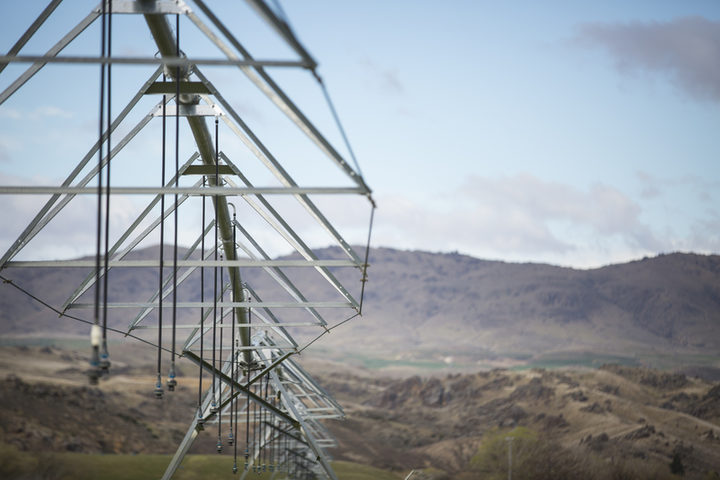
Stu Wright's family is part of the fabric of Selwyn district, inland from Christchurch. They've worked the land near Sheffield for 125 years.
The murky drizzle hanging over the furrows of his farm in the foothills of the Southern Alps, near Sheffield are at odds with his on-going struggle to keep his crops well hydrated.

Canterbury arable farmer Stu Wright Canterbury arable farmer Stu Wright Photo: RNZ/Maja Burry
Here he grows seed potatoes, garlic, radishes and rye.
But the way his family have farmed for over a century is no longer working.
"We were the big clover growers in Canterbury, but now, there is hardly any clover grown here because the irrigated guys are getting better crops," Mr Wright says.
"If you are a dryland farmer, you are getting paid on irrigated prices but you can't match the production."
Not only does he earn less, sometimes he can't even sell his crop at all, because companies that market and distribute crops often will not even sign a purchase contract unless irrigation systems are in place.
But a chance arose which meant he would be able to join those growers, that were able to water their land; but at a substantial cost.

Stu Wright standing in a garlic crop on his Canterbury farm Stu Wright standing in a garlic crop on his Canterbury farm Photo: RNZ/Maja Burry
Mr Wright was aware large scale irrigation projects were under scrutiny and decided to take action while he still had the chance and joined the Central Plains Water scheme in inner Canterbury, which takes water from Canterbury rivers and carries it via a canal and pipes to farmers.
"Central Plains was probably the last option to get water on the Canterbury Plains," he says.
"We had a family discussion, we decided we had been here for over a hundred years, and if we wanted to be here for well over another hundred years, then we needed water."
Being part of the Central Plains scheme costs him $8000 a hectare, and he has still to break even on his investment. Expensive, he says, but still worthwhile.
Challenges for dryland farmers in the North Island
Almost 700km north of Mr Wright are dry country farmers on the East Coast.
One of those is Hugh Ritchie, who grows crops on a property near the Central Hawke's Bay settlement of Ōtāne.
Hawkes Bay farmer, Hugh RitchieHawkes Bay farmer, Hugh Ritchie Photo: Horticulture NZ
The land has been in his family since the 1960s, and he values it deeply; sometimes tending his crops through the night when dew on the ground makes them easier to cut.
He uses irrigation water from deep bores on his land and points out the crops that must have irrigation water to survive.
"This is a seed carrot and it needs water to survive"
He doesn't just mean the stuff that falls naturally from the sky and soaks into its roots.
By "water" he means irrigation water, which can be guaranteed to ensure the crop grows during the parched summer months in Central Hawke's Bay, where the rain can almost always be guaranteed to dry up.
Without it, no carrots seeds to grow the next crop of carrots expected in the supermarkets down the line.
New Zealand supplies 75 percent of the world's carrot seed, he explains, and the companies that trade in this commodity need to know they have a regular supply from growers to give them confidence in making deals with their own customers.
"It's a specialist business and they need absolute reliability of crop and controlling water is a critical part of that.
"We won't even get a contract to work the ground without having water on hand, and reliable water, that can be guaranteed throughout the summer."
It's the same situation for the crop of carrots, rather than their seed; it's a non-starter without irrigation.
Subscribe free to the RNZ Insight podcast; On iPhones: Apple Podcasts, RadioPublic or Spotify - On Android phones: RadioPublic
In Hawke's Bay, many farmers and growers are desperately trying to work out how they might survive in the face of future water restrictions.
Many had their hopes pinned on the multi-million dollar Ruataniwha dam proposal to provide them with more secure water supplies, which that idea abandoned they're plagued with uncertainty.
In addition there are new rules that require more water to flow down the main local river, the Tukituki. Plus a new suite of water drilling opportunities have been unveiled, which could deplete the resource further.
Because Mr Ritchie uses bore water, he hopes he might escape some of the water restrictions that other farmers might soon be facing.
But it's not just Hawke's Bay and Canterbury; these problems also plague other provinces parched in the summer sun such as Central Otago, Marlborough, and Wairarapa, and the situation is forecast to get worse with climate change.
Irrigation schemes "false hope"
Advocates of irrigation schemes argue New Zealand should be capturing rainfall that normally ends up in the sea by building water storage schemes now, before it is too late.
But critics like Annabeth Cohen of Forest and Bird, says the opposite is true: farmers should have recognised the limitations of their land long ago, and not make its overuse even worse by building irrigation schemes at this stage.
"It sounds like a dream come true to have all that water available, but it is basically false hope," she says.
"We are not farming the right thing in the right place, given the environmental limits.
"In New Zealand, we are handing out water rights for 35 years. That is promising resources that are not available now and will certainly not be available in the future.
"If we can't live within the current environmental limits, how do you think we are going to fare when climate change changes all that."
Government funding of irrigation
Irrigation in New Zealand dates back to the 1880s, when water rights acquired for sluicing during the gold rushes were converted into rights to irrigate farmland.
More than hundred years later and the area now being watered covers 794,440 hectares or 3 percent of New Zealand's total land area, and about 8 percent of the nation's farmed land.
At present, 47 percent of irrigated land in New Zealand is used for dairy farms and 29 percent is for used for arable crops and horticulture.
Last year, the government announced it was winding down irrigation funding, while honouring existing commitments.
But wholesale state backing of irrigation schemes is a thing of the past.
While knocking back state aid for big schemes, the government is allocating $80 million for smaller schemes via the Provincial Growth Fund (PGF).
About 20 people or organisations have so far applied for state money.
Several applications, worth less than $1m have been approved by officials at the Ministry for Business, Innovation and Employment.
One large scheme in Northland, costing $15m, has been approved by the Minister for Regional Development, Shane Jones and the Minister for Economic Development David Parker.
Rules for these state-assisted schemes were signed off by ministers in December in an effort to avoid the environmental cost of some of the intensification that came with greater irrigation in the past.
The new schemes will not be allowed to increase the number of farm animals on a given plot of land, they will have to be commercially viable and will also be aimed largely at areas where Māori land is under developed.
They will have to be small to medium in size.
But they will of limited use in entral Hawke's Bay.
This area has always been dry in summer, and this problem will get worse with climate change.
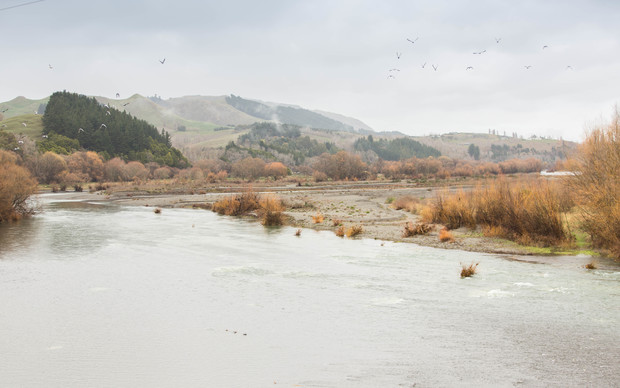
The Tukituki RiverThe Tukituki River Photo: RNZ / Claire Eastham-Farrelly
The area faces extra difficulties, with a loss of a water storage that farmers had hoped would help out, and requirement that more water should flow down the Tukituki River, when arguably there is not enough upstream.
About 40 farmers, orchardists and business owners are caught in a situation that the Mayor of Central Hawke's Bay, Alex Walker, says is deeply frustrating.
"Lifting of the river flows means there is the potential for significant water bans for is out of 10 years.
"But there is no forecast as to which of the six years are on ban and which are not."
She says this makes it difficult for people to decide which crops to plant and which ones to leave out.


