Showing posts with label free trade. Show all posts

Tuesday, 26 January 2021

Traitorous government signs UPGRADED free trade agreement with the CCP

 Nothing I can say could come close to my feeling of disgust with this and with this traitorous govenment. Just think of the stance taken by its nearest peignoir, Australia.

We have had a few weeks rest from this shit over the summer break and now it is back in earnest with the return of the Prime Sinister.

New Zealand signs upgraded free trade agreement with China (Communist Party)


Stuff,

26 January, 2021


New Zealand has signed an upgrade to the China free trade agreement, offering some New Zealand goods faster access to Chinese markets and a reduction in tariffs for paper and wood products.

Trade Minister Damien O’Connor and China’s Commerce Minister Wang Wentao inked the deal in a video-link meeting on Tuesday afternoon, more than a year after the deal was first settled by the countries.

Trade Minister Damien O’Connor speaks to the press at the signing of the China FTA upgrade on Tuesday.
MINISTRY OF FOREIGN AFFAIRS & TR/SUPPLIED

O’Connor, signing the paperwork in the Beehive in Wellington, said the upgrade meant the free trade agreement was suitable for another decade. New Zealand was the first developed country to sign a free trade agreement with China, in 2008.

"What this does is modernise the free trade agreement that we signed in 2008, brings it up to date. It provides real opportunities for exporters,” O’Connor said.

“Ten years ago, some of the issues around trade were not as sophisticated, this agreement allows us to move forward, particularly in the area of services.”

New Zealand will already have 98 per cent free trade with China, its largest trading partner, once the existing free trade agreement comes fully into force. The upgrade has primarily focused on reducing compliance costs for New Zealand exporters, and other measures which ease access to China’s markets.

Prime Minister Jacinda Ardern met with Chinese Premier Li Keqiang at the East Asia Summit in Bangkok in 2019, where the conclusion of three years of negotiations over the upgrade to the NZ-China free trade agreement was announced.
LUKE MALPASS/STUFF
Prime

At the Chinese border, there will be an expedited six hour “clearance time” for perishable goods, such as seafood. Exporters will have key staff they can contact at Chinese ports to iron out any issues. More visas for Chinese tour guides will be provided, and fewer visas will be provided to traditional medicine practitioners.

“These are technical issues that we've tied up through the upgrade and will give more security and certainty to all our exporters,” O’Connor said.

Under the upgraded agreement, 99 per cent of New Zealand's $3 billion trade in paper and wood products will gain tariff-free, preferential access to China. An additional 12 wood and paper products will have duties removed; the expected value of this change was $36 million.

Wood products have been a major export to China. Of the $6.4b in wood exports in 2018, 48 per cent headed to China.

There has been no change to the deadline for removing tariffs on dairy products under the existing agreement. Most diary products will be tariff-free in a year’s time, and milk powder by 2024.

Environmental considerations have entered the free trade agreement with the upgrade, including a provision that environmental measures should not be weakened to promote trade, and that environmental standards cannot be wielded for trade protectionist purposes.

O’Connor and China’s Commerce Minister Wang Wentao signed the upgraded deal via video-link.
MINISTRY OF FOREIGN AFFAIRS & TR/SUPPLIED
O’Connk.

"It upholds environmental standards and doesn't allow any of those to be reduced for trade advantage,” O’Connor said.

O’Connor said China would receive access to a market of highly desirable products through the upgrade. Rules for Chinese investors in New Zealand would not change in light of the agreement.

Having signed the upgraded agreement, New Zealand’s Parliament will consider and ratify the deal before it comes into force.

Wang, speaking through an interpreter, said the signing of the upgrade was “another milestone” in co-operation between the countries.

"I'll be more than happy to maintain working relations with you; jointly break new ground in trade and economic relations between China and New Zealand,” he said.

Friday, 2 October 2020

NZ quietly upgrades its commitment to China's Belt and Road Initiative

I have not seen this ANYWHERE in the New Zealand media.


New Zealand to Upgrade 

Trade via Belt and Road, 

Chinese State Media Reports

This is from a year ago.


Epoch Times,

28 September, 2020

New Zealand and China will upgrade its free trade agreement (FTA) within the framework of the controversial Belt and Road Initiative (BRI), according to a report by Chinese Global Television Network (CGTN) on Sept. 25.

Gao Feng, a spokesperson from the Chinese Ministry of Commerce (MOFCOM), reportedly announced the news at the virtual China–New Zealand Joint Committee of Trade and Economy meeting on Sept. 23.

The upgrade aims to deepen cooperation in infrastructure, agriculture, and tourism, Gao said. CGTN reported that New Zealand and China would also maintain communication on research, medicine, and vaccine development.

New Zealand and China concluded negotiations for the upgraded FTA in November 2019. It is yet to be passed by the New Zealand government and currently is at the stage where submissions from the public are being heard.

Epoch Times Photo
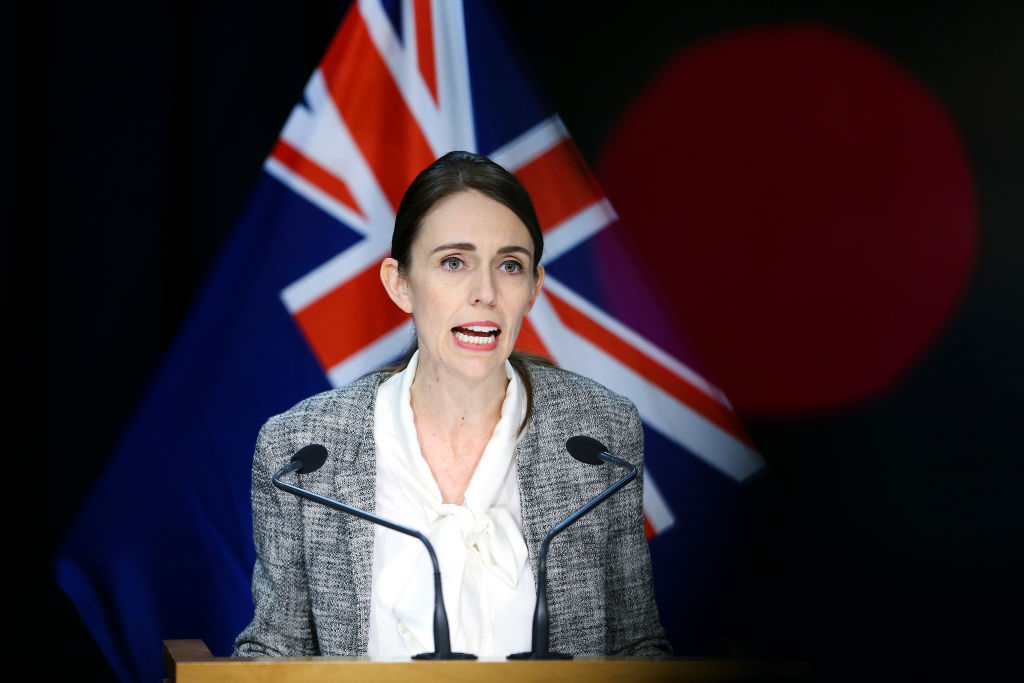
Prime Minister Jacinda Ardern speaks to media during a press conference at Parliament in Wellington, New Zealand, on June 17, 2020. (Hagen Hopkins/Getty Images)

In 2017 the former New Zealand government signed a Memorandum of Arrangement (MOA) with the Chinese regime to develop a plan for New Zealand to join the BRI within 18 months.

The MOA was delayed when the former government lost the election.

However, Prime Minister Jacinda Ardern noted in a speech in April 2019 that she discussed the Belt and Road Initiative with Li Keqiang, China’s premier, during her state visit to the communist nation in 2019.

At the same time, David Parker, the minister for trade and export growth, attended the Belt and Road Forum hosted by CCP leader Xi Jinping in Beijing in April 2019.

After attending the conference, Parker said: “The Belt and Road Forum provided a further opportunity for China and New Zealand to discuss possible avenues and opportunities for effective, transparent cooperation under a Belt and Road work plan.”

US Warns Five Eyes Allies Against BRI

U.S. Secretary of State Mike Pompeo declared in May that the United States would disconnect from any partner that it saw as putting at risk its national interests—including by signing up to the BRI.

In an interview on SkyNews, Pompeo warned Australia and its Five Eyes allies to look very closely at BRI agreements.

“There’s often money loaned at concessional rates or conditions placed in the debt documents or government concessions that have to be made to the Chinese Communist Party to get those Belt and Road Initiative projects built. Those present real risk—real risk to the people in that region, a real risk to your country,” Pompeo said.

Currently, a representative from the New Zealand Ministry for Foreign Affairs and Trade confirmed to The Epoch Times on Sept. 29 that New Zealand officials are still continuing to talk to their Chinese counterparts about the BRI and how it could benefit New Zealand especially around cooperation on international trade and environment initiatives. 

Friday, 17 April 2015

the TPPA

US lawmakers make it easier for Obama to 'fast-track' Trans-Pacific Partnership
Senior US lawmakers have reached a deal to make it easier for President Barack Obama to negotiate a massive trade accord with 11 other Asia-Pacific nations, including Australia and New Zealand.

Senate Finance Committee Chairman Sen. Orrin Hatch. Photo / AP file

Senate Finance Committee Chairman Sen. Orrin Hatch. Photo / AP file


17 April, 2015


If Congress as a whole approves granting Mr Obama "fast-track" authority, it would give lawmakers the ability to vote to approve or reject the proposed Trans-Pacific Partnership.

But it prevents them from introducing changes to the accord - described as the largest since the North American Free Trade Agreement (NAFTA).

The Trans-Pacific Partnership is a regional trade framework under negotiation between Australia, Brunei, Canada, Chile, Japan, Malaysia, Mexico, New Zealand, Peru, Singapore, the United States and Vietnam.

"The TPA [trade promotion authority] bill contains the clearest articulation of trade priorities in our nation's history," said Senate Finance Committee chairman Orrin Hatch, who reached the deal with the panel's top Democrat Senator Ron Wyden, and House Ways and Means Committee chairman Paul Ryan.


"We intend to move expeditiously on these bills," Mr Hatch said at a committee hearing on Thursday (local time).

'Fairer fight', 'no back door'

The deal, which would need to pass both chambers of Congress and receive a presidential signature, Mr Wyden said, will allow a "fairer fight" and offer "no back door" for special interests to insert their priorities into the agreement.

Mr Wyden said it would provide "tougher enforcement, a new level of transparency" and "vigorous oversight".

The deal notably requires Obama to publish the deal for at least 60 days before the president signs it, and up to four months for congressional review.

And it contains a reverse switch that would allow lawmakers to turn off "fast-track" authority if they feel the trade deal fails to meet their standards.

Mr Wyden said if negotiators "fall short and the product doesn't meet our standards, Congress can still hit the brakes on a bad deal".

"I'm proud this bipartisan bill creates what I expect to be unprecedented transparency in trade negotiations, and ensures future trade deals break new ground to promote human rights, improve labor conditions, and safeguard the environment."

House Speaker John Boehner, who has long pushed for a new TPA policy, hailed the deal and said it would "strengthen" congressional authority over a final trade accord.

US Trade Representative Michael Froman, a key negotiator of the international accord, gave a cautious thumbs up to the newly agreed legislation.

"At first glance we see very important developments in terms of negotiations objectives," Mr Froman said, mentioning progress on preventing unfair competition from state-owned enterprises and strong safeguards for US business and products including agriculture.

Public concern over the Trans-Pacific Partnership trade deal mounts
Aid group Médecins Sans Frontières says a soon-to-be-sealed trade deal will not only push up local medicine costs, but place life-saving ones out of reach for millions of patients in developing countries.

Trade Minister Andrew Robb is negotiating the Trans-Pacific Partnership.
Trade Minister Andrew Robb is negotiating the Trans-Pacific Partnership. Photo: Reuters


SMH,
16 April, 2015


At a public forum organised by critics of the Trans-Pacific Partnership on Thursday, Médecins Sans Frontières Australia's advocacy manager Jon Edwards said leaked chapters showed it granted pharmaceutical companies extended patents, allowing them to charge higher prices.

The regional trade pact, which involves 12 countries covering 40 per cent of the world's economy, has also come under fire for containing a clause that allows multinationals to sue governments if new laws harm their profits.

A late-stage draft of the Investment chapter, leaked in March by Wikileaks, showed some public health carve-outs, specifically the Pharmaceutical Benefits Scheme, Medicare Benefits Scheme, Therapeutic Goods Administration and the Office of the Gene Technology Regulator.

But Mr Edwards told a crowd of more than a hundred at NSW Parliament House that these exemptions were "seriously flawed".

"MSF is not convinced that they will protect countries like Australia, let alone Vietnam, Malaysia or Peru, from the threat of pharmaceutical companies exercising legal threats or action to enforce monopolies they are afforded in the TPP," he said.

Patricia Ranald, co-ordinator of the Australian Fair Trade and Investment Network (AFTINET), who organised the forum, said the carve-outs showed the government's assurances about general safeguards embedded in the TPP did not hold water.

"The fact they've named those specific institutions means that the general safeguards are not effective. If we have to name those institutions, how about the other ones such as in food regulation, environmental protections?"

Trade Minister Andrew Robb refused to answer questions about the exemptions, saying he would not engage in debates over "leaked, outdated documents". He said the only text that mattered was the final text.

On Thursday, the Australian Council of Trade Unions joined counterparts from the 12 negotiating countries in calling for trade talks to cease unless they were conducted with "genuine, transparent, public mandates that place people front and centre, not big corporations".

It criticised the government for conducting the negotiations in secret.

Additionally it raised concerns about indications in leaks that some countries are attempting to reject protections of workers' rights and that the deal will not cover the United Nations International Labour Organisation conventions on rights at work.

"The TPP makes corporate profits more important than protections for clean air, clean water, climate stability and workers' rights," said ACTU president Ged Kearney. "A fair trade deal needs to recognise and protect workers' rights, environmental standards and access to quality public services – this is not happening with the TPP."

Mr Robb described the call as the latest round of scaremongering by anti-trade groups. He said the ACTU had taken part in 14 separate consultations on labour issues.

"It beggars belief the ACTU is opposing efforts to create jobs for Australians. By criticising the approach to TPP labour chapter negotiations, they are criticising themselves given they have been actively involved in guiding this approach," he said.

Mr Robb questioned whether Ms Ranald was being up front about her links with trade unions.

At the forum, Ms Ranald said AFTINET represented church, union, public health, environmental, and women's groups, amongst many others.

"I don't think being accused, being associated with unions is such a crime. We're diverse," she said to loud applause.

Mr Edwards said MSF was far from anti-trade.

"MSF is not anti-trade, quite the opposite. MSF is pro-trade and pro-competition in the pharmaceutical business, where it can reduce prices and bring benefits to our patients and others in need of essential medicines," he said.

Sunday, 27 April 2014

The TPP

TPP Trade Deal Starts to 

Unravel, But What's It All 

About Anyway?


President Obama returns from East Asia empty handed after Japan rejects bilateral agreement, but if the TPP moves forward will it be in the interest of most Americans?


Saturday, 16 March 2013

Trans-Pacific Partnership

First, the “official version” and then a press release from Dr. Jane Kelsey

Japanese bid for TPP important - Joyce


The acting Trade Minister, Steven Joyce, says Japan's bid to be part of the Trans Pacific Partnership negotiations is important, as countries move towards completing an agreement by the end of the year.

Radio NZ,
16 March, 2013

The agreement, known as TPP, is a free trade deal being negotiated by eleven countries including New Zealand, the United States and Australia.
Japan wants to be the 12th country.

Mr Joyce says Japan is New Zealand's fourth largest trading partner, and any removal of trade barriers as part of the agreement could be hugely beneficial to New Zealand.

Mr Joyce says TPP ministers will want to discuss the next steps regarding Japan when they meet next month as part of the APEC Trade Ministers meeting in Indonesia.


Terms of Japan's entry to TPPA talks bad news for NZ

Friday, 15 March 2013, 2:41 pm
Press Release: Professor Jane Kelsey


15 March 2013


For immediate release:

Terms of Japan's entry to TPPA talks bad news for NZ, ‘surrender of sovereignty’ for Japan
Japan’s Prime Minister Abe will announce this afternoon that Japan will seek to join the Trans-Pacific Partnership agreement (TPPA) negotiations. He already has US endorsement to do so’, says Professor Jane Kelsey who has just returned from observing the Singapore round of the talks.
Several days ago Abe’s Liberal Democratic Party cleared the way for the announcement. However, the Party’s resolution also called for Japan to maintain tariffs on key farm products, especially rice, wheat, beef, dairy products and sugar, and defend the public health insurance system.
Yesterday, current and recent members of the Diet (Parliament) who have been campaigning against the agreement for several years released an open letter to Abe that said Japan would have to accept any text that was agreed by the time they joined the negotiations, sight unseen.
The letter objected that the denial of 'any right or opportunity to set the terms or to alter terms that undermine the national interests of Japan’ was ‘a fundamental surrender of sovereignty’.
They also revealed that the US Trade Representative had told other chief negotiators they needed to complete their bilateral pre-entry discussions with Japan and approve its entry by July. [An English translation of the complete text is below]
Once a 90-day notification period to the US Congress expired Japan would be able to join the talks in September, one month before the political leaders of the existing eleven countries hope to sign the completed deal.
If this is true, the US has effected a double play on New Zealand’, said Professor Kelsey.
Trade Minister Groser said New Zealand would welcome Japan’s participation ‘once we have established procedures for their entry that are acceptable to their governments and to ours’. That was widely taken to mean Japan’s agreement to comprehensive agricultural liberalisation in line with the statement of the TPPA leaders in Honolulu in November 2011.
Australia has been trying unsuccessfully to achieve that goal in a free trade negotiation with Japan since 2007.
New Zealand would have just over three months to get Japan to agree or give way to a timeframe that appears to have been imposed unilaterally by the US.
'Even if Japan agrees in principle to consider opening dairy market access, that is just the first step in the process', according to Professor Kelsey.
Assuming the US continues to delay any substantial discussion of dairy market access to its own markets until September, the US and Japan could then join forces in demanding flexibility and stymie the one gain that New Zealand government has said is a bottom line and without which it will walk away from the TPPA’.
--
Dear PM Abe,
It has been widely reported that this week you will announce a formal decision to join negotiations to establish a Trans-Pacific Partnership (TPP) free trade agreement.
We recognized the terms under which other countries, namely Mexico and Canada, have joined TPP negotiations were grossly unfair. Effectively, terms were dictated to these nations, which were told either they could comply or not join the talks.
In particular, these entrants were required to agree that they would not seek to reopen any matters that had already been agreed to during the previous three years of negotiations. Further, they were forbidden from offering new proposals with respect to the numerous subjects that had already been decided.
In sum, they were told that if they wanted to join TPP talks, they would be required to simply agree to all of the expansive terms negotiated by the other countries in any of the agreement’s 29 chapters of binding rules.
All of Japan’s current and future domestic laws, regulations and administrative procedures would be required to conform with these rules established by other countries. In addition to trade in goods, including agriculture, these rules would severely limit Japan’s regulation of a wide range of sensitive matters such as foreign investors, postal, banking, insurance, energy, telecommunications, medicine approvals and prices, food and product safety, and more.
In addition, the newly entering parties were denied access to the confidential negotiating texts that they were being required to accept. That means that they were required to agree to accept texts that they could not review in advance to assess the implications for their countries. Instead, they were required to rely solely on whatever informal assurances they had received from other TPP parties with respect to what the texts would require.
We understand that at the March Singapore Round of TPP negotiations, U.S. trade officials informed other countries’ TPP negotiators of a process by which Japan would be allowed to join the agreement. U.S. officials have indicated that Japan has agreed to the same disrespectful, unfair process imposed on Mexico and Canada for accession to the TPP. The U.S. instructed the other TPP countries to complete their bilateral consultations with Japan by July.
Japan would be allowed to join an agreement that has been negotiated by other countries, without any right or opportunity to set the terms or to alter terms that undermine the national interests of Japan. This is a fundamental surrender of sovereignty.
If Japan is about to announce its desire to enter these negotiations, we are seeking your assurance that Japan will not be required to comply with the unacceptable process imposed on Canada and Mexico. We ask you state publicly the process that Japan will follow and the terms that have been agreed with the other TPP negotiating parties and to table a written assurance to this effect in the Diet.
March 13, 2013
National Coalition for Commenting on TPP


Tuesday, 19 February 2013

De-globalisation


The financial crash will not bring about 'globalisation on steroids'
Joshua Kurlantzick.


17 February, 2013

In the wake of Barack Obama's re-election and the leadership change in China, many economists, businesspeople and leaders have assumed that, with internationalists at the helm of the world's two largest economies, the world will see a new period of greater economic integration.


Optimists hope that this integration eventually will pull the globe out of its prolonged economic malaise. Indeed, many struggling economies, such as Greece, already are seeking closer economic integration with China; Chinese aid and investment has helped revitalise Greece's most important ports.

And as developing nations such as China take the lead on trade deals, they also are gaining a bigger role in international financial organisations, which thus supposedly also are becoming more integrated. The future, as one American columnist wrote, is "globalisation on steroids".

Yet in reality today's economic slowdown, over the long term, is likely to have just the opposite effect. The slowdown will leave as its legacy the worst deglobalisation in modern history, a period of shutting down international lending, government protectionism, failed free trade deals, and the renewed power of state capitalists. Even if the slowdown soon ends - if Xi Jinping in China and Barack Obama in the US can use their mandates to push for freer trade and global integration - the long-term effects of this deglobalisation will last decades, putting a ceiling on how much the world economy can ever rebound.

For at least a century, the world economy has run in cycles, in which integration, in the form of closer trade and financial ties, cross-border bank lending, and rising trade and migration, has been followed by short periods of slowdown and deglobalisation, periods in which the world economy became less linked together.
At times, the slowdown and de-globalisation was precipitated by world wars, as in the 1910s. At other times, it was precipitated by major energy shocks, such as in the early 1970s.

Yet after each period of deglobalisation, the world economy quickly bounced back, with banks soon seeing new opportunities to lend abroad, new trade rounds launching, new companies springing up to increase global exports, and new financial services products emerging to tie markets together.

Not so this time. This de-globalisation is so severe that its effects will not be easily reversed. In nearly every leading nation, not only politicians on the left - the opponents of globalisation in earlier periods - but also on the right have come to a consensus sceptical of greater economic integration.

In the 2012 US presidential campaign, Mitt Romney attacked trade with China even more than Barack Obama, while both Democrats and Republicans almost unanimously supported new measures to block Chinese telecommunications firm Huawei from investing in 4G phone networks in the US - and received no opposition even from the most pro-business Republicans.

Meanwhile in France the right-leaning Gaullist parties, under Nicolas Sarkozy and his heirs, have become as supportive of greater protectionism as the Socialist Party, which under the current president, Francois Hollande, has enacted new import restrictions on major trading partners like South Korea and pushed French supermarkets to sell only French products.

Meanwhile, leaders of many developing nations have become nearly as sceptical of globalisation as their western peers.

In the past year, major coalition partners of the Indian Congress government have left the coalition to block the prime minister's efforts to open up India to foreign retail.

In Brazil, the president, Dilma Rousseff, has increasingly pushed for greater protection of strategic Brazilian industries, telling the UN: "We cannot accept that legitimate initiatives of commercial defence by developing countries can be classified as protectionist."

Politicians, at least, often exit the scene without having lasting effects. But more frightening, the financial institutions that once propelled globalisation have retrenched so badly that their shift will last for years.

Today, as crisis-hit European nations have passed legislation forcing banks to maintain higher capital requirements and to invest more within their own borders, these European institutions, which had been the major sources of emerging world investments, have started a process of massive deleveraging.

Until two years ago, European banks accounted for about 90 per cent of all foreign bank lending in Africa, eastern Europe, and the Middle East. That figure is dropping rapidly.

Although some European leaders at first thought this contraction in European banks' balance sheets would only last through 2011 and 2012, now they - and the world - are starting to realise that the deleveraging is a much longer-term problem. Credit Suisse estimates that European banks' returning to lending in their home markets will strip as much as $1 trillion in funding from emerging markets and even developed markets over the coming decades. In other words, expect to see a credit crunch for decades.

Trade, one of the other pillars of globalisation, also will take decades to recover. The World Trade Organisation's current round of negotiations, known as the Doha Round, has been stalled for years, and the regional free trade agreements enacted by Asian nations in part to replace Doha contain far less liberalisation than meets the eye.

A third major pillar of the globalisation of the 1990s and 2000s was increased migration.

But as the economic slowdown has morphed into a longer-term period of stagnation, the tolerance of wealthier nations for migration has ebbed.
In the US, the Republican Party's 2012 platform called for "self-deportation" of illegal migrants in the US.

This tough stance is being echoed in many other wealthy nations, where the level of anti-immigrant sentiment is high.

In austerity-wracked southern European nations, rabidly anti-immigrant parties already have become mainstream political power players. Greece's anti-immigrant party, Golden Dawn, already has established a fearsome reputation for rounding up and beating immigrants. It now holds the fourth-largest number of seats in parliament.

Even tiny Singapore, a country that despite the global slowdown has maintained a GDP per capita of $61,000 at purchasing power parity and which depends on trade and foreign workers to prosper, has seen its public turn sour on migration. Anti-foreign worker sentiment helped propel the Singaporean opposition, dormant for decades, to its strongest showing ever in last year's elections, as it criticised the ruling party for being too lenient in allowing migration.

As trade flows, financial globalisation, and cross-border migration recede, the state has returned to power around the world, turning back the gains made by free markets in the 1990s and early 2000s.

While state-owned enterprises only controlled six times as much of China's industrial output as private firms in 2004, today they control 11 times as much. 

And they are hardly unique. In the years 2004-2009, while 120 state-owned companies made their debut on the Forbes list of the world's largest corporations, more than 250 Western private companies fell off that list.

Since this round of deglobalisation involves a longer period of protectionism and worse damage to banks, it is likely to be longer and deeper than previous periods.
For the global economy, this probably will mean a dearth of new entrepreneurial companies, particularly in developing nations.

In addition, it will mean that trade wars probably will only escalate, since these regional trade deals do not hold world leaders to the tough standards that previous WTO rounds did; in the long run, this could lead to an overall decline in trade, which would make the entire international economy far less dynamic, and could even lead to greater political tensions between big trading powers such as the US and China.


Joshua Kurlantzick is Fellow for South-east Asia at the Council on Foreign Relations