This
certainly hasn’t dominated the headlines in this country to the
extent that I would say the news is being suppressed.
On
a sort Google search, apart from a notification from Parliament all I
could find was this from the Otago Daily Times, the sole surviving independent daily newspaper in the country.
New
Zealand passed the "Comprehensive and Progressive Agreement for
Trans-Pacific Partnership" (The CPTPP) formerly the known as The
TPP.
New
Zealand inked the controversial 11-country Comprehensive and
Progressive Agreement on Trans Pacific Partnership in Chile
yesterday, to widespread business acclaim.
The
CPTPP will come into force after six countries, including New
Zealand, ratify the agreement, which is expected to reignite further
public opposition, but National has already signalled its support for
ratification. The deal opens up potential trade gains between the
11-member countries, whose collective economies are worth $US10
trillion ($NZ13.7 trillion), but not entirely without the
controversial catch whereby some corporates could still sue New
Zealand.
Under
both the National-led and Labour-led governments, the CPTPP
negotiations sparked controversy and widespread demonstrations,
primarily over the compulsory investor-state dispute settlement
(ISDS) trigger within the deal, allowing corporates entities to sue
New Zealand.
Minister
for Trade and Export Growth David Parker signed the deal in Santiago
yesterday, also revealing for the first time "side letter"
agreements were signed between five nations.
"We
haven’t been able to get every country on board, but signing
letters with this many CPTPP partners is a real achievement," Mr
Parker said in a statement.
"The
investor-state dispute settlement mechanism had been one of our main
concerns about the agreement," Mr Parker said.
Following
confirmation of the formal signing, a raft of business related
entities welcomed the outcome, including BusinessNZ division New
Zealand International Business Forum, New Zealand Winegrowers, The
Latin America New Zealand Business Council, Beef + Lamb New Zealand
and the Meat Industry Association.
Mr
Parker said the five side letters and Canada-Chile declarations
narrowed the scope for investors to make ISDS claims under CPTPP.
"For
example, private companies cannot make ISDS claims under the CPTPP
relating to investment contracts they have entered into with
governments," Mr Parker said.
New
Zealand Winegrowers chief executive Philip Gregan was one of the many
business organisations lining up to welcome the CPTPP’s signing,
describing it as crucial to giving New Zealand "a fair crack"
at international markets.
He
said the CPTPP would be New Zealand’s first trade agreement with
Japan, Mexico, Canada and Peru.
The
deal would immediately make New Zealand wine more competitive in
CPTPP markets such as Canada, Japan and Malaysia by reducing import
tariffs, Mr Gregan said in a statement. New Zealand’s total wine
exports are up 5% to $1.67billion, for the year to last November, of
which $515 million was exported to CPTPP member countries.
The
CPTPP deal was signed just hours before US President Donald Trump
signed off controversial tariffs on imported steel and aluminium, of
respectively 25% and 10%, with immediate exemptions for Canada and
Mexico. ExportNZ executive director Catherine Beard said in the
context of the US protectionist move and subsequent threats of global
trade wars, the CPTPP was an example of countries working together
for open and free trade.
"One
thing the US actions have done is get the rest the world to focus on
the benefits of trade, and the CPTPP is a concrete example of
everyone moving forward together," she said.
Mr
Parker said the terms of the side letters varied, with some excluding
the use of ISDS between New Zealand and other countries entirely,
while others allowed for arbitration to proceed only if the relevant
Government agrees.
"We
have also made it clear that we will oppose including ISDS in any
future free trade agreements involving New Zealand," Mr Parker
said.
The
New Zealand International Business Forum executive director Stephen
Jacobi said the CPTPP signing was about securing sustainable growth
and jobs.
He
noted that under CPTPP the Treaty of Waitangi was fully protected,
along with the Government’s continuing right to regulate in the
national interest in areas such as the environment and public health.
"CPTPP
also put in place new environmental and labour provisions, binding
all parties," he said.
Jimmy Dore discusses the issue with Suzie Dawson, our unsung hero presently residing for her own protection in Moscow.
Donald
Trump may have removed the US from the TPP as one of the few truly
anti-globalist moves he has made. New Zealand, desptie public
pronouncements is just as wedded to neo-liberalism and the globalist
agenda as ever.
A
TPP without the United States? Who would ever have thought?
Kelsey:
Labour has shown a lack of political backbone on so-called
‘progressive’ TPPA
If
it signs the latest version of this controversial deal, Jacinda
Ardern’s government can hardly expect people to take the promise of
a progressive new model for New Zealand’s international trading
relations seriously, argues leading TPPA critic Jane Kelsey.
The
on-again, off-again Trans-Pacific Partnership Agreement (TPPA) is
reportedly a done deal, again. Exactly one year after the Trump
administration withdrew the US from the original agreement, trade
officials from the remaining 11 countries reached consensus on a
revised TPPA-11 in Japan. The rebranded Comprehensive and Progressive
Agreement on Trans-Pacific Partnership is due to be signed in Chile
on 8 March.
Back
in 2017 Labour’s dissent to the majority select committee report on
the TPPA said it “will have ramifications for generations of New
Zealanders. For their sake, we should not so lightly enter into an
agreement which may exacerbate long-term challenges for our economy,
workforce, and society.”
What
has changed? Overall, very little. Former trade minister Tim Groser
said New Zealand had to swallow a number of dead rats to conclude the
original agreement. A number of those rats are in hibernation under
the TPPA-11, but none have been euthanised.
To
be fair, the Labour-led government was handed a poison chalice.
National excluded the opposition parties from information about the
negotiations, leaving them dependent on leaks like everyone else. It
expected – and senior Labour officials had hoped – the agreement
would have been in force before the 2017 election.
Following
a truncated treaty examination process, Labour, New Zealand First and
the Greens all wrote dissents to the select committee report,
criticising the secrecy of the TPPA process and saying they would not
support its ratification. All criticised the economics of the deal,
with Labour endorsing calls for a robust economic assessment that
included the impact on employment and wage distribution, along with a
health impact study. All three objected to the constraints on
regulating foreign investment and the controversial investor-state
dispute settlement process (ISDS). Only the Greens remain true to
that position today.
Within
two weeks of taking office, the new government attended the “final”
round of renegotiations before ministers met in Vietnam in December
to finalise the revised deal, based on wish-lists tabled by each
country. I understand New Zealand never tabled one, but I have made
an Official Information Act request to confirm this.
The
government did try to get some last-minute changes, including
side-letters from the other parties promising not to apply ISDS to
New Zealand. Most said “no”. Labour then claimed the
already-existing side letter with Australia and some other safeguards
as its own achievements, along with the consensus decisions to
suspend some provisions pending re-entry by the US. Prime Minister
Ardern and Trade Minister Parker then set about selling the same TPPA
as “progressive” and in New Zealand’s best interests.
There
were some short-term gains. The suspended provisions include some of
the toxic provisions that would have impacted on Pharmac’s process
and its leverage to reduce the monopoly price of new generation
medicines. The extension of copyright term to life plus 70 years had
been estimated to cost an average $55m a year. Most of the other
“gains” are marginal or illusory. And the legal risks still
exist, some active, some dormant (forget the idea the US might be
required to agree to abandon some of them as a condition of
re-entry).
The
obsessive secrecy that has shielded governments from accountability
over seven years of TPPA negotiations continues. According to
Japanese officials the final TPPA-11 text won’t be revealed until
after it is signed, despite David Parker saying earlier that he
wanted it released as soon as possible. Parker responded to an OIA
request, confirming the original secrecy pact to withhold all
negotiating documents for four years after the TPPA came into force,
even though this is supposedly a different agreement.
What
should a Labour-led government have done differently? First, it
should have commissioned the revised independent economic assessment
and health impact analyses it called for in opposition. Second, it
should have shown a political backbone, like the Canadian government
that also inherited the deal. Canada played hardball and successful
demanded side-letters to alter its obligations relating to investment
and auto-parts. Not great, but something. New Zealand should have
demanded similar side-letters excluding it from ISDS as a
pre-requisite for continued participation. Third, it should have
sought the suspension of the UPOV 1991 obligation, which has serious
Treaty implications, and engaged with Māori to strengthen the Treaty
of Waitangi exception, as the Waitangi Tribunal advised. Fourth, it
should have withdrawn its agreement to the secrecy pact.
None
of that happened. So what now? The government could still do all the
above, but both Labour and NZ First lack the political will. Instead,
we’ll have domestic political fight with two parties that
previously opposed ratification.
The
priority for me is to break through the information deficit and
reiterate the long-term costs of the deal, versus the minimal gains
for low quality exports of beef and dairy.
The
most crucial area of the TPPA that has not received enough attention
is the novel chapter on electronic commerce – basically, a set of
rules that will cement the oligopoly of Big Tech for the indefinite
future, allowing them to hold data offshore subject to the privacy
and security laws of the country hosting the server, or not to
disclose source codes, preventing effective scrutiny of
anti-competitive or discriminatory practices. Other rules say
offshore service providers don’t need to have a presence inside the
country, thus undermining tax, consumer protection and labour laws,
and governments can’t require locally established firms to use
local content or services.
I
asked technology minister Clare Curran in an OIA request for analysis
provided to her on the e-commerce chapter. She says that information
doesn’t exist. I have made the same request to David Parker. When I
asked him to release the legal analysis of the chapter, he indicated
he was unlikely to disclose any advice that discussed grey areas.
Hopefully he has changed his mind. Otherwise, crucially important
commitments will be adopted without the government receiving
contestable advice on the implications. The legal risks extend beyond
the TPPA-11. Similar e-commerce texts are proposed for virtually all
other mega-agreements, and New Zealand has supported moves to
negotiate them in the WTO.
The
government’s endorsement of the TPPA-11 also raises questions about
future trade strategy. The National government’s “Trade Policy
Refresh” saw it adopt a goal of free trade agreements covering 90%
of New Zealand goods exports by 2030. Parker rejects this “notches
on the belt” approach and promises a new “inclusive and
progressive” approach to trade negotiations that addresses gender,
labour, indigenous rights, environment, small and medium enterprises
and climate change. He held a rushed round of consultations in early
December – after Labour endorsed the TPPA-11 decision in Vietnam –
promising more early this year.
Parker
has endorsed the Canadian approach, which involves clip-ons to the
standard agreements, without changing rules that have negative
systemic impacts on those constituencies and issues. One example was
the statement on “trade and gender empowerment” adopted by
ministers, including New Zealand’s, at the recent WTO ministerial
in Argentina. Within 24 hours over 160 women’s groups
internationally had dismissed it as an exercise in “pink-washing”
that sought to “mainstream women into a polluted stream”.
Labour
knows it has to do better, but I don’t think it knows how,
especially if it has to get other negotiating partners on board. It
also knows that it can’t expect people to take the promise of a
progressive new model for New Zealand’s international trading
relations seriously if it signs and ratifies the TPPA-11.
New
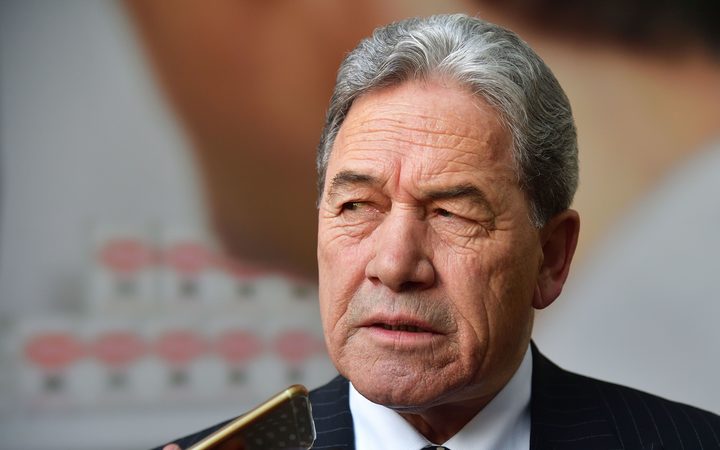
Zealand First leader and Foreign Minister Winston Peters is defending
his party's switch to support the newly negotiated TPP, saying enough
changes have been made to the deal to allay their concerns.
After
a breakthrough at talks in Japan in recent days, 11 countries,
including New Zealand, are preparing to sign the agreement in Chile
on 8 March.
Mr
Peters and his party have opposed trade deals in the past, including
the FTA with China while he was foreign minister, negotiated under
the Labour government led by Helen Clark.
He
also campaigned against the TPP, describing it at Rātana in 2016 as
a "sham and a scam".
But
he told Morning Report the deal has been renegotiated, since the
Labour-led government took office.
"The
deal is not the deal inherited, it's different ... with substantial
changes with the types that the Canadians were holding out on as
well, that we both have seen changes that mean we can support this
deal". The
sticking point for New Zealand First had been the rules under which
foreign companies can sue governments, the investor state dispute
rules.

 Posts
Posts