Showing posts with label extinction.. Show all posts

Thursday, 6 June 2019

The disappearing orangutans of Indonesia

Shocking footage shows an orangutan fighting against a bulldozer to protect the final tree


Orangutan Clings To Only Tree Left After People Destroy Her Home


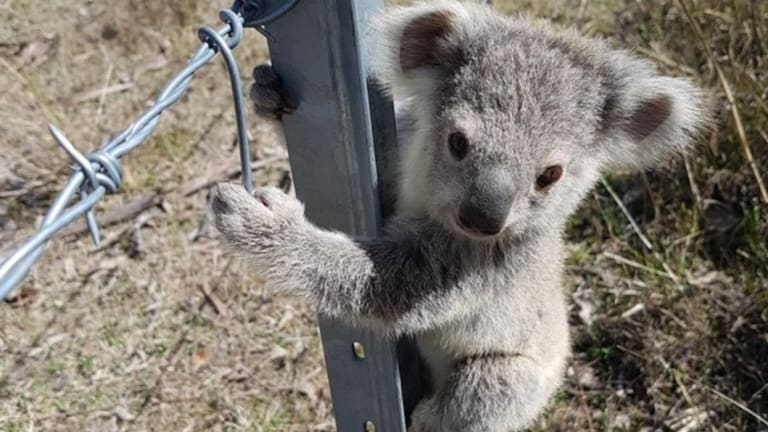
Koalas are functionally extinct


Some things just BREAK YOUR HEART. I've held one in my arms. This is very hard to bear

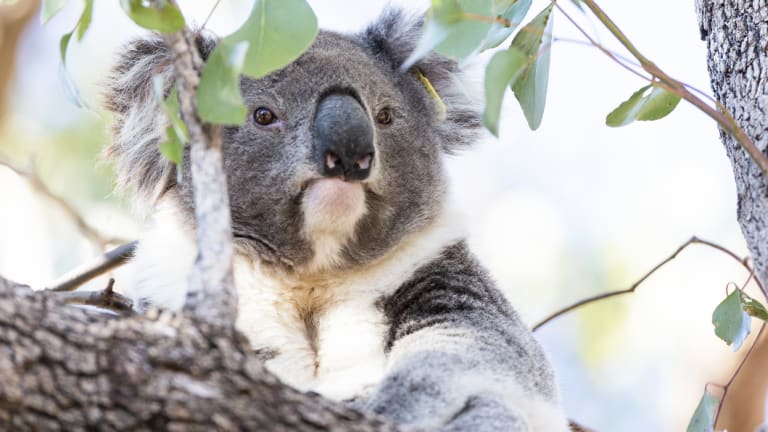
KOALAS DECLARED FUNCTIONALLY EXTINCT
Image result for koala bear
Sam Carana, Via Facebook

The Australian Koala Foundation has declared koalas officially “functionally extinct”. According to fossil records, Koalas are native to Australia and have been living there for at least 30 million years. The Australian Koala Foundation thinks that no more than 80,000 Koalas are left in Australia. Deborah Tabart, who chairs the Australian Koala Foundation, adds: "This is approximately 1% of the 8 million Koalas that were shot for fur and sent to London between 1890 and 1927”.

Next to getting killed by people and dogs, there is habitat loss. Koalas live in the eucalyptus forest and they eat eucalyptus leaves. As more eucalyptus trees get cut down and as the number and size of roads, cities and farms grows, these forests get divided into ever smaller patches. Once the distance between patches becomes too large, Koalas can no longer travel from one patch of forest to another. As numbers in a particular patch of forest fall below a critical level, the Koalas become prone to inbreeding and thus more vulnerable to disease.

Diseased koalas are treated with antibiotics, but the koalas often lose weight and die even after receiving treatment. Research suspects that drugs meant to save the koalas might be upsetting the balance of their gut diversity and interfering with their ability to digest eucalyptus leaves, which contain a compound called tannin that can be highly toxic if it isn't broken down by certain types of gut bacteria, and if those microbes are absent, koalas might be unable to process the eucalyptus leaves.

Furthermore, climate change-driven droughts and heat waves are causing dehydration and heat stress, leading to organ failure and premature death of Koalas. This dire situation makes that Koalas have now been declared to be officially “functionally extinct”, since it seems unlikely that Kaolas will be able to survive for long.


Saturday, 29 September 2018

Australia's koalas head for extinction


Alarming': State ignoring koala data as icon heads towards extinction

Koalas are in strife across eastern Australia, including in NSW where the WWF estimates the animal faces extinction in the state by 2050.

SMH,
28 September, 2018

The Berejiklian government is ignoring its own advice on the best regions to project koalas as numbers of the much-loved marsupial plummet towards extinction in the state by mid-century, reports show.

Documents obtained under freedom of information laws by the North Coast Environment Council and the National Parks Association – and released on Save the Koala Day on Friday – found state reserves cover just 0.2 per cent of so-called "koala hubs" that are home to key colonies of the animal.

"To save the koala as a species, governments will need to protect the actual real living koala populations," the council's Susie Russell said. "Calling random areas of forest 'koala reserves' does nothing if there are no koalas living there."

For instance, of 77,517 hectares of koala hubs in north-east NSW, only one-seventh were located in national parks, with a fifth in state forests and the remaining two-thirds on private land, the data show.

Dr Oisin Sweeney, senior ecologist with the NPA, said it must be "deeply frustrating" for Office of Environment and Heritage staff to have work so hard to identify the best koala habitat only to see the government largely ignore this when setting land aside for protection.

Changes to forestry permits that will allow an intensification of logging particularly in the state's north-east of the state, increased land-clearing for farming, and rezoning for housing will further hit key koala habitats, he said.

"By completely ignoring urban development, the government is abandoning a big chunk of known koala colonies," Dr Sweeney said.

Koala populations in the Pilliga region of northern NSW have plunged amid heatwaves and drought. 
He estimates the state has about 15,000 to 20,000 koalas, "with almost every biodiversity area in NSW showing alarming declines".

A separate report released on Friday by WWF says koalas will be extinct in NSW by 2050 on current trends "without a significant reduction in tree clearing, mitigation of climate change and [a] major expansion of protected areas". It estimated the koala population sank by one-third to 21,000 by 2010.

Environment Minister Gabrielle Upton defended the government's record, saying its $45 million Koala Strategy to add reserve more habitat, tackle diseases and fix roadkill hotspots was "the biggest commitment by any state government to secure koalas in the wild".

Ms Upton also introduced a bill on Thursday to transfer more than 4500 hectares of state forest to the national park estate, about half of which was habitat. About 20,000 hectares of state forest on the Central Coast, Hunter, Hawkesbury, North Coast and Southern Highlands has now been set aside as new koala reserves, she said.

Labor's environment spokeswoman Penny Sharpe said "the death knell for koalas in NSW is sounding loud and clear".

"Increased land clearing, deforestation, failure to create new National Parks, failing to protect existing koala habitats are the ingredients that will see koalas in NSW lost forever," she said.

Dawn Walker, the Greens spokeswoman for koalas and forests, said the Koala Plan was "a sham" because it failed to halt logging of native forests or wind back looser land-clearing laws. The government should establish a Great Koala National Park in the Coffs Harbour hinterland where a fifth of the state's wild koalas were at risk from logging, she said.

According to the released documents, the Great Koala National Park proposal "is the most important area of public land for koalas in NSW and a conservation priority given the concentration of hubs within its boundaries". About 56 per cent of hubs in the state's north east would be contained within that plan.

An OEH spokeswoman said the koala plan was "based on the NSW Chief Scientist and Engineer's recommendations and informed by input from an expert advisory committee".

A centrepiece of the NSW Koala Strategy was the setting aside of large areas "where koalas can thrive and new habitats can be created", and more than 24,000 hectares of state forest would be secured in initial part of the plan, she said.

Sunday, 28 June 2015

Methane eruptions miles from US-Canada border

I think we can ignore the bit about the geoengineering, but the rest of the report is explosive (pardon the pun).

The local temperature has clearly exceeded methane hydrate destabilization temperature early in the summer.

Exploding Pond In Canada Is 'Vision Of Hell' As Methane Erupts From Ground Miles From US Border


22 June, 2015

Photos, videos and email tips can be mailed to tips@allnewspipeline.com

In the absolutely amazing 1st and 2nd videos below, we see a pond on a golf course in Canada exploding in gas bubbles in a scene that looks more like a volcano preparing to erupt than something we'd expect to be seeing at the 2nd hole. The 
Winnipeg Sun said it "looked like a vision from hell, if hell was a golf course" and as we quickly learn here in the 2nd video, a news program about the 1st video, we're witnessing methane bubbling up out of the ground, just the latest such eruption around the planet, as we quickly race towards hell on Earth.

After watching these videos, ANP urges you to read the warnings given to us by Dane Wigington in his new story called "
Planetary Meltdown From Formerly Frozen Methane, If You Are Not Alarmed, You Should Be" and as shared in the 3rd video below called "Extinction Level Arctic Methane Releases Caused By Geoengineering." What we are witnessing here is unprecedented and if we're not alarmed, we learn real quickly we definitely need to be! Much more below videos.


According to Dane Wigington, our planet is changing at such a blinding speed that before long, it will no longer be able to support life. He tells us bluntly that we are on the edge of extinction: 
If there is not a complete course correction in regard to human activity, total near term global extinction is a mathematical certainty. ANP published a story yesterday called "Elite Call Humanity 'The Walking Dead' As They Warn 'The Next Great Extinction Is Here' Before Running Off To Their Bunkers." Maybe Paul Ehrlich of Stanford U knows more than we give him credit for when he tells us our time here is running out.

Susan Duclos recently published a story on ANP in which 
she warned that our planet Earth is becoming increasingly unstable with a massive uptick in earthquakes and 'violent' volcanic activity across the world. We need to understand that all of the events we're witnessing across the planet are clearly connected. As we learn from Wigington if we're paying attention, our planet is in total meltdown and the ongoing global geoengineering programs are making the situation WORSE, not better. We're told: "Methane is releasing at an ever increasing rate from lake and sea beds around the globe, especially in the Arctic."

We can now add Canada, and only MILES away from the US border, to the locations where methane is now bubbling up - and completely out of human control as the state of emergency they declared there proves. The chart below is mind numbing. The video below
the chart is absolutely sobering. The pictures below that video are quite thought provoking and show us in more visual images exactly what we're now dealing with here now and why we're so in danger.
Atmospheric methane is virtually skyrocketing past pre-industrial levels. As methane releases, it fuels "climate feedback loops" that trigger even more methane release.

methane-chart-450x286.jpg

The exploding pond at the Indian Hills Golf Course in Lambton Shores, Ontario, Canada is on Lake Huron and is only 25+ miles from the US border in Michigan as seen in this Google Earth screenshot bottom right.

EXPLODINGPOND.jpg

Wigington tells us that our 'industrialized/militarized civilization' has  no regard for the natural world, nor does it care for the 'miraculous life support systems' of our amazing planet Earth and our once-thriving biosphere. In a race to fix what we've destroyed, geoengineering is blowing up in our faces and actually quickening what we're watching unfold.
"There is one form of anthropogenic activity that stands out above all others as the epitome of human insanity, climate engineering."


Imagine if the pond in Canada erupting now in methane was covered in ice; is this what it would look like? As we see in the 2nd image below, we could catch it on fire!

frozen-methane-450x407.jpeg

Methane-leak-450x308.jpg

These mysterious holes in Siberia were also caused by massive methane releases. 

siberian-hole-450x329.jpg

Saturday, 18 April 2015

Threats to European bee populations

Graph of the Day: Major threats to bees in Europe


Major threats to bees in Europe. Graphic: IUCN
15 April, 2015


19 March 2015 (IUCN) – With the majority (56.7%) of European bee species being listed as Data Deficient, any overview of the threats to the continental apifauna will necessarily be incomplete. However, for conservation and management of bee diversity to be undertaken effectively, it is critical to have a clear understanding of taxonomy and ecology of the species present. National governments, through the Convention on Biological Diversity, recognise the existence of a taxonomic impediment and, through the Darwin Declaration, intend to address the situation (Environment Australia 1998). This shortfall in taxonomic expertise is very apparent in our understanding of bees. A major threat to effective deployment of conservation actions for the bees of Europe is an inability to understand and identify the species present and to monitor the state of populations effectively.

According to the European Red List, 212 species had no threats identified, while for 1,067 species threats remain unknown. Identified threats for the remaining species (663) are presented below, and a summary of the relative importance of the different threatening processes is shown in Figure 11.

Many of the environmental threats to bee diversity are associated with modern agriculture and, in particular, shifting agricultural practice and the increasing intensification of farming (Figure 11). These threats include those related to intensive arable farming (loss of uncultivated habitats and widespread use of insecticides and herbicides (Sydenham, et al., 2014, Gill and Raine 2014)), livestock farming (resulting in grazing and stocking regimes that are damaging to grasslands and fragile Mediterranean ecosystems) (Vulliamy, et al., 2006) and the continued presence of commercial timber plantations (Navarro-Cerrillo, et al., 2013).

According to the European Red List, 366 species are affected by changes in agricultural practice, which can lead to large scale habitat loss and habitat degradation, especially in temperate regions. Shifts from grassland hay cropping regimes to the more intensive silage production (i.e. late season to early season cropping) or increased grazing, has resulted in large scale losses of herb-rich grasslands e.g., 97% loss of enclosed semi‐natural grasslands in England and Wales (Bullock, et al., 2011) and 97-99% of the historically managed grassland in Sweden (Dahlström, et al., 2008). Loss of season-long flowering impacts particularly strongly on long-lived social insects, especially bumblebees (Bombus spp.), and in more intensively farmed regions of Europe, bumblebees are especially susceptible (Carvell, et al., 2006, Rundlöf, et al., 2008). The loss of semi-natural grasslands also negatively impacts on localised and specialised solitary species (e.g., Andrena hattorfiana and A. humilis in Sweden) (Franzén and Nilsson 2004).

In other parts of Europe, traditional land use has been abandoned, allowing for development of scrub and ultimately woodland. This is especially true in places that are generally unsuitable for more intensive farming, and in places such as the Baltic States it is abandonment, rather than habitat fragmentation, that is the key driver of species composition in semi-natural grasslands (Dauber, et al., 2006). 331 non-threatened species and 35 threatened species are regarded as under threat from agricultural expansion, intensification and shifts in agricultural practice, and 307 non-threatened species and 16 threatened species are regarded as under threat from livestock farming (often in conjunction with an increased susceptibility to fire in the Mediterranean region).

Pollution, pesticides, and herbicides Among the many threats linked to modern agriculture is the widespread use of agri-chemicals. The results of the European Red List show that 252 species of nonthreatened bees, and 7 threatened bee species are regarded as threatened by agricultural and forestry effluents; either by direct contact, or via a sub-lethal effect on the bees themselves (mainly due to insecticide application) or by damaging the floral resources (mainly due to herbicide application) on which bees depend.

The pesticide story is complex, but studies have shown that exposure to neonicotinoid pesticides can lead directly to the loss of honey bees (e.g., Tapparo, et al., 2012, Pisa, et al., 2015), and commercial Bombus in the US (e.g., Gradish, et al., 2010). Exposure to sub-lethal doses of neonicotinoids have been linked with increased levels of the gut pathogen Nosema in honey bees (Pettis, et al., 2012) and colony loss by impairing overwinter survival in honey bees (Lu, et al., 2014). Elston, et al., (2013) report that sub-lethal effects of thiamethoxam, a neonicotinoid pesticide, in conjunction with propiconazole, a DMI fungicide, affect colony initiation in bumblebee (Bombus terrestris) colonies (see also Godfray, et al., 2014).

A number of laboratory studies (e.g., Goulson 2013, Sandrock, et al., 2014) describe the sub-lethal effects of neonicotinoid pesticides on some species of bees, and growing evidence from field studies indicates that levels of systemic pesticides (neonicotinoids and fipronil) that have been documented in the environment are sufficient to cause adverse impacts on a wide range of non-target organisms, including bees (Pisa, et al., 2015). Traits such as body size, foraging range, food storage, etc. vary highly between bee species and as a result, so does the potential sensitivity to the direct or indirect effects of pesticides (Williams, et al., 2010). It seems clear that honey bee traits make them more robust than other wild bee species to resist the effects of pesticides (Desneux, et al., 2007). Nevertheless, our knowledge about the effects of pesticides is based primarily on honey bees. Gill and Raine (2014) have, however, shown that prolonged exposure of sub-lethal doses of Imidachloprid (a neonicotinoid) affects natural foraging behaviour of commercially reared Bombus terrestris in the field.

Herbicide application can also impact negatively on bee diversity, as it can reduce the availability of flowers on which bees depend and delay the flowering so the timing between the period when food is most needed by pollinators and food availability is disrupted (Boutin, et al., 2014). Herbicide application can have a significant local effect on bees, especially those species that are specialised pollen foragers (Nabhan and Buchmann 1995).


Increasing application of nitrogen-based fertilisers is typical of the widespread intensification of agriculture over much of the continent. Fertiliser use, in addition to encouraging the growth of the target crops, also promotes rank grassland, low in flowering plants (especially Fabaceae) (Wilson, et al., 1999) and poor for many bees, especially some Bombus species and Fabaceae speшialists.

Tuesday, 10 March 2015

the Impending Demise of Humans

Here is a miscellany of comments regarding the impending demise of humans.

I stand with Guy and regard any "solutions", whether 'divestment', 'geoengineeing' - anything other than a choice made as an individual moral choice, as nothing less than delusional

For Those Who Still Refuse to Accept the Impending Demise of Humans
Guy McPherson

9 March, 2015

I’m frequently disparaged by relatively wealthy, Caucasian men who cannot think for themselves. It turns out to be a stunningly large proportion of the demographic. The line they trot out, time after time, is that I do not explain how a rapid rise in global-average temperature will cause human extinction.

Allow me, yet again, to explain with small words and short sentences. I doubt it’ll help, but I’m giving it one more try.

The genus Homo has occupied the planet for about 2.8 million years. We’ve never had humans at 3.3 C or higher above baseline in the past (baseline = beginning of the industrial revolution, commonly accepted as 1750).

Even when the genus Homo was present at relatively high global-average temperatures, the rise in temperature paled in comparison to the contemporary rate of change. Even the Wall Street Journal realizes it’s too late to mitigate. Well, of course it is: The rate of evolution trails the rate of climate change by a factor of 10,000, according to a paper in the August 2013 issue of Ecology Letters.

And that’s based on the relatively slow rate of change so far. It fails to take into account abrupt climate change, which has begun only within the last few years.

Plants cannot keep up with the rate of change. So they die. For those without the slightest clue about biology, this seems to be a technical problem to which we’ll simply design a technical solution. Not so fast, engineers. The living planet is not merely a complex set of cogs to which we can apply wrenches and screwdrivers. 

Evolutionary change requires random mutations and subsequent heritability. Alas, there is no time for multi-generational adaptation to a rapidly changing physical environment.

Without plants, there is no habitat for the genus Homo. Without plants, our species has no food. Never mind the lack of water for Earth’s current human occupants. Never mind the early deaths of millions of people due to ongoing climate change. After all, the techno-fantasies of the engineers include the ability to create potable water with “free energy.”

Starvation lurks.

Even if we could manage to move plants from one area to another, don’t expect the plants to thrive unless we move the soil, too. And the rich array of organisms within the soil. And the relatively stable weather system with which the plants evolved.

Whoops, too late. The weather is too weird. The soils are too interactively live.

We’re human animals. As with every other animal on the planet, we need habitat to survive. Once the habitat is gone, we won’t last long. But, immersed in abject misery, every moment will seem to last forever.

Forever is a long time. Especially toward the end.


There is always room for satire and humour


Scientists Consider New 


Names for Climate Change


BY ANDY BOROWITZ


NEW HAVEN (The Borowitz Report)—After a report from the Yale Center on Climate Change Communication showed that the term “climate change” elicits relatively little concern from the American public, leading scientists are recommending replacing it with a new term: “You will be burnt to a crisp and die.”

Other terms under consideration by the scientists include “your cities will be ravaged by tsunamis and floods” and “earth will be a fiery hellhole incapable of supporting human life.”


Scientists were generally supportive of the suggestions, with many favoring the term “your future will involve rowing a boat down a river of rotting corpses.”


Any of these terms would do a better job conveying the urgency of the problem,” Tracy Klugian, a spokesperson for the newly renamed Yale Center for Oh My God Wake Up You Assholes, said.


For some reason, the artistically-bent seem better able to see things clearly


Chill the arctic, save the 

world


So it's official: According to the prestigious National Academy of Sciences (NAS), we're in a "climate crisis" of our own making due to the ever increasing amounts of "greenhouse gases" we humans have been pumping into the Earth's atmosphere since the dawn of the Industrial Age.

But just like those absurdly naïve news articles lately about the "positive economic impacts" of the Arctic's ongoing meltdown (which is picking up speed even as I write this, no lie), the NAS seems oblivious to the full scope of what we all now face due to stubbornly refusing to get off fossil fuels when we had the chance back in the 70's (or 80's, or 90's or...).

True, they are now calling for dramatic reductions in global greenhouse gas emissions along with major reforestation and soil restoration efforts beginning this decade (all good ideas, long overdue).

But they (like many) don't seem to understand that this will no longer be enough to stave off a near-term catastrophe of epic (dare I say, Biblical?) proportions.

The alternative media (such as "Truth Out") are all over what's happening to the Arctic, and the serious implications from it.

Yet, there's a creepy, "Stay calm, don't panic, everything's under control, keep consuming", feel about things coming from the "mainstream" these days.

And maybe this is because the truth is far worse than you (and perhaps even "they") may want to know:

Even as I type this, the Arctic is in a "Death Spiral", and seems hell-bent on dragging us down along with it.

Its sea-ice pack (less than two-fifths of its former glory and very thin now) is "gunning" for a "Blue Ocean" this summer or next.

(Those poor Eskimos and Polar Bears!).

Greenland is also showing signs of "rapid collapse". If it were to "let out", this would raise seas substantially and quickly, well before "later this century or next".

And Arctic Methane ("Natural Gas") is increasingly erupting from thawing tundra and shallow sea floor permafrost (most notably, along the East Siberian Arctic Shelf) in amounts that have been described by scientists as "horrific" and the like.

Not good, because Methane is an even more potent greenhouse gas than Carbon Dioxide, capable of "super-heating" the atmosphere if it builds up.

(It then breaks down into Carbon Dioxide, which has a "life-cycle" of about 200 years, give or take. Getting the point yet?)

This is all happening because at some moment, not too long ago, a "tipping point" (remember that?) was finally reached. Inconveniently.

At that point, the Atlantic and Pacific Oceans decided they'd had enough of overheating due unnatural global warming from fossil fuel emissions.

(How much heat? Nearly 4.5 BILLION Hiroshima bombs worth since 1970 alone, literally several per second. Tick, tick, tick...)

Now, they are giving this heat back to the Arctic Ocean (therefore the Arctic and the world) in trumps.

Because of this, the Arctic has warmed up to a point where the temperature difference (gradient) between it and the equator has diminished enough to substantially weaken the Polar Jet Stream.

This is allowing for "freak", "stuck" air patterns unprecedented in human history (and probably then some).

These in turn are leading to the increase in extreme, "abnormal," weather disasters of late, such as the prolonged drought, heat waves and cold snaps, super storms, torrential rains, and massive, repetitive snowfalls.

(Don't believe me? Check out the current issue of "Scientific American")

Scientists are currently saying that the last time "greenhouse gas" levels were this high on Earth was millions years ago (at least the late Pliocene) when the Earth was much warmer and humans weren't around.

Wanna' go there? Neither do I. Who would??

But now the planet is trying to "catch up", and wants to do it in within a few decades. (That's gonna be a bit hard to adapt to, don't you think?)

And a number of top scientists now say it could get much worse, real fast.

They say things have become so unstable "up top" that a massive "gigaton" release of Methane is possible "at any time", especially along the rapidly thawing East Siberian Arctic Shelf.

And if this were to happen, then "all bets are off".

The Pliocene could arrive in a decade's time, give or take. (WTF??)

It is said that this type of significant, rapid heat-up will be catastrophic.

That it will cause major ecosystem and agricultural collapse, rapid sea level rise, ever more extreme weather events, and the like.

And these in turn will end civilization, and trigger mass extinctions (maybe even our own), well before mid-century.

(Well, that figures...)

And this is why a growing number of top climate experts (all of whom have friends, families, and reputations to uphold) are SCREAMING about a "planetary emergency".

They argue we're actually now in a fight for our very lives, due to a climate that is now beginning to go "out of control".

They're saying the Earth's biosphere is so maxed out from greenhouse gases that not even serious emissions reductions and far better stewardship will be enough to "save the day" anymore.

That in order to stave off catastrophe, a safe and efficient way to capture excess carbon from the atmosphere and put it back in the ground where it belonged in the first place must be found before long.

Of more immediate concern, they now insist that (so as to minimize future Arctic Methane releases, and prevent that "gigaburst") it is imperative to engineer a "Hail Mary" style "cool down" of the Arctic during its sunny months, beginning this spring (utilizing "cloud seeding", an established technology, at least).

Not much in this world makes sense these days, but I guess this does.

So, here we are, at least half-way to heck with a HUGE decision on our hands:

(And it hasn't been as if there haven't been ample warnings along the way.)

Do we continue to go along with global warming and climate change deniers, even 'though their "worm tongue" claims seem ever more ridiculous with each new, disastrous, day?

With those who are heavily invested in fossil fuels and resisting change?

And just take out chances with an "On The Beach" (or at best, "Beyond Thunderdome") scenario, despite what a growing number of experts are saying?

Or do we actually do something about all this before it really is too late?

Getting off fossil fuels isn't as impossible as some say it is.

(Not doing so sure looks terminal, 'though.)

Major advancements have been made in efficiency and solar (room for big gains here!). And the technology exists (or is rapidly developing) for far less polluting fuels, lubricants, and plastics from hemp (and even algae).

Better stewardship practices will certainly help (along with more "thinking global, being local").

But it is going to take some technological breakthroughs, such as for carbon capture (not to mention better storage of the large amounts of spent, but still radioactive, nuclear fuel currently being "temporarily" stored at aging, closing fission reactors worldwide, lest there be more Fukushimas).

Hey, this is the era of nanotechnology. Let's do it!

In the true spirit of the "open, free market", let's have some real innovation!

If there can be any better investment than "saving the world" for all those corporate trillions currently "parked" in offshore accounts, I don't know what that could possibly be (talk about a jobs and infrastructure program!).

True, to deal with the climate threat we all now face, far more cooperation and forgiveness (and far less confrontation) will be necessary worldwide (not that!).

Yet, it just seems like such a damn, stupid, shame to be touching the stars, and then self-destruct due to greed, inefficiency, war, ignorance, apathy, and denial.

Maybe things are already "too far gone" to re-stabilize the Earth's climate back where our species (and most life) needs it in order to survive (let alone thrive).

And sooner or later, "we're doomed" (unless we get off the planet, 'though that "coming singularity" is still only a dim light down a long tunnel).

At least we went out trying to fix the mess we've made instead of dumping it on the heads of today's beautiful, innocent, children and countless other species.

At least we went down "giving it our best shot" instead of "firing drunk and blind".

First and foremost, there's the issue of "chillin' down the Arctic", preferably before the Sun returns to the North Pole...

(You listening, world "movers and shakers"? How "lucky" are you feeling now?)

A good thought and a prayer to all Creation amidst the Whirlwind...

Cody Michaels, - piano soloist, composer, storyteller, poet, poet, rock roller, student of life

"The wild party's over. Here's the bill." (Mother Earth)


A word about veganism
Seemorerocks


I have a had a range of comments, ranging from a friend referencing desertification and the disappearance of Habitat - “I have long thought the Chinese purchases of farms in NZ were in part to protect agaisnt this phenomenon”

To -


I think people concerning themselves with careerists like McKibben whilst ignoring the great contribution animal agriculture places to climate change, are suffering from the same hypocrisy that Bill McKibben is.”

It has got me thinking, because we get a lot of aggressive prosetylising about veganism these days, so I would like to record what I think about it.

If people want to adopt veganism on a personal basis to reduce their own participation in violence, as a moral choice, I can only support that.

However, that is where it ends.

Veganism is not going to “save the planet” (all due respect to Chris Hedges), any more than geoengineering, changing the lightbulbs or anything else – right up to things that are definitely “right”, like permaculture

The train has left the station.

The horse has bolted.

As a personal dietary choice I am far more in favour of lactovegetarianism (if for nothing else than for the ability to have a more balanced diet).

As a way of approaching how we manage our land (and I mean our land, as I am not naïve enough to think that there is going to be any positive changes in agriculture.

It has always made me wonder what these folks would propose doing with those cattle, sheep and pigs that actually exist in today’s world in the highly unlikely event of a change of heart about industrial farming. Letting them lose to destroy what remains of our land? Culling them? (I hope not)

All of this makes me think of two things – both related in some way to Tibetan Buddhism. The first, is the statement by a Lama when asked about diet - “You are not going to become enlightened by eating” and the second is the rather hypocritical practice of Tibetans who need meat to survive getting Muslims to carry out the deed because of their ban on killing.

Human nature is a funny and contradictory thing. I prefer to see things as they are rather than adopt some ideal.

To make it clear to those with closed minds, I abhore the practice of industrial farming as much as I do the practices of Wall Street and crony capitalism. But , seeing none of these things is going to go away until we witness a sudden and catastrophic meltdown I will live what remains of my life as I see best.

In the meantime, I dislike implications that I am a hypocrite because I don’t embrace somebody else’s ideology.