Showing posts with label Venezuela. Show all posts

Wednesday, 6 May 2020

Sunday, 4 August 2019

Trump administration moves towards naval blockade of Venezuela


Officials Say US Headed 

Toward Full Naval Blockade 

Of Venezuela

3 August, 2019

Following initial reports this week that the White House is preparing to escalate sanctions on Venezuela, an unnamed senior administration official has given new confirmation that the Trump Administration is seriously considering imposing a naval blockade on Venezuela, as part of a continuing pressure campaign to oust socialist President Nicolas Maduro. 
The senior official further indicated Maduro has "a short window" to voluntarily leave power before Trump could approve a full “quarantine” or  “blockade” of the Latin American country. 
On Thursday while taking reporters' questions, Trump was asked about some of Maduro's powerful external backers
Asked by a reporter whether he was considering such a measure, given the amount of involvement by China and Iran in Venezuela, Trump said: “Yes, I am.” He gave no details.
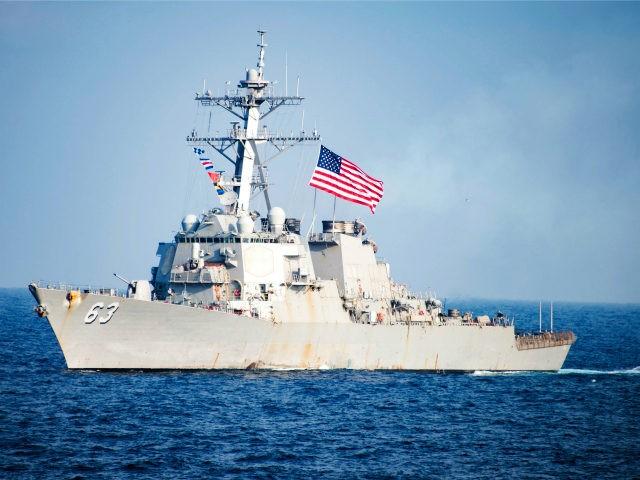
The president didn't define the extent of such a "quarantine," but a follow-up report in Bloomberg indicated it would start with a complete blockade by sea, enforced by US Navy ships. 

President Maduro pounced on the comments, and directed his ambassador to lodge a formal complaint with the UN Security Council, saying any attempt to block the Venezuelan coastline is "clearly illegal" according to international law and norms. He said in a televised broadcast on Friday
 Venezuela's seas would remain "free and independent."
"All of Venezuela, in a civic-military union, repudiates and rejects the statements of Donald Trump about a supposed quarantine, of a supposed blockade," Maduro said in the speech. "A blockade, why would he announce that? It is clearly illegal."
Trump over this summer has expressed an unwillingness for "military options" in Venezuela, even recently saying he was "bored" with meddling in such a complex geopolitical climate, according to reports; however, this could be the start of escalation ramping back up again after a failed military coup attempt early this year. 

Tuesday, 23 July 2019

Blackouts in Venezuela

Venezuela blames nationwide blackouts on ‘electromagnetic attack’

Venezuela blames nationwide blackouts on ‘electromagnetic attack’

Wednesday, 26 June 2019

The US regime change operation in Venezuela


Dead On Arrival – A Brief Post-Mortem On The US’ Regime-Change Operation In Venezuela
Strategic Culture Foundation
By Joaquin Flores

25 June, 2019


From: Strategic Culture – Joaquin Flores
They say hindsight is 20/20, and nothing exemplifies that more than the kind of post-mortem that can be done on the failed attempt by the US to overthrow the government of Venezuela.  Working through the lack of options that the US has in terms of regime-change in Venezuela, should lead towards a higher degree of investor confidence in the Bolivarian Republic.
We understand that there are ultimately only three ways to attack a target state until it collapses:
  1. Supporting an internal coup/revolution or terrorism;
  2. Economic embargo perhaps leading to or justified by 1, and;
  3. Military invasion justified by the government’s reaction to 1
Then we can see that US has failed in the first two. While the US does appear on the rhetorical level to be willing to embargo the rest of planet earth, they would have to effectively do so in order to embargo Venezuela. By promoting globalization as a virtue, at the institutional level, and not simply recognizing it with problems and all as an inherent component of market economies, the US has withered its own ability to control other civilizations and states in the world’s growing multipolar system.
While the US can place sanctions on Venezuela, and get some countries to even go along with these sanctions, it only improves or strengthens the role and power of those middle-man countries like China which act as ‘value transactors’ of Venezuelan commodities into the global economy. Because it is impossible to ‘cut’ China out of the global economy, it is impossible to cut Venezuela out as well.  Given how much China is invested into Venezuela’s economy, as the Wall Street Journal notes, there’s little chance that will change either.
Despite an effort to unseat the democratically elected PSUV government, we were offered some keen insights into the US’s own self-realization regarding their failed process, and publicly so by Pompeo himself.
The level of honesty coming from the Trump administration in the US is refreshing even as it is only half the truth. When we read that Pompeo has explained that the Venezuelan opposition is ‘divided’, this is of course nothing other than good news for those concerned with regional stability, economic development, and a de-escalation of tensions that can lead towards war and instability.
It is also tremendously true, even if Pompeo doesn’t really explain why it’s the case, at least not entirely. But the facticity of the claim in itself reveals that there can be no US sponsored ‘internal regime change’ in Venezuela. Both the governments of Brazil and Colombia – close US allies under their present administrations – have ruled out any sort of military intervention into Venezuela.
Pompeo’s Confession
In comments published by the Washington Post, from an audio recording, it was reported then that Pompeo admitted that:
We were trying to support various religious institutions so that the opposition would unite,” Pompeo remarked, going on to explain that “they [the opposition] remain divided on how to confront the Maduro regime.”
This admission came on the heels of the recorded statement to the WP, where he previously explained:
Our dilemma, which is to keep the (Venezuelan) opposition together, has turned out to be tremendously difficult,”
He continued, saying that:
At the moment when (Nicolás) Maduro leaves, everyone will raise their hands and say: ‘Choose me, I’m the next president of Venezuela.’”

Subsequent to that comment, he would explain that an excess of 40 different Venezuelan opposition politicians have come forward expressing their view that as Guaido is but a transitional figure, that they ought to be ‘selected’ by the US to win an actual (i.e. staged) election. This would be, ideally for them, an election that comes on the heels of an absolute restructuring of the security apparatus of Venezuela. The idea would be to ensure the marginalization of the PSUV forces from the electoral process, a ‘counter-revolution’ of sorts. The staged elections involving various opposition parties and leaders would be an afterthought in all reality. And still, there is no consensus among this opposition on who should lead. Pompeo would continue to explain:
Our dilemma, which is to keep the (Venezuelan) opposition together, has turned out to be extremely difficult […] The moment Maduro leaves, everybody’s going to raise their hands , ‘Take me, I’m the next president of Venezuela.’”
Pompeo expressed tremendous exasperation with this state of affairs, commenting that his realization of the problem isn’t one that came about recently, but is one in fact he was aware of since he began his work in the Trump administration with the CIA. To that point he stressed that these are problems which not only manifested themselves in “public during these last months, but since the day I became director of the CIA (Central Intelligence Agency), this was something that He was at the center of what President Trump was trying to do. ”
That’s to say, Pompeo understood this problem all along. The whole project was dead on arrival.
There is no military option
Given that Venezuela can’t really be effectively more embargoed than it presently is, the US is left with one option remaining. Yes, that leaves military options, nominally on the table in terms of US pressure tactics and techniques. But the reality is that these are something much less tangible than the US has historically relied upon. A lot of this has to do with the general decline of the US military in comparative terms. While the US maintains something approximating its military capacity in absolute terms, compared to a decade or two ago, it has not managed to maintain that in relative or comparative terms. The ‘gap’ between the U.S and other rising powers, military speaking – and this reflects economic changes as well – has become smaller.  Even the Washington Post, as well as other mainstream US billionaire blogs, has admitted as much.
The fact of Venezuela’s anti-air capabilities in the form of the S-300 system are enough to bring unacceptable levels of material and human loss to the US air forces (Navy/Marine, Army, etc.). These could potentially bring the number of downed US fighters to many dozens in the first hours, of the first sortie. The loss of prestige alongside the scores of Cindy Sheehans this would produce, makes the venture a non-starter from go.
So this leaves the US in something of a conundrum. It has indeed brought Venezuela to the near point of collapse over the course of recent years, creating an economic catastrophe through a combination of sanctions and the manipulation of oil prices. But it failed to push it over the edge, and its thanks to a growing and new international consensus that this was the case.
Venezuelan leadership for its part has admitted also that there are a number of measures and policies that ought to have been in place, long term economic measure in terms of diversifying the economy that would have helped to off-set the worst of the damage done by the manipulated attack on Venezuela’s economy. We’ll recall that Russia experienced similar, based in the same manipulation of oil prices, leading to a temporary ‘shock’ to the Ruble, which plummeted in value relative to the Dollar overnight, stoking a major crisis between June and December of 2014. Russia was in a better position to manage this, and though without hiccups, has managed to avoid the sorts of repercussions that Venezuela has faced.
Strong reasons for optimism and the coming bullish trend
The inability of the US to move further against Venezuela’s economy has only given Caracas time, and organization, to work around them. These work-around measures by Venezuela can improve, but the distance between the economic attacks from the US, and the operationalizing of Guiado in a coup gambit, was too great for the US to use them in combination in an effective way.
It’s worth noting also that the general ‘game plan’ of the US has been effectively written about, expounded publicly, and absorbed by private intelligence agencies and government networks alike. The science and art of regime change has given rise to the science and art of the counter-coup.
When we understand that there is no really viable military option, Caracas knows that it is bracing for further acts of terrorism and sabotage on its critical infrastructure. International help in combatting such state-sponsored terrorism, as reported by Venezuelan state news agency TeleSurhas already been had, however, and so we can expect that we will see how effective this has been through the lack of much materializing in this direction.
Taken all together, the essentials for a rebounded Venezuelan economy are in place. Investor confidence and the assurances to Spanish, and therefore by extension German, banking interests operating without the US as a middle-man in Latin America, are well-founded and lead towards a bullish trend.
As a post-mortem on the US’s failed regime change operation in Venezuela, it is an excellent case study in how the international community can properly deal with and respond to the often irrational and potentially destabilizing actions of former global hegemons when in a state of decline. As far as Venezuela is concerned, it’s an excellent case study in sovereignty in the 21st century, despite a west-centric socio-economic focus on globalization.

Sunday, 23 June 2019

Venezuelan Coup Leaders pocket $70 million


Did Venezuelan Coup Leaders Pocket $70 Million From Citgo's Stolen US Assets?

22 June, 2019

Venezuela’s government has claimed the Department of Justice will investigate Citgo’s opposition-appointed board for the theft of $70 million. But the board is itself the product of a massive theft – that of the elected government’s wealth.
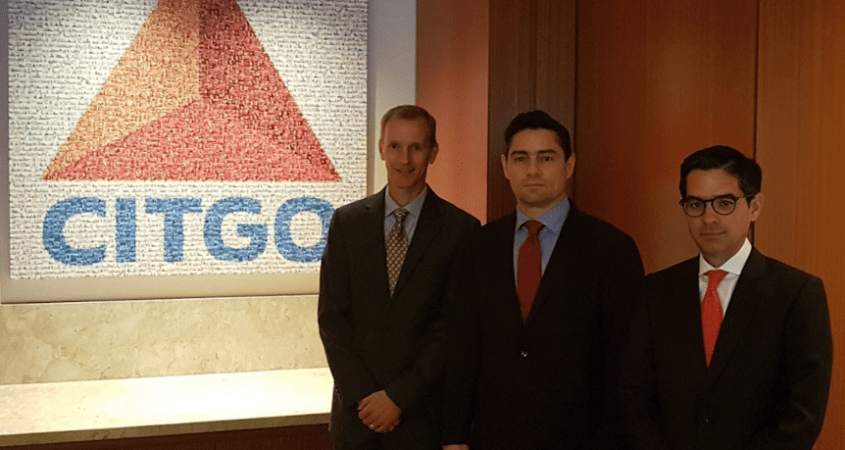
Former Exxon Lawyer and Venezuela opposition envoy to Washington, Carlos Vecchio, may have overseen a multi-million dollar fraud scheme since his political allies were handed control of his country’s US-based oil accounts.
On June 17, Venezuela’s government claimed that the US Justice Department was opening an investigation into Citgo’s opposition-appointed board of directors. Hours later, the ad-hoc council confirmed it had received a subpoena from US officials.
Citgo appeared to confirm the existence of the US government probe, stating that it “received a subpoena from the Department of Justice, which has been conducting a multi-year investigation into corruption practices in PDVSA.” Citgo is a subsidiary of Petroleum of Venezuela (PDVSA), the country’s state-owned oil company.
Citgo said it has “pledged full cooperation” with the investigation. It did not specify the nature of the subpoena or whether it concerned illegal activities alleged to have taken place before or after Guaido’s appointees took control of the company.
Citgo’s announcement followed an ominous comment by Venezuela’s Vice Minister of Communications on June 17:
“It is very likely that the United States Department of Justice will open an ad hoc investigation into the fake board of directors that Juan Guaidó appointed to the Citgo company,” Rodriguez proclaimed during a presentation from Venezuela’s presidential palace.
According to Rodriguez, the investigation was sparked by an alleged accounting fraud totaling $70 million. Rodriguez asserted the money, originally meant to cover PDVSA’s 2020 bond payment due in April, was stolen by Guaido’s representative in the US.
“It seems like the person directly involved in having pocketed those $70 million in excesses, due to cooking the books, is Mr. Carlos Vecchio,” charged Rodriguez.
The allegations of theft on a mass scale came just a day after members of Guaidó’s inner circle were exposed for embezzling $125,000 in money intended for humanitarian aid, spending it on expensive hotels and luxury items in Colombia.
Guaidó’s coup administration is not only facing a collapse of its credibility, but now the possibility of serious legal consequences for its brazen conduct.
Asked by The Grayzone about the existence of an investigation into the opposition’s Citgo accounts, the US Department of Justice stated that it “generally does not confirm, deny or otherwise comment on the existence or non-existence of an investigation.”

Stacking Citgo’s board with corporate consultants and pre-Chavez oil executives

The Trump Administration recognized Vecchio as Venezuela’s ambassador to Washington in January, after he was appointed by Guaidó.
Vecchio has since surrounded himself with an entourage of professional opposition activists in Washington DC. They include David Smolansky, a former local official from Vecchio’ Popular Will party who was appointed to PDVSA’s board of directors by the opposition-controlled National Assembly this February.
Vecchio did not reply to questions sent by The Grayzone pertaining to the management of Citgo accounts and where he finds the funding to cover his salary and those of his staff.
“Why doesn’t Guaidó have appointed ministers?” Rodriguez asked, insisting that the US-appointed leader had selected “representatives of Citgo to steal $7 billion.”
“We have information that interests which belong to Citgo are moving to personal accounts,” the government spokesman added.
$7 billion represents the entirety of PDVSA’s US-based assets seized by the US in January when it rolled out unprecedented sanctions targeting Venezuela’s oil industry. In conjunction with the Trump Administration’s announcement, Guaidó ordered Venezuela’s legally defunct National Assembly to appoint a new board of directors to PDVSA and Citgo.
Within weeks, Reuters reported the new Citgo board “was arranging its first meeting at the company’s headquarters” in Houston.
“It seems like the U.S. legal system will generally accept the legal fiction that PDVSA, Citgo’s sole shareholder, is controlled by Guaidó rather than by the people in Venezuela who actually control it,” Bloomberg opinion columnist Matt Levine wrote at the time, highlighting the bizarre character of the move.
The Guaidó-appointed board was subsequently stacked with corporate consultants and former PDVSA employees who were forced out of the company under the watch of the late Venezuelan President Hugo Chavez.
Citgo’s new chairwoman, Luisa Palacios, previously served as chief of Latin America Macro and Energy Research at Medley Global Advisors, which bills itself as “the leading macro policy intelligence service for the world’s top hedge funds, investment banks, asset managers and corporations”.
While at MGA, Palacios’ job was to “[provide] primary-sourced intelligence and analysis on economic policy and political risk”. In other words, a woman who just months ago was advising hedge funds and corporations on Latin America energy policy now heads a major Latin American-based energy company.
Palacios has also worked as a strategist for British investment bank Barclays Capital and as a consultant at the World Bank’s Latin America division.
Joining Palacios on Citgo’s opposition-appointed board is financial analyst Andres Elloy Padilla. In an instance of flagrant nepotism, Padilla’s nomination was overseen by his brother, Luis Carlos, who was the Vice President of the Energy and Petroleum Commission of the National Assembly where nominations were decided.
View image on TwitterView image on Twitter
Andrés Eloy José Padilla Villalba, designado por Guaidó y la AN en la dirección de la filial de PDVSA en EEUU, es hermano del diputado de AD por Luis Carlos Padilla Villalba, quien es el VP de la Comisión de Energía y Petróleo donde se definen las postulaciones
325 people are talking about this
Guaidó’s board also includes Luis Urdaneta, who once served as Citgo’s Chairman before becoming PDVSA’s Vice President in 1994. Urdaneta remained in that role until Hugo Chavez won power in 1998 and moved to fully socialize the company. Urdaneta’s colleague on Citgo’s new team, Angel Olmeta, similarly retired from his position on PDVSA’s board in 1998. While employed with PDVSA, Olmeta oversaw its acquisition of Citgo and went on to serve as the refinery’s Executive Vice President and Chief Operating Officer.
As former oil industry executives who saw their employment end with Chavez’s rise, Urdaneta and Olmeta have much in common with Guaidó’s US envoy, Carlos Vecchio. Vecchio enjoyed a successful career with private petrol, working as a tax lawyer for PDVSA before the rise of Chavez, then moving to ExxonMobil.
As The Grayzone reportedVecchio led Exxon’s legal fight against the Chavez government and only entered the political arena once Chavez drove his former employer from the country.
As Guaidó’s US ambassador, Vecchio now stands accused of overseeing the embezzlement of $70 million from Citgo’s accounts. He has dismissed the reports, insisting his role as ambassador limits his involvement in Citgo’s affairs.
“I am not a part of PDVSA or Citgo’s board of directors, nor am I interested in being such,” Vecchio tweeted in response to the charges.

“We need to take control of those assets. Bank accounts, we need to protect that.”

While it’s unclear who exactly controls the assets handed over to Guaido earlier this year, Foreign Agent Registration Act filings list Vecchio as the “Foreign Principal” of “the Bolivarian Republic of Venezuela under President Juan Guaidó” in the US. The DOJ deleted that filing without explanation shortly after its publication.
“We have assets that belong to the republic. I represent the republic and [am] working on that,” Vecchio told Public Radio International in February when asked whether or not it was legal for him to manage Venezuela’s accounts.
“We need to take control of those assets,” he added.
When PRI asked what could “get done without an official embassy”, Vecchio replied without hesitation: “Bank accounts, we need to protect that. Gold reserves, we need to protect that and also public companies or corporations such as Citgo… So that’s what we are doing.”
What precisely Vecchio planned to do with the money was unknown, but his comments have taken on new meaning in light of the alleged fraud inquiry.

By transferring billions in oil assets belonging to the Venezuelan government into the hands of a group of opposition activists with a track record of corruption, the Trump administration has primed the pump for major scandals. Whether the former Exxon lawyer Vecchio and his cohort pocketed the Citgo accounts or “protected” them, as he pledged to do, the pilfering of Venezuela’s wealth through a slow-motion coup has already begun.