Chickens are coming home to roost & NZ dirty deed$ risk exposure. Ron Mark
don't say you were not warned.
Denise
McNabb #Food For Oil# Wine Box # Panama Papers # Sp Trading # Mosque
shooting Manifesto targets NATO Serbian Air Strikes.
'Operation
Gladio B' (also referred to as Gladio 2[1][2] or 2.0[3]) is a
codename the FBI used since 1997 for ongoing relations between the US
intelligence community, the US military and Al Qaeda.This was
revealed by whistleblower Sibel Edmonds (whose information Daniel
Ellsberg rates as "far more explosive than the Pentagon
Papers").
The
original Gladio was a Europe wide network of fascist "stay-behind"
cells that NATO/CIA/MI6 trained to carry out bombings and
assassinations in the event of a Soviet invasion. Gladio B
substituted Muslims for fascists, and continues to carry out false
flag attacks in Europe and maybe elsewhere.
"In
interviews with this author in early March, Edmonds claimed that
Ayman al-Zawahiri, current head of al Qaeda and Osama bin Laden’s
deputy at the time, had innumerable, regular meetings at the U.S.
embassy in Baku, Azerbaijan, with U.S. military and intelligence
officials between 1997 and 2001, as part of an operation known as
‘Gladio B’. Al-Zawahiri, she charged, as well as various members
of the bin Laden family and other Mujahideen, were transported on
NATO planes to various parts of Central Asia and the Balkans to
participate in Pentagon-backed destabilisation operations".
Pakistani
journalist Hamid Mir a survivor of an assassination attempt following
his anti Pakistani Intelligence and government corruption reports
confirms the above reports in 2003 when he reported in mainstream
news reports that Zawahiri came to New Zealand to set up companies in
NZ in the 1990's. His claims can be endorsed in turn by the Justice
Jain investigation in the 1987 assassination of Rajv Ghandi which saw
the Indian CIB investigate companies in NZ for arms connections in
2000.
Helen
Clark denied Hamid Mir allegations all the while organizing NZ's role
in the failed UN humanitarian program Food For Oil (called weapons
for wheat in Australia) that saw Saddam buy weapons with aid money
from kick back.
MFAT
documents confirm 80% of dairy product imported to Iraq came shipped
via third parties such as the Saudi Arabia Milk Company, and Vina
Milk Vietnam, assisted by Prok Bank (listed in the Panama Papers
along side commodity exchange firm Well Net Holdings (share holders
Bao Steel, Richwhite Investments) Vanuatu & Vostock Exports
(equity dealers for NZ dairy, Middle Easter crude & munitions)
director assisted Ian Robertson, former Russian FSB officers Victor
and Larissa Shumilov and former National MP arms dealer and
researcher for Winston Peters Ross Meurant whose book the Syrian
Connection details how a kiwi and KGB circumnavigate a UN trade
embargo. The Food For Oil UN accountant was also a Kiwi David Mace a
former Ernst & Young and senior partner in director Bao Steel.
Winston
Peters New Zealand First would later deny any NZ firms were involved.
When challenged by international watchdog groups who pointed out he
could not know this as no New Zealand agency had investigated the
primary documents outlying the UN corruption Peter's resorted to an
OUT RIGHT LIE!!!
A
cornered Peter told a media who never bothered to check claiming the
police and the SFO would launch a probe to see wether any wrong doing
had taken place.
Without
exception all firms contacted by this author acknowledged no one in
the police or the SFO had approached. The police media spokes even
acknowledged this was true.
Wiki
leaks documents confirm Clark committed troops to Iraq Afghanistan
believing it would secure New Zealand a milk deal. It mirrors Jacinda
committing soldiers to Afghanistan and Iraq to secure a free trade
deal with Brussels which is where Gladio B was first outed.
Then
there is Trade 2030 and NZ prepares to sell smart weapons technology
via the old Meurant 'Syrian Connection' third party shuffle Samoa
Pathways (Agenda 2030) to Saudi Arabia proposed Vision 2030.
The
Bosnian Clinton Islam (actually to be precise the Saudi Pakistan )
arms pipeline was approved following the Serbian massacre of Muslims
during the Siege of Sarajevo. It was reported in April 1996 in the
several articles in the LA Times and other USA media sources.
Six
month earlier I had reported on the Muslim Fascist connection ties to
NZ arms deals in Nexus Magazine Dec 95 Jan 96 issue (A State of
Terror) . The article resulted in two book on NZ ties to the Gladio B
terror network supported by the NZDF
I
wrote back then
"P2
is not the only force of Fascism that remains at large. The rise of
the new right is prevalent throughout Europe and the globe as a
whole. Fascist organisations like America's Aryan Nation are rapidly
on the increase. However, more disturbing are reports of such
pro-Nazi group infiltration within armies and police forces of
several democratic states including America, Canada, Britain and
Australia. In Germany, anti-Fascist investigators like John Kohl also
report of the neo-Nazis' increased military efficiency. In August
1995 a large cache of arms, thought to have come from former
Yugoslavia, confirmed worst fears. Neo-Nazi activists are using
ex-Yugoslavia as a training ground.39 To date, 150 neo-Nazi
mercenaries of German origin are known to be fighting in Croatia
alongside Fascists from America, Britain and Austria.40
Yet
again, the Balkans are serving their historical role as a breeding
ground for the return of terror, with potential international
consequences. For while Gaullist France, Britain and Russia provide
arms to Serbia on one side, America, with equally ulterior motives,
denies the existence of Ustache-connected elements within the
Croatian Government (Ustache was the pro-Nazi WWII nationalist
organisation). At the same time, America (with Germany and,
strangely, Israel) has been conducting a covert airlift of weapons
into Croatia and Bosnia from the start of the conflict. The weapons
and funds have in all likelihood come from Pakistan, Indonesia and
possibly even Iran. The operations logistical support has been
carried out by a mixture of US forces, allied UN troops and,
according to local rumours, elements of the French Foreign Legion at
Sarajevo.41
According
to the relative of a high-ranking Indonesian military official, one
such airlift took place in August 1994 when New Zealand UN troops
brought weapons-provided by Indonesia and destined for the Muslim
forces-along with their baggage. How authentic this report is, is not
known. However, it is on record that in early September 1994, shortly
after the arrival of NZ troops in the former Yugoslavian republic,
Bosnian forces launched a counter-offensive. Bosnia had suddenly
procured munitions and heavy weapons, previously much in lack. Where
had/who had/what had made such a feat possible? Perhaps it is just
coincidence that, a week later, Indonesia awarded New Zealand Telecom
an NZ$600 million contract.42"
Originally
aired on BBC2 in 1992, 'Operation Gladio' reveals 'Gladio', the
secret state-sponsored terror network operating in Europe.
This
BBC series is about a far-right secret army, operated by the CIA and
MI6 through NATO, which killed hundreds of innocent Europeans and
attempted to blame the deaths on Baader Meinhof, Red Brigades and
other left wing groups. Known as 'stay-behinds' these armies were
given access to military equipment which was supposed to be used for
sabotage after a Soviet invasion. Instead it was used in massacres
across mainland Europe as part of a CIA Strategy of Tension. Gladio
killing sprees in Belgium and Italy were carried out for the purpose
of frightening the national political classes into adopting U.S.
policies.
Russian
Media This Week- Op Gladio B: US Threatens Russia with Unleashing
Terrorists on Its Soil
In
this first edition of the Russian Newspaper Monitor, a new weekly
show produced by Newsbud, Professor Filip Kovacevic gives an overview
of the Russian newspaper media scene.
He
also discusses the front-page news stories from Rossiyskaya Gazeta
(RG), Izvestia, Kommersant, Pravda and Komsomolskaya Pravda on a
whole variety of topics, including the Russian view of the U.S.
policy in Syria, Putin's visit to Kazakhstan, the new generation of
Russian strategic bomber aircraft patrolling the Pacific, the Russian
military draft, and the political positions of the Russian Communist
Party.
Come
and join us in this one-of-a-kind overview of Russian media
landscape, and what’s been cooking there this past week.
Show
Notes
Rossiyskaya
Gazeta [Russian Newspaper] - www.rg.ru
Wikileaks
documents have shown the intimite relationship between Clinton and
the Gulen movement.
However,
this will show that Sibel Edmonds has been here long, long before –
in 2011 in fact, before anyone had heard of him
WikiLeaks,
Hillary-Gulen Intimate Ties & How Clintons Gave Birth to Mullah
Gulen’s Terrorist Network
In
this episode of Spotlight with Sibel and Spiro we discuss the
notorious USA-based Mullah Fethullah Gulen and Operation Gladio B in
light of Wikileaks’ recent announcement that they plan to release a
new batch of e-mails exposing the intimate ties between Hillary
Clinton and Gulen’s 25+ Billion shady network. Sibel Edmonds
explains how Fethullah Gulen was brought into the United States
during the Clinton Administration, and how Bill Clinton’s White
House, the State Department and the Justice Department’s Janet Reno
provided the infamous mullah and his terrorism-heroin operations with
blanket immunity and protection. We also take a look at Clinton’s
hand-picked handlers, Graham Fuller and Mark Grossman, selected to
manage and direct Gulen’s cells in the U.S. and abroad.
Turkish
Intel Chief Exposes CIA Operations via Islamic Group in Central Asia
“In
the 1990s Gulen’s Madrasas sheltered 130 CIA agents" in
Kyrgyzstan & Uzbekistan”
Yesterday
Washington Post’s Jeff Stein published a very interesting but
incomplete story
regarding a recently published memoir by former Turkish Intelligence
Chief Osman Nuri Gundes. Here is the title of his post: Islamic
group is CIA front, ex-Turkish Intel chief says.
For those of you familiar with my case and what I’ve been covering
here at Boiling Frogs Post this exposé is ‘old news’ but
nonetheless a vindication. As for those who are first-timers here or
not that familiar with my case, this is an opportunity for a bit of
background and to learn a few important points and facts that you
won’t be getting from this ‘half-picture’ presented by the
Washington Post.
In
his memoir Gundes claims that Fethullah Gulen’s worldwide Islamic
movement based in Pennsylvania has been providing cover for the CIA
since the mid-1990s, and that in the 90s, the movement "sheltered
130 CIA agents"
at its schools in Kyrgyzstan and Uzbekistan alone.
Now,
as I’ve done before, I am going to praise Jeff Stain, whom I know
and like, for his solid journalistic talent and background and give
him a few credits for actually covering this story (it is one of
those ‘thou shall not cover’ areas in an agreement between the US
mainstream media and the US government), before I bash the piece, its
half-a.. coverage, incomplete background, and it’s incredibly
lenient treatment of a shady-dubious-charlatan, a major player in
this operation yet a major denier when confronted by Stein; Graham
Fuller. Again, as before, I am going to blame it on the unfortunate
situation of ‘having to sell your journalistic soul to earn your
living.’
Let’s
start with Gulen. The only background provided on Gulen is the
following with only one link which takes you to Gulen’s marketing
site:
…an
influential former Turkish imam by the name of Fethullah
Gulen,
has 600 schools and 4 million followers around the world.
…
The
imam left Turkey in 1998 and settled in Saylorsburg,
Pa.,
where the movement is headquartered. According to Intelligence
Online, he obtained a residence permit only in 2008 with the help of
Fuller and George Fidas, whom it described as head of the agency’s
outreach to universities.
There
is no mention of Gulen’s decade-long ‘wanted’ status in Turkey
(until recently), no mention of the ban on Gulen and his Madrasas in
several Central Asian countries, no mention of various investigations
of Gulen by other western countries, no mention of the unknown
sources of his billions of dollars…As we all know except for a very
few, and by that I mean a number in 100s if that, no one in this
country has ever heard of this guy with his billions, with his castle
in Pennsylvania, his hundreds of Madrasas, now hundreds of US charter
schools, his dubious businesses….Yet, for an article as serious as
this (Madrasas and mosques as CIA operation centers in Central Asia),
the central figure in the story has been given one sentence; no
history, no relevant facts…
Those
of you who have not read our previous commentaries and updates on
this topic can check them out here,
here,
here,
and here,
and below is a list of a few Gulen related facts totally
(mysteriously?) absent from Washington Post piece:more
-In
1999 Gulen defected to the US shortly before his scandalous speech,
where he is heard calling on his supporters to "work patiently
and to creep silently into the institutions in order to seize power
in the state", became public. Turkish prosecutors demanded
a ten-year sentence for Gülen for having "founded an
organization that sought to destroy the secular apparatus of state
and establish a theocratic state". Mr. Gulen has not left the
United States since.
-The
Netherlands has taken major steps to cut funding to all Gülen
associated organizations and is investigating his operations. The
Turkish Fethullah Gülen movement is really an Islamic fundamentalist
group, claims
Rotterdam council member Anita Fähmel (Leefbaar Rotterdam) on the
basis of her own study of the Turkish movement.
-The
Russian government has banned
all Gülen schools and the activities of the Nur sect in Russia. Over
20 Turkish followers of Gulen were deported
from Russia in 2002-2004.
-In
1999 Uzbekistan closed
all Gulen’s Madrasas and shortly afterward arrested eight
journalists who were graduates of Gulen schools, and found them
guilty of setting up an illegal religious group and of involvement in
an extremist organization.
-In
Turkmenistan, government authorities have placed Gulen’s schools
under close scrutiny and have ordered them to scrap
the history of religion from curriculums.
Now,
back to the story and its other major short coming:
Apparently
Mr. Stein was not able to reach Gulen for comment, so he moved on to
his CIA sources with ‘long
ties to Central Asia.’
First he quotes his first source, Former CIA operative Robert
Baer,
chief of the agency’s Central Asia and Caucasus operations from
1995 through 1997, who called the allegations bogus. However, Mr.
Baer added: “It’s
possible that the CIA turned around this ship after I left.”
I
don’t have a problem with Baer’s response. Based on what I
personally know, US Islamization Operations in Central Asia via Gulen
started in late 1997, early 1998. That brings me to what truly set me
off, Stein’s second source and actually a character who is pointed
to by the new memoir’s author - Graham Fuller:
Graham
Fuller,
a former CIA station chief in Kabul and author of “The Future of
Political Islam,” threw cold water on Gundes’s allegations about
Kyrgyzstan and Uzbekistan.
“I
think the story of 130 CIA agents in Gulen schools in Central Asia is
pretty wild,” Fuller said by e-mail.
“I
should hasten to add that I left CIA in 1987 -- nearly 25 years ago
-- and I have absolutely no concrete personal knowledge whatsoever
about this. But my instincts tell me the claim is highly improbable.”
Next,
Jeff Stein very gently confronts Fuller with the fact that according
to the memoir and related media coverage Gulen obtained his US
residence permit with his (Fuller’s) help, and Fuller denies it and
says that’s ‘wrong,’:
“What
I did do,” Fuller explained, “was write a letter to the FBI in
early 2006 …at a time when Gulen's enemies were pressing for his
extradition to Turkey from the U.S. In the post 9/11 environment,
they began spreading the word that he was a dangerous radical. In my
statement to the FBI I offered my views…that I did not believe he
posed a security threat of any kind to the U.S. I still believe that
today, as do a large body of scholars on contemporary Islam.”
…
First
of all, there have been tens if not hundreds of articles establishing
Graham Fuller as one of Gulen’s official references to the court
for his residency, you can view some of these here,
here,
here.
This quote comes from Foreign
Policy Journal:
Fethullah
Gulen became a green card holder despite serious opposition from FBI
and from Homeland Security Department. Former CIA officers (formally
and informally) such as Graham Fuller and Morton Abromovitz were some
of the prominent references in Gulen's green card application.
Next
is the question of why. Why and in what capacity has Fuller been this
active, this supportive, of Gulen? I am talking about this voluntary
‘I wrote a letter to the FBI on Gulen’ line:
…was
write a letter to the FBI in early 2006 …at a time when Gulen's
enemies were pressing for his extradition to Turkey from the U.S. In
the post 9/11 environment, they began spreading the word that he was
a dangerous radical. In my statement to the FBI I offered my
views…that I did not believe he posed a security threat of any kind
to the U.S. I still believe that today, as do a large body of
scholars on contemporary Islam.
And
Stein let that slide?! I’d quickly ask: ‘how often do you write
to the FBI on people you think have been unfairly targeted or treated
by them?!’
Last
but not least on Graham Fuller is my own on-the-record, more
accurately, on-the-album, naming
of individuals implicated (criminally) in my case, thus protected via
invocation of the State Secrets Privilьege:
Coinciding
with the publication of the first article in a series in Britain’s
Sunday Times covering some of her allegations, former FBI translator
Sibel Edmonds posts a gallery of 18 photos of people and three images
of question marks on her website, justacitizen.com The 21 images are
divided into three groups, and the page is titled “State Secrets
Privilege Gallery.”… “The third group includes people who all
appear to work at think tanks—primarily WINEP, the Washington
Institute for Near East Policy”: Graham
E. Fuller—RAND Corporation,
David Makovsky—WINEP, Alan Makovsky—WINEP, ? (box with question
mark), ? (box with question mark), Yusuf Turani (president-in-exile,
Turkestan), Professor Sabri Sayari (Georgetown, WINEP), and Mehmet
Eymur (former head of the Turkish intelligence agency MIT).
…
I
am going to leave you with the following excerpts from my interview
with Phil Giraldi for the Am Con Magazine in 2009, on Gulen, CIA
Central Asia operations & the use of Islam and Mujahideen
there-1997-2001, [All emphasis mine]:
GIRALDI:
You also have information on al-Qaeda, specifically al-Qaeda
in Central Asia
and Bosnia. You were privy to conversations that suggested the CIA
was supporting al-Qaeda in central Asia and the Balkans,
training people to get money, get weapons, and this contact continued
until 9/11…
EDMONDS:
I don’t know if it was CIA. There were certain forces in the U.S.
government who worked with the Turkish paramilitary groups, including
Abdullah Çatli’s group, Fethullah
Gülen.
GIRALDI:
Well, that could be either Joint Special Operations Command or CIA.
EDMONDS:
Maybe in a lot of cases when they said State Department, they meant
CIA?
GIRALDI:
When they said State Department, they probably meant CIA.
EDMONDS:
Okay. So these conversations, between 1997
and 2001,
had to do with a Central Asia operation that involved bin Laden. Not
once did anybody use the word “al-Qaeda.” It was always
“mujahideen,” always “bin Laden” and, in fact, not “bin
Laden” but “bin Ladens” plural. There were several bin Ladens
who were going on private jets to Azerbaijan
and Tajikistan.
The Turkish ambassador in Azerbaijan worked with them.
There
were bin Ladens, with the help of Pakistanis or Saudis, under our
management. Marc Grossman was leading it, 100 percent, bringing
people from East
Turkestan into Kyrgyzstan,
from Kyrgyzstan to
Azerbaijan,
from Azerbaijan some of them were being channeled to Chechnya, some
of them were being channeled to Bosnia. From Turkey, they were
putting all these bin Ladens on NATO planes. People and weapons went
one way, drugs came back.
GIRALDI:
Was the U.S. government aware of this circular deal?
EDMONDS:
100 percent. A lot of the drugs were going to Belgium on NATO planes.
After that, they went to the UK, and a lot came to the U.S. via
military planes to distribution centers in Chicago and Paterson, New
Jersey. Turkish diplomats who would never be searched were coming
with suitcases of heroin.
Hardly
had the failed coup attempt come to an end when numerous facts
emerged that allow us to make far-reaching conclusions on the new
realities that have formed in the region.
First,
for example, is the news that the international media have actively
broadcast that the UAE played a rather active role in the Turkish
coup. Just a few days ago, the Crown Prince of Abu Dhabi, the Deputy
Supreme Commander of the Armed Forces of the UAE, Mohammed bin Zayed
Al-Nahyan made an announced visit to Doha, where he held secret talks
with the Emir of Qatar, Tamim bin Hamad Al Thani. Moreover, neither
the UAE nor Qatari media covered the event and the Qatari television
channel, Al Jazeera, was no exception. Famous Turkish journalist,
Ismail Basha, pointed out that the purpose of Al Nahyan’s visit was
to persuade Qatar to act as mediator in negotiations between the UAE
and Turkey on settling relations. According to some media reports,
the UAE authorities financed the military coup in Turkey, which is
evidenced by published details of the conspirators’ plan.
If
this assertion is true, there is no doubt that the UAE, which cannot
be considered an independent player on the world stage, particularly
in the Persian Gulf area, are backed up by other countries, in this
case, Saudi Arabia and the United States. In particular, the TV
channels Sky News and Al-Arabiya, sponsored by Saudi Arabia, spoke
out in support of the insurgents and the coverage of events in Turkey
showed Sky News and Al-Arabiya journalists pleased to report on the
success of the coup, and that President Erdogan intended to flee the
country. A further argument supporting the idea of Saudi Arabia’s
involvement in the coup is demonstrated by the fact that Riyadh took
15 hours to react to the events in Ankara and Istanbul while many
others immediately expressed their condemnation for the attempted
uprising.
Riyadh
does not like Erdogan’s policy aimed at upping Turkey’s role in
the region and creating a new Ottoman Empire, which, as per history,
would include most of the Arab states. Ankara is conducting an
increasingly independent policy in Syria: it is not coordinating its
plans with Saudi Arabia, Qatar and the United States, which are the
main financial donors and weapon suppliers to various groups of
terrorists. It is these countries that are responsible for the
transformation of the once prosperous Syria into a scorched land akin
to a cemetery. Will the leaders of these countries accept the
responsibility for their criminal activities or will everything be
reduced to false apologies as it was with Iraq. Apparently, the
impunity of a number of states, especially in the West, will continue
to provoke the growth of terrorism in various regions of the world,
and their victims will not be the Western leaders, but ordinary
citizens destined to pay for the “game” their leaders are
playing.
Having
failed to benefit from the so-called Turkish coup and losing its
position in the region on all counts, Saudi Arabia, by way of its
Minister of Foreign Affairs, Adel al-Jubeir, proposed that Russia
enter into economic cooperation with the Persian Gulf countries
provided that the Russian Federation refrains from supporting the
Syrian President Bashar al-Assad. The minister stated that Saudi
Arabia and Russia are of the same opinion of what the outcome of the
Syrian conflict should be; their differences lie in the means by
which it should be achieved.
Meanwhile,
inside Turkey there is increasing anti-American sentiment due to the
widespread assumption that the United States had a hand in organising
the coup. For example, the Voice of America correspondent in
Istanbul was forced to flee from an angry mob at least twice. Public
anger was also provoked when two American politicians expressed their
approval of the participants of the uprising as it was still ongoing.
One of them was Congressman of California, Brad Sherman, the second –
the senator of the State of Virginia, Richard Black.
The
world’s media is pointing out that NATO did not even warn Turkey, a
NATO member, about the potential threat. A number of experts drew
attention to the fact that the events in Turkey, which is a
“significant and very active” member of NATO, took place a little
over week following the NATO Summit in Warsaw. The largest
military-political structure that has every means of ensuring
security at its disposal did not say a word about the potential
threat not only to Turkey’s security but the regional security as a
whole. A question arises then: was the problem of regime change in
Turkey discussed and planned at the summit given that Erdogan has
been increasingly “struggling to free himself” from NATO’s
grip?
Interestingly,
the failed coup attempt has led to changes in the policy of a number
of states – Russia, Turkey and Iran. The Iranian news agency, Fars,
received confirmation from official sources in Ankara of the fact
that Turkey was warned by Russia and it is unclear what the results
of the events would have been if the intelligence hadn’t been
received from Moscow. Iranian media also reported that Saudi Arabia
and the United Arab Emirates were aware of the coup but chose not to
share this information with their ally, Erdogan.
Oddly
enough, the failed military coup attempt has led to a dramatic
improvement in relations between Russia and Turkey. Both Russian and
Turkish media have dropped any negative material about each other. It
was more about establishing friendly relations now. A clear example
of this was the unusually rapid restoration of air travel to and from
Turkey and a sharp increase in Russian tourists to Turkish resorts.
The
unsuccessful coup attempt has also led to a possible tripartite
alliance between Russia, Turkey and Iran. “We intend to cooperate
with Iran and Russia to solve regional problems together and
significantly reinforce our steps towards returning peace and
stability to the region,” said Erdogan.
The
two Islamic states of Iran and Turkey alone have a total population
of 150 million people and play a significant role in the affairs of
the region. The West, as history has demonstrated, has sought to
prevent an alliance between these countries for over three centuries,
pitting them against each other or against Russia.
Now,
however, in the new reality, the establishment of a tripartite
alliance with Russia will allow Iran and Turkey to strengthen their
position in the Muslim world. After that, the Cooperation Council for
the Arab States of the Gulf and its leading member, Saudi Arabia,
will lose its dominant role in the region and will no longer dare to
threaten the interests of Ankara and Tehran and, under the pressure
of these circumstances, will cease to be hostile towards Russia.
Viktor
Mikhin, corresponding member of the Russian Academy of Natural
Sciences, exclusively for the online magazine “New Eastern
Outlook”.
Erdogan
Wants to 'Smash NATO Secret Army' Allegedly Involved in Attempted
Coup
According
to Turkish media reports, there was a secret NATO structure involved
in the attempted coup that took place in Turkey on July 15, German
newspaper Deutsche Wirtschafts Nachrichten wrote.
The
media source, referring to reports of Turkish media, wrote
that this structure has primarily been used by the British and
Americans to influence political events in Turkey.
The
newspaper also noted that Fethullah Gulen, a US-based Muslim cleric,
who was accused by the Turkish government of plotting the
coup, could also be a part of this structure.
"If
one wants to again create relationship of trust with the
Western institutions, Gladio [clandestine NATO structure] in Turkey
must be eliminated as it already was in several Western
countries" Turkish journalist Ozcan Tikit wrote for newspaper
Habertürk.
According
to DWN,
Erdogan and the Turkish government are determined to "completely
smash this clandestine structure."
"Erdogan
is determined to smash Gladio in any case. Because the head
of state has — albeit belatedly — realized that
NATO seeks to harm Turkey's territorial integrity," the
newspaper noted.
At
the same time, former head of Turkish intelligence services
Bülent Orakoglu argued that NATO's secret structures are active not
only in Turkey, but also in the whole Europe.
"There
is a force that wants the EU to dissolve. This force is a new
form of Gladio, which carries out its operations among the
population. I am confident that there is a Gladio structure in Europe
which is working towards the dissolution of the EU,"
Orakoglu said.
During
the Cold War, the United States created secret armies in Europe
tasked to organize resistance in case of Soviet
invasion. However, these secret armies that belonged to the so
called Gladio network also reportedly organized terrorist attacks
in the form of so called "false flag operations"
to shape the political landscape in accordance with the
interests of the United States.
On
July 15, an attempted coup took place in Turkey and was
suppressed the following day. Over 240 people were killed
during the coup attempt and an estimated 2,000 were wounded.
Since
the failed coup, Turkey has jailed more than 10,000 people and
suspended more than 50,000 judges, civil servants, and educators
under a state of emergency in which expressing ideas
similar to those of Gulen is considered a crime.
Nach
türkischen Medienberichten soll die NATO-Geheimarmee Gladio der
strukturelle Urheber des Putschversuchs vom 15. Juli sein. Erdogan
und die türkische Regierung seien entschlossen, diese
Parallelstruktur vollständig zu zeьschlagen.
This is the second time in one day that the work of Sibel Edmonds is highlighted
I suspect that to understand geopolitics in the region and the flare-up of the war in Nagorno-Karabakh we are going to have to understand Operation Gladio 'B' Gladio
B and the Battle for Eurasia - James Corbett lecture
‘Operation
Gladio B’--the continuation of the old NATO Gladio program--covers
a tangled web of covert operatives, billionaire Imams, drug running,
prison breaks and terror strikes. Its goal: the destabilization of
Central Asia and the Caucasus. In this presentation to Studium
Generale in Groningen on November 19, 2014, James Corbett lifts the
lid on this operation, its covert operatives, and the secret battle
for the Eurasian heartland.
Why
was a Sunday Times report on US government ties to al-Qaeda chief
spiked?
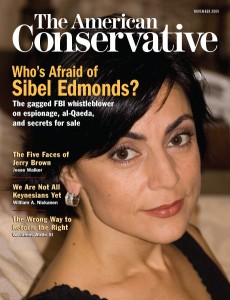
FBI
whistle-blower Sibel Edmonds was described as "the most gagged
person in the history of the United States" by the American
Civil Liberties Union. Was the Sunday Times pressured to drop its
investigation into her revelations?
A
whistleblower has revealed extraordinary information on the U.S.
government’s support for international terrorist networks and
organised crime. The government has denied the allegations yet gone
to extraordinary lengths to silence her. Her critics have derided her
as a fabulist and fabricator. But now comes word that some of her
most serious allegations were confirmed by a major European newspaper
only to be squashed at the request of the U.S. government.
In
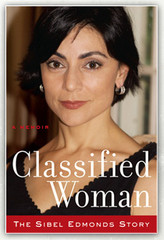
a recent book Classified Woman, Sibel Edmonds, a former
translator for the FBI, describes how the Pentagon, CIA and State
Department maintained intimate ties to al-Qaeda militants as late as
2001. Her memoir, Classified
Woman: The Sibel Edmonds Story,
published last year, charged senior government officials with
negligence, corruption and collaboration with al Qaeda in illegal
arms smuggling and drugs trafficking in Central Asia.
In
interviews with this author in early March, Edmonds claimed that
Ayman al-Zawahiri, current head of al Qaeda and Osama bin Laden’s
deputy at the time, had innumerable, regular meetings at the U.S.
embassy in Baku, Azerbaijan, with U.S. military and intelligence
officials between 1997 and 2001, as part of an operation known as
‘Gladio B’. Al-Zawahiri, she charged, as well as various members
of the bin Laden family and other mujahideen, were transported on
NATO planes to various parts of Central Asia and the Balkans to
participate in Pentagon-backed destabilisation operations.
According
to two Sunday Times journalists speaking on
condition of anonymity, this and related revelations had been
confirmed by senior Pentagon and MI6 officials as part of a four-part
investigative series that were supposed to run in 2008. The Sunday
Times journalists described how the story was inexplicably
dropped under the pressure of undisclosed “interest groups”,
which, they suggest, were associated with the U.S. State Department.
Shooting
the Messenger
Described
by the American
Civil Liberties Union as
the “most gagged person in the history of the United States of
America,” Edmonds studied criminal justice, psychology and public
policy at George Washington and George Mason universities. Two
weeks after the 9/11 terrorist attacks, her fluency in Turkish, Farsi
and Azerbaijani earned her an FBI contract at the Washington DC field
office. She was tasked with translating highly classified
intelligence from operations against terrorism suspects in and
outside the U.S..
In
the course of her work, Edmonds became privy to evidence that U.S.
military and intelligence agencies were collaborating with Islamist
militants affiliated with al-Qaeda, the very forces blamed for the
9/11 attacks – and that officials in the FBI were covering up the
evidence. When Edmonds complained to her superiors, her family was
threatened by one of the subjects of her complaint, and she was
fired. Her accusations of espionage against her FBI colleagues were
eventually investigated by theJustice
Department’s Office of the Inspector General,
which did not give details about the allegations as they remained
classified.
Although
no final conclusions about the espionage allegations were reached,
the Justice Departmentconcluded that
many of Edmonds’ accusations “were supported, that the FBI did
not take them seriously enough and that her allegations were, in
fact, the most significant factor in the FBI’s decision to
terminate her services.”
When
she attempted to go public with her story in 2002, and again in 2004,
the U.S. government silenced Edmonds by invoking a legal precedent
known as “state secrets privilege” – a near limitless power
to quash
a lawsuit based
solely on the government’s claim that evidence or testimony could
divulge information that might undermine “national security.”
Under this doctrine, the government sought to retroactively
classify basic
information concerning Edmonds’s case already in the public record,
including, according to the New
York Times,
“what languages Ms. Edmonds translated, what types of cases she
handled, and what employees she worked with, officials said. Even
routine and widely disseminated information — like where she worked
— is now classified.”
Other
intelligence experts agree that Edmonds had stumbled upon a criminal
conspiracy at the heart of the American judicial system. In her
memoirs, she recounts that FBI Special Agent Gilbert Graham, who also
worked in the Washington field office on counter-intelligence
operations, told her over a coffee how he “ran background checks on
federal judges” in the “early nineties for the bureau… If we
came up with shit – skeletons in their closets – the Justice
Department kept it in their pantry to be used against them in the
future or to get them to do what they want in certain cases – cases
like yours.”A redacted version of Graham’s
classified protected disclosure to
the Justice Department regarding these allegations, released in 2007,
refers to the FBI’s “abuse of authority” by conducting illegal
wiretapping to obtain information on U.S. public officials.
Incubating
Terror
Five
years ago, Edmonds revealed to the Sunday
Times that
an unidentified senior U.S. State Department official was on the
payroll of Turkish agents in Washington, passing on nuclear and
military secrets. “He was aiding foreign operatives against U.S.
interests by passing them highly classified information, not only
from the State Department but also from the Pentagon, in exchange for
money, position and political objectives”, Edmonds told the paper.
She reported coming across this information when
listening to suppressed phone calls recorded by FBI surveillance,
marked by her colleague Melek Can Dickerson as “not pertinent”.
In
the Sunday
Times exposé,
Edmonds described a parallel organisation in Israel cooperating with
the Turks on illegal weapons sales and technology transfers. Between
them, Israel and Turkey operated a range of front companies
incorporated in the U.S. with active “moles in sensitive military
and nuclear institutions”, supported by U.S. officials, in order to
sell secrets to the highest bidder. One of the buyers was
Pakistan’s Inter Services Intelligence (ISI) – which often used
its Turkish allies, according to theTimes,
“as a conduit… because they were less likely to attract
suspicion.”
The
Pakistani operation was, the paper reported, “led by General
Mahmoud Ahmad, then the ISI chief” from 1999 to 2001, when the
agency helped train, supply and coordinate the Afghan Taliban and
gave sanctuary to their Arab allies brought together in the coalition
named al-Qaeda. Ahmad, as the Timesnoted, “was accused
[by the FBI] of sanctioning a $100,000 wire payment to Mohammed Atta,
one of the 9/11 hijackers, immediately before the attacks.”
According
to Indian intelligence officials, they had assisted the FBI in
“tracing and establishing” the financial trail between the
General and the chief hijacker. The discovery was, they allege, the
real reason behind the General’s sudden retirement in October
2001. The Pakistani daily, The
News,
reported on 10th September 2001 that the ISI chief held several
“mysterious meetings at the Pentagon and National Security Council”
that week, including with CIA director George Tenet.
In
an interview with this author in March, Edmonds raised the question
of whether U.S. officials’ liaisons with an espionage network
overseen by Ahmad, and the FBI’s suppression of related
intelligence, played a role in facilitating the attacks.
“Following
9/11, a number of the foreign operatives were taken in for
questioning by the FBI on suspicion that they knew about or somehow
aided the attacks”, reported the Sunday
Times.
The paper related that according to Edmonds, the senior State
Department official received a call from a foreign agent under FBI
surveillance asking for help to “get them out of the U.S. because
we can’t afford for them to spill the beans.” The official
promised “he would ‘take care of it’.”
Edmonds
told this author that high-level corruption compromised the ability
of the U.S. intelligence community to pursue ongoing investigations
of those planning the 9/11 attacks. “It was precisely those
militants that were incubated by some of America’s key allies”,
she said. Corruption helped guarantee Congressional
silence when that incubation strategy backfired in the form of 9/11.
“Both Republican and Democratic representatives in the House and
Senate came up in FBI counterintelligence investigations for taking
bribes from foreign agents”, she said.
Al-Qaeda:
Enemy or Asset?
In
her interview, Edmonds insisted that after its initial exposé,
the Times‘ investigation had gone beyond such previous
revelations, and was preparing to disclose her most startling
accusations. Among these, Edmonds described how the CIA and the
Pentagon had been running a series of covert operations supporting
Islamist militant networks linked to Osama bin Laden right up to
9/11, in Central Asia, the Balkans and the Caucasus.
While
it is widely
recognised that
the CIA sponsored bin Laden’s networks in Afghanistan during the
Cold War, U.S. government officials deny any
such ties existed. Others claim these
ties were real,
but were severed after the Soviet Union collapsed in 1989.
But
according to Edmonds, this narrative is false. “Not just bin Laden,
but several senior ‘bin Ladens’ were transported by U.S.
intelligence back and forth to the region in the late 1990s through
to 2001”, she told this author, “including Ayman al-Zawahiri” –
Osama bin Laden’s right-hand-man who has taken over as al-Qaeda’s
top leader.
“In
the late 1990s, all the way up to 9/11, al-Zawahiri and other
mujahideen operatives were meeting regularly with senior U.S.
officials in the U.S. embassy in Baku to plan the Pentagon’s Balkan
operations with the mujahideen,” said Edmonds. “We had support
for these operations from Pakistan and Saudi Arabia, but the U.S.
oversaw and directed them. They were being run from a secret section
of the Pentagon with its own office”.
Edmonds
clarified, “the FBI counterintelligence investigation which was
tracking these targets, along with their links to U.S. officials, was
known as ‘Gladio B’, and was kickstarted in 1997. It so happens
that Major Douglas Dickerson” – the husband of her FBI co-worker
Melek whom she accused of espionage – “specifically directed the
Pentagon’s ‘Gladio’ operations in Kazakhstan and Turkmenistan
at this time.”
In testimony
under oath,
Edmonds has previously confirmed that Major Doug Dickerson worked for
the Pentagon’s Defense Intelligence Agency (DIA) under the weapons
procurement logistics
division on Turkey and Central Asia, and with the Office of Special
Plans (OSP) overseeing policy in Central Asia.
Gladio
B
Edmonds
said that the Pentagon operations with Islamists were an “extension”
of an original ‘Gladio’ programme uncovered in the 1970s in
Italy, part of an EU-wide
NATO covert operation that
began as early as the 1940s. As Swiss historian Dr. Daniele
Ganser records in his seminal book, NATO’s
Secret Armies,
an official Italian
parliamentary inquiry confirmed
that British MI6 and the CIA had established a network of secret
“stay-behind” paramilitary armies, staffed by fascist and Nazi
collaborators. The covert armies carried out terrorist attacks
throughout Western Europe, officially blamed on Communists in what
Italian military intelligence called the ‘strategy of tension’.
“You
had to attack civilians, the people, women, children, innocent
people, unknown people far removed from any political game”
explained Gladio operative Vincenzo
Vinciguerra during
his trial in 1984. “The reason was quite simple. They were
supposed to force these people… to turn to the State to ask for
greater security.”
While
the reality of Gladio’s existence in Europe is a
matter of historical record,
Edmonds contended the same strategy was adopted by the Pentagon in
the 1990s in a new theatre of operations, namely, Asia. “Instead of
using neo-Nazis, they used mujahideen working under various bin
Ladens, as well as al-Zawahiri”, she said.
The
last publicly known Gladio meeting occurred in NATO’s Allied
Clandestine Committee (ACC) in Brussels in 1990. While Italy was a
focal point for the older European operations, Edmonds said that
Turkey and Azerbaijan served as the main conduits for a completely
new, different set of operations in Asia using veterans of the
anti-Soviet campaign in Afghanistan, the so-called “Afghan Arabs”
that had been trained by al-Qaeda.
These
new Pentagon-led operations were codenamed ‘Gladio B’ by FBI
counterintelligence: “In 1997, NATO asked [Egyptian President]
Hosni Mubarak to release from prison Islamist militants affiliated to
Ayman al-Zawahiri [whose role in the assassination of Anwar Sadat led
to Mubarak’s ascension]. They were flown under U.S. orders to
Turkey for [training and use in] operations by the Pentagon”, she
said.
Edmonds’
allegations find some independent corroboration in the public record.
The Wall
Street Journal refers
to a nebulous agreement between Mubarak and “the operational wing
of Egyptian Islamic Jihad, which was then headed by Ayman
al-Zawahiri… Many of that group’s fighters embraced a
cease-fire with the government of former President Hosni Mubarak in
1997.”
Youssef
Bodansky,
former Director of the Congressional Task Force on Terrorism and
Unconventional Warfare, cited U.S. intelligence sources in an article
for Defense
and Foreign Affairs: Strategic Policy,
confirming “discussions between the Egyptian terrorist leader Dr.
Ayman al-Zawahiri and an Arab-American known to have been both an
emissary of the CIA and the U.S. Government.” He referred to
an “offer” made to al-Zawahiri in November 1997 on behalf of U.S.
intelligence, granting his Islamists a free hand in Egypt as long as
they lent support to U.S. forces in the Balkans. In 1998, Al
Zawahiri’s brother, Muhammed,
led an elite unit of the Kosovo Liberation Army against Serbs during
the Kosovo conflict – he reportedly had direct contact with NATO
leadership.
“This
is why”, Edmonds continued in her interview, “even though the FBI
routinely monitored the communications of the diplomatic arms of all
countries, only four countries were exempt from this protocol – the
UK, Turkey, Azerbaijan, and Belgium – the seat of NATO. No other
country – not even allies like Israel or Saudi Arabia, were exempt.
This is because these four countries were integral to the Pentagon’s
so-called Gladio B operations.”
Edmonds
did not speculate on the objectives of the Pentagon’s ‘Gladio B’
operations, but highlighted the following possibilities: projecting
U.S. power in the former Soviet sphere of influence to access
previously untapped strategic energy and mineral reserves for U.S.
and European companies; pushing back Russian and Chinese power; and
expanding the scope of lucrative criminal activities, particularly
illegal arms and drugs trafficking.
Terrorism
finance expert Loretta
Napoleoni estimates
the total value of this criminal economy to be about $1.5 trillion
annually, the bulk of which “flows into Western economies, where it
gets recycled in the U.S. and in Europe” as a “vital element of
the cash flow of these economies.”
It
is no coincidence then that the opium trade, Edmonds told this
author, has grown rapidly under the tutelage of NATO in Afghanistan:
“I know for a fact that NATO planes routinely shipped heroin to
Belgium, where they then made their way into Europe and to the UK.
They also shipped heroin to distribution centres in Chicago and New
Jersey. FBI counterintelligence and DEA (Drug Enforcement Agency)
operations had acquired evidence of this drug trafficking in its
surveillance of a wide range of targets, including senior officials
in the Pentagon, CIA and State Department. As part of this
surveillance, the role of the Dickersons – with the support of
these senior U.S. officials – in facilitating drug-trafficking,
came up. It was clear from this evidence that the whole funnel of
drugs, money and terror in Central Asia was directed by these
officials.”
The
evidence for this funnel, according to Edmonds, remains classified in
the form of FBI counterintelligence surveillance records she was
asked to translate. Although this alleged evidence has never made it
to court due to the U.S. government’s exertion of ‘state secret
privilege’, she was able to testify in detail concerning her
allegations, including naming names, in
2009.
Censorship
In
recent interviews, two Sunday Times journalists
confirmed to this author that the newspaper’s investigation based
on Sibel Edmonds’ revelations was to break much of the details into
the open.
“We’d
spoken to several current and active Pentagon officials confirming
the existence of U.S. operations sponsoring mujahideen networks in
Central Asia from the 1990s to 2001,” said oneSunday Times source.
“Those mujahideen networks were intertwined with a whole range of
criminal enterprises, including drugs and guns. The Pentagon
officials corroborated Edmonds’ allegations against specific U.S.
officials, and I’d also interviewed an MI6 officer who confirmed
that the U.S. was running these operations sponsoring mujahideen in
that period.”
But
according to Edmonds, citing the investigative team at the paper, the
last two articles in the series were spiked under U.S. State
Department pressure. She recalled being told at the time by
journalists leading the Sunday Times investigation
that the newspaper’s editor had decided to squash the story after
receiving calls from officials at the U.S. embassy in London.
A
journalist with the Sunday Times‘ investigative unit
told this author he had interviewed former Special Agent in Charge,
Dennis Saccher, who had moved to the FBI’s Colorado office. Saccher
reportedly confirmed the veracity of Edmonds’ allegations of
espionage, telling him that Edmonds’ story “should have been
front page news” because it was “a scandal bigger than
Watergate.” The same journalist confirmed that after interviewing
Saccher at his home, the newspaper was contacted by the U.S. State
Department. “The U.S. embassy in London called the editor and tried
to ward him off. We were told that we weren’t permitted to approach
Saccher or any other active FBI agents directly, but could only go
through the FBI’s press office – that if we tried to speak to
Saccher or anyone else employed by the FBI directly, that would be
illegal. Of course, it isn’t, but that’s what we were told. I
think this was a veiled threat.”
Saccher’s
comments to the journalist never made it to press.
A
lead reporter on the series at the Sunday Times told
this author that the investigation based on Edmonds’ information
was supposed to have four parts, but was inexplicably dropped. “The
story was pulled half-way, suddenly, without any warning”, the
journalist said. “I wasn’t party to the editorial decision to
drop the story, but there was a belief in the office amongst several
journalists who were part of the Insight investigative unit that the
decision was made under pressure from the U.S. State Department,
because the story might cause a diplomatic incident.”
Although
the journalist was unaware of where this belief came from – and was
not informed of the U.S. embassy’s contact with the paper’s
editor which the other journalist was privy to – he acknowledged
that self-censorship influenced by unspecified “interest groups”
was a possible explanation. “The way the story was dropped was
unusual, but the belief amongst my colleagues this happened under
political pressure is plausible.” He cryptically described an
“editorial mechanism, linked to the paper but not formally part of
it, which could however exert control on stories when necessary,
linked to certain interests.” When asked which interests, the
journalist said, “I can’t say. I can’t talk about that.”
Edmonds
described how, due to the U.S. government’s efforts to silence her,
she had no option left except to write her story down. The resultant
book, Classified
Woman,
had to be submitted to an FBI panel for review. By law, the bureau
was required to make a decision on what could be disclosed or
redacted within 30 days.
Instead,
about a year later, Edmonds’ lawyer received a
letter from the FBI informing
them that the agency was still reviewing the book, and prohibiting
her from publishing it: “The matters Ms. Edmonds writes about
involve many equities, some of which may implicate information that
is classified… Approval of the manuscripts by the FBI will include
incorporation of all changes required by the FBI. Until then, Ms.
Edmonds does not have approval to publish her manuscripts which
includes showing them to editors, literary agents, publishers,
reviewers, or anyone else. At this point, Ms. Edmonds remains
obligated not to disclose or publish the manuscript in any manner.”
The
block was another example, Edmonds said, “of the abuse of ‘national
security’ to conceal evidence of criminality.” She said that this
forced her to release the book herself in March 2012, as no publisher
would risk taking it on.
In
1990, alarming evidence of NATO-sponsored terrorist attacks came to
light. This is the shocking story of Operation Gladio; a tale of
espionage, conspiracy and political violence.

 Posts
Posts