Showing posts with label Lehman. Show all posts

Wednesday, 10 July 2019

Deutsche Bank - a Lehmann moment?


"The Mood Is Pretty Hopeless": Scene Outside Deutsche Bank Offices Evokes Lehman Collapse

9 July, 2019

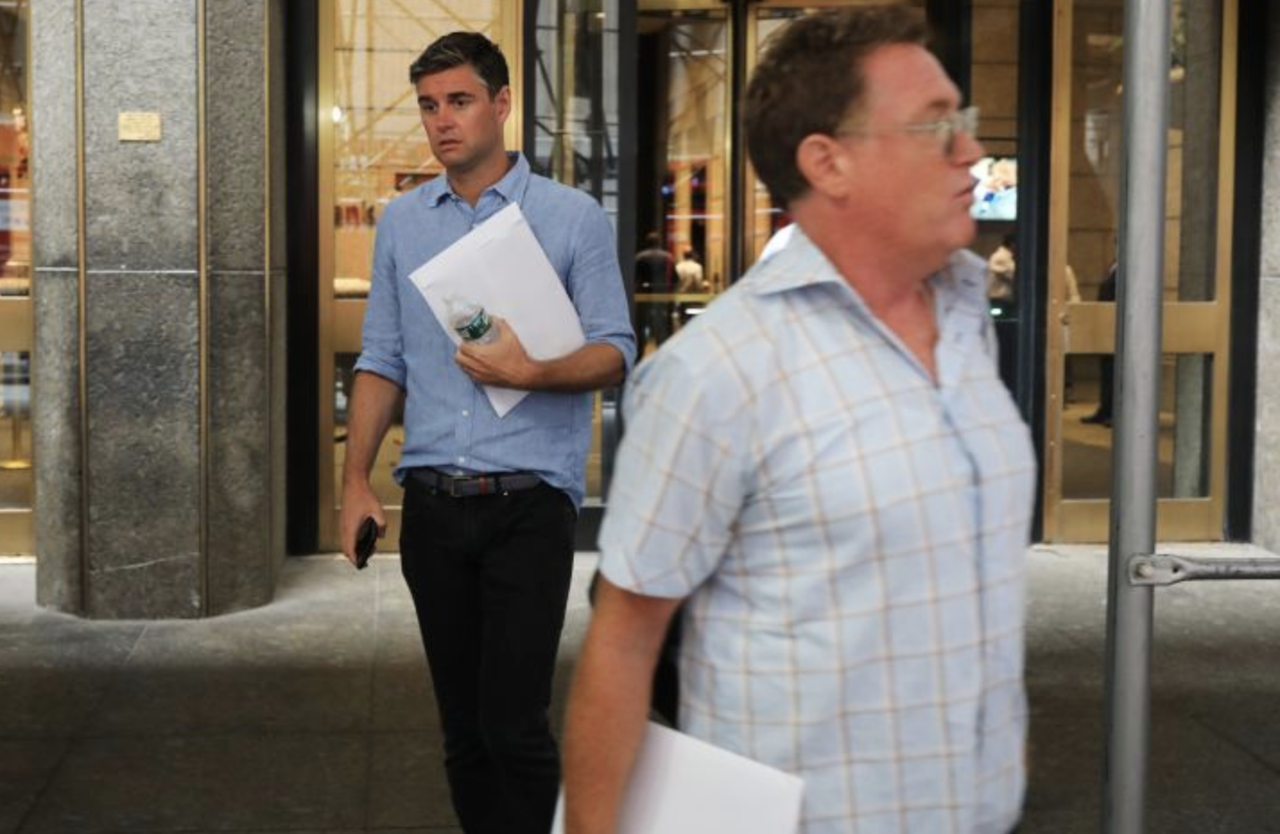
At the end of the day, all of the frenzied whispers in the press about Deutsche Bank CEO Christian Sewing's sweeping restructuring hardly did it justice. Instead of moving slowly, the bank started herding hundreds of employees into meetings with HR, first in its offices in Asia (Hong Kong, Sydney), then London (which got hit particularly hard) then New York City.
DB

By some accounts, it was the largest mass banker firing since the collapse of Lehman, which left nearly 30,000 employees in New York City jobless. Although the American economy is doing comparatively well relative to Europe, across the world, DB employees might struggle to find work again in their same field.
According to Bloomberg, automation and cuts have left most investment banks much leaner than they were before the crisis, and the contracting hedge fund industry, which once poached employees from DB's equities business, isn't much help. Some employees will inevitably find their way to Evercore, Blackstone - boutique investment banks and private equity are two of the industry's top growth areas - or family offices, which, thanks to the never-ending rally in asset prices (and the return of bitcoin), are also booming.

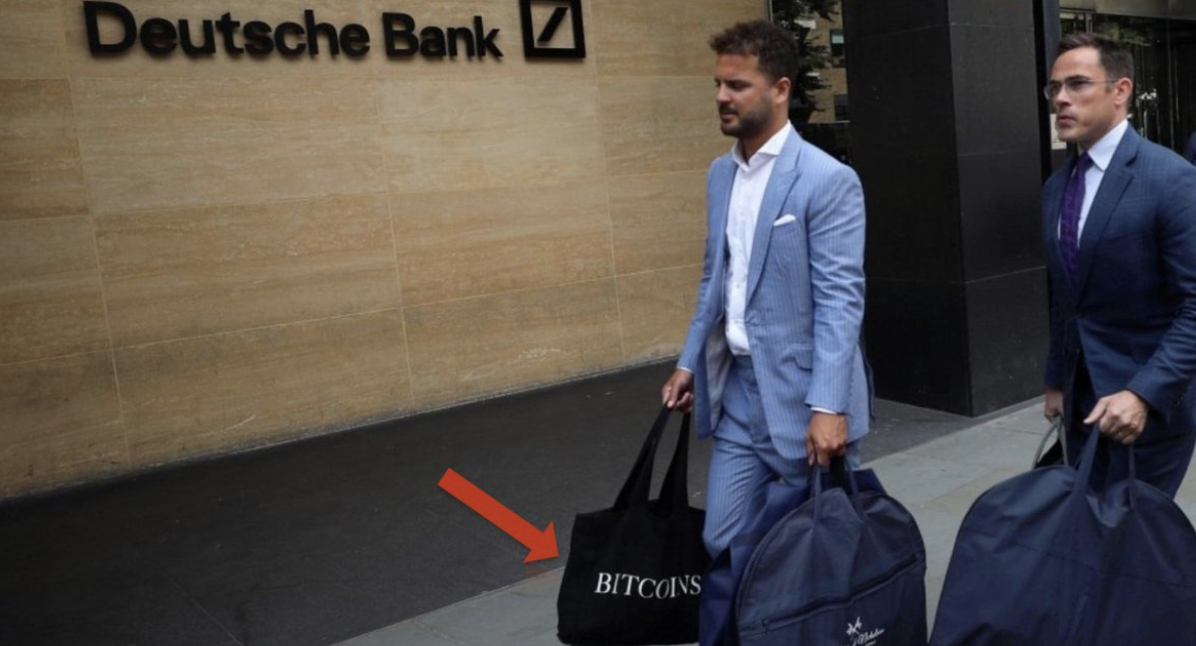
Oh, and of course, there's always crypto. Some evidence has surfaced to suggest that many young bankers are already looking to make the leap.
DB

For the highest-paid employees being let go this week, many will need to get used to lower pay. Some 1,100 'material risk takers' have been let go. On average, they earned $1.25 million, with almost 60% of that in cash.

"A lot of these people are going to have to get used to less compensation," said Richard Lipstein, managing director at recruiting firm Gilbert Tweed International, in a telephone interview. And "the percentage of compensation in cash is lower than it used to be."

Many will need to leave the street, and possibly whatever city in which they are currently living, to find work elsewhere.

"A lot of the people coming out of DB are going to be very challenged to find jobs just because of the sheer change in the equity business," said Michael Nelson, a senior recruiter at Quest Group. "When you are dispersing that many people globally, some of those people might have to leave the business."


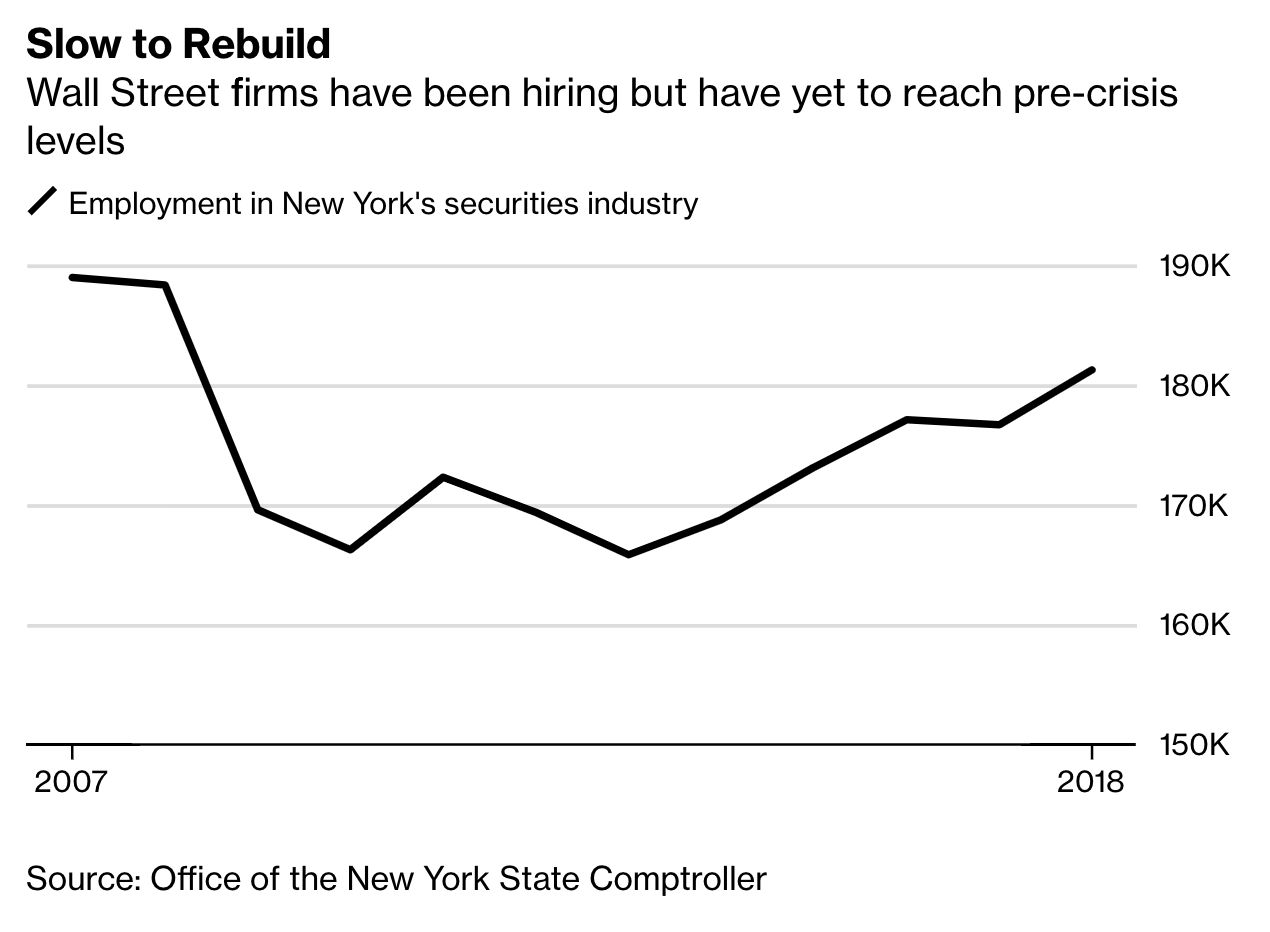
But although banking headcount has never returned to its pre-crisis levels...
DB

...at least one major Wall Street institution is looking to hire some Deutsche people: Goldman Sachs.

While BBG's piece on the layoffs focused on the difficulty these employees may face in finding new work, Reuters described the scene outside these offices, where one insider had warned about "Lehman-style" scenes. To wit, some just fired workers could be seen mulling outside, taking photos with colleagues and splitting cabs, presumably to go to the nearest pub and quaff liquor, beer and prosecco.
Staff leaving in Hong Kong were holding envelopes with the bank’s logo. Three employees took a picture of themselves beside a Deutsche Bank sign outside, hugged and then hailed a taxi.
"They give you this packet and you are out of the building," said one equities trader.
"The equities market is not that great so I may not find a similar job, but I have to deal with it," said another.
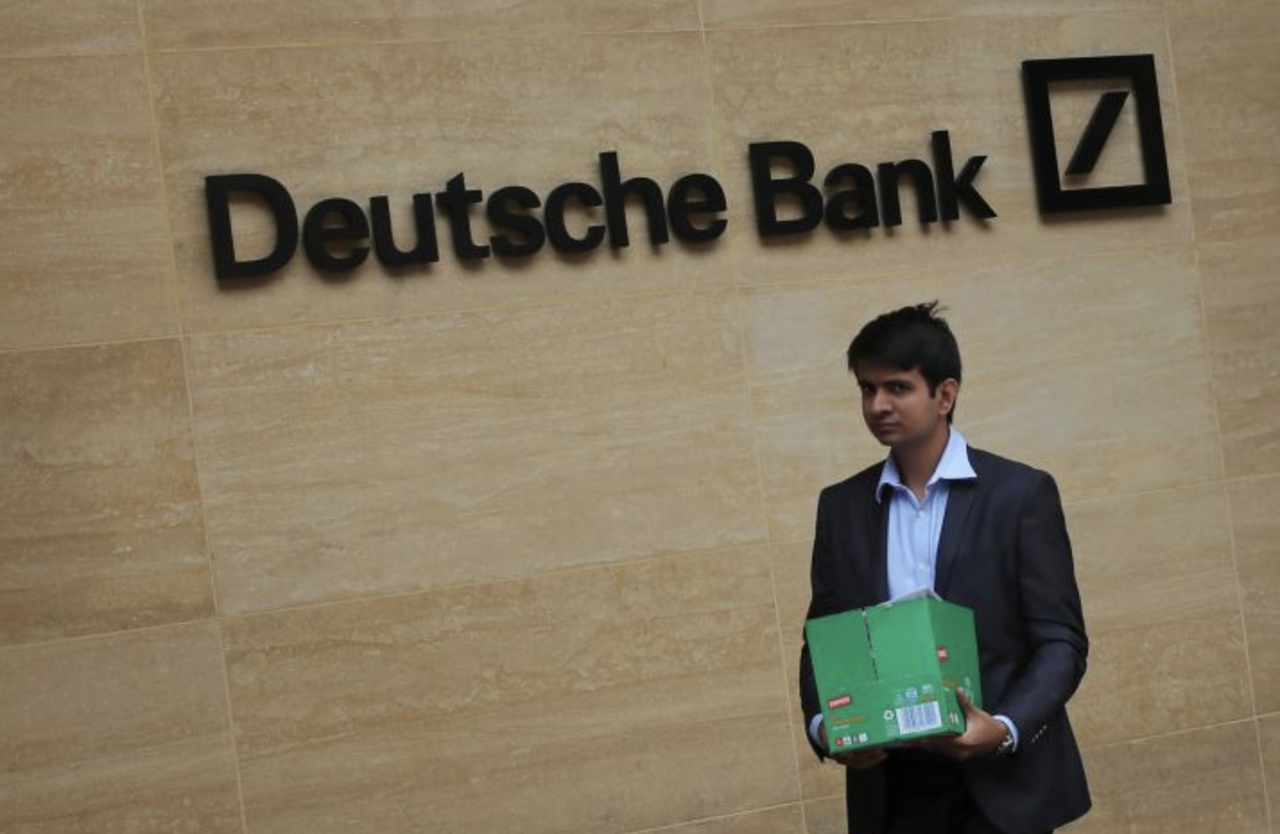
After weeks of looming dread, employees were called into auditoriums, cafeterias and offices, handed an envelope with the details of their redundancy package, and shown the door. Reuters' reporters followed some of the employees at DB's London office to the nearest pub.
Few staff wanted to speak outside the bank’s London office, but trade was picking up at the nearby Balls Brothers pub around lunchtime.
"I got laid off, where else would I go," said a man who had just lost his job in equity sales.
Job cuts were expansive in the bank's main support centers, where the mood was "pretty hopeless".
A Deutsche Bank employee in Bengaluru told Reuters that he and several colleagues were told first thing that their jobs were going.
"We were informed that our jobs have become redundant and handed over our letters and given approximately a month’s salary," he said.
"The mood is pretty hopeless right now, especially (among)people who are single-earners or have big financial burdens such as loans to pay," he added.
Sewing's grand restructuring plan involves shutting down Deutsche's entire lossmaking global equities business, cutting 18,000 jobs (roughly one-fifth of the bank's total headcount) and hiving off €288 billion ($322 billion) of loss-making assets into a bad bank for sale or run-off. The goal of the restructuring is to reorient DB away from its troubled institutional business and more toward commercial banking and asset management.
DB
As a JP Morgan analyst pointed out, questions linger over DB's ability to grow, its "ability to operate a corporate franchise without a European equity business."
Investors were also taken by surprise, which is probably why DB shares sold off again on Tuesday. Closing the bank's European equity business as a radical step that few anticipated. Most of the leaks to the media seemed to suggest that the cuts would focus on its foreign business, particularly the troubled US equities unit.
But without an equities business, some clients might lose faith in DB's ability to win business from large corporations. Then again, there's also the sheer enormity of what the bank is trying to do: substantially grow revenues while cutting a huge chunk of its staff and closing whole businesses, some of which are synergistic with other businesses that will remain open.

As Daniele Brupbacher of UBS pointed out, the odds of success seem low: "Cutting costs by one-quarter while increasing revenues by 10 per cent over four years in the current market environment, while undergoing massive restructuring, could be seen as 'challenging.'"


Restructuring costs are also probably weighing on shareholders' minds: the restructuring is expected to produce a full-year loss.  Will corporate bank head Stefan Hoops succeed in doubling the Global Transaction Bank’s pretax earnings to €2 billion over the next 2 years, and make a tangible return on equity of 15% by 2022? We guess it's possible. We suppose it's possible, but is it likely...


Exclusive: Deutsche Bank’s numbers revealed, collapse coming

Saturday, 21 July 2012

Bank scandal


CONFIRMED AT LAST: The attempted cover-up of how JP Morgan torpedoed Lehman Brothers
As an early propagator of the allegation that JP Morgan Chase deliberately hastened the Lehman collapse, the Slog finds itself vindicated three years on by a successful regulator action against JPM, and contemporary documentation.

15 July, 2012
And then when you have the suckers by the balls, you squeeze just like this”

Around the time of the Lehman disaster, a senior insider at the firm relayed to me what seemed an astonishing allegation: that in the weeks prior to the eventual collapse, JP Morgan deliberately withheld huge monies owed to Lehman in order to make the bankruptcy a certainty from which they could benefit. I relayed this story to another contact the following year, and he not only corroborated the charge, he also said he was sure Barclays had done the same. The now disgraced Barclays CEO Bob Diamond took over Lehman in a fire sale only weeks later (using taxpayers’ money as a bridging loan to do it) and rapidly built up a commanding position for the division he then headed up, Barcap  – the investment arm of the bank.
Now, more than three years later, regulators have penalised JPMorgan for actions tied to Lehman’s demise. The bank settled the Lehman matter and agreed to pay a fine of approximately $20 million. The action took place because of Morgan’s ‘questionable treatment of [Lehman] customer money’: regulators accused JPMorgan of withholding Lehman customer funds for nearly two weeks. So it had been true after all.
Jamie Dimon’s Morgan Chase dodged and dived on this one for three years in an attempt to smooth over the tracks.  As late as April this year, the Pirate insisted that the ‘monies involved were small’: but that doesn’t tally with this Wall Street Journal snippet from the time as follows:
Lehman Brothers Holdings Inc., the securities firm that filed the biggest bankruptcy in history yesterday, was advanced $138 billion this week by JPMorgan Chase & Co. to settle Lehman trades and keep financial markets stable, according to a court filing.’

Advancing cash to keep the markets stable is simply double-talk bollocks: many observers are sure this was the Lehman trades money withheld by JPM. The Lehman administrators continued to air their grievances about it, and in late May 2010 the bankruptcy estate of Lehman Brothers Holdings, Inc. filed suit against JPMorgan Chase, alleging that JPMorgan’s actions in the weeks preceding bankruptcy were wrongful. The claims arose from amendments and supplements to the Clearance Agreement between Lehman and JPMorgan in the weeks immediately preceding the bankruptcy. (In a nutshell, JPM changed the terms without notice to include onerous requirements for massive collateral against giving Lehman its own money back – a form of crooked logic that only a banker could construct. The weight of this collateral requirement on already serious debts took Lehman Brothers from intensive care to the Pearly Gates).
Just before this suit was filed, I took a small risk by including in a Slogpost of 13th March 2010 the phrase ‘former Lehman employees rendered jobless by management hubris and JP Morgan’. Now the full extent of the cannibalism indulged in by Morgan has come to light…although Barcap’s  role remains in a murky penumbra somewhere. But typically, by coughing up twenty million bucks to the Federal Government, the predatory Morgan Chase has got away with ‘not admitting guilt’. Disgraceful. Think of it this way: $20m to ice a major appointment…that has to be the bargain of the decade.

A few more extracts from the 2010 Slogpost make interesting reading today:
The top-ranking British law practice Linklaters signed off on controversial accounting practices that let Lehman Brothers shift billions of dollars of debt off its balance sheet. This masked the perilous state of the bank’s finances, and for many years misled both investors and regulators….Not only has crooked dealing been a clear and present carbuncle on the City’s reputation for decades, ancillary professional concerns have long been up to their necks in illegal collusion in such activities….Time and again, accusations of wrongdoing are met with appalled sanctimony by those routinely involved in serious misdeeds….only to result in even worse revelations…..And equally, the sentences handed out to miscreants justifiably evoke cries of ‘one law for the rich and another for the poor’.’
Well, nothing changes. And not much changed in Morgan the Pirate’s behaviour either: on 20th May 2009, so a CNBC story claimed, Washington Mutual (Wamu) sought billions in damages following its acquisition by Morgan Chase, via a class action suit littered with phrases like ‘far below market value’, ‘premeditated plan’, ‘designed to damage’, ‘purchase…on the cheap’, ‘wrongful conduct’, ‘sham negotiations’, ‘misusing confidential information’, ‘violation of confidentiality agreement’, ‘unfair advantage’, and ‘fire sale prices’. Nothing to see there, then. On June 24th last year, an Appeals Court revived the action – whch clearly has some merit. As far as I know, it continues to rumble on today, to the benefit of lawyers….just for a change.

Hat-tip to US Slogger Butch Cassidy for alerting me to progress on the original Lehman scam. If anyone has anything substantial on Diamond Bob’s role in it, the address as always is jawslog@gmail.com

Poscript: when I suggested in a 2007 edition of the magazine Market Leader that robust Lehman results hid an overdependence on merger and acquisition business, I did not for a second suspect wrongdoing – only myopia. But I can promise you, no editor has ever received such a level of vitriol from Lehmans and others in the sector – coupled with bullying threats of legal action, and accusations of dangerous naivety on my part. It must rank as one of luckiest unintentional scoops of all time.

Wednesday, 30 May 2012

The Immanent Financial Megashock

This seems like a fair and intelligible assessment of the situation and the likelihood of a Lehman moment in the world economy.

Bank runs spreading across Europe!
What next?
Martin D. Weiss Ph.D.


28 May, 2012

This is not the first time we’ve warned you about an imminent financial megashock.


In our Money and Markets of December 3, 2007, we specifically named Lehman Brothers as the next major firm to collapse on Wall Street. (See “Dangerously Close to a Money Panic.”)


In our Money and Markets of March 17, 2008, precisely 182 days before its failure, we again named Lehman, making it abundantly clear that it could be the trigger of a financial meltdown. (See “Closer to a Financial Meltdown.”)


And now, starting with last week’s edition, we are warning you of ANOTHER Lehman-type megashock.


A new telltale sign: Bank runs, the final nail in the coffin of any modern economy, are spreading among the PIIGS countries of Europe — and possibly beyond.


In Greece it’s already a tsunami — a desperate effort by millions of citizens to get their money out of danger before Greece is forced to leave the euro zone.


In Spain, it’s quickly turning into a flood, as individuals and businesses — with $1.25 trillion in total bank deposits — wonder if their country will be the next to leave the union.


In Portugal, Ireland, Italy or even France, banks are vulnerable to similar outflows. And once the stampede strikes more than two or three major countries, you could see bank runs all across Europe.


Sound Familiar?


It should. Because last year we witnessed a very similar contagion when investors stampeded from the bonds of the weakest European countries.


Much like today, the first to be attacked was Greece, the weakest link in the chain. Then, Spain, Portugal, Italy and even France got hit hard.


Soon, nearly all of Europe was infected, prompting its central bankers to suddenly break their solemn vows of monetary piety and print more than $1 trillion worth of new euros.


Now, despite all those efforts, they’re facing a new contagion of a second kind — by bank depositors.


But bank runs are far more infectious — and dangerous — than investor stampedes.


They spill out onto the streets and onto the airwaves.


They invoke frightening flashbacks to the Great Depression.


And they immediately threaten the entire banking system.


According to the New York Times, “the havoc that a stampede might cause to the Continent’s financial system would greatly complicate efforts by European Union officials to fashion a longer-term plan to ease the debt crisis and revive Europe’s economy, because authorities would have to cope with the staggering added costs of shoring up banks.


“‘A bank run can happen very quickly,’ said Matt King, an expert on international fund flows in London for Citigroup. ‘You are fine the night before, but on the morning after it’s too late.’”


And just as I explained here last week, the Times points out that it “was a similar liquidity crisis on Wall Street in September 2008 — which started with nervous investors pulling money from troubled institutions, then quickly from healthier ones — that set off the financial crisis.”


I repeat: It was just last Monday that I showed you how Europe and the U.S. are now on a collision course with a second Lehman-type megashock.


And here we are today, only seven days later, with the snowball of events bringing us a few steps closer.


Worse Than 2008?


Politicians and investors all over the world are now trying to prepare for the inevitable consequences. What they don’t seem to realize is that the next major megashock could be more severe than the Lehman Brothers failure.


Never forget the key differences between then and now:


In 2008, it was strictly individual financial institutions that were on the edge of collapse. Today, entire nations are on the brink.


In 2008, the U.S. federal deficit of the prior fiscal year was $161 billion. Today, it’s $1.327 trillion, or 8.2 times larger.


In 2008, most of the megabanks at the epicenter of the crisis were in the United States. Today, although some U.S. megabanks are still taking excessive risk, it’s primarily the far LARGER European banks that are in the most trouble. In fact the weak European banks are so large, their total assets are greater than the total assets of ALL U.S. commercial banks combined.


In 2008, governments had not yet deployed their “big gun” cures for the debt crisis. So they still had the firing power to squelch the crisis with a series of unprecedented rescues. Today, we have seen the rapidly diminishing returns — or outright failure — of nearly every possible stimulus plan, bailout deal or austerity measures known to man.


In 2008, governments encountered little public resistance to major new policy initiatives. Today, millions of citizens are rebelling at the polls — or on the streets — in France, Greece, Portugal, Spain, Italy, and even Germany.


Most important, until late 2008, central banks restricted their role to traditional manipulation of interest rates. Now, however, four of the most powerful central banks in the world (the Fed, ECB, BOE and BOJ) have departed radically from tradition and embarked on the greatest wave of money printing in the history of mankind.


So how can you prepare yourself for this type of megashock and its impact on the markets? For an answer let’s take a closer look at …


What REALLY Happened During
And After The Lehman Collapse


Over a single weekend in mid-September 2008, the Fed chairman, the Treasury secretary, and other high officials huddled at the New York Fed’s offices in downtown Manhattan.


They seriously considered bailing out Lehman, but they ran into two hurdles:


First, Lehman’s assets were too sick — so diseased, in fact, even the federal government didn’t want to touch them with a 10-foot pole. Nor were there any private buyers remotely interested in a shotgun marriage.


Second, foreshadowing the public rebellion that would later bust onto the scene in the Tea Party movement, there was a new sentiment on Wall Street that was previously unheard of:


A small, but vocal, minority was getting sick and tired of bailouts. “Let them fail,” they said. “Teach those bastards a lesson!” was the new rallying cry.


For the Fed chairman and Treasury secretary, it was the long-dreaded day of reckoning. It was the fateful moment in history that demanded a life-or-death decision regarding one of the biggest financial institutions in the world — bigger than General Motors, Ford, and Chrysler put together.


Should they save it? Or should they let it fail?


Their decision: To make a break with the past. To let Lehman fail.


Here’s what you’re going to do,” was the basic message from the federal authorities to Lehman’s highest officials.


Tomorrow morning, you’re going to take a trip downtown to the U.S. Bankruptcy Court at One Bowling Green.


You’re going to file for bankruptcy.


Then you’re going to fire your staff.


And before the end of the day, you’re going to pack up your own boxes and clear out.”


As in the prior Bear Stearns failure, America’s largest banking conglomerate (JPMorgan Chase) promptly appeared on the scene and swooped up the outstanding trades. And as with Bear Stearns, the Fed acted as a backstop.


But Lehman’s demise was unique because it was thrown into bankruptcy and put on the chopping block for liquidation.


Exactly 182 days earlier, we warned that it could be the financial earthquake that changes the world. And it was.


Until that day, nearly everyone assumed that giant firms like Lehman were “too big to fail,” that the government would always step in to save them.


But that myth was shattered on September 15, 2008, when the U.S. government decided to abandon its long tradition of largesse and let Lehman go under.


A major U.S. money market fund, the Reserve Primary Fund, immediately suffered a direct hit in its portfolio from exposure to Lehman securities, pushing its share value below $1 — an unprecedented event that spread panic in the entire industry.


Money funds, mutual funds and other institutions refused to buy the short-term IOUs (commercial paper) that thousands of companies rely on for ready cash.


All over the world, investors recoiled in horror, abandoning short-term credit markets — the lifeblood of the global financial system.


Bank lending froze. Borrowing costs went through the roof. Corporate bonds tanked. The entire world seemed like it was coming unglued.


I guess we goofed!” were, in essence, the words of admission heard at the Fed and Treasury. “Now, instead of just a bailout for Lehman, what we’re really going to need is the Mother of All Bailouts — for the entire financial system.”


The U.S. government promptly complied, delivering precisely what they asked for — a $700-billion Troubled Asset Relief Program (TARP), rushed through Congress and signed into law by President Bush in record time.


In addition, the U.S. government loaned, invested, or committed:


$300 billion to nationalize the world’s two largest mortgage companies, Fannie Mae and Freddie Mac


over $42 billion for the Big Three auto manufacturers


$29 billion for Bear Stearns


$150 billion for AIG, and $350 billion for Citigroup


$300 billion for the Federal Housing Administration Rescue Bill to refinance bad mortgages


$87 billion to pay back JPMorgan Chase for bad Lehman Brothers trades


$200 billion in loans to banks under the Federal Reserve’s Term Auction Facility (TAF)


$50 billion to support short-term corporate IOUs held by money market mutual funds


$500 billion to rescue various credit markets


$620 billion for foreign central banks


trillions more to guarantee the Federal Deposit Insurance Corporation’s (FDIC’s) new, expanded bank deposit insurance coverage from $100,000 to $250,000


plus trillions more in bailouts and for other sweeping guarantees.


Governments of the UK and the European Union followed a similar pattern.


And everywhere — both inside and outside of government, apologists for these mega-rescues argued that it was “the lesser of the evils,” the only way to save the world from an even direr fate.


They were wrong, and we told them so on September 25, 2008.


That’s when Safe Money Report editor Mike Larson and I submitted a white paper to the U.S. Congress specifically documenting why the government bailouts would ultimately transform the debt crisis into a sovereign debt crisis.


Sure, governments can bail out big banks, brokers and insurers, we argued. But when the next crisis strikes, who will bail out the governments?


At the time, no one even bothered asking the question. Now, the question is everywhere.


But no one has an answer.


Yes, with trillions in bailouts since the 2008 debt crisis, the governments of the U.S. and Europe were able to calm the waters and restore credit markets.


But no government anywhere can create wealth and prosperity with worthless paper.


And no government can repeal the laws of gravity or change the laws of thermodynamics:


When investors sell bad government bonds, the value of those bonds must plunge, making it next to impossible for those governments to borrow.


When savers run to safety, money must flood from the weakest banks to the strongest, making it impossible for the weak banks to survive.


That’s what’s happening now and what will continue to happen in the weeks ahead — until and unless the authorities unleash a new wave of money printing that makes previous waves look puny by comparison.


Stand by for our team’s specific instructions on how to protect yourself and profit.


Good luck and God bless!


Martin


Dr. Weiss founded Weiss Research in 1971 and has dedicated the past 40 years to helping millions of average investors find truly safe havens and investments. He is president of Weiss Ratings, the nation’s leading independent rating agency accepting no fees from rated companies. And he is the chairman of the Sound Dollar Committee, originally founded by his father in 1959 to help President Dwight D. Eisenhower balance the federal budget. His last three books have all been New York Times Bestsellers and his most recent title is The Ultimate Money Guide for Bubbles, Busts, Recesssion and Depression.