Showing posts with label Chrsitchurch. Show all posts

Monday, 25 March 2019

Crackdown in New Zealand - a Commission of Inquiry" and guns for police


Police officers in every part of New Zealand will continue to carry guns

25 March, 2019

Police around the country will continue to carry guns for the foreseeable future, while the National Threat Level remains at high.

All frontline police officers in all regions - rural and urban - have been instructed by Police Commissioner Mike Bush to carry guns while on duty "until we are satisfied that the risk to the community is reduced".

A police spokesperson said they could not give a specific timeframe on when that might be.

Police are unlikely to rescind the order to carry guns until the National Threat Level is lowered, which is a decision that lies with the cross-agency Combined Threat Assessment Group (CTAG).


All officers are carrying a Glock 17 pistol in their holsters, and have a Bushmaster M4 semi-automatic rifle in each police car. Officers tasked with protecting specific people and areas are carrying the Bushmaster on patrol.


Under normal circumstances, police in New Zealand carry pepper spray, batons, and tasers, though all are trained with the Glock and Bushmaster.

Police Association President Chris Cahill said that arming police officers meant the public could have more assurance knowing that police could respond to situations immediately, and reduce the possibility of copycat attacks.

In a 2017 survey of frontline police officers, 73 per cent said they would prefer to carry a firearm while on patrol.

Cahill said that "in general" the police association supported arming frontline officers.

"It's certainly going to be a discussion. Things have changed in New Zealand."

According to statistics made public by police headquarters, firearms were presented at police 17 times in 2017. In four of those incidents, weapons were fired.

And of those 17 situations, 14 resulted in prosecutions.

Cahill said that the recent gun law changes, combined with more that could come into effect down the line, could "create an environment where there are less firearms and less risk to officers, and it may not be needed, but it will depend on the other changes."

He is calling for a gun register, "so we know who has them, what they are, and where they are."

He would also like to see more stringent security requirements.

"What we know is most criminals get them [guns] from stealing them by law-abiding gun owners," he said.

Firearms license owners in New Zealand must have a secure gun rack, safe, or "receptacle of stout construction," to store their weapons.

Frontline police officers in Canterbury are becoming increasingly used to carrying firearms - they were given a directive to carry guns while on patrol for a few days from February 28 to March 3 while a 20-year-old man who was suspected of causing a shoot-out in Christchurch was on the loose.


Spy agencies' 'hands tied behind their backs' - Simon Bridges


"Mosque attacks" - why do they not call things by their name - a massacre or slaying?


25 March, 2019

Prime Minister Jacinda Ardern has announced that there will be a Royal Commission of Inquiry into security agencies following the Christchurch terrorist attacks.

She said, while New Zealanders and Muslim communities were still grieving they were also rightly asking questions about how the terror attack was able to take place.

The inquiry will look at what could or should have been done to prevent the attack, Ms Ardern said.

It will probe into the accused individual and his activities before the terrorist attack, including into agencies.

"It will look at the actions of SIS, the GCSB, police, Customs, Immigration and any other relevant government departments or agencies," she said.

Ms Ardern said the terms of reference had not yet been set, but these would reflect the seriousness of the attack and the need to get answers in a timely manner.

"There will be a focus on whether our intelligence community was concentrating its resources appropriately and whether there were any reports that could or should have been alerted then to this attack.

"It's important that no stone is left unturned to get to the bottom of how this act of terrorism occurred."

Ms Ardern said the commission would look at events leading up to the attacks, rather than the immediate emergency response to the attacks, which was work that would be done separately.

She said the government needed to balance the timeliness of the inquiry with the need to be thorough.

"We want it to be independent, we want it to be at the highest level, but we also want it to be timely ... I absolutely accept that people want answers and they don't want to be waiting a long time, but we equally have to allow the inquiry the time to do the job properly, so we're weighing all that up," Ms Ardern said.

She said Royal Commissions were usually reserved for the matters of gravest public important and it was clearly the appropriate form of inquiry for this instance.

Ms Ardern also announced that she would travel to Beijing in China on Sunday where she will meet with President Xi Jinping and Premier Li Keqiang. She will also formally open the New Zealand embassy.

Ms Ardern said it was an important visit that was planned some weeks ago but given the terrorist attacks in Christchurch it has been cut back to just one day of meetings. Ms Ardern said she would be back in New Zealand by Tuesday.

"I expect discussions will include a broad range of bilateral, regional and international issues of common interest, including on upgrading our free trade agreement, protecting and promoting a rules based international trading system and combating climate change."


RT on the suppression of free speech in New Zealand


Top news on RT this morning

Free speech debate in New Zealand after mosque slayer’s manifesto banned
RT,
24 March, 2019
New Zealand’s chief censor has banned mosque shooter Brenton Tarrant’s white supremacist manifesto, as well as videos of his violent rampage. The bans have ignited a debate over free speech in the grieving country.
Chief censor David Shanks declared the killer’s 80-page manifesto – entitled ‘The Great Replacement’ – “objectionable”on Saturday, and ordered anyone in possession of it to destroy it.
“New Zealanders can all play a part in denying those who exhort hatred, killing and terror,” Shanks said. “Do not support the murderous objectives of its author by republishing or distributing it.”

Following the classification, anyone caught with the document on their computer could face between 10 and 14 years in prison. Video footage of the attack, originally live-streamed by Tarrant on Facebook, has also been deemed objectionable. A teenager has already appeared before Christchurch District Court last week for allegedly sharing the banned video.
The attempt to scrub Tarrant’s views from the internet follow Prime Minister Jacinda Ardern’s “global call” to fight the “ideology” of racism. Ardern pledged to “to weed it out where it exists and make sure that we never create an environment where it can flourish.”
Free speech advocates, however, are concerned with Ardern’s censorship-heavy approach.
“People are more confident of each other and their leaders when there is no room left for conspiracy theories, when nothing is hidden,”Stephen Franks, a constitutional lawyer and spokesman for the Free Speech Coalition, told AP“The damage and risks are greater from suppressing these things than they are from trusting people to form their own conclusions and to see evil or madness for what it is.”
Speaking about Tarrant’s first-person-shooter-style video, counterterrorism expert Jennifer Breedon told RT that banning such videos does nothing to prevent future attacks. “We need to stop putting band-aids on gunshot wounds,” she said. “We’re spending so much time talking about ‘we can’t have videos like this’...rather than answering questions that need to be asked.”
Commentators on social media chimed in.
Free speech is protected in New Zealand by the 1990 Bill of Rights Act“Everyone has the right to freedom of expression, including the freedom to seek, receive, and impart information and opinions of any kind in any form,” the Act reads.
However, the protection is not as legally watertight as the US’ First Amendment. In the case of Tarrant’s manifesto, Shanks argued that the Act doesn’t apply. “It promotes, encourages and justifies acts of murder and terrorist violence against identified groups of people,” he said. “It identifies specific places for potential attack in New Zealand, and refers to the means by which other types of attack may be carried out.” Shanks’ censors, therefore, treated the manifesto the same as propaganda from terrorist organizations like the Islamic State.
Before Shanks declared the manifesto verboten, New Zealand’s internet service providers gladly censored it themselves. Any site that may have hosted the killer’s polemical screed was blacklisted, with the censorship even spilling over into neighboring Australia, where internet users were locked out of 4chan. With New Zealand’s ‘objectionable content’ laws allowing corporations to be fined up to NZ$200,000 (US$173,000) for sharing the video or any related content, their willingness to self-censor is unsurprising.
However, some applications of censorship have left commentators puzzled. Kiwi journalist Nick Monroe – himself skeptical of the government’s censorship efforts – complained that any of his commentary on the shooting was being removed seconds after upload.
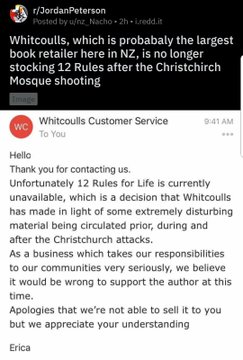
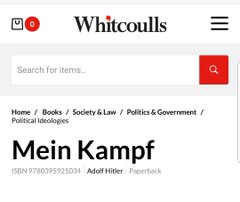
Likewise, a nationwide chain of booksellers responded to the shooting by pulling copies of psychologist Jordan Peterson’s self-help book ‘12 Rules for Life’ from its shelves, citing “disturbing” photo that had emerged of Peterson with a fan wearing a “Proud Islamophobe” t-shirt. Bizarrely, the bookseller has continued to stock copies of Adolf Hitler’s ‘Mein Kampf.’
Perhaps the most famous piece of extremist literature in the world, Mein Kampf has been banned in some European countries and in Russia. Reprints of the book were forbidden in Germany until 2016, when the work entered the public domain.

Wednesday, 20 February 2013

Public Enemy No. 1

71pc want Parata gone - poll
Hundreds of protesters have delivered a motion of no confidence in Hekia Parata's performance as a new poll reveals the controversial education minister is rapidly turning into political public enemy No 1.


20 February, 2013


In today's Fairfax Media-Ipsos poll, surveyed before this week's announcement on the Christchurch schools revamp, almost 60 per cent of respondents believe Prime Minister John Key should have sacked his seventh-ranked minister in last month's Cabinet reshuffle.

That rose to 71 per cent among voters from Canterbury, where on Monday Parata announced a proposal to close or merge 19 schools.

Yesterday more than 1500 school supporters delivered a motion of no confidence in Parata's record to date to the Education Ministry's offices in Christchurch. It followed an NZEI rally in the city.

NZEI national president Judith Nowotarski said government representatives had graciously accepted the motion of no confidence at the Ministry of Education's Christchurch headquarters. The rally began at the CBS Arena before protesters marched to the ministry office in Princess St.

"We got to go inside to present to them our motion. It was very respectful. They listened, they sat, there was nodding."

Southbridge School principal and prominent NZEI member Peter Verstappen led the rally.

He told supporters the minister's job in Christchurch was not finished and she still had a fight on her hands to close seven schools and merge 12 into six.

At one point he led the crowd in a chant of "Heck no, she [Parata] must go".

The dismal public rating of the minister comes after a series of political calamities. A plan to increase class sizes was met with derision last year, and resulted in a backdown.

A failure to deal with the ongoing problems with the Novopay payroll system saw criticism heaped on her, and Education Secretary Lesley Longstone quit. Parata was further humiliated when Key gave responsibility for the Novopay debacle to senior minister Steven Joyce.

Government proposals to close a residential school for disabled girls in Nelson were overturned by a High Court ruling in December.

And this year got off to a bad start when she remarked it was "karma" that Education Ministry staff had also experienced problems with their wage packets.


The official announcement on Christchurch schools on Monday also infuriated some teachers and parents.

The poll shows 59.8 per cent nationwide believe Key should have removed her from the education portfolio. Women were more likely than men to want her sacked. Just over 18 per cent didn't know or couldn't say.

It follows a Colmar Brunton/TVNZ poll earlier this week, in which 59 per cent of voters polled believed Key made the wrong decision by keeping her in the role.

Parata faced more negative headlines yesterday when she avoided apologising for the Novopay fiasco.

She said: "I've made it clear from the outset that I wanted teachers to be paid . . . I'm confident that the ministerial review will find, as Steven Joyce has said, that there is enough blame to go around in the eight years that this project has been in development."

She was undaunted by the poll results. "In education there are always challenges," she said.

"There were a lot of challenges in 2012, and there will be more in 2013. I am focused on renewing the education sector in greater Christchurch and improving educational outcomes . . . "

The poll surveyed 1000 randomly selected people by telephone from February 10 to 14 and has a margin of error of 3.1 per cent.


Christchurch is now 'slumlord central'


20 February, 2013


No problems at all with the shaking, despite having a wife and four kids aged under six.

However, our landlord tried to evict us, so he could get his very minor ECQ repairs done without having to pay to put us up somewhere else (they do all the minor jobs first).

His bid was rejected by the tenancy tribunal, but with just three months left on the lease he decided not to renew, which for us has meant leaving town and changing schools.

The property managers, who are a very well-known company, with a very bad rep among renters, refused to present for a final inspection; and refused to refund the bond, despite us having very expensive receipts from another very well-known bond-cleaning and carpet-cleaning company, and some two months later, they still haven't said why they won't return the bond, how much they want, or why.

This experience is actually quite typical of the various professional and amateur landlords we've had to work with. Now when I first moved to Christchurch some 20 years ago, it was well-known for its cheap rentals, albeit very-poorly heated and insulated ones that are quite inappropriate for the very cold weather there (yes, they're still like that - insulation subsidies only seem to find their way to the landlords private abodes).

Today it's better known for its pension-bludging, tax-dodging slumlords, who make life very difficult for the small number of younger, working folks that still haven't left yet.

I would rate ChCh as a great place to leave (unless you are much older and own property).

And forget about the rebuild work - the place has long been famous for its low wages, try Aussie.