There are lots of questions when it comes to 5G wireless signals. Plenty of very reasonable people are concerned that 5G radio waves will cause harm to them, animals, plant and insect life.
Forgetting for a moment debates over things we can’t see with the naked eye; let’s consider something we can see. Trees.
Among all the debates it is easy to forget that for 5G radio waves to work effectively mini cell transmitters – which will need to be placed 250 metres apart along every street in the land for full coverage – require line of sight to work.
This means that a tree standing between a 5G transmitter and your phone, wifi router, or self-driving car could be an issue. The tree, particularly when it is full of leaves, will severely disrupt or block the 5G signal.
Source: Connect Future report
Stories are emerging of the wholesale removal of perfectly fine trees along perfectly pleasant streets in the UK and elsewhere.
Members of the public, aghast at the cutting down of trees in their street, have been told the trees are old, diseased, not-native, or are causing damage to the footpath or drains. Plausible excuses to remove mature trees. But what’s the rush and why now? What’s the agenda?
The paper’s co-authors are Tim Brown (5G IC), Michael Fitch (BT), David Owens (Telefonica), Simon Saunders (RealWireless), Andy Sutton (EE), and Stephen Temple (5G IC).
Section 3.1 of the paper says: “In the past the priority for planning authorities has been to reduce mobile mast heights so that masts are visually screened by buildings and/or trees – with trees being the highest and more likely obstruction.
“However this also screens the RF [radio] signals and has defeated the objective of reliable coverage…even with a mast 10 meters tall there is still has [sic] a 30% chance of being blocked by trees.”
Source: Connect Future report
The authors recommend that cell transmitters should be 3 meters above tree height. Which is one reason why trees along your street are at risk of being removed. Do you want cell sites placed higher or the trees removed?
The illustration above, from the Connected Future report, shows that clear line of sight is the preferred option. And that means no trees between 5G cells sites and your phone.
A line from the Connected Futurereport out of the UK: “…the services that can be enjoyed, is dependent upon a number of factors. These include the distance of the user from the base station, the exact location of the user (as buildings & trees can block signals)…”
Telstra in Australia is worried about trees. And a report featuring US telco Verizon says: “The mm Wave technology has been criticized for its short propagation range and line-of-sight paths.” And finally the good old Current Bun in the UK is clear.
Bottom line; so you can download a 90 minute movie in a few seconds we risk losing our leafy neighbourhoods. Fair compromise?
Let me know if trees are being cut down in your neighbourhood.
The “maritime security belt” trilateral four-day drill between Iran, China and Russia in the sea of Oman and the Indian Ocean will mark the Middle East for decades to come. It signals the end of US absolute hegemony and control of the Middle East- and of the world. The joint drills are being carried out at the heart of the zone of US maritime influence. The drills are tactical exercises simulating the rescue of frigates under attack by a mutual enemy over a 17,000 km area. They are not strategic, because China and Russia will not have access to Iranian harbours on an ongoing basis. No common adversary is expected to face Russia, China or Iran together in these waters. The aim of these exercises is for all three countries to send a common message to the US. The maritime ‘message’ addressed to the world this December 2019 realistically is that the period of global dominance of the USA as sole and self-elected “policeman of the world” is coming to an end.
It was the first time Iran has held a joint exercise with two major world naval powers on this scale since the “Islamic Republic” in 1979. Iran invited and hosted the trilateral drills, starting from its southeastern port of Chabahar, to challenge the US “maximum pressure” policy. Tehran is sending a message to the world that it is developing its military capabilities in the midst of the harshest ever US sanctions, demonstrating that the US policy of isolating Iran is ineffective. President Donald Trump and his team have managed to hurt the Iranian population with their unprecedented sanctions and siege: but the government of Tehran has effectively adapted to these punitive measures, countering with a new “budget of Resistance” to limit its dependence on oil exports.
President Donald Trump’s policy is speeding the formation of an alliance between Iran, China and Russia (all affected by US sanctions). These countries, notwithstanding the “maritime security belt” drills, have not actually signed strategic alliances among themselves, but are finding ways to protect themselves while operating in the sea of Oman and the Indian Ocean. These drills can be considered a challenge to US sanctions, taking place in the most important worldwide maritime traffic waterway, considered vital to the USwith 18.5 million barrels of oil transiting through this area daily.
The US sun is setting. It has shone brightly since 1991 when the cold war ended between Washington and Moscow. This is when President George Bush announced US policy and the vision of “a new world order where diverse nations are drawn together in common cause to achieve the universal aspirations of mankind: peace and security, freedom and the rule of law.”
That day marked the beginning, in fact, of an imbalanced world order based on the political, economic and military dominance of the US. It was the beginning of a “destructive-constructive” strategy to crush any country rejecting US hegemony. Iran was at the top of the list.
Under President George W. Bush, Washington decided to surround Iran, China and Russia further and occupied Afghanistan – due to its geo-political strategic position overlooking at the west of China, middle of Asia and the east of Iran and its richness of Uranium – and then Iraq. The control of Middle Eastern oil was the priority followed by a “new Middle East” plan to break Iran’s alliance with Lebanon (Hezbollah) and the SyrianPresident Bashar al-Assad.
The US has constantly been looking for ways to divide continents, to rule them and thus prevent the emergence of any threatening alliance. Eurasia, which contains two thirds of the world’s energy, was under constant close US watch, similar to Iran.
But Iran 2019 is different from Iran 1979. Following the “war of the tankers” in the Straits of Hormuz, the downing of the most expensive US drone and the targeting and destruction of Saudi Arabia’s oil facilities (reducing its export capability by half) with Iranian precision cruise missiles, the US discovered a bitter reality. All US military bases surrounding Iran were easy targets for Iran cruise missiles in the case of a decision by Washington to attack the “Islamic Republic”. Iran didn’t need to bother looking for a US target in far offterritories.
Moreover, Iran did not hesitate to intercept and confiscate a British tanker, sending a confrontational message to Great Britain and expressing its readiness for a military skirmish if necessary. Iran signalled its ability to fight on multiple fronts against its enemies. Iranian officials made crystal clear to all surrounding countries’ leaders (Saudi Arabia, the Emirates, Iraq, north-east Syria, Israel) that its precision missiles would spare no country where a US base is stationed or used as a starting point for attack on Iran.
Many elements indicated Iran was ready for the worst-case scenario, and was trained for an extreme situation,knowing that the US would not venture into an unpredictable war where victory is far from guaranteed. President Trump was ready for a few battles here and there, a “battle between wars” Israeli-style rather than a totally destructive war. Trump and his team became aware that the US’s enemies had equipped themselves with enough missiles to be simultaneously engaged on multiple fronts in different Middle Eastern countries.
Trump has sought to avoid human losses during his presence in office. He knows that Iran’s allies will dive into any future confrontation against the “Islamic Republic” and will hit US allies in the Middle Eastern region.
Iran has equipped its strongest and most organised ally in the Middle East, Hezbollah in Lebanon, with tens of thousands of rockets and precision missiles, enough to destroy Israeli targets, already included in its bank of objectives. The Israeli targets are within a few kilometres of Hezbollah bases, not far enough for the Israeli interception missiles to neutralise all missiles and rockets if simultaneously launched. But that is not the real problem: in fact, the Israeli domestic front is far from ready for war, as even Israeli military officials acknowledge.
Hezbollah managed to break the Israeli deterrence policy and succeeded in breaking the will of Israel, as the world observed in the last confrontation. Indeed, Israel chose to abandon for two weeks all positions along 100 kilometres from the Lebanese borders and 5 kilometres deep due to a single threat launched via local television by Hezbollah Secretary General Sayyed Hassan Nasrallah. A very strong indication that though Israel can continue verbally threatening Lebanon, war is unlikely for a very long time to come.
Iran’s allies are also present in Syria, Iraq and Yemen, all equipped with precision missiles. The US and its allies are not in a position to ignore this reality and the fact that (notwithstanding the US and Israel’s great destructive power) serious damage can be inflicted on the US camp in case of war.
Another crucially important element, not to be neglected, is the fact that the US is taking further distance fromthe Middle East. In 2019 I witnessed the US’s clear detachment from the Iraqi selection of a Prime Minister, for the first time since 2003. The US is also, unusually, not intervening in Lebanon’s choice of a Prime Minister. These are two important countries where the US was positioned in the front line to curb Iran’s influence. Likewise, in Syria (where the US is flagrantly stealing Syrian oil), the US seems to have lost its appetite to remain in the Levant and compel Iran’s departure from Syria- to the great discontent of Israel.
Only the weapon of economic sanctions remains for the US, a weapon that soon will be less efficient as countries adapt to their new situation. Trump is sanctioning his friends, enemies and competitors, exhausting US financial power. That is giving an advantage to the countries concerned to prepare themselves for counter-measures in the long-term. The US, despite its attempt at hegemony, is returning to the era before the 1991.
It is true that the US has managed, under President Trump, to sell huge quantities of weapons to Middle Eastern countries. The US military industry has benefitted for a few years but this is coming to an end. These weapons will no longer be used in any future war because the possibility of a military confrontation in the Middle East is fading and all parties and potential belligerents are well equipped and armed with destructive fire power.
Today the US is looking at Russia, China and their allies as sources of danger from highly competitive technology and artificial intelligence developments. There is little room for future military confrontation. The time has finally come for the Middle Eastern countries to solve their domestic and regional problems among themselves without outside interference.
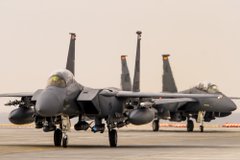
The U.S. military conducted air strikes in Iraq and Syria against the five facilities controlled by the Kataib Hezbollah militia group in response to the killing of a U.S. civilian contractor in a rocket attack on an Iraqi military base, US Central Command said on Sunday. A U.S. official told Reuters that the strikes were carried out by F-15 fighter jets.
Iraqi security and militia sources said at least 18 militia fighters were killed and more than 50 wounded following three U.S. air strikes in Iraq on Sunday evening, with Reuters reporting that at least four local Kataib Hezbollah commanders were among the dead, adding that one of the strikes had targeted the militia group’s headquarters near the western Qaim district on the border with Syria.
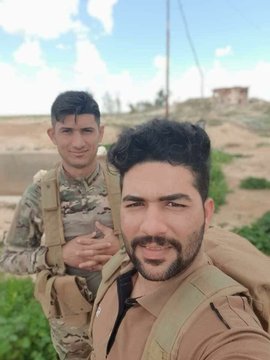
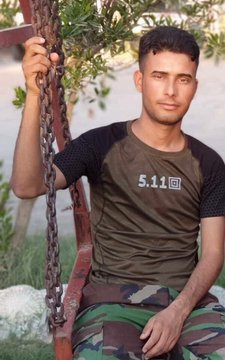
#BREAKING: According to Hashd al-Shaabi, Mortada Jabbar Ghaylan Salman Khazali, commander of 1st Reg. of #PMU's 45th Brigade (Kataib Hezbollah), Abbas Sajit, Imran Ghaith and Ammar Yasser are 4 members of 45th Brigade who are killed in the #USAF's airstrike in #AlQaim 2 hours ago
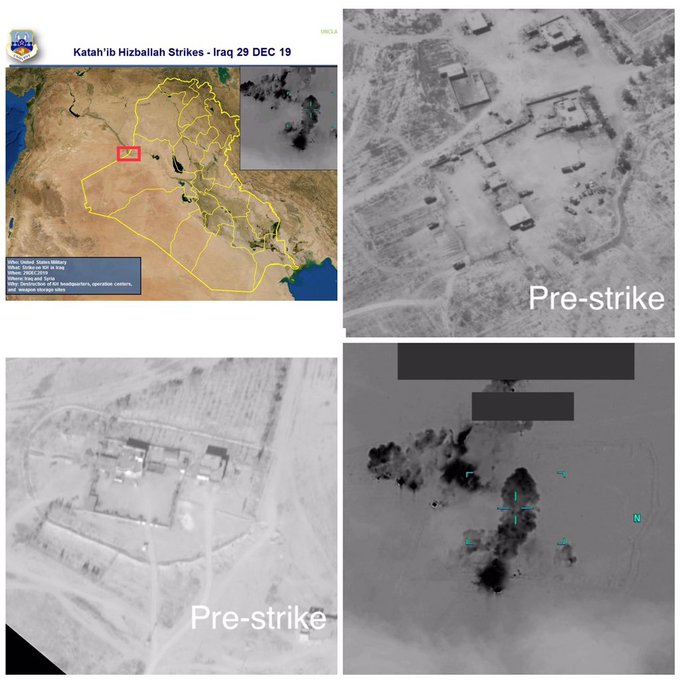
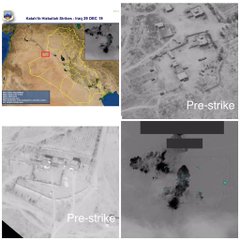
#BREAKING: CJTF-Op. #InherentResolve released these images showing before and after the airstrike against five targets belonging to the Kataib Hezbollah (#PMU's 45th Brigade) in #AlQaim, west of #Iraq.
The Pentagon said it had targeted three locations of the Iranian-backed Shi’ite Muslim militia group in Iraq and two in Syria. The locations included weapons storage facilities and command and control locations the group had used to plan and execute attacks on coalition forces.
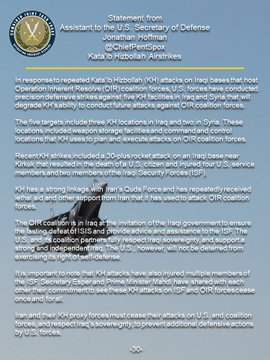
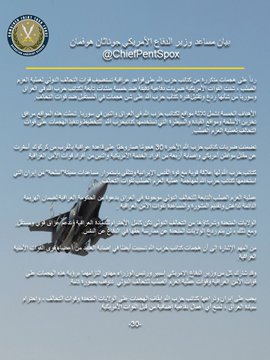
“In response to repeated Kata'ib Hizbollah attacks on Iraqi bases that host @CJTFOIR forces, U.S. forces conducted precision defensive strikes against 5 KH facilities in Iraq & Syria [to] degrade KH's ability to conduct future attacks against @coalition forces.” ~@ChiefPentSpox
"In response to repeated Kata’ib Hizbollah attacks on Iraqi bases that host Operation Inherent Resolve (OIR) coalition forces, U.S. forces have conducted precision defensive strikes ... that will degrade KH’s ability to conduct future attacks against OIR coalition forces" chief Pentagon spokesman Jonathan Hoffman said in a statement.
The US has accused Kataib Hezbollah of carrying out a strike involving more than 30 rockets on Friday which killed a US civilian contractor and injured four US service members and two members of the Iraqi Security Forces near the oil-rich city of Kirkuk.
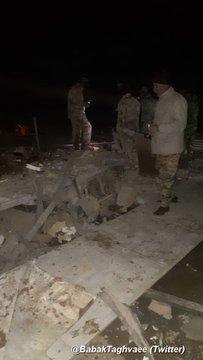
#BREAKING: #PMU released first images of the aftermath of #USAF airstrike at the local command & control base & ammunition depot of #IRGC's Kataib Hezbollah terrorist organization in #AlQaim, west of #Iraq. Death of several terrorists including two from #IRGC-QF is reported!
Earlier this month, Secretary of State Mike Pompeo blamed Iranian-backed forces for a series of attacks on bases in Iraq and warned Iran that any attacks by Tehran or proxies that harmed Americans or allies would be "answered with a decisive U.S. response" which begs the question if today's attack is just a precursor to a broader Iranian offensive.
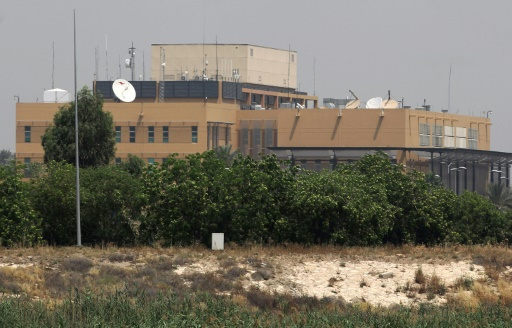
And in what may perhaps be an early response to this question, shortly after news of the air strikes, the US evacuated all staff from the Iraq embassy in Baghdad following speculation that Kataib Hezbollah might carry-out a rocket attack in retaliation
#BREAKING: On order of #IRGC-QF terrorist commander, Qasem Soleimani, the #PMU's 47th Brigade (Kataib Hezbollah) might carry-out rocket attack at #US embassy in #Baghdad's #GreenZone within next few minutes. All #US embassy staff are evacuated.
And while we wait to see if an attack will indeed take place against the US embassy in Baghdad, there were unconfirmed reports that Kataib Hezbollah had fired four 107mm rockets at Camp Taji where US troops are present and the Iraqi Air Force has a base; the attack was in response to the US airstrike targeting the Kataib Hezbollah's local HQ.
#BREAKING: Minutes ago, #IRGC backed 47th Brigade of #PMU (Kataib Hezbollah) fired four 107mm rockets at Camp #Taji where #US troops are present & #Iraq|i Army Aviation has a base. This attack is carried-out in response to #USAF airstrike at Kataib Hezbollah's local HQ in #AlQaim

 Posts