Global Markets A Sea Of Red As Dollar Selloff Resumes
30 January, 2017
The global selloff that started on Monday as traders were spooked by the double whammy of surging interest rates and fears about iPhone X demand, and resulting in the biggest drop in US stocks since September, accelerated overnight and as seen below world stocks and US equity futures are a sea of red this morning:
I
n an odd reversal, yesterday's dollar bounce lost steam amid position rebalancing before Trump’s State of the Union address and the Fed’s two-day meeting. So far today, it has been a tale of two halves: Light dollar buying throughout the Asia session, reversing once London opened, with EUR and other G10 pairs bouncing off the lows. Bunds have also come down from the highs. USD is now looking heavy, with perhaps more selling to come according to some desks, even as US yields are dipping. Most pairs remain range-bound for the time being, as we head into the magic of month-end tomorrow, for the first time in 2018. Month-end related selling is expected at some point.
The euro advanced alongside the yen, and the pound erased a drop. The yen advanced against all of its Group-of-10 peers as a stock selloff prompts risk aversion. Tokyo-based funds are selling the Aussie against the yen ahead of Trump’s speech Tuesday night, according to a trader who spoke to Bloomberg.
“After last week’s large moves, currency markets are wary of this week’s upcoming events but also of the implications for higher yields,” said Mansoor Mohi-uddin, head of currency strategy at NatWest Markets in Singapore. “The focus in G-10 currencies is whether higher yields cause stocks to weaken, thus supporting safe haven currencies.”
Predictably, volatility across FX continues to rise, with EUR/USD driven back above 1.24, while GBP/USD rallies 100 pips to 1.41 after sliding below 1.40. Actually make that vol across all assets classes.
Treasury yield rose above 2.7% before slipping back, while European government bonds edged higher as traders digested growth data from the region. Rate moves were supported as rebalancing inflows widely flagged over last week, keeping the curve relatively unchanged; bunds initially rally after soft Saxony CPI reading, however other German regions reduce probability of large national German CPI miss. US TSYs tracked the dollar for much of the session, although they have since rebounded from session lows even as the BBDXY continues to decline.
Overnight the US bond selloff spread to Japan, where the benchmark 10-year bond yield briefly rose over 2bps above 0.10%, the highest since July 11, with yields up ~1bp across the curve at last check. Any sustained increase in the 10-year yield to 0.1% would test speculation the BOJ will offer to buy unlimited amount of bonds for fixed rates.
Meanwhile in equities, European stocks opened in the red and drifted lower, mirroring a particularly weak Asian equity session and the drop in U.S. index futures. The Stoxx Europe 600 Index drops 0.5%, declining for the fourth time in five days. Miners are among the biggest decliners as copper and gold prices fall, with banks also sliding. Index losses are tempered by a gain for Swatch after its earnings beat estimates, while Siemens Gamesa also advances after saying it’s on the right path to meet 2018 targets.
Asian markets also traded lower across the board as the selling in US equity futures and retreat from record highs gathered pace overnight. Australia's ASX 200 (-0.9%) and Japan's Nikkei 225 (-1.4%) were both negative with Australia led lower by weakness across commodity-related sectors, while Japanese participants digested earnings and a slew of data including a contraction in Household Spending, as well as higher Unemployment. Selling accelerated in late trade amid a slump in US equity futures, in which DJIA futures fell over 200 points after a breakdown of near-term support at 26,400. Hang Seng (-1.1%) and Shanghai Comp. (-1.0%) conformed to the losses after continued PBoC inaction which resulted to a daily net drain of CNY 240bln and amid reports that banks were ordered to curb overnight lending, while tech names and Apple suppliers in the region were also mostly downbeat after the tech giant was said to reduce Q1 iPhone X orders by 50% due to slower than expected sales
At the same time, a wariness is emerging in equity markets as surging rates on government bonds test appetite for stocks at elevated valuations. Investors are weighing whether stronger corporate earnings, a pick-up in economic growth and optimism over U.S. tax cuts can continue driving up prices in markets that recently touched their highest on record; as noted yesterday, Goldman Sachs predicted a correction is imminent, but said any such pullback would be a buying opportunity.
“An acceleration in the selloff of global bond markets appears to be starting to let some of the air out of the recent rally in global equity markets,” said Michael Hewson, chief market analyst at CMC Markets UK. “U.S. markets suffered their worst one day fall this year, though sharp falls in tech stocks also contributed.” Apple Inc. shares dropped as much as 2.6 percent amid renewed concerns about falling demand for the iPhone X.
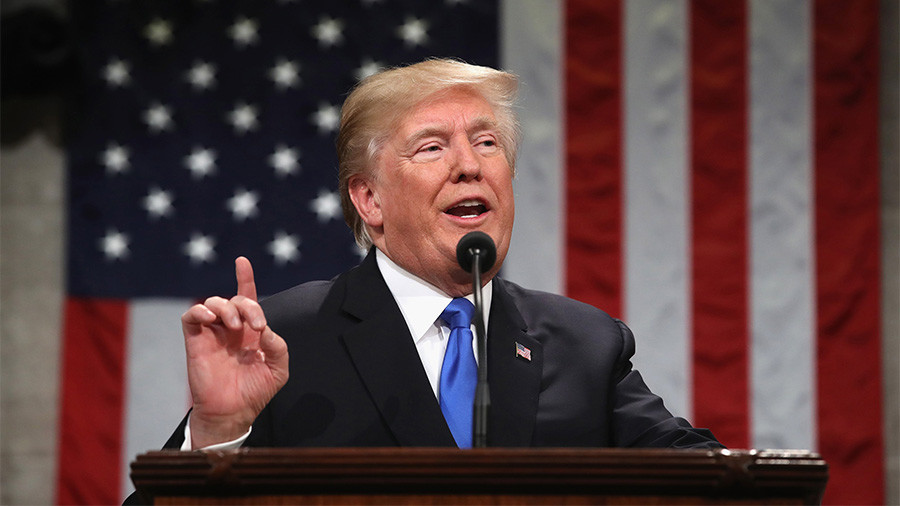
Looking at today's key event, expect Trump's State of the Union address to borrow from Trump’s Davos appearance with respect to detailing the America First approach, Credit Agricole strategists including Valentin Marinov write in a note. Markets will be particularly sensitive to any hints of further trade barriers to protect domestic U.S. producers, probably with negative implications for the USD.
A quick look at the ongoing Brexit chaos, cable initially sold off on news that PM May will reject the EU’s proposed deal on the Brexit transition period and go into battle next week over freedom of movement and so-called “rule taking”, the Telegraph reported. Then, the Times said that May is facing a donors’ revolt and growing pressure to leave Downing Street as soon as the outline of a trade deal is negotiated with the European Union this autumn. Finally, BuzzFeed leaked the UK government’s unreleased Brexit analysis which reportedly showed that UK will be worse off in every scenario outside the EU.
Elsewhere, many metals pared Monday’s gain, though gold reversed a decline to trade higher. Bitcoin fluctuated around $11,000 and emerging-market stocks slumped. Both WTI and Brent crude futures traded lower amid the (early) resurgence in the USD with prices hovering around the USD 65bbl and USD 69bbl levels respectively with energy newsflow otherwise relatively light. In metals markets, gold trades lower amid the global risk environment and the yellow metal’s safe-haven status.
Bulletin Headline Summary from RanSquawk
European bourses are trading mostly lower (Eurostoxx 50 -0.3%), in-fitting with the global risk sentiment
Choppy trade for the USD as gains prove to be short-lived with EUR/USD and GBP/USD back above 1.2400 and
1.4000 respectively
Looking ahead, highlights include German national CPIs and a slew of central bank speakers
Market Snapshot
S&P 500 futures down 0.3% to 2,844.50
STOXX Europe 600 down 0.3% to 398.53
MSCI Asia Pacific down 1.1% to 184.84
MSCI Asia Pacific ex Japan down 1.3% to 605.78
Nikkei down 1.4% to 23,291.97
Topix down 1.2% to 1,858.13
Hang Seng Index down 1.1% to 32,607.29
Shanghai Composite down 1% to 3,488.01
Sensex down 0.7% to 36,027.57
Australia S&P/ASX 200 down 0.9% to 6,022.80
Kospi down 1.2% to 2,567.74
German 10Y yield fell 1.9 bps to 0.675%
Euro down 0.02% to $1.2381
Italian 10Y yield rose 2.0 bps to 1.758%
Spanish 10Y yield fell 1.8 bps to 1.401%
Brent futures down 0.4% to $69.21/bbl
Gold spot up 0.3% to $1,343.98
U.S. Dollar Index down 0.1% to 89.20
Top Headline News
The U.S. identified 96 of Russia’s richest people as “oligarchs” and 104 top government figures in lists mandated under last year’s sanctions law, adding pressure over alleged Kremlin interference in the 2016 presidential vote
Struggling to find an approach to Brexit that can win the support of her divided cabinet, U.K. PM Theresa May is asking European officials and leaders to come up with ideas on what kind of future relationship might be on offer, according to three people familiar with the situation
The euro-area economy expanded 0.6% q/q in 4Q, matching the median economist forecast while economic confidence for the region fell to 114.7 from 115.3 in December
Mnuchin says U.S. debt limit suspension can be extended into February
Dubai’s Biggest Lender in Talks With Sberbank on Turkey Unit
Wynn Scrutiny Intensifies as Macau Regulators Voice Concerns
HNA Crisis Deepens as Group Is Said to Face Liquidity Crunch
Varian to Buy Sirtex for $1.3 Billion to Add Cancer Drugs
Trump Agenda Faces Tough Fiscal Reality After State of the Union
Blackstone in Talks Buy TRI Unit Stake For $17b: Reuters
Japan December retail sales 0.9% vs -0.4% est; y/y 3.6% vs 2.2% est
New Zealand December trade balance NZ$640m vs -NZ$125m estimate
Asian markets traded lower across the board as the selling in US equity futures and retreat from record highs gathered pace overnight. ASX 200 (-0.9%) and Nikkei 225 (-1.4%) were both negative with Australia led lower by weakness across commodity-related sectors, while Japanese participants digested earnings and a slew of data including a contraction in Household Spending, as well as higher Unemployment. Furthermore, selling then accelerated in late trade amid a slump in US equity futures, in which DJIA futures fell over 200 points after a breakdown of near-term support at 26,400. Hang Seng (-1.1%) and Shanghai Comp. (-1.0%) conformed to the losses after continued PBoC inaction which resulted to a daily net drain of CNY 240bln and amid reports that banks were ordered to curb overnight lending, while tech names and Apple suppliers in the region were also mostly downbeat after the tech giant was said to reduce Q1 iPhone X orders by 50% due to slower than expected sales. Finally, 10yr JGBs were lower as Japanese yields played catch up to their US counterparts in which the US 10yr yield rose above 2.7% to its highest since April 2014, while firmer demand for the 2yr JGB auction.
Top Asian News
China Stocks in Hong Kong Sink to Pare World’s Steepest Rally
PetroChina Says Profit May Triple Amid Cost Cuts, Higher Oil
Top Noble Group Shareholder Urges SGX Probe of Trader’s Actions
Apps to Screen Tenants Latest Chinese Startups Battleground
Asian Suppliers Fall on Report Apple Cut IPhone X Targets
European bourses are trading broadly lower (Eurostoxx 50 -0.3%), in-fitting with the global risk sentiment spurred from equity performance seen in US and Asia-Pac hours. The only index immune to losses this morning is the SMI (+0.3%) with the Swiss bourse supported by the luxury sector after a positive update from Swatch (+2.7%) and the latest Swiss watch exports which have also lifted Richemont (+1.8%) higher in sympathy. Elsewhere, IT names trade higher after chip makers such as Infineon (+0.8%) and STMicroelectronics (+0.5%) are granted some reprieve in the wake of yesterday’s news that Apple could curtail some of their production of the iPhone X. Additionally, material names lag their peers amid the price action seen in the metals complex. Finally, Telecom Italia (+2.8%) top the FSTE MIB after news that the Co. are to unveil their network spin-off proposal on February 7th.
Top European News
U.K. Mortgage Approvals at 3-Year Low as Housing Market Slows
Russian Traders Unfazed by U.S. Oligarch List as Bonds Rally
Top Norway Fund Manager Is Betting on Rigs for 200% Return
In currencies, the USD initially managed to maintain its recovery momentum after recovering above 89.500 on widespread gains vs its G10 rivals (Ex-JPY and CHF), before sentiment reversed and the USD was dragged into negative territory.
EUR/USD briefly retested overnight lows around 1.2337 on a weak inflation read from German state Saxony, but very mixed data from others ahead of heavyweight NRW, broad USD softness and progress in German coalition negotiations prompted a marked rebound towards 1.2400.
GBP/USD initially lost the 1.4000 handle with stops triggered on a break to 1.3980, but has recovered to trade around 1.4080 in choppy price action.
AUD/USD mid-range between 0.8040-0.8100 and undermined by ongoing weakness in metals/commodities, while
NZD/USD has retreated further towards 0.7300 despite decent NZ trade data as CFTC shorts continue to pare positions.
USD/CAD nudging higher again between 1.2330-1.2380 as some positive NAFTA discussions are offset by another downturn in oil prices.
Ahead, US President Trump’s State of the Union address kicks off a busy line up of risk events, with the FOMC concluding its 2-day meeting on the last trading day of January and NFP looming on Friday.
In commodities, both WTI and Brent crude futures traded lower amid the (early) resurgence in the USD with prices hovering around the USD 65bbl and USD 69bbl levels respectively with energy newsflow otherwise relatively light. In metals markets, gold trades lower amid the global risk environment and the yellow metal’s safe-haven status. Elsewhere, copper was pressured during Asia-Pac and fell below USD 3.20/lb amid broad declines across the complex and with sentiment spooked as the equity sell-off gathered pace. Additionally, zinc prices have shown losses in London after printing 11 year highs yesterday.
Looking at the day ahead, the highlight is President Trump’s first State of the Union address in front of Congress. Also due to speak is the BoE’s Carney before the UK Parliament’s Economic Affairs Committee. Datawise, in Europe the highlights include a first look at Q4 GDP for the Euro area and France, the flash January CPI report in Germany, UK credit and money aggregates data for December and January confidence indicators for the Euro area. In the US the highlight is the January consumer confidence print, while the November S&P/ Case-Shiller house price index is also due to be released. Away from this, the ECB’s Mersch speaks in Frankfurt and Catalonia’s parliament votes on its regionalpresident. Pfizer and McDonald’s will release earnings.
US Event Calendar
9am: S&P CoreLogic CS 20-City NSA Index, prior 203.8; MoM SA, est. 0.6%, prior 0.7%; YoY NSA, est. 6.3%, prior 6.38%
10am: Conf. Board Consumer Confidence, est. 123, prior 122.1;Present Situation, prior 156.6;Expectations, prior 99.1
DB's Jim Reid concludes the overnight wrap
Bonds continue to be caught in the cross hairs at the moment although a story at the end of the European session on the ECB likely tapering between September and December rather than abruptly ending the program stemmed a little bit of the sell-off yesterday. The global rise in yields did start to cause some damage though with the S&P 500 (-0.67%) seeing its worst day since September and the VIX climbing 24.9% to 13.84 - the highest close since August. More on equities below but the bond sell-off started after we went to print yesterday morning and finished with 10yr USTs +3.5bp and 10yr Bunds +6.5bps. 5yr equivalents sold off 2bps and 3.3bps respectively. The four bonds mentioned above are up +8bps, +12.4bps, +7.9bps and +12.8bps respectively since the intraday lows after the ECB meeting on Thursday afternoon. So a pretty substantial sell-off in these low yield times.
In terms of landmarks, US 10yr hit the highest level since April 2014 (close 2.695% - day’s highs 2.725%) and 10yr Bunds the highest since September 2015 (close 0.691% - day’s highs 0.6995%). 5 year Bunds spent most of the day trading above 0% but closed at -0.006%. We haven’t closed above zero since November 2015.
There was nothing particularly igniting the sell-off. However there’s no doubt that global yields remain too low given strong growth, the likely pick up in US inflation, much less QE going forward, significantly higher upcoming US treasury supply, higher oil and a weaker dollar. Yesterday gives us confidence that the reasoning behind our credit view for 2018 has some basis. To recap we think Q1 will be good for credit but that higher yields and inflation through the year will eventually lead to volatility picking up and spreads reversing. It’s too early for too much damage to be done in credit (especially with CSPP technicals still strong - see below) but recent moves have given us a hint of a slightly higher vol regime if rates continue to climb as we expect.
Despite the notable rise in 10y treasury yields, our US economists believe there is considerable scope for bond yields to rise before they weigh on growth and equities. They note the economy neutral 10-year yield (10yr-star) in nominal terms is currently c3.5% – suggesting that bond yields could rise about 80bp from current levels before we would begin to worry about them materially slowing growth momentum. For more details, refer to their note.
Staying with rates, the Bloomberg story that the ECB will likely taper QE between September and YE 2018 was attributed to officials familiar with the discussions.
The main implication is that it probably rules out a rate increase before June 2019 as the perception is that there will be a six month gap between the end of QE and the first rate hike. Staying with the ECB, the latest CSPP/PSPP ratio has exceeded last week's record and is again way above the long-run average. The net CSPP purchases were €2.3bn last week with net PSPP purchases at €5.8bn. The CSPP/ PSPP ratio was a huge 39.5% (27.2% over last 4 weeks vs. 11.5% before QE was trimmed in April 2017). There may have been another lumpy PSPP redemption just like in the previous week, which could have pushed the ratio up meaningfully. However, with every weekly print, a signal is emerging from the noise that gives us confidence that the role of corporate bonds in QE has indeed risen as we forecast – at least around the 20% mark that we expect on average in H1.
This morning in Asia, equities have followed the negative lead from the US and are down c1%. The Nikkei (-1.46%), Kospi (-1.08%), Hang Seng (-1.05%) and China’s CSI 300 (-0.53%) are all down, while UST 10y yields are up c2bp as we type. Elsewhere, Exxon Mobil is reportedly planning a $50bn capex over the next five years in the US, according to a tweet from Texas Senator Kevin Brady – whose district is home to Exxon’s corporate campus.
Now recapping other markets performance from yesterday. US equities retreated c0.6% from their record highs (S&P & Dow -0.67%; Nasdaq -0.52%). All sectors within the S&P were in the red with losses led by utilities, energy and telco stocks. Apple fell 2.1% after the Nikkei reported that Apple told suppliers it will halve 1Q production targets for the iPhone X. European markets were broadly lower, with the Stoxx 600 (-0.19%) and Dax (-0.12%) modestly lower while the FTSE rose marginally (+0.08%), partly benefiting from a lower Serling.
Turning to currencies, the US dollar index gained 0.27%, while the Euro and Sterling fell 0.39% and 0.62% respectively, although the latter is still up c4.2% since early January. In commodities, WTI oil retreated -0.88% from its c3 year high. Elsewhere, precious metals weakened c1% (Gold -0.61%; Silver -1.30%) and other base metals were mixed but Zinc edged 0.5% higher to a fresh 10 year high (Copper -0.13%; Zinc +0.50%; Aluminium -0.71%).
Away from the markets and ahead of tomorrow’s official forecasts, unnamed sources told Reuters that the German government has lifted its 2018 GDP growth forecast to 2.4% from 1.9%, while the unemployment rate is expected to fall 0.4ppt yoy to 5.3% in 2018. Elsewhere, ITV reported that Ms Merkel said her behind the scenes Brexit talks with UK’s PM May were going round in circles, with an endless cycle of “what do you want?” (from Ms Merkel) and “make me an offer” (from PM May).
Following on with some more Brexit headlines. On the EU side, Chief negotiator Barnier noted “we very much need the UK to clarify its position” and “we have to make sure we do have time (to complete the Brexit deal)….we’re working towards the end of October”. Conversely, the UK’s Brexit Secretary Davis pushed back on the deadline, noting “…it can be done in the time – (but) the end of this year” and subject to clarity on a future trade deal. Elsewhere, he added “… we think it would be cherry picking the other way around (by the EU) to leave financial services out” and given it’s so big, we’ll have to treat it separately, with a key argument around financial services being regulatory equivalence. Finally, Bloomberg noted the opposition leader Mr Corbyn has told a private group of business executives that his party’s policy on Brexit is wide open, but a second referendum is out of the question.
Over in Canada, the sixth round of NAFTA talks seemed to have ended with a slightly positive tone. The US trade representative Lighthizer noted “…we finally began to discuss core issues…but we’re progressing very slowly”, my hope is that we “start seeing some breakthroughs between now and the next round” of talks scheduled in late February. Elsewhere, the Canadian and Mexican counterparts noted “some progress” and “on the right track to reach a deal” respectively post the talks.
Finally as a reminder, President Trump’s State of Union speech is out just before we go to print in the morning (late evening US time tonight). DB’s Ruskin noted that it’s not normally a market mover but that if there is a potential market sensitive topic its US trade relations with China.
Before we take a look at today’s calendar, we wrap up with other data releases from yesterday. In the US, the December PCE core was in line at 0.2% mom and 1.5% yoy. Notably the three and six month annualised rate was firmer at 1.9% yoy and 1.7% yoy respectively. The January Dallas Fed manufacturing activity index was above market at 33.4 (vs. 25.4) and the highest in 12 years. Elsewhere, the December personal income was above expectations at 0.4% mom (vs. 0.3%) while personal spending was in line at 0.4% mom, but the prior month’s reading was upwardly revised by 0.2ppt. In Europe, Germany’s December import price index was in line at 1.1% yoy, while Italy’s December PPI was lower than the prior month’s print at 2.2% yoy (vs. 2.8%).
Looking at the day ahead, the highlight is President Trump’s first State of the Union address in front of Congress. Also due to speak is the BoE’s Carney before the UK Parliament’s Economic Affairs Committee. Datawise, in Europe the highlights include a first look at Q4 GDP for the Euro area and France, the flash January CPI report in Germany, UK credit and money aggregates data for December and January confidence indicators for the Euro area. In the US the highlight is the January consumer confidence print, while the November S&P/ Case-Shiller house price index is also due to be released. Away from this, the ECB’s Mersch speaks in Frankfurt and Catalonia’s parliament votes on its regional president. Pfizer and McDonald’s will release earnings.

 Posts
Posts