Sunday, 1 April 2018

News from the UK

Moscow confronts London with 14 questions on ‘fabricated’ Skripal case
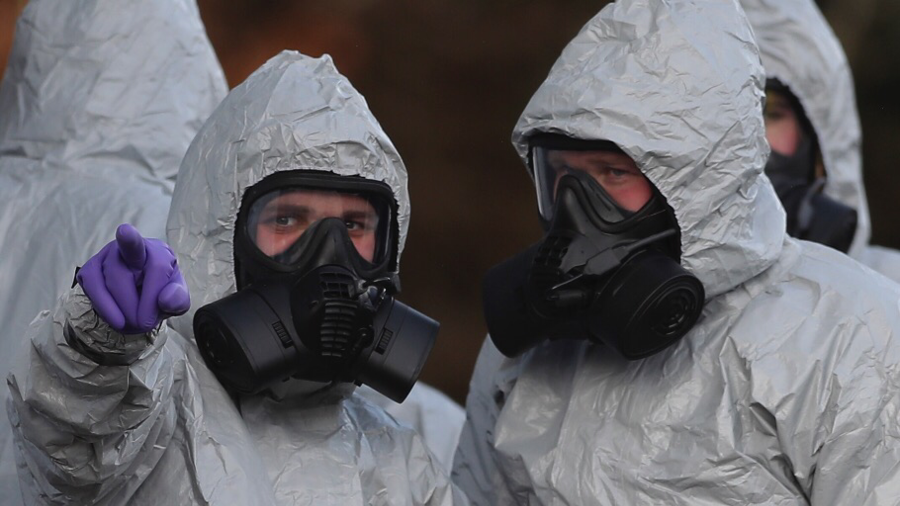
Moscow confronts London with 14 questions on ‘fabricated’ Skripal case
RT,
31 March, 2018

Russia’s Embassy in London has sent a list of 14 questions to the UK Foreign Ministry, demanding that it reveals details of the investigation into the nerve-agent poisoning of former double agent Sergei Skripal and his daughter.
The questions, provided in full below, include a demand to clarify whether samples of the nerve agent А-234 (also known as “Novichok”) have ever been developed in the UK. The embassy’s statement calls the incident that started the recent diplomatic row a “fabricated case against Russia.”


1. Why has Russia been denied the right of consular access to the two Russian citizens, who came to harm on British territory?2. What specific antidotes and in what form were the victims injected with? How did such antidotes come into the possession of British doctors at the scene of the incident?3. On what grounds was France involved in technical cooperation in the investigation of the incident, in which Russian citizens were injured?4. Did the UK notify the OPCW (Organization for the Prohibition of Chemical Weapons) of France’s involvement in the investigation of the Salisbury incident?5. What does France have to do with the incident, involving two Russian citizens in the UK?6. What rules of UK procedural legislation allow for the involvement of a foreign state in an internal investigation?7. What evidence was handed over to France to be studied and for the investigation to be conducted?8. Were the French experts present during the sampling of biomaterial from Sergei and Yulia Skripal?9. Was the study of biomaterials from Sergei and Yulia Skripal conducted by the French experts and, if so, in which specific laboratories?10. Does the UK have the materials involved in the investigation carried out by France? 11. Have the results of the French investigation been presented to the OPCW Technical Secretariat?12. Based on what attributes was the alleged “Russian origin” of the substance used in Salisbury established?13. Does the UK have control samples of the chemical warfare agent, which British representatives refer to as “Novichok”?14. Have the samples of a chemical warfare agent of the same type as “Novichok” (in accordance to British terminology) or its analogues been developed in the UK?


A similar list, containing 10 questions, was sent to the French Foreign Ministry by the Russian Embassy in Paris. According to the document, Moscow wanted to know on what grounds France was involved in the British investigation into the Skripal poisoning.

It demanded that Paris reveal what kind of evidence was handed over to France by the UK, and also inquired if French experts were in possession of the samples of the nerve agent А-234 (also known as “Novichok”) or biomaterials from Sergei and Yulia Skripal.

Russia also demanded explanations on what made French experts conclude that the substance used in Salisbury attack was nerve agent А-234 and that it was of Russian origins. The final question on the list read: “Have the samples of a chemical warfare agent of this type or its analogues been developed in France and if so, for what purpose?”

Sergei Skripal and his daughter, Yulia, were discovered on a bench in Salisbury in early March, with the UK claiming a Soviet-designed nerve agent was used against them. Without a proper investigation being carried out, London said it was “highly likely” that Russia was responsible for the attack and introduced sanctions against the country, including the expulsion of Russian diplomats.

Moscow has denied all accusations, decrying them as a “provocation,” and demanded proof from the British side. However, London refused to cooperate with Russia on the case, denying its consular staff access to Russian citizen Yulia Skripal and turning down the request to provide a sample of the toxic substance in question.

Over 50 affected as Russia downsizes UK diplomatic mission in tit-for-tat response


Over 50 affected as Russia downsizes UK diplomatic mission in tit-for-tat response

Moscow’s decision to have the UK downsize its diplomatic presence in Russia to be equal to that of Moscow in London means that it must cut over 50 jobs at the British mission, according to the Russian foreign ministry.

On Friday, Russia announced its response to the UK’s expulsion of 23 Russian diplomats that London linked to double agent Sergei Skripal’s poisoning. In addition to expelling 23 British diplomats, Moscow also gave London one month to downsize its diplomatic presence in Russia.

The final number of staff in Russia should be equal to the number of staff at the Russian diplomatic mission in Britain. Similar measures were taken in response to the American expulsion of Russian diplomats over alleged interference in the 2016 presidential election in the US.


Britain says Aeroflot plane was searched to protect UK from ‘organized crime & harmful substances’


Britain says Aeroflot plane was searched to protect UK from ‘organized crime & harmful substances’

The controversial search of a Russian plane by British officials at Heathrow Airport was conducted to protect the UK from organized crime and the smuggling of harmful substances, the UK security minister has said.

Moscow had described the search of an Aeroflot plane as “illegal” and called for an explanation from British authorities.

“It is routine for [UK] Border Force to search aircraft to protect the UK from organized crime and from those who attempt to bring harmful substances like drugs or firearms into the country,” UK Security Minister Ben Wallace said on Saturday. He insisted that once the “checks were carried out,” the aircraft “was allowed to carry on with its onward journey.”


The justification presented by London “only aggravates our doubts as to the real intentions of the team” that performed the unlawful search, the Russian Embassy in the UK said in response to the statement. Aeroflot and Russian airports “observe strict international security standards” on the presence of firearms and drugs on board and did not “give rise to doubts in that respect,” it added.


British ISIS torturers 'regret' beheadings, say revoking citizenship 'unfair'
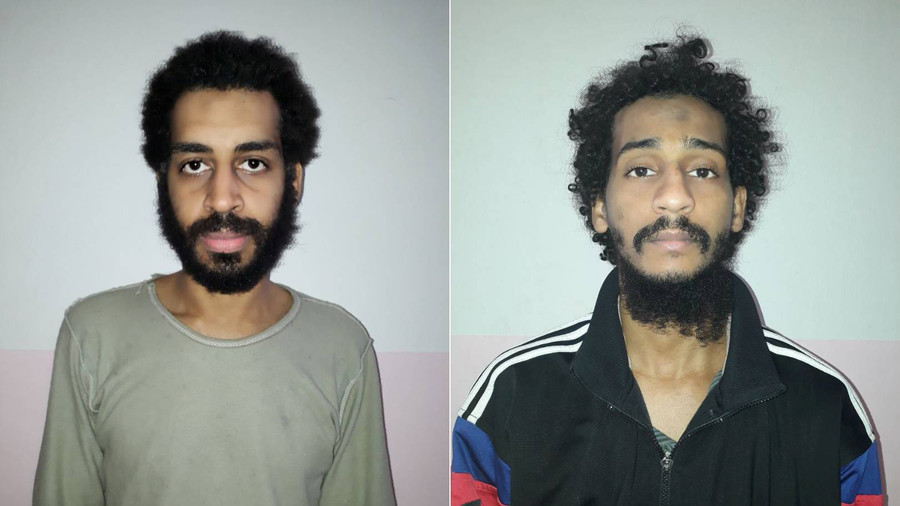
Photos provided by SDF on February 9, 2018, showing captured ISIS members Alexanda Kotey and Shafee Elsheikh © SDF handout / Reuters
Two British ISIS members have described their brutal execution of hostages as “regrettable.” The men also said that the British government’s decision to revoke their citizenship denied them the chance of a fair trial.

El Shafee Elsheikh and Alexanda Amon Kotey were allegedly part of a four-member Islamic State (IS, formerly known as ISIS/ISIL) cell known as “The Beatles.” The cell became known for its brutal execution videos of hostages, including American journalists Steven Sotloff and James Foley in 2014.

The cell’s leader, Mohammed Emwazi, became known as “Jihadi John,” and appeared in many of the group’s videos, threatening the west from behind a mask. Emwazi was “evaporated”in a coalition drone strike in Raqqa, Syria in November 2015. Another member of the group, Aine Lesley Davis, was arrested in Turkey last year and sentenced to seven years in prison.

The Russians are being too damned civilised in the circumstances.


Russia has no plans to cease cultural cooperation with the United Kingdom and hopes that this sphere will continue to stay away from politics amid the ongoing diplomatic row with the United Kingdom, Russia's Deputy Culture Minister Alexander Zhuravsky said on Saturday.

"We have never unilaterally initiated to break off relations or cease cultural ties, that is why in this case… there were no unfriendly actions from the Ministry of Culture… We hope that culture will stay out of politics as before," 

No warning given. They ordered the crew out and when the pilot refused to leave they shut him in the cockpit: no witnesses to the search.


From the Deutsche Wirtschafts Nachrichten: Friday evening the British Border and Customs authority at the London Heathrow airport, with no warning, searched an Aeroflot airliner in from Moscow. Contrary to the rules of international air travel, according to the airline, they ordered the pilot and the crew to leave the plane. The pilot refused, having regard to his duties as a captain. He was, as the Russian state-owned news Agency TASS, reported, forced to stay the cockpit, while the authorities were searching the plane.

The BBC reported that it had received the information on the customs action from the British foreign Ministry. In recent days the foreign Minister, Boris Johnson has stepped up his particularly sharp public criticism of Russia.

Russia lodged a sharp protest according to the spokeswoman of the foreign Ministry, Maria Zakharova against this deed of the authorities. Russia calls on London to return to the international practices in air travel. “The behavior of the British police is a clear demonstration of the desire to board and tamper without a witness,” said Zakharova in the radio station Rossiya 24, according to RIA.

Employees of the Russian Ambassador went to the airport to investigate the situation.


Key areas of East Ghouta are linerated

All E. Ghouta towns liberated, key Damascus highway open after 7yrs of blockade – Syrian military

All E. Ghouta towns liberated, key Damascus highway open after 7yrs of blockade – Syrian military


RT,
31 March, 2018


Syrian forces have liberated all militant-held settlements in the Damascus suburb of Eastern Ghouta, the military command said in a televised statement. A major Syrian motorway has been unblocked for the first time in seven years.

“After a set of carefully planned battles and operations carried out by our armed forces in cooperation with loyal and allied troops, the control over all the towns and settlements in the Damascus suburb of Eastern Ghouta has been restored,” a Syrian Army statement said, as cited by Sputnik news agency.

The army has also lifted the blockade of a main highway connecting the Syrian capital to the rest of the country, the statement said, as cited by SANA state news agency. “The victory in Eastern Ghouta ensured opening of the main routes between Damascus and central, northern and coastal regions, and all the way to the Iraqi border,” it said.

Syrian forces managed to defeat the militant groups holding Ghouta after their headquarters, ammunition depots, fortifications and weapons factories were destroyed, the army said. It added the military units are continuing the offensive on the outskirts of the town of Douma, driving militants out of the area.

The milestone victory would ensure the “restoration of security and stability in Damascus,” and would bring relief to a civilian population that has suffered from “terrorist crimes and sponsors of terrorist organizations over the past several years.”

The Eastern Ghouta area has been under siege since 2012. In February this year, Syrian troops began their offensive to liberate the last militant-held stronghold located close to Damascus.

On February 27, Russia brokered the humanitarian ceasefire in eastern Ghouta to allow civilians to escape the area through a humanitarian corridor, several of which have since been set up. The cessation of hostilities was renewed several times, allowing civilians, as well as militants and their families, to safely exit the besieged area.

The Russian military also helped the Syrian Army ensure security in and around humanitarian corridors, through which both civilians and militants were exiting. The troops thwarted dozens of suicide attacks targeting buses that ferried civilians out of the area, Russian Defense Minister Sergey Shoigu said on Friday. Forty-eight explosive belts were also seized during anti-terrorism raids.

The efforts enabled at least 150,000 people to leave eastern Ghouta for safety, the majority of them being Syrian civilians suffering under the militant rule. As the area was being liberated, some 40,000 people returned to their homes. Those who have returned are receiving aid packages delivered by UN agencies and the Russian Reconciliation Centre.

Syrian civilians who managed to flee eastern Ghouta through humanitarian corridors relayed the stories of atrocities committed by the terrorists. They told RT’s video agency Ruptly that the militants kept all the food and water for themselves, used people as human shields and employed threats and violence in order to prevent them from leaving the war-torn area.


Life in eastern Ghouta will soon be returning back to normal in a way that is similar to what is now happening in Aleppo, which was liberated from militants with Russia’s help in late 2016, Russian Foreign Ministry spokeswoman Maria Zakharova said, reacting to the news.

“We have a place, which was one of the last terrorist strongholds, cleared from militants… We have obvious progress, which is admitted by the UN and humanitarian organizations; we have the process of withdrawal of civilians [from terrorist-held areas] and the liberation of towns,” Zakharova told Russia’s Channel 5.

Those are the signs that “bit by bit, eastern Ghouta will follow the footsteps of Aleppo, where from 100,000 to 200,000 people have already returned,” she said. “It still less than what used to be the city's population [before the war], but it shows that life is really starting to come back to normal.”

French troops deployed in northern Syria

CURRENT DEVELOPMENTS: French Troops Are Growing In Northern Syria


31 March, 2018


MANBIJ, Syria – French troops are currently deploying five military bases in northern Syria in the area controlled by the forces of Washington-backed and Kurdish-led SDF (Syrian Democratic Forces) as reported by Turkish state news agency Anadolu.

According to Turkish media, more than 70 members of the French Special Forces are at the Lafarge cement factory near Mistanur Hill and Harab-Isk.
In fact, they say that even 30 executives are working from Raqqa. The 1st Marine Parachutist Constitution and the 10th Parachutist Unit are also operating in the area.
Kurdish People’s Protection Units (YPG) are the core of the SDF. Ankara describes YPG as a terrorist group and as the Syrian arm of the Turkey-based Kurdistan Workers’ Party (PKK).
Turkey recently launched a large-scale military operation against the YPG in the north of Syria and captured the YPG-held Afrin region.
All this comes just 24 hours after the rupture between Ankara and Paris’s relations and the reception of President Emmanuel Macron at the Elysées Palace with the political and military delegation of the Syrian Kurds and the Arab-Kurdish alliance.
According to the French “Le Monde,” this decision by the French presidency “is a crucial move and a decisive shift in the involvement of the French agent on the Kurdish Syrian front.”
The reaction was immediate and the headlines of the Turkish newspapers expressed Ankara’s anger with titles such as “Movement-scandal” in “Hürriyet” or “Crisis: France sends an army to Manbij” of “Milliyet”.
After Erdogan’s “cuff” against Macron in Paris yesterday it was announced that France does not plan to conduct a military operation in northern Syria outside the international coalitions fight against the Islamic State.
This clarification was made on the following statements made by Kurdish officials after meeting with President Emmanuel Macron, according to which Paris is also about to send “new troops” to northern Syria.
“France does not envisage a new military operation on the field in northern Syria outside of the international coalition against the Islamic State,” the French Presidency underlined.
Indeed, the Turkish President, Recep Tayyip Erdogan, launched a violent attack on France, calling France’s move to mediate between Turkey and the Syrian Democratic Forces as a  “wrong approach” .
“I would like to stress that I was very much disappointed by France’s completely wrong approach to this issue,”  the Turkish president said.  “Who are you talking about mediation between Turkey and a terrorist organization?” he questioned.
Addressing Emmanuel Macron, Erdogan said: “Who assigned you this duty? Who told you to get involved in those things that are bigger than yours? “
Translated from Crash Magazine Online.

TURKISH MEDIA SAYS FRENCH TROOPS DEPLOYED AT 5 MILITARY BASES IN NORTHERN SYRIA

31 March, 2018


French troops are currently deplyoed at 5 military bases within the area controlled by the US-backed Syrian Democratic Forces (SDF) in northern Syria, the Turksih state-run news agency Anadolu Agency says.

According to Anadolu, over 70 French special forcesservice members are stationed at the Lafarge Cement factory near the Mistanur Hill and the village of Harab-Isk. The agency added that over 30 French servicemembers are operating in Raqqah. France’s 1st Marine Infantry Parachute Regiment and 10th Parachute Commando forces also operate in the area.
The Kurdish People’s Protection Units (YPG) is a core of the SDF. Ankara describes the YPG as a terrorist group, a local branch of the Kurdistan Workers’ Party (PKK). Turkey has even recently conducted a large-scale military operation against the YPG in northwestern Syria and has captured the area of Afrin from it.

Turksih Media Says French Troops Deployed At 5 Military Bases In Northern Syria
Click

Turks preparing to assault Manbij?


[Editor’s note: It certainly looks like tensions are increasing between the Turkish-backed ‘rebels’ (or are they just a Turkish proxy army including Turkish personnel) and the Syrian Kurds, with the city of Manbij being the most likely point where fighting will break out. What greatly complicates matters is that the US and it’s allies are backing the Kurds and have forces on the ground, which raises the prospect of NATO allies becoming engaged against each other in a proxy war. For Syria, it means that despite the destruction of ISIS, there appears to be little prospect of the seemingly interminable conflict that has wrecked the country coming to an end any time soon. Ian]__________
Al Masdar
Photos (below) have emerged showing US motorized forces patrolling the frontline with Turkish-backed rebels near the city of Manbij in northern Aleppo province.
The stepped up US patrols in defense of Pentagon-backed proxies comes as Ankara is making serious threats about launching an offensive to expel Syrian Kurdish forces from Manbij and its surrounding countryside.
There are reports that Turkish-backed rebel groups (guided by Ankara) are already making preliminary moves for a major military operation against US-led forces in Manbij.
Recently, two troops of the US-coalition (at least one confirmed to be an American) were killed and five others injured in an IED attack that sources are now saying happened in Manbij city; no warring faction has officially been blamed yet.
Recently, reports emerged that France was planning to send troops to Manbij to deter Turkish aggression towards Syrian Kurdish forces.
A UK soldier has been killed in combat in Syria, the Ministry of Defence has said.
The serviceman – embedded with US forces as part of a counter-terrorism operation against the Islamic State group – was killed on Thursday by an improvised explosive device.
An American soldier was also killed by the roadside bomb, US officials said.
The MOD confirmed that his family had been notified, adding “our thoughts are with them at this difficult time”.
BBC defence correspondent Jonathan Beale said the British serviceman is the first UK soldier to be killed in combat fighting IS.
He said: “The MOD and the government has not acknowledged that British forces are involved in combat in Syria before.
“They never comment on the activities of UK special forces either. But in 2017, the then Defence Secretary Michael Fallon did tell MPs that a small number of UK military personnel had been in the country as part of the US-led coalition.”
Our correspondent added it was believed the serviceman was killed near the town of Manbij in northern Syria in a night-time operation against IS.
US officials said five other personnel were wounded in the incident.
It comes a day after US President Donald Trump told advisers he wanted US forces withdrawn from Syria “very soon”.


Bolton - Israel's agent inside the US

Bolton Acted Against US Interests to Push Israel's Agenda in Lebanon


the Real News

When Israel invaded Lebanon in 2006, then-Ambassador John Bolton worked to prevent a ceasefire, acting as "an asset for Israel against the interests of his own secretary of state, his own State Department, his own superiors, and his own president," says Phyllis Bennis of the Institute for Policy Studies

Israeli armed drone over Israel

Israel's Armed Drone Crashes Over Lebanon


Israeli News Live

Israel has a drone go done over Lebanon, moments later a second drone shoots the first drone with a guided missile. State Department was warned that Israel's snipers on the border with Gaza could cause a blood bath, twelve were killed as a result of Israel claiming it was defending its border.


The Truth About Israel's Role in the New World Order


This is worthwhile reposting with the accompanying email released by Wikileaks.

Blueprint for regime change

NEW IRAN AND SYRIA 2.DOC


From:
To:
Date: 2001-01-01 03:00
Subject: NEW IRAN AND SYRIA 2.DOC


UNCLASSIFIED U.S. Department of State Case No. F-2014-20439 Doc No. C05794498 Date: 11/30/2015

RELEASE IN FULL

The best way to help Israel deal with Iran's growing nuclear capability is to help the people of Syria overthrow the regime of Bashar Assad.

Negotiations to limit Iran's nuclear program will not solve Israel's security dilemma. Nor will they stop Iran from improving the crucial part of any nuclear weapons program — the capability

to enrich uranium. At best, the talks between the world's major powers and Iran that began in Istanbul this April and will continue in Baghdad in May will enable Israel to postpone by a few months a decision whether to launch an attack on Iran that could provoke a major Mideast war.

Iran's nuclear program and Syria's civil war may seem unconnected, but they are. For Israeli leaders, the real threat from a nuclear-armed Iran is not the prospect of an insane Iranian leader launching an unprovoked Iranian nuclear attack on Israel that would lead to the annihilation of both countries. What Israeli military leaders really worry about -- but cannot talk about – is losing their nuclear monopoly. An Iranian nuclear weapons capability would not only end that nuclear monopoly but could also prompt other adversaries, like Saudi Arabia and Egypt, to go nuclear as well. The result would be a precarious nuclear balance in which Israel could notrespond to provocations with conventional military strikes on Syria and Lebanon, as it can today.
If Iran were to reach the threshold of a nuclear weapons state, Tehran would find it much easier

to call on its allies in Syria and Hezbollah to strike Israel, knowing that its nuclear weaponswould serve as a deterrent to Israel responding against Iran itself.

Back to Syria. It is the strategic relationship between Iran and the regime of Bashar Assad in Syria that makes it possible for Iran to undermine Israel's security — not through a direct attack, which in the thirty years of hostility between Iran and Israel has never occurred, but through its proxies in Lebanon,  like Hezbollah, that are sustained, armed and trained by Iran via Syria. The end of the Assad regime would end this dangerous alliance. Israel's leadership understands well

why defeating Assad is now in its interests. Speaking on CNN's Amanpour show last week Defense Minister Ehud Barak argued that "the toppling down of Assad will be a major blow to the radical axis, major blow to Iran.... It's the only kind of outpost of the Iranian influence in the Arab world...and it will weaken dramatically both Hezbollah in Lebanon and Hamas and Islamic
Jihad in Gaza."

Bringing down Assad would not only be a massive boon to Israel's security, it would also ease Israel's understandable fear of losing its nuclear monopoly. Then, Israel and the United States

might be able to develop a common view of when the Iranian program is so dangerous that military action could be warranted. Right now, it is the combination of Iran's strategic alliance with Syria and the steady progress in Iran's nuclear enrichment program that has led Israeli leaders to contemplate a surprise attack — if necessary over the objections of Washington. With Assad gone, and Iran no longer able to threaten Israel through its, proxies, it is possible that the United States and Israel can agree on red lines for when Iran's program has crossed an
unacceptable threshold. In short, the White House can ease the tension that has developed with Israel over Iran by doing the right thing in Syria.

The rebellion in Syria has now lasted more than a year. The opposition is not going away, nor is the regime going to accept a diplomatic solution from the outside. With his life and his family at risk, only the threat or use of force will change the Syrian dictator Bashar Assad's mind.

UNCLASSIFIED U.S. Department of State Case No. F-2014-20439 Doc No. C05794498 Date: 11/30/2015

The Obama administration has been understandably wary of engaging in an air operation in Syria like the one conducted in Libya for three main reasons. Unlike the Libyan opposition forces, the Syrian rebels are not unified and do not hold territory. The Arab League has not called for outside military intervention as it did in Libya. And the Russians are opposed.

Libya was an easier case. But other than the laudable purpose of saving Libyan civilians from

likely attacks by Qaddafi's regime, the Libyan operation had no long-lasting consequences for the region. Syria is harder. But success in Syria would be a transformative event for the Middle East. Not only would another ruthless dictator succumb to mass opposition on the streets, but the region would be changed for the better as Iran would no longer have a foothold in the Middle East from which to threaten Israel and undermine stability in the region.

Unlike in Libya, a successful intervention in Syria would require substantial diplomatic and military leadership from the United States. Washington should start by expressing itswillingness to work with regional allies like Turkey, Saudi Arabia, and Qatar to organize, train and arm Syrian rebel forces. The announcement of such a decision would, by itself, likely cause substantial defections from the Syrian military. Then, using territory in Turkey and possibly Jordan, U.S. diplomats and Pentagon officials can start strengthening the opposition. It will take time. But the rebellion is going to go on for a long time, with or without U.S. involvement.

The second step is to develop international support for a coalition air operation. Russia will never support such a mission, so there is no point operating through the UN Security Council.

Some argue that U.S. involvement risks a wider war with Russia. But the Kosovo example shows otherwise. In that case, Russia had genuine ethnic and political ties to the Serbs, which don't exist between Russia and Syria, and even then Russia did little more than complain.

Russian officials have already acknowledged they won't stand in the way if intervention comes.

Arming the Syrian rebels and using western air power to ground Syrian helicopters and airplanes is a low-cost high payoff approach. As long as Washington's political leaders stay firmthat no U.S. ground troops will be deployed, as they did in both Kosovo and Libya, the costs to the United States will be limited. Victory may not come quickly or easily, but it will come. And the payoff will be substantial. Iran would be strategically isolated, unable to exert its influence in the Middle East. The resulting regime in Syria will see the United States as a friend, not an enemy. Washington would gain substantial recognition as fighting for the people in the Arab world, not the corrupt regimes. For Israel, the rationale for a bolt from the blue attack on Iran's nuclear facilities would be eased. And a new Syrian regime might well be open to early action

on the frozen peace talks with Israel. Hezbollah in Lebanon would be cut off from its Iranian sponsor since Syria would no longer be a transit point for Iranian training, assistance and missiles. All these strategic benefits and the prospect of saving thousands of civilians from murder at the hands of the Assad regime (10,000 have already been killed in this first year of civil war).

With the veil of fear lifted from the Syrian people, they seem determine tofight for their freedom. America can and should help them — and by doing so help Israel and help reduce therisk of a wider war.


See the original HERE