I am treading on thin ice here.
In ordinary times to talk about this was 'politically incorrect" at best but with the insanity that has overtaken the world the time has come to be a bit more objective about things.
This article came out today and is making the point that theories about the Moriori have "enabled racism against Maori" for generations.
If I have a point it might be to heal the present as best we can, be objective about the past and not rewrite our history but to clarify it.
HEALING (if that is what is wanted and certain forces DO
NOT - they want to DIVIDE us) NEVER EVER COMES
FROM IGNORING THE SHADOW.
https://www.stuff.co.nz/national/121809536/the-moriori-myth-has-enabled-racism-against-maori-in-aotearoa-for-generations?fbclid=IwAR1v-1KxMPVTeKDdxrWJvaH8lg2pKkdqJ0qOFsvuSInSzW9VsTX_BFl-5Mk
He is making the point that in the. 19th Century it was thought that Moriori were a pre-Maori culture
Anyone who was in schooling up to about the 1960s was taught that the Moriori people were a pre-Māori culture. It was in the School Journal of the time. It was propaganda created by ethnographers and perpetuated by the Government of the time.
This has since been debunked; it is a myth.That was, in the mind of the Pākehā, what happened with the Moriori when the Māori had arrived. And so it was happening again with the Māori and the settling of the Europeans. Another way to shift the blame from themselves for the apparently imminent extinction of the Māori race.
The Moriori are people who inhabited the Chatham Islands. They are of Eastern Polynesian descent, like Māori, and recent archaeological evidence shows that the Moriori people arrived in the Chatham Islands around 1500.
It is unclear whether they were originally part of the Māori migration to Aotearoa and later relocated to the Chatham Islands, or if they had come on their own directly to the Chatham Islands from the same region of Polynesia as Māori....
***
He goes on -
There is actually no substantial scientific evidence that there ever was pre-Māori people in Aotearoa. But the evidence shows there had been one constant human presence, from the 1200s onwards, of Eastern Polynesian origin.
And this is the nub of his argument...
Although their argument has been debunked for decades, and they are letting their ignorance get in the way of actually seeking further education on the matter, it’s incredibly disappointing that today, in 21st century Aotearoa, Māori still face this sort of abuse and attack on the credibility of our culture….
….These people (racists) will not be able to handle reading this article because they cannot stand that their only argument to “support” their racist narrative is being ripped apart and disproved.
This is from Wikipedia

The Moriori are the indigenous Polynesian people of the Chatham Islands (Rēkohu in Moriori; Wharekauri in Māori), New Zealand. Moriori originated from Māori settlers from the New Zealand mainland around AD 1500.[2] This was near the time of the shift from the Archaic to Classic Māori culture on the main islands of New Zealand.[3][4] Oral tradition records multiple waves of migration to the Chatham Islands.[5][6] Over several centuries these settlers' culture diverged from mainland Māori, developing a distinctive dialect, mythology, artistic expression and way of life.[7]
Early Moriori formed tribal groups based on eastern Polynesian social customs and organisation; later, a prominent pacifist culture emerged (see Nunuku-whenua).[8] This culture made it easier for Taranaki Māori invaders to nearly exterminate them in the 1830s during the Musket Wars.[9] Currently there are around 700 people who identify as Moriori, most of whom no longer live on the Chatham Islands.[10]
During the late 19th century some prominent anthropologists proposed that Moriori were pre-Māori settlers of mainland New Zealand, and possibly Melanesian in origin.[11] This hypothesis was taught in New Zealand’s schools for most of the 20th century, long after it had fallen from favour among academics.
DISCUSSION
Indeed.
Theories of 50-100 years ago do get disproven, however, a racist narrative??
From everything I have read online NO ONE is actually saying that "Moriori were a pre-Maori civilisation" these days - so that would make the argument a straw man one, at least in terms of today.
However, what is moot, however, is evidence that is by-and-large suppressed that demonstrates that some Maori at least had practises that are very similar to what white colonialists got up to - invasion, genocide, slavery - and it seems that cannibalism can be added to the list.
Just about every civilisation is guilty of something like this if you examine, warts and all.
White settler society was perhaps more extreme - especially elsewhere, in Australia and North America but hardly unique. Even the Africans traded in slaves, as did the Arabs. But you are not allowed to say that.
I would argue that the racism of yesteryear is behind us. We had colonialist racism and now we have the consequences of racism. Instead, what we have now is class warfare against the poor and disposessed, including white people as well as people of other racists.
Moreover, the worse things get in these terms and the less equal (and less just) things become the more they talk about institutional racism (which really does not exist any more in the sense it did in the past) the more they have to talk about this, essentially as a Divide and Rule tactic, to keep us at each others' throats.
For me, the first priority is to bring as much objectivity and truth as I can muster to the situation and to eschew the rewriting of history, political correctness and ideology as I can.
If we were not living in a civilisation that is rapid and terminal decline I would be talking about equal rights vs. "equality" - but all that has been rendered irrelevant and all we are left with is Truth vs lies.
I am of an age now where I don't really care what the masses "think" and my own self-respect is more important even if violent mobs come to my door.
CANNIBALISM AND GENOCIDE OF MORIORI
What follows is some material I have been able to glean from the Internet on this matter.
***
First, this is what te Are (the Encyclopedia of New Zealand) says:
“Around 300 Moriori were initially slaughtered, and hundreds more were enslaved and later died. Some were killed by their captors. Others, horrified by the desecration of their beliefs, died of ‘kongenge’ (despair). According to records made by elders, 1,561 Moriori died between 1835 and 1863, when they were released from slavery. As well as the large numbers who died at the hands of Ngāti Mutunga and Ngāti Tama, many succumbed to diseases introduced by Europeans. In 1862 only 101 remained. When Tommy Solomon died in 1933, many thought this marked the extinction of the Moriori people.”
And then there was this item from 2009.
Strangely enough this item would not open - I was told that it was a 500 error - which implies the server was not working, yet there is nothing wrong with the stuff.co.nz website
My wife read out from the book Guns, Germs & Steel, several passages about the Maori invasion of Chatham Islands. These warrior invaders went over in two British ships and proceeded to slaughter, eat and enslave every single island inhabitant. As one of the leaders said, "This was according to the custom of our time." Yep. Exterminating an entire tribe. And it was the custom of a warrior culture.
The invaders did some horrible things. Cannibalism was a Maori custom and so was making your enemy suffer, even when the Moriori had done nothing to be classified as enemy. They were forbidden to speak their dialect. Those not killed were taken as slaves.
Finally, historians think Maori came to the shores of Aotearoa between 1320 and 1360.
That means that traditional Maori civilisation lasted about 400 years whereas the colonial and post-colonial New Zealand has been with us for about 200 years or so.
It does not seem to me to warrant the term tangata whenua.
They may have come to an empty land but their practises were similar to anyone else in the human species.
The Māori (/ˈmaʊri/; Māori pronunciation: [ˈmaːɔɾi] (About this soundlisten)[6]) are the indigenous Polynesian people of mainland New Zealand. Māori originated with settlers from eastern Polynesia, who arrived in New Zealand in several waves of waka (canoe) voyages between roughly 1320 and 1350.[7] Over several centuries in isolation, these settlers developed their own distinctive culture, whose language, mythology, crafts and performing arts evolved independently from those of other eastern Polynesian cultures
This is a scholastic article on this from 2008.
Just Eat The Vegetables… Cannibalism in early New Zealand
25 August, 2008
Emile Rouargue’s fanciful illustration of Maori cannibalism, an illustration in a volume on French explorer Dumont D’Urville’s expedition to . The artist is not known to have visited . This illustration is on the cover of Moon’s This Horrid Practice – the title itself being Captain James Cook’s reference to cannibalism.
In This Horrid Practice, (: Penguin NZ, 2008), author Paul Moon argues that Maori cannibalism or kai tangata [human food] was more widespread and occurred later than many histories record. Moreover, in various radio & newspaper interviews launching his book, he charges revisionist historians have sanitized histories in recent decades by ignoring or excluding discussion of cannibalism. This post will limit itself to the second claim and its factual accuracy.
Conceding for argument’s sake that political correctness in has been widespread in recent decades, the charge that recent general histories have denied or ignored the practice of cannibalism is a weak one not borne out by the facts.
Moon charges that Keith Sinclair’s A History of New Zealand (multiple editions) mentions cannibalism but once and that Michael King’s Penguin History of New Zealand (2003) omits any discussion of it at all.
A quick review of Sinclair’s history shows at least three separate references: quoting Maori anthropologist Terangi Hiroa (Sir Peter Buck) as dryly commenting of the pre-European Maori that ” ’Human flesh was eaten when procurable’.” (p.18); that the inter-Maori musket wars of the 1820s “led to heavy casualties and cannibal feasts unprecedented in pre-European battles fought with stone weapons” (p. 42); and, that under the influence of the missionaries “Christian chiefs… gave up killing and cannibalism” (p. 45). It is clear from the tenor of Sinclair’s remarks that cannibalism was embedded within Maori culture and was practised on a large scale in the 1820s. A closer reading of Sinclair’s body of work would likely uncover further references to the role of cannibalism within Maori culture.
Turning to Michael King’s Penguin History of New Zealand, he certainly does examine the short, brutal lives of Maori, cut short often by premeditated acts of violence: “As Maori oral tradition recorded, and ancient burials have confirmed, elderly people, women and children, along with defeated male warriors, were periodic subjects for torture, killing and cannibalism.” (p. 87) King continues with an un-cited quote detailing the evidence of violence at a burial site in that notes the site was hidden possibly to avoid desecration by enemies (pp. 87-89).
King also cites the Grass Cove incident of 1773 in which ten of Captain Cook’s crew were victims of Maori cannibalism to underscore the misunderstandings of first contacts between Maori and Europeans, despite Cook’s generally enlightened and moderate approach to indigenous peoples in the Pacific (p. 106).
One might be led to conclude, among other possibilities, that Moon’s consideration of these two general histories was limited to an act the first year student is cautioned against: the reading of a book’s index to a topic rather than a thoroughgoing reading of the work in question. A scholar has a higher duty yet - of familiarizing himself with the body of another’s work before making a full assessment.
Stepping back from King’s general history which of its nature means even for such a young country as that many matters must be dealt with sketchily, in the context of his body of scholarship it is clear that King knew well and did not shy away from tackling the vexed issue of cannibalism.
Nowhere is this more apparent than in King’s Moriori (1989) in which he presents an authoritative account of the genocide, including cannibalism, of intertribal colonisation by mainland Ngati Mutunga and Ngati Tama Maori of the Chatham Island/Rekohu Moriori. King’s work was path-breaking in confronting a European or Pakeha myth that Moriori were an inferior, non-Maori group driven from the mainland; in challenging Maori accounts of the Moriori genocide; and, affirming Moriori as first peoples in Rekohu.
In Moriori, (for example, pp. 62-66), King quotes at length missionary Johannes Engst who collected the few surviving Moriori accounts of genocidal cannibalism: after death, “the heads were removed and thrown to the dogs, which gnawed off the best and buried the remainder for the next meal. Then the virile membrane [penis], having been cut off, was thrown to the women sitting around who ate this dainty morsel eagerly…. The heart, the most sought-after part of the whole body, was set aside for the chief guest…. When it [the flesh] had all been washed clean it was brought to the oven…. [Once cooked] they then laid the flesh compactly in small baskets, giving each person an individual portion.” (p. 65).
Did Sinclair and King ignore or deny the prevalence of cannibalism? Even their general histories suggest not.
If you don’t like the meat, just eat the vegetables…
And this is a website devoted to the genocide of Moriori. Nowhere do they claim that Moriori predated Maori
The Genocide of Moriori
The Moriori genocide happened on the Chatham Islands of New Zealand. The Moriori people lived by a code of no violence, war fare, and cannibalism. This was known as the law of nunuku.The genocide had occurred in the fall of 1835. Moriori had a small population of only 2000 people. In the beginning, the Moriori had also been cannibals but had started to abide the non violent ways of the nunuku code. The last full blooded Moriori had died in 1933. A statue was created in 1986 for him. It can be found in Manukau. In 1835 a European ship had arrived on the Chatham island with around five-hundred Maori who were armed with guns, axes, and clubs. About a month later, another ship had arrived with about 400 more Maori. Moriori people were killed off, enslaved, and were used for cannibal practice. Maori had invaded camps without warning and with ease. Moriori's land was now Maori land. Maori were known to invade lands and kill off people and because of the closeness and the peacefulness of the Moriori, the Maori had decided to take over. There were no specific reason as to why this specific genocide happened. Those who survived the invasion were kept as slaves or eaten. Moriori were not allowed to marry one another nor have children with in their race. Many Moriori had died of despair and many of the women had ended up having children with the Maori and eventually ended up marrying the Europeans and Maori people. By 1863, only one 101 Moriori out of 2,000 had survived. The Moriori people were freed in 1963. The genocide of the Moriori was not something that people were not well informed of. There wasn't many well written facts on this genocide
The Moriori are the indigenous people of the Chatham islands. They were Maori Polynesians that settled in the islands from New Zealand in the 16th century. The Moriori consisted of a small population, with its highest number of inhabitants being 2000 at their peak. They lived by the law of Nunuku, a code of non-violence and passive resistance, banning warfare and cannibalism.
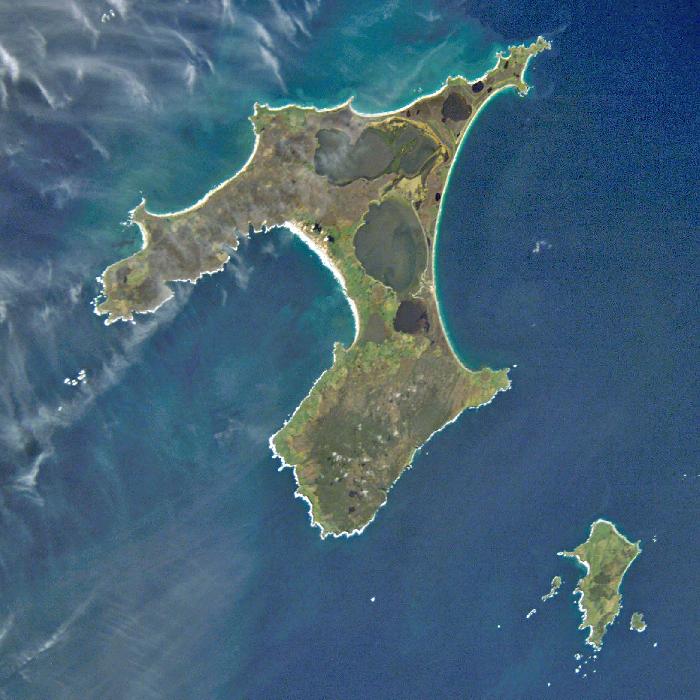
The Chatham islands from space
CAUSES OF THE MORIORI GENOCIDE - WHAT IS IT?
"We took possession... in accordance with our customs and we caught all the people. Not one escaped....."
The Māori were in search of resources and new territories to conquer. Hearing of the peacefulness of the Moriori, they set their sights on the Chatham islands.
"Parties of warriors armed with muskets, clubs and tomahawks, led by their chiefs, walked through Moriori tribal territories and settlements without warning, permission or greeting. If the districts were wanted by the invaders, they curtly informed the inhabitants that their land had been taken and the Moriori living there were now vassals."
"[The Maori] commenced to kill us like sheep.... [We] were terrified, fled to the bush, concealed ourselves in holes underground, and in any place to escape our enemies. It was of no avail; we were discovered and killed - men, women and children indiscriminately."
THE EIGHT STAGES OF THE MORIORI GENOCIDE
While many of the 8 stages of genocide apply to the Moriori genocide, this event occured in the 19th century between indigenous peoples. Because of this, several aspects of the stages may not be applicable - for example, the broadcasting of hate propaganda. In addition, the stages and the things that transpire during each stage may be in a different order.
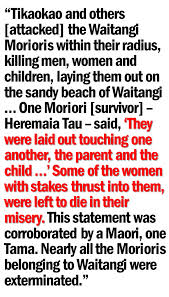
ritual involving staking out woman and children on the beacj amd leaving them to die in great pain over several daysforbade speaking of Moriori languageforced Moriori to desecrate their sacred sites by urinating and defecating on themAfter the invasion: Moriori forbidden to marry Moriori or have children with each otherThey all became slaves of the invadersMany Moriori women had children with their Moriori mastersOnly 101 Moriori out of a population of about 2000 were left alive by 1862
![Chart]()
Stage 1: Classification
While all of the parties were descended from the Māori, the Moriori was classified as different than the Māori of Taranaki region. The Moriori had different cultures and customs as a result of adapting to local conditions.
Stage 2: Symbolization
Names were used to distinguish the two groups: Moriori vs the Māori tribes Ngāti Mutunga and Ngāti Tama of Taranaki. The groups had different languages.
Stage 3: Dehumanization
While the Moriori were cannibals before, they created a ban on it, as well as warfare, as a result of Nunuku's law. However, the Māori were cannibals still. The Taranaki tribes not only killed and enslaved the Moriori, but ate them as well. Although this stage may be during the extermination stage, this shows that the Māori were dehumanizing the Moriori to the highest.
Stage 4: Organization
The Taranaki Māori living at Port Nicolson had been planning to invade a place for some time. The Chatham Islands were chosen for their proximity and the fact that the residents abided by Nunuku's Law.
Stage 5: Polarization
The use of the Moriori language was forbidden. The Moriori were forced to defile their ancient holy sites by urinating and defecating on them.
Stage 6: Preparation
In preparation for the invasion, the Māori tribes seized control of a European ship. It carried 500 armed Māori with guns, clubs, and axes, as well as loaded with 78 tonnes of seed potatoes. The ship arrived on November 19, 1835, followed on December 5th by another, this time with 400 more Māori on board.
Stage 7: Extermination
Although the Moriori outnumbered the Māori, they chose to obey Nunuku's Law of peace. They were nearly exterminated by the Māori. About 10% of the population was killed, some eaten, and the rest enslaved.
Stage 8: Denial
This stage was not very present in the Moriori genocide. To invade and take over was the custom of the Ngāti Mutunga and Ngāti Tama tribes.
This genocide may not be on as big as a scale as others, but it is equally as horrific. While not documented very well, several events and occurances were recorded.
- While the invading Māori were waiting for the second ship to arrive, they killed a twelve year old girl and hung her flesh on posts
- The Māori had a ritual that involved staking out women and children on the beach and leaving them for days to die painful deaths
WHY WERE THE MORIORI DEFEATED?
Although the Moriori outnumbered the Māori tribes almost two to one, they chose to abide by Nunuku's Law. Some of them wanted to fight back, but ultimately they decided that this law was more important, as it was a sacred covenant to their gods and could not be broken.
"The law of Nunuku [is] not a strategy for survival, to be varied as conditions changed; it [is] a moral imperative."
![Chart]()
1561
Number of Moriori that died between 1835 and 1863 (when they were released from slavery). Many were killed by the Taranaki tribes during the genocide, some were killed by their captors, some were infected with European diseases, and yet others died of 'kongege' or despair.
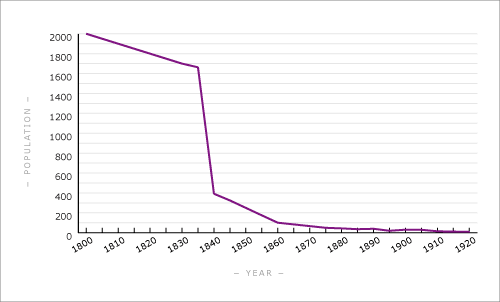
MORIORI POPULATION OF THE CHATHAM ISLANDS, 1800-1920
By 1862, only 101 out of 2000 Moriori were left.
The Moriori were forbidden to marry other Moriori or have children with each other, effectively preventing their population growth and continuing the genocide of their people and culture even after the event. They all became slaves of the invaders; many Moriori women had children with their masters.The Moriori were finally released from slavery in 1963.
The last full-blooded Moriori died in 1933. However, in the 1990s, the Moriori began to rebuild their culture and identity. They were recognized as the indigenous people of the Chatham islands and slowly their language is being revived as well. As of today, there are several thousand mixed ancestry Moriori alive today.
The following may be construed as racist as it involves eyewitness accounts from the 19th and early-20th Century
| HERE BE CANNIBALS |
|
| CANNIBALISM IN NEW ZEALAND |
There is not a bay, not a cove, in New Zealand which has not witnessed horrible dramas, and woe to the white man who falls into the New Zealanders’ hands.
Dr. Felix Maynard & Alexandre Dumas, The Whalers, Hutchinson, 1937.
The dreadful Maori custom – or at least occasional habit – of exhuming and eating buried human bodies was also a Fijian custom.
Elsdon Best
In this situation we were not above two cables’ length from the rocks, and here we remained in the strength of the tide, from a little after seven till near midnight. The sea broke in dreadful surf upon the rocks. Our danger was imminent and our escape critical in the highest degree; from the situation of these rocks, so well adapted to catch unwary strangers, I call them ‘The Traps.’
There was not a man aboard Endeavour who, in the event of the ship’s breaking up, would not have preferred to drown rather than be left to the mercy of the Maoris. For as Endeavour slowly circled the North Island, those few words spoken by the Maori boys – ‘Do not put us ashore there; it is inhabited by our enemies who will kill and eat us’ – began to grow into a hideous reality. Yet even as fresh evidence came to light that these people were indeed cannibals, the ship’s company still refused to believe the truth their eyes told them.
Tupia inquired if it was their practice to eat men, to which they answered in the affirmative; but said that they ate only their enemies who were slain in battle. We now began seriously to believe that this horrid custom prevailed amongst them, for what the boys had said we had considered as a mere hyperbolical expression of their fear. But some days later some of our people found in the skirts of the wood, near a hole, or oven, three human hip-bones, which they brought on board: a further proof that these people eat human flesh...
Calm light airs from the north all day on the 23rd November hindered us from putting out to sea as intended. In the afternoon, some of the officers went on shore to amuse themselves among the natives, where they saw the head and bowels of a youth, who had been lately killed, lying on the beach, and the heart stuck on a forked stick which was fixed on the head of one of the largest canoes. One of the gentlemen bought the head and brought it on board, where a piece of the flesh was broiled and eaten by one of the natives, before all the officers and most of the men. I was on shore at this time, but soon after returning on board was informed of the above circumstances, and found the quarter-deck crowded with the natives, and the mangled head, or rather part of it (for the under-jaw and lips were wanting), lying on the taffrail. The skull had been broken on the left side, just above the temples, and the remains of the face had all the appearance of a youth under twenty.
The sight of the head, and the relation of the above circumstances, struck me with horror and filled my mind with indignation against these cannibals. Curiosity, however, got the better of my indignation, especially when I considered that it would avail but little, and being desirous of becoming an eye-witness of a fact which many doubted, I ordered a piece of the flesh to be broiled, and brought to the quarter-deck, where one of the cannibals ate it with surprising avidity. This had such an effect on some of our people as to make them sick. Oedidee, the native who had embarked with us some time before, was so affected with the sight as to become perfectly motionless, and seemed as if metamorphosed into a statue of horror. It is utterly impossible for art to describe that passion with half the force that it appeared in his countenance.
When roused from this state by some of us, he burst into tears, continued to weep and scold by turns, told them they were vile men and that he neither was nor would be any longer their friend. He even would not suffer them to touch him. He used the same language to one of the gentlemen who cut off the flesh, and refused to accept or even touch the knife with which it was done. Such was Oedidee’s indignation against this vile custom; and worthy of imitation by every rational being...
One of the cannibals thereupon bit and gnawed the human arm which Banks had picked up, drawing it through his mouth and showing by signs that the flesh to him was a dainty bit. Tupia carried on the conversation: ‘Where are the heads?’ he asked. ‘Do you eat them too?’ ‘Of the heads,’ answered an old man, ‘we eat only the brains.’ Later he brought on board Endeavour four of the heads of the seven victims. The hair and flesh were entire, but we perceived that the brains had been extracted. The flesh was soft, but had by some method been preserved from putrefaction, for it had no disagreeable smell...
This custom of eating their enemies slain in battle (for I firmly believe they eat the flesh of no others) has undoubtedly been handed down to them from earliest times; and we know it is not an easy matter to wean a nation from their ancient customs, let them be ever so inhuman and savage; especially if that nation has no manner of connexion or commerce with strangers. For it is by this that the greatest part of the human race has been civilized; an advantage which the New Zealanders, from their situation, never had.
One of the arguments they made use of to Tapia, who frequently expostulated with them against this custom, was that there could be no harm in killing and eating the man who would do the same by them if it was in his power. For, said they, ‘Can there be any harm in eating our enemies, whom we have killed in battle? Would not those very enemies have done the same to us?’ I have often seen them listen to Tapia with great attention, but I never found his arguments have any weight with them. When Oedidee and several of our people showed their abhorrence of it, they only laughed at them.
Captain Cook
[Touai, a New Zealand chief who was brought to London in 1818 and resided there for a long time, becoming ‘almost civilized’] confessed in his moments of nostalgia that what he most regretted in the country from which he was absent was the feast of human flesh, the feast of victory. He was weary of eating English beef; he claimed that there was a great analogy between the flesh of the pig and that of man. This last declaration he made before a sumptuously served table. The flesh of women and children was to him and his fellow-countrymen the most delicious, while certain Maories prefer that of a man of fifty, and that of a black rather than that of a white. His countrymen, Touai said, never ate the flesh raw, and preserved the fat of the rump for the purpose of dressing their sweet potatoes...
New Zealanders particularly esteem the brain, and reject the remainder of the head; but an English missionary has reported that Pomare, a chief of the Bay of Islands, ate six entire heads. Chiefs’ heads are usually dried and perfectly preserved by an ingenious process. When a tribe wishes to make peace, it offers the vanquished tribe, as proof of its good intentions, the heads of the chiefs the others have lost. These heads are also articles of commerce in the neighbourhood of the Bay of Islands.
The bones of chiefs are very carefully gathered up, and from them they construct knives, fish-hooks, arrow-points, and points for lances and javelins, as well as ornaments for the toilet. I possess some fish-hooks pointed with very sharp fragments of human bone. Sometimes they detach the hand and the forearm and dry them at a fire of aromatic herbs. The muscles and tendons of the fingers contract so that the whole forms a hook, which they place in their huts for the suspension of baskets and weapons. I have seen several of these used as clothes-pegs. They utilize the remnants of the corpse in this manner in order to cause the family of the chief who is no more to feel that, even after death, he is still the slave of the victor. Before the feast of victory, each warrior drinks the blood of the enemy he has killed with his own hand. The atoua, the god of the conquered, then becomes subject to the atoua of the victors. In the neighbourhood of Hokianga, Hongi ate the left eye of a great chief. According to their belief, the left eye becomes a star in the firmament, and Hongi considered that henceforth his star would be much the more brilliant, and the strength of his sight would be augmented by all that which was possessed by the defunct....
Though the New Zealanders do not conceal their cannibalism, their chiefs sometimes endeavour to excuse themselves for it. ‘The fish of the sea eat one another,’ they say; ‘ the large fish eat the small ones, the small ones eat insects; dogs eat men and men eat dogs, while dogs eat one another; finally, the gods devour other gods. Why, among enemies, should we not eat one another?’
There is usually a suspension of fighting after the death of the first chief to fall in combat. The party which has not lost that leader claims the body of the defunct. If the others are intimidated, they yield it at once, and in addition, the chief’s wife, who is immediately put to death; she even voluntarily yields herself up, if she loved her husband. The priests cut up the corpses, divide them into fragments, and eat some; offering the greater number to their idols, while consulting the gods upon the issue of the present war.
Dr. Felix Maynard & Alexandre Dumas, The Whalers, Hutchinson, 1937.
After battle comes the terrible and revolting episode of the cannibal feast. It is unfortunately impossible to pass it over without notice, for Maori history is too full of allusion and incident connected with the practice for us to avoid mention of description of some of its horrors.
Prisoners taken in the fight were slain in cold blood, except those reserved for slavery – a mark of still greater contempt than being killed for food. Sometimes after the battle a few of the defeated were thrust alive into large food-baskets and thus degraded for ever. As a general rule, however, they were slain for the oven.
In days near our own it is recorded that a chief named Wherowhero ordered 250 prisoners of the Taranaki people to be brought to him for slaughter. He sat on the ground and the prisoners were brought to him one by one to receive the blow of the chief’s mere – a weapon till lately in the possession his son, the late Maori ‘King.’ After he had killed the greater number of them he said, ‘I am tired. Let the rest live.’ So the remainder passed into slavery.
How numerous sometimes these war captives were may be judged by the fact that when Hongi returned from his raid on the southern tribes he brought back 2,000 prisoners to the Bay of Islands. One of the latest cannibal feats of consequence was held at Ohariu, near Wellington, when 150 of the Muaupoko tribe went into the ovens. When the Maoris overcame the gentle Morioris of the Chatham Islands, not only did they keep the captives penned up like live-stock waiting to be killed and eaten, but one of the leading chiefs of the invaders ordered a meal of six children at once to be cooked to regale his friends.
I was shown a part of a beach on the Chatham Islands on which the bodies of eighty Moriori women were laid side by side, each with an impaling stake driven into the abdomen. It is difficult for one not accustomed to savage warfare to note how shockingly callous and heartless this desecration of the human body made the actors in these terrible scenes...
A Maori relating an account of an expedition said, incidentally: ‘On the way I was speaking to a red-haired girl who had just been caught out in the open. We were then on the eastern side of Maunga Whau, Auckland. My companions remained with the girl whilst I went to see the man of Waikato who had been killed. As we came back, I saw the head of the red-haired girl lying in the ferns by the side of the track. Further on, we overtook one of the Waihou men carrying a back-load of the flesh, which he was taking to our camp to cook for food. The arms of the girl were round his neck, whilst the body was on his back.’ If one can mentally picture the scene, with the man striding along, carrying the headless, disembowelled trunk of the naked girl, enough of this kind of horror will have been evoked...
When the bodies could not all be eaten, some of the flesh was stripped from the bones and dried in the sun, being hung on stages for that purpose. The flesh was then gathered into baskets and oil was poured over it, the oil being rendered-down from the bodies; this was done to prevent it spoiling from damp. Sometimes the flesh was potted into calabashes, as birds were potted. The bones were broken up and burnt in the fire. The body of a chief might be flayed, and the skin dried for covering hoops or boxes. The heads of the inferior chiefs were smashed and burnt, but those of the great were preserved by smoking. Sometimes the bones were broken and knocked like nails into the posts of the storehouses – a great indignity.
Bones were also taken away to be made into fish-hooks, or as barbs for bird or eel spears. The hands were dried with the fingers bent towards the palm, and the wrists were tied to a pole which was stuck into the ground, and baskets containing the remains of a meal were hung upon the fingers. Some of the Ngapuhi tribe were treated this way early this century. The hands were fastened to the walls of a house, with the wrists upwards and fingers turned up as hooks. The hands had been roasted until the outer skin had come off. The palms were quite white inside....
If the deceased had been a great chief, care was taken to degrade every part of the skeleton. The thigh-bones were made into flutes, or cut into sections that could be worked into rings for the legs of captive parrots. From other bones would be made pins for holding the dress-mats together, or needles for sewing dogskin mats. The skull might even be used as a water-vessel for carrying water in, for wetting ovens. But chiefs’ heads were carried back to be erected on posts so that they might be taunted, or fixed on the corner sticks of a loom to be mocked by a women as she sat weaving. In fact, no method of showing contempt, especially of defiling the remains of the defeated by associating them with food, was spared.
Sometimes the heart of the vanquished was roasted for ceremonial purposes. When the Kaiapoi stronghold was attacked by the forces of Rauparaha, the heart of a chief of the defending party was cut out and roasted in a fire, while all the attacking warriors stretched out their arms towards the heart while it was cooking. When the priests ended their chant, the warriors took up the song, while the chief priest tore off a portion of the heart and threw it among the enemy to weaken them.
The heart of a victim of sacrifice was not always eaten for war purposes. Sometimes it was for other reasons. Thus Uenuku ate the heart of his wife, who had committed adultery. The heart of the human sacrifice was eaten at a house-building ceremony, and also at the tattooing of the lips of a chief’s daughter and at the felling of a tree to be used for a great chief’s canoe.
Edward Tregear, The Maori Race, New Zealand, 1904.
A young Maori convert, of ‘a particularly gentle and lovable disposition, very shy – even timid, and extremely popular with everyone at the mission where he was employed... One day he happened to meet a young girl who had run away for some reason from her home in a neighbouring village. The young Maori suddenly became possessed of an unaccustomed demon. He seized the young girl, took her to his hut, killed her in cold blood; cut up her body in the traditional manner, and then invited his friends to partake with him in a meal, the chief and most favoured dish of which consisted on this young Maori girl.’
A. P. Rice in The American Antiquarian, vol. XXXII, 1910
The Master of the trading brig Elizabeth, one Captain Steward, who allowed himself to be persuaded by a Maori chief to smuggle him and a party of his tribesmen aboard the ship so that they might arrive unexpectedly at the shores of an island where their enemies lived. Te Rauparaha must have been a person of some plausibility, for Captain Stewart allowed a hundred or more natives to secrete themselves in part of his holds before he set sail for their mutual objective: the one to pick up a cargo of flax, the other with a very different end in view.
Between one and two in the morning, the Elizabeth dropped anchor off shore. At daylight, Steward found canoes coming out to visit the ship, and one by one, the crews were allowed to come aboard, and were then battened down below hatches. As soon as sufficient canoes were available, the tribesmen from the other hold came up on deck, boarded the canoes, and paddled across the bay, to fight the depleted community and ultimately return with canoe-loads of victims, who were then thrown down into the holds where already their fellow-tribesmen were battened down.
None of those taken prisoner were killed, nor were any of those killed on shore cooked on board, nor in the cooking-vessels belonging to the ship. All the bodies were cooked on shore in the primitive Maori fashion of the day. They dig a hole in the earth two feet deep, in which they make a quantity of round stones red-hot with dry wood, after which they take out all the stones except a few at the bottom, over which they lay several alternate tiers of leaves and flesh, until there is as much above the ground as below. They then throw about two or three quarts of water over all, and confine the steam with old mats and earth so completely that in 20 minutes the flesh is cooked; it is in this way that they cook and cure all their provisions.
The prisoners, the dead and alive flesh, were brought ashore and seated in rows on the beach, the preserved flesh being carried off in baskets to the place appointed for the cannibal feast. It was estimated that about one hundred baskets of flesh were landed, and that each basket contained the equivalent of one human body. Then commenced a dance which was described by an eye-witness:
The warriors, entirely naked, their long black hair, although matted with human gore, yet flowing partially in the wind; in the left hand a human head and in the right hand a bayoneted musket held by the middle of the barrel. Thus, with a song, the terrible expression of which can only be imagined by being heard, did they dance round their wretched victims, every now and then approaching them with gestures, threatening death under its most horrible forms of lingering torture.
The captives, with the exception of one old man and a boy who were sentenced to death, were apportioned amongst the conquering warriors as slaves. The tables were laid. About a hundred baskets of potatoes, a large supply of green vegetables, and equal quantities of whale-blubber and human flesh, constituted the awful menu. The old man, from whose neck suspended the head of his son, while the body formed part of the cannibal feast, was brought forth and subjected to torture from the women before the last scene of all.
The banquet went on to a finish, and, though it proved none the less attractive to the participants, was rendered all the more hideous to the onlookers by the fact that the midsummer season when it took place, added to the hasty and incomplete manner in which the human flesh had been prepared in the ovens, caused the human – yet inhuman – food to become putrid in a most revolting form before it was spread out for the banquet. Officers of the boat witnessed this frightful orgy, and some of them brought to Hobart Town mementoes of the scene, dissected from the bodies as they lay out for the repast.
Garry Hogg, Cannibalism and Human Sacrifice, pp. 197-199.
The principal part of the prisoners that day were cripples, women and children; the remainder making their escapes as well as their weak state would allow them (they had been besieged for a considerable time). A party of the enemy were employed in despatching as many as would be sufficient for the evening’s meal; their slaves getting the ovens ready, and the remainder went in search of more prey, which they found to the number of twelve hundred.
On the 23rd, they commenced the slaughter of the prisoners that were taken alive. They were crammed into huts, well guarded, the principal chief executioner, with a sharp tomahawk in his hand, ready to receive them. They were then called out one by one. Those that had well carved or tattooed heads had their heads cut off on a block, the body quartered and hung upon fences that were erected for the purpose. Those with indifferent heads received one blow, and were then dragged to a hole to bleed. The young children, and grown-up lads, were cut down the belly and then roasted on sticks before the fires.
I have, since this bloody deed was committed, paid a visit to the fatal spot to view the remains of this horrid carnage. Within several miles in all directions, are placed in the ground pieces of wood, painted red, as a memorial of the spot where those that that were left behind had some friend or relative slain. On advancing nearer, is a heap of bones, since burned, as near as I can imagine of about 300 persons. Thence to about a quarter of a mile are skeletons, not burned, strewed about the place where the enemy had formed their settlements, and the ovens still remaining where they had been cooked.
I believe they did not eat any flesh inside the place where they butchered them, as I could not see any bones in it; it had not been disturbed since the savages left it [to] pay us a visit. The block they struck the fatal blow on was still remaining, the blood and the notches from the axe were still quite fresh. The trees were stripped of their leaves, and the branches thereof supplied, instead, with dead bodies, cleaned and ready for cooking.
On taking a general view of the place, I observed that the enemy had formed three different settlements, and in each of them was a heap of bones similar to the first I had seen, and also to each, a rack, placed along the spot where they eat their victuals; on it they place the heads of their unfortunate victims, that they may continually keep the objects of their revenge in their sight and mind, which is the continued bloodthirsty practice of this disgraceful race, whose constant study is meditating the death of their fellow-countrymen...
To the gun I was stationed at, they dragged a man slightly wounded in the leg, and tied him hand and foot until the battle was over. Then they loosed him and put some questions to him, which he could not answer, nor give them any satisfaction thereof, as he knew his doom. They then took the fatal tomahawk and put it between his teeth, while another pierced his throat for a chief to drink his blood. Others at the same time were cutting his arms and legs off. They then cut off his head, quartered him and sent his heart to a chief, it being a delicious morsel and they being generally favoured with such rarities after an engagement.
In the meantime, a fellow that had proved a traitor wished to come and see his wife and children. They seized him and served him in like manner. Oh, what a scene for a man of Christian feeling, to behold dead bodies strewed about the settlement in every direction, and hung up at every native’s door, their entrails taken out and thrown aside and the women preparing ovens to cook them! By great persuasion, we prevailed on the savages not to cook any inside the fence, or to come into our houses during the time they were regaling themselves on what they termed sumptuous food – far sweeter, they said, than pork.
On our side, there were eight men killed, three children, and two women, during the siege. They got sixteen bodies, besides a great number that were half roasted, and dug several up out of the graves, half decayed, which they also ate. Another instance of their depravity was to make a musket ramrod red hot, enter it in the lower part of the victim’s belly and let it run upwards, and then make a slight incision in a vein to let his blood run gradually, for them to drink...
I must here conclude, being very scanty of paper; for which reason, columns of the disgraceful conduct of these cannibals remain unpenned
by
Daniel Henry Sheridan

 Posts
Posts