Showing posts with label human righrs. Show all posts

Wednesday, 29 May 2019

NZ's Human Rights


Geneva human rights committee 'shocked' at NZ's human rights report card
Justice Minister Andrew Little says NZ has a strong human rights record, but we could do better when it comes to reducing child poverty, free education, affordable housing, and slashing the prison muster.

24 May. 2019


A UN human rights committee is shocked by New Zealand's record on child poverty, inadequate housing, the incarceration rate, and violence, abuse and bullying.

New Zealand received a mixed reception from the UN Committee responsible for oversight of the International Covenant on Economic, Social and Cultural Rights (ICESCR) when it met in Geneva last month.

Human Rights chief commissioner David Rutherford and chief legal advisor Janet Anderson-Bidois attended the review, and Justice Minister Andrew Little addressed questions from the committee on the Government's action on policies and legislation, which aimed to ensure Kiwis had access to equal economic, social and cultural rights.

However, some of New Zealand's human rights statistics shocked the committee, Rutherford said.

"It was empowering to observe the incredulity at some of our worst statistics.

Your key to unlocking NZ politics: Sign up for our newsletter
"While issues like health disparities, or domestic violence, are well-known to many of us in New Zealand, they came as a shock to some committee members."

They were shocked by statistics on child poverty, inadequate housing, the incarceration rate, and violence, abuse and bullying.

These statistics "didn't seem to sit well with our status as a developed nation," Rutherford said.

Seeing the language that the committee used to describe New Zealand's record was "surprising", Little said.

"I was certainly surprised by their language because over the two days that I met with them...the conversation was very constructive and very good and it seemed to me at the end of it for engaging in their questions and so on it was incredibly positive."

The committee also noted significant standard of living, education, and health disparities for groups such as Māori, Pasifika people, disabled people, and the LGBTI community.

"Māori and Pasifika New Zealanders are more likely to be affected by preventable conditions, and to die prematurely," he said.

"They are also less likely to be able to access care because of socio-economic barriers."

Meanwhile, people with intellectual disabilities had an average life expectancy several decades less than other people of the same age.

The committee picked out three main areas where it wanted the Government to report back to the committee within 18 months.

These were the development of a human rights-based housing strategy, progress on reducing family violence, and the removal of benefit sanctions.

The issues of housing, family violence, and benefit sanctions, along with New Zealand's rate of child poverty and incarceration have all recently been in the spotlight in New Zealand.

Earlier in the year, Prime Minister Jacinda Ardern introduced the country's first child poverty reduction targets in an aim to put a "historic dent" in child poverty. She put in place three 10-year targets, and a child poverty reduction bill, which outlined a series of ways to measure child poverty.

Little said he wasn't "particularly fussed" about the priority areas that had been set out because the Government was already on top of addressing them.

"We should have a good story to tell about steps we're taking in relation to them," he said.

According to the Ministry of Social Development's Household incomes in New Zealand report 140,000 children - or 13 per cent - were living in households with income of less than 50 per cent of the median, before housing costs, in 2016.

Meanwhile, Corrections Minister Kelvin Davis and Little have spoken about widespread changes to the criminal justice system, in order to drop the prison population by 30 per cent in the next 15 years. New Zealand's prison muster has been growing at "one of the most rapid rates ever recorded", according to Corrections. In 2016 the prison population exceeded 10,000 for the first time, and it had continued to grow since then.

New Zealand has long had one of the worst family violence records in the OECD, with police attending more than 100,000 domestic violence callouts a year.

And at the end of last year the Government and Opposition were at odds over benefit sanctions - the new Government wanted to scrap sanctions for sole parent beneficiaries who did not name the other parent, and Ministry of Social Development report from 2016 was inconclusive, saying: "We do not have sufficient evidence to confirm if the benefit reduction is achieving the policy's intent."

The Human Rights Commission also made a submission to the committee, which called for New Zealand to demonstrate a more tangible legislative, policy and practice commitment to meeting its obligations under ICESCR.

The committee review process aimed to identify what needed to change in New Zealand in order to "move the dial" on human rights, Rutherford said.

Saturday, 31 March 2018

Israel Renews Slaughter of Palestinian Civilians - Uses Drones to Gas Protesters


The Truth About Israel's Role in the New World Order

Blackstone Intelligence


Israel Renews Slaughter of Palestinian Civilians - Uses Drones to Gas Protesters


WAR CRIMES! Video Proof That Israel Is Murdering Unarmed Palestinians


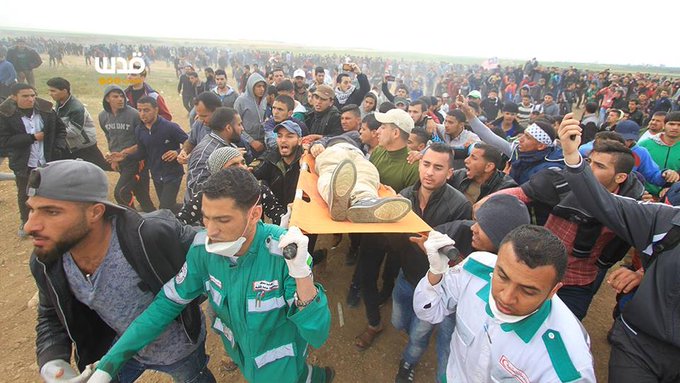
Israeli forces physically tried to prevent medics from treating injured Palestinians


Israeli forces physically tried to prevent medics from treating injured Palestinian demonstrators near the illegal settlement of Beit El in the occupied West Bank yesterday.

.


Israeli forces shoot unarmed protesters from across Gaza security fence, killing at least 15


We are closely following the horrifying news from Gaza this morning. The Israeli government said it would meet Gaza protesters with live fire across the border fence and duly massed snipers on the border; and it has followed through today, killing at least nine Palestinians, according to early reports. Sadly the number keeps climbing: as of 4 PM EST, Haaretz was reporting that 15 Palestinians had been killed.
The outrage on the left is reminiscent of the Mavi Marmara onslaught in 2010, when Israeli commandos boarded a Turkish aid ship trying to reach Gaza and killed nine of the aid volunteers. Even Israel supporters are already making this comparison— to an event that brought global condemnation/diplomatic embarrassment to Israel.
The Associated Press reports 1000 Palestinians injured by tear gas inhalation and from being struck by live rounds or rubber-coated bullets. The Times of Israel reports “scattered” protests on the West Bank.
The first to be killed was a Palestinian farmer, said to be working his fields.


The human rights group B’Tselem issued an unequivocal statement of condemnation of Israeli “crime”s:
Shooting at unarmed demonstrators is illegal and any command allowing such an action is manifestly illegal. Yesterday, B’Tselem warned against relating to demonstration areas as combat zones and against shooting live fire at demonstrators. Armed soldiers and unarmed demonstrators are not “at war.” The illegal open fire regulations and the compliance with them are the reason for the number of dead and injured today in the Gaza Strip.
The protests were organized as “The Great March of Return,” a nonviolent gathering of Palestinian refugees who demand the right to return to their families’ homes inside Israel. Nearly 2 million Gazans are virtually imprisoned in the 140-square-mile strip, under blockade since 2007, after Hamas assumed political control of the area. The blockade extends to a 1000-foot “buffer zone” on the Gaza side of a fence from which Israel bars activity.
Many observers are noting the caged condition of the Palestinians. Nora Barrows Friedman of EI:
The “totally democratic” “start-up nation” once again using caged Palestinians as laboratory subjects, killing and injuring them solely because they are demanding their right to leave this concentration camp and go home
Ali Abunimah:
Yeah it’s totally normal to cage people in a sealed ghetto after ethnically cleansing them for not being Jewish and then to shoot them if they demonstrate for their right to go home. Nothing to see just a normal “democracy.”
10 demonstrators peacefully marching out of bondage already shot dead, from behind the safety of the Gaza border fence. Passover indeed.
Jewish Voice for Peace has issued a statement, saying it is “horrified” by the deadly response to a peace march, and also citing the Passover angle:
Tonight, as Jews across the world gather at the Passover seder to remember our own story as a people questing for a homeland, we honor and recognize the yearning for homeland propelling today’s Land Day protests.
Max Blumenthal:
Back in 2011, Thomas Friedman promised that an unarmed Palestinian mass march would “stimulate a real peace debate within Israel.” Today, the happened and Israeli snipers have shot 13 marchers so far.
Israeli forces HAD to shoot into a non-violent march of 20K protestors in order to have the usual pretext of violence. Journos should be asking critical questions why they used lethal force in the first place? This is about settler anxiety not self defense.
Scott Roth:
Israel knows it can get away with murder, literally. It knows that because it is never held to account for its crimes. For that reason many are morally culpable for what is happening today.
In stark contrast to The New York Times, the Washington Post just published an article on the killings that is a model of what mainstream reporting should be. The second sentence says that the Israeli army used live ammunition, killing at least ten people. The Postdescribes the Israelis as attacking the demonstrators. The writers Loveday Morris and Hazem Balousha use the word “riots” and burning tires and rock-throwing in quotation marks, thus treating the Israeli military authorities as highly-interested informants. There’s no talk about “clashes”; the article is clear about who caused the violence. They actually quote a young Gazan, something the Times failed to do.
Media critics are assailing periodicals for describing today’s action as “clashes.” “Can you pls stop referring to soldiers shooting at unarmed civilians as ‘clashes’. You’re perpetuating the idea that this is a two-sided conflict as opposed to a powerful militarised state occupying & oppressing civilians.” Nima Shirazi: “Only one side fired ALL the bullets, ALL the mortar shells, ALL the tear gas. Only one side has ALL the tanks, ALL the bombers, ALL the drones.”
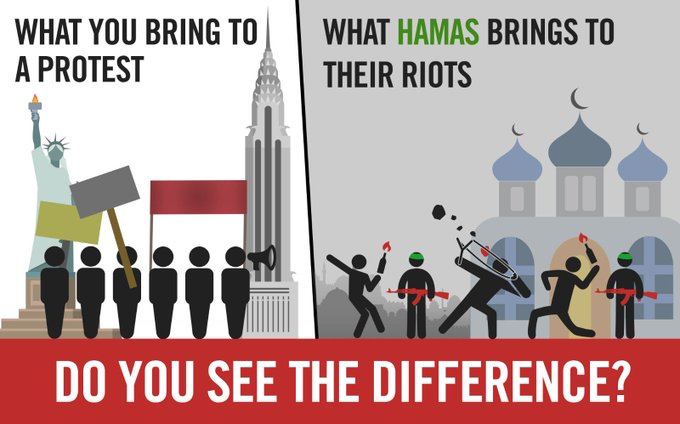
The Israeli army is seeking to stem international condemnation by characterizing the protests as “riots” and “terror.”


J Street the liberal Zionist organization has had nothing to say about the killings. Americans for Peace Now appears to be echoing the Israeli version of events: “IDF says terror groups using border protests as cover to launch attacks.”
US negotiator Jason Greenblatt is firmly taking Israel’s side. He said: “Hamas is encouraging a hostile march on the Israel-Gaza border,” he tweeted. “Hamas should focus on desperately needed improvements to the lives of Palestinians in Gaza instead of inciting violence against Israel that only increases hardship & undermines chances for peace.”


Thursday, 16 April 2015

New Zealand GCSB supports human rights abuse in Bangladesh

New Zealand Spy Data Shared With Bangladeshi Human Rights Abusers
By Ryan Gallagher and Nicky Hager


15 April, 2015


Secret documents reveal New Zealand’s electronic eavesdropping agency shared intelligence with state security agents in Bangladesh, despite authorities in the South Asian nation being implicated in torture, extrajudicial killings and other human rights abuses.


Government Communications Security Bureau, or GCSB, has conducted spying operations in Bangladesh over the past decade, according to the documents. The surveillance has been carried out in support of the U.S. government’s global counterterrorism strategy, primarily from a spy post in Bangladesh’s capital, Dhaka, and apparently facilitated by the National Security Agency and the Central Intelligence Agency.

The Bangladesh spying, revealed on Wednesday by The New Zealand Herald in collaboration with The Intercept, is outlined in secret memos and reports dated between 2003 and 2013. The files were obtained by The Intercept from NSA whistleblower Edward Snowden.

An NSA document that outlines the agency’s relationship with New Zealand, dated from April 2013, noted that “the GCSB has been the lead for the intelligence community on the Bangladesh CT [counter-terrorism] target since 2004.” The document added that the New Zealand agency had “provided unique intelligence leads that have enabled successful CT operations by Bangladesh State Intelligence Service, CIA and India over the past year.”

The specific Bangladesh “State Intelligence Service” referred to is not named in the document. Bangladesh has several agencies that focus on gathering intelligence, principally the Directorate General of Forces Intelligence, the National Security Intelligence agency and the police Special Branch. The lead agency that executes the country’s counterterrorism operations is the Rapid Action Battalion (pictured above). Each of these agencies has been accused of involvement in severe human rights abuses over a number of years.

In 2008, for instance, Human Rights Watch alleged that the Special Branch headquarters in Dhaka’s Maghbazar neighborhood was used to torture detainees. In 2009, the rights group accused the Rapid Action Battalion of extrajudicially executing hundreds of people and said acts of torture were routinely perpetrated by officials from the intelligence directorate.

In 2010, a prominent trade union organizer, Aminul Islam, alleged that the National Security Intelligence agency had tapped his phone calls, beaten him unconscious and threatened to kill him. Two years later, he was found dead in unexplained circumstances, his body showing signs of torture: His toes were broken, a sharp object had apparently been used to pierce a hole below his knee, and his body and legs were battered and bruised.

Bangladesh’s intelligence agencies and main security forces cooperate closely. Most notably, they work together as part of a notorious center called the Taskforce for Interrogation Cell, located inside a compound in northern Dhaka that is controlled by the Rapid Action Battalion unit.

In 2011, the Guardian reported that the interrogation cell was used as a place to extract information and confessions from “enemies of the state.” It was described as a “torture center” used for “deliberate and systematic” mistreatment of detainees. One British man detained there in 2009 on terrorism-related charges was allegedly hooded and strapped to a chair while a drill was driven into his right shoulder and hip.

Other torture methods used by Bangladeshi authorities, according to Human Rights Watch, have included “burning with acid, hammering of nails into toes … electric shocks, beatings on legs with iron rods, beating with batons on backs after sprinkling sand on them, ice torture, finger piercing, and mock executions.”

In February 2014, the U.S. government suspended its own support for the Rapid Action Battalion, citing “gross violation of human rights” committed by the force’s members. The same month, a case against the Bangladesh government was lodged in the International Criminal Court, accusing the country’s officials of waging a brutal campaign of “widespread or systematic” torture, killings, and other human rights abuses that amounted to crimes against humanity.

Bangladesh’s government did not respond to requests for comment on this story. The country’s officials have previously denied the abuse allegations; State Minister Asaduzzaman Khan stated last year that the government “doesn’t believe in the politics of killing and forced disappearance.”

It is unclear from any of the NSA documents whether New Zealand sought or received any assurances from Bangladesh over how intelligence it shared could be used for detentions and interrogations, or whether there was any effective oversight of how the country’s agencies ultimately used the information.

But the documents do reveal that the GCSB adopted a dual-edged approach: It shared intelligence with Bangladesh’s security agencies, and also secretly monitored the internal communications of the Rapid Action Battalion force.

A classified 2009 GCSB report contained an intercepted image of a battalion officer speaking on an internal video conference system. It said that the force “has been an active target for the GCSB in the past and this information could well be of high interest for future operations if the domestic security situation in Bangladesh were to deteriorate.”

Bangladesh has low levels of terrorist activity compared to many countries in that region. In 2014 it was 24th on the Global Terrorism Index (the United States was 30th). Concerns, as expressed in U.S. government diplomatic cables released by WikiLeaks, have mainly been that the country can be used as a transport route or temporary haven for militants active in other countries, particularly groups involved in the long-running India-Pakistan conflict in Kashmir.

New Zealand does not have a high commission or any other official building in Bangladesh in which to hide a covert listening post. The Snowden documents suggest the Dhaka unit may be located inside a U.S. diplomatic building with operations overseen by the NSA and the CIA.

The 2009 GCSB report said that the Bangladeshi surveillance was made possible through “the Dhaka F6 environment survey.” F6 is a designator used to refer to a joint CIA/NSA unit known as the Special Collection Service, which eavesdrops on communications from U.S. embassies and consulates.

The report noted that the listening post was mostly being used by the GCSB to intercept local mobile phone calls. “Site collection resources,” it said, “are in the main being used for the collection of productive GSM emitters.”

The CIA, the GCSB and the New Zealand prime minister’s office each declined to comment on the details in this story.

GCSB’s acting director, Una Jagose, said in an emailed statement that the agency “exists to protect New Zealand and New Zealanders.” She added: “We have a foreign intelligence mandate. We don’t comment on speculation about matters that may or may not be operational. Everything we do is explicitly authorised and subject to independent oversight.”

The NSA had not responded to a request for comment at time of publication.
Photo: Pavel Rahman/AP


Friday, 17 October 2014

Saudi Arabia - death by crucifiction

This is Saudi Arabia – America's great ally in bring “democracy” to Syria and other countries

Saudi Arabia Sentences Politcal Dissident To Death By Crucifiction
The death sentence against Sheikh Nimr Baqir al-Nimr is part of a campaign by the authorities in Saudi Arabia to crush all dissent, including those defending the rights of the Kingdom’s Shi’a Muslim community.

By Amnesty International

Sheikh Nemr

16 October, 2014

A death sentence passed today against a dissident Shi’a Muslim cleric in Saudi Arabia for “disobeying the ruler”, “inciting sectarian strife” and “encouraging, leading and participating in demonstrations” after a deeply flawed trial is appalling and must be immediately quashed, said Amnesty International.

The death sentence against Sheikh Nimr Baqir al-Nimr is part of a campaign by the authorities in Saudi Arabia to crush all dissent, including those defending the rights of the Kingdom’s Shi’a Muslim community,” said Said Boumedouha, Deputy Director of Amnesty International’s Middle East and North Africa Programme.

Sheikh al-Nimr’s brother, Mohammad al-Nimr, was reportedly arrested after the sentence was passed at the Specialised Criminal Court in Riyadh.

The reasons for Mohammad al-Nimr’s arrest and his whereabouts remain unknown – although it is believed he was detained after tweeting about his brother’s death sentence.

The shocking death sentence against Sheikh al-Nimr followed by the arrest of his brother in court today illustrate the lengths Saudi Arabia will go to in their quest to stop Shi’a activists from defending their rights. Sheikh al-Nimr must be released and Saudi Arabia must end its systematic discrimination and harassment of the Shi’a community,” said Said Boumedouha.

Sheikh al-Nimr, a vocal critic of the Saudi Arabian authorities’ harassment of Shi’a Muslims, was initially charged with banditry and other offences after security agents claimed he had opened fire on them when he was arrested on 8 July 2012. The sheikh was shot and wounded during the arrest.

Evidence for all the other charges he was convicted of came from religious sermons and interviews attributed to the cleric. Amnesty International’s review of these texts confirms that he was exercising his right to free expression and was not inciting violence. Some of the charges, such as disobeying the ruler, should not be offences as they criminalize the right to freedom of expression. Other charges are vague and have been used simply to punish him for his peaceful activities.

Sheikh al-Nimr’s trial has been seriously flawed. Eyewitnesses, whose testimonies were the only evidence used against him, were not brought to court to testify. This violates the country’s own laws. The Sheikh was denied the most basic means to prepare for his defence and was not represented by legal counsel for some of the proceedings because the authorities did not inform his lawyer of some dates of the hearings,” said Said Boumedouha.

Sheikh al-Nimr, who is the Imam of al-Awamiyya mosque in al-Qatif, eastern Saudi Arabia, also suffered from ill-treatment throughout his two-year detention, most of which he spent in solitary confinement in military hospitals and at the al-Ha’ir prison in Riyadh.

Access to his family and lawyers – including during interrogations — has been irregular. He was also denied surgery to remove a bullet in his back.

Treatment for his right leg, which remains paralyzed since he was shot during his arrest, has also been refused.

Saudi Arabians in the Kingdom’s predominantly Shi’a Eastern Province have been calling for reforms since before February 2011, when the “Arab Spring” uprisings swept through the Middle East and North Africa.

Saudi authorities have responded by cracking down on those suspected of taking part in or supporting protests or expressing views critical of the state.

Members of the Shi’a community have been arrested, imprisoned and harassed for holding collective prayer meetings, celebrating Shi’a religious festivals and for breaching restrictions on building mosques and religious schools.

In May and June 2014 at least five Shi’a Muslims detained in connection with the 2011 and 2012 protests were sentenced to death on trumped-up charges related to their activism.


The death sentence against Sheikh Nimr Baqir al-Nimr is part of a campaign by the authorities in Saudi Arabia to crush all dissent, including those defending the rights of the Kingdom’s Shi’a Muslim community

Saturday, 11 October 2014

Martial law in America

Public Health Emergency Declared In Connecticut Over Ebola: Civil Rights Suspended Indefinitely


10 October, 2014

We warned a week ago of the various possibilities surrounding an Ebola outbreak in America, and today we get some degree of confirmation of a medical-based martial-law coming to the USGovernor Dan Malloy has declared a Public Health Emergency in Connecticut, authorizing the "isolation of any individual reasonably believed to have been exposed to the Ebola virus."Simply put, as we noted previously, the State of Public Health Emergency allows bureaucrats to detain and force-vaccinate people without due process - despite not one single case being found in CT. If there is a major Ebola pandemic in America, all of the liberties and the freedoms that you currently enjoy would be gone.


"I hereby declare a public health emergency for the State, pursuant to the Connecticut General Statutes Section 19a-131a, for the duration of the epidemic. Specifically, in accordance with Connecticut General Statutes Section 19a-131b, I authorize the Commissioner of Public Health to Order the isolation or quarantine, under conditions prescribed by the Commissioner of Public Health, of any individual or group of individuals whom the Commissioner reasonably believes to have been exposed to, infected with, or otherwise at risk of passing the Ebola virus."


Which he defended as a precautionary and preparatory measure in the event that the state has either a confirmed infection or has confirmed that someone at risk of developing the infection is residing in the state.


We are taking this action today to ensure that we are prepared, in advance, to deal with any identified cases in which someone has been exposed to the virus or, worst case, infected,” said Governor Malloy.  “Our state’s hospitals have been preparing for it, and public health officials from the state are working around the clock to monitor the situation.  Right now, we have no reason to think that anyone in the state is infected or at risk of infection.  But it is essential to be prepared and we need to have the authorities in place that will allow us to move quickly to protect public health, if and when that becomes necessary.  Signing this order will allow us to do that.”

Translated... as we previously noted:


If there is a major Ebola pandemic in America, all of the liberties and the freedoms that you currently enjoy would be gone.  If government officials believe that you have the virus, federal law allows them to round you up and detain you "for such time and in such manner as may be reasonably necessary."  In addition, the CDC already has the authority to quarantine healthy Americans if they reasonably believe that they may become sick.  During an outbreak, the government can force you to remain isolated in your own home, or the government may forcibly take you to a treatment facility, a tent city, a sports stadium, an old military base or a camp.  You would not have any choice in the matter.  And you would be forced to endure any medical procedure mandated by the government.  That includes shots, vaccines and the drawing of blood.  During such a scenario, you can scream about your "rights" all that you want, but it won't do any good.

In case you are tempted to think that I am making this up, I want you to read what federal law actually says.  The following is 42 U.S.C. 264(d).  I have added bold for emphasis...


(1) Regulations prescribed under this section may provide for the apprehension and examination of any individual reasonably believed to be infected with a communicable disease in a qualifying stage and (A) to be moving or about to move from a State to another State; or (B) to be a probable source of infection to individuals who, while infected with such disease in a qualifying stage, will be moving from a State to another State. Such regulations may provide that if upon examination any such individual is found to be infected, he may be detained for such time and in such manner as may be reasonably necessary. For purposes of this subsection, the term “State” includes, in addition to the several States, only the District of Columbia.
(2) For purposes of this subsection, the term “qualifying stage”, with respect to a communicable disease, means that such disease—
(A) is in a communicable stage; or
(B) is in a precommunicable stage, if the disease would be likely to cause a public health emergency if transmitted to other individuals.


In addition, as I discussed above, the CDC already has the authority to isolate people that are not sick to see if they do become sick.  The following is what the CDC website says about this.


Quarantine is used to separate and restrict the movement of wellpersons who may have been exposed to a communicable disease to see if they become ill. These people may have been exposed to a disease and do not know it, or they may have the disease but do not show symptoms. Quarantine can also help limit the spread of communicable disease.

*  *  *


Governor Dannel Malloy has declared Connecticut to be in a state of public health emergency, enabling the indefinite suspension of certain civil rights. State bureaucrats have been granted the broad authority to forcibly detain suspected sick people without due process. The declaration came preemptively, as Connecticut has not yet seen a single case of the virus it purports to stop.
 
Rationalizing his actions, the governor said in a statement: “We need to have the authorities in place that will allow us to move quickly to protect public health, if and when that becomes necessary. Signing this order will allow us to do that.”
 
The recipient of most of the newly-imparted power is Jewel Mullen, Connecticut’s Commissioner of the Department of Public Health (DPH). By having this measure in place, Commissioner Mullen explained, “we don’t have to scramble in the event I need to take action.”
 
The actions that authorities might want to “scramble” to use is the forcible quarantine of citizens — without charges or trial.
 
Connecticut General Statutes Section 19a-131a spells out the powers that may be used during the state of public health emergency:
 
[While] the emergency exists [the state] may do any of the following: (1) Order the commissioner to implement all or a portion of the public health emergency response plan developed pursuant to section 19a-131g; (2) authorize the commissioner to isolate or quarantine persons in accordance with section 19a-131b; (3) order the commissioner to vaccinate persons in accordance with section 19a-131e; or (4) apply for and receive federal assistance.”
 
As noted above, the Commissioner may issue an order of mass vaccination at his or her own discretion.
 
Section 19a-131d states that any individual who refuses to comply with any portion of the order may be punished with with fines and imprisonment for up to one (1) year.
 
Fending off a police state requires constant vigilance against efforts to desecrate civil liberties. As the current scenario has shown us, a climate of fear — fear of disease, terrorism, foreign threats, etc. — makes it all-too easy to suspend constitutional rights with minimal public resistance. Many people actually feel grateful to see the government absorbing greater powers; taken with the promises of keeping them safe.
 
The state of public health emergency will remain in effect indefinitely until lifted by the governor.

*  *  *

Welcome to the new normal American police state.