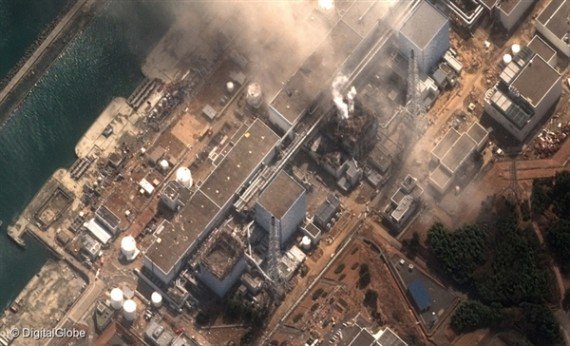
Fukushima
causes mutations & DNA damage with ‘no end in sight’ –
Greenpeace

anai
/ Reuters
4
March, 2016
Greenpeace
has released a new report outlining the environmental and health
impacts of the Fukushima nuclear disaster, and warning of long-term
consequences lasting decades to even centuries.
Stressing
there is “no end in sight” to the ecological fallout, the NGO
says the impact in a number of areas will continue, which will
include but not be limited to mutations in trees, DNA-damaged worms
and butterflies, as well as radiation-contaminated mountain water
tables.
“The
government’s massive decontamination program will have almost no
impact on reducing the ecological threat from the enormous amount of
radiation from the Fukushima nuclear disaster. Already, over 9
million cubic meters of nuclear waste are scattered over at least
113,000 locations across Fukushima prefecture,” said
Kendra Ulrich, Senior nuclear campaigner at Greenpeace Japan.
The study based
on five years of independent scientific research in addition to 25
radiological investigations by Greenpeace radiation specialists paint
a dire picture. The impact from the 2011 disaster are already
becoming apparent, the environmental group says. These are seen in
the high radiation concentrations in new leaves, and growth mutations
of fir trees and pale blue grass butterfly mutations.
Based
on scientific studies, Greenpeace also notes decreases in 57 bird
species and high levels of cesium contamination in freshwater fish.
The NGO is raising the alarm regarding the contamination of coastal
estuaries as well.
Greenpeace
warns against the government’s decision to lift a number of
evacuation orders around the Fukushima plant by March 2017. The NGO
says the International Atomic Energy Agency and the government are
operating under “deeply
flawed assumptions” when
it comes to decontamination and ecosystem risks.
“The
Abe government is perpetuating a myth that five years after the start
of the nuclear accident the situation is returning to normal. The
evidence exposes this as political rhetoric, not scientific fact. And
unfortunately for the victims, this means they are being told it is
safe to return to environments where radiation levels are often still
too high and are surrounded by heavy contamination,” Ulrich
said.
Based
on the 56-page report the environmental advocacy group believes that
around 100,000 people won’t be able to return home in the immediate
future.
“The
Japanese government should put its citizens first, the majority of
who reject the restart of nuclear reactors. Many are demanding the
only safe and clean options that can meet Japan’s needs - renewable
energy,” said
Ulrich.
Former-PM
Admits "Future Existence Of Japan Was At Stake" As
Mutations Appear In Fukushima Forest
5
March, 2016
"The
future existence of Japan as a whole was at stake," admits
Japan's prime minister at the time of the 2011 quake and tsunami,
revealing that the country
came within a "paper-thin margin" of a nuclear
disasterrequiring
the evacuation of 50 million people. Naoto Kan expressed satisfaction
at the three
TEPCO executives facing charges over negligence,
but this shocking admission comes as
AFP reports, conservation
group Greenpeace warned that "signs
of mutations in trees and DNA-damaged worms beginning to
appear,"while "vast
stocks of radiation" mean that forests cannot be decontaminated.
In
an interview with The Telegraph to
mark the fifth anniversary of the tragedy, Naoto Kan described the
panic and disarray at the highest levels of the Japanese government
as it fought to control multiple meltdowns at the crippled Fukushima
Daiichi nuclear power station.
He
said he
considered evacuating the capital, Tokyo, along with all other areas
within 160 miles of the plant, and declaring martial law. “The
future existence of Japan as a whole was at stake,” he
said. “Something on that scale, an evacuation of 50 million, it
would have been like a losing a huge war.”
Mr
Kan admitted he was frightened and said he got “no clear
information” out of Tepco, the plant’s operator. He
was “very shocked” by the performance of Nobuaki Terasaka, his
own government’s key nuclear safety adviser. “We
questioned him and he was unable to give clear responses,” he said.
“We
asked him – do you know anything about nuclear issues? And he said
no, I majored in economics.”
“When
we got the report that power had been cut and the coolant had stopped
working, that sent a shiver down my spine,” Mr Kan said. “From
March 11, when the incident happened, until the 15th, the effects [of
radioactive contamination] were expanding geographically.
"From
the 16th to the 20th we were able to halt the spread of radiation but
the margin left for us was paper-thin. If
the [fuel rods] had burnt through [in] all six reactors, that would
definitely have affected Tokyo.
“From
a very early stage I had a very high concern for Tokyo. I
was forming ideas for a Tokyo evacuation plan in my head. In the 1923
earthquake the government ordered martial law – I did think of the
possibility of having to set up such emergency law if it really came
down to it.
“We
were only able to avert a 250-kilometre (160-mile) evacuation zone
[around the plant] by a wafer-thin margin, thanks to the efforts of
people who risked their lives."
Mr
Kan said he had to retreat to an inner room after the atmosphere in
the government’s crisis management centre became “very noisy”.
He
said: “There was so little precise information coming in. It was
very difficult to make clear judgments. I don’t consider myself a
nuclear expert, but I did study physics at university.
"I
knew that even based on what little we were hearing, there was a real
possibility this could be bigger than Chernobyl. That was a terrible
disaster, but there was only one reactor there. There were six here.”
All
of these admissions of the monstrous reality are hitting just as
onservation group Greenpeace warned on Friday that the
environmental impact of the Fukushima nuclear crisis five years ago
on nearby forests is just beginning to be seen and
will remain a source of contamination for years to come.
As
the fifth anniversary of the disaster approaches, Greenpeace
said signs of mutations in trees and DNA-damaged worms were beginning
to appear, while "vast stocks of radiation" mean that
forests cannot be decontaminated. As
AFP reports,
In
a report, Greenpeace cited "apparent
increases in growth mutations of fir trees... heritable mutations in
pale blue grass butterfly populations" as well as "DNA-damaged
worms in highly contaminated areas", it
said.
The
report came as the government
intends to lift many evacuation orders in villages around the
Fukushima plant by March 2017, if
its massive decontamination effort progresses as it hopes.
For
now, only residential areas are being cleaned in the short-term, and
the worst-hit
parts of the countryside are being omitted, a
recommendation made by the International Atomic Energy Agency.
Finally,
we leave it to Kan to conclude:
"Next
time, we might not be so lucky.”
Mystery
cancers are cropping up in children in aftermath of Fukushima
4
March, 2016
The
March 2011 meltdowns at the Fukushima Daiichi Nuclear Power Plant
caused extensive human suffering—evacuations, emotional trauma and
premature deaths, disrupted jobs and schooling. What they have not
caused, so far, is radiation-related illness among the general
public, and few specialists expect dramatic increases in cancers or
other ailments. The reactors spewed just a tenth of the radiation
emitted by the Chernobyl disaster, winds blew much of that out to
sea, and evacuations were swift. Yet one wave of illness has been
linked to the disaster—the ironic result of a well-intentioned
screening program.
Months
after the disaster, Fukushima Prefecture set about examining the
thyroids of hundreds of thousands of children and teens for signs of
radiation-related cancers. The screening effort was unprecedented,
and no one knew what to expect. So when the first round of exams
started turning up thyroid abnormalities in nearly half of the kids,
of whom more than 100 were later diagnosed with thyroid cancer, a
firestorm erupted.
Related
content:
One
result, says Kenji Shibuya, a public health specialist at University
of Tokyo, was “overdiagnosis and overtreatment,” leading dozens
of children to have their thyroids removed, perhaps unnecessarily.
Activists trumpeted the findings as evidence of the dangers of
nuclear power. The large number of abnormalities appearing so soon
after the accident “would indicate that these children almost
certainly received a very high dose of thyroid radiation from inhaled
and ingested radioactive iodine,” antinuclear crusader Helen
Caldicott wrote in a post on her homepage.
Scientists
emphatically disagree. “The evidence suggests that the great
majority and perhaps all of the cases so far discovered are not due
to radiation,” says Dillwyn Williams, a thyroid cancer specialist
at University of Cambridge in the United Kingdom. In journal papers
and in a series of letters published last month in Epidemiology,
scientists have attacked the alarmist interpretations. Many
acknowledge that baseline data from noncontaminated areas were needed
from the outset and that the public should have been better educated
to understand results and, perhaps, to accept watchful waiting as an
alternative to immediate surgery. But most also say the findings hint
at a medical puzzle: Why are thyroid abnormalities so common in
children? The “surprising” results of the screening, Williams
says, show that “many more thyroid carcinomas than were previously
realized must originate in early life.”
Memories
of Chernobyl got Japanese authorities worrying about thyroid cancer.
The fallout from that April 1986 accident included radioactive
iodine, which settled across swathes of Belarus, Russia, and Ukraine,
contaminating pastures grazed by dairy cows. Children who drank the
tainted milk accumulated the radioactive iodine in their thyroids.
(Adult thyroids absorb less iodine.) A 2006 World Health Organization
(WHO) study found that in the most contaminated areas, there had been
about 5000 thyroid cancer cases among those who were under 18 at the
time of the accident, though the report noted that more cases could
emerge over time. The United Nations in 2006 attributed 15 childhood
thyroid cancer deaths to Chernobyl. Caught early, the cancer is
almost always cured by removal of the thyroid gland.
With
that in mind, Japanese authorities set out to screen
the thyroids of all 368,651 Fukushima residents who
were 18 and under at the time of the accident. Most experts were not
anticipating a bumper crop of thyroid problems. For starters, the
potential radiation exposure of Fukushima residents was slight
compared with Chernobyl victims. Moreover, the day after the
meltdowns, Japanese authorities evacuated some 150,000 people living
within 20 kilometers of the plant, and a week later they started
screening for contaminated food. In addition, Fukushima residents
were offered iodine tablets after the accident to block absorption of
any radioactive iodine that managed to find its way into the food
supply.
In
2013, WHO estimated that the 12 to 25 millisieverts (mSv) of exposure
in the first year after the accident in the hardest hit areas might
result in minuscule increases in cancer rates. (Worldwide, people
receive on average 2.4 mSv per year from background radiation; a
medical chest x-ray delivers about 0.1 mSv.) WHO noted that females
have a 0.75% lifetime risk of developing thyroid cancer; it estimated
that the highest exposures in the Fukushima area raised that risk by
an additional 0.5%.
The
initial round of thyroid screening, started in late 2011, was simply
to provide baseline data, as any radiation-induced tumors were not
expected to emerge for at least 4 years. Children with nodules larger
than 5.0 mm or cysts bigger than 20.1 mm underwent a second, more
detailed examination and, if necessary, fine needle aspiration. After
the initial screening, children will have their thyroids examined
every 2 years until age 20 and every 5 years after that.
Results
were released as screening progressed, and right from the start there
were surprisingly high rates of abnormalities. Findings from the
initial round of screening, completed in April 2015 and released in
August 2015, showed that nearly 50% of the 300,476 subjects had solid
nodules or fluid-filled cysts on their thyroids. Smaller studies
elsewhere had hinted that tiny thyroid cysts and nodules were common
in all ages. But “specialists did not know whether the frequency
[in the Fukushima results] was high or low,” says Noboru Takamura,
a radiation health scientist at the Atomic Bomb Disease Institute at
Nagasaki University in Japan.
As
the number of confirmed cancers rose, worries grew about a link to
radiation—and those concerns gained a high-profile proponent. In
2013, Toshihide Tsuda, an environmental epidemiologist at Okayama
University in Japan, started presenting analyses at international
conferences claiming the number of thyroid cancers in the Fukushima
screening was unusually high. Last October, he published his results
online in Epidemiology, concluding that the first round of screening
indicated cancer incidence rates ranging from 0 to 605 cases per
million kids, depending on location, but overall “an approximately
30-fold increase” over the normal childhood cancer rate. That claim
fed alarming headlines.
Other
scientists were swift and severe in their criticism. A fundamental
error, according to several epidemiologists, is that Tsuda compared
the results of the Fukushima survey, which used advanced ultrasound
devices that detect otherwise unnoticeable growths, with the roughly
three cases of thyroid cancer per million found by traditional
clinical examinations of patients who have lumps or symptoms. “It
is inappropriate to compare the data from the Fukushima screening
program with cancer registry data from the rest of Japan where there
is, in general, no such large-scale screening,” Richard Wakeford,
an epidemiologist at the University of Manchester in the United
Kingdom, wrote on behalf of 11 members of a WHO expert working group
on Fukushima health consequences. Theirs was one of seven letters to
Epidemiology published online last month that blasted Tsuda’s
methodology and conclusions.
To
see what comparable screening would find in a population not exposed
to radiation, Takamura’s team used the Fukushima survey protocol to
examine 4365 children aged 3 to 18 from three widely separated
prefectures. They found similar numbers of nodules and cysts and one
cancer, for a prevalence of 230 cancers per million people, as they
reported in Scientific Reports in March 2015. Other Japanese
studies reported thyroid cancer rates of 300, 350, and even 1300 per
million. “The prevalence of thyroid cancer detected by advanced
ultrasound techniques in other areas of Japan does not differ
meaningfully from that in Fukushima Prefecture,” Takamura wrote in
Epidemiology. In a letter to Epidemiology, Tsuda claims to have
addressed the screening effect by adjusting the number of cancer
cases to account for the lag time between when an ultrasound
examination would catch the cancers and when they could be clinically
identified. He did not address other criticisms or respond to
repeated requests for comment from Science.
Although
many scientists disagree with the spin Tsuda and activists have put
on the findings, they endorse the screening effort. “A thyroid
screening program would be expected to save lives by detecting
cancers early, whether or not the cancers were caused by
radioactivity,” says Timothy Jorgensen, a radiation health
physicist at Georgetown University in Washington, D.C.
Yet
it has become clear the public and even many doctors did not have the
background to put the results in perspective. Even though the vast
majority of thyroid abnormalities are safe to ignore, “finding
small lesions causes patients anxiety,” says Seiji Yasumura, vice
director of the Fukushima Prefecture Health Management Survey.
Virtually all of those diagnosed with thyroid cancer have had the
glands removed, even though accumulating evidence suggests in many
cases it might have been better to wait, the University of Tokyo’s
Shibuya adds. “Careful observation would be the best option.”
South
Korea offers a cautionary tale. In 1999, the South Korean government
initiated a health program in which care providers offered ultrasound
thyroid screening for a small additional fee—and thyroid cancer
diagnoses exploded.
In 2011, the rate of thyroid cancer diagnosis was
15 times what it was in 1993, yet there was no change in thyroid
cancer mortality, Heyong Sik Ahn of Korea University in Seoul and
colleagues reported in The New England Journal of Medicine in
November 2014. Virtually all those diagnosed underwent total or
partial thyroid removal. Most required lifelong thyroid-hormone
replacement therapy. To stem this “epidemic,” Ahn and others
discourage routine thyroid cancer screening.
Williams
says the evidence suggests that thyroid growths among children are
far more common than previously thought and must be considered
normal. The Fukushima survey, he says, promises a “better
understanding of the origins and development” of such growths and
may lead to better treatment protocols

 Posts
Posts




 Greenpeace Japan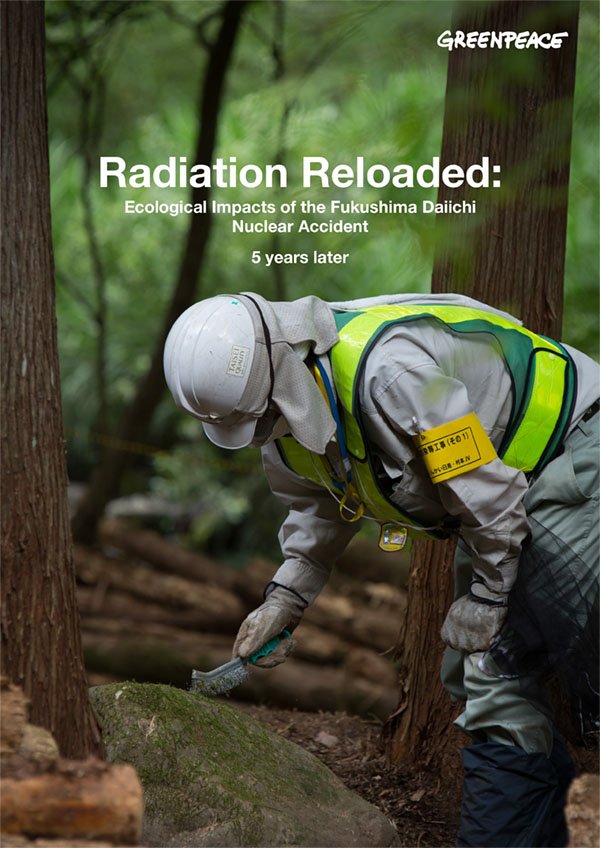


 Greenpeace