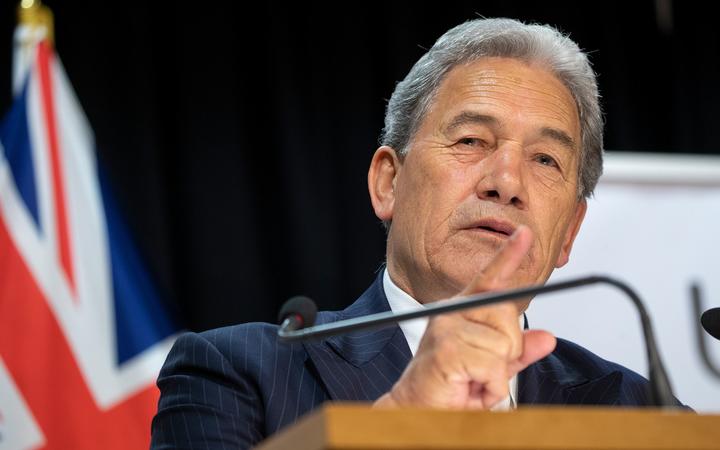
Showing posts with label Winston Peters. Show all posts

Monday, 19 October 2020

An elected dictatorship in New Zealand

New Zealand had an election in the weekend with predictable results, determined in my mind by fear, delusion and a hope for deliverance from a pandemic that has had minimal impact apart from destroying an economy that was already in deep trouble. I discuss the huge government debt and other issues which, taken together, indicate that New Zealanders are in for hard times ahead.

For the first time since New Zealand introduced proportional representation we have a situation (for the first time since the mid-1990's where a party can rule on its own - effectively, an elected dictatorship.

Deconstructing the results of 

the New Zealand election


This last weekend saw an election in New Zealand. The results of the elections was easily foreseen. It was no shock. 


And the population, driven by fear and gratitude for being delivered from what is a COVID-19 Plandemic. 


People are so grateful – we seem to have even found a solution to the common cold and flu by getting people to wear masks and hideaway. 


It’s just a pity that it cost the economy and many other aspects of our national life and to get this wondrous result. 


I have been far more interested – and concerned by – events as they are unfolding in the United States at the moment. I was so interested in the election results as they were coming in they went to bed I’m at my usual time, which is about 8 pm.

I am so disenchanted with New Zealand politics that I was not going to vote at all I but I based on the scurrilous campaign against a small party that opposes government policies on the pandemic lockdown as well is its New World Order policies and cuddling up to China that I did get out to vote and voted for the party that got 20,000 votes Despite having 70,000 people listed and  59,000 regular financial donations


I am not going to say that this was a rigged election and some on social media have suggested but there is certainly some glaring irregularities.


There were two things that happened in the days leading up to the election. 


The first was that a day or so before Saturday’s election Facebook took down Advance NZ (that’s Billy te Kahikas party). Given the perfect timing And the riddle of the results I find it hard to say that this is a coincidence and FB just “chose” that moment to strike.


Nothing of course can be proven but it is highly suspicious and I have heard rumours that I have been unable to confirm, that the debt-ridden government gave $53 million to Facebook (to Facebook!).


What if that is true? The NZ GOVT being able to rely on the social media giant to come to the rescue and remove the presence of a highly inconvenient party that got under the govt’s skin.


https://news.yahoo.com/conspiracy-driven-bluesman-bombs-zealand-231517459.html?guccounter=1&guce_referrer=aHR0cHM6Ly9kdWNrZHVja2dvLmNvbS8&guce_referrer_sig=AQAAAFg19lahbjLMkCSW6dIGNA-OU4CegLoMApitZuuT-GoFXL9RfE8BPuChoZ4kOUfGuGB9KPTTJIMlsI_0BvIno3kA-7rrtJKeFVqFTsEQeafr6gIwwrZNSD4j6BLoSIG_dgKfp8jtzs22If6XZ1fTFTlOlxfcmT_bvI6lk3P8u8oJ

The second involves Winston Peters, who the public has been taught to hate.


In the days leading up to the election a case being brought to the serious fraud office about the New Zealand first foundation, connected to Winston Peters, its leader who was largely instrumental in keeping the government in power as well as providing a check and perhaps even counterweight to the other left-wing parties - Labour and the Greens.


I am unaware of the details but this has happened when governments have wanted to rid themselves of an inconvenient presence.


I have watched while since the election Winston Peters, who is our most senior politician and I would say senior statesman has been almost disrespected and certainly not given the accolades that I think due to him.


He is the only politician across-the-board who has ever talked about the astronomical debt levels and the travel our Economy is in.


Peters has been the only one to have pointed out that this economic crisis preceded, but was made much worse by  the Covid crisis.


I have felt more and more like an internal exile on a distant and isolated island because I am surrounded by such denial that there is a serious problem. 


Everyone thinks Jacinda has made such a fantastic job.


Just have another look at the debt levels.


I did a quick back of envelope calculation. 


NZ’s govt debt (who knows what private debt levels are) at 96 billion dollars is huge. 


The US govt debt that we can agree, is through the ceiling is 279 times that of NZ while it’s population acc to my calculations is a full 687 times that of NZ.


Houston, we have a problem


And yet, there is almost total denial across the board. Why not just keep borrowing into infinity and doubling the money supply when there is almost nothing in the economy to even start to pay it off.


I don’t know off hand what tourism’s share in our export earnings but it has dried up.


There is practically no real economy left.


And then there is this.


Jacinda Adern has pledged $65 m for arts and culture

And yet the pickers who come from the Pacific islands every year to pick out fruits and vegetables have been refused entry into NZ.

Given that our traditional trading partners are in their own deep shit I suppose the answer is to cuddle up to China, even more than we have in the past.


And I am not the only one to say it.


I did pick up a couple of interesting little things from the coverage I did hear on election night.


The first is from Jim Bolger who was the last PM of the old school, in the 1990’s.


He, it seems to me, I’d worried about the right thing


And our own ex PM, Helen Clark who, I suspect, might be eying up a vacancy for the Sec Gen’s job when it becomes vacant said something that it would be hard to see as anything other than CODE for the Great Reset, so beloved of the World Economic Forum.


Wednesday, 29 April 2020

Winston Peters: Govt refused advice to seal border


Winston Peters back on his 


podium with Covid-19 


border closure bombshell


RNZ,
29 April, 2020

Foreign Minister Winston Peters has clearly been missing his time in the spotlight, using a speech today to drop a bombshell about Cabinet's decision to close the border - generating headline news and more controversy for the coalition government.
No caption
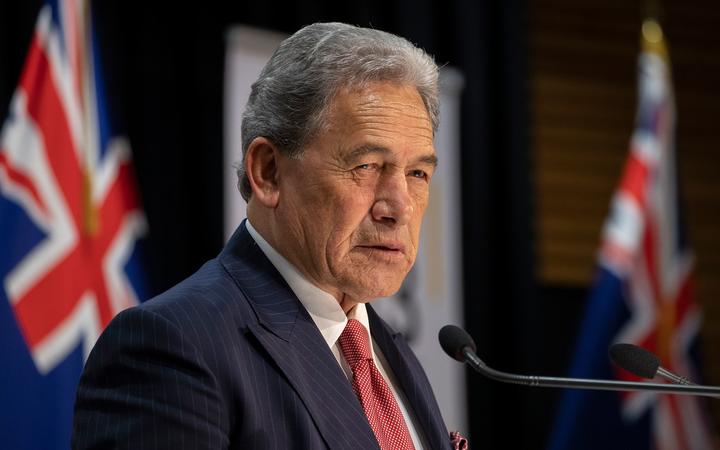
Winston Peters. Photo: Pool / NZME
The speech, delivered on his second day back at Parliament, was used to defend criticisms of the Covid-19 response that have clearly stung, and to heap praise on ministry officials.
Dropped in the middle of all of this was the fascinating revelation that health officials had pushed "strongly" to completely shut the border - including to New Zealand citizens and permanent residents.
It was a recommendation Cabinet ministers rejected with Peters saying it was "inconceivable that we [would] ever turn our backs on our own".
How hard did officials push? "Real strong," he said.
But he was not critical of their recommendation saying it was consistent with a health-focused approach and in line with the government's own call to "go hard and go early".
Peters also explained the international consequences of taking such drastic action, saying countries who felt New Zealanders had been abandoned by their own government would "shut down trade access ... and never forgive us".
That also created a need to give assurances to other nations their people would be able to leave New Zealand to return home amid the chaos of a global shutdown.
New Zealanders trapped overseas would have had a "right to think their country had forsaken them," he said, if ministers had accepted the health officials' advice.
But Peters took a jab at those who've complained about the cost of mercy flights arranged by the government.
"How many climbed off the plane and said 'the first thing I want to do is thank the New Zealand taxpayer'? I think many more should have got off the plane and said 'thank God to my country and the New Zealand taxpayer'."
Cabinet decisions can sometimes be dissected after the fact with the release of official papers but it is unusual for a minister to proactively offer such details, and about such a controversial consideration.
Except when it suits their own political purposes and they are twofold for Peters.
The first was to rebut criticisms the government had been captured by health advice, the second to give him a much-needed dose of media attention after weeks of being shut up at home.
He's been doing plenty of interviews from his home base, including with Australian outlets, but seemed to relish being back behind the podium at the Beehive as he answered questions in a pretty frank way, by foreign affairs standards.
No caption
Photo: Pool / NZME
All political parties are getting antsy about the incredible amount of exposure Prime Minister (and Labour Party leader) Jacinda Ardern continues to get day after day with the September election still high on their minds. That's not just the opposition but also Labour's partners the Greens and New Zealand First.
The Greens have been starting to put out media releases piggybacking off government announcements and expect to see New Zealand First ministers start to assert themselves in a much more combative way - especially once the May Budget is out of the way.
There's been a huge effort by the Ministry of Foreign Affairs not only to get 45,000 foreign nationals home in the middle of a nationwide lockdown but also to repatriate the tens of thousands of New Zealanders who found themselves stranded as borders shut down and transit routes dwindled.
Peters isn't known for lavishing praise on public servants but his words about the ministry show how impressed he's been with its work.
To date, the government response has been a success in health terms but the devastation wrought on the economy will be a long-lasting consequence.
Making sure trade continues to flow between New Zealand and its traditional partners is already a top priority for Peters and Trade Minister David Parker.
New Zealanders are also looking towards the time when they can start travelling beyond their own borders, but that's unlikely to be any time soon.
It makes sense for the focus to be on New Zealand's immediate neighbourhood: there are long and strong relationships, practical advantages of proximity, and the fact countries like Singapore, Taiwan and Korea have had varying degrees of success containing the virus.
Creating a "trans-Tasman" bubble has already captured the imagination both here and over the ditch, but that would only happen if both countries could be confident it could be done safely.
The Pacific will have to be approached differently - it's so far managed to protect itself against the worst ravages of the virus and all involved would be reluctant to start any tourism or other commerce that could risk any outbreak.
Further afield, Peters supports calls for an independent investigation into the origins of the Covid-19 outbreak being led by Australia; a position that could challenge key trading partner China.
China's ambassador to Australia has warned there could be a consumer backlash against that country as a result, in both tourism and export sales.
Peters said he was not worried about any similar repercussions for New Zealand because of personal assurances given to him.
"The Chinese at the very highest level have promised me over the years...that they don't behave that way, and I take them at their word."

Thursday, 25 January 2018

NZ Labour government to sign TPP Agreement

Donald Trump may have removed the US from the TPP as one of the few truly anti-globalist moves he has made. New Zealand, desptie public pronouncements is just as wedded to neo-liberalism and the globalist agenda as ever.

A TPP without the United States? Who would ever have thought?

Kelsey: Labour has shown a lack of political backbone on so-called ‘progressive’ TPPA


25 January, 2018

If it signs the latest version of this controversial deal, Jacinda Ardern’s government can hardly expect people to take the promise of a progressive new model for New Zealand’s international trading relations seriously, argues leading TPPA critic Jane Kelsey.


The on-again, off-again Trans-Pacific Partnership Agreement (TPPA) is reportedly a done deal, again. Exactly one year after the Trump administration withdrew the US from the original agreement, trade officials from the remaining 11 countries reached consensus on a revised TPPA-11 in Japan. The rebranded Comprehensive and Progressive Agreement on Trans-Pacific Partnership is due to be signed in Chile on 8 March.

Back in 2017 Labour’s dissent to the majority select committee report on the TPPA said it “will have ramifications for generations of New Zealanders. For their sake, we should not so lightly enter into an agreement which may exacerbate long-term challenges for our economy, workforce, and society.”

What has changed? Overall, very little. Former trade minister Tim Groser said New Zealand had to swallow a number of dead rats to conclude the original agreement. A number of those rats are in hibernation under the TPPA-11, but none have been euthanised.

To be fair, the Labour-led government was handed a poison chalice. National excluded the opposition parties from information about the negotiations, leaving them dependent on leaks like everyone else. It expected – and senior Labour officials had hoped – the agreement would have been in force before the 2017 election.

Following a truncated treaty examination process, Labour, New Zealand First and the Greens all wrote dissents to the select committee report, criticising the secrecy of the TPPA process and saying they would not support its ratification. All criticised the economics of the deal, with Labour endorsing calls for a robust economic assessment that included the impact on employment and wage distribution, along with a health impact study. All three objected to the constraints on regulating foreign investment and the controversial investor-state dispute settlement process (ISDS). Only the Greens remain true to that position today.

Within two weeks of taking office, the new government attended the “final” round of renegotiations before ministers met in Vietnam in December to finalise the revised deal, based on wish-lists tabled by each country. I understand New Zealand never tabled one, but I have made an Official Information Act request to confirm this.

The government did try to get some last-minute changes, including side-letters from the other parties promising not to apply ISDS to New Zealand. Most said “no”. Labour then claimed the already-existing side letter with Australia and some other safeguards as its own achievements, along with the consensus decisions to suspend some provisions pending re-entry by the US. Prime Minister Ardern and Trade Minister Parker then set about selling the same TPPA as “progressive” and in New Zealand’s best interests.

There were some short-term gains. The suspended provisions include some of the toxic provisions that would have impacted on Pharmac’s process and its leverage to reduce the monopoly price of new generation medicines. The extension of copyright term to life plus 70 years had been estimated to cost an average $55m a year. Most of the other “gains” are marginal or illusory. And the legal risks still exist, some active, some dormant (forget the idea the US might be required to agree to abandon some of them as a condition of re-entry).

The obsessive secrecy that has shielded governments from accountability over seven years of TPPA negotiations continues. According to Japanese officials the final TPPA-11 text won’t be revealed until after it is signed, despite David Parker saying earlier that he wanted it released as soon as possible. Parker responded to an OIA request, confirming the original secrecy pact to withhold all negotiating documents for four years after the TPPA came into force, even though this is supposedly a different agreement.

What should a Labour-led government have done differently? First, it should have commissioned the revised independent economic assessment and health impact analyses it called for in opposition. Second, it should have shown a political backbone, like the Canadian government that also inherited the deal. Canada played hardball and successful demanded side-letters to alter its obligations relating to investment and auto-parts. Not great, but something. New Zealand should have demanded similar side-letters excluding it from ISDS as a pre-requisite for continued participation. Third, it should have sought the suspension of the UPOV 1991 obligation, which has serious Treaty implications, and engaged with Māori to strengthen the Treaty of Waitangi exception, as the Waitangi Tribunal advised. Fourth, it should have withdrawn its agreement to the secrecy pact.

None of that happened. So what now? The government could still do all the above, but both Labour and NZ First lack the political will. Instead, we’ll have domestic political fight with two parties that previously opposed ratification.

The priority for me is to break through the information deficit and reiterate the long-term costs of the deal, versus the minimal gains for low quality exports of beef and dairy.

The most crucial area of the TPPA that has not received enough attention is the novel chapter on electronic commerce – basically, a set of rules that will cement the oligopoly of Big Tech for the indefinite future, allowing them to hold data offshore subject to the privacy and security laws of the country hosting the server, or not to disclose source codes, preventing effective scrutiny of anti-competitive or discriminatory practices. Other rules say offshore service providers don’t need to have a presence inside the country, thus undermining tax, consumer protection and labour laws, and governments can’t require locally established firms to use local content or services.

I asked technology minister Clare Curran in an OIA request for analysis provided to her on the e-commerce chapter. She says that information doesn’t exist. I have made the same request to David Parker. When I asked him to release the legal analysis of the chapter, he indicated he was unlikely to disclose any advice that discussed grey areas. Hopefully he has changed his mind. Otherwise, crucially important commitments will be adopted without the government receiving contestable advice on the implications. The legal risks extend beyond the TPPA-11. Similar e-commerce texts are proposed for virtually all other mega-agreements, and New Zealand has supported moves to negotiate them in the WTO.

The government’s endorsement of the TPPA-11 also raises questions about future trade strategy. The National government’s “Trade Policy Refresh” saw it adopt a goal of free trade agreements covering 90% of New Zealand goods exports by 2030. Parker rejects this “notches on the belt” approach and promises a new “inclusive and progressive” approach to trade negotiations that addresses gender, labour, indigenous rights, environment, small and medium enterprises and climate change. He held a rushed round of consultations in early December – after Labour endorsed the TPPA-11 decision in Vietnam – promising more early this year.

Parker has endorsed the Canadian approach, which involves clip-ons to the standard agreements, without changing rules that have negative systemic impacts on those constituencies and issues. One example was the statement on “trade and gender empowerment” adopted by ministers, including New Zealand’s, at the recent WTO ministerial in Argentina. Within 24 hours over 160 women’s groups internationally had dismissed it as an exercise in “pink-washing” that sought to “mainstream women into a polluted stream”.


Labour knows it has to do better, but I don’t think it knows how, especially if it has to get other negotiating partners on board. It also knows that it can’t expect people to take the promise of a progressive new model for New Zealand’s international trading relations seriously if it signs and ratifies the TPPA-11.


Winston Peters defends TPP flip

Winston Peters


New Zealand First leader and Foreign Minister Winston Peters is defending his party's switch to support the newly negotiated TPP, saying enough changes have been made to the deal to allay their concerns.


After a breakthrough at talks in Japan in recent days, 11 countries, including New Zealand, are preparing to sign the agreement in Chile on 8 March.


Mr Peters and his party have opposed trade deals in the past, including the FTA with China while he was foreign minister, negotiated under the Labour government led by Helen Clark.


He also campaigned against the TPP, describing it at Rātana in 2016 as a "sham and a scam".


But he told Morning Report the deal has been renegotiated, since the Labour-led government took office.


"The deal is not the deal inherited, it's different ... with substantial changes with the types that the Canadians were holding out on as well, that we both have seen changes that mean we can support this deal".

The sticking point for New Zealand First had been the rules under which foreign companies can sue governments, the investor state dispute rules.


Listen to Winston Peters HERE