Showing posts with label South America. Show all posts

Monday, 1 March 2021

Pfizer wants military bases in developing countries as “guarantee” for vaccines

This excellent bit of journalism from Indian television lays bare the sort of pressure countries are being put under the accept the mRNA Pfizer vaccine.

See below for an article that has been published in mostly countries from the global south.


WHEN CORPORATIONS RULE THE WORLD

Gravitas: Pfizer's abusive vaccine deals

Pfizer wants military bases as “guarantee” for vaccines


Pfizer has become a terror. The US pharma company is reportedly asking for military bases and sovereign assets as guarantee for vaccines. WION's Palki 

Sharma has the details.


This article has appeared in several outlets, but not in mainstream news sources.


A medical worker fills a syringe with a dose of the Pfizer-BioNTech COVID-19 vaccine, Tokyo Medical Centre, February 17, 2021. Photo: Behrouz Mehri/Pool via Reuters/File Photo.

the Wire Science,

24 February, 2021

However, the government officials from Argentina and the unnamed country who spoke to the Bureau felt Pfizer’s demands went beyond those of other vaccine companies, and beyond those of Covax, an organisation created to ensure low-income countries can access vaccines, which is also requiring its members to indemnify manufacturers. This presents an additional burden for some countries because it means having to hire specialist lawyers and sometimes pass complex new legislation, so manufacturers’ liabilities can be waived – Write Madlen Davies, Rosa Furneaux, Iván Ruiz, and Jill Langlois

Pfizer has been accused of “bullying” Latin American governments in COVID-19 vaccine negotiations and has asked some countries to put up sovereign assets, such as embassy buildings and military bases, as a guarantee against the cost of any future legal cases, the Bureau of Investigative Journalism can reveal.

In the case of one country, demands made by the pharmaceutical giant led to a three-month delay in a vaccine deal being agreed. For Argentina and Brazil, no national deals were agreed at all. Any hold-up in countries receiving vaccines means more people contracting COVID-19 and potentially dying.

Officials from Argentina and the other Latin American country, which cannot be named as it has signed a confidentiality agreement with Pfizer, said the company’s negotiators demanded additional indemnity against any civil claims citizens might file if they experienced adverse effects after being inoculated. In Argentina and Brazil, Pfizer asked for sovereign assets to be put up as collateral for any future legal costs.

One official who was present in the unnamed country’s negotiations described Pfizer’s demands as “high-level bullying” and said the government felt like it was being “held to ransom” in order to access life-saving vaccines.

Campaigners are already warning of a “vaccine apartheid” in which rich Western countries may be inoculated years before poorer regions. Now, legal experts have raised concerns that Pfizer’s demands amount to an abuse of power.

“Pharmaceutical companies shouldn’t be using their power to limit life-saving vaccines in low- and middle-income countries,” said Professor Lawrence Gostin, director of the World Health Organisation’s Collaborating Centre on National and Global Health Law. “[This] seems to be exactly what they’re doing.”

Protection against liability shouldn’t be used as “the sword of Damocles hanging over the heads of desperate countries with a desperate population,” he added.

Pfizer has been in talks with more than 100 countries and supranational organisations, and has supply agreements with nine countries in Latin America and the Caribbean: Chile, Colombia, Costa Rica, Dominican Republic, Ecuador, Mexico, Panama, Peru, and Uruguay. The terms of those deals are unknown.

Pfizer told the Bureau: “Globally, we have also allocated doses to low- and lower-middle-income countries at a not-for-profit price, including an advance purchase agreement with Covax to provide up to 40 million doses in 2021. We are committed to supporting efforts aimed at providing developing countries with the same access to vaccines as the rest of the world.” It declined to comment on ongoing private negotiations.

Most governments are offering indemnity – exemption from legal liability – to the vaccine manufacturers they are buying from. This means that a citizen who suffers an adverse effect after being vaccinated can file a claim against the manufacturer and, if successful, the government would pay the compensation. In some countries people can also apply for compensation through specific structures without going to court.

This is fairly typical for vaccines administered in a pandemic. In many cases adverse effects are so rare that they do not show up in clinical trials and only become apparent once hundreds of thousands of people have received the vaccine (a 2009 H1N1 flu vaccine, for example, was eventually linked to narcolepsy). Because manufacturers have developed vaccines quickly and because they protect everyone in society, governments often agree to cover the cost of compensation.

However, the government officials from Argentina and the unnamed country who spoke to the Bureau felt Pfizer’s demands went beyond those of other vaccine companies, and beyond those of Covax, an organisation created to ensure low-income countries can access vaccines, which is also requiring its members to indemnify manufacturers. This presents an additional burden for some countries because it means having to hire specialist lawyers and sometimes pass complex new legislation, so manufacturers’ liabilities can be waived.


India is large enough to resist entities like Pfizer that they have had difficulties with in the past


Pfizer Inc has withdrawn an application for emergency-use authorisation of its COVID-19 vaccine in India that it has developed with Germany’s BioNTech, the company told the Reuters news agency on Friday.

The United States company, which was the first drugmaker to apply for emergency use authorisation of its COVID-19 vaccine in India, had a meeting with the country’s drugs regulator on Wednesday and the decision was made after that, the company said.

“Based on the deliberations at the meeting and our understanding of additional information that the regulator may need, the company has decided to withdraw its application at this time,” it said in a statement to Reuters.

“Pfizer will continue to engage with the authority and re-submit its approval request with additional information as it becomes available in the near future.”


Meanwhile, at almost exactly the same time New Zealand announced that they had accepted the vaccine and were putting the release on fast track.

I suspect New Zealand's method of negotiation is to agree to any and every suggestion that is put to them by corporations that are bigger than them.

I remember Noam Chomsky talking about the neoliberal reforms in New Zealand: the only difference with the rest of the world was that it did it VOLUNTARILY, and ahead of most of the rest of the world.  Chile was the first.


New Zealand has given the green light to its first Covid-19 vaccine, with Medsafe announcing provisional approving for a jab from Pfizer and BioNTech that has become a cornerstone of the global immunisation effort.

The first shipments of the vaccine, which will now face no legal hurdles at the border, are expected in the country before the end of March. New Zealand has 1.5 million doses on order for the jab, which has shown 95% effectiveness in trials.

First in line for vaccination will be border workers, a group which includes all the staff in managed isolation facilities, their families, as well as airline staff. This relatively small group is expected to be fully vaccinated within two to three weeks.


Monday, 22 June 2020

A biblical plague of locusts in ARGENTINA and PARAGUAY

We are seeing plagues pf locusts in Africa, India, Pakistan and China.

Now, we are seeing them in South America.  (They are in parts of Russia as well).

Apocalyptic Locust Plague 
Invades Argentina as 
Millions of Flying Insects Fill 
the Skies

20 June, 2020


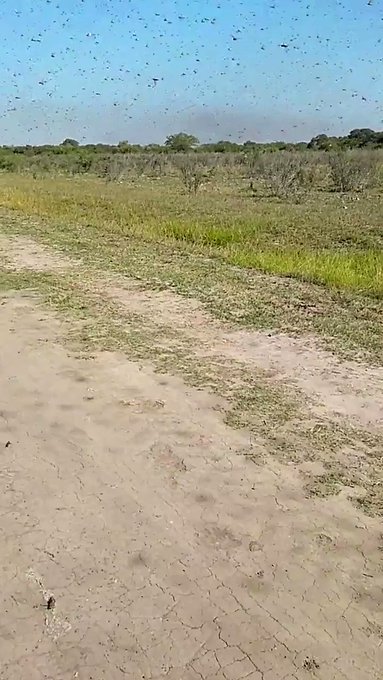
Argentina is being invaded by a locust plague of biblical proportions, devouring everything on its path.
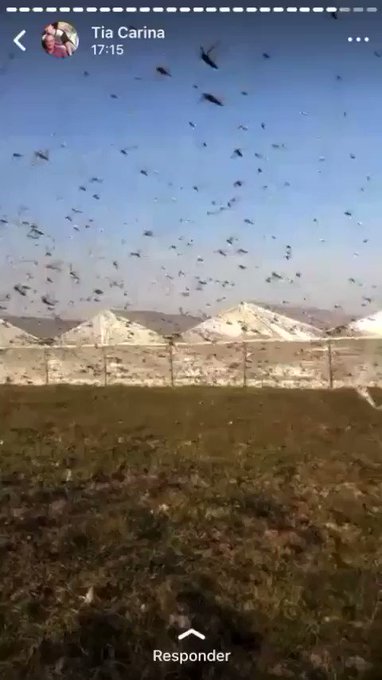
The biblical swarm of more than 40 millions of locusts has crossed from neighbouring Paraguay and is currently sweeping through the northern region of Argentina.
The short-horned grasshoppers have affected farms in the commune of Lanteri located in the northern Argentine province of Santa Fe after crossing from neighbouring Paraguay.
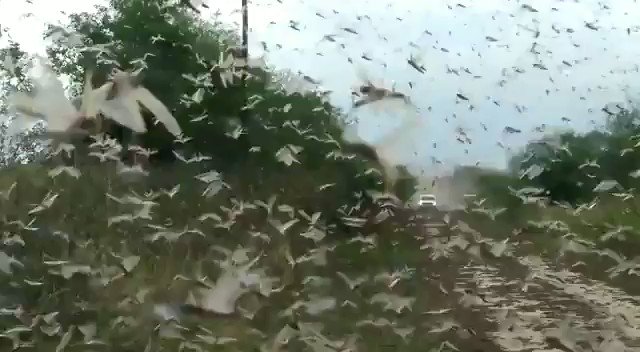
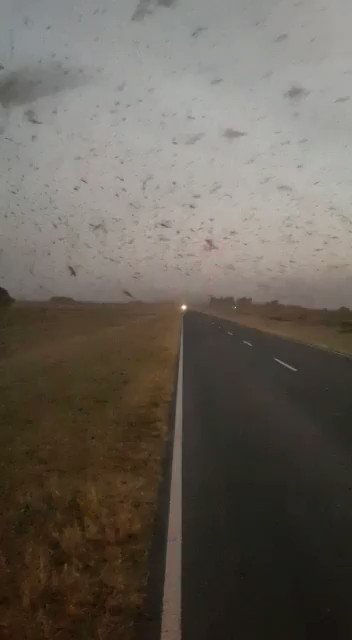
Videos taken by local residents show the terrifying scene as the insects completely block out the driver’s view on the road.

Plaga de langostas llega a Argentina: comen como 350.000 personas

Los voraces insectos provienen de Paraguay y tienen en alerta a los agricultores de la provincia de Formosa.

Los productos amenazados por estos insectos son los cultivos de mandioca, maíz, caña de azúcar.

Motorists had to drive carefully as thousands of locusts flew past at a low altitude, hitting their windscreens.

Another clip captures the locusts sweeping through the regions in northern Argentina.
⚠️ 🦗
Equipos dieron apoyo a los productores del paraje El Algarrobal, del distrito de Lanteri, que realizaron acciones para disminuir la población de la manga de langostas.

Lanteri community president Pipo Garcia told local media that the swarm is “astonishing” and that he has never seen anything like it.
The National Service of Agri-Food Health and Quality (SENASA) said the swarm was passing through the province of Chaco on Tuesday.
The swarms have passed through the Argentine provinces of Chaco and Formosa after crossing from Paraguay, according to reports.

SENASA and several witnesses posted videos of the swarm of locusts on social media showing them filling the air over fields and roads in the region.
According to local media, they belong to a species of locust in the subfamily Cyrtacanthacridinae (Schistocerca cancellata) which have an insatiable appetite for crops of wheat, corn and oats used for cattle, but are different from the desert locust currently devastating Africa and SW Asia

Yo lo anticipe, la plaga de langostas llego a corrientes, argentina. Muy pronto en bs as.

On Wednesday morning, the locusts reportedly passed through the municipalities of Villa Ocampo and Villa Guillermina in Santa Fe, travelling at around 100 kilometres (62 miles) a day.
SENASA said this swarm is capable of devouring the same amount of crops as 2,500 people per day.

Imágenes de la llegada de nubes de langostas a Lanteri, norte de Santa Fe, buscando campos para pasar la noche.

Last month, the National Service of Vegetal Health of Paraguay informed SENASA about the presence of locusts on its border with Argentina.
Meanwhile, Africa is facing a probable third wave of locust invasion in 6 months:

Monday, 20 April 2020

Dead bodies litter the beaches as Ecuador sees explosion in fatalities from the coronavirus


"Cemeteries Simply Cannot 


Cope" As Ecuador's COVID 


Death Rate Suddenly 


Quadruples


19 April, 2020

While COVID-19 news flow from South America has been somewhat uneventful during the pandemic, one country to keep an eye on for future developments of a possible outbreak is Ecuador.
A new report via The Guardian has revealed some pretty shocking statics of a massive death surge over the last several months in one province of the country. 
On a six-week basis, starting on March 01, 10,939 people have died in Guayas province, which is well above the six-week average of 3,000 deaths, representing a near quadrupling. Most of the deaths are situated in the province's largest city, Guayaquil. 
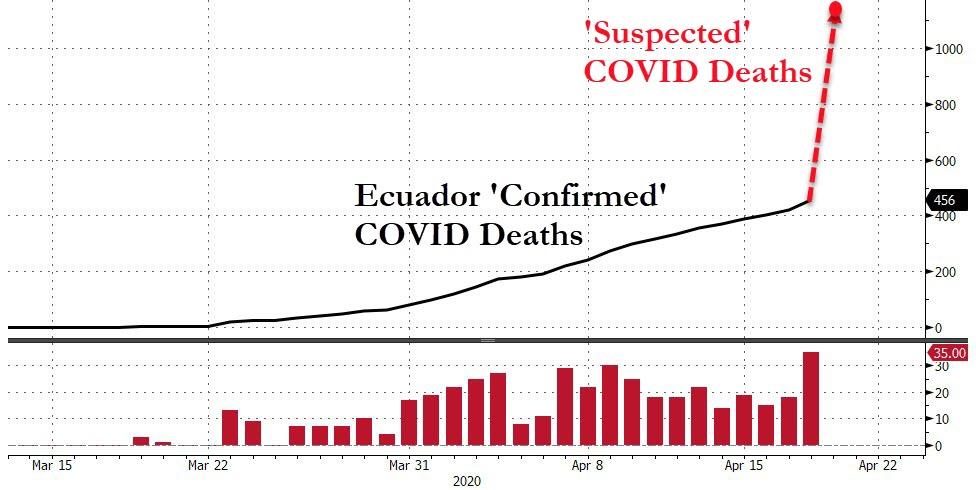
However, there is some conflicting data, considering on Sunday morning (April 18), Johns Hopkins University COVID-19 data shows a total of 9,022 confirmed cases and 456 deaths in the country.


The country's interior minister Maria Paula Romo told the Guardian that virus deaths in Ecuador are much higher than official government data is reporting. 
"The number of deaths is totally out of the ordinary," Romo told the Guardian. 
The swelling mortality in Guayaquil suggests the city's health care system is overstretched and is the reason why bodies have been dumped into the streets.
Body’s can’t get picked up because the police won’t do it the coronavirus it’s getting bad 🔞🔞⚠️⚠️😷🦠⚠️⚠️😳😳😳


Guayaquil is Ecuadors worst effected city of the virus. Many reports were share of dead corps rotting on the street and sidewalk...If you dont belive that watch this video from the city were by far the most infections in Ecuador are reported.
"We've wanted to be open about the statistics for deaths to show a more complete panorama," Romo said, adding that the full statistics would explain "why the funeral services and cemeteries simply could not cope in recent days in Guayaquil and Guayas."
VIDEO: victims in coffins and body bags, together with stretchers and soiled bedding at rear of hospital in , Ecuador’s second biggest city 🇪🇨 pic.twitter.com/pQahztMS8c
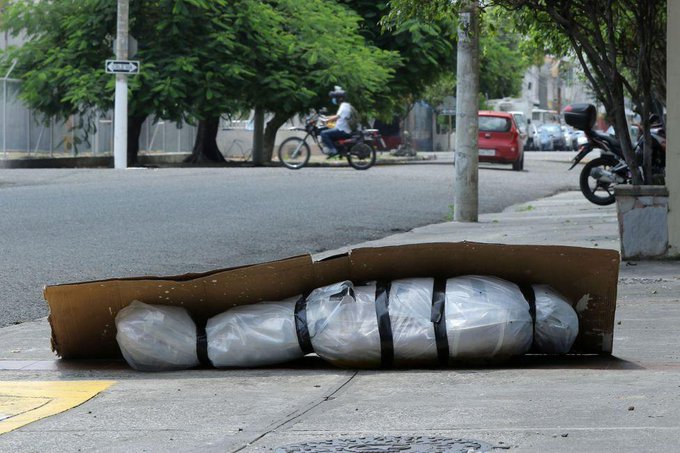
This is a street in Ecuador.
The body of a Corona victim in the style of apocalyptic movies is very tightly wrapped in nylon and duck tape and secretly left in a dark night on a non-commute pedestrian.


View image on Twitter

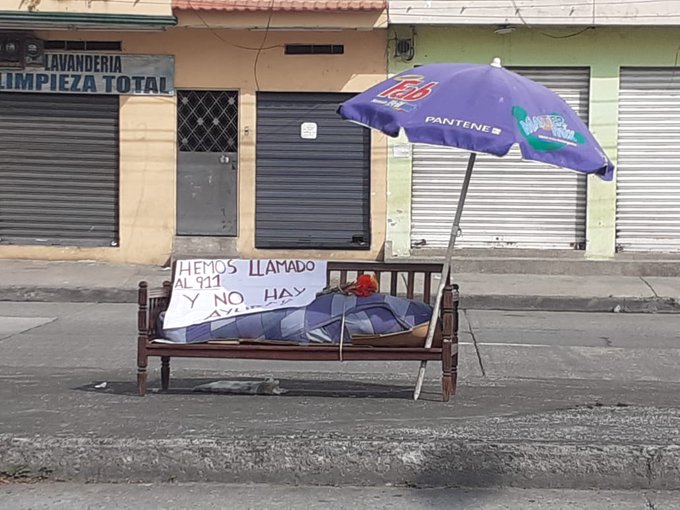
| Citizens have posted this photo on their social media accounts. A person who died from is in the middle of an avenue in Guayaquil. The banner says: "We have called 911 and there is no help!" Users insist that burial services are collapsed.


View image on Twitter
| The body of the person who died from and abandoned in the middle of an avenue in the city of was already collected by the authorities.


View image on Twitter
in : Coffins lay on streets as authorities struggle to cope with virus outbreak

DETAILS: https://on.rt.com/ae6o 
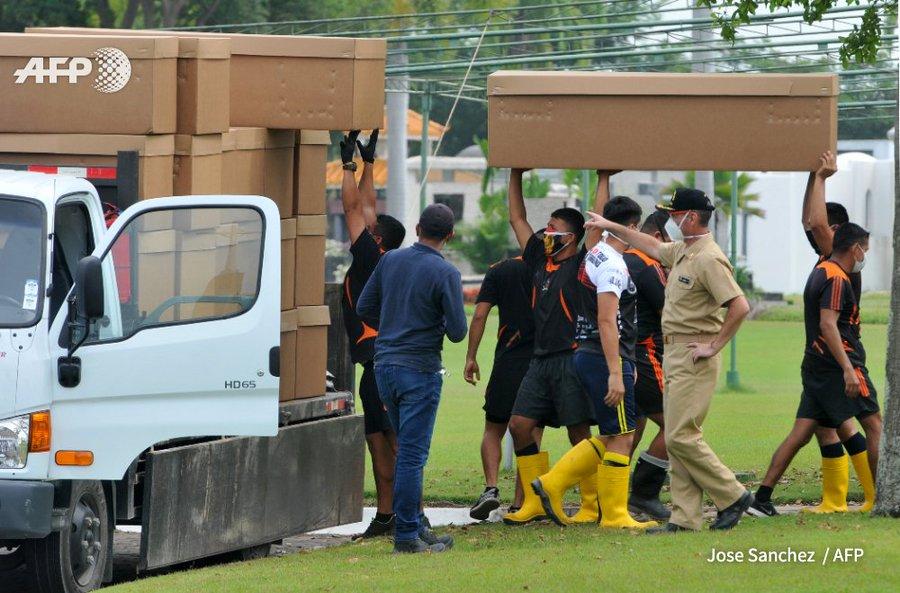
The fast-spreading virus has stunned Guayaquil officials. Government agencies have been paralyzed as corpses continue to overwhelm the hospital system. Last week, the government handed out cardboard coffins to residents who needed corpses removed from their homes. 
Despite stringent stay-at-home public health orders, the province as a whole, more specifically, Guayaquil, could be the next major hotspot of the virus outbreak in South America and should be closely monitored.