I
was fortunate to be able to catch up with Martha Lu who has just
recently moved to Brisbane, Australia from Sao Paulo.
We
discuss the tragedy of what is happening politically in Brazil, the
corruption and the denial and specifically how it relates to the
question of water for the poor people of Brazil who have been ignored
by the government, the ruling elite and by the corporation that was
responsible for destroying their lives.
Martha
devoted herself, as a photojournalist to chronicling what is
otherwise swept under the carpet and helps people to tell their story
where they would otherwise be ignored and silenced.
Martha
talks about a feeling that is so common to many of us of helplessness
in the face of tragedy of this magnitude and explains her reasons for
deciding to leave Brazil.
What
is happening to Brazil is a tragedy of gargantuan magnitude and is a
warning to us all. It is a tragedy that differs from what faces us in
the ‘developed” world only in magnitude and in its timescale –
but not in kind.
There
but by the grace of God go we.
---Seemorerocks
Focus
on Brazil
An
interview with Martha Lu from Sao Paulo
Part one
Part two
Here is the article from last year on Brazil by Robertscribbler
Martha makes reference to this.When the players at the Olympic arena were overcome by the stench of sulfa the response of the authorities was to spray perfume.
Atletas
criticam odor, e Rio-2016 cogita jogar perfume em arena de handebol
The
stench was one of the leading brands of the first day of the event-a
test of handball for the Olympic games of 2016, which will be held in
Rio de Janeiro. The preliminary competition began on Friday (29), in
the Arena of the Future, which is in the Olympic Park in Barra da
Tijuca, and will be the headquarters of the sport in the Games. After
the athletes have complained about the odor, the organizing committee
of Rio-2016 devised using perfume to disguise the environment
Swift-moving
drama has defined Brazil's political landscape in recent weeks, with
the beleaguered Dilma Rousseff government teetering
on the abyss.
Many consider attacks against her to amount to an affront to
democracy and a reversal of the hard-fought gains of the 1988
Constitution, which ushered out a brutal military dictatorship. Yet,
what lurks behind this spectacle could be far worse than a coup
d'état:
powerful political and economic forces are now moving to dismantle
the country's human rights and environmental standards, with grave
implications for the Amazon and its peoples.....[ ]
Here is an article I posted late last year by Martha Lu reporting her experiences chronicling the mining disaster at Bento Rodrigues.
We
are living in a world of ecological and human catastrophe. Events
occur, stay in the headlines and then disappear and people forget and
don’t give it another thought.
But
somewhere people’s lives have been ruined forever and they are
living with destituation, ill health – and denial.
One
of the examples of this is in Brazil and the
mining disaster
that occcured in the village of Bento Rodrigues in
November,
Much
as I’d like to do justice to everyone it is simply impossible. But
I am fortunate to have a friend in Brazil, Martha Lu who is
chronicling the drought in Sao Paulo and now, this disaster that
befell the people of Bento Rodrigues.
She
recently travelled to have a look herself, so I will leave her to
describe this in her own words:
Genocide?
Martha
Lu, Brazil
I
would like to share and ask for help. I believe that you all know
about the major mine accident here in Brazil, the one who kiiled not
only human lifes but a major river.
The
UN special rapporteur urged the Brazilian Government to secure access
to safe drinking water and sanitation for people affected by
catastrophic collapse of a tailing dam in Mariana. - See more at:
http://www.ohchr.org/EN/NewsEvents/Pages/DisplayNews.aspx
….
By
the Brazilian legislation water, to be considered for human
consumption, should have a limit of 100 UNT of turbidity. The river
has, stated by the own Brazilian government, in some points up to
20.440 http://bit.ly/1lExfZ4
.
Mineral
water is being given to the people but in a very harmful condition.
They have to wait, under the sun and 36oC temperatures, up to 8 hours
to receive some bottles. http://bit.ly/1M9Oer4
Now the Samarco Company
wants to end the distribuition.
Brazilian
Government is telling that the water is safe to consume http://bit.ly/1SVrq46
I talk to the
people, I saw whats is happening and nobody wants to talk about it.
We
do not know what is in that water, even UN asked for safe water but
did not tell what is in the water that people are getting in their
taps.
We
need to know to what people are being exposed to due the contact of
this water, we have almost a million people in that area. If they are
being exposed to something that will compromise their health and the
governmental authorities are doing nothing, this is genocide.
We
need to know the truth about the quality of the water
Look
what happened with my boot
I
am trying to get it analyzed but the reliable institute here said no
They
do not want to produce evidence against the boss
Here is Martha's report about Sao Paulo from last September
At
Least 15 Dead Amid Heavy Rains
in Sao Paulo Area
At
least 15 people died and dozens were injured amid a heavy rainstorm
in Brazil’s Sao Paulo metropolitan region, El Universal reports
citing officials.
MEXICO
CITY (Sputnik) – Four people, including a child, were killed in the
Mairipora municipality where a landslide occurred on Thursday night,
the newspaper said on Friday.
In
Francisco Morato, a suburban city in the metropolitan region of Sao
Paulo, nine people were killed by a landslide.
Two
people drowned in the city of Guarulhos.
According
to some Brazilian media, local rescue services report at least 18
deaths amid the rainstorm which has affected a total of twenty cities
in the Sao Paulo metropolitan area.
The
Sao Paulo-Guarulhos International Airport temporarily suspended
operations and several train stations stopped their activities,
according to El Universal.
(TIME)
– The biggest city in the Western hemisphere is facing its greatest
water crisis in
over 80 years —
and climate change is only part of the problem.
Millions
of residents in São Paulo, Brazil
face daily water shutoffsunless
the city manages its water better. It is not only a problem of
drought. The city of 20 million is plagued by failing infrastructure
across the city, and it has been unable to deliver the water it does
have to residents in need. Without major changes to the city’s
infrastructure and planning, commentators say the crisis is bound to
continue.
The
crisis is most acutely felt in the Periferia —
the generally poorer districts on the outskirts of the city. These
oft-neglected neighborhoods, many of which sit at higher altitudes in
the hills around the city, require more water pressure to reach their
tanks. And even on days when it is raining outside, the pipes in
the Periferia are
often dry.
On
top of it all, São Paulo has now suffered two of the driest seasons
on record, back-to-back.
The
Cantareira reservoirs, which supply water to over 9 million
residents, were operating at 12% capacity in October. The water level
has fallen so low that large parts of the surface of the reservoirs
are dried mud.
“This
is what we would call a real emergency,” said Paulo Dallari, deputy
secretary for the São Paulo mayor’s office. “The reservoirs are
much lower than they used to be. It is raining much lower than the
average. So we might have some difficult situations in the near
future.”
Dallari
is now working to expand the emergency water reserves around São
Paulo – especially in facilities like hospitals and schools, which
he points out are particularly vulnerable in situations of extreme
water shortage.
Some
neighborhoods and surrounding towns have fared worse than others. The
outlying city of Itu saw massive protests last year – sometimes
turning violent – when the city tried to cut them off from the
water network entirely.
Many
São Paulo residents have had daily 12-hour water cutoffs over the
last year. But Dallari points out that while wealthier residents have
been able to build water tanks and purchase water from private
sources, the poorest residents can’t do that.
Residents
of the indigenous Gaurani community, who live in thePeriferia town
of Itakupe, complained that the little amount of water that flows to
them is a milky, white color.
“When
there was no water the children went thirsty,” says Sonia Aramirim,
a Gaurani teacher from Itakupe. “Many of them would get dehydrated.
Some women had urinary problems from not drinking enough water.”
In
the south of the city lies the Billings reservoir, which holds 20%
more water than the Cantareira. Environmentalists point out that this
could be a better source of water for the city, but it is polluted.
Over one million people now live by its banks, but there is no proper
sewage system so waste flows into the reservoir.
“There
are two extremes: on one side a rural reservoir that has a serious
deforestation problem, on the other side an urban reservoir that has
a pollution problem,” says Marussia Whately, coordinator of Aliança
pela Água, an alliance of 30 NGO’s brought together to devise and
propose solutions to the city’s crisis. [more]
I
woke up this morning to a message from Martha Lu in Sao Paulo. Below
is what she said and the video she sent me
Update
from Sao Paulo
Things
here are not so good...it is extremely hot here...I do not believe
that we will escape...
Anyway...I
wander if you can help to spread this documentary...it is really
serious and well made...tells the truth about why we will probably
collapse...they are shooting with their own money...and need a little
help to finish it.
Besides
being the first person to be interviewed by them I also help them a
lot because I truly that it is important to tell what is going on
here.
And
in response to my question about the rainy season and whether it has
arrived
We
had rain...above avarage but the problem is that the soil was so
dry...that the income flow of water is lower than was expected
Sao
Paulo,
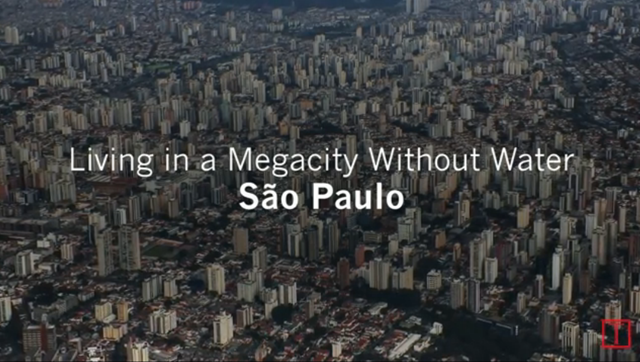
Brazil, a city of over 11 million people, may literally run out of
water. Let that really sink in for a moment. Politicians in Brazil
ignored or downplayed this crisis until it reached the calamitous
point it is at now. Instead they poured their attention and
money into the World Cup and displaced thousands of people from their
homes in the process. In recent weeks people across varying
demographics have taken to the streets to protest the gross
malfeasance of a government drunk on the lies of neoliberalism, which
Wikipedia defines as “privatization,
fiscal austerity, deregulation, free trade, and reductions in
government spending in order to enhance the role of the private
sector in the economy.”
It is also the most destructive, savage and final stage of
capitalism.
For
most of us the enormity of this catastrophe is still difficult to
grasp. But there it is right in front of us. The normalcy bias,
that almost hypnotic state of denial we often experience when faced
with disaster, appears to be ubiquitous these days. The media reports
these stories (sometimes) but there is seldom, if ever, a discussion
about the global ramifications an existential threat like this
presents for all of humanity. Sao Paulo should serve as a loud
wail of warning that the entire world has forever changed, and we are
not prepared for what lies ahead.
Herein
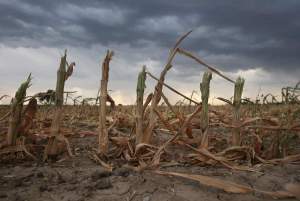
lies the lesson for all of us. As climate change accelerates
and the resources of our planet dwindle, rivers dry up, fields lay
fallow, and flood waters rise, the wealthy and powerful will do the
only thing they know how to do. They will ignore or downplay serious
environmental problems. They will build more prison walls. They
will arm their police forces with the equipment of the battlefield.
They will launch war after war of imperialistic plunder cloaked in a
veil of meaningless slogans and jingoism. They will employ racism to
divide. They will continue to dismantle civil liberties under the
guise of national security. They will instruct the media to distract
and invert the truth. And they will keep us all on a diet while they
feast on what remains.
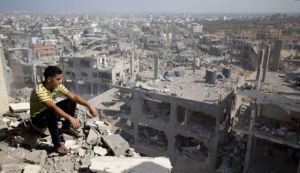
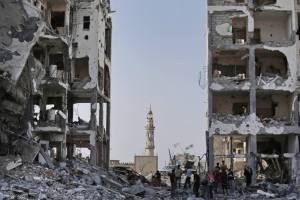
Israel’s
treatment of Gaza also provides a window into a future that all
humanity may soon know all too well. It is emblematic of a future of
militarized walls and open air prisons. Since the beginning of the
blockade in 2007 Gaza has been reduced to rubble over and over again,
the last time in the summer of 2014, in what can accurately be called
collective punishment. Food and construction materials are still
restricted. And an Israeli official spoke plainly regarding their
intentions. “The
idea,”
he said, “is
to put the Palestinians on a diet, but not to make them die of
hunger.”
After Israel repeatedly destroyed its infrastructure, Gaza may now be
out of clean drinking water as soon as 2020. The casualness of such
barbarity is staggering, especially since the population of Gaza is
over 40% children under 14 years of age.
No
matter how one views the history of this region, it should be clear
to most that Israel is far more powerful than Gaza, which is
restricted by Israel in exporting goods, and has no army, air
force or navy. In contrast, Israel is an economic powerhouse which
exports military technology and pharmaceuticals, and is the fourth
largest military power in the world in addition to possessing
nuclear weapons. It also controls Gazan airspace, restricts
travel in and out of the strip, and routinely fires on fishermen off
its coast. It is an example of neoliberal plunder being played
out with textbook precision in a Western nation. The powerful
vanquish the powerless; and the wealthy grow their wealth in
stupefying proportions in the midst of immense and imposed
poverty.
In
India, the world’s most populous democracy, neoliberalism has
carved out a landscape that magnifies wealth inequities. As in China,
river ways are polluted with industrial waste in a mad dash toward
the reward of material wealth and an inevitable descent into
dystopian misery. It is a nation that is literally on the brink of
mass migration, social collapse and extinction, but is one of the
most lauded among the neoliberal elite. Here one can see the
grotesque display of wealth sitting upon a pile of refuse being
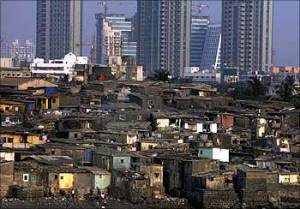
praised for its so-called progress. Mumbai is a visual aid to
understanding the end result of neoliberalism. Gilded towers
rise in supercilious impudence above fetid shanty towns of
exploitation and misery. And the wealthy have created an
insular bubble to shield them from the blight of indigence that
surrounds them. As in Israel, there is a growing reactionary
nationalism which poses unique and terrifying prospects given that it
too possesses nuclear arms.
In
truth the immoral metric of neoliberal capitalism is incapable of
preparing us for the catastrophies looming on the horizon. Its
machinery is greased by illusion, distraction and willful ignorance.
It is the reason why depression and anxiety dominate the Western
psyche. It is the most emblematic feature of a dying civilization,
medicated to numbness through drugs, alcohol, violence, political
spectacle and vacuous entertainment. It is an order that views
the powerless as either commodities for exploitation or nuisances for
disposal. The oil under the thawing Arctic or the beleaguered
rainforests of South America and the bread basket of war torn Ukraine
are all business opportunities. The damage done is calculated as
“externalities,” essentially someone else’s problem. But the
world is getting smaller and the dumping grounds are getting closer,
even to the enclaves of the privileged and powerful.
We,
as a species, have either created, permitted or have been oppressed
by the order that is threatening our collective demise in a mere blip
of geologic time. Indeed, it is this order that has already sentenced
countless species to the halls of extinction; and enslaves millions
of people around the world in sweatshop fire traps, pesticide ridden
fields and lung choking mines. But our dissent is a raft to
actualized freedom. Our ability to simply say no may be our last and
greatest action against the brutality and cruelty of our age.
It
is certain that neoliberal capitalism’s days are numbered. To wit,
regardless of its implacable hubris, it simply cannot outsmart
nature. Sao Paulo, Gaza and India provide us with some of the
best examples we have of its dystopian future. They should
serve as warnings and ignite our conscience and imagination.
But the minutes to midnight are quickening; and the ability of our
species to deny reality and delay action is staggering. It is
true that human beings have a remarkable capacity to rise from
improbable ashes, but now we are facing the greatest nemesis we have
ever encountered… ourselves. And the odds of us rising again
after this ever impending fall are getting slimmer by the second.
"I have a degree in Business but stop working to take care of my daugther...start to learn photography in the end of 2013 thinking about photographing children....but it didn't happen because of the drought.
"Since January 2014 I have been having a close look on the drought because I didn't like the way the goverment is handlng the crisis
"I started to go to the outskirts to see what is happening...because I am really concernd about the people"
Martha has provided a very compelling description of the situation.
What
she paints is a picture of impending breakdown and catastrophe as one
of the world's largest cities runs out of water.
With
regard to the latter resevoir martha wrote me:
"We
are in a pre-catastrophe situation...in 80 days we coulnd not have
water for 4 million pepole because of Sistema Alto Tietê"
She
paints a picture where the governor, local government and media are
keeping silent about the magnitude of the problem,
"I
do not know what is going to happen here...the governor is not
telling the truth to the people...the press is not telling the
truth...and we are runnig out of water very fast. "
This
will sound very familiar to most of us but if you listen to Martha is
particular dire in Brazil.
Whilst
there is some rain it is not enough to restore the resevoirs. Poor
people do not have the reяources for rain-collection tanks
and rely on very basic methods to catch rain as best they can.
It
became clear that it was the poor people that are suffering from
restrictions in their water supply and from drinking water that is
making them sick. Diarrhoea, hepatitis and dengue fever (from
mosquitoes) is rife.
Not
only Sao Paulo is affected but Rio de Janeiro, Minas Gerais,
Goias, Espirito Santo, Paraíba, Ceará states are affected - the
most developed and populated part of the country.
The
subtropical south-east should be getting the wet season in
September-October but with the developing el-Nino this looks very
much unlikely to be the case.
Flow
was lowest for the month in the Cantareira; Alto Tiete has the worst
record in history
Here are some photos of the resevoirs that were full in 2012-13.
Paraitinga Dam River-system
Jaguar Dam Cantareira-system
Dam Bridge-high tiete new system
This is how the Cantereira resevoir is supposed to look
Here are a couple of articles from Brazilian media. It is clear from the first that the Brazilian army is preparing for social breakdown. The second article is about the diseases caused by the water crisis. The translation is electronic and thus fairly ropey but the meaning should,nevertheless, be clear.
Army
simulates the occupation of Sabesp in the case of social crisis
Military
make simulation possible occupation in time of crisis
The
water crisis and social chaos in Sao Paulo enter in the concerns of
the Army
Exército
simula ocupar a Sabesp em caso de crise social
The Brazilian Army has
held on the morning of Wednesday the dependencies of Sabesp,
in the district of Pinheiros, in the West zone of São Paulo. About
70 military armed study the perimeter and the inside of the ring, "to
a possible need for occupation, in the event of a crisis,"
according to the internal report sent by the company to its
employees. The concept of "crisis" was not clarified by the
Sabesp, but staff explained to this newspaper that is known and
commented on the fear for a possible popular uprising, or intrusion
attempts on the spot, if the
water crisis that faces Sao Paulo if
it gets worse this year. The Army considers this operation in the
context of national security and qualifies the headquarters of the
Sabesp as a "strategic area".
Sabesp
informs that, the exception of the past year, this type of maneuver
has been done in other dependencies of the company and in water
treatment plants 15 years ago. Consulted by EL país, the three
ex-employees of the company with over 25 years of badge of the
company said they have never seen anything like it. The Military
Command of the south-East states that he sent a herd of 100 military
personnel to the Training in the Operations to Guarantee Law and
Order "in accordance with the normal planning of the year of
instruction" of the soldiers.
"There is no correlation
with the water crisis, today it was there, as tomorrow may be in
towers of telecommunications or electric power," said the
advisor to the Command.
At
the door of the company, two employees talked the overt presence of
the military in the local area. One of them, although it has been
warned on Tuesday, got a scare as well in the morning when you save
your lunch box in the cafeteria, where he found more than 30 men
armed with machine guns. The Army arrived at around 6am and plan to
continue the maneuvers until 19pm. The work of recognition of the
military is being carried out more discreetly, since the 25th.
The
Army had already demonstrated
his concern for
the aggravation of the water crisis and the social chaos that could
untie before prolonged cuts in the water supply. On April 28, the
Military Command of the south-East, which coordinates this operation,
held in its headquarters the first lecture with the water crisis in
the subject line. In the event, the
director of the metropolitan of Sabesp, Paulo Massato,
opened the door to the possibility of the water runs out in July, but
said that the completion of the works planned by the Sabesp can
ensure the supply until the next rainy season, in October.
The
principal of these works is the interconnection of the Dam Billings
with the Alto Tietê System, and will dump, according to the governor
Geraldo Alckmin and the president of the company Jerson Kelman, a
caster drastic – five days without water by two with – in the
neighborhoods served by the Cantareira System. Sabesp and the
Government shall ensure that, after a delay of three months, the work
should finish in September and there
will be no rotation.
Read the statement sent to employees of Sabesp
The Brazilian army performs the operation of security in the Complex Costa Carvalho
The area of Sabesp is considered strategic and action is part of preventive military activities aimed at preserving public order and the protection of people and heritage
In this Wednesday, May 27, the Military Command of the south-East of the Brazilian Army will be in the dependencies of Sabesp, in the Complex Costa Carvalho, for an operation inserted in the context of national security. This is the simulation for a possible need of occupation in a time of crisis, a time that the area of Sabesp is considered strategic.
Military personnel and vehicles should arrive soon in the early hours of the day and develop the activities of the security in the course of Wednesday without any interference in the work routine of the company. To ensure the success of the operation, the work of recognition of the ground by the officers of the Brazilian Army is being held from the 25h
During
the water crisis, cases of diarrhea multiply in São Paulo
Epidemiological
surveillance associates outbreaks of the disease in the scenario of
shortages
Durante
a crise hídrica, casos de diarreia se multiplicam em São Paulo
16
July, 2015
Via Yandex Translate
The
cases of acute diarrhoea had been an important increase in the State
of São Paulo in 2014, associated with the water crisis. The
assessment is the Centre of Epidemiological Surveillance (CVE), an
organ of the State Department of Health, linked to the Government
Geraldo Alckmin (PSDB). The centre has qualified for the 2014 as a
year of “hyper-epidemic”, after a detailed analysis, although
preliminary, of the notifications of outbreaks of the disease. The
body associates the evident increase of reported cases – almost
35.000 in a couple of weeks of February, march, and September – to
the problems of water supply that still affect the whole of the
metropolitan area and various cities in the interior. “The water
crisis opens wide issues that are not new in relation to water and
sanitation in São Paulo and in Brazil,” says the study.
In
the historical series of the six years prior to the crisis, 2008 to
2013, the State average shows that the number of cases was between
15,000 and 20,000, never exceeding 25,000. In this series, September
appears always as a month critical and registers the largest number
of annual notifications, overcoming a little more than 20,000.
The
decrease of pressure, the intermittency of supply, rationing, the
consumption of the dead volume of the dams, and the use of water from
wells and trucks, whose quality is not always inspected in accordance
with the law, are the main causes that can compromise the quality of
water and promote the emergence of outbreaks (occurrence of two or
more cases) of diarrhea and other diseases transmitted by water, as
it is pointed out the search of the CVE.
The
study identifies scenarios that are relevant as of the capital and
seven other municipalities in the interior of Campinas, sp (north),
Tambaú (northwest), Mogi das Cruzes (eastern region), Araraquara
(center), Piracicaba (northwest), São José do Rio Preto (northwest)
and São João da Boa Vista (center-east) – we have noted the
increase in attendances at concentrations much higher at certain
times of the year, which coincide with the periods most critical of
the crisis, as the end of the dry season.
In
the case of Tambaú, in the town of 23,000 inhabitants, the cases of
diarrhea have skyrocketed from less than a dozen to more than 90 from
16 August 2014, four days before the city declaring a state of
calamity due to lack of water. The number of cases did not return to
normal until November, although it was not until February of this
year the average notifications continued higher than in the same
period of 2014.
The
periods of January to April and from August to September last year
were critical in the assembly of the State. The analysis is made
based on the calls epidemiological weeks, which begin on Sunday and
end on the following Saturday. In the period from 9 to 15 February
were recorded almost 35.000 cases in the State, as well as the week
between 7 and 13 September, where the number was similar. During the
rest of the week, the index of notifications has not fallen below
15,000. The number of cases, however, can be even greater. In another
study of the type of 2005, the medical and sanitary Mary Bernadette
de Paula Eduardo, who had been on the board of the Division of
Disease Transmission by Water and Food CVE since 1999, demonstrates
that only 40% of the people who have the disease, seek the services
of health, which began to notify the care for diarrhea in 2000.
Source:
DDTHA/CVE/CCD/SES-SP (SIVEP_DDA) DC – years of 2008 to 2013
The
first conclusions of this survey were presented in may by the current
director of the Division of Disease Transmission by Water and Food
centre, Eliane Suzuki, with data collected and analyzed by the
department of public. In the intervention, made at a seminar on
safety of water for human consumption, occurred in the Faculty of
Public Health, USP, Suzuki said: “one sees clearly that the number
[of cases 2104] is larger. This shows that with the lack of water and
the consequences that this brings, 2014 was a year of
hyper-epidemic”. The presentation is available, from the minute 79,
on the site of the USP.
EL
país showed in a report of may this year that the contamination of
the plumbing, drinking water, earth or sewage, can leave an entire
street patient. The residents of Jardim Conceição, a poor
neighborhood of the city of Osasco, reported that in February of this
year, entire families showed symptoms such as vomiting and diarrhea.
“The water from the sewage mixed with the pipes,” said Nazareth,
46 years, one of the affected. “The water that came out of the
faucet had the smell of shit, and the whole street got sick”.
Sabesp said at the time that the polluted water was the earth and
that the malfunction was repaired in three days. “We do not trust
in that water, much less to give to the children,” said the young
Protagonist Days. The damage, he said, the left 15 days without
water.
In
the period from 9 to 15 February were recorded almost 35.000 cases in
the State, as well as the week between 7 and 13 September, where the
number was similar.
Other
cases were revealed by the press, before authorities act, during the
past year. In August 2014, the city of Brodowski, 339 kilometers away
from São Paulo, reported 195 cases of people with vomiting and
diarrhea in 15 days, according to the Folha de S. Paulo. The
self-Service Water and Sewer Brodowski (Saaeb) did not rule out the
possibility that people have been contaminated by water, after the
supply to be relegated to the truck. Also in August, residents of the
Redemption of the Serra, the municipality served by Sabesp to 163
kilometers from the capital, has suffered in their stomachs to dry
your reservoir and a problem in the water treatment station,
according to reports by the portal G1.
Already
in march of this year, Residents of the Garden Turquoise, in M'boi
Mirim (the south zone of São Paulo) received water with the smell of
sewage, and, according to the journal Now, at least 57 people became
ill with diarrhea, vomiting, headache or fever, after contact with
the water stinking, ink and brown in color. The newspaper brought the
liquid to a lab, which found the presence of fecal coliform bacteria
(present in stool), which makes the water unfit for consumption, even
after boiling. Sabesp has denied and said that the water met the
standards without health risk.
The
residents of Jardim Conceição, a poor neighborhood of the city of
Osasco, reported that in February of this year, entire families
showed symptoms such as vomiting and diarrhea.
Sabesp,
which was consulted by the incidence of diseases during the water
crisis in the municipalities where it operates (São Paulo, Mogi das
Cruzes and São João Boa Vista), stated by means of support of the
press that "the water distributed to the population is within
the parameters required by the Ordinance with 2,914/2011, of the
Ministry of Health". The company said that the results of the
more than 62,000 monthly tests it performs are forwarded to the
surveillance, the local health, according to the law.
The
Department of Health stated that the data of the study were used to
discuss the issue of diseases transmitted by water and food, "in
addition to helping in the preparation of the contingency plan in
relation to the scenario of drought and water crisis".
Questioned about why the population was not warned about the risks of
water-borne diseases in a scenario of water crisis, the folder stated
that "it is up to each municipality to trigger their actions, in
a decentralized manner, and to alert the population". The press
office has denied an interview with the head of the department who
did the study and evaluated after the interpretation of the report on
the same, though checked with multiple sources, "is the result
of anxiety because the study is still merely preliminary".
In
the wake of the Hepatitis A
Willkner
Eduardo Range of 21 years, and at least four more people from the
same street of Carapicuíba contracted Hepatitis A in the last 15
days. / MARTHA LU
In
addition to the diarrhoea and vomiting, the contaminated water can
also cause other more serious diseases, such as Hepatitis A, an
inflation of the liver caused by a virus, transmitted by the
ingestion of water or food contaminated with fecal matter.
In
Carapicuíba, at least five people have had Hepatitis A in the last
15 days in only two streets in the same district. They began to feel
a strong abdominal pain, fatigue, lack of appetite, and realized that
a tone yellow dyed your eyes and skin.
Luan, seven years, Rosângela,
the mother, and the young Willkner Eduardo Range, 21-year-old, were
three of the victims. “I took treatment with serum and tea to pick
a [medicinal herb] and I'm already as well, but the doctor told me
that it was the fault of the water that I had drunk and did not
return to take the faucet. The one day that I was sick, the water was
a yellow color,” says Willkner.
The
disease, however, remained stable in recent years in São Paulo and
tends to disappear thanks to a specific vaccine applied in children,
according to information of the CVE. In the past year, were reported
16 outbreaks, with up to 60 cases in the month of September. An
outbreak is considered from two cases in the same font, in the same
place and in the same time period.

 Posts