Having seen waves of extreme over-reactions to Elon Musk's take-over of Twitter - and demands for all sorts of censorship being reinstated - we have seen an armada of virtue-signaling among advertisers pulling their spending from the free-speech platform.
In a New York Times op-ed, the former head of trust and safety at Twitter, Yoel Roth, wrote Twitter under Musk's leadership is at risk of being removed from Apple and Google's app stores if they fail to follow guidelines:
"Failure to adhere to Apple's and Google's guidelines would be catastrophic, risking Twitter's expulsion from their app stores and making it more difficult for billions of potential users to get Twitter's services. This gives Apple and Google enormous power to shape the decisions Twitter makes," Roth said.
He explained, "as I departed the company, the calls from the app review teams had already begun."
...Elon Musk has just broken the news that, seemingly confirming the rumors, Apple is threatening to pull Twitter's app from its app-store... and won't say why...
Musk is not taking this lying down as one would expect, first questioning where Tim Cook hates free speech?
As it mulls kicking Elon Musk’s Twitter off the app store, it has now been revealed that Apple restricted the use of AirDrop in China, a move that harmed the organizational efforts of demonstrators protesting against the CCP’s lockdowns.....
...With Beijing now trying to contain what some are calling the most serious mass uprising since Tiananmen Square, Apple is apparently helping them to crush dissent.
Earlier this month, Apple restricted the use of AirDrop in China, which protesters had been using to evade censorship.
AirDrop allows local connections between devices, meaning it cannot be monitored or censored by local authorities.
However, Apple launched an update to the app in China that restricted usage to just 10 minutes, making it harder for protesters to communicate with other activists, as well as send messages nearby bystanders and tourists.
After Chinese health officials announced an accelerating move to vaccinate older people against Covid-19, a sign the world's second-largest economy could be reopening after disastrous zero Covid policies, a new report says the metro area around the world's largest iPhone plant is set to loosen Covid restrictions.
Bloomberg reported Foxconn's massive iPhone factory in Zhengzhou, central China, is set to ease Covid control measures.
Meanwhile, whatever the justifiable criticism of Elon Musk for his transhumanism etc. he is stirring things up at Twitter which is becoming quite a happening place. I wouldn't give you 2c for Facebook, but the addicts will defend their use to the hilt.
Elon Musk said Monday that Twitter’s internal files on the company’s “free speech suppression” will be revealed “soon,” raising expectations that light will be shed on the circumstances around Twitter’s censorship of the New York Post’s explosive story that exposed information on a laptop allegedly belonging to Hunter Biden.
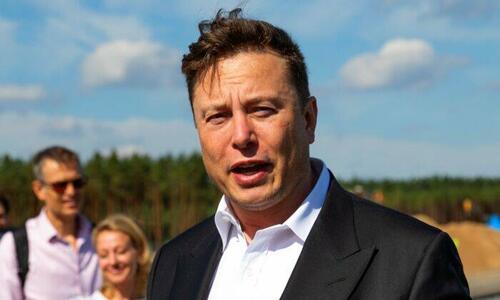
Tesla head Elon Musk talks to the press as he arrives to have a look at the construction site of the new Tesla Gigafactory near Berlin on Sept. 3, 2020. (Maja Hitij/Getty Images)
“The Twitter Files on free speech suppression soon to be published on Twitter itself. The public deserves to know what really happened …” Musk said in a post late Monday.
The Twitter Files on free speech suppression soon to be published on Twitter itself. The public deserves to know what really happened …
Twitter will no longer enforce its Covid-19 misinformation policy, under which users who deviated from prevailing establishment narratives frequently had their accounts locked or suspended.
The longstanding policy did not apply to misinformation from government officials, who regularly lied about things such as transmission, masks, vaccine efficacy, side effects, or any of the other 'science' which turned out to be patently false.
Twitter did not officially announce the change, rather, the company added a note to a page on its website outlining its Covid-19 policy.
"Effective November 23, 2022, Twitter is no longer enforcing the COVID-19 misleading information policy," reads the note, which follows a line that still reads: "As the global community faces the COVID-19 pandemic together, Twitter is helping people find reliable information, connect with others, and follow what's happening in real time."
BREAKING: Twitter has stopped enforcing it’s COVID-19 Misinformation Policy as of November 23rd pic.twitter.com/iOsQsZnZLh
Tesla and SpaceX founder Elon Musk on Friday showcased pigs with computer chips in their brains during his unveiling of Neuralink, an upcoming technology aiming to bring symbiosis between artificial intelligence and the human brain.
The live showcase involved displaying real-time neural signals from one of the pigs, whom Musk named Gertrude, CNBC reported.
Musk said the process for installing a Neuralink in a human brain would be an hourlong operation that is no more invasive than LASIK eye surgery, inserting a coin-sized device into the skull that would leave a tiny scar after the electrodes are inserted in the brain.
He likened the technology to being essentially a "Fitbit in your skull."
While the ambitious project has been under wraps since its announcement in 2016, Musk said the device could help fight memory loss, blindness and paralysis, among other medical conditions.
He added that a mainstream audience likely would not be able to use a Neuralink device electively for more than a decade.
"There will be ethical and safety issues to work through, and for a long time, it's likely that you'll have to have a real medical need to access this technology," he said.
Musk also said Friday that the technology had received "Breakthrough Device" designation from the Food and Drug Administration, according to Forbes.
While mainstream use of the device likely is years away, Musk answered several questions about its potential, saying a person could summon their self-driving car just by thinking about it.
The device has also been tested on at least 19 different animals and has a success rate of around 87 percent.
In the last several decades, and certainly in the post-9/11 environment in which the previous restrictions on the militarization of the American society largely disappeared, the US national security establishment has expand not only by creating new programs and agencies, but also by co-opting non-state actors. Many a US think-tank is now little more than an extension of some US government agency, conducting research to validate previously arrived-at conclusions in furtherance of a specific institutional agenda. Likewise many corporations have gone beyond being mere defense or intelligence contractors. Rather, their business activities are from the outset designed to be readily weaponizable, meshing seamlessly with the armed services and intelligence agencies.
It is not entirely clear how the process works, for there does not appear to be a system of contract awards for specific deliverables. Rather, it seems these capabilities are developed on the initiative of specific businesses which speculate their efforts will be utilized by the US national security establishment ever on the lookout for technological “game-changers”. Moreover, given the unchecked growth of the US national security budget, these entrepreneurs can operate in high confidence their efforts will also be financially rewarded by the intelligence and defense establishments, even if they are not commercially viable.
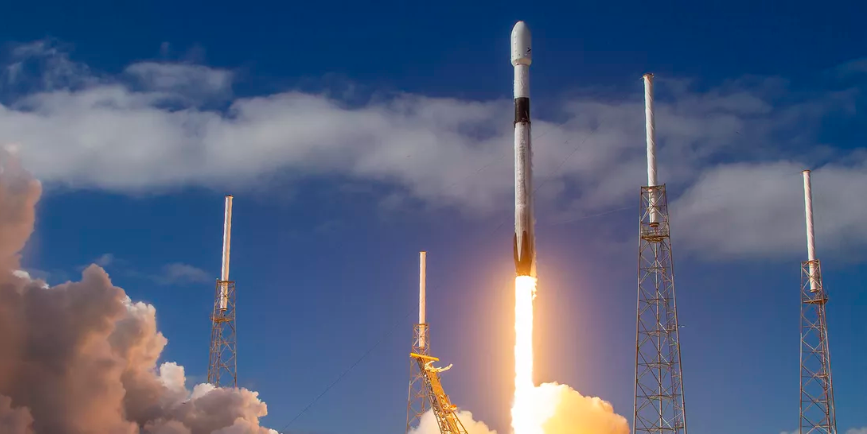
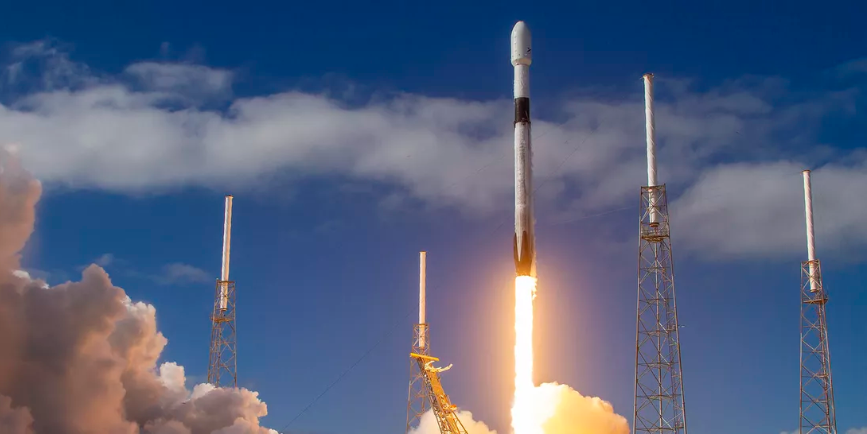
Falcon 9 launch in November 2019, which carried 60 Starlink satellites, via SpaceX.
There have been numerous examples of initially civilian applications being put to use for the benefit of US national security institutions. Facebook has made its databases available to various agencies to test facial recognition technologies, for example. Google and Amazon make their cloud capabilities available to the Pentagon and the intelligence communities. The opposition to China’s Huawei 5G networks and cell phones appears to be motivated by the concern these systems do not have backdoors installed for the benefit of US national security state.
Elon Musk’s business empire has benefited from its proximity to the US national security state. Musk, an immigrant from the Republic of South Africa, has made his initial fortune by creating PayPal. While Musk has sold his remaining interest in PayPal in 2002, that entity has since then engaged in furthering US national security agendas by blocking payments to organizations which were critical of US policies. This, however, is probably more of a reflection of the subservience of US tech firms to the US government than of Musk’s original intent.
Nevertheless, the timing of Musk’s departure from PayPal and the entry into the space business is noteworthy. Already in the late 1990s, there were rumblings in the United States about the desirability of militarizing space and building up anti-ballistic missile defenses, ostensibly against the so-called “rogue states” of North Korea and Iran. These initiatives gained considerable impetus in 2001, following the election of the Bush-Cheney administration which promptly moved to end the ABM Treaty as the first step toward the future of weaponization of space.
Space-X’s establishment in 2002, the same year the ABM Treaty collapsed due to the Bush Administration abrogation, seems entirely too convenient to be a mere coincidence, even though the stated aims of the company are mainly commercial. Still, it is easy to imagine why a firm focused on the development of low-cost, possibly reusable, space launch vehicles would be useful to the Pentagon. Creating a government program with the same objective would have attracted unnecessary attention. There would be budget appropriations battles, congressional testimony, various forms of oversight, and the inevitable domestic and international opposition to such destabilizing and provocative initiatives.
Providing Space-X with technological assistance, allowing it to hire government specialists, then giving it access to lucrative government space launch orders, is a far more attractive proposition. Moreover, the bypassing of the normal defense contracting system actually meant considerable cost savings, thanks to Musk’s red tape-cutting techniques. It's design bureau functioned in a fashion akin to Lockheed’s famous “skunk works” which developed extremely ambitious projects such as the U-2 and SR-71 in large part thanks to being able to fly “under the radar” (no pun intended). However, since that time Lockheed ballooned into a massive “too big to fail” defense contractor which delivers costly and poorly performing aircraft.
Musk’s fantasies about colonizing Mars and selling seats on orbital space flights proved a very effective cover for the corporation’s core military applications. Moreover, Space-X’s status as a private corporation allows it to defray some of the research and development costs through genuine commercial activities. Yet one has to wonder whether SpaceX success would have been as spectacular if it weren’t for privileged access to government facilities. SpaceX has been able to piggy-back on the massive US government investment in space launch facilities. It is able to operate out of not only Cape Canaveral and the Kennedy Space Center, but even from the Vandenberg Air Force Base. The speed with which SpaceX was able to develop, test, and deploy several different new rocket engine design of the Kestrel, Merlin, Raptor, and Draco families also may be due to privileged access to technologies developed for NASA and military space programs.
Even though SpaceX was founded in 2002, it won a $100 million USAF space launch contract in 2005 and the NASA Commercial Orbital Transportation Services (COTS) contract in 2006, even though the first orbital mission of the Falcon I rocket would not take place until 2008. USAF awarded another $1 billion contract to SpaceX in early 2008, even before the first Falcon I flight. SpaceX has become the de-facto research and development branch of NASA when it comes to manned spaceflight. The 2014 NASA contract for the Crew Dragon has so far resulted in one successful docking with the International Space Station, though without a crew on board, and was followed by a successful splashdown. The larger Starship reusable heavy manned spacecraft is expected to start flying in the 2020s.
Competition from United Launch Services and even Boeing notwithstanding, there is little doubt SpaceX is to US manned spaceflight what Boeing is to heavy commercial aircraft and Lockheed-Martin to “fifth-generation” fighters. It has become the primary go-to contractor of such systems for both commercial and military US government applications, with the competitors being maintained in existence with occasional contracts largely as insurance against spectacular failure of SpaceX.
SpaceX portfolio of reusable space launch vehicles, manned spacecraft, and most recently also satellites means that the company is well positioned to serve as a one-stop shopping center for the newly created branch of the US armed forces. Given the United States’ desire to weaponize space as part of its effort to undermine strategic nuclear deterrence of rival powers, namely the Russian Federation and the People’s Republic of China, there is every reason to expect SpaceX will be a recipient of considerable financial largesse from the USSF.
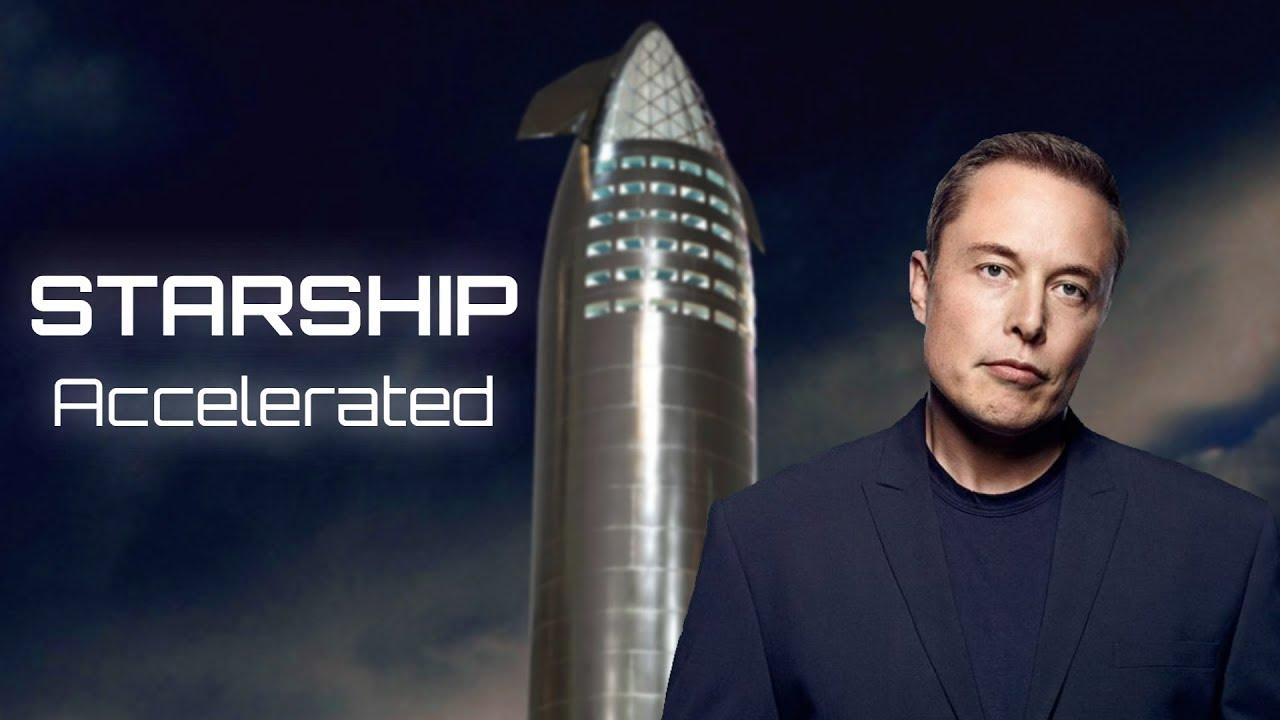
Arguably the most intriguing project SpaceX is pursuing is Starlink, a proposed network of over four thousand miniature satellites whose ostensible aim is to provide broadband internet service to the entire planet. However, the interest in Starlink demonstrated by the US military suggests that, once again, this is at the very least a dual-use project. Articles discussing the military’s interest in Starlink cite the possibility of it becoming the replacement for the aging J-STARS airborne ground target acquisition radars, suggesting these satellites’ emissions can be used to track moving land objects.. If that is indeed the case, they could also serve the role of anti-ballistic missile warning satellites, and even be used to track stealth aircraft, since the constellation of satellites would function as a massive distributed multi-static radar array.
The mad pace of SpaceX has not been without mishaps. The Crew Dragon, in particular, suffered a number of embarrassing failures, and it may yet be that the corner-cutting hell-for-leather approach the corporation may yet lead to disaster when applied to the considerably more demanding problem of manned spaceflight. Other private entrepreneurs, such as Burt Rutan’s Scaled Composites and Richard Branson’s Virgin Galactic, either suffered fatal accidents that greatly delayed their respective programs or prompted their shut-down. G_7 SpaceX, however, differs from them in that its main customer is the US government that is greatly interested in having the USSF dominate the Earth’s orbit in the same way as the USN dominates the global ocean by establishing large-scale permanent presence of US military personnel in space. The US government has gambled SpaceX will deliver products necessary for such domination. Whether it can do that still remains to be seen.
Technocrat Elon Musk will use SpaceX to launch 12,000 satellites alone. Although data has zero mass, land-based plus sky-based 5G will be teeming with constant rivers of data while blanketing humanity with questionable radiation. ⁃ TN Editor
Public attention about 5G has been focused on the plans of telecom companies to install millions of small cell towers on electric utility poles, on public buildings and schools, on bus stop shelters, in public parks, and anywhere they want in national parks and on federally owned land.
In local urban communities there would be a cell tower approximately every 500 feet along every street.
As bad as these small cell towers might seem from the standpoint of constant exposure to radio frequency (RF) radiation in close proximity to the source, perhaps an even more alarming prospect will be the beaming of millimeter length microwaves at the earth from thousands of new communication satellites.
The FCC gave approval to SpaceX on March 29, 2018, to launch 4,425 satellites into low orbit around the Earth.
The total number of satellites that is expected to be put into low and high orbit by several companies will be 20,000 satellites.
5G will use Phased Array Antennas to shoot Beams of Radiation at Cell Phones
These satellites will use the same type of phased array antennas as will be used by the ground-based 5G systems.
This means that they will send tightly focused beams of intense microwave radiation at each specific 5G device that is on the Earth and each device will send a beam of radiation back to the satellite.
Previous generations of RF cellular communication used large antennas to send a blanket of radiation in all directions. The lower frequencies they used and the broad distribution of microwaves limited the numbers of cellular devices that could connect through an individual tall tower.
The much shorter length microwaves used for 5G will make it possible to use small phased array antennas to send and receive signals.
Phased array antennas consist of clusters of hundreds of tiny antennas that work together to shoot a ray of energy at a target just like a bullet. A cluster of these tiny antennas can be arranged in a 4 inch by 4 inch matrix.
The rays of microwaves they produce will be strong enough to pass through walls and human bodies. If they were not strong enough to do this, then everyone with a 5G smartphone would have to stand outside when using the devices.
Each 5G product will also have multiple phased array antennas which will be used to create a powerful beam of radiation back to the 5G devices mounted on electrical utility poles or toward a specific satellite in space.
These beams of radiation will also need to be strong enough to pass through walls and human flesh such as a hand or head to reach the intended destination.
This means that if you are in a crowded location, such as an airport or on a train, there will be hundreds if not thousands of invisible beams of radiation flying through the environment at the speed of light.
As people move in that environment, their bodies will be penetrated by numerous beams of radiation as they walk or as other people walk around them with their 5G smartphones.
5G Phones will be much more Powerful than Previous Phones
The effective radiated power of the 5G phased array antennas in phones will be 10 times more powerful than 4G phones.
No one will be free from exposure.
In addition, 5G beams of microwave radiation will be received and transmitted from new computer equipment, household appliances, and automobiles.
Stationary equipment such as Wi-Fi hubs in homes and offices will be permitted to use microwave beams that are 15 times stronger (300 watts) than the signals from 5G phones or 150 times stronger than 4G phones.
Why is 5G so Much More Dangerous than Previous Microwave Communication Systems?
Arthur Firstenberg, author, researcher, and advocate for limiting RF exposure from the environment, explains the analysis of 5G radiation that was published in Microwave News in 2002. He stated:
When an ordinary electromagnetic field enters the body, it causes charges to move and currents to flow.
But when extremely short electromagnetic pulses enter the body [5G], something else happens: the moving charges themselves become little antennas that re-radiate the electromagnetic field and send it deeper into the body.
These re-radiated waves are called Brillouin precursors.
They become significant when either the power or the phase of the waves changes rapidly enough.
5G will probably satisfy both requirements. This means that the reassurance we are being given—that these millimeter waves are too short to penetrate far into the body—is not true.
5G Satellites Will Fill the Skies
These are the companies with the biggest plans to deploy satellites:
SpaceX: 12,000 satellites
OneWeb: 4,560 satellites
Boeing: 2,956 satellites
Spire Global: 972 satellites
Arthur Firstenberg describes the plans of corporations who want to use 5G technology. He states:
Honeywell has already signed a memorandum of understanding to become OneWeb’s first large customer—it plans to provide high-speed Wi-Fi on business, commercial, and military aircraft throughout the world.
SpaceX would like to provide the equivalent of 5G to every person on the planet.
Ground-based 5G Implementation
Ground-based 5G systems are already being implemented in dozens of major cities right now. Plans are being approved by hundreds of other cities, which will allow implementation in 2019 and beyond.
As I explained in my previous articles, cities do not have the right to “say no” to 5G. FCC regulations prevent cities from objecting on the basis of health concerns – they only can speak to issues of esthetics and the practical matter of the placement of equipment.
They are required to “say yes,” and they better do it quickly, or telecom companies will threaten them with legal action for obstructing their plans.

 Posts
Posts