Posts
Posts


Being spied on - and paying for the pleasure
Kiwis
pay $103m 'membership fee' for spying
David
Fisher

21
October, 2014
The
$103 million taxpayer funding of New Zealand's intelligence agencies
is effectively a membership fee for joining the Five Eyes
surveillance club with the United States, United Kingdom, Australia
and Canada, according to a de-classified report.
The
report says the money pays for our spies to do a few "niche"
tasks well and to use our international partners to do the rest.
The
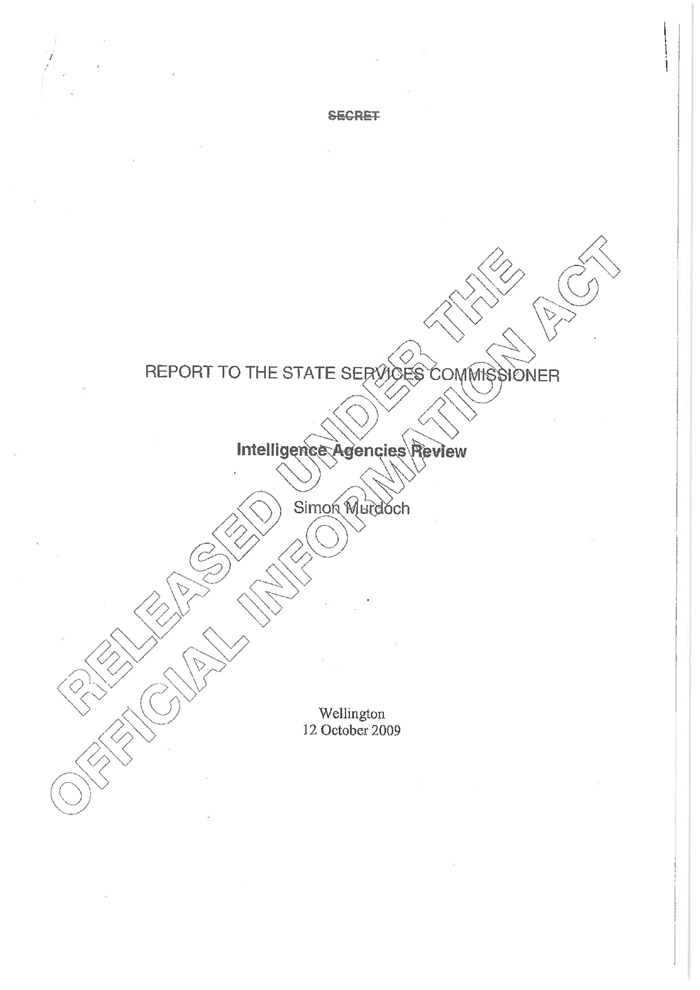
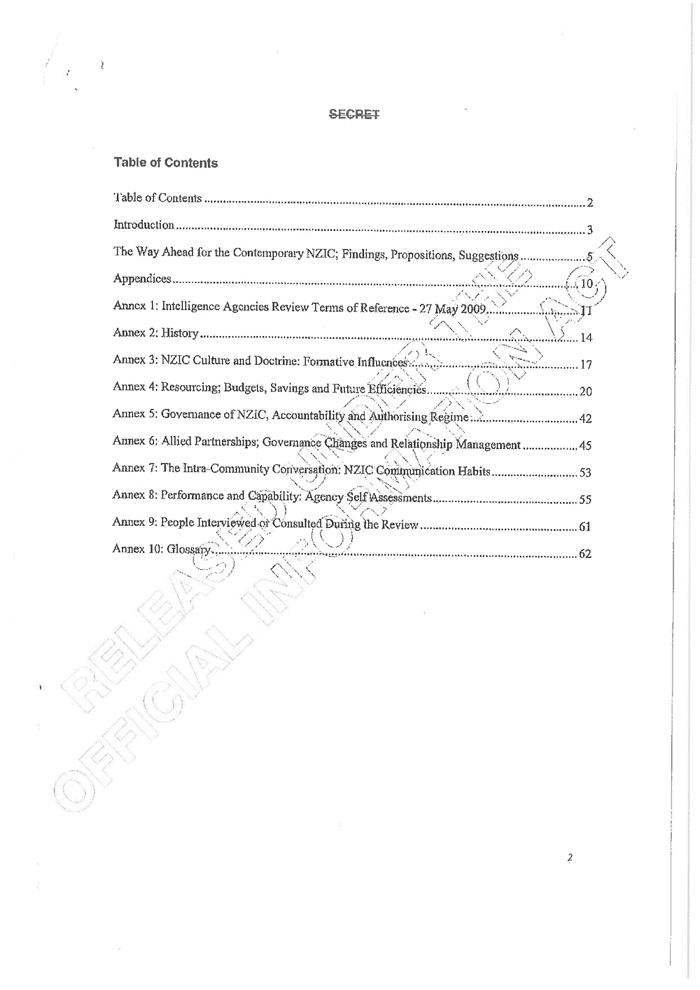
"Murdoch
Report" was written by former diplomat and senior public
servant Simon Murdoch in 2009 for the State Services Commissioner and
classified secret because of the details contained about New
Zealand's spy agencies.
It
was a review of the framework in which the agencies operated, carried
out at a time when New Zealand's intelligence-sharing relationship
with the United States was undergoing massive change.
It
was released to the Herald under the Official Information Act,
requiring it to be declassified from "secret" to be mad public
Mr
Murdoch charted the growth in funding for New Zealand's intelligence
community, which includes "human intelligence" specialists
at the NZSIS and the electronic eavesdroppers at the GCSB, finding it
had doubled in staff numbers and more than tripled in cost to $103m
since the September 11 2001 terror attacks in the US.
Mr
Murdoch wrote the money should be seen "in the context of the
annual 'subscription' paid by New Zealand to belong to the 5-Eyes
community whose annual capital investment and operating outlays would
dwarf our".
"It
helps explain why the niche contributions that we can make to 5-Eyes
burden sharing are so important and why agency heads strive to be
responsive to partner demand."
The
theme of working hard for the Five Eyes partners is echoed in a
number of places in the report.
In
describing the "way ahead", he said the intelligence
community needed to "manage the expectations of NZIC's key
offshore partners from the centre more actively".
He
said NZ needed to show itself as a "niche contributor with
capacity constraints but some high quality competencies".
The
intelligence agencies have always been vague on what contribution New
Zealand makes to the 5-Eyes partnership.
Speculation
ranges from having good positioning on the planet for some satellite
intercepts to our benign nation status being used as a staging point
for electronic spying on countries less friendly to the UK or US.
Mr
Murdoch listed a range of security threats faced by New Zealand,
including cyber threats to IT infrastructure, "imported or
homegrown Islamic militancy" and working to contain the spread
of the weapons of mass destruction.
Threats
also included "transboundary criminality, civilisational
friction, resource rivalry and energy brinkmanship".
Mr
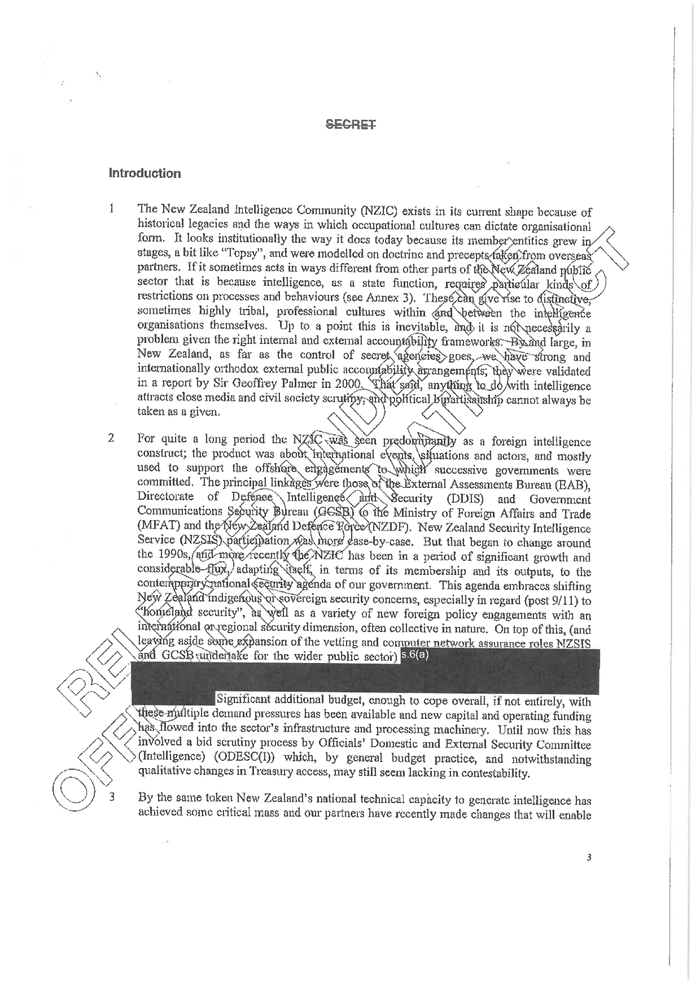
Murdoch suggested a restructuring of the intelligence community which
has only partly taken place, describing it was a collection of
agencies which had grown without planning over the years.
He
also illustrated the lack of constant, formal links between the heads
of agencies, describing a monthly "working lunch" between
spy bosses of the GCSB, NZSIS, DDIS, and the lesser known External
Assessments Bureau (now National Assessments Bureau) and the Domestic
and External Security Group.
The
purpose of the lunches was to "share issues and perspectives",
but they stopped in late 2008 because its members became too busy.
Large
sections of the document are blanked out, particularly the areas
which appear to discuss relationships with Five Eyes' partners.
The
redactions also pose a puzzle - the glossary has removed acronyms for
two organisations listed alphabetically between the NZIC (NZ
Intelligence Community) and NZSIS (NZ Security Intelligence Service).
The
GCSB went from about $20m a year to $50m, the NZSIS from about $10m
to $35m and the little-known Directorate of Defence Intelligence and
Security from $2.4m to $11.3m.
Mr
Murdoch has held some of the most sensitive roles in New Zealand.