Showing posts with label conservation. Show all posts

Saturday, 30 January 2021

Starvation behind mass death in Wellington

 New Zealand in hot water: the plight of the little blue penguins


Starvation behind mass death 

of little blue penguin chicks

Warmer waters and sediment has caused 35 percent of little blue penguin chicks to die in Wellington.
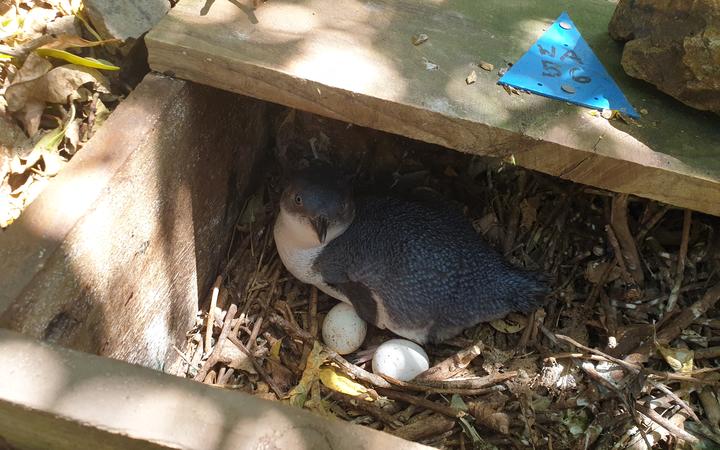
Little Blue Penguin in it's nesting box in Wellington.

Little Blue Penguin in it's nesting box in Wellington. Photo: Supplied

Radio NZ,

28 January, 2021


After a what was a successful nesting season, 66 baby penguins from Matiu / Somes Island died of starvation during a horror couple of weeks in November.

The season ended with a total loss of 82 chicks, 35 percent of the babies hatched this year.

Matiu / Somes is a predator-free Island in the heart of Wellington Harbour, and home to a usually thriving colony of Little Blue Penguins, or kororā.

But this season, it was a different story.

Penguin expert, and advocate - Mike Rumble surveys the island every two weeks with a team of volunteers to check the 600-to-800 penguins it's home to.

During a routine visit in November, he and the team came across a horrifying sight.

"The number involved was very high ... and it was all dead chicks in nest boxes and clearly something had gone wrong."

Over three weeks they lost 66 chicks, 54 of them found on one day alone.

"It wasn't always both chicks in the nest.

"Sometimes it was only one of two, and of course the problem we then had to do was try and work out what was going on."

From there Rumble looked to the water, curious to find out what had caused the mass casualty.

"I had this perfect view of both sides of Matiu / Somes Island and one of the things I saw was what we call silting lines.

"The lines of whatever it was coming out of Hutt River was coming down both sides of the island so we knew immediately there was a serious problem."

Mike Rumble believed a heavy downpour of rain and some stormwater overflow contributed to the silt.
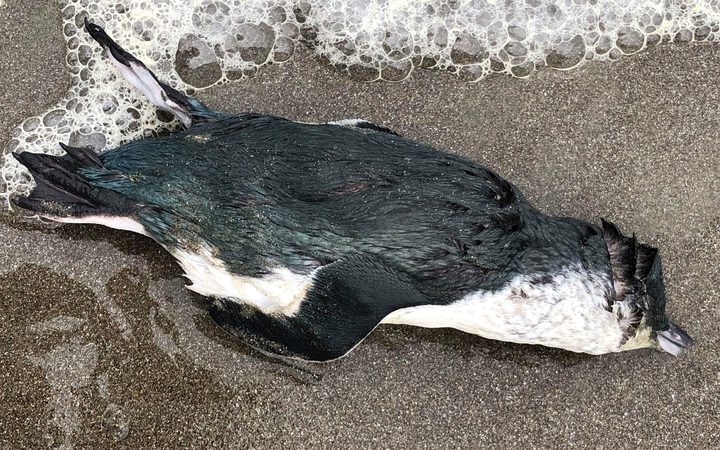
A dead little blue penguin.

sixty-six penguin chicks died. Photo: Supplied / Anna Gadsby

His suspicions were confirmed when the pathology results for one of the dead penguins came back - starvation was part of the problem.

These Little Blue Penguins were the canary in the coal mine when things weren't right and they were warning us about climate change, Rumble said.

"The little penguins rely on small fish which stay down at the sea floor in the cold currents and if the harbour temperature rises, as it clearly must have, those cold currents don't come up, they stay down which means the birds have got to work harder and things get very difficult for them when there is silting at the same time because they can't see the food that they're hunting for."

The parent penguins, go out to fish before returning home to feed the chicks, but if they can't get enough they won't - or they have to make the call to only feed one of their babies, he said.

In total they lost 82 out of 260 penguin chicks for the nesting season.

It was normal for about 11 percent of the chicks to die in a seasons but Rumble said this year's loss was sitting at 35 percent.

"The end result 2021 is 65 percent fledge rate, a massive drop. It could be a long-term effect hopefully eased a bit by the fact that whatever was causing the problem disappeared.

"It will still impact on what happens in the next two or three seasons."
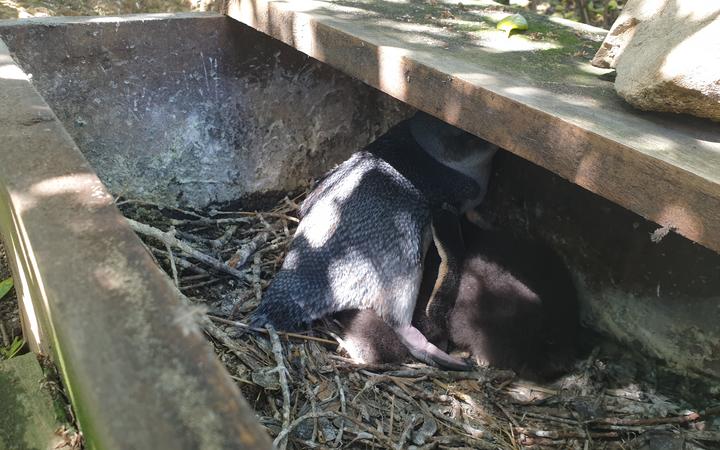
Little Blue Penguin chicks hunker down in their box.

Little Blue Penguin chicks hunker down in their box. Photo: Supplied

He said fewer birds would return for breeding, which will continue to harm the numbers of the colony.

Rumble had asked the Department of Conservation to do a full-scale audit into penguin losses this season to see if the problem was more widespread.

But he was thankful for the penguin parents, because there were more eggs at the start of the season, meaning there were higher chick numbers overall, which would combat some of the impact of the huge loss.


“Sea otters are an amazing indicator of what’s happening in the coastal environment, not just to other marine animals, but to us, too, especially on the issue of domoic acid,” said Christine K. Johnson, director of the EpiCenter for Disease Dynamics in the One Health Institute at the UC Davis School of Veterinary Medicine and senior author of the study.

 The world’s ocean temperatures in 2020 were the third highest on record, and each of the past five years have been the ocean’s hottest years on record.
The study found that exposure to domoic acid increased a sea otter’s risk of dying with heart disease 1.7-fold. The risk is up to 2.5 times greater for otters consuming a high proportion of crab and clam, which accumulate domoic acid in their tissues, helping it persist in the food web. Additionally, the researchers discovered that domoic acid exposure is especially detrimental for prime-age adult sea otters, whose survival is vital for population growth.

“That’s worrisome for the long-term population recovery of southern sea otters, which are a threatened species,” said lead author Megan Moriarty, a wildlife veterinarian who conducted this research for her Ph.D. in epidemiology at UC Davis. “This study emphasises that domoic acid is a threat that isn’t going away. It’s a food web toxin and is pretty pervasive.”

https://www.oceanographicmagazine.com/news/algal-blooms-sea-otters/

Tuesday, 19 January 2021

Discussing about climate change and New Zealand's marine life

 New Zealand in hot water: the plight of the little blue penguins


Seemorerocks interviews Pam Crisp, a conservation educator based in Lower Hutt, New Zealand. Pam is programme manager for Seaweek, NZ's annual marine engagement event, and active in her local community through Transition Towns Lower Hutt

Monday, 4 February 2019

Riverbeds dry up and water supplies run out in middle New Zealand

NZ: Running out of water in Makara

I am a strong believer in anecdotal evidence and citizen science.

I have a story from the local community of Makara where Pam and I keep our horses.

We heard from a local who lives on the beach.   His house was condemned because it was basically destroyed by ex-cyclone Gita in February, 2018.


Ex-Cyclone Gita left Makara residents with a large clean up job after flooding homes and destroying property on Wednesday.

Now, with 5 days left until he moves out from his property he has completely run out of water. Fortunately the owner of the land where we kept our horses offered him some water from the stream that runs through the property.

Another Makara neighbour has discovered his rain tank is completely empty and has gone over to town supply.

Just a few weeks ago I thought things looked better than they had and we might might avoid the worst in Makara this year.

However, the above story and the state of our stream (one of my litmus tests) has persuaded me otherwise.

The first photo was from last year which was very dry.


Now compare it with this taken looking in the opposite direction (because of the shade from setting sun.


In the public discourse on cliamte change there is little mention of drought (until crisis I upon us) any more than there is of the speed and severity of the problem.

Official statistics tend to hide the nature and severity of the problem.

****

Meanwhile...


The high rainfall within the Rai and Pelorus catchments is essential to the surrounding communities, providing irrigation and recreation.

The Rai River attracts guided fishing trips on the hunt for rainbow and brown trout, providing tourism and recreational opportunities for the small community. It is also popular with Outward Bound as an outdoor classroom, while others use it for kayaking.....

Rai farmers contend with a high annual rainfall of about 2m that can saturate paddocks, with run-off ending up in the river. They have the added problem of substantial flooding along the valley floor, also affecting water quality.


Several fish found dead after riverbeds dry up in wider Marlborough region

2 Febraury, 2019

A number of fish have shown up dead as a result of drying up riverbeds in the wider Marlborough region.
It comes after concerns from Fish and Game Nelson Marlborough earlier this week over the effects of warmer temperatures on freshwater species.
Earlier this week, Fish and Game Nelson Marlborough expressed concerns over the effects of warmer temperatures on freshwater species. Source: Fish and Game New Zealand

Fish and Game regional manager Rhys Barrier told 1 NEWS as water levels recede, fish are becoming trapped in small pools of water with nowhere to go.

"26C will end up killing brown trout if they're in it too long," Mr Barrier said.

On Friday, Fish and Game staff visited the Opouri tributary of the Rai River, where they spotted several dead fish which were being "cleaned up" by hawks and shags.

The Rai River has been below its minimum flow levels for the past week.

***
We generally have to go by anecdote and reports like in this article to get a true sense of the picture. I believe the statistics from NIWA conceal as much as they reveal

Rainfall deficit


Soil moisture deficit


Swimmers warned to take care after toxic algae found in Wellington region's rivers

Toxic to people and fatal to dogs, toxic algae is blooming in the Wellington region's rivers.

SUPPLIED
Toxic to people and fatal to dogs, toxic algae is blooming in the Wellington region's rivers.
2 February, 2019

It is more deadly than cobra venom and it has returned to the Wellington region's rivers.
Toxic algae has pushed some of the region's rivers over the safe swimming limit and the Greater Wellington Regional Council says people should stay out of some altogether.

Swimmers should avoid the Hutt River between Moonshine Bridge and Fairway Drive Bridge, and the Pakuratahi River from SH2 to its confluence with the Hutt River in Kaitoke Regional Park, the council says.

Children should be kept away from water in these sites and dogs should be kept on a lead.

Swimmers have been warned to look out for toxic algae in the Wellington region's rivers before taking a dip. (File photo)

NICHOLAS BOYACK/STUFF
Swimmers have been warned to look out for toxic algae in the Wellington region's rivers before taking a dip. (File photo)
It becomes dangerous when it comes loose from the riverbed and brown or black mats wash up on the banks or form floating rafts. A coin sized piece of algae could kill a 20kg dog.

Toxic algae cover is also rising at Greater Wellington's Waipoua, Waingawa and Ruamahanga river monitoring sites in Wairarapa, and in the Otaki and Waikanae rivers in Kāpiti, although these sites are currently below the council's "no swim" trigger levels.

Senior Environmental Scientist Mark Heath said no detached mats of toxic algae had yet been seen at any of the monitored sites.

Swimmers and dogs should keep away from sections of the Hutt River.

SUPPLIED
Swimmers and dogs should keep away from sections of the Hutt River.

"However this could change rapidly, especially during warm weather, so we are urging people to be careful near all waterways throughout the region."

The algae was more deadly than cobra venom.

Given the rapid growth of toxic algae, and its potential change in coverage between weekly monitoring points, the council urged people to know learn it looks like.

They should check information signs around popular swimming holes and visit Greater Wellington's Is it Safe to Swim? website and Facebook page for more information about toxic algae, as well as images.

WHERE IS THE TOXIC ALGAE?*

Kāpiti Coast: The Ōtaki and Waikanae Rivers both remain below guideline levels at approximately 5 per cent cover but council monitoring officers have noticed a significant increase in toxic algae coverage (approximately 15 per cent) and it has become concentrated in some areas.

Hutt River: Toxic algae exceed the 20 per cent cover guideline level at the Silverstream Bridge site. All other monitoring sites were below guideline levels.

Ruamahanga River: Toxic algae cover is at approximately 10 per cent cover at the Waipoua and Waingawa monitoring sites, while toxic algae at Ruamahanga River sites are at approximately 5 per cent cover.

Pakuratahi River: The Pakuratahi River at Kaitoke Forest Park has a significant toxic algal bloom (20 per cent cover).

Waipapa Stream: The Waipapa Stream near Red Rocks on Wellington's South Coast also has a significant bloom.
*Monitored January 29 to

Saturday, 15 December 2018

Shark numbers in Austalia down by 90%


Shark numbers decline by up to 90% in five decades off Queensland coast
Researchers conclude the most likely cause for the dramatic declines is commercial fishing


14 December, 2018


Shark numbers along the Queensland coast have declined by more than 90% for some species in the past five decades, according to new research that calls for better protections for sharks in Australian waters.

University of Queensland and Griffith University researchers analysed shark control program data to measure changes in shark populations along the Queensland coastline in a 55 year period.

The shark control program has used drumlines and nets since 1962 to try to reduce the risk of shark attacks, and now spans 1760km of the Queensland coastline.

The scientists studied the number of hammerhead, white, tiger and whaler sharks caught in nets from 1962 to 2016.
The data showed the number of hammerheads and white sharks had each declined by 92%, whaler sharks by 82% and tiger sharks by 74%.

 The researchers examined and eliminated the possibility that factors such as the location and materials of nets, reliability of historical figures or the possibility that sharks were learning to avoid drumlines had influenced the numbers.


Instead, they concluded that the most likely cause for the dramatic declines was commercial fishing.

“The key thing that our study shows is that large apex sharks on the Queensland coastline have been declining over the last 50 years,” the study’s lead author and post-doctoral research fellow at the University of Queensland George Roff said.
 
“We found drastic declines in the population of large apex sharks.”
The data also showed the sharks caught were getting smaller, which Roff said had implications for population dynamics and how well shark populations could recover.

“The bigger the shark is, that’s when it reaches a reproductive stage,” he said.
“If we’re catching more young sharks there’s fewer reproductive individuals out there and they breed less.”

The research team said factors such as climate change, which is affecting shark populations, could not explain the scale of the decline.

“We can be fairly certain the cause of the decline is fisheries related. There’s not very many other things it can be,” Roff said.

Dr Chris Brown, from Griffith University’s Australian Rivers Institute, said some species, such as hammerhead sharks, were recognised internationally as being at risk of extinction.

“It would be a great tragedy if we lost these species because of preventable human causes,” he said.

“Sharks play important roles in ecosystems as scavengers and predators, and they are indicators of healthy ecosystems. These declines are concerning because they suggest the health of coastal ecosystems is also declining.”
Shark attacks off Australian beaches have created an uneasy relationship between beachgoers and the apex predator.

But the researchers say their study demonstrates the need for more protections for sharks in Australian waters, as opposed to increased measures to control them.

“We also need more research into understanding the movements of these animals,” Roff said.


Friday, 30 November 2018

Over 200 whates die in strandings in New Zealand and Australia

What makes over 200 whales die in strandings over several days?
As many as 145 pilot whales dead after mass stranding on Stewart Island


26 November, 2018

As many as 145 pilot whales have died after a mass stranding in Mason Bay on Stewart Island.

A hiker reportedly spotted the whales on Saturday and notified Department of Conservation staff at 10.30pm.


There were two pods stranded at the southern end of Mason Bay, approximately 2km apart.

DoC Rakiura operations manager Ren Leppens said half of the whales had already died by the time they were found and due to the condition of the remaining whales and the remote, difficult to access location, the decision was made to euthanise the remainder.

"Sadly, the likelihood of being able to successfully refloat the remaining whales was extremely low. The remote location, lack of nearby personnel and the whales' deteriorating condition meant the most humane thing to do was to euthanise."

"However, it's always a heart-breaking decision to make."

Marine mammal strandings are a relatively common occurrence on New Zealand shores, with DoC responding to an average 85 incidents a year – mostly of single animals.

On Sunday 10 pygmy killer whales stranded at Ninety Mile Beach. Two have since died and attempts were being made to refloat the others.

It was the second stranding in the Far North in three days after a 15m sperm whale died on Tokeroa Beach on Saturday, after washing ashore on Friday.

The strandings are unlikely to be related

More than 50 whales dead after another mass stranding

30 November, 2018

Fifty pilot whales have been found dead after a mass stranding in the Chatham Islands.

Initially, up to 80 whales were found beached at the southern end of Hanson Bay near Owenga township yesterday evening, but it was too late in the day to help the animals, the Department of Conservation said today.

When staff showed up at the beach this morning, they were relieved to find that about 30 or 40 of the whales had re-floated themselves without human intervention. However, another 51 whales remained - all of them dead except for one.

The remaining whale was euthanised by DOC staff.

"It was the most humane thing to do," said DOC Chatham Islands Operations Manager Dave Carlton. "This is always an awful decision to have to make."

The stranding comes only days after 145 pilot whales died on the shore of Stewart Island on Monday..

And eight pygmy whales beached themselves on Ninety Mile Beach in Northland last Sunday.

Twenty-eight whales dead in 'inexplicable' beaching in Victoria

28 November, 2018

Wildlife authorities have said it’s unclear what caused twenty-eight whales to become stranded at a remote beach in Far East Gippsland.
The mass beaching at the Croajingolong National Park between Petrel Point and Rame Head was first spotted by aircraft pilot Grant Shorland senior yesterday about 4pm.
Three wildlife experts that were flown in by helicopter found one dead humpback whale and 23 dead pilot whales.
Four of the pilot whales were earlier in a critical condition, but died this afternoon; two were euthanised, while the remaining two died of natural causes.
Pilot Grant Shorland said he was shocked and saddened by the mass stranding, which is the state’s worst in more than 30 years.
“I’ve never seen whales like that before. We see a lot of other stuff on the beach, but not a big pod of whales like that.”
The cause of the beaching remains unclear, but marine mammal expert Dr Kate Charlton-Robb said seismic activity of illness may have been a factor.
Incident Controller with the Department of Environment, Land, Water and Planning (DELWP), Michael Turner, earlier told 9News.com.au this morning he’d never seen a beaching of this scale in 32 years with the department.
“The whales are in a very remote part of the national park that’s only really accessible on foot,” Mr Turne said.
"I recently responded to a beaching in Point Hicks, but that was only one whale.
“We encourage people to steer clear of the area for safety reasons and to ensure the efforts of crews are not impacted,” he said.
Sharks may be more active in the area.
Wildlife officers will remain in the area over the coming days, and will take samples for research to better understand why they beached themselves and how it can be prevented in the future.
The mass beaching comes just days after two massive pods of up to 145 pilot whales washed ashore on a beach in southern New Zealand.
Many died before help arrived, while the rest were euthanised by conservation workers.
New Zealand's Department of Conservation has released heartbreaking footage showing dozens of pilot whales sprawled helplessly in Mason Bay on the west coast of Stewart Island.

Tuesday, 21 August 2018

New South Wales town “mobbed'” by thirsty emus


Australia drought: New South Wales town “mobbed'” by thirsty emus
Mobs of emus have taken over the small mining town of Broken Hill in far west New South Wales, 19 August 2018. The native birds have been drawn to town in search of food and water as drought worsens, with the region facing its driest start to a year on record. Photo: ABC News

19 August, 2018

19 August 2018 (BBC News) – Large numbers of emus have been flocking to an outback mining town in New South Wales as Australia continues to struggle with extreme drought.

The flightless birds are desperately searching for food and water in Broken Hill, local animal rescue services say.

"They're actually walking down our main street. We're seeing mobs of them," wildlife worker Emma Singleton said.

Separately, the Australian PM has announced extra aid for farmers hit by the drought.

"I want to say to our farmers, we have your back," Malcolm Turnbull told reporters, as he announced a A$1.8bn (US$1.3bn; £1.03bn) increase in funds to help deal with extreme aridity in New South Wales.

Australia's most populous state, which produces about a quarter of the country's agricultural output, was officially declared entirely in drought on 8 August.

In Broken Hill, 935km (580 miles) west of Sydney, groups of emus have been seen "running laps of the main street, eating gardens and gate crashing football matches", ABC News reports.

Ms Singleton, who works for the Rescue and Rehabilitation of Australian Native Animals, said: "We've had 14 on a sporting oval. They've been out there for weeks - the locals in that area are giving them food and water." […]

Parts of New South Wales have had the lowest rainfall on record, with less than 10mm of rain recorded in some areas in July.

As well as failing crops, farmers there have been struggling to feed and water livestock. Mr Turnbull said some had spent as much as A$10,000 per truckload of hay just to feed their animals. [more]