Showing posts with label Sinai. Show all posts

Monday, 2 November 2015

Russian plane crash in Sinai -update - 11/01/2015

Russian Plane "Broke Apart In The Air," Officials Say As Investigators Frantically Search For "Clues"


1 November, 2015


Just when it seemed as though the conflict in Syria and the attendant ISIS saga couldn’t possibly get any more surreal, on Saturday a Russian passenger jet fell out of the sky over the Sinai Peninsula. Subsequently, ISIS claimed responsibility and released a video clip that purportedly depicts the mid-air explosion that brought the plane down.


All 224 people on board were killed including 17 children. It was the worst “accident” in the history of Russian aviation. Bodies are reportedly scattered as far as 8 kilometers from the crash site. "We found a three-year-old girl eight kilometres from the scene" of the main wreckage, one official told AFP. The picture shown below, which depicts Darina, a 10-month old girl killed in the crash staring at planes before flying to Egypt, has gone viral.


Now, as Russia mourns, authorities are scrambling to determine exactly what happened and more than a few observers contend that ISIS couldn’t possibly have shot the plane down given the altitude. Nevertheless, some international airlines have diverted traffic over the region which has been the site of clashes between the Egyptian government and militants. 


Adding to the mystery, the plane’s co-pilot allegedly voiced concerns about the condition of the aircraft prior to the flight and while officials insist that it would be extraordinarily difficult for a terrorist group to hit a plane flying at 31,000 feet, Prime Minister Sherif Ismail says there’s “no evidence that anything unusual was happening on the plane before it crashed.”


Here’s more from Bloomberg:


Prime Minister Sherif Ismail said in a televised news conference on Saturday that it would be premature to speculate on the cause of the crash before the data on recorders were analyzed. 
 
Conflicting reports have emerged about whether the pilot, who was flying at an altitude of 31,000 feet, indicated a technical problem. While Civil Aviation Minister Hossam Kamal said the pilot hadn’t radioed an SOS call, the Dubai-based Al-Arabiya satellite channel reported he had sought permission to land at a nearby airport. 
 
It is technically difficult to target a plane at that level,” Ismail said. “We have no evidence that anything unusual was happening on the plane before it crashed.”
 
Islamic State’s statement doesn’t specify how the plane was downed and the local affiliate may have jumped the gun to take credit, Mokhtar Awad, an analyst at the Center for American Progress, a research institute in Washington, said by e-mail. Russian Transportation Minister Maxim Sokolov said on state television that reports of a terrorist missile aren’t credible.
 
Former Israeli national security adviser Yaakov Amidror, an army reserves general, concurred that it was unlikely an Islamist group shot down the aircraft. But “other scenarios also have to be considered, especially the possibility that the plane was sabotaged at the airport before taking off,” Amidror said.
 
Preliminary investigations indicate the plane went down due to a technical problem, the state-run Ahram Gate website said, citing Egyptian security officials. The plane had reached cruising altitude before crashing in the remote
 
Al Hassana area of central Sinai, about 50 kilometers (30 miles) south of Al-Arish. Egyptian security forces have been waging a fierce campaign in the area against militants who have pledged allegiance to Islamic State.


Other experts claim that the plane's movements just prior to the crash seem to rule out a terrorist attack. 


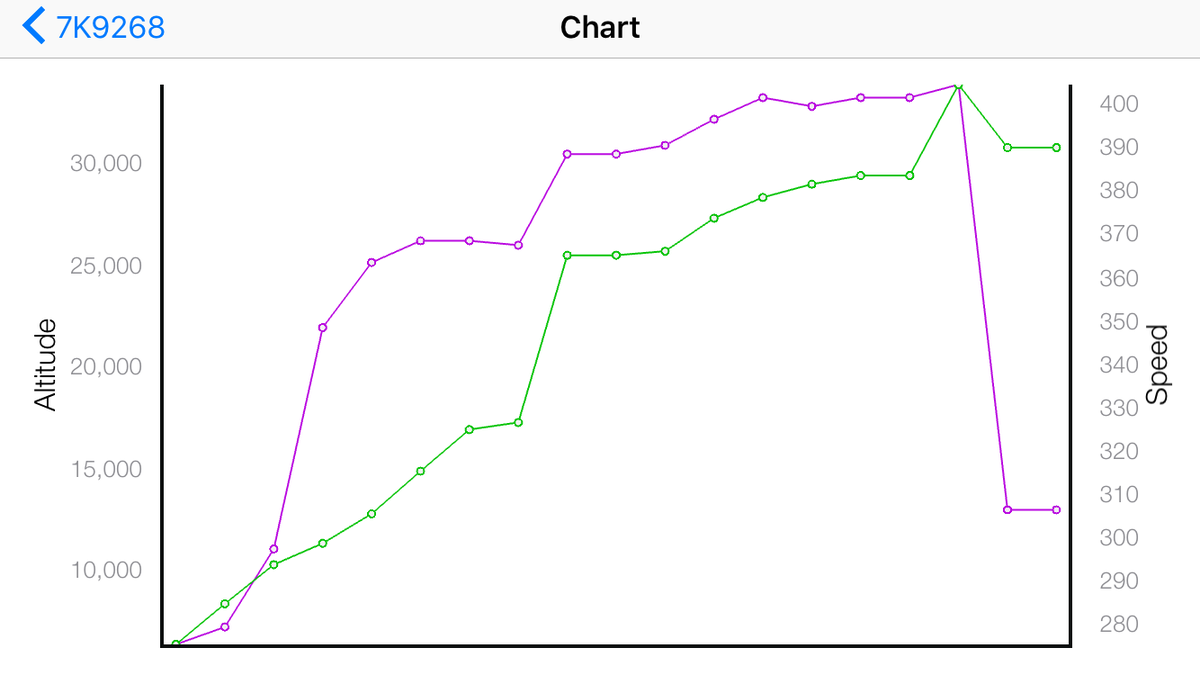
In its final seconds Saturday, the Metrojet plane was bucking wildly, abruptly climbing and descending before communication was lost, according to FlightRadar24.com, which tracks flight routes. At times it dropped as fast as 6,000 feet per minute, only to reverse and climb even faster, repeating that pattern several times. At other times, it slowed dangerously. About 24 seconds before losing contact, it dropped to 71 miles per hour from 470 miles, according to the data. Jetliners such as the Airbus 321 can’t stay aloft at such a speed.
 
If the FlightRadar24 data are correct, “it probably rules out sabotage,” said Paul Hayes, director of air safety and insurance at Ascend Worldwide. “It’s probably some sort of control problem.”


As a refresher, here's a look at the flight path and data:


RT : Looping playback of . Last data recorded at 04:13:22 UTC
 
 
The aircraft was descending rapidly at about 6,000 (2,000 meters) feet per minute before the signal was lost to air traffic control.

Speed / Alt plotted on graph. Speed (purple) drops off before we lost contact at 04:13:10z
 

Embedded image permalink

Raw data shows plane EI-ETJ had entered a steep descent. Download here


Embedded image permalink


And here's a bit more color from Sputnik:


Experts from Egypt, Russia, and France have started analyzing the flight data recorders of the Russian airliner which crashed Saturday in Egypt killing 224, Egyptian media report.
 
The airliner's flight recorders were discovered on Saturday night. The Russian transportation minister said they had no significant damages.
 
"There is minor technical damage. But there was no thermal impact as the Egyptian representatives say," Maksim Sokolov said.
 
A Kogalymavia/Metrojet Airbus A321 en route to St. Petersburg from the resort city of Sharm El-Sheikh with 217 passengers and seven crew on board, crashed in the Sinai Peninsula, leaving no survivors. The Sinai air crash became the deadliest air accident in the history of Russian aviation, surpassing the 1985 disaster in Uzbekistan, where 200 people died.


And so, even as the "experts" claim that i) ISIS couldn't have shot the plane down, and ii) that the data seem to "rule out" sabotage, one can't help but note that Malaysia Airlines Flight 17 was brought down by a missile over Ukraine and furthermore, it's not clear why "some sort of control problem" isn't compatible with someone either hitting the aircraft with a projectile or else detonating an explosive on board. That is, when planes explode in mid-flight, it tends to lead to "control problems." Indeed, Russian officials have confirmed that the plane "broke apart in the air": 

Russian plane 'broke apart in the air': Russian aviation official

"It is too early to draw conclusions," MAK executive director Viktor Sorochenko says. "Disintegration of the fuselage took place in the air, and the fragments are scattered around a large area [about 20 square kilometers]", the official added.


Yes, it "broke apart", which would appear to suggest that it in fact exploded. And so even as it will probably never be possible to definitively say whether or not the video released on Saturday is real or fake, we would note once again that if the footage is authentic, someone on the ground knew exactlywhen to start filming.


In any event, we'll await the "official" word, although reports indicate that it could take weeks, or even months to determine exactly what happened here. That said, if there's even a shred of credible evidence to corroborate the video shown above, don't expect The Kremlin to wait around on the full report as IS in Sinai may soon find themselves shooting at other Russian jets in the skies above Egypt - only these jets will be shooting back. 

    Thursday, 3 January 2013

    Israel and Egypt


    The Bible says, you reap what you sow.

    Israel will cease to exist within a decade, says Muslim Brotherhood official
    A senior Muslim Brotherhood official has said that Israel will cease to exist within a decade, the latest in a series of inflammatory comments by figures close to Egypt's Mohammed Morsi..


    1 January, 2013


    Essam el-Erian, deputy head of the Brotherhood's political arm, the Freedom and Justice Party, was trying to lay to rest a controversy over comments he made in an interview last week, in which he invited Egyptian-born Jews to return to the country.

    In an interview with the Saudi-backed newspaper Al-Sharq al-Awsat, Mr Erian said that the "ideology of Zionism" had ended in failure and that "Palestine's occupiers" should leave to make way for the return of Palestinians.

    "Jewish occupiers of the territory of historic Palestine are an obstacle to the Palestinians' right of return," he said. "Anyone who can read the future can see that this project has a decade, less than a decade to go, and it is our faith that the people of Palestine can then return to Palestine."

    He said a future state would include Muslim, Christians, Jews and Druze as Palestinian citizens.

    All but a handful of the Egyptian Jewish community, once 80,000-strong, left the country after the Israel-Egypt wars of 1948, 1956 and 1967, many to Israel. However, Judaism is given protected status alongside Islam and Christianity in Egypt's new constitution, and the Muslim Brotherhood, despite a history of anti-semitism, is now keen to insist its enemy is Zionism rather than Jews themselves.

    Mr Morsi's own relations with Israel have become tangled as a result - he refuses to acknowledge or formally recognise Israel, even by name, but has also said he will maintain Egypt's relations with the country and played a leading role in negotiating November's ceasefire between Israel and Hamas.

    As a result, spokesmen like Mr Erian have been accused by Islamist hardliners of becoming "American stooges".

    Although Mr Erian remains an important adviser, both he and spokesmen for Mr Morsi insist his recent comments were made in a personal capacity.
    Nevertheless, they will raise concern about continuing anti-semitism, widely accepted in Egyptian media


     Images like the one below evoke memories of East Germany


    Israel completes bulk of Egypt border fence
    Israel completed the main segment of a razor-wire fence along its border with Egypt on Wednesday, a barrier against illegal migrants and Islamist militants hiding out in the lawless Sinai region.


    2 January, 2013


    The five-meter high fence, bolstered by military surveillance equipment, is touted by Prime Minister Benjamin Netanyahu as proof of his commitment to the Jewish state's security as he campaigns for a national election on January 22.

    Once the final 14 kilometer (8.5 mile) section is completed within three months, the fence will stretch from Israel's Red Sea port of Eilat to the Gaza Strip on the Mediterranean.

    In the desert beyond, hardline Islamist groups have expanded in a security vacuum caused by the overthrow of Egyptian President Hosni Mubarak in 2011 and efforts to re-impose central authority have been slow.

    Islamist gunmen killed at least 16 Egyptian border guards in Sinai last August and hijacked an armored vehicle which they smashed across the frontier before they were killed by Israeli forces.

    With security and illegal immigration a target of his campaign, Netanyahu travelled by military helicopter to the southern frontier for a ceremony marking the completion of the 230 km (143 miles) section of fence.

    His government has accelerated its construction, deported some migrants and imposed legal penalties on Israelis who hire them without work permits.

    Thirty-six migrants crossed illegally into Israel last month and were arrested, compared with 2,153 who entered a year ago, Netanyahu's office said in a statement.

    "Just as we stopped completely the infiltration into Israeli cities, we will succeed in the next mission - the repatriation of tens of thousands of infiltrators already in Israel to their home countries," it cited Netanyahu as saying at the ceremony.

    More than 60,000 Africans have entered Israel on foot in recent years seeking work or refuge. They have stirred fears for public order and some have come under racially-motivated attack.

    The bulk are from Sudan or Eritrea and Israel's ability to repatriate them is limited. Sudan's government is hostile to Israel and Somalia is deemed a ravaged danger zone by refugee advocates.

    Israel portrays the vast majority of the migrants as illegal job-seekers. Humanitarian agencies say they should be considered for asylum.

    Monday, 17 September 2012

    The Sinai


    Islamist militants attack Egyptian security headquarters in Sinai
    Gunmen fire mortar bombs and grenades in retaliation for military operation against Islamic militants, security source says.


    16 September, 2012

    Islamist militants attacked Egypt's security headquarters in northern Sinai on Sunday with a barrage of mortar bombs and machine gun fire, security officials said.

    Gunmen fired rocket-propelled grenades at the building in the town of al-Arish, prompting snipers on top of the security building to return fire. A gun battle ensued for more than an hour, witnesses said.

    At least two civilians were reportedly wounded in the fighting.

    Meanwhile, about 30 armored personnel carriers backed by helicopters fought militants in the town of Sheikh Zuwayed, 30 km (18.6 miles) east of al-Arish on the Mediterranean coast.

    According to Palestinian news agency Ma'an, an Egyptian military helicopter was hit by a rocket-propelled grenade fired by Islamists during the incident, causing it to make an emergency landing.

    Militants also attacked army checkpoints in Sheikh Zuwayed and in Rafah.

    The fighting broke out after police backed by the military staged dawn raids on a number of homes in Sheik Zuwayed on Sunday. Officials said four men suspected of belonging to extremist militant groups were arrested.

    On Friday, in the midst of protests across the Middle East against an anti-Islam film produced in the United States, militants waving black banners and shouting "God is great!" stormed an international peacekeepers' base in northern Sinai and battled troops, wounding two Colombians. They stole some weapons and radio equipment, officials said.

    The base near the border with Gaza and Israel houses some 1,500 members of the force, including U.S.­ troops.

    Egyptian forces last month began their biggest security sweep in decades in Sinai after militants killed 16 border guards on August 5 in the most deadly attack since Egypt's 1973 war with Israel.

    Since then, some 33 militants have been killed, with many more arrested.

    The government sent hundreds of troops with tanks, armored vehicles and helicopters to Sinai in a joint operation with police to raid militant hideouts, arrest suspects and seize weapons.

    Disorder has spread in Sinai since former dictator Hosni Mubarak was ousted in a popular uprising, with Islamist militants stepping up attacks on Egyptian security forces and the Israeli border.

    Egypt's new president, Mohammed Morsi, has vowed to restore order.

    Bedouin tribes in the area have long complained of neglect by the central government. 

    Friday, 10 August 2012

    Clashes on Sinai peninsular


    Security breakdown in Sinai: Army battles it out with militants
    Clashes in Egypt’s Sinai Peninsula are raging for the second day as the military attempts to combat militants who have taken a foothold in the region since Mubarak’s ouster.


    RT,
    9 August, 2012

    The violence has spurred the largest military deployment in the Sinai Peninsula since 1979. Around 60 tanks, 15 armored personnel carriers, missile batteries and hundreds of soldiers have been sent into the main Northern Sinai town of Al-Arish on Thursday as Egyptian security forces continue to battle with Islamic militants.

    The deployment is believed to be the largest since Egypt signed the 1979 Camp David Accords with Israel. As a result of the accords, prior approval is needed before deploying troops on either side of the border, a condition which served to virtually demilitarize the Sinai Peninsula.

    Militants ramped up their attacks by attacking five joint military-police checkpoints on Wednesday, prompting the Egyptian military to launch airstrikes from Apache helicopters. Nile TV reported the airstrikes killed at least 20. It was the first time Egypt had deployed its air force in Sinai since the 1973 Yom Kippur War. 
     
    The military also began sealing off some of the 1,200 illegal tunnels that currently permeate the Egyptian border with the Gaza Strip. 
     
    The security operation was launched in response to a weekend attack when masked gunmen killed 16 Egyptian border guards before slipping across the border into Israel.

    On Thursday Egyptian Intelligence asked Hamas Prime Minister Ismail Haniyeh to hand over three members of the Izz ad-Din al-Qassam Brigades- Hamas paramilitary wing for providing indirect help to militants in Sinai, al-Quds newspaper reports.

    Mossad reportedly transferred a list of nine alleged militants connected with Sunday’s attack to Egyptian Intelligence on the same day. The nine suspected militants are said to be affiliated with "The Armies of Monotheism and Jihad in Palestine," reports Haaretz, citing Mousa Mohammed Abu Marzook, deputy chairman of the Hamas Political Bureau.

    Marzook maintained that Mossad was responsible for the attack, backing a claim that Egypt’s Muslim Brotherhood made earlier this week. The Muslim Brotherhood accused Mossad of “seeking to abort the [Egyptian] revolution since its inception.” Israel maintains Hammas are behind the attacks, an accusation they have denied.

    Egypt’s President Mohammed Morsi, who took the oath of office on June 30 to become the country’s first freely elected president, said those behind Sunday’s “cowardly” attack would pay dearly. Morsi, who is a longstanding member of the Muslim Brotherhood, has not publicly blamed Mossad for the assault.

    In a move to assert his authority, on Wednesday Morsi said he had forced his director of General Intelligence Services to resign and had dismissed the governor of Northern Sinai. As the military is constitutionally out of Morsi’s reach, Field Marshal Mohammed Tantawi, the head of Egypt’s Supreme Ruling Military Council, fired Hamdy Badeen, the head of Egypt’s Military Police.

    Egypt’s armed forces further called on locals and Bedouin tribes in Sinai to help security forces restore order in the region.

    The resolute response from both Morsi and the country’s military rulers shows Egypt’s authorities are taking the deteriorating security situation in the region seriously.

    Many analysts have attributed the growing Islamist presence in Sinai to the security vacuum resulting from former president Hosni Mubarak’s ouster last year.
    Despite the recent flare-up in the violence, the Egyptian military actually launched “Operation Eagle” in August 2011 to re-establish control in Sinai, a move which saw 2,500 Egyptian troops and 250 armored personnel carriers deployed to Sinai. 
     
    With Mubarak’s security apparatus virtually disintegrating in January of last year, a tacit understanding between Israel and Egypt was reached regarding the need to bolster the latter’s military presence in the region, Ahram online reports.

    An Egypt-Israel gas pipeline was sabotaged almost a dozen times in under a year, while militants believed to be connected with Islamist groups carried out a series of attacks on Egyptian police stations and checkpoints.

    Egypt’s decision to send in reinforcements and intensify its clampdown follows a claim by Israel that Sunday’s brazen attack was a “wake-up call” for Egypt to get a grip on the threat of growing lawlessness on what is, in effect, a bridge between Asia and Africa.

    Thursday, 9 August 2012

    Conflict in the Sinai


    Egypt fires missiles against suspected militants in Sinai
    The Egyptian military has launched an assault against suspected Islamist militants after they attacked security checkpoints along the Egyptian-Israeli border. At least 20 people have reportedly been killed.

    RT,
    8 August, 2012


    This comes just two days after 16 Egyptian soldiers were killed in similar attack.
    Egyptian security officials told AP that attack helicopters had fired missiles just hours after three security checkpoints were attacked by suspected militants around North Sinai’s town of Sheikh Zuwaid, 10 kilometers from the Gaza strip.
    Egyptian troops entered the village of al-Toumah, nearby Sheikh Zuwaid after they were informed of Islamist insurgent activity there, a military commander told Reuters.

    "We have succeeded in entering al-Toumah village, killed 20 terrorists and destroyed three armored cars belonging to terrorists. Operations are still ongoing," the commander said to Reuters.

    The exchange of fire started in the late hours of Tuesday and lasted until Wednesday morning.

    According to Ahram, the state news website, 20 suspected militants were killed in the attacks. Six people were wounded, officials say. Among them were a military officer, two soldiers, two policemen and a civilian whose condition is critical.

    The attackers also targeted a cement production company in Sinai, Al Jazeera reports.

    Egypt's President Mohamed Morsi has sacked the intelligence chief and the governor of North Sinai following the killing of over a dozen Egyptian security personnel by militants.

    Violence has escalated dramatically in the country since the ousting of Hosni Mubarak last year. It is also moving closer to the Israeli-Egyptian border. People in the affected areas are becoming concerned that if the violence spreads further, the conflict may have regional implications.

    Security officials said this was the first time a missile strike has been used in the Sinai area since the 1973 war with Israel to take back the peninsular. The territory was returned to Egypt in 1979 with the signing of a peace treaty with Israel.

    The latest developments in the Sinai Peninsula now raise fears that Tel Aviv may choose to act unilaterally if it feels threatened