Parts of the Indian capital, Delhi, have been placed on alert after a swarm of locusts invaded a suburban area.
Correspondents say it is the first time the suburb city of Gurgaon (Gurugram) has seen a locust invasion.
Footage on social media showed tens of thousands of the insects flying over buildings and landing on rooftops.
India is witnessing its worst locust invasion in decades. The swarms, which originate in the Horn of Africa, have devoured crops in several states.
On Saturday, Delhi environment minister Gopal Rai asked district authorities in the south and west of the city to remain on high alert, the Times of India reported.
Residents in Gurgaon were told to make loud noises with pots and pans or drums to try to drive the locusts away.
Pilots flying into and out of Delhi's international airport, which borders Gurgaon, have been told to take extra care, according to ANI news agency.
Agriculture ministry official KL Gurjar said the swarm appeared to be headed towards the city of Palwal, south of Delhi.
"The swarms moved from west to east. They entered Gurugram around 11.30am," he told PTI news agency.
If not controlled, desert locusts destroy food supplies and can cause famine.
According to the UN, the current infestations can be traced back to the cyclone season of 2018-19 that brought heavy rains to the Arabian Peninsula. That allowed at least three generations of "unprecedented breeding" that went undetected. Swarms have since spread out into East Africa, the Middle East and South Asia
An
Indian government think tank has warned that New Delhi is set to run
out of groundwater within two years as climate change and dramatic
population growth hit supplies.
Based
on data collected from 24 of 29 Indian states, the National Institute
for Transforming India (NITI) warned that the country's worst ever
water shortage is likely to adversely impact some 600 million people.
It
said that by 2020 some 20 Indian cities besides Delhi, including
global information technology centres like Bangalore and nearby
Hyderabad, were also likely to run out of groundwater, impacting over
120 million residents or nearly twice Britain’s population.
It
cautioned that like Cape Town in South Africa, Bangalore too faced
the grim prospect of ‘Day Zero’, when its water taps would run
permanently dry if drastic measures to avert the looming crisis were
not swiftly implemented.
“Critical
ground water resources that account for 40 per cent of India’s
water supply are being depleted at unsustainable rates” the NITI
analysis declared and called for the immediate implementation of
sustainable water resources.
The
report estimates that by 2030 India’s water demands would double
and the resultant scarcity could trim six per cent off its annual
gross domestic product, besides gravely impacting food security, as
agriculture consumes some 80 per cent of water.
Groundwater
levels in Bangalore have plummeted in recent years. In 2012 water
could be found at a few hundred feet below the ground, compared with
1,500 feet now. To make matters worse much of the remaining water is
badly contaminated by industrial effluents and sewage that seep into
the ground.
The
report said that climate change, deficient rainfall, the onset of
early and extended summer and rising populations across India were
collectively making it impossible for urban municipalities to meet
rising water demands.
A
taste of what is to come surfaced last month in the former colonial
summer capital Shimla, where the mountain springs sustaining the
picturesque Himalayan town simply ran dry.
This
forced thousands of thirsty and unwashed tourists, who had flocked to
the hill retreat to escape the searing heat of the plains, to flee
the resort.
Dust
storms come months before the start of city’s traditional
‘pollution season’
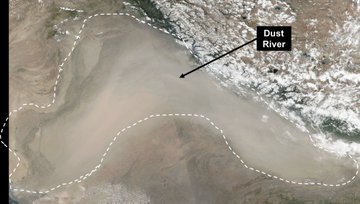
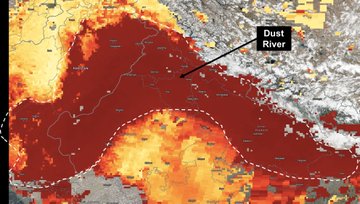
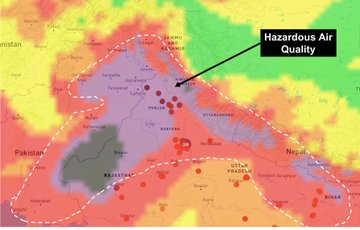
Smog
more toxic than can be measured by monitoring devices has blanketed
the Indian capital this week, months before the start of Delhi’s
traditional “pollution season”.
A
thick haze was visible across the city from Tuesday and some
government pollution monitors have recorded concentrations of 999 –
the highest they can measure – as dust storms kicked up in nearby
Rajasthan state blanketed the region.
Though
the billowing clouds of dust and sand were blamed for the immediate
spike in pollution levels, the sight of dense smog engulfing Delhi
months before winter has underscored a growing awareness that harmful
air is a year-round problem for the city.
Air
quality in Delhi usually begins to plummet in October when slower
winds and cooler temperatures trap pollutants closer to the ground.
But
data published by the government’s Central Pollution Control Board
shows that air quality has been classed “very unhealthy” – with
index scores as high as 270 – every April and May for the past
three years, or since authorities began collecting and publishing the
statistics.
Just
a single day in April or May of the past three years had air
classified as “good” – 12 April this year, when levels fell to
99. “It clearly shows that this is also a summertime problem,”
said Aishwarya Sudhir, an independent researcher who studies air
quality in India.
Authorities
have ordered a halt to all construction in the capital and its
satellite cities until the weekend to reduce pollution levels, and
doctors have advised people to stay indoors as much as possible.
Meteorologists
said the presence of a layer of dust across the city is also trapping
heat, sending temperatures soaring in excess of 40C.
Concern
about north India’s air quality crisis is usually most acute after
the Hindu festival of Diwali in autumn, when hundreds of thousands of
Indians release firecrackers that combine with existing pollutants to
form a poisonous haze over the region that persists for months until
temperatures cool. Public health experts said pollution levels on
some days in November last year were the equivalent of smoking 50
cigarettes per day.
India,
home to 14 of the world’s top 20 most polluted cities, has the
highest rate of respiratory diseases of any country. A leading lung
specialist, Arvind Kumar, says the cancer patients he sees Delhi are
younger, more often female and more likely to be non smokers than
those outside the city.
Children
are the most vulnerable: a 2015 study concluded about half Delhi’s
4.4m schoolchildren had stunted lung development and would never
completely recover.
But
pressure on local and central governments to act usually clears along
with the air in February when warmer temperatures help to thin the
smog.
Sudhir
said this week’s spike in pollution was a wake-up call that Delhi’s
air is rarely safe. “Polluting activities keep going on in the city
during summer, including construction, allowing road dust to linger,
the operation of coal-fired power plants and other things,” she
said.
Under
an action plan in place since January 2017, pollution levels of the
kind recorded this week should have resulted in trucks being denied
entry into the city, the closure of brick kilns and other polluting
industries, and a ban on using diesel generators.
Yet
the government seems only to implement some of these measures, and
only in response to public outcry, she said.
“We
tend to act only when it’s an emergency,” she said. “There were
forecasts that dust storms would sweep the entire region. They should
have acted on these weeks ago, not when it became this severe.”

 Posts
Posts